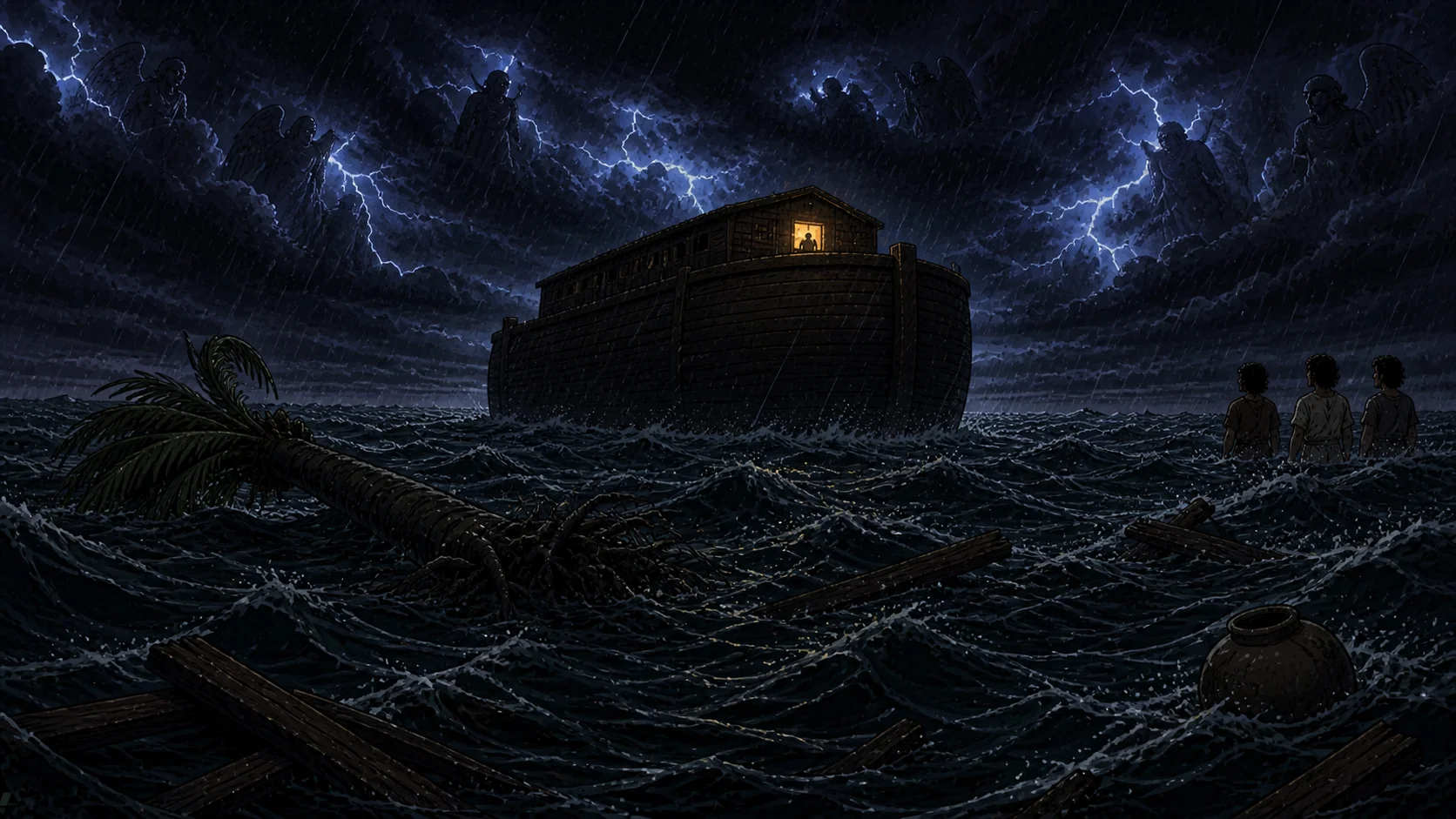
The flood is described with a kind of terrible poetry. The waters increase. They lift the ark. The ark rises. And then: the waters prevail — מְאֹד מְאֹד (me'od me'od), "exceedingly, exceedingly." The doubling intensifies the scope: this is not regional flooding, not seasonal overflow. The very same waters that Elohim divided on the second day of Creation (1:6–7) — the waters above and below the firmament — are now reunited. Creation is partially being unmade. The world before the flood is being washed off the earth.
The number forty is loaded with meaning throughout Scripture. Forty days and forty nights of rain. Forty years in the wilderness. Forty days Moshe spent on Sinai. Forty days and forty nights that Eliyahu walked to Horeb. The number forty in Hebrew thought consistently marks a period of testing, transition, and transformation — the old order passing away and a new one being born. The flood does not merely destroy; it prepares.
While the world is under water, the text contains one of its most quietly profound statements: (8:1) "And God remembered Noah". The Hebrew word זָכַר (zachar) — to remember — does not imply that Elohim had forgotten. Divine remembering is active engagement, purposeful intervention. When Elohim "remembered" Noah, the waters began to recede. When He "remembered" the covenant (9:15), the rainbow appeared. Memory in Hebrew is not passive recall — it is the act that sets deliverance in motion.