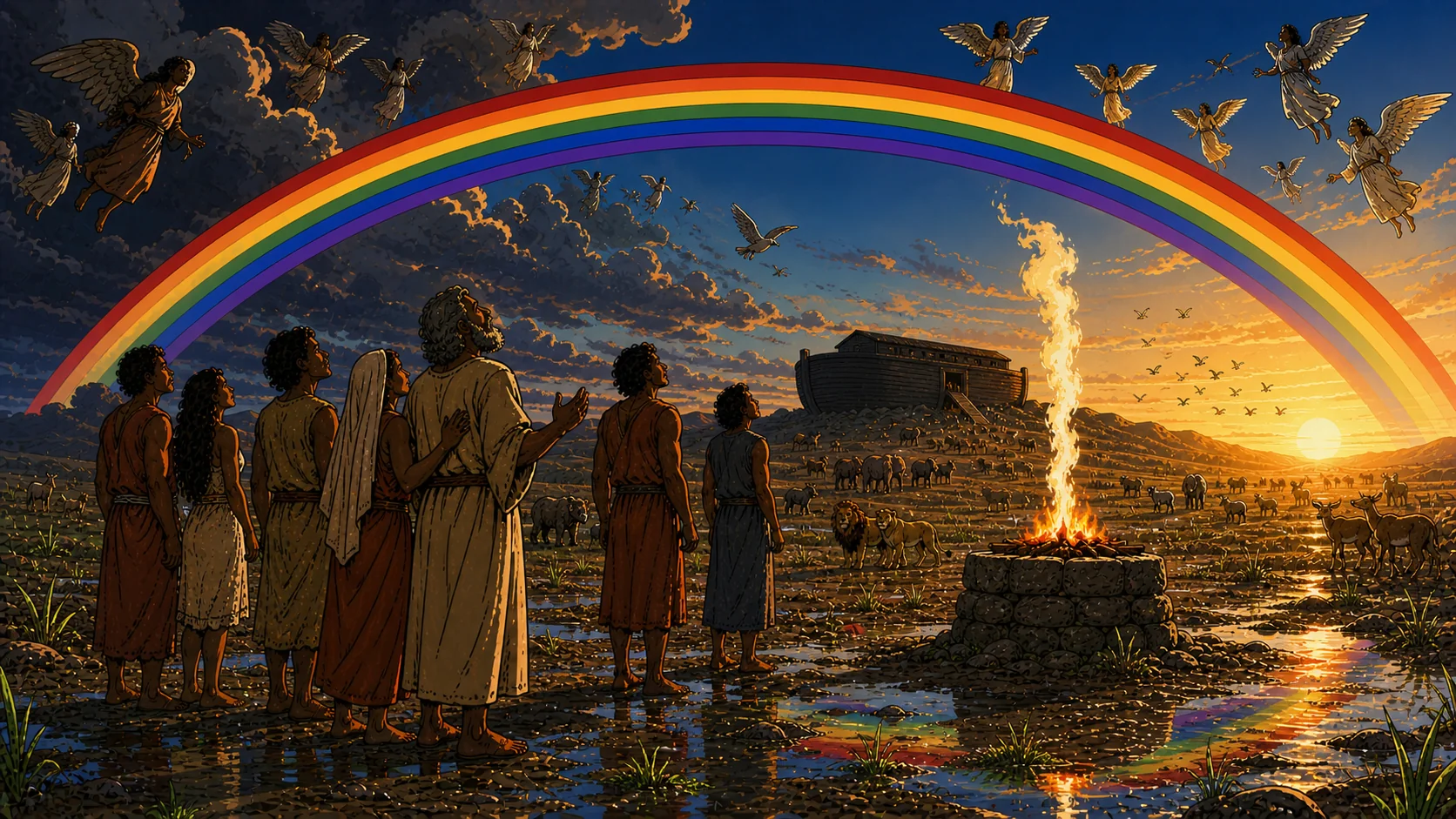
After the flood, Noah steps out onto a washed earth and the first thing he does is build an altar and offer burnt offerings. Elohim responds with a promise that restructures the relationship between Creator and creation: (8:21) "I will never again curse the ground because of man... nor will I ever again strike down every living creature". The promise comes before the rainbow. The sign follows the oath.
The rainbow — קֶשֶׁת (keshet) in Hebrew — is the word for a bow, as in bow and arrow. In the ancient Near East, the rainbow shape was associated with the weapon of warrior gods. Here, Elohim places His bow in the cloud — but the bow points upward, away from the earth. Some ancient commentators read this as Elohim disarming: the weapon of divine war has been hung up, pointed toward heaven. The storm cloud still comes, but the weapon in it is now a promise, not a threat.
The covenant is sealed not with human action but with a natural phenomenon that Elohim says He will see: "When the bow is seen in the cloud, I will remember." The divine memory is activated by the rainbow. This is not a sign given only to humanity to reassure them — it is a sign given to Elohim Himself as a prompt for His own covenant faithfulness. The rainbow is Elohim's reminder to Himself. The implications are staggering: the Creator of the universe builds visual memory aids into the sky because He has committed to keeping His promise. Every rainbow since that day is a public declaration that the flood will not return — that the covenant holds.