Every image tells a story rooted in the original text — from Creation to the cloud filling the Tabernacle. The Prophets and Gospels are in the reader.
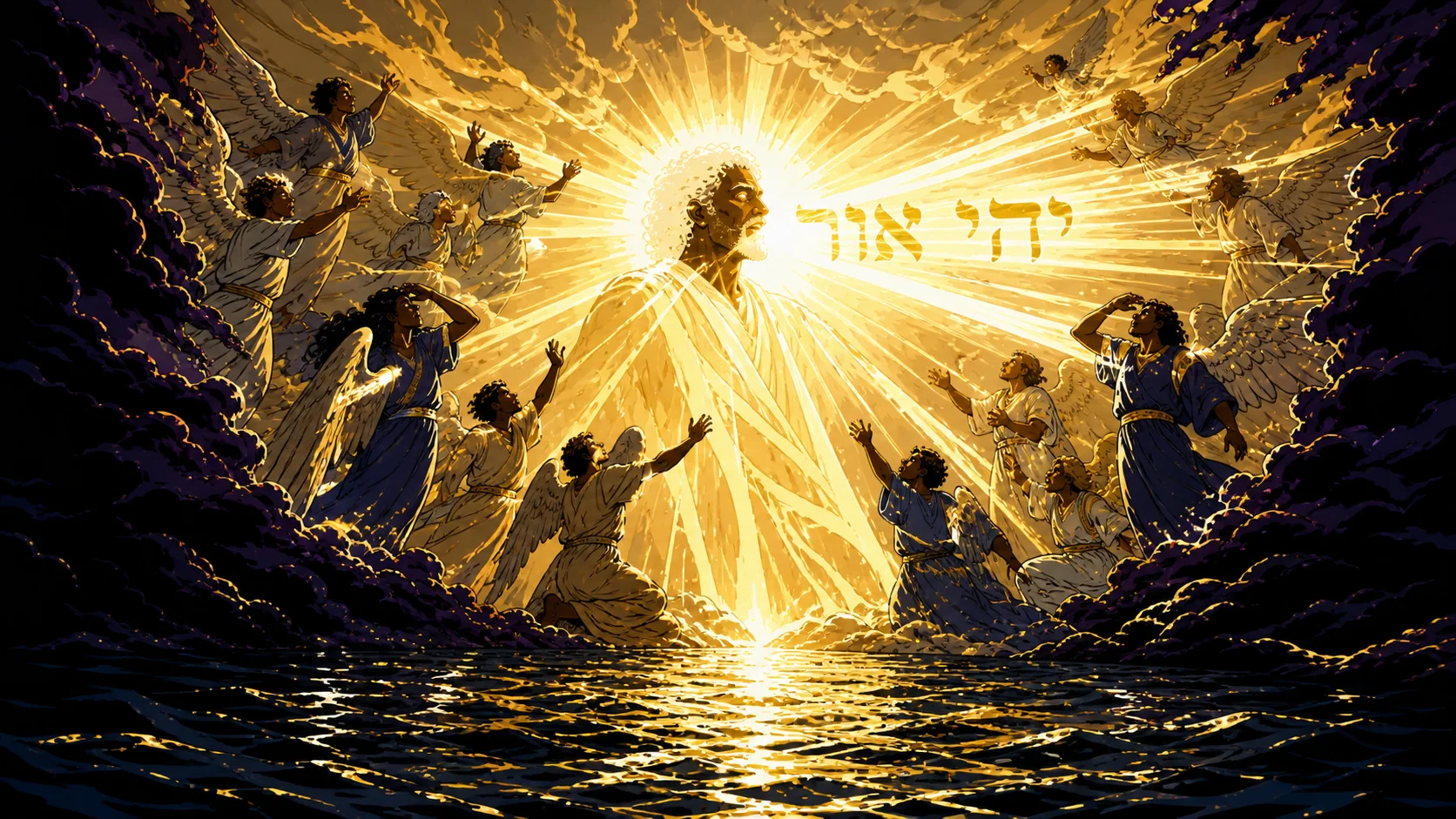
Three Hebrew words that spoke the cosmos into existence. The most powerful sentence ever written.
View Breakdown →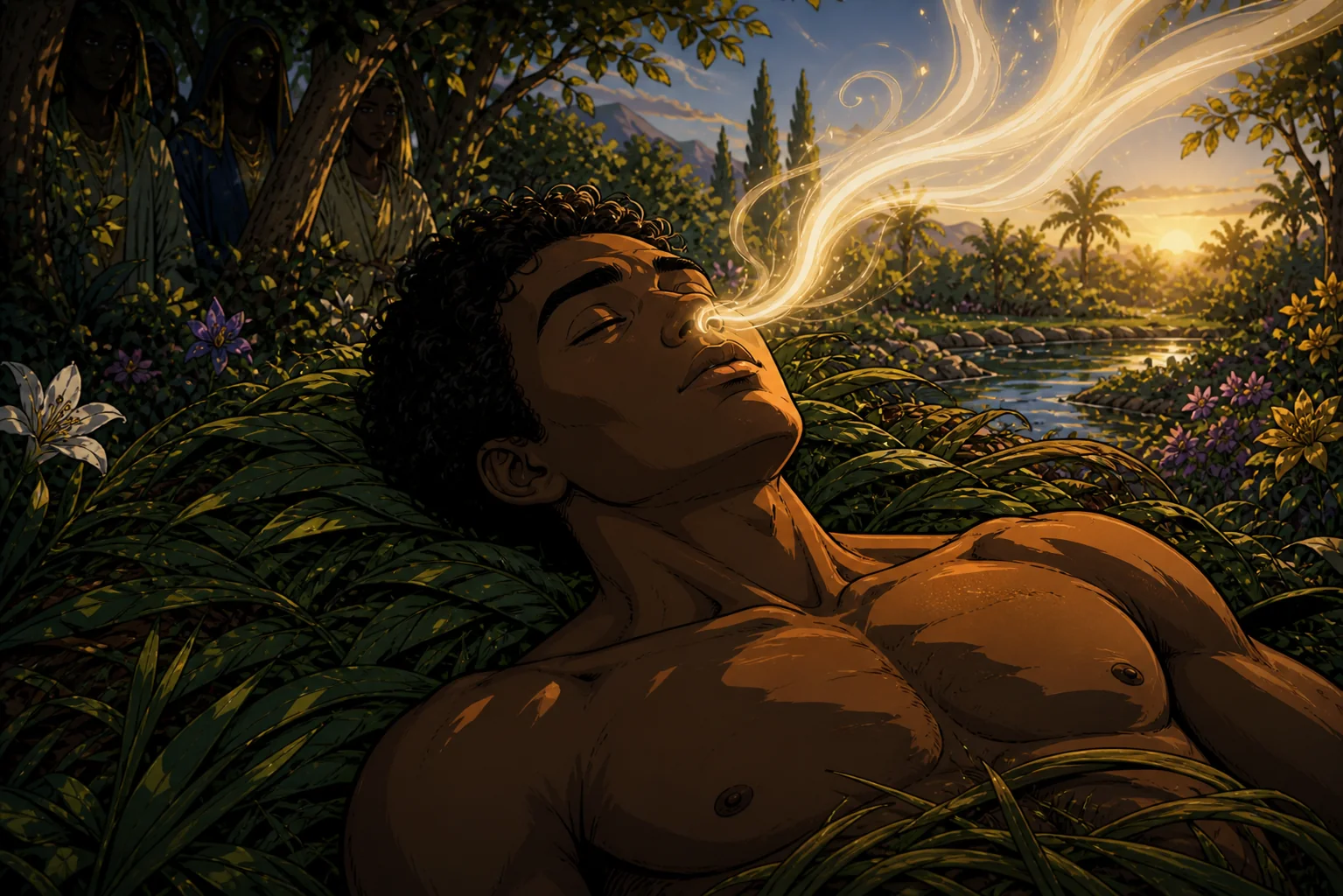
Adam is formed from the dust of the earth — then the divine breath enters and he becomes a living soul.
View Breakdown →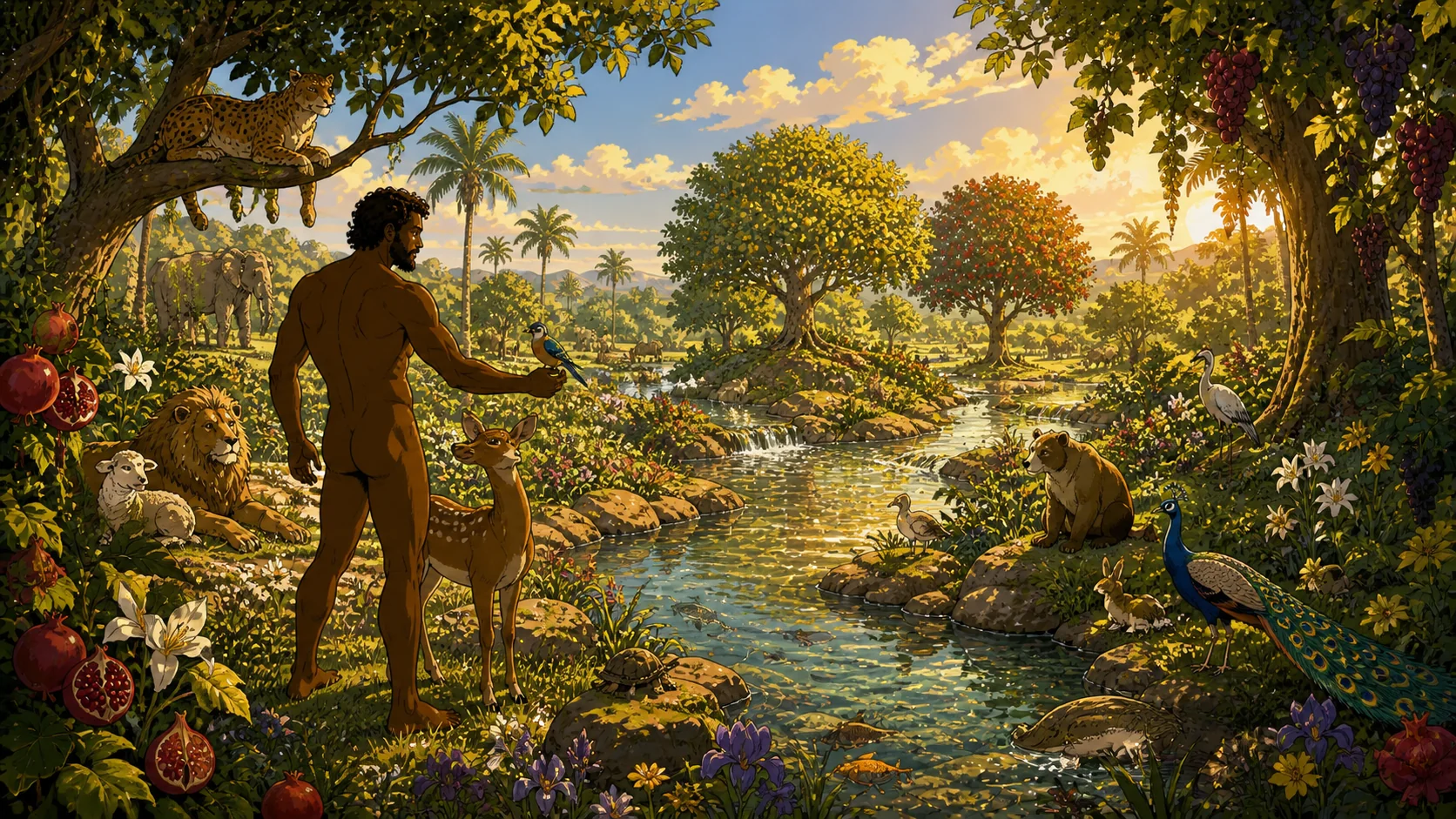
Elohim plants a garden eastward in Eden and places the man there to tend and keep it.
View Breakdown →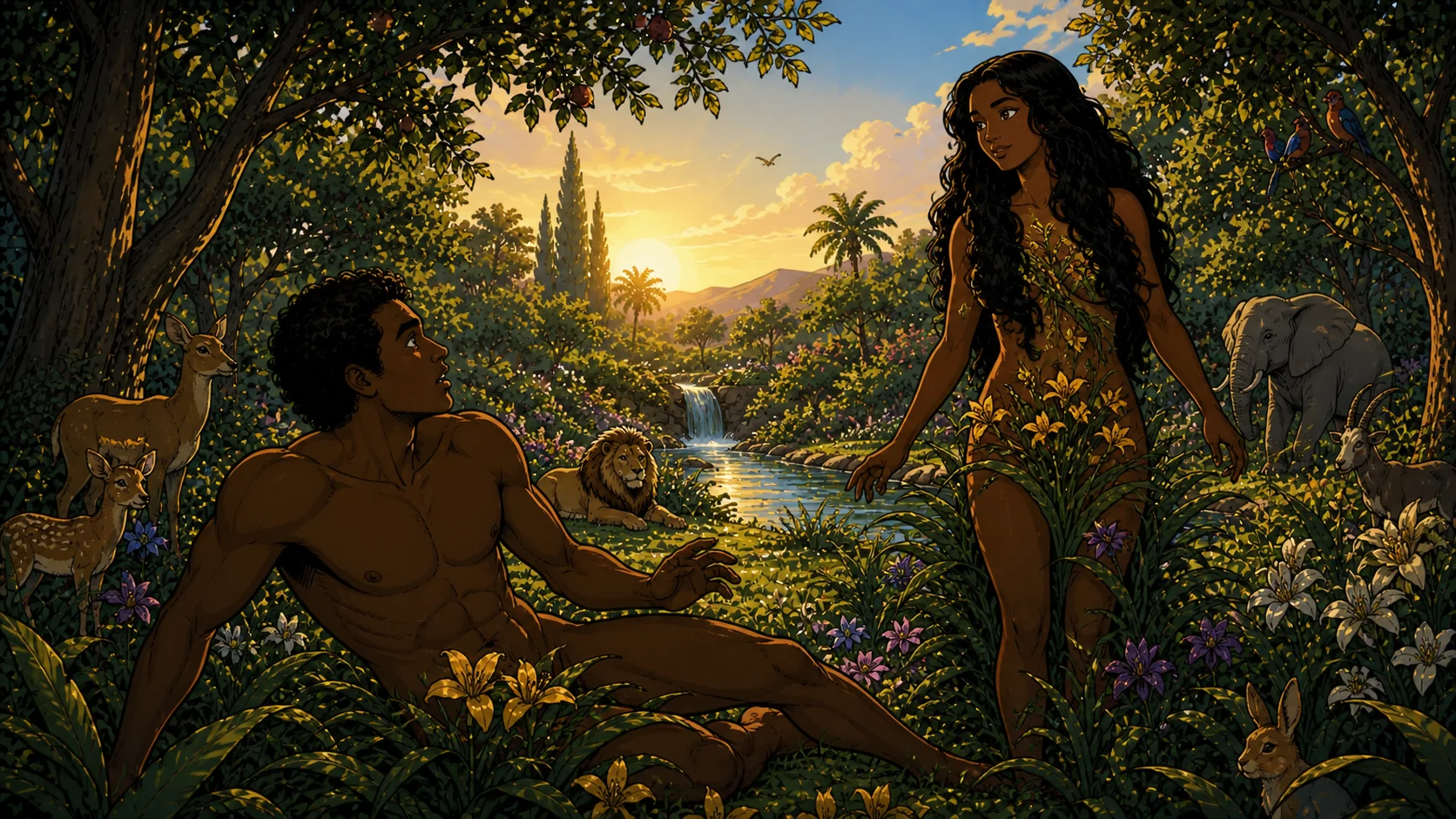
A deep sleep falls on Adam. From his side, Elohim builds a woman — bone of his bone, flesh of his flesh.
View Breakdown →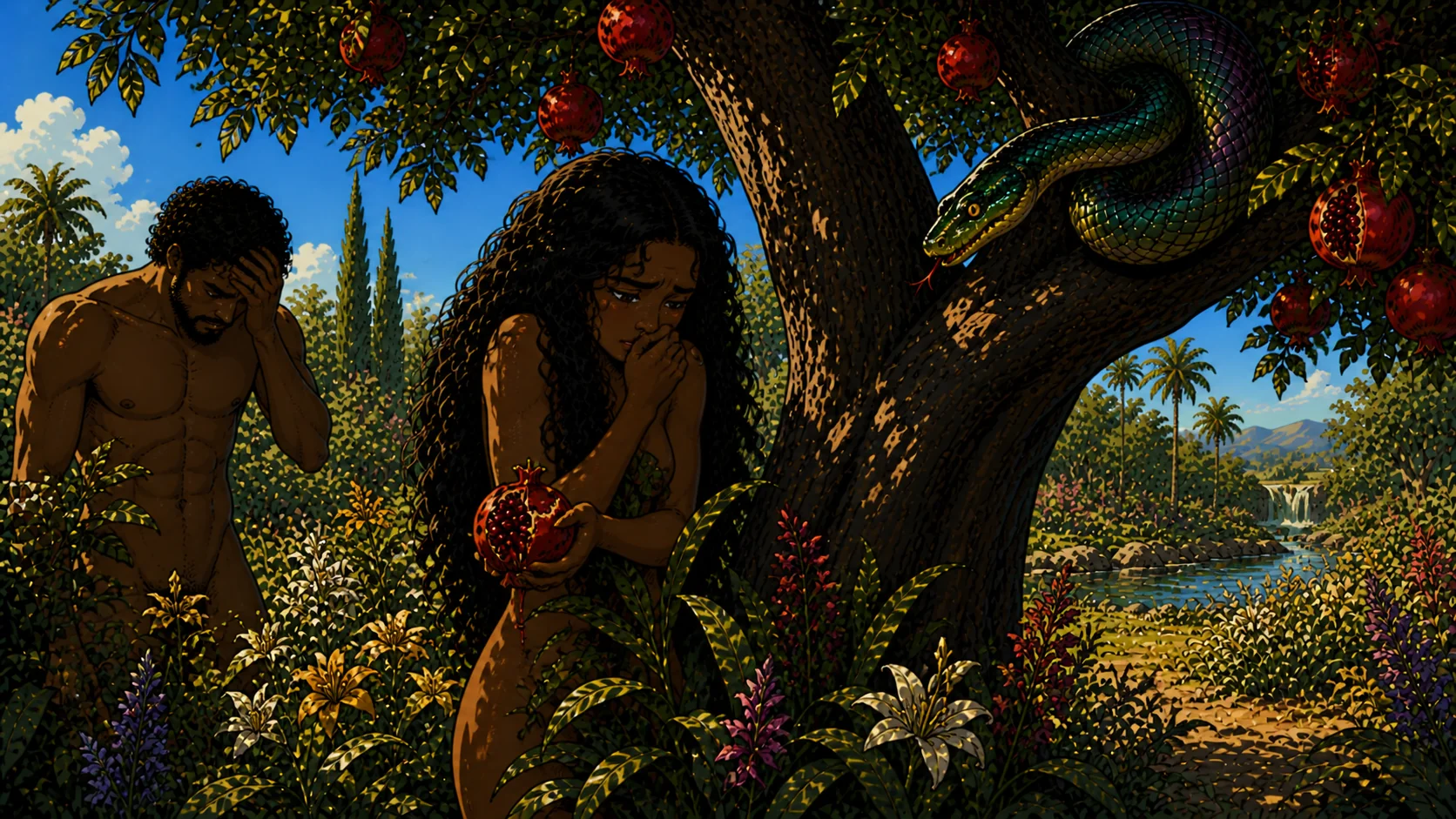
The craftiest creature in Eden deceives the woman. She sees, she desires, she takes — and the world changes forever.
View Breakdown →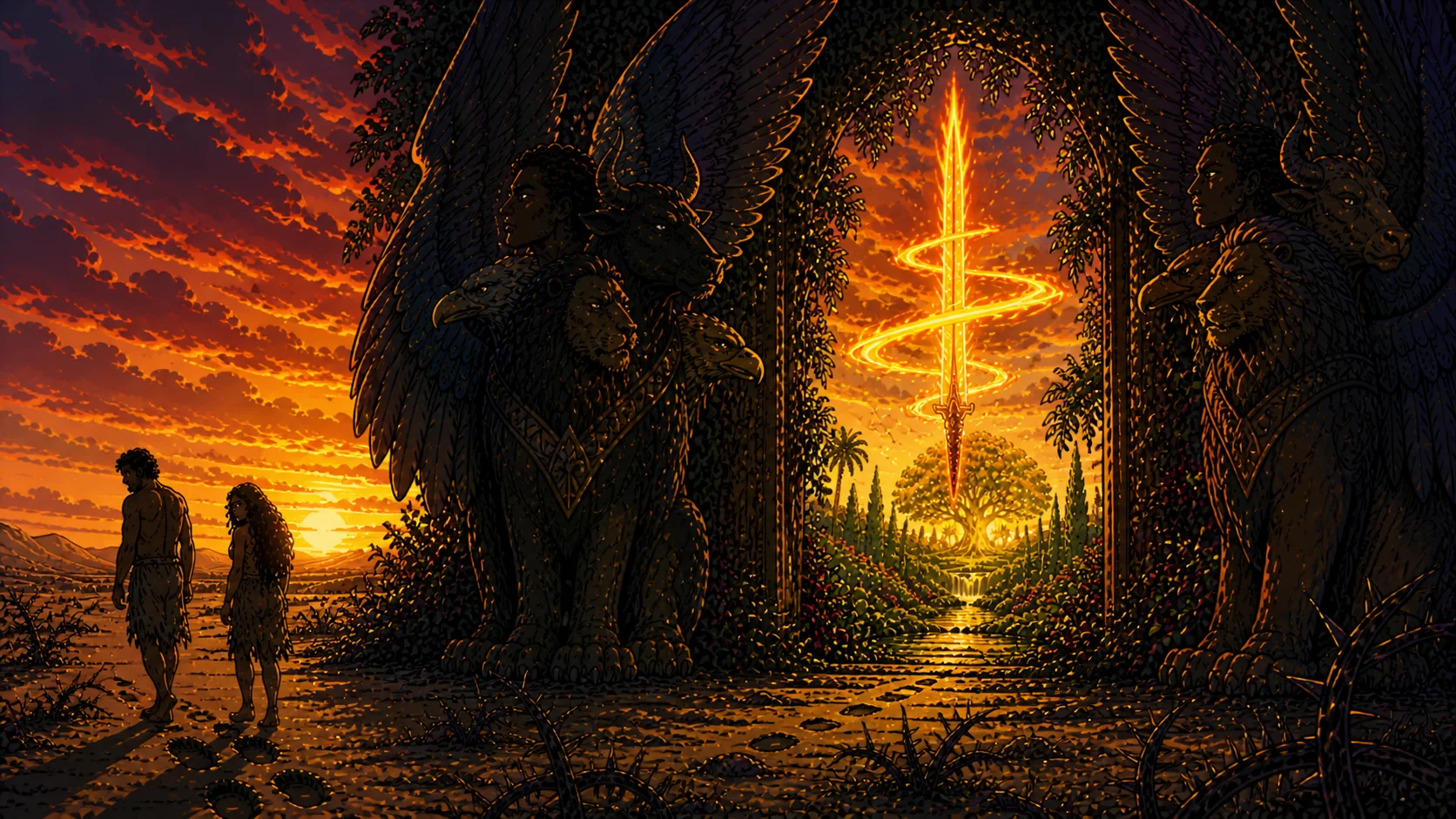
The LORD drives Adam from Eden. Cherubim and a flaming sword guard the way to the Tree of Life.
View Breakdown →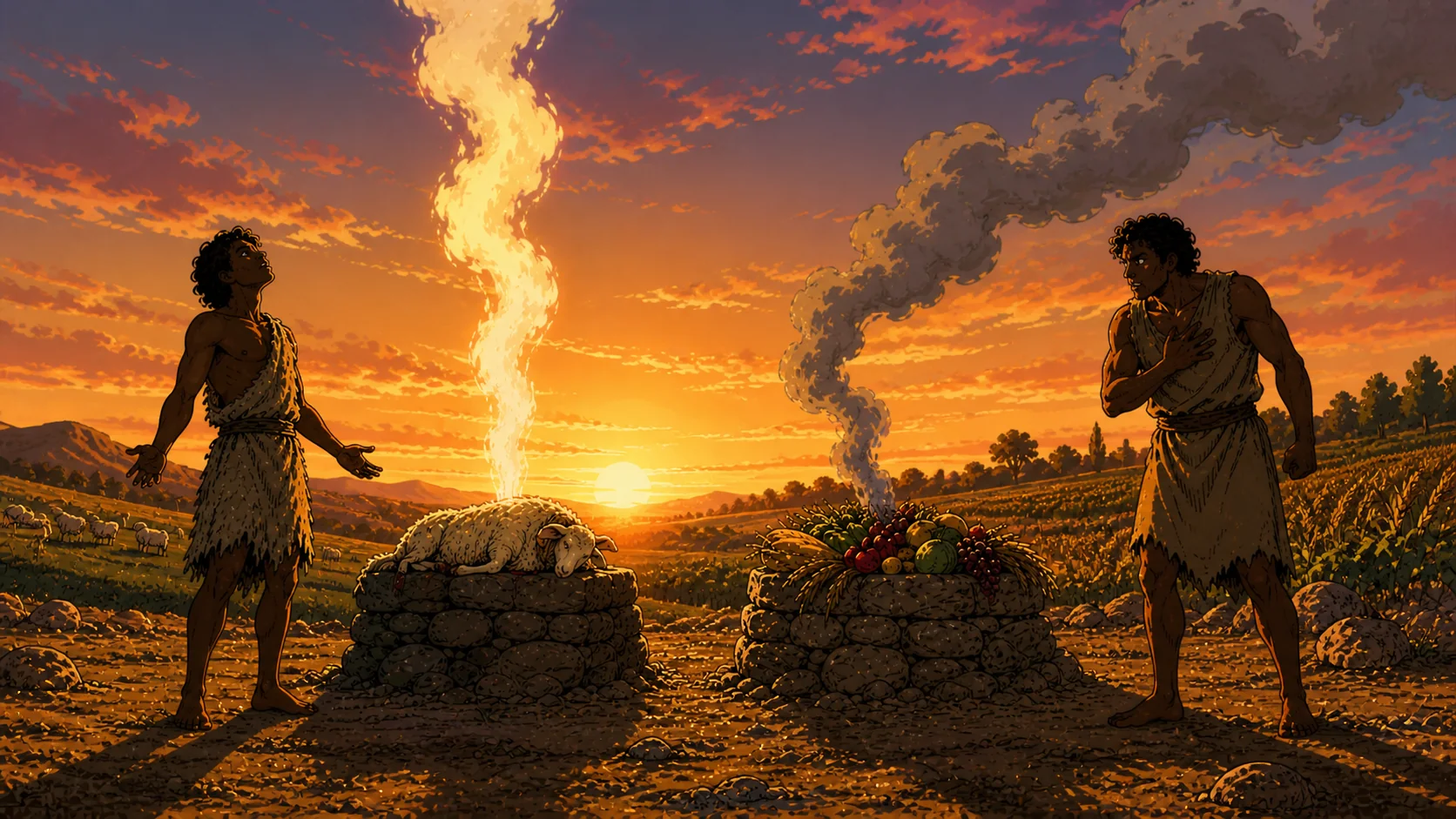
Two brothers bring offerings to the LORD. One is accepted. One is not. The ancient question: why?
View Breakdown →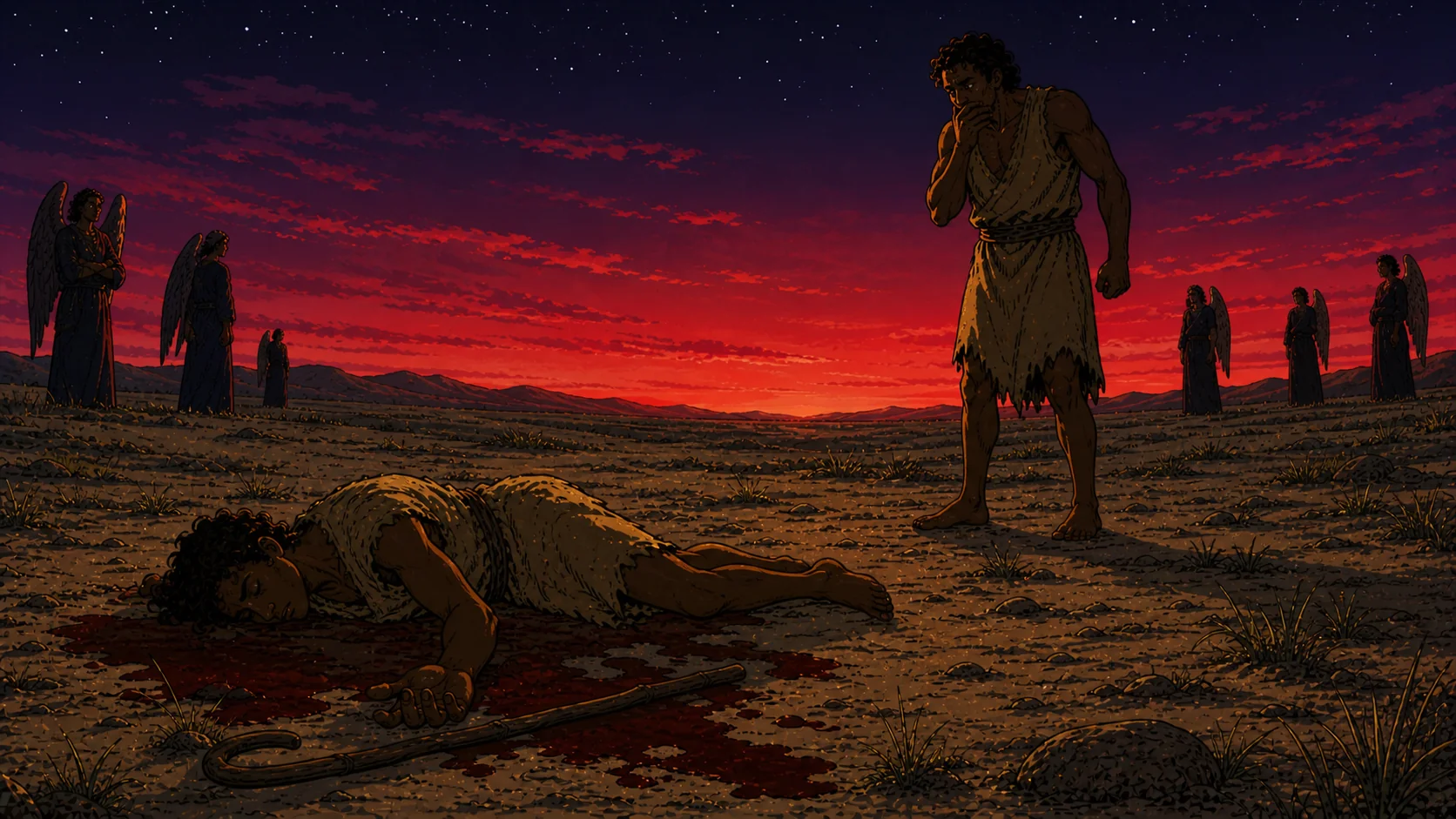
In the field, Cain rises against his brother. The earth drinks the first blood. The voice cries from the ground.
View Breakdown →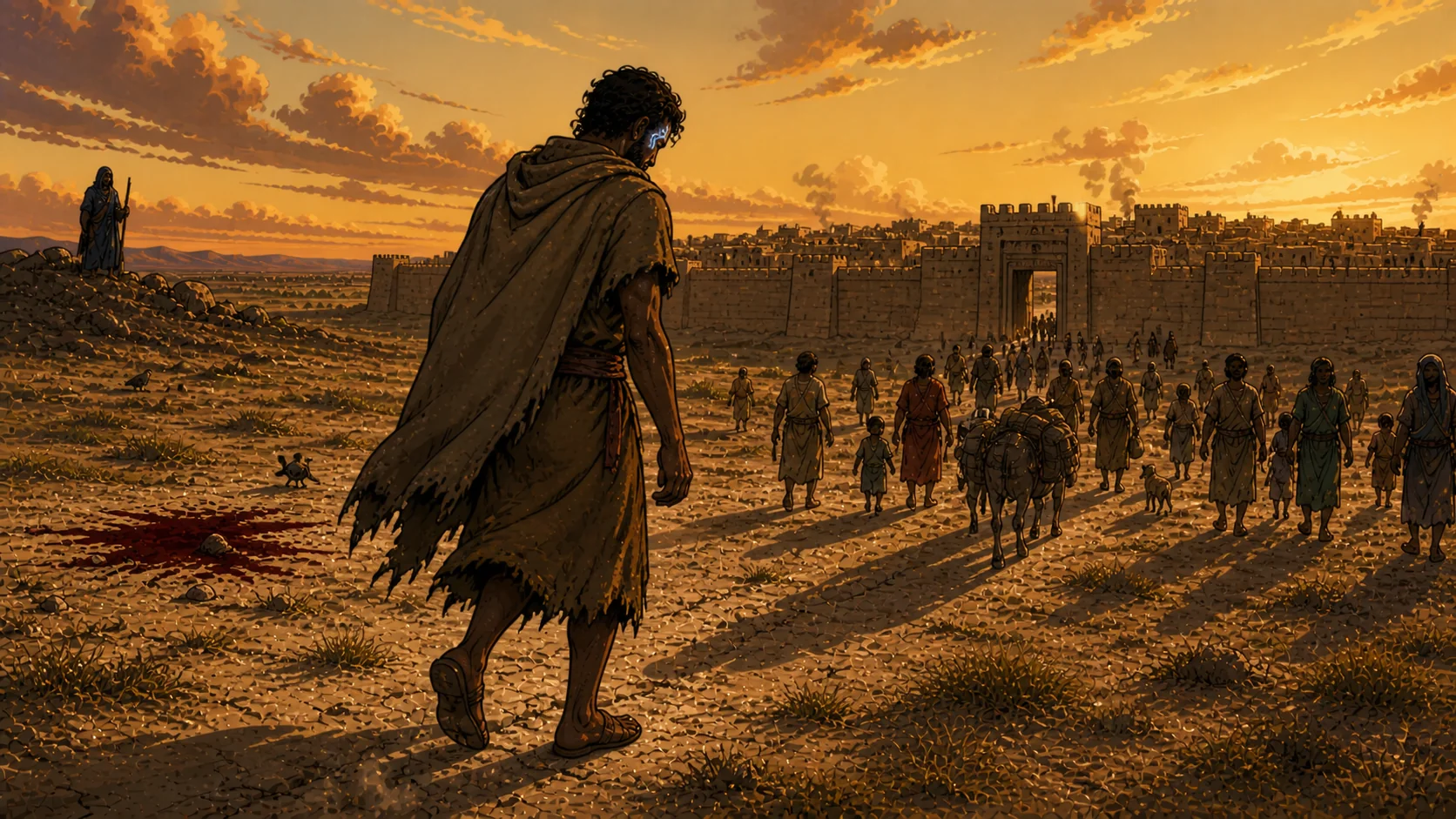
Cain is cursed from the earth, marked, and made a wanderer. Even in judgment, the LORD protects him.
View Breakdown →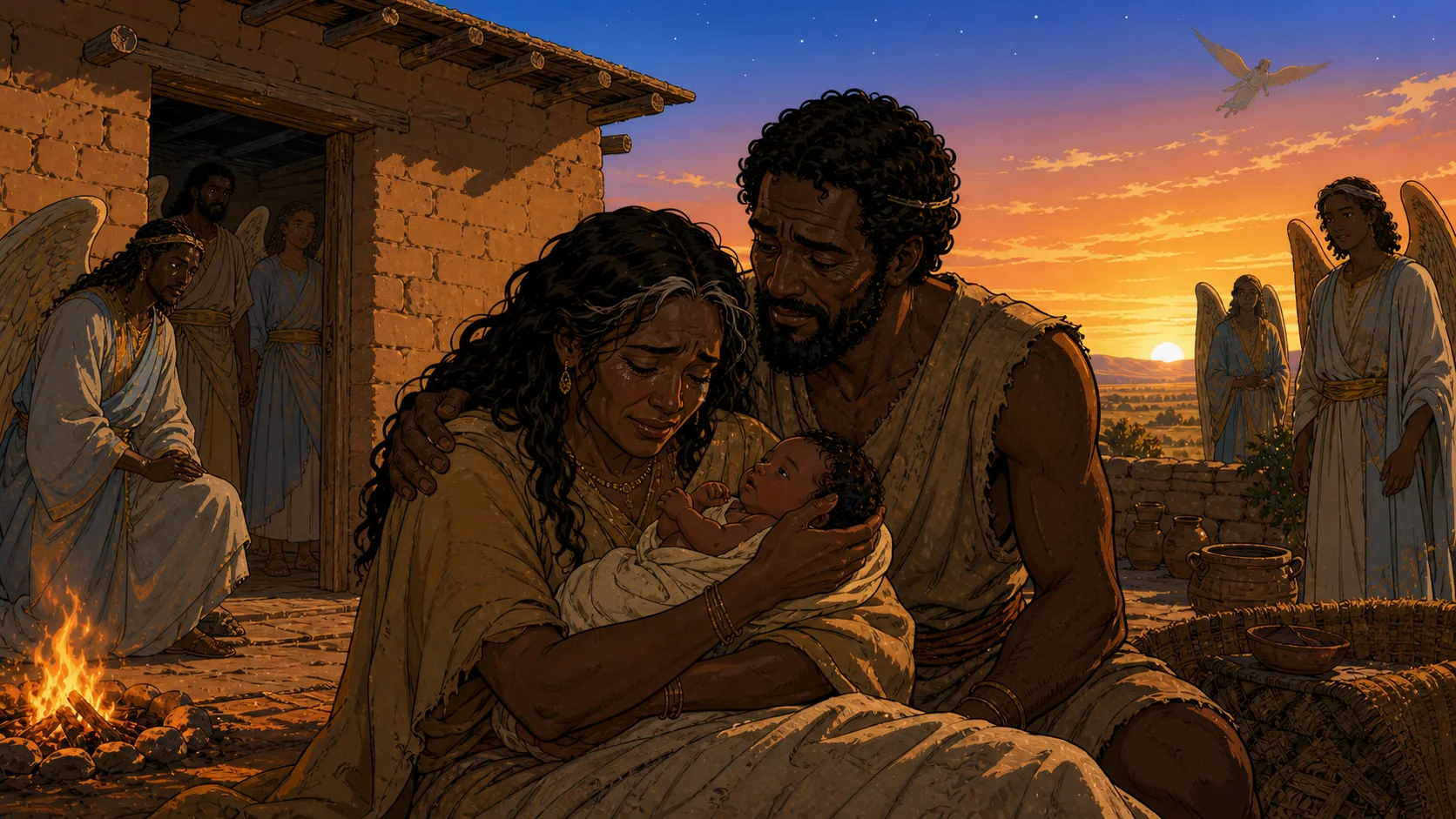
After Abel's murder, Elohim grants another seed. In Seth, the line of righteousness continues.
View Breakdown →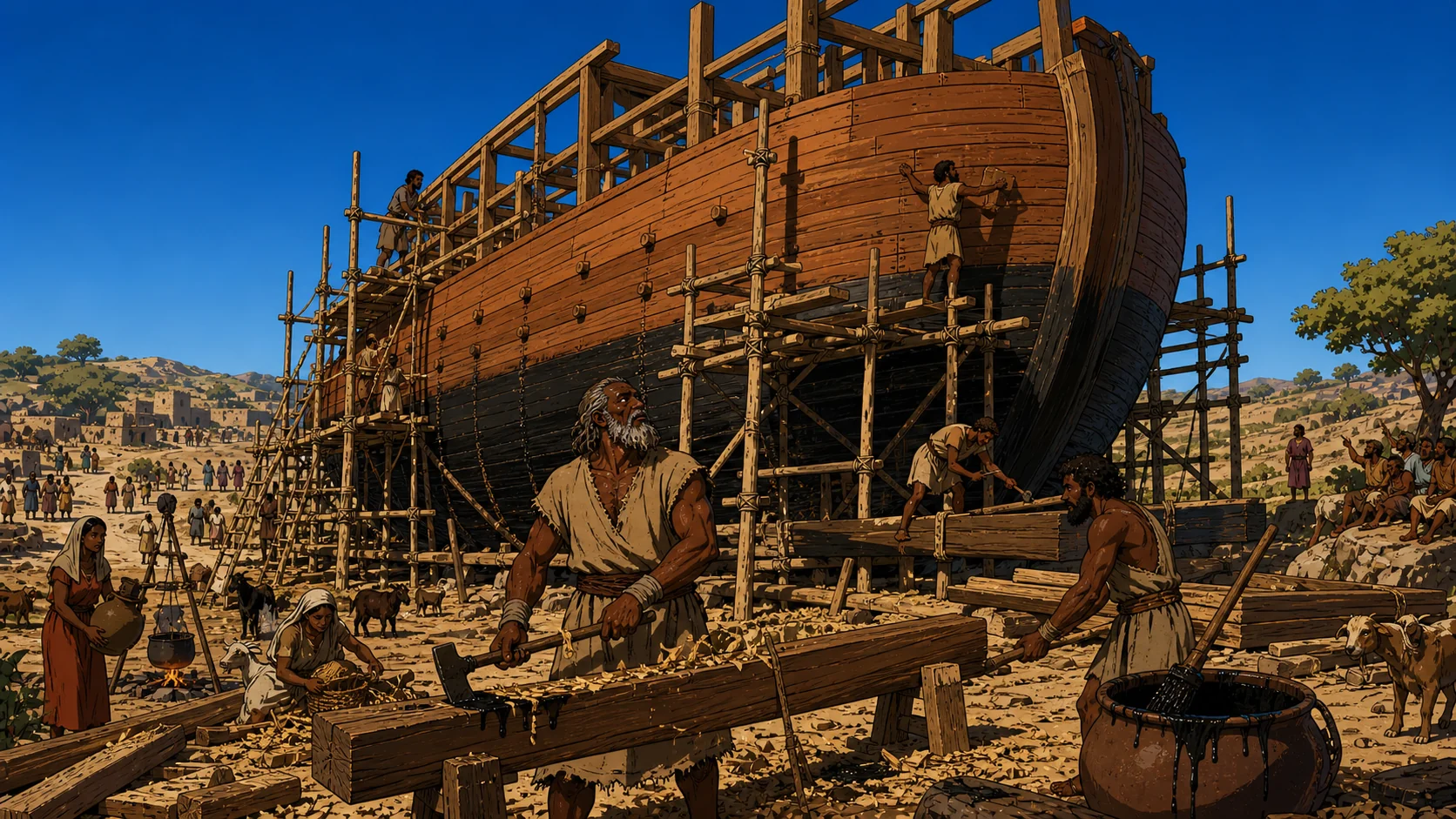
Elohim gives precise instructions. Noah — righteous in his generation — obeys every word.
View Breakdown →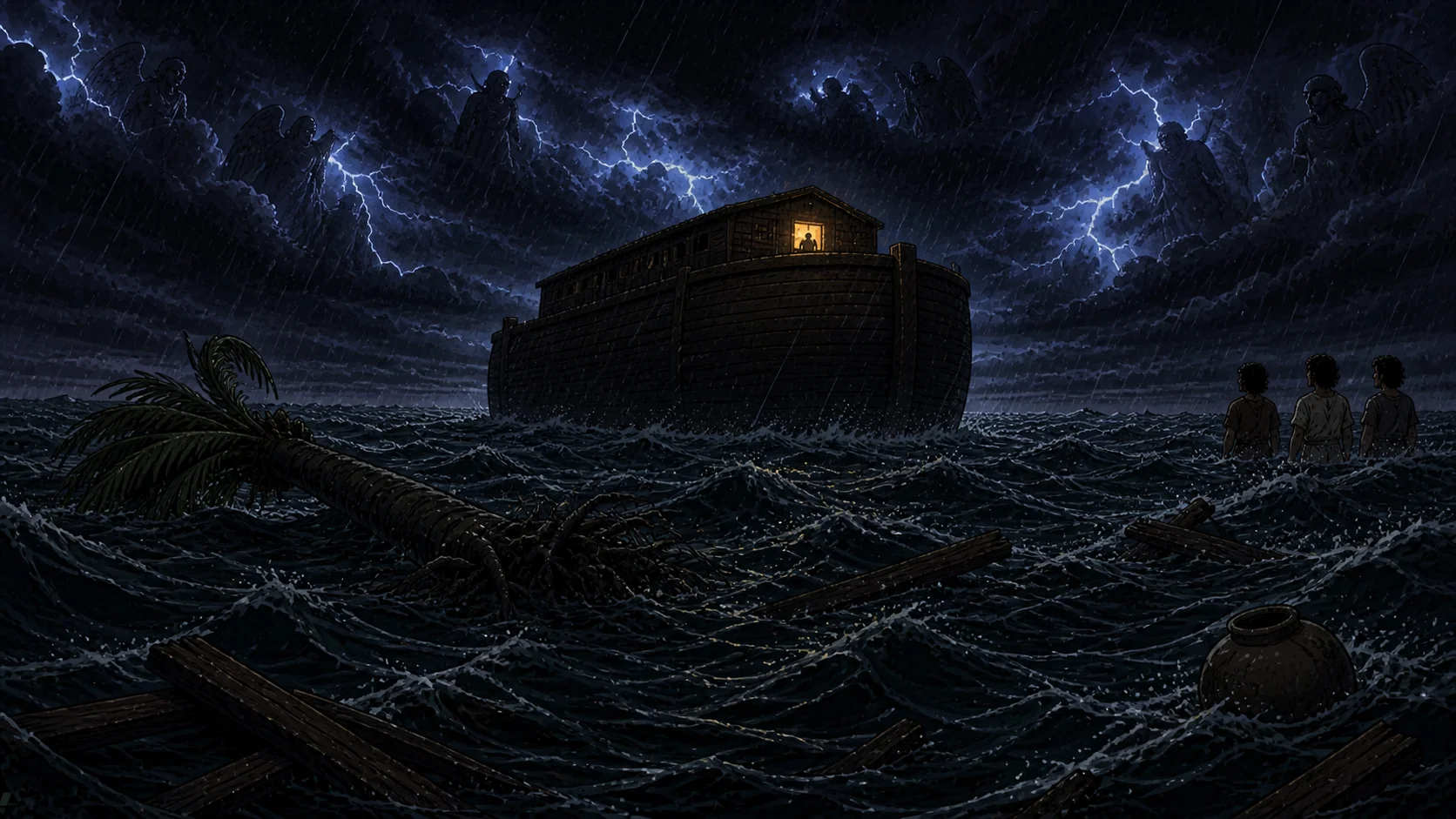
Forty days and the waters prevail. Every high mountain covered. Every breath on dry land ceases.
View Breakdown →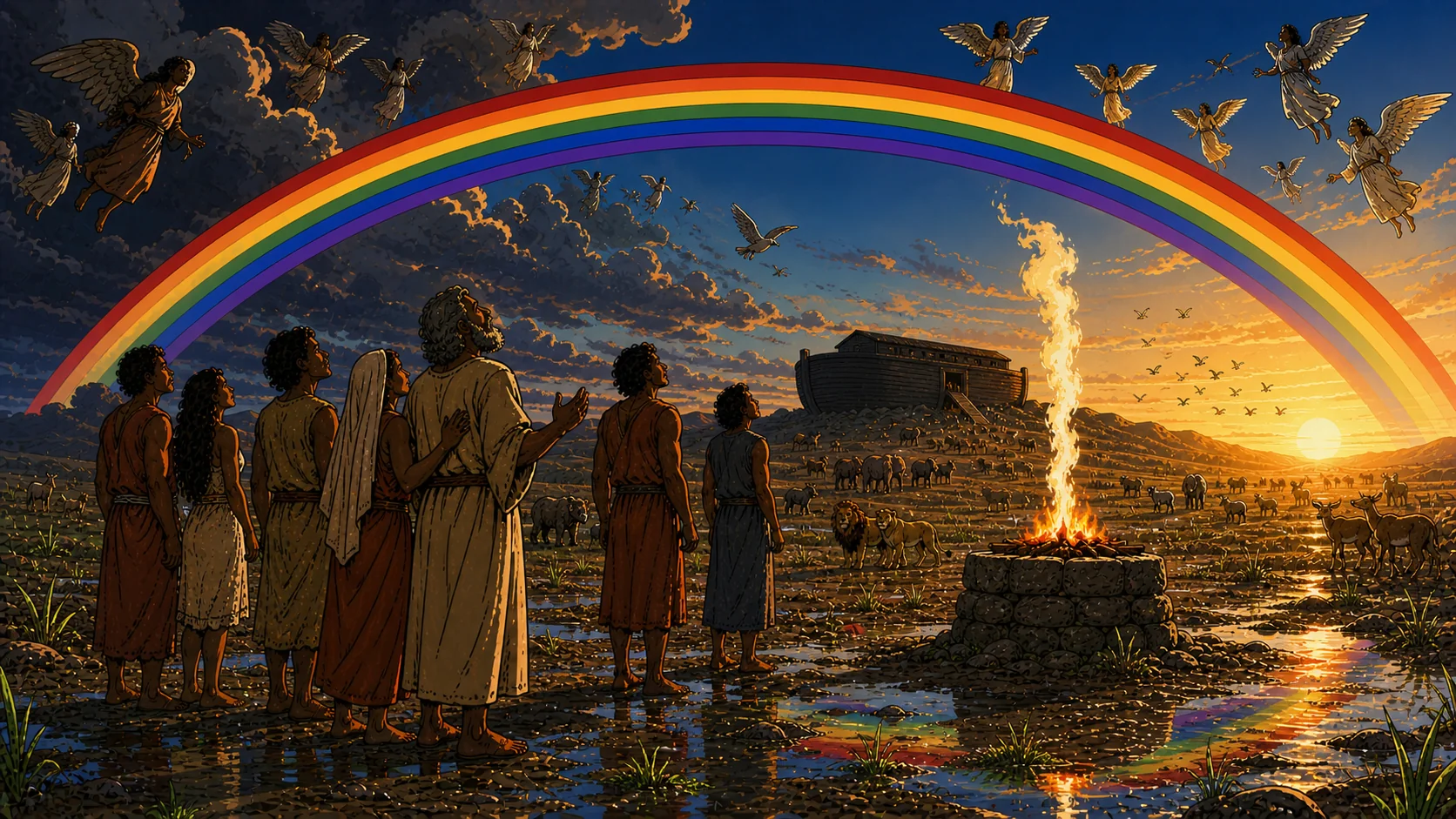
Elohim sets His bow in the cloud as a sign of the eternal covenant. The earth will never flood again.
View Breakdown →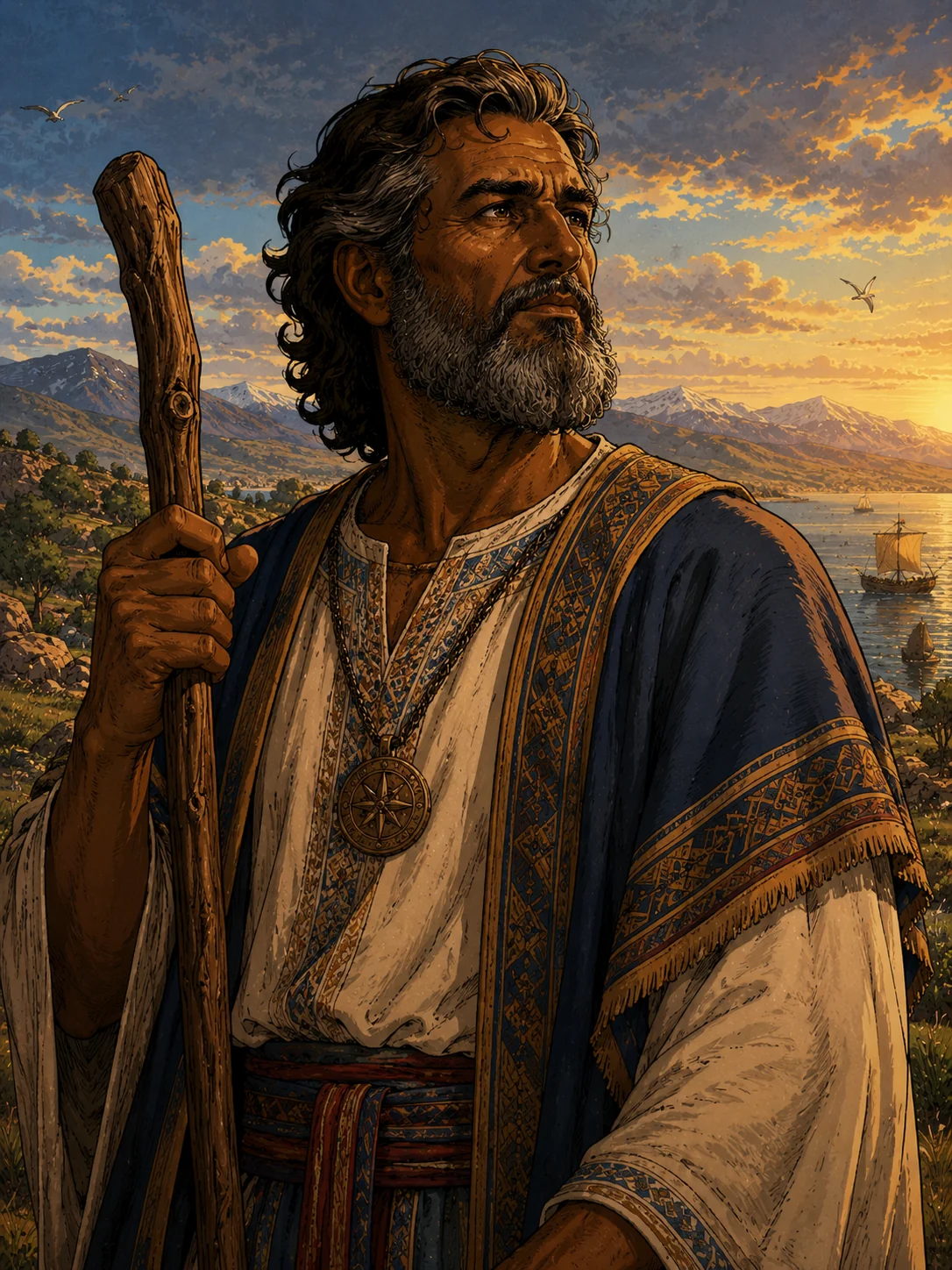
From Noah's oldest son came the Indo-European world — Greeks, Medes, Cimmerians, Scythians, and the peoples of the northern coastlands.
View Breakdown →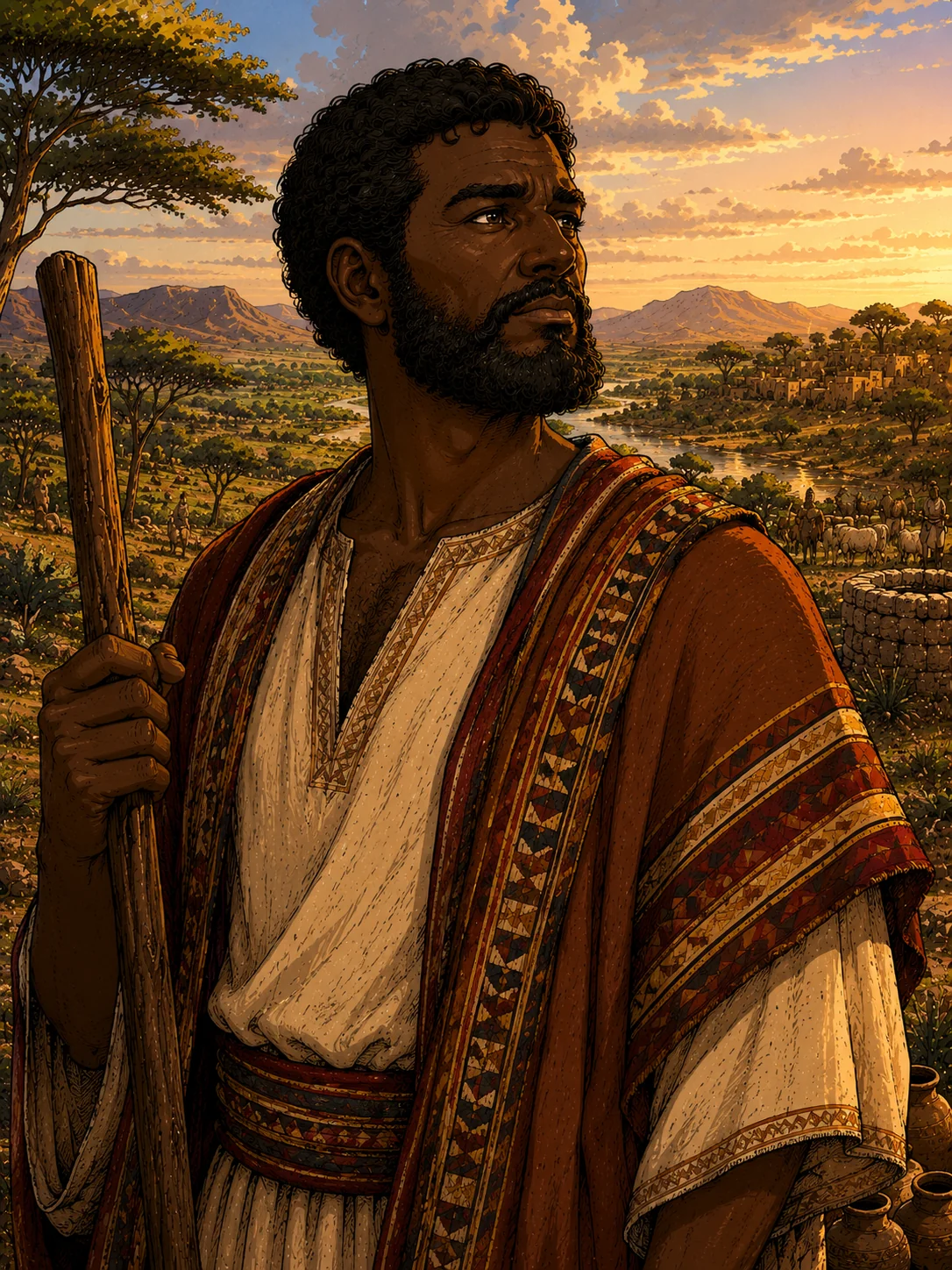
Ham's sons built Egypt, Kush, Babylon, and Canaan. Nimrod rises. Thirty nations — Africa, the Levant, and the first empires.
View Breakdown →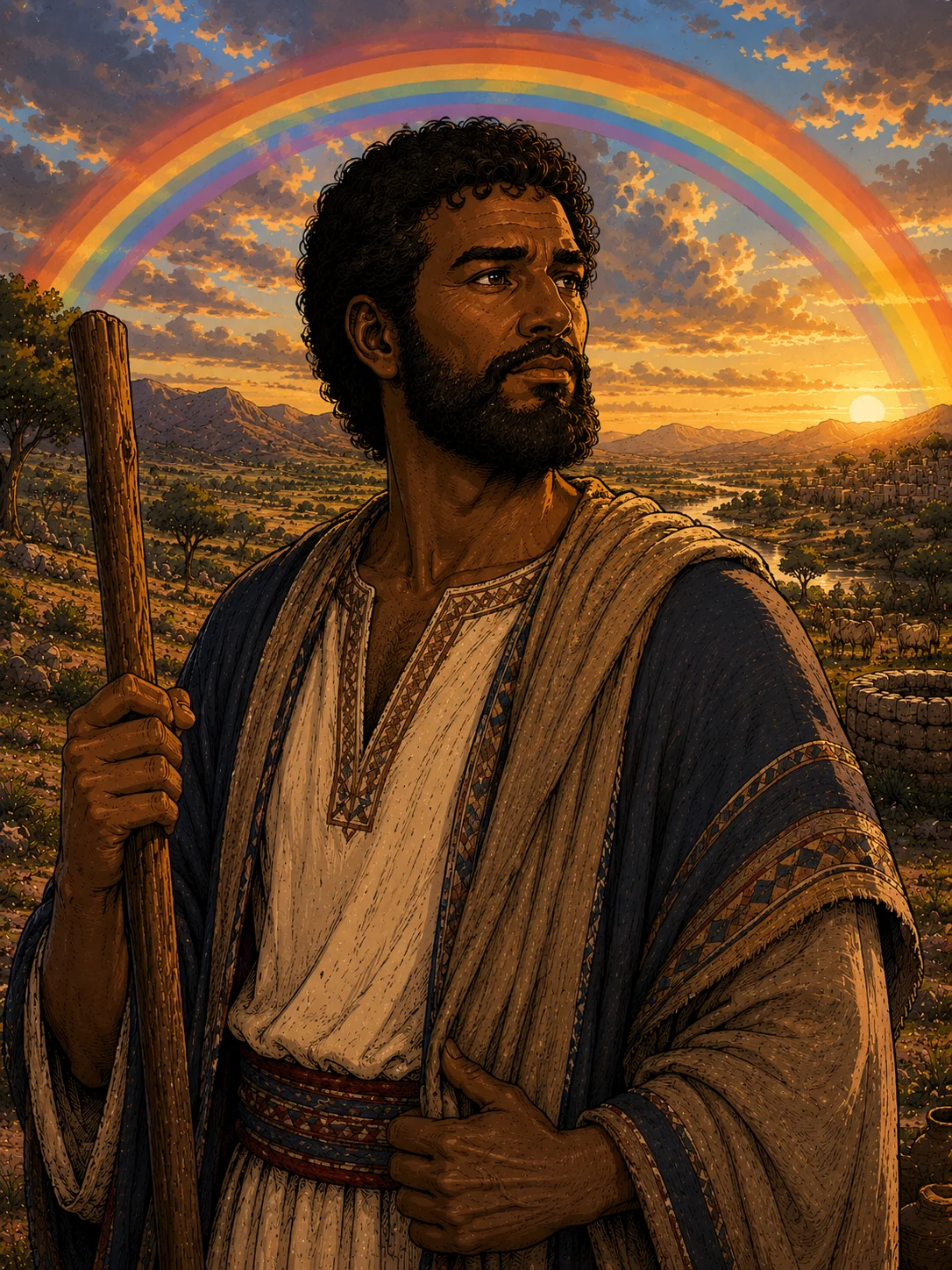
From Shem came Asshur, Aram, and the line that leads to Eber — the ancestor of the Hebrews — and on to Abraham.
View Breakdown →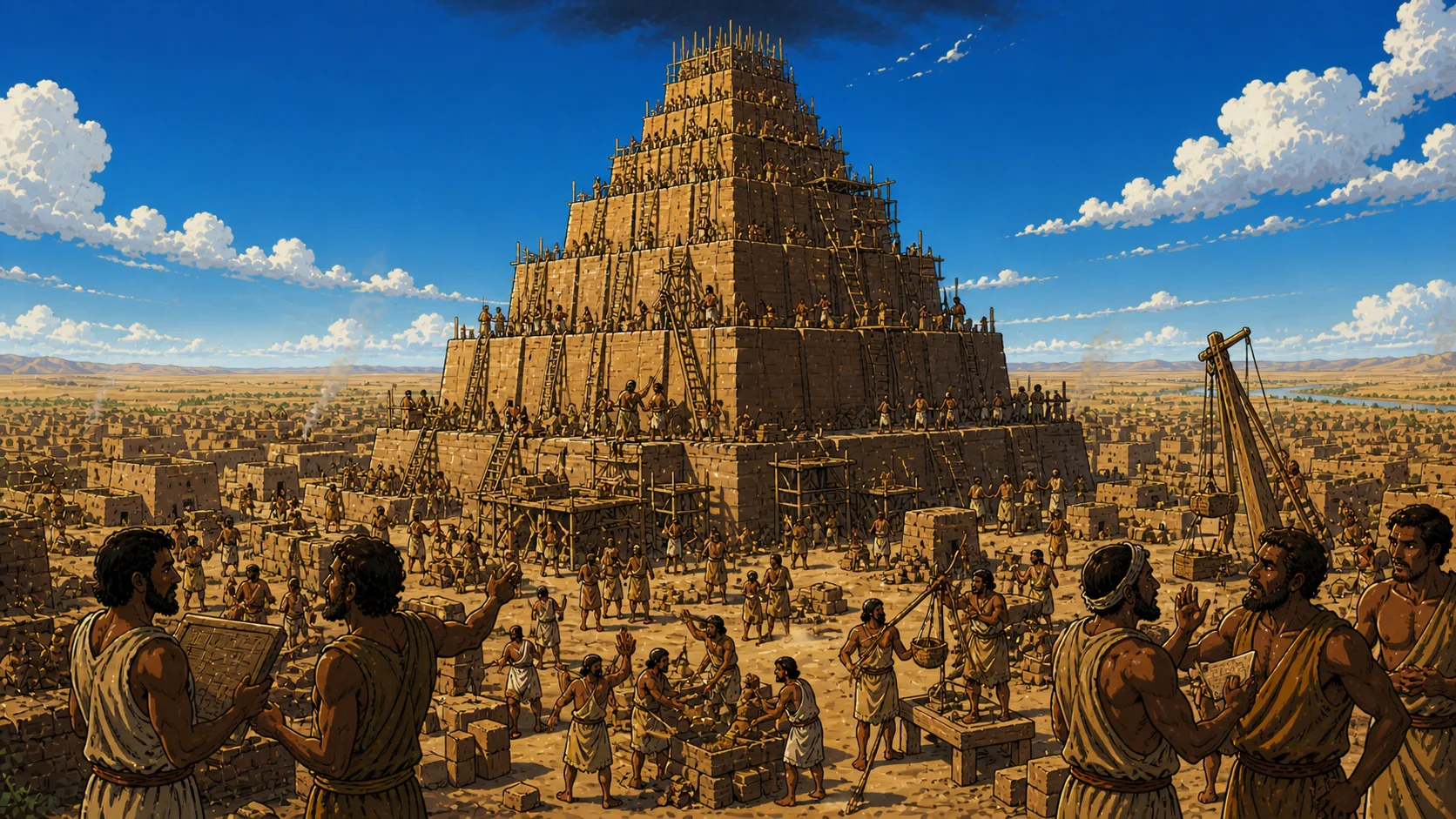
One people, one language, one ambition: to reach the heavens. Elohim descends and scatters them across the earth.
View Breakdown →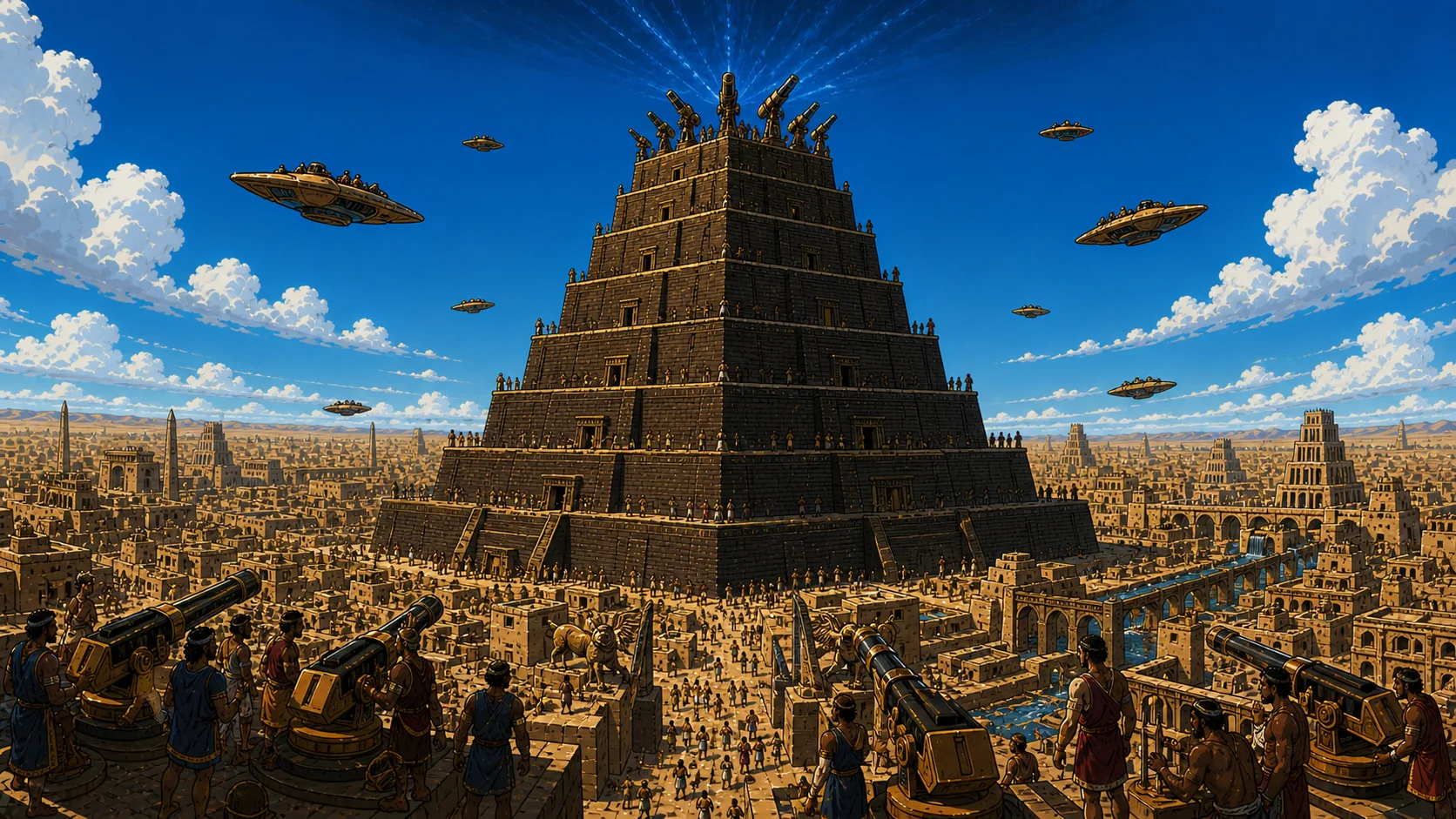
The tower stands complete. The people unified. The ambition at its height — just before the fall.
View Breakdown →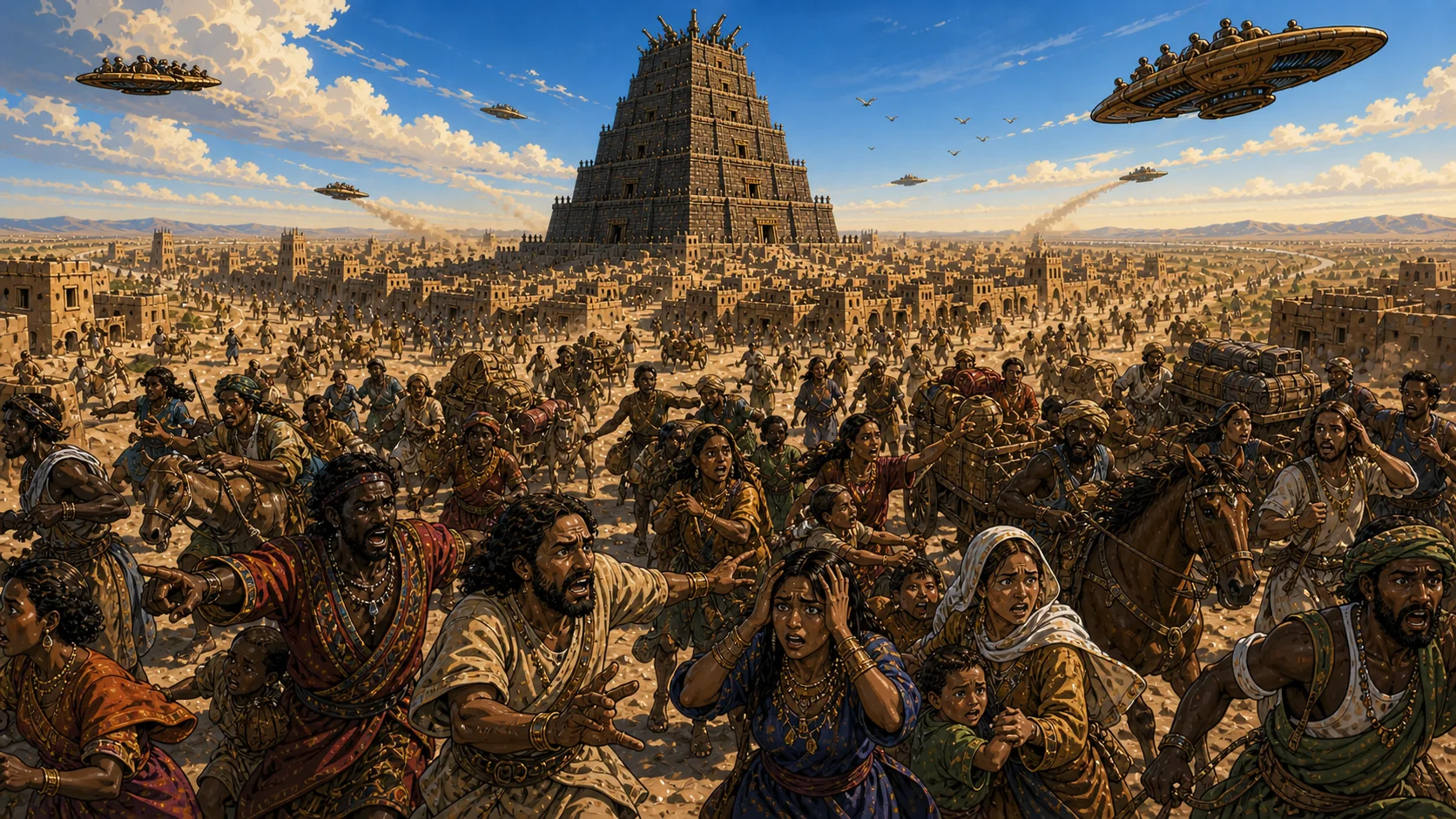
"Come, let Us go down." Language is confused, unity is broken, and the nations are scattered across every land.
View Breakdown →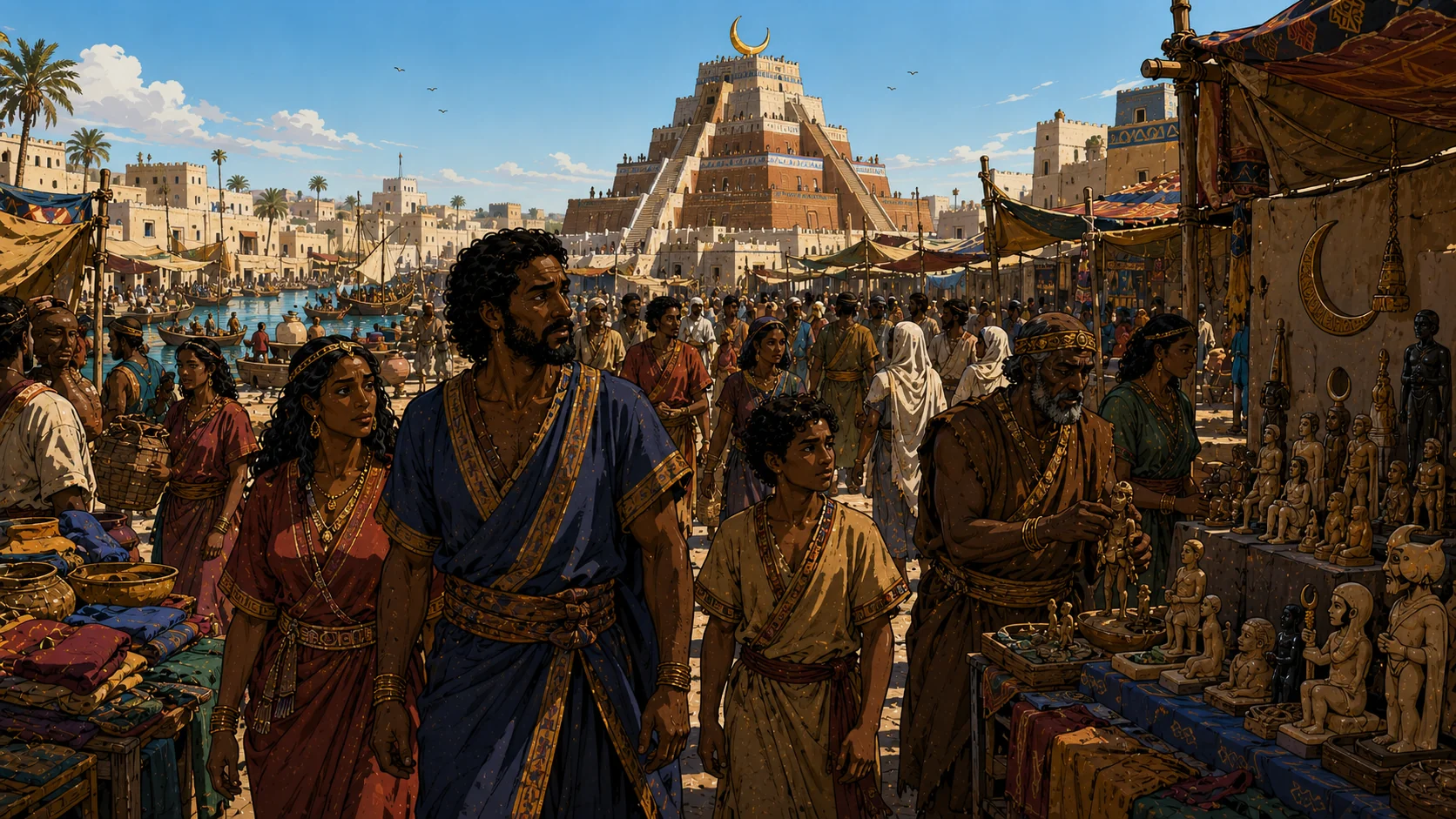
Before the call, before the journey — a man named Avram in the city of Ur. Terah's household and the origin of a covenant people.
View Breakdown →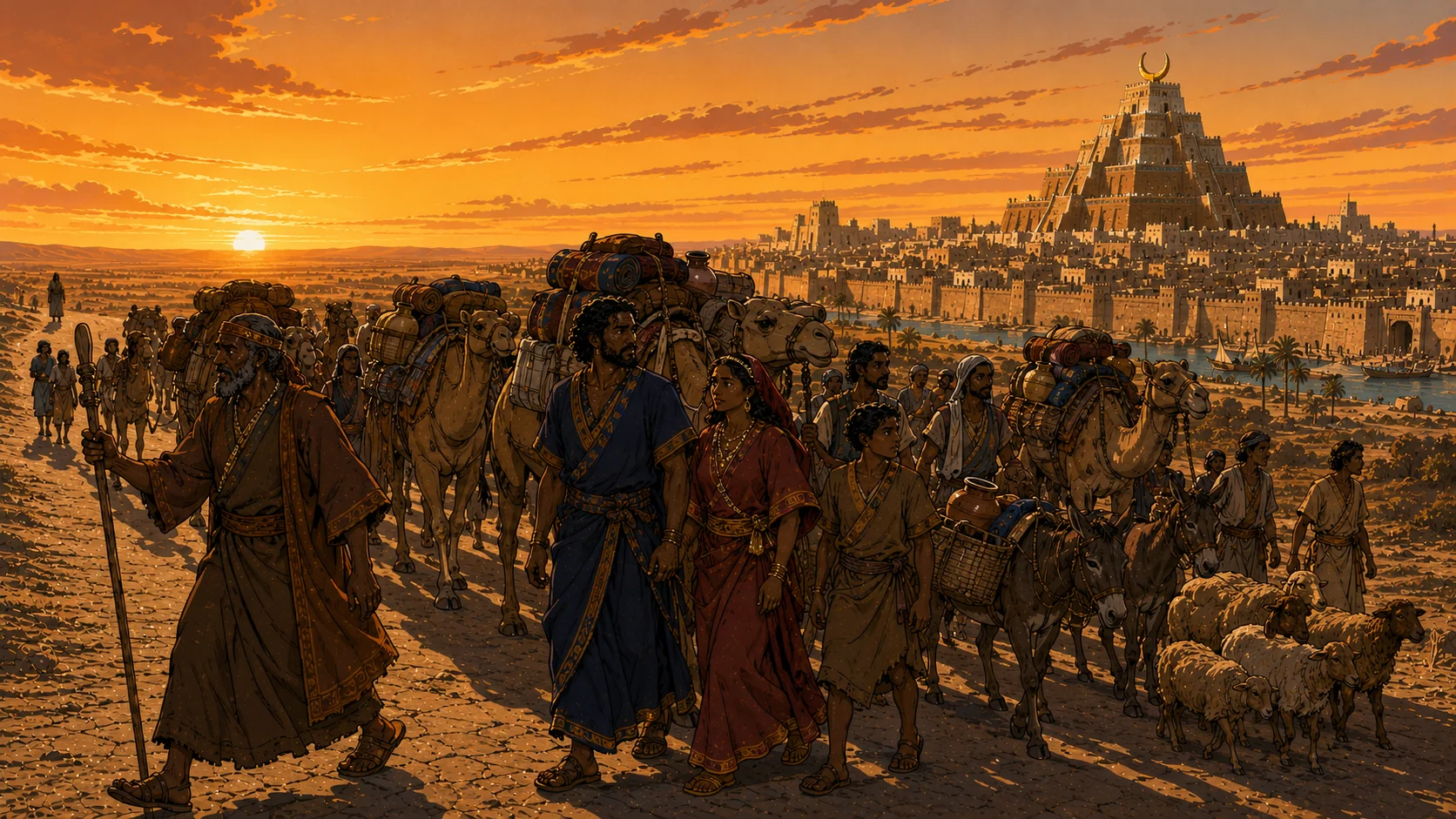
Terah gathers his family and leaves Ur of the Chaldees, bound for Canaan. They travel as far as Haran — and stop there.
View Breakdown →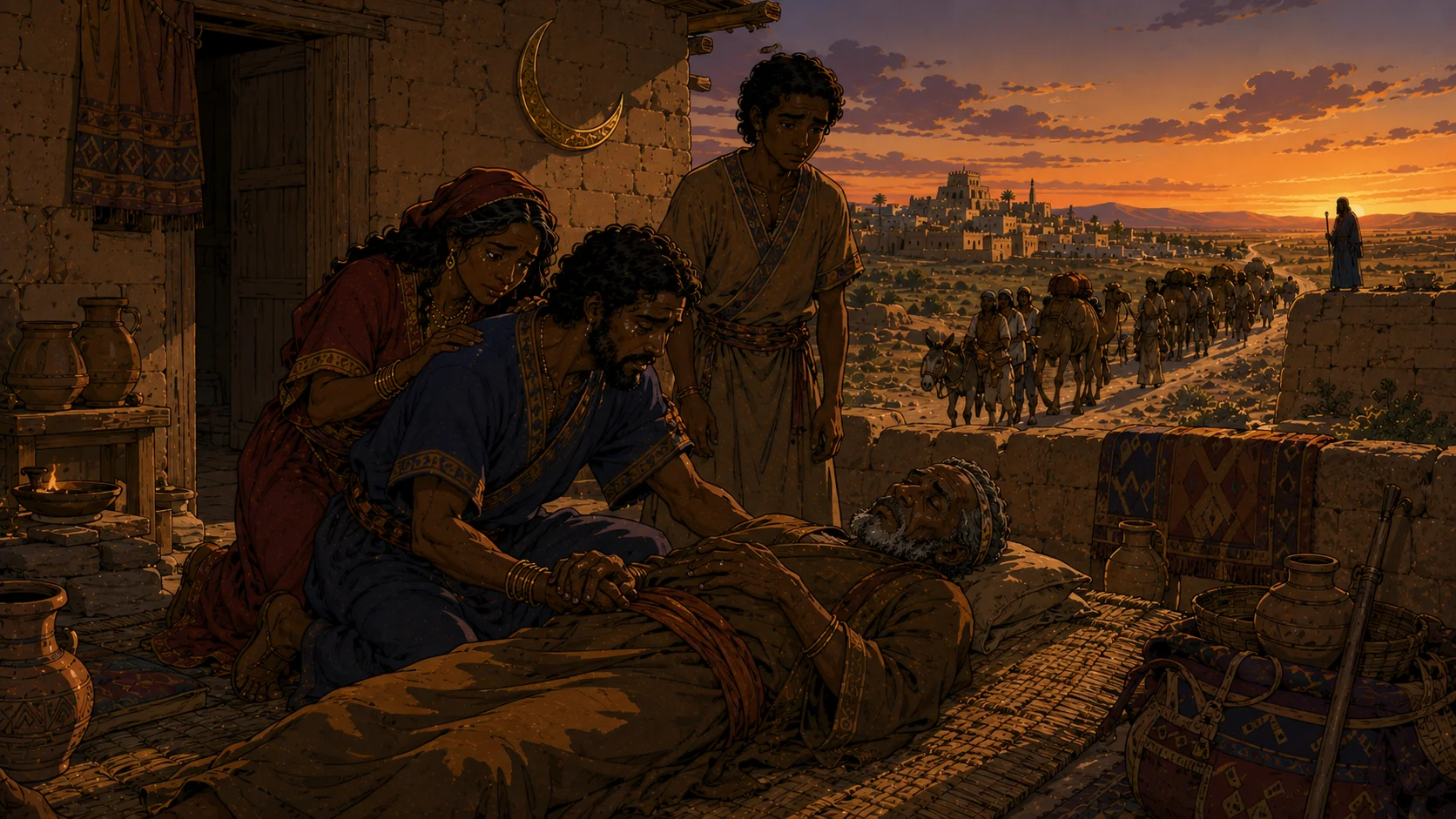
Two hundred and five years. Haran becomes Terah's final city. The father dies in the place he stopped. Avram is still waiting for the call.
View Breakdown →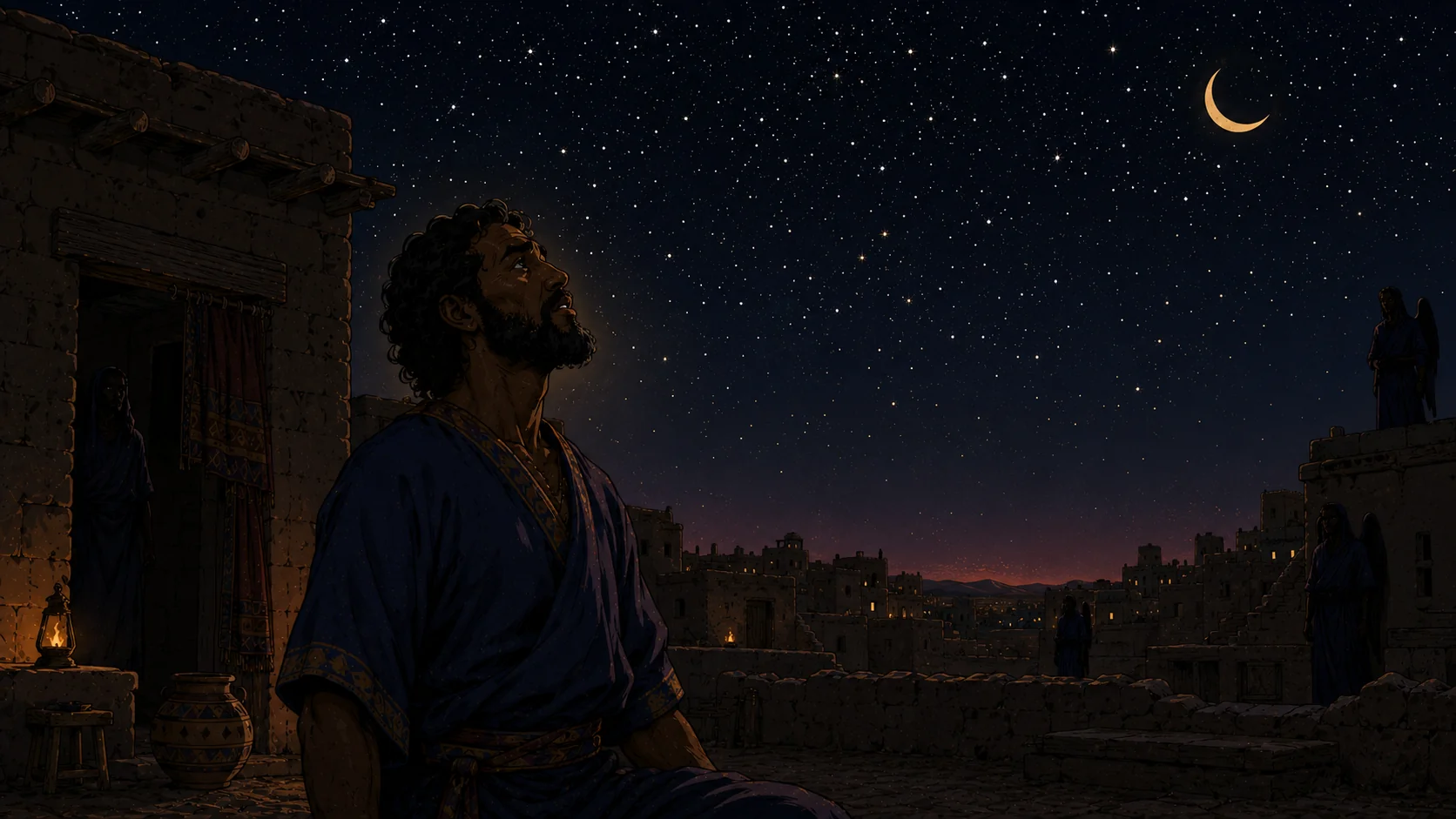
"Go forth from your land, from your birthplace, from your father's house." The most consequential two words in Genesis. A covenant begins.
View Breakdown →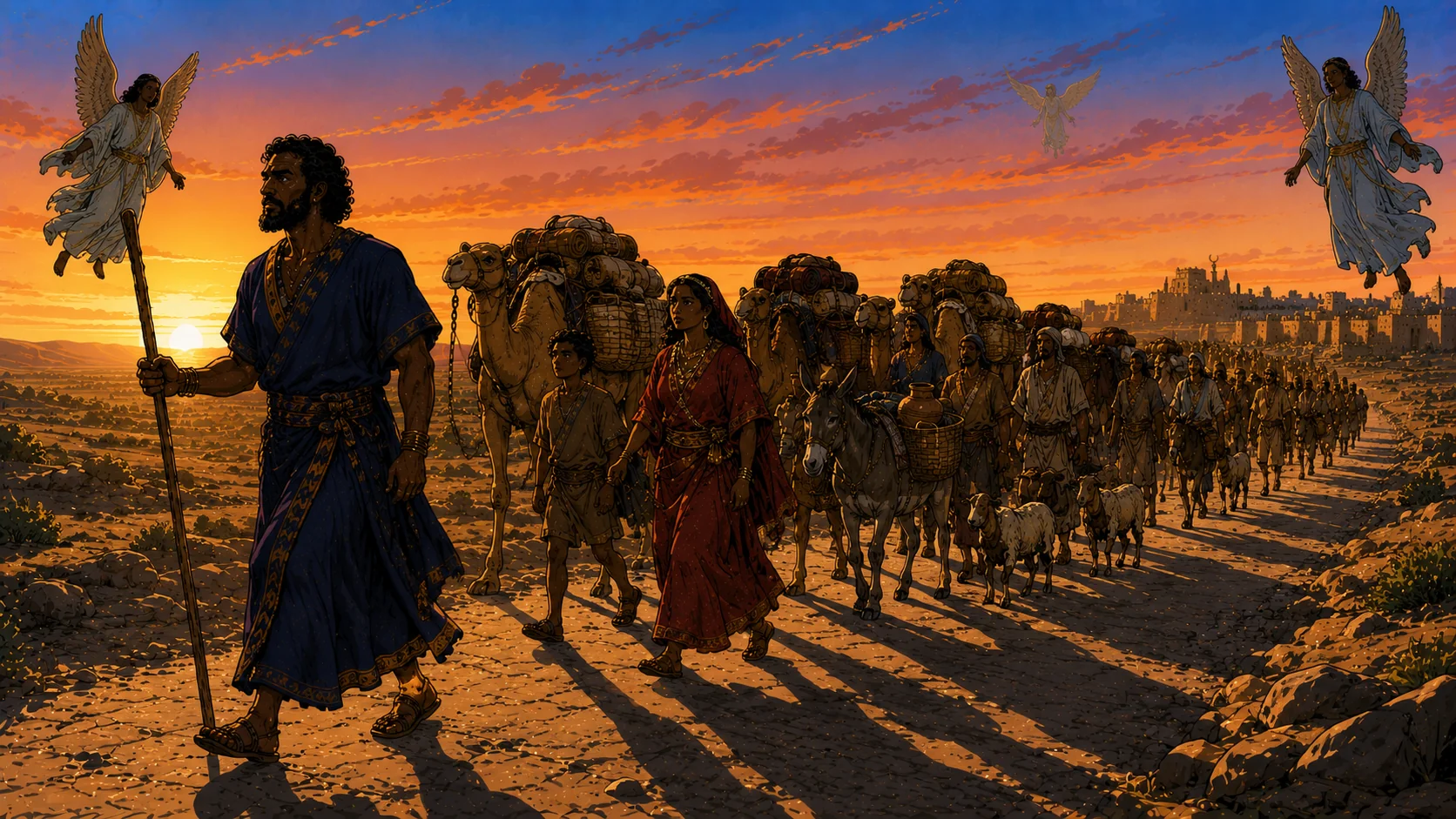
Avram goes — as Yah commanded. He takes Sarai, Lot, all they had gathered, and the souls they had made in Haran. Canaan lies ahead.
View Breakdown →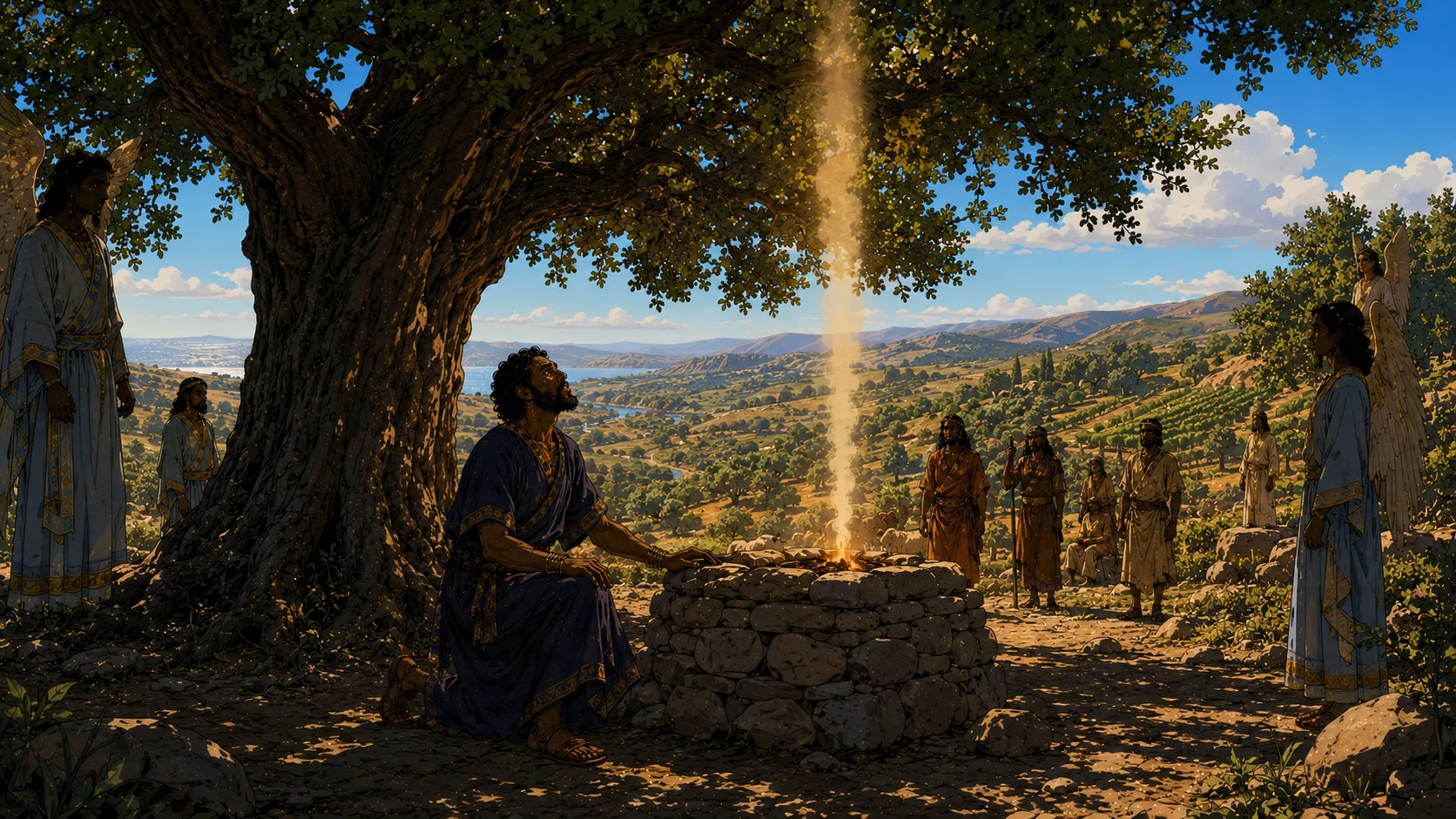
Avram enters Canaan for the first time. Yah appears. "To your seed I will give this land." Avram builds an altar at Shechem — the first in Canaan.
View Breakdown →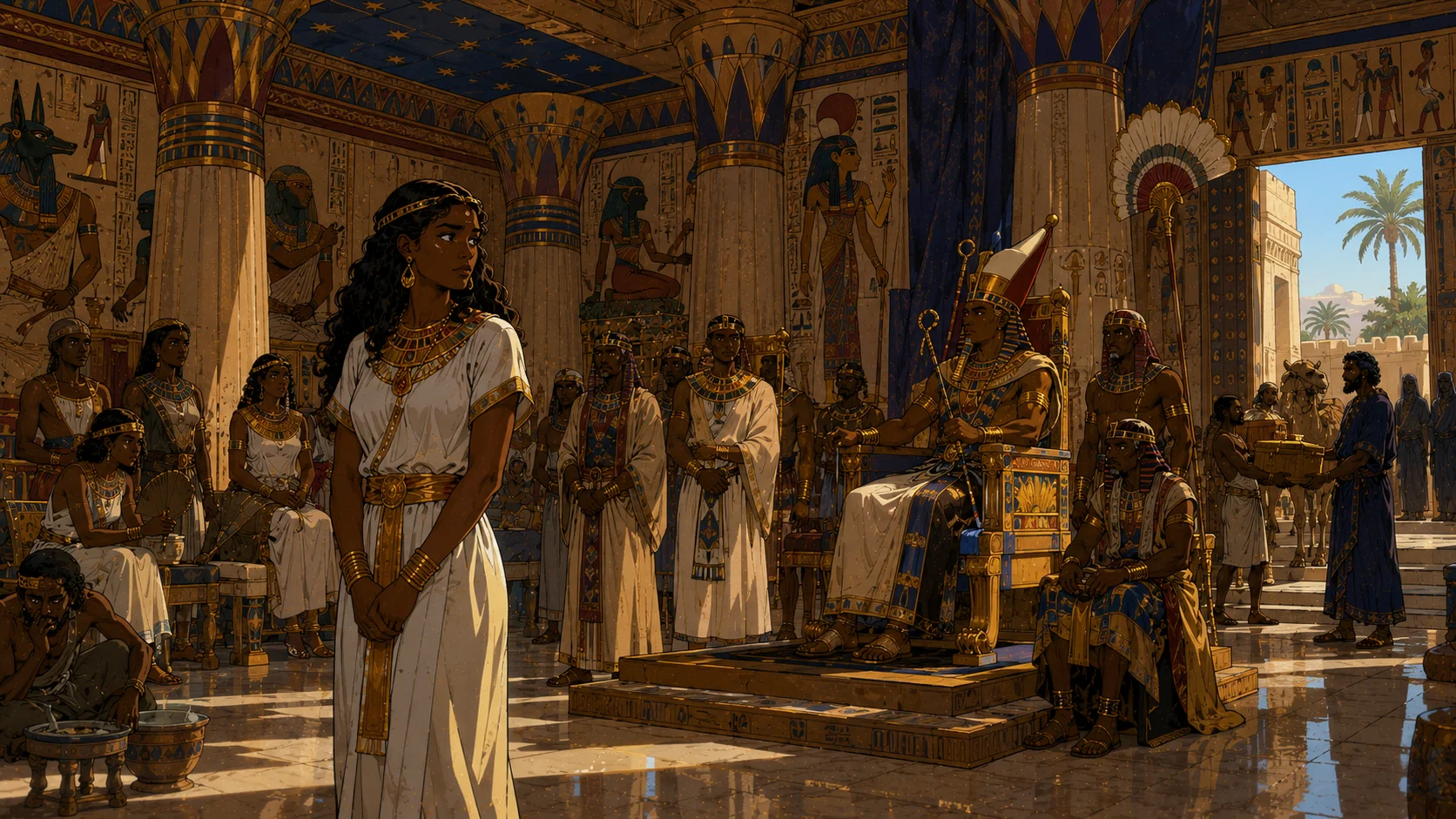
Famine drives Avram to Egypt. The Egyptians see Sarai's beauty. She is taken into Pharaoh's house. A pattern begins that will echo through generations.
View Breakdown →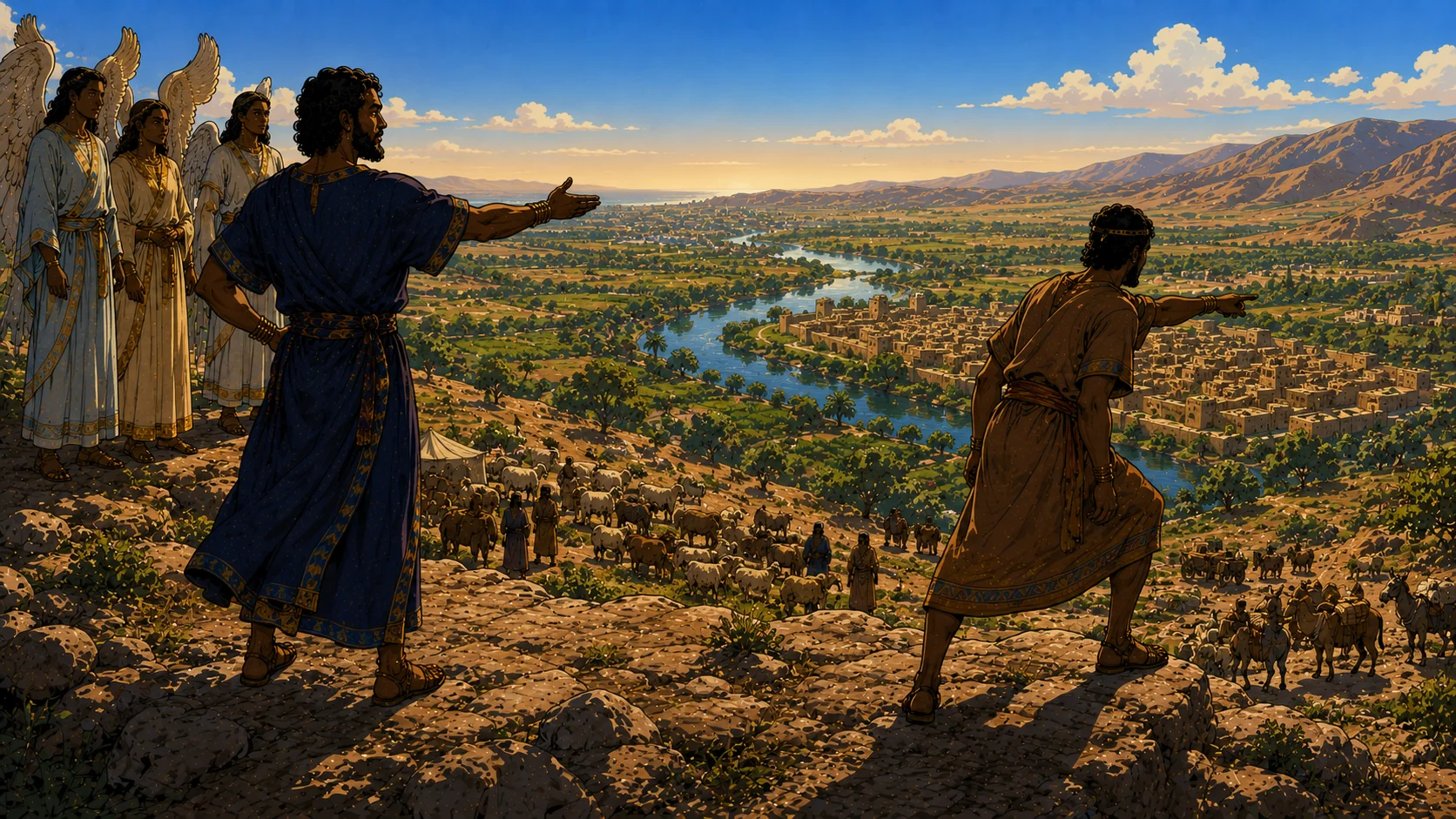
"Please separate from me." The covenant household divides. Lot chooses the well-watered plain of Jordan — and pitches his tent toward Sodom.
View Breakdown →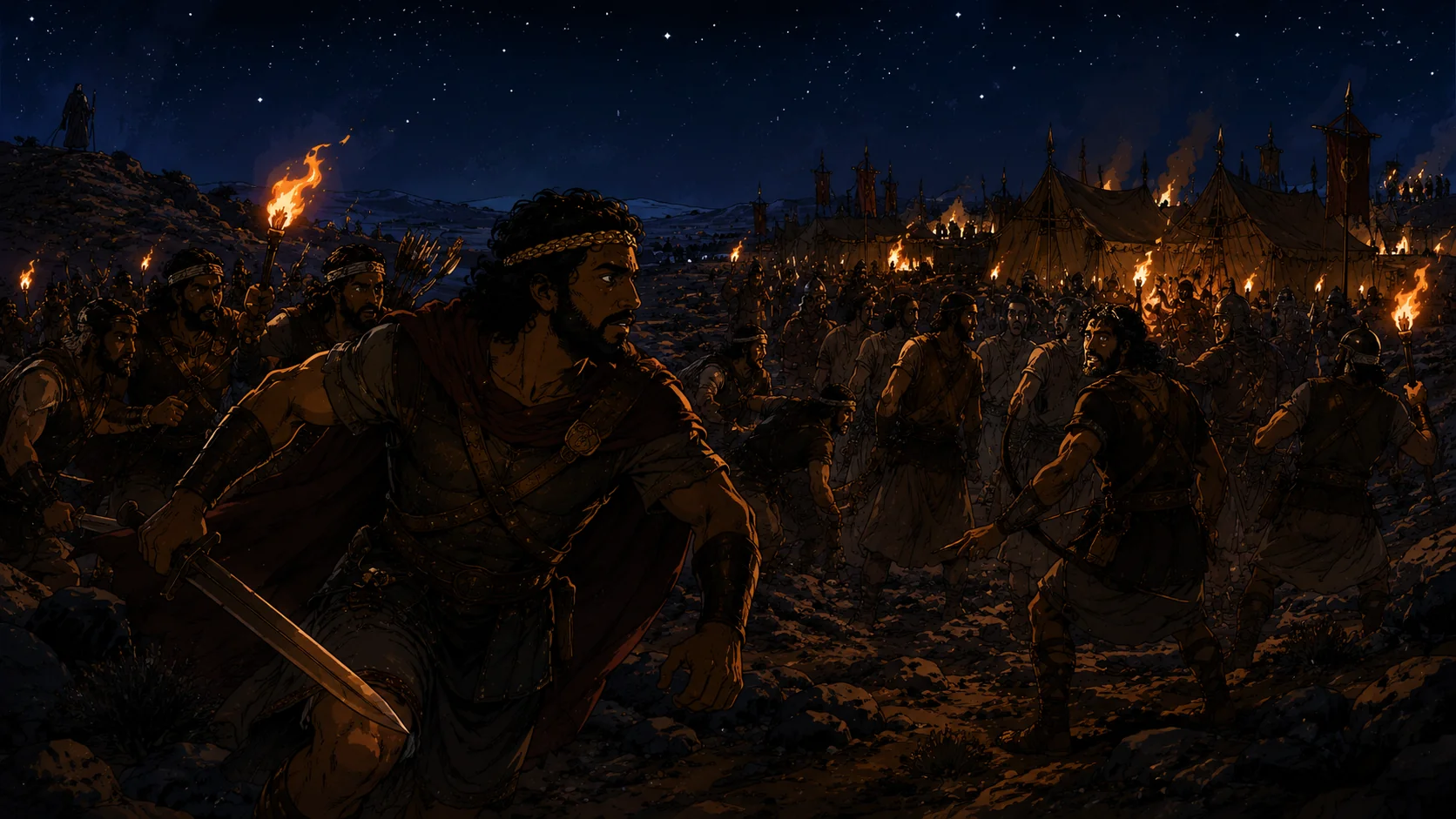
Lot is taken captive. Avram arms 318 trained men born in his household and pursues four kings through the night to rescue his kinsman.
View Breakdown →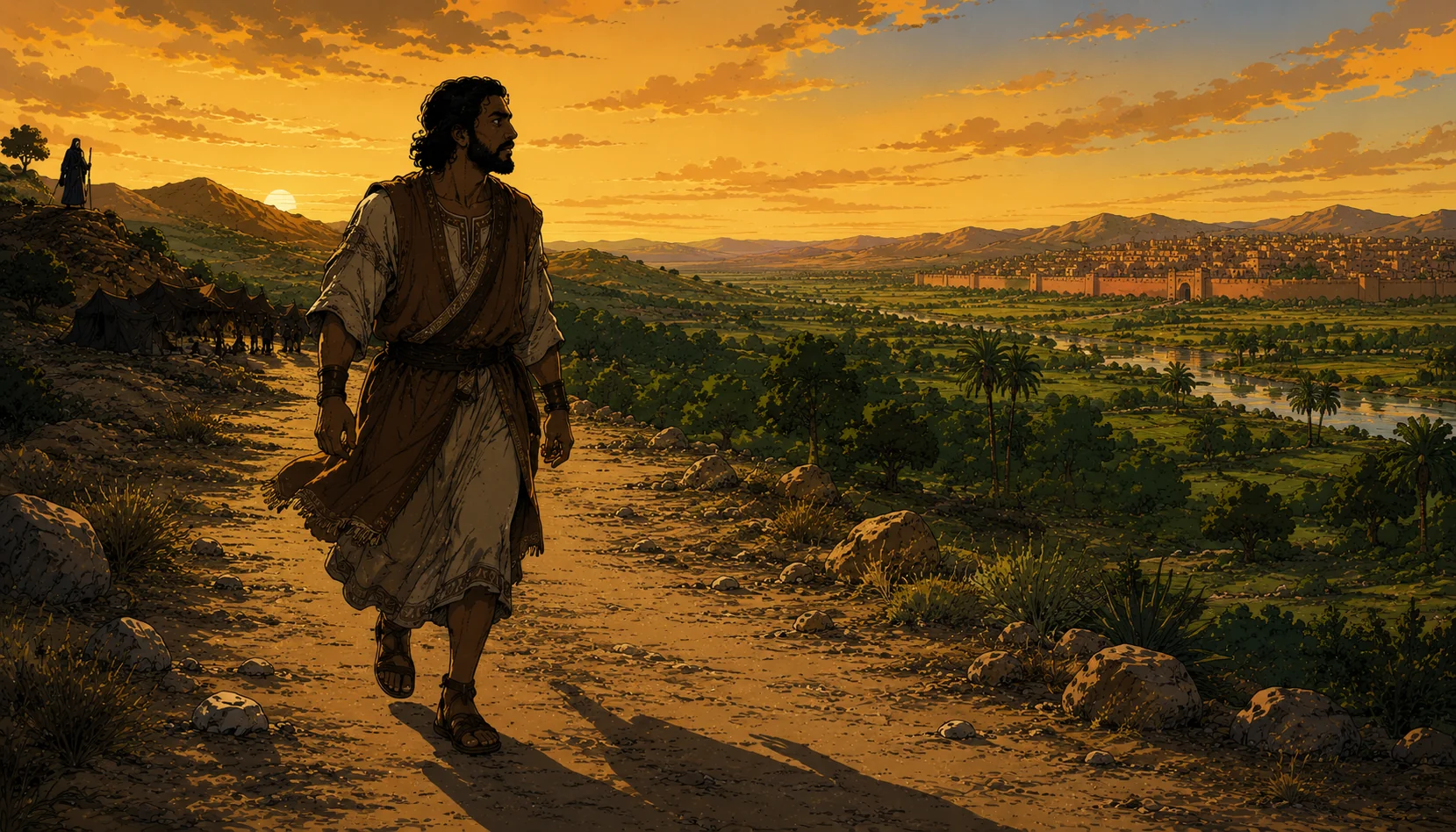
Abraham recovers everything — all the goods, all the captives, and his kinsman Lot. The first military act of a patriarch, in defense of family.
View Breakdown →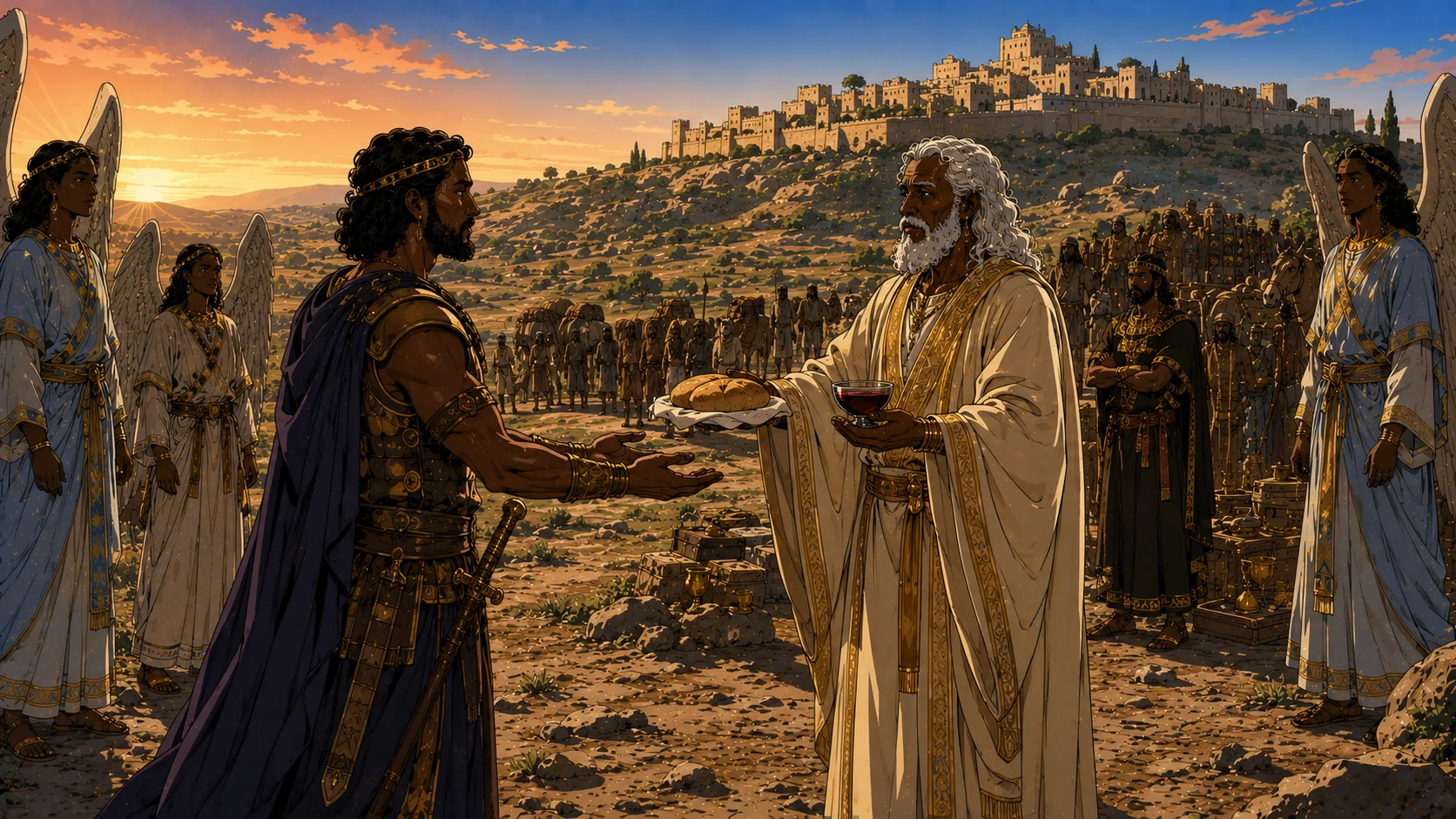
Priest of El Elyon. King of Salem. He brings bread and wine, blesses Avram, and receives a tithe of everything. The most mysterious figure in the Patriarchal narrative.
View Breakdown →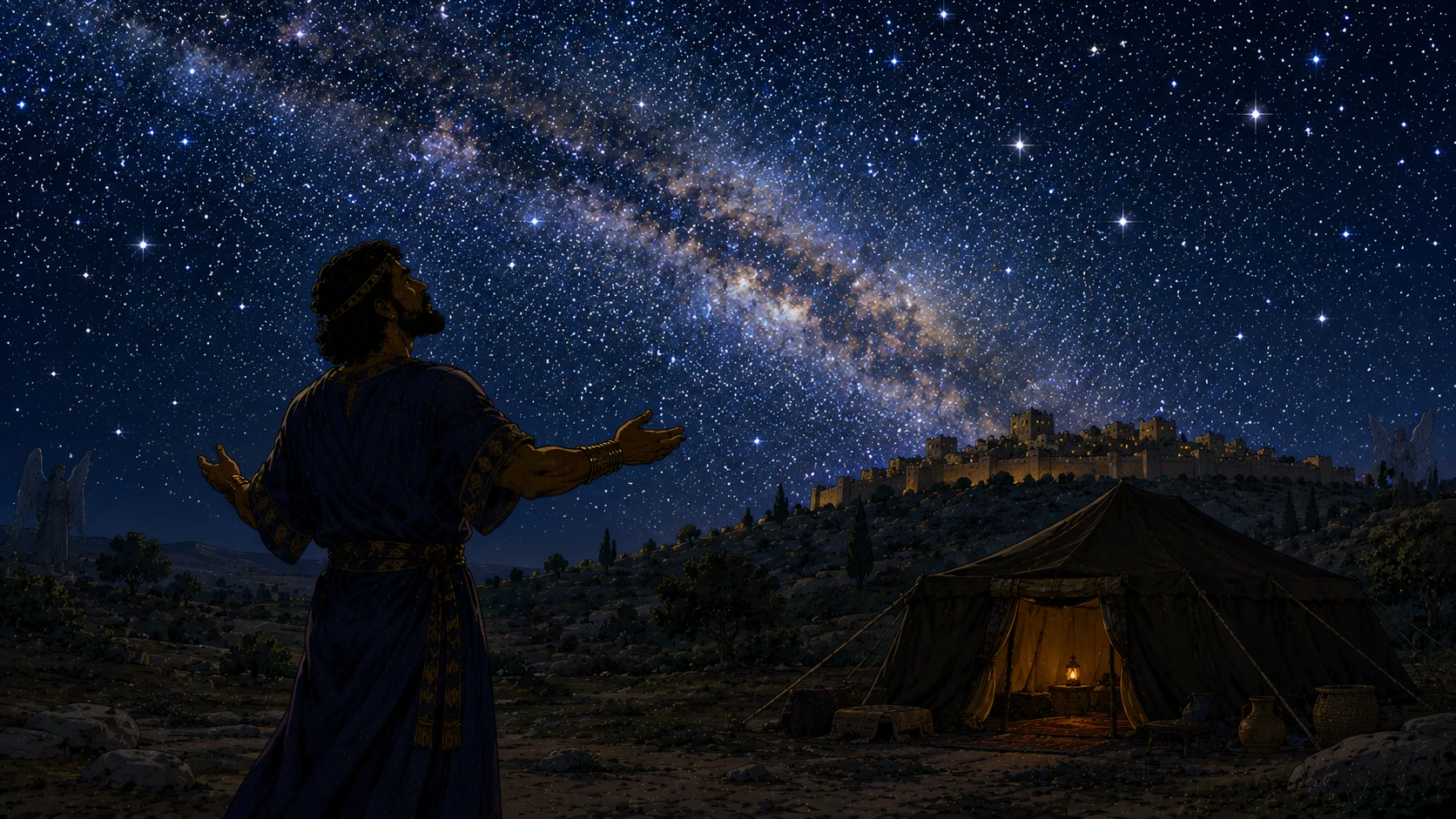
"Do not fear, Avram. I am your shield, your very great reward." The word of Yah comes in a vision. Look at the stars. Count them if you can.
View Breakdown →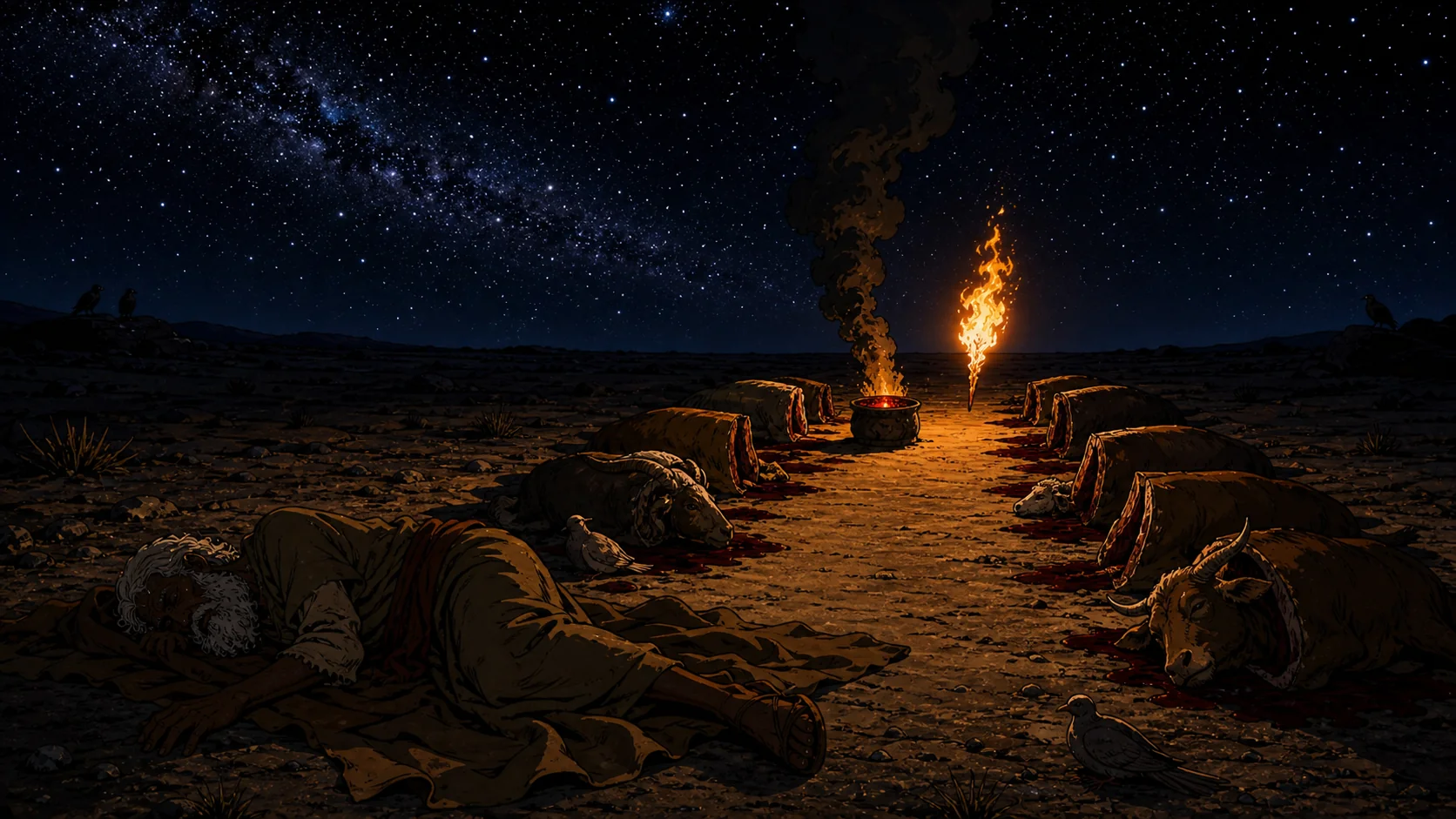
In darkness, a smoking oven and flaming torch pass between the pieces. Elohim seals the covenant with Avraham.
View Breakdown →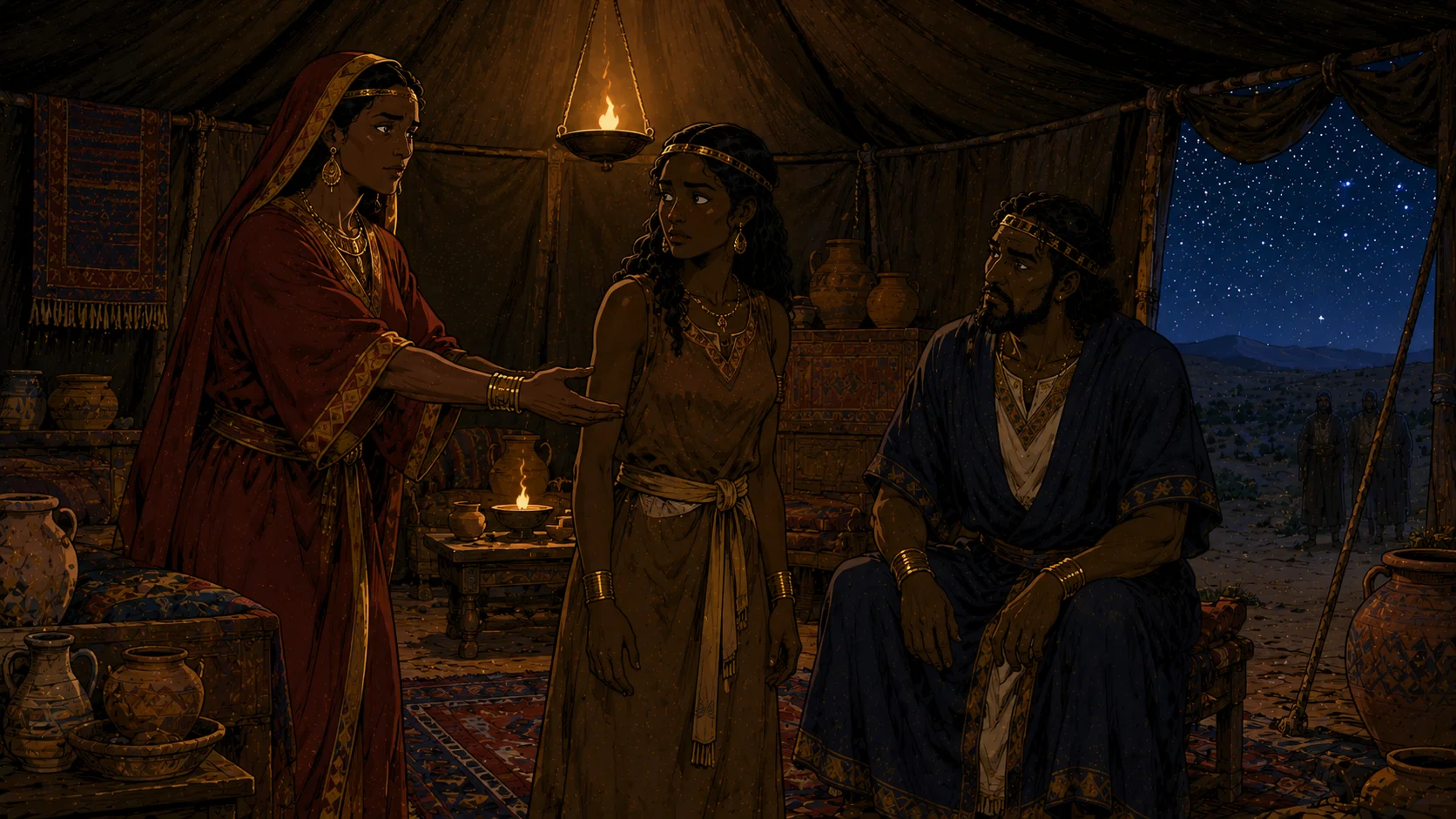
Ten years in Canaan and no child. Sarai gives her Egyptian maidservant Hagar to Avram as a wife. A solution that creates a new problem.
View Breakdown →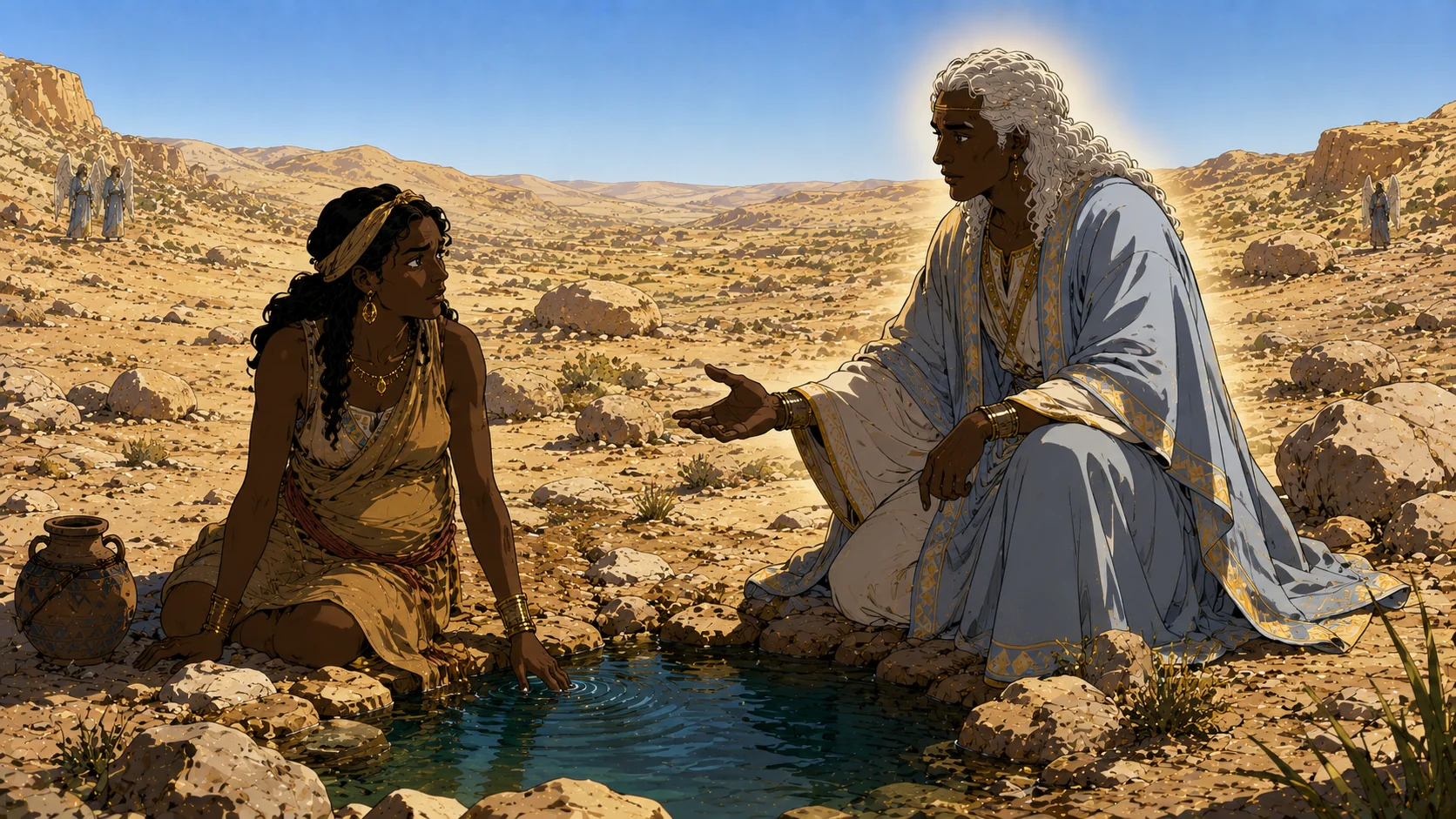
Hagar flees into the wilderness. The Angel of Yah finds her at a spring. "Return and submit." She names Yah: El Roi — the God Who Sees Me.
View Breakdown →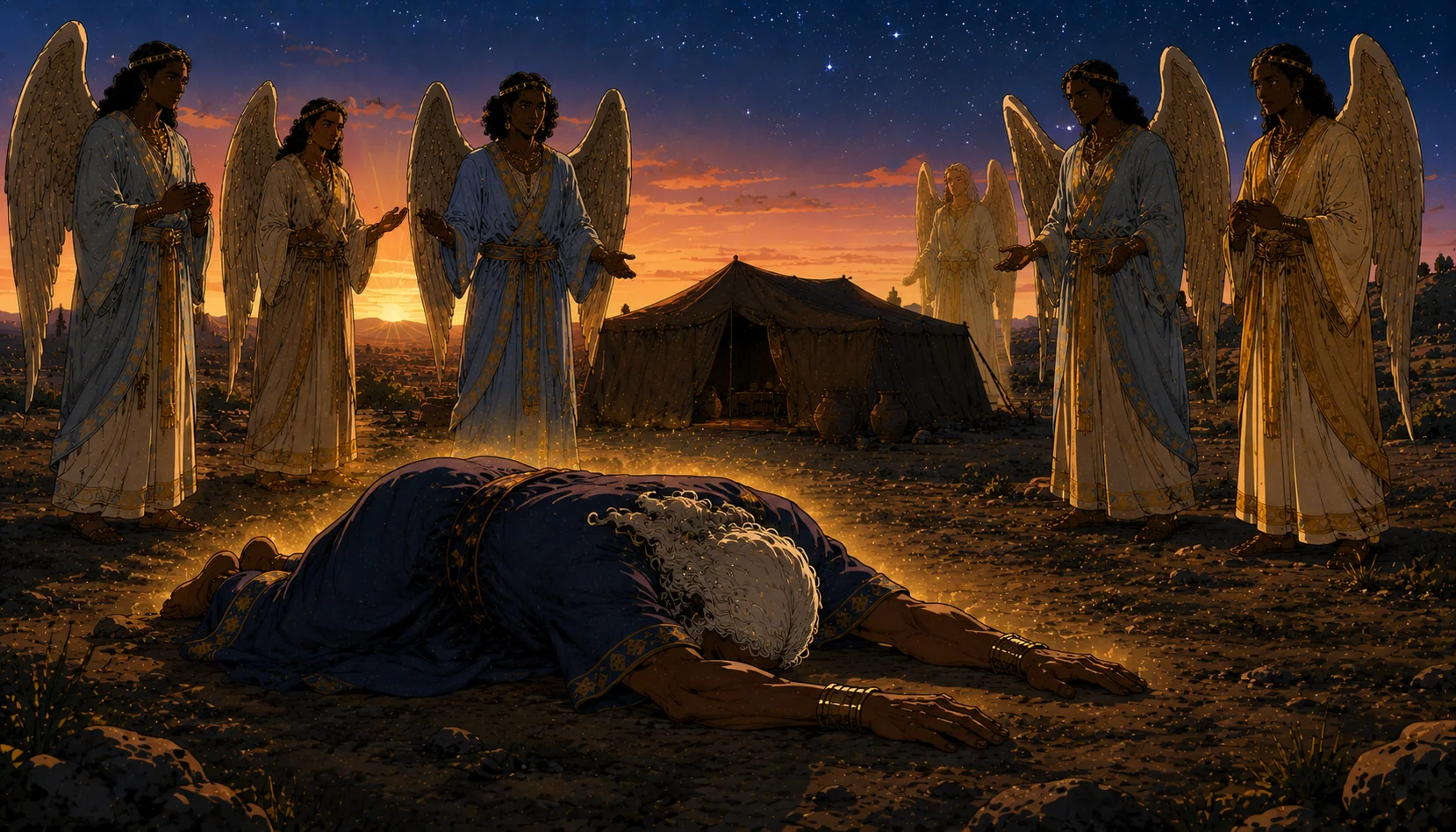
Thirteen years after Ishmael's birth, Yah appears again. A new name. A new sign. "Father of many nations" carved into the very sound of his breath.
View Breakdown →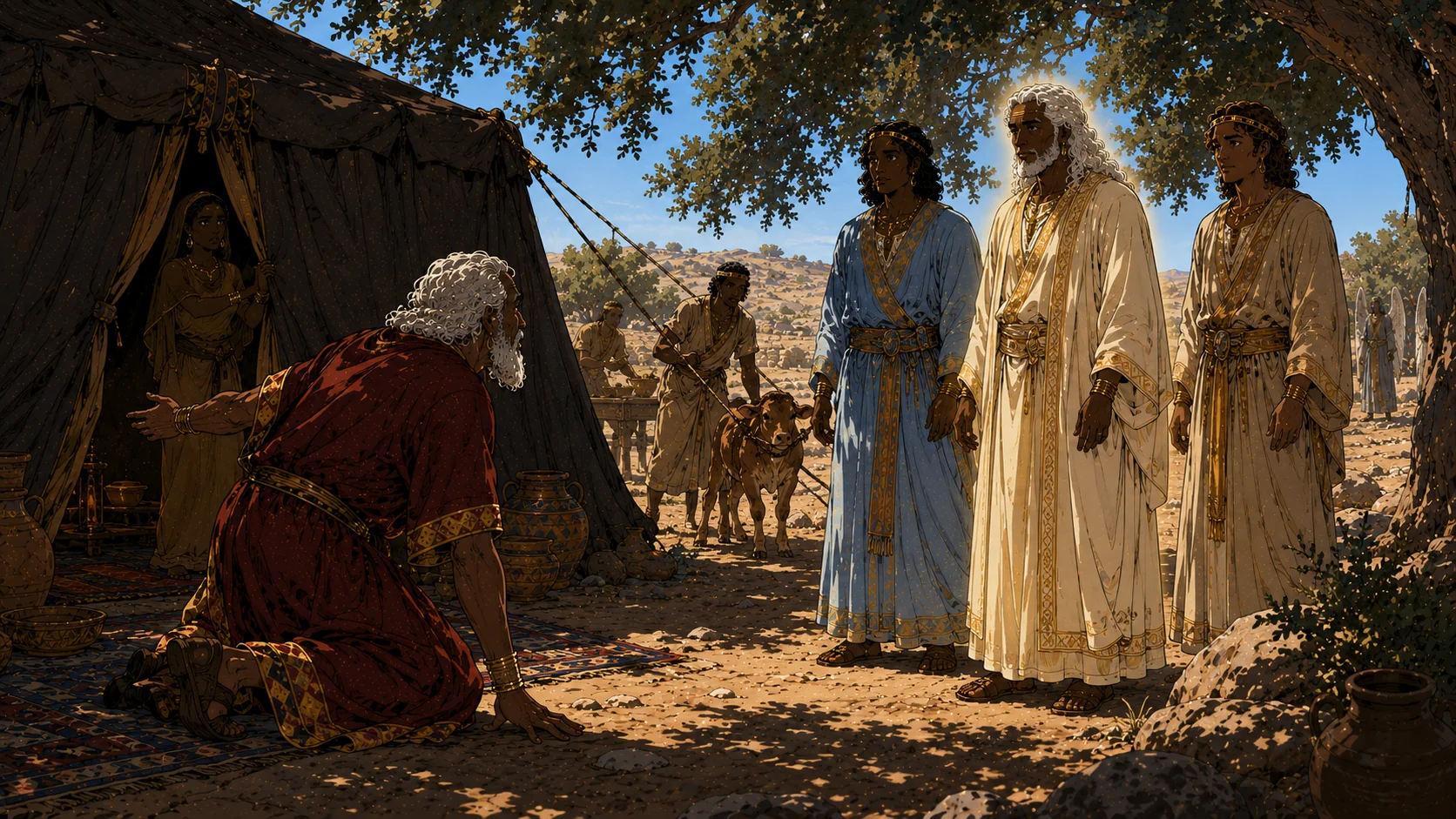
At the heat of the day, three men appear at Avraham's tent. He runs to meet them, bows, and commands a feast. Covenant hospitality — הַכְנָסַת אוֹרְחִים.
View Breakdown →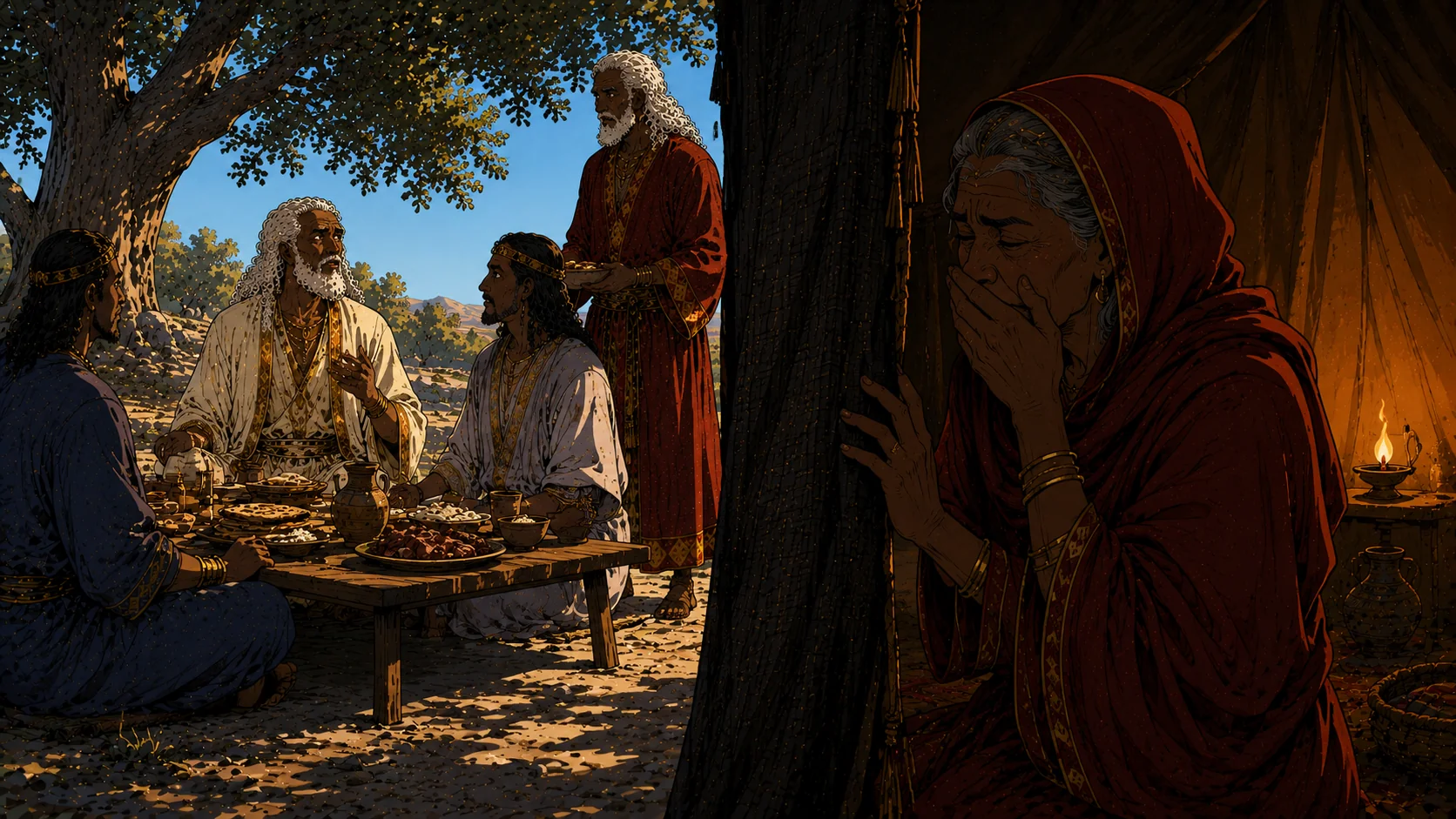
She laughed within herself. The promise seemed impossible. Her laughter becomes her son's name — Yitzchak. He laughs.
View Breakdown →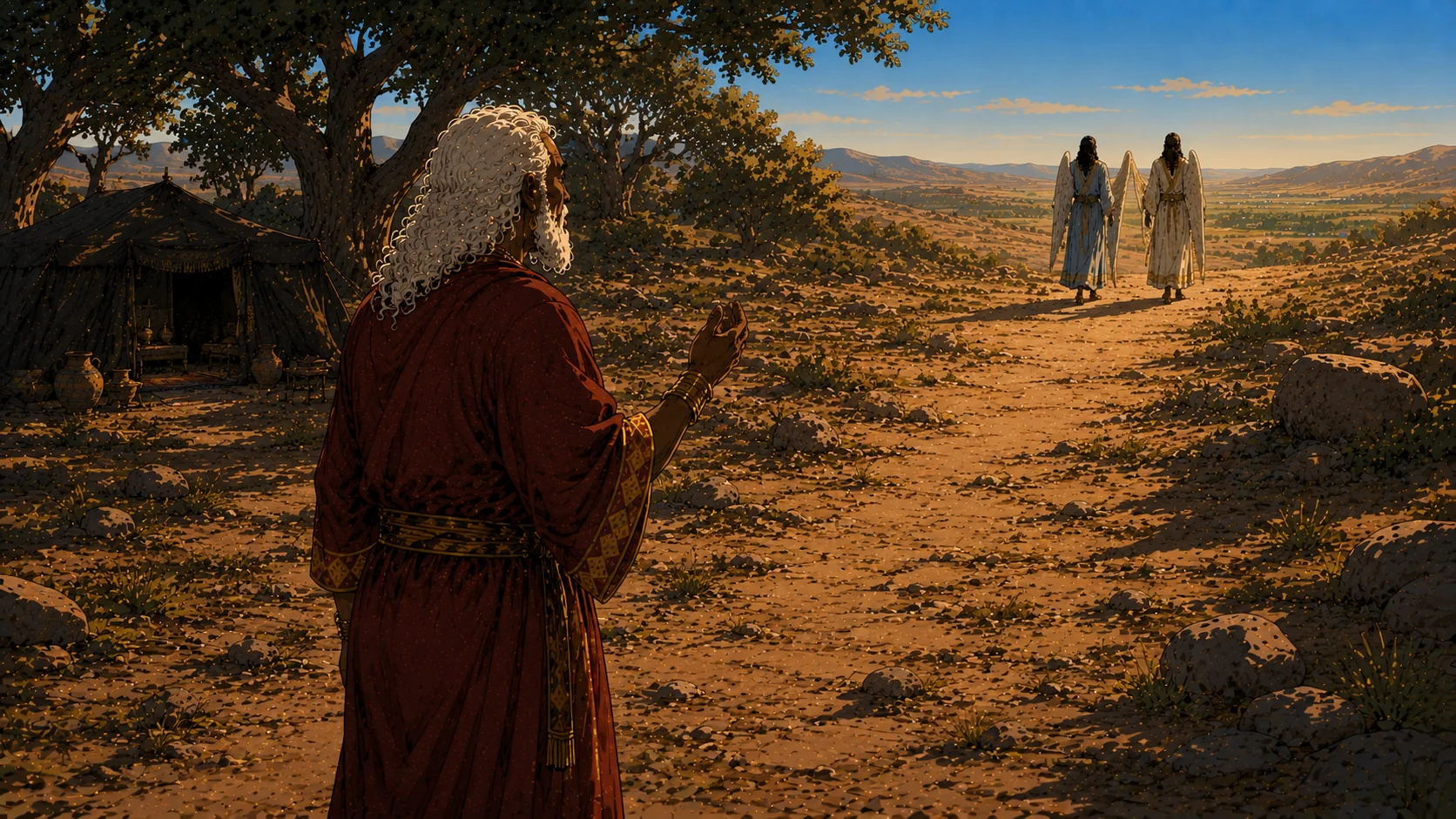
The men turned toward Sodom. Abraham still stood before Yah. The posture of the intercessor — before the negotiation begins.
View Breakdown →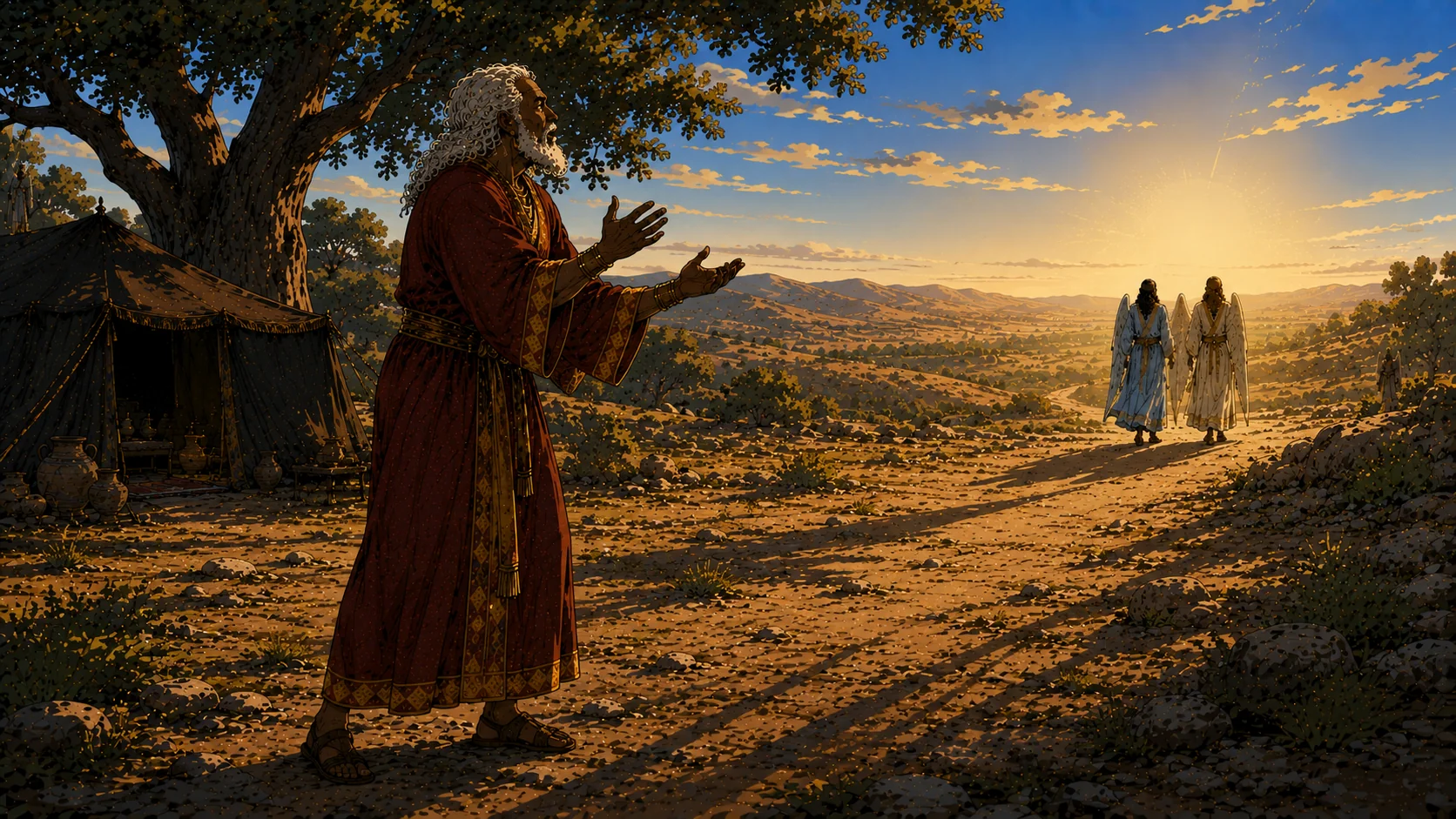
"Will You indeed sweep away the righteous with the wicked?" The boldest prayer in the Patriarchal narratives. A man argues with the Judge of all the earth.
View Breakdown →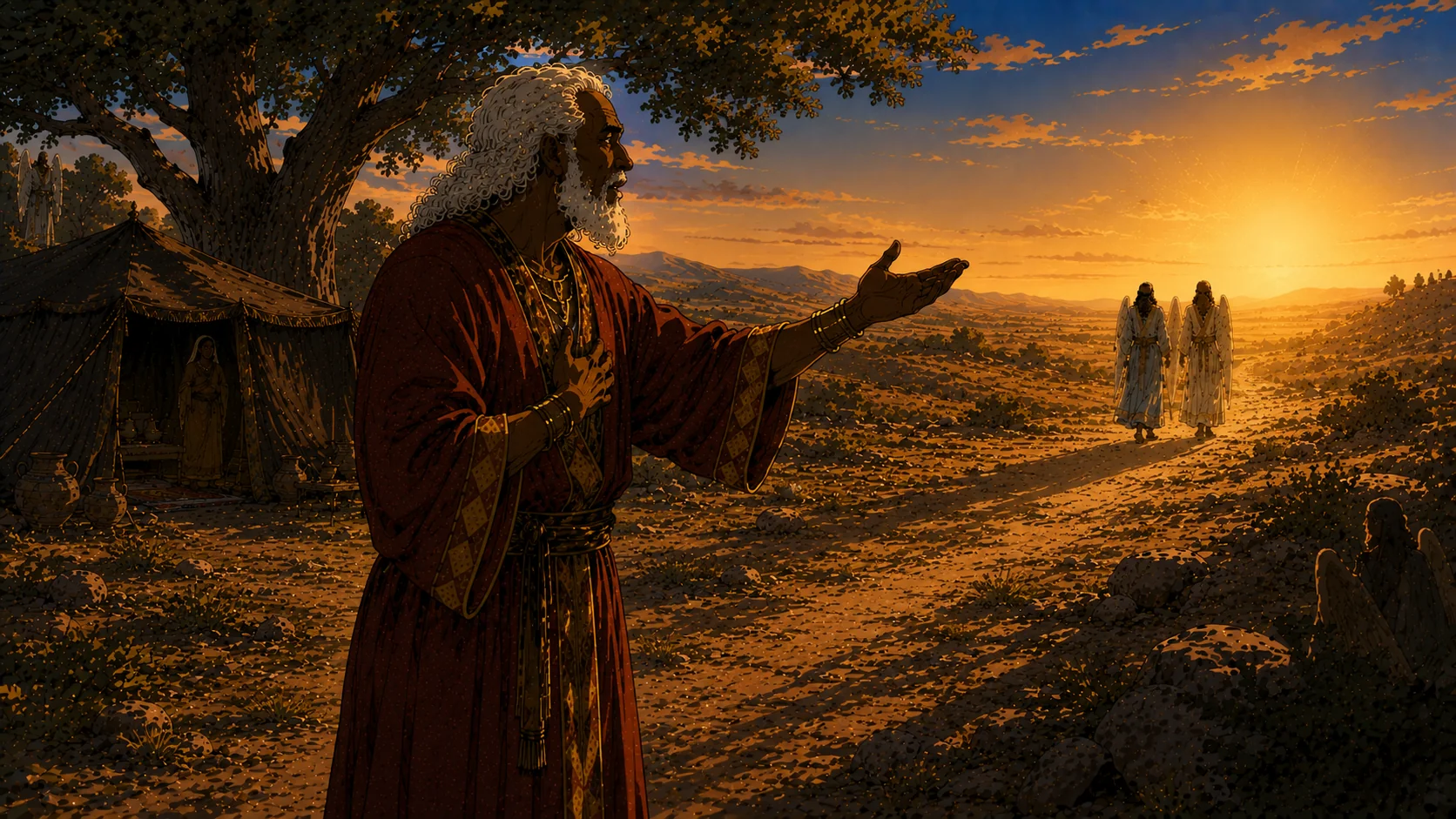
Fifty righteous would save Sodom. Then forty-five. Then forty. The descending negotiation over the fate of a city.
View Breakdown →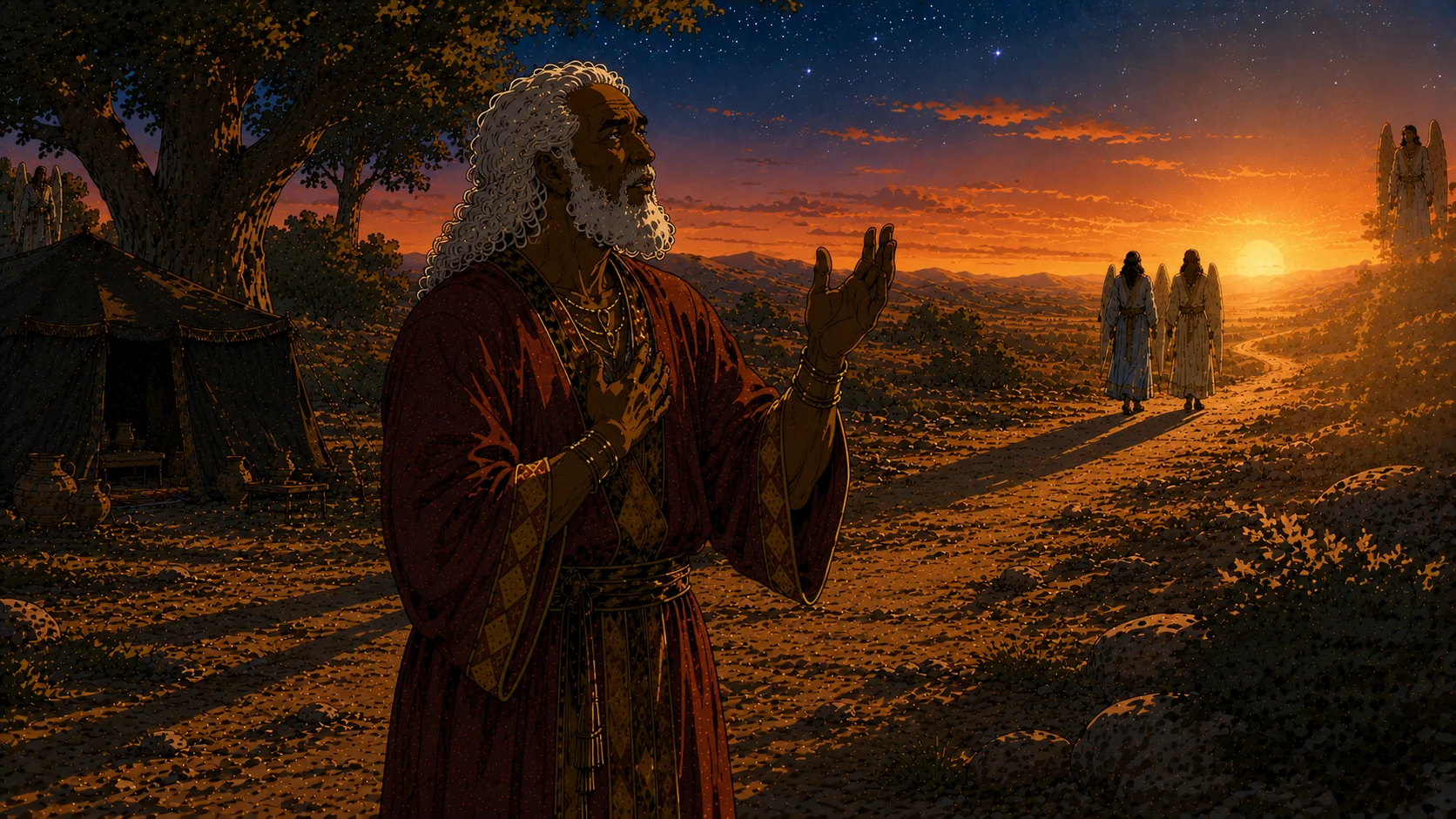
He stops at ten. The minimum quorum of the righteous. Abraham reached the edge of what he could hold in faith — and Sodom fell below even that.
View Breakdown →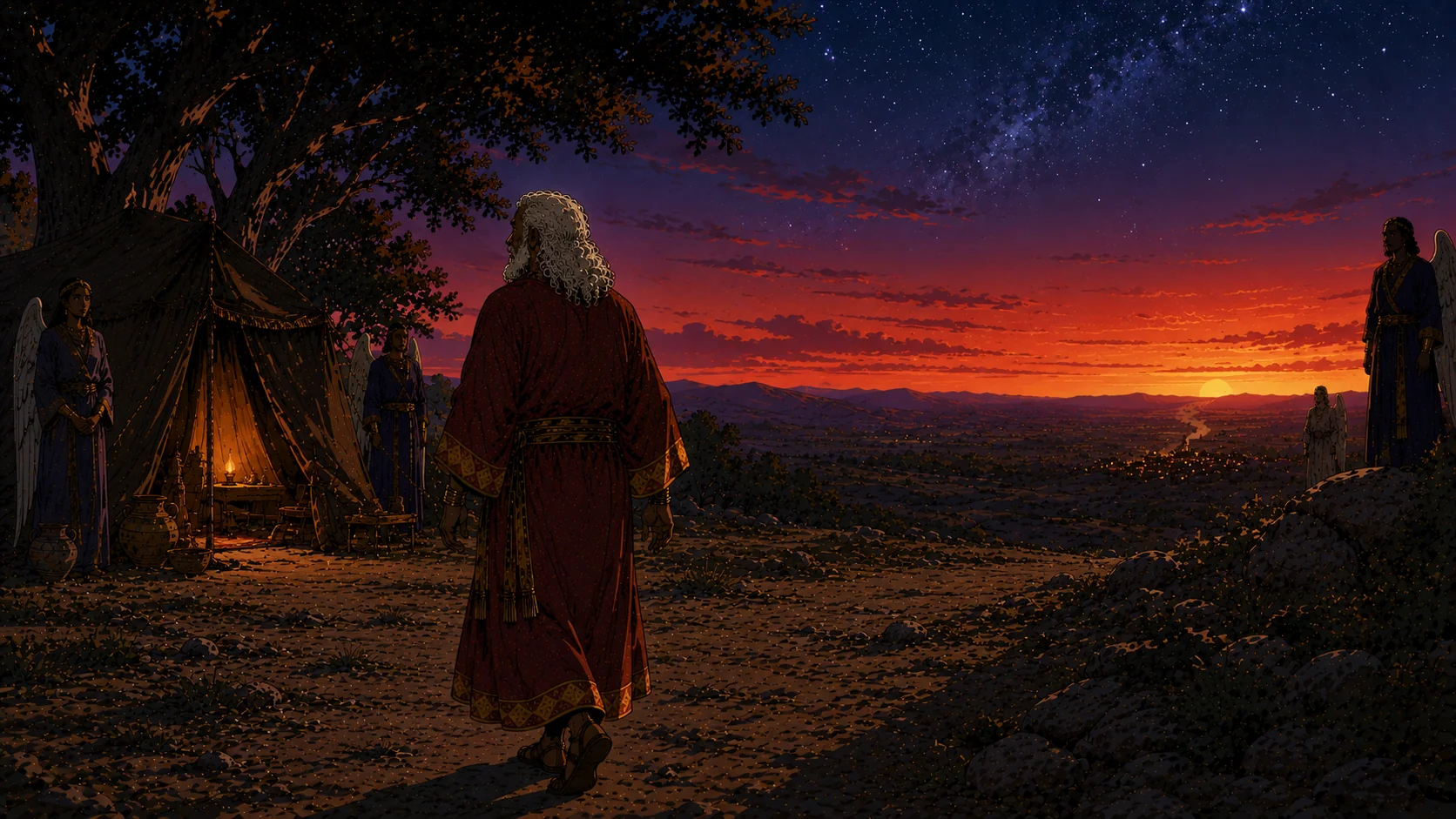
When He had finished speaking, Yah went away. Abraham returned to his place. The intercession is over. The morning will come.
View Breakdown →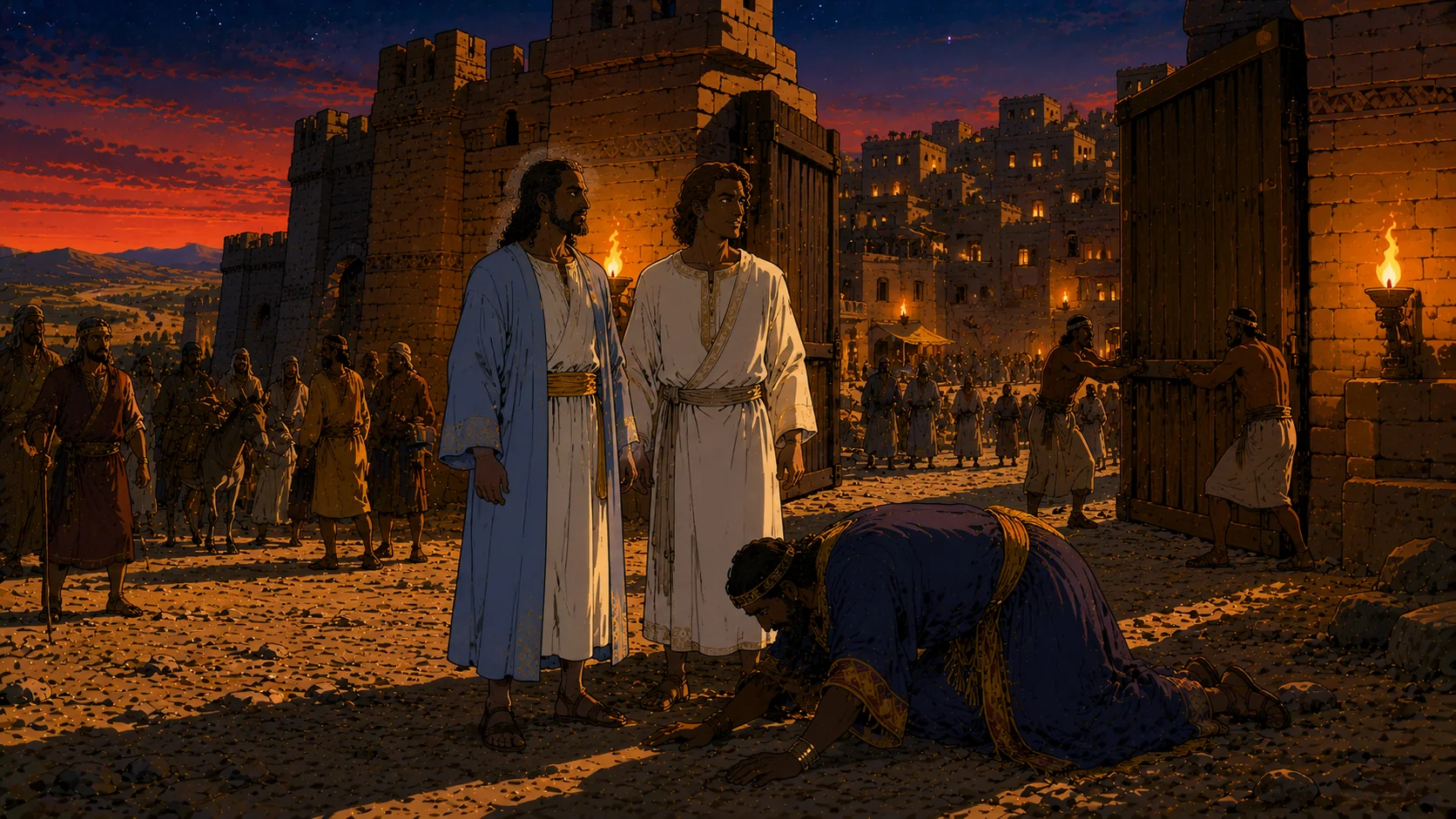
Two angels arrived at Sodom in the evening. Lot was sitting in the gate. The night before the judgment that cannot be prevented has begun.
View Breakdown →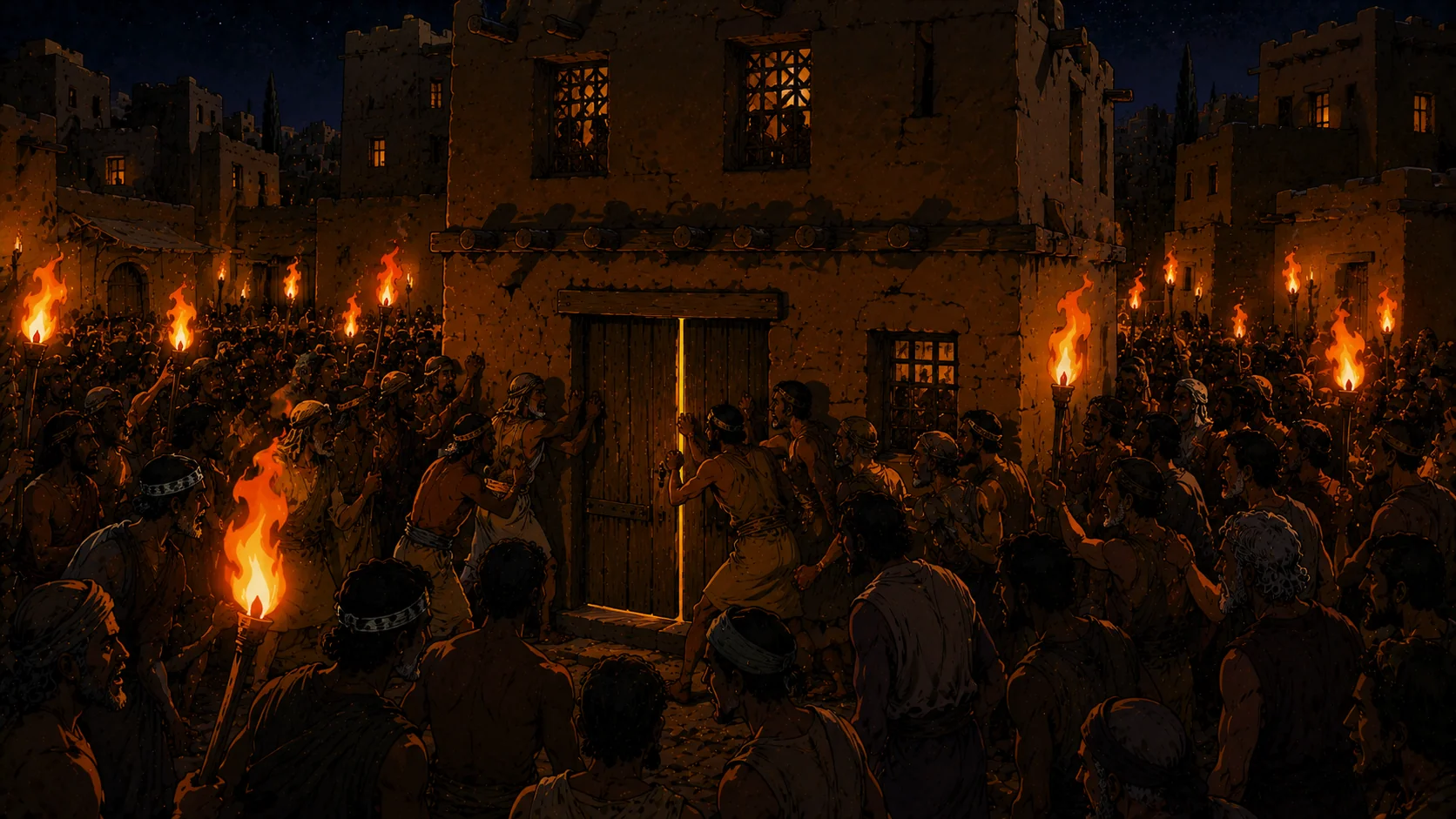
Young and old — all the people from every quarter. A city mobilizing as a unit. Wickedness that does not merely permit evil but organizes around it.
View Breakdown →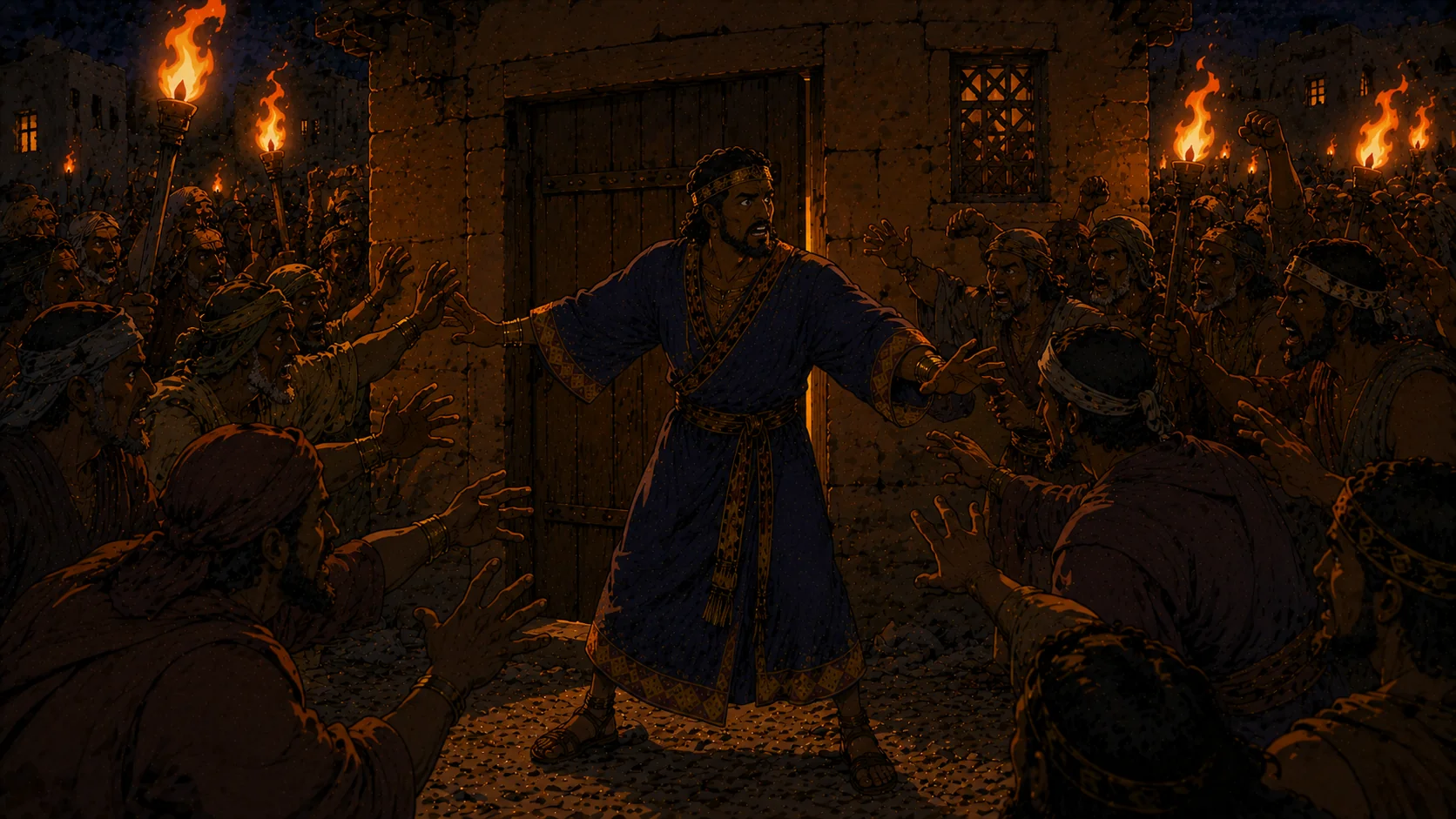
He went out, closed the door behind him, and stood between the angels and the mob. Lot at his most tragic — the hospitality intact, the moral logic broken.
View Breakdown →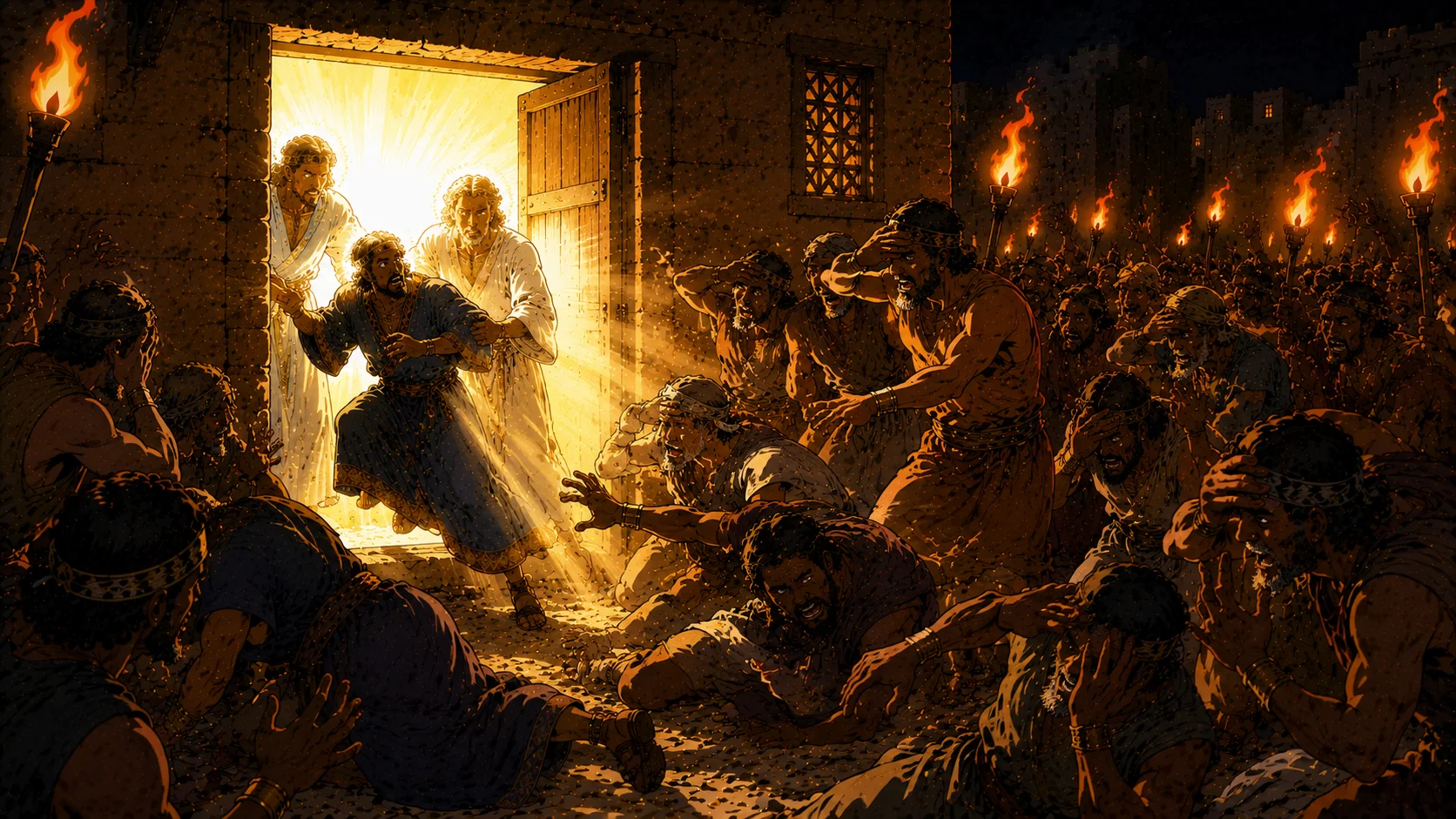
They struck the men of Sodom with blinding radiance. Even blinded, the men wearied themselves finding the door. The malice outlasted the capacity.
View Breakdown →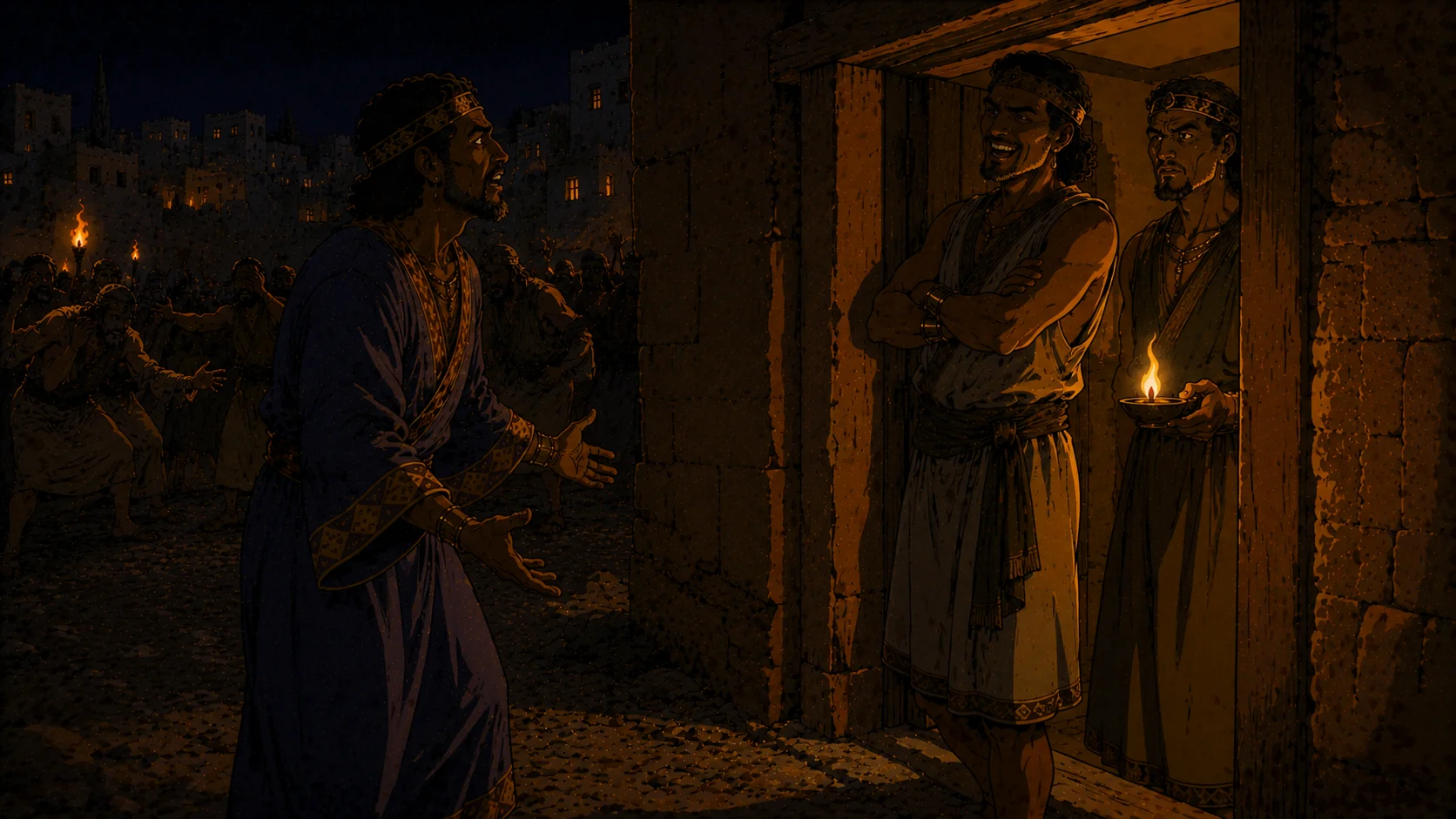
Lot warned his sons-in-law. He seemed to them like one who jests. They laughed. They stayed. The city's familiarity had become its own kind of blindness.
View Breakdown →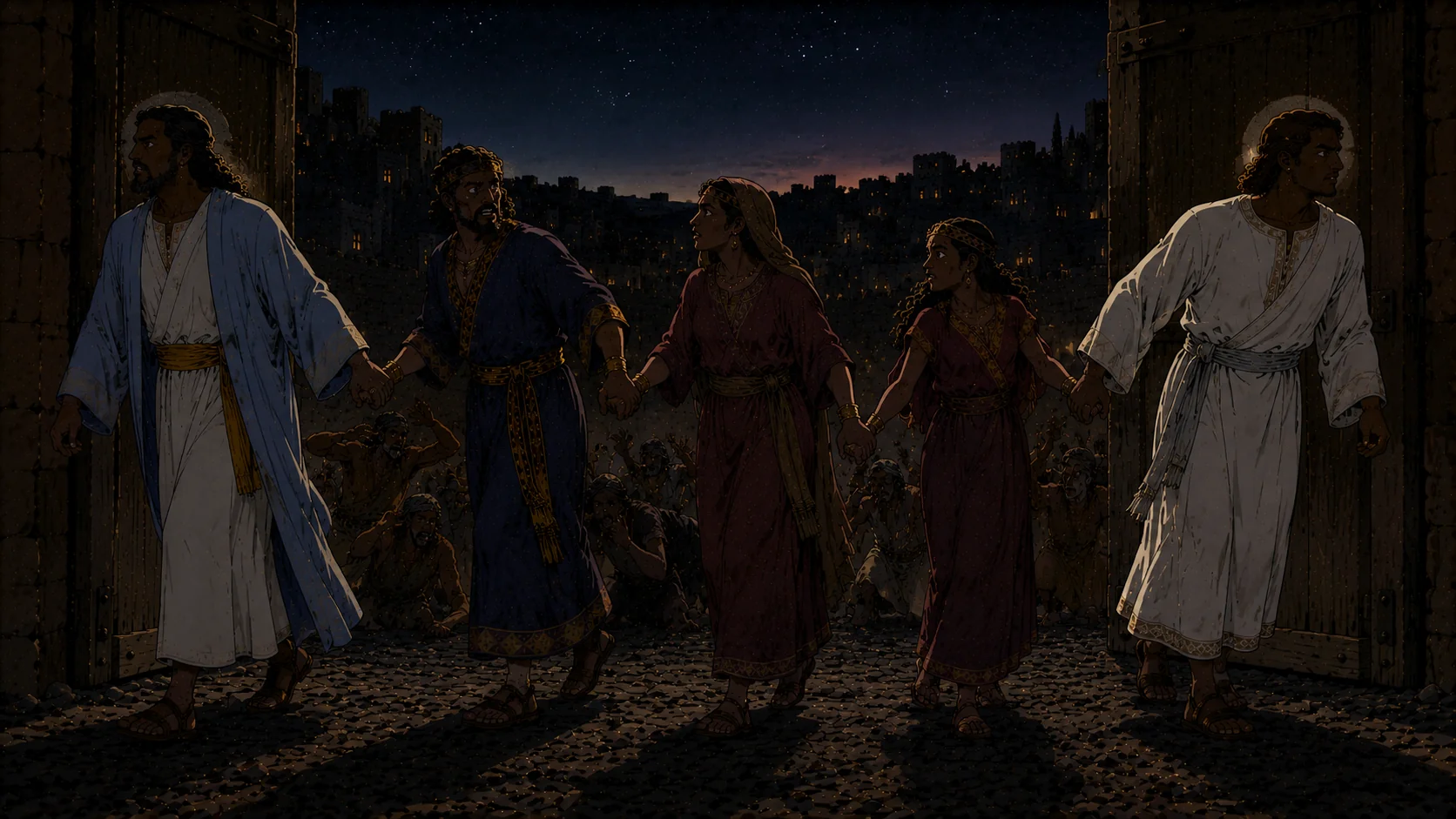
But he lingered. So the angels seized his hand and dragged him out — in the mercy of Yah upon him. He could not save himself. He was pulled to safety.
View Breakdown →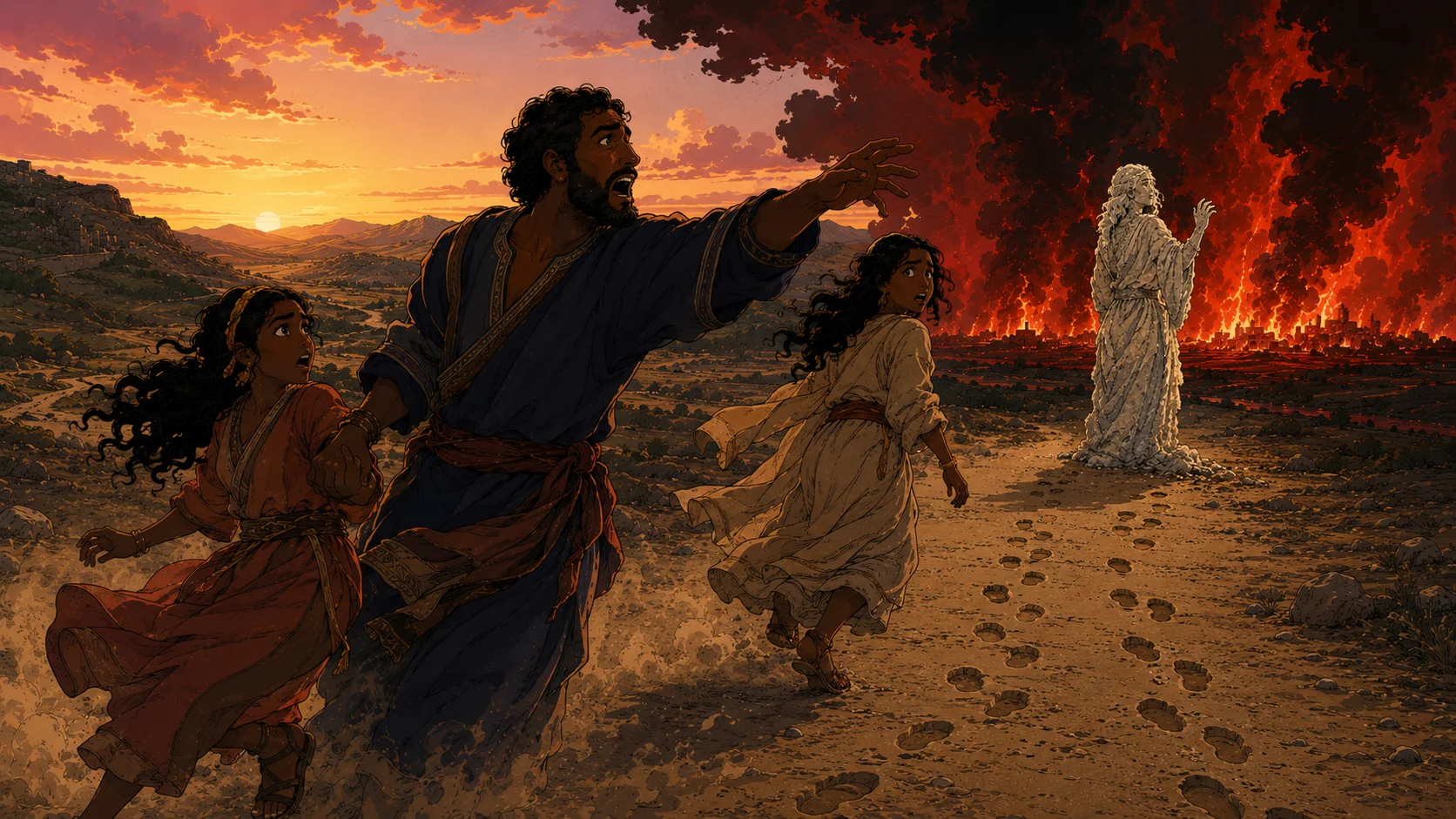
His wife looked back from behind him, and she became a pillar of salt. The most expensive glance in Genesis — three Hebrew words, an eternal monument.
View Breakdown →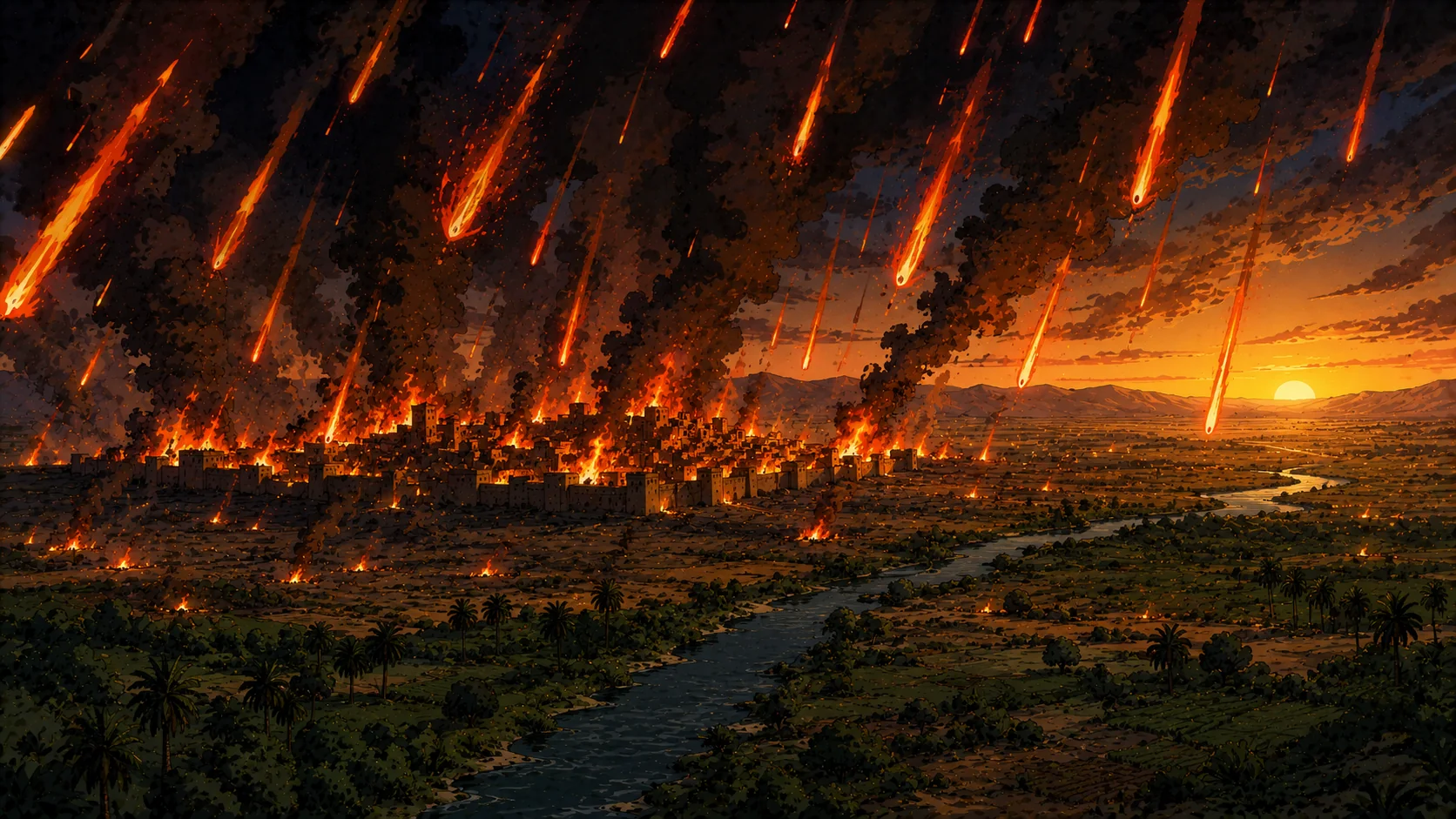
Yah rained sulfur and fire on Sodom and Gomorrah from Yah out of the heavens. He overthrew the cities, the plain, all the inhabitants, and what grew on the ground.
View Breakdown →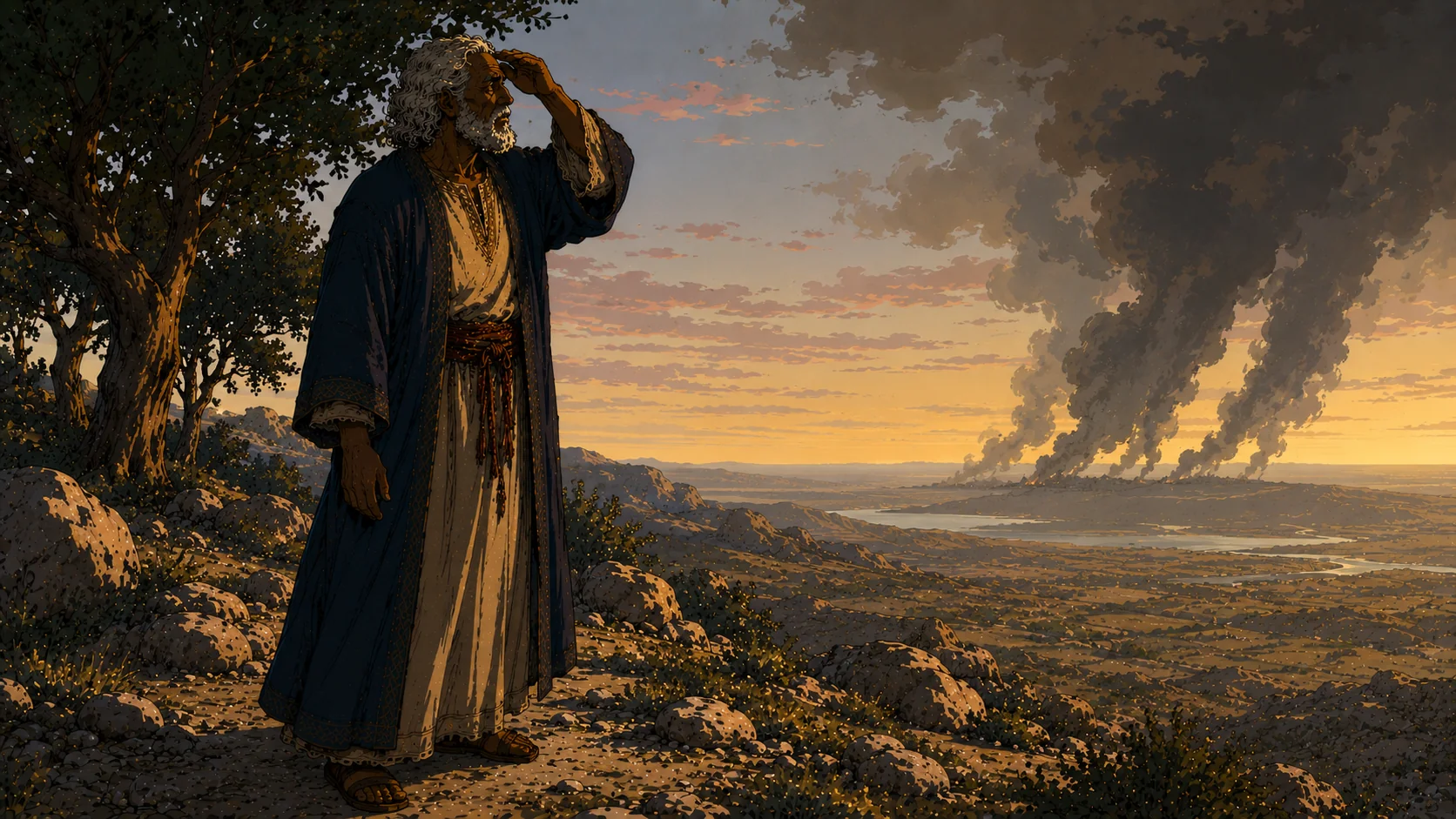
Abraham rose early and returned to the place where he had stood before Yah. He looked toward Sodom — and behold, smoke rising from the land like the smoke of a furnace.
View Breakdown →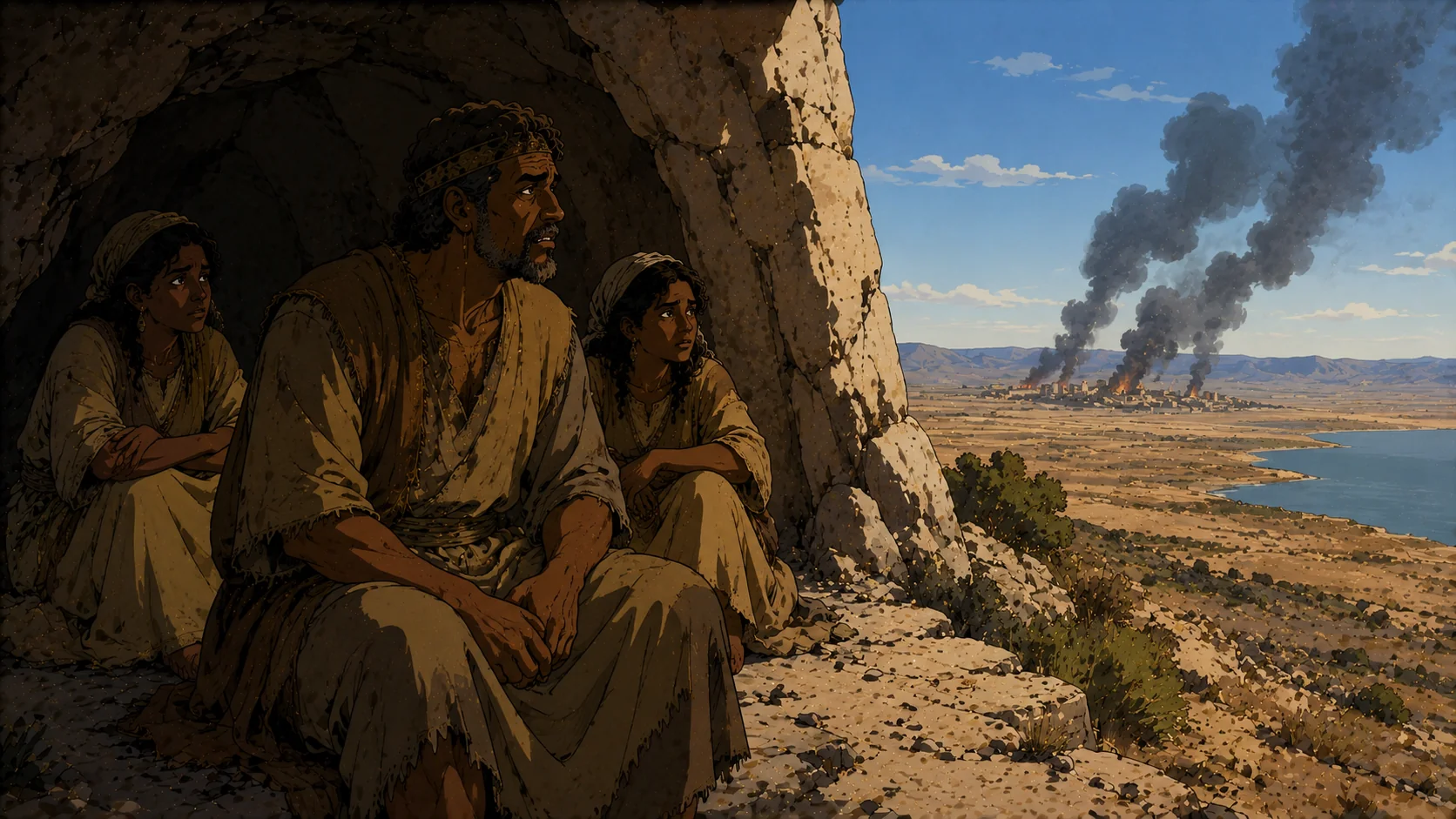
He left Zoar and settled in the hills with his two daughters, afraid to stay in the city. The arc ends where Abraham found him at the beginning: without a household, in a cave.
View Breakdown →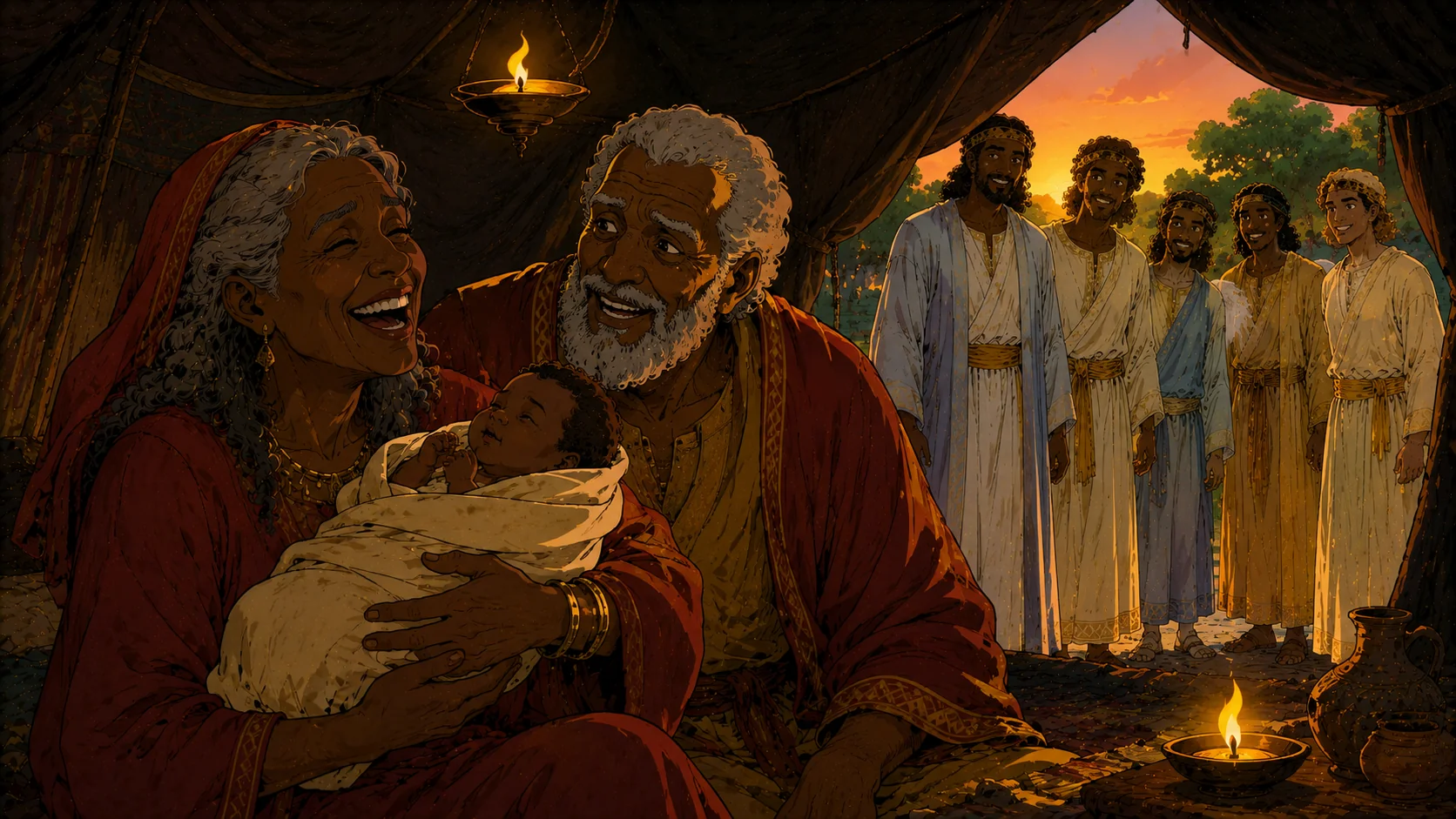
Yah visited Sarah as He had said. Twenty-five years after the promise. The word spoken in Genesis 12 arrives in flesh — and his name holds his mother's laughter.
View Breakdown →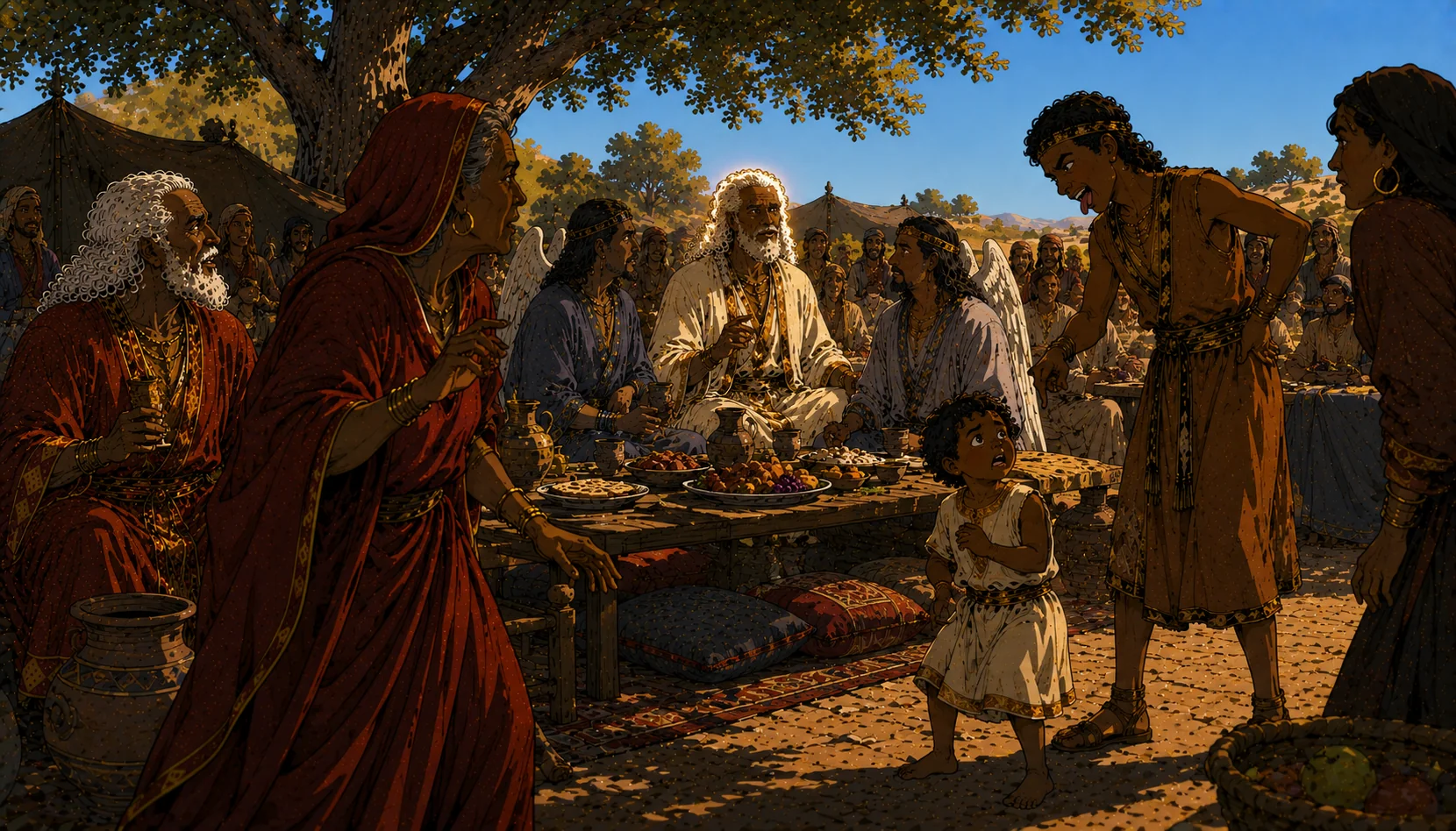
On the day of Isaac's feast, Ishmael is laughing. Sarah sees it. The feast day becomes the day of expulsion. One root — tzachak — divides the two sons.
View Breakdown →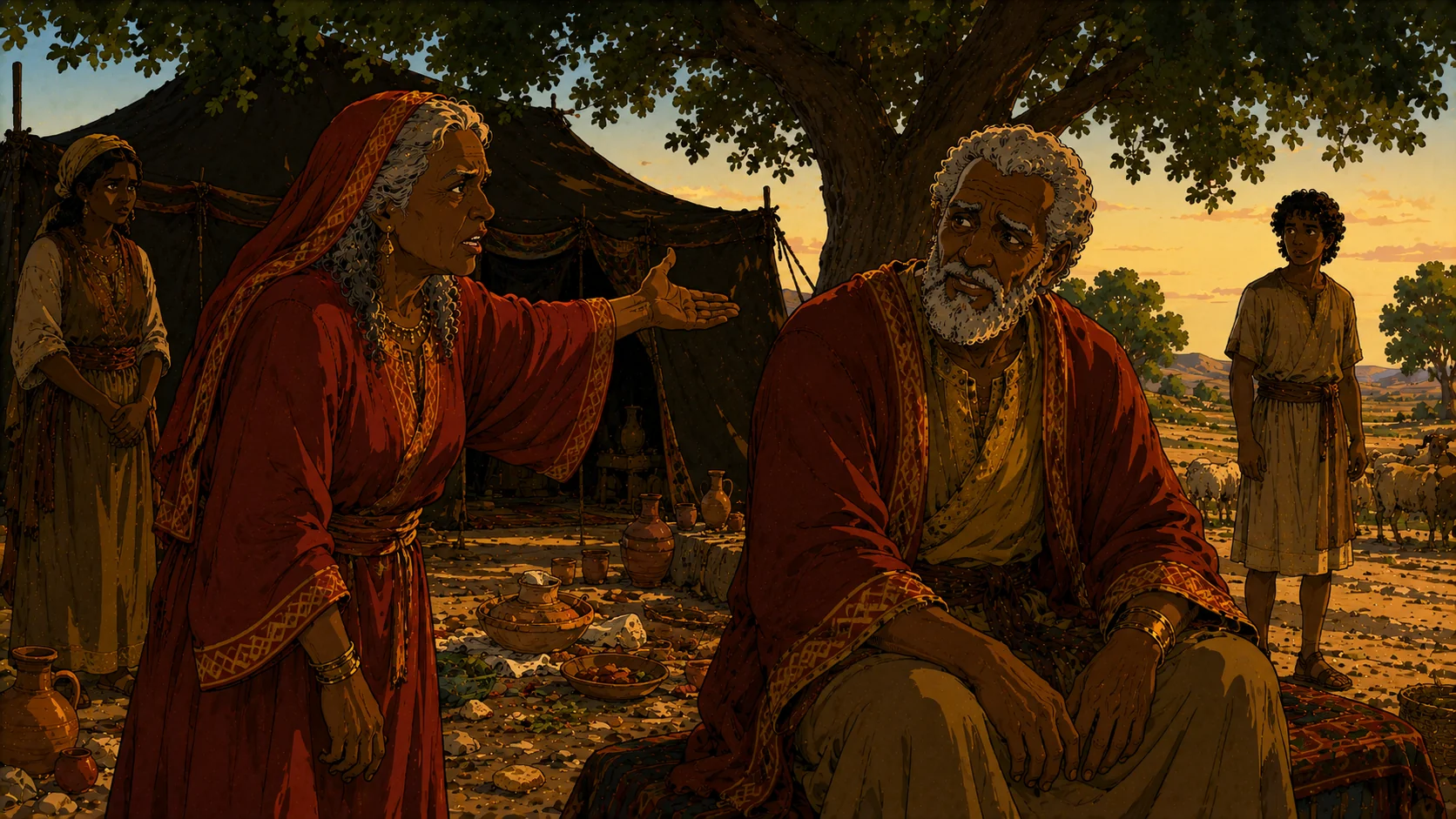
"Expel this slave woman and her son." The same verb used for the expulsion from Eden. Yah confirms the command. Abraham rises early the next morning.
View Breakdown →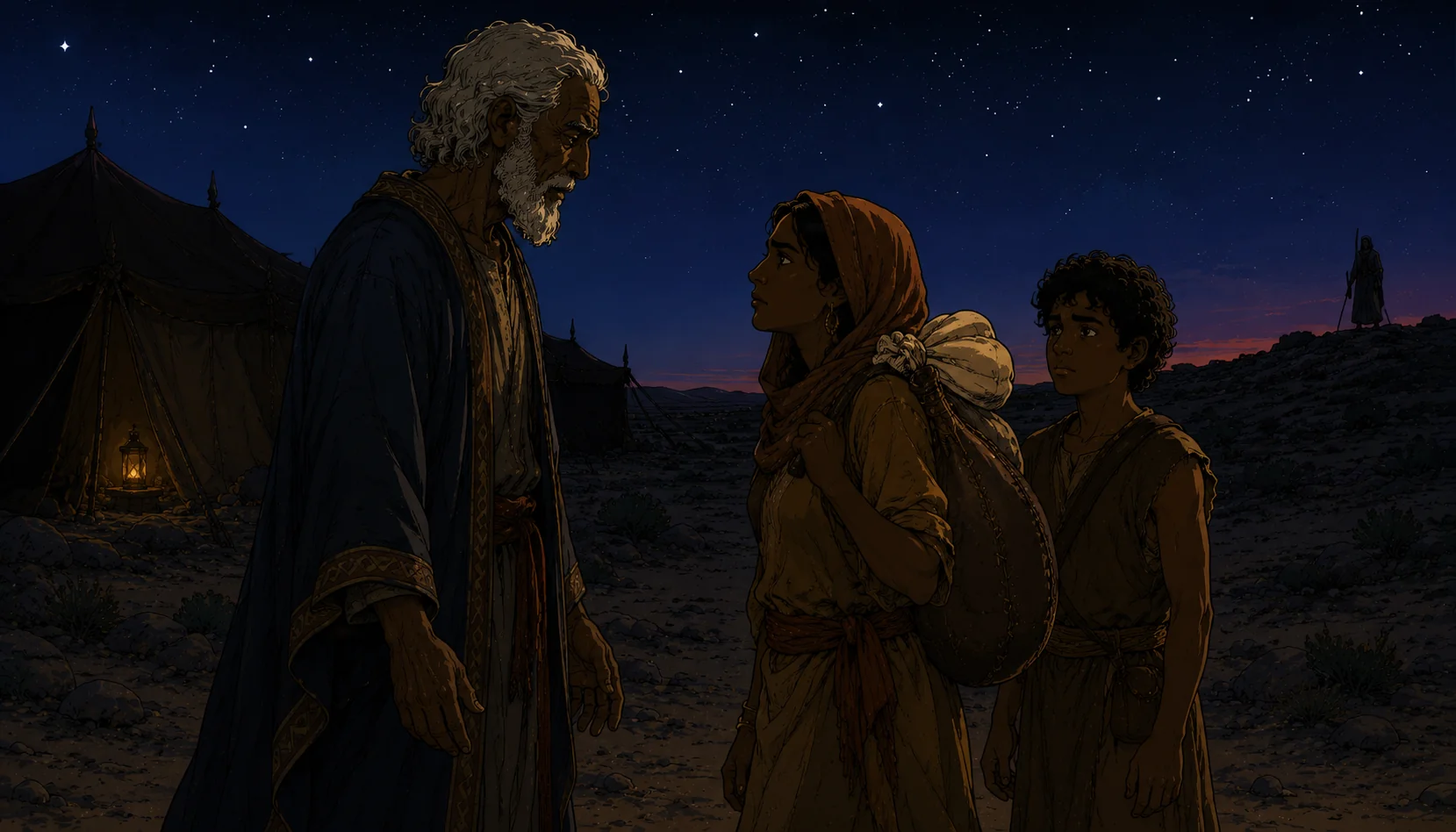
He rose before dawn, took bread and a skin of water, and placed them on Hagar's shoulder. The same verb used at the Akedah. Obedience always rises early.
View Breakdown →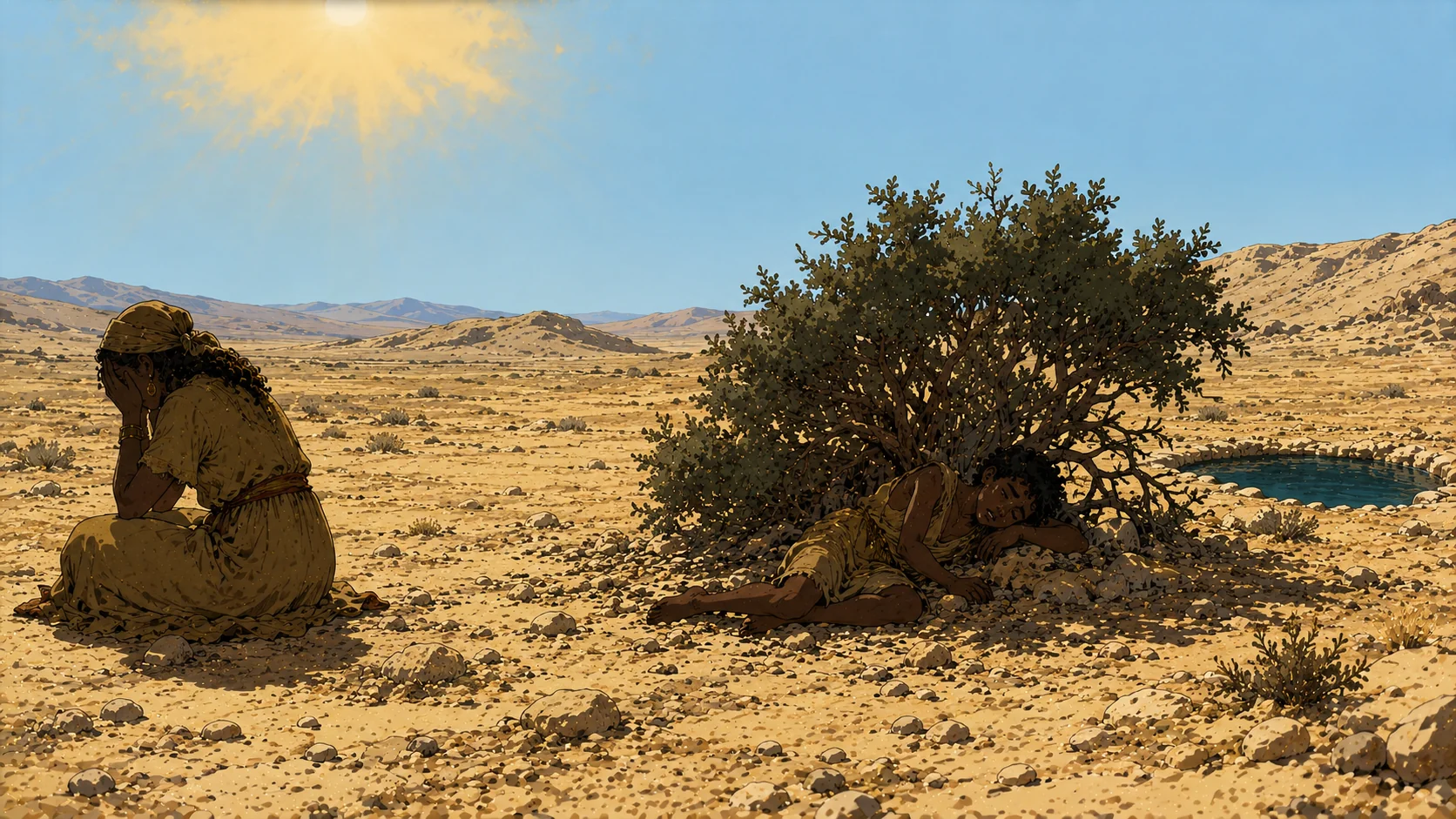
The water ran out. She wept. God heard the boy's voice where he was. He opened her eyes. She saw the well. Yah finds Ishmael in the exact coordinates of his suffering.
View Breakdown →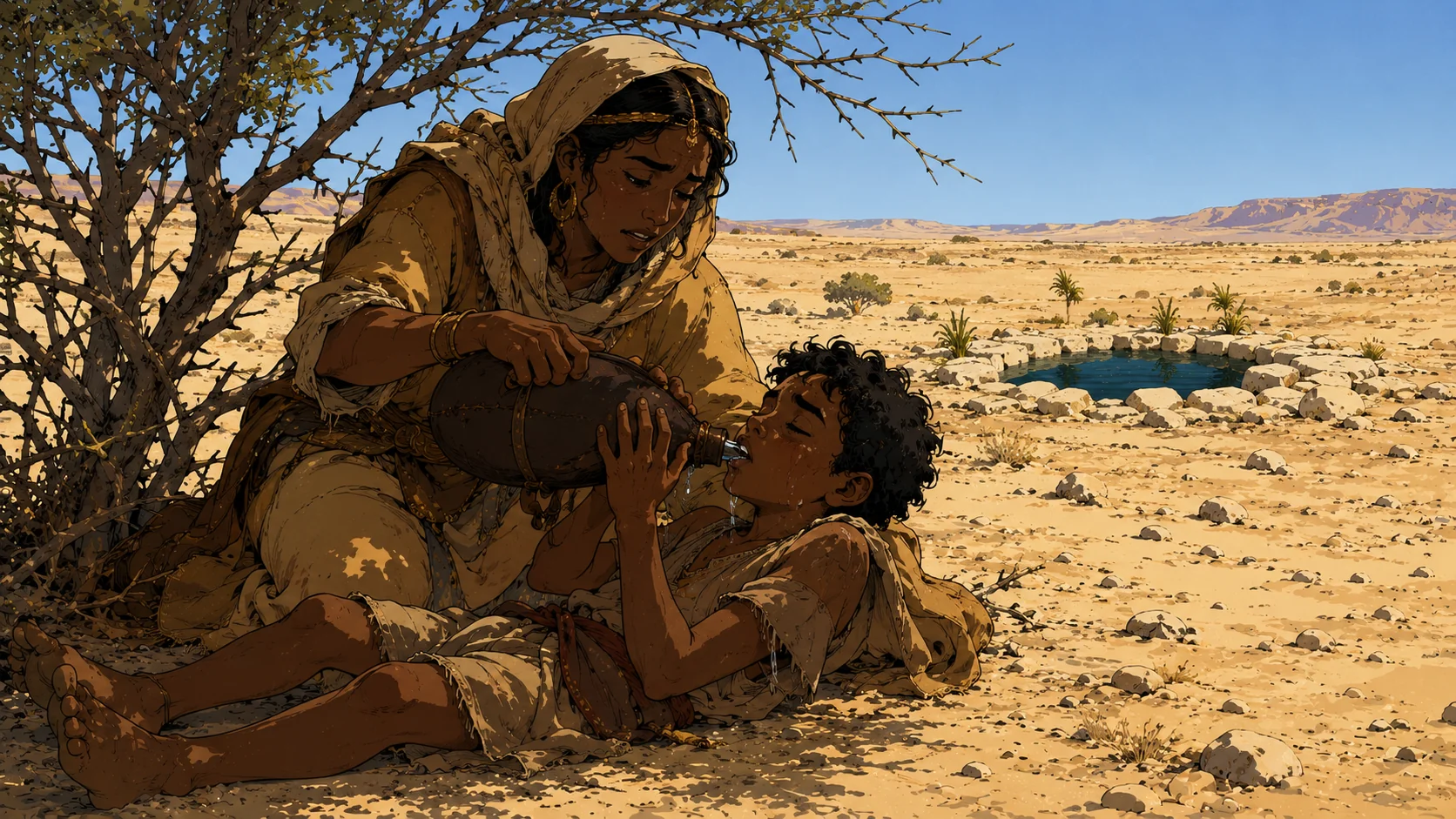
Elohim opened her eyes and she saw a well. She went and filled the skin with water and gave the boy a drink. The well was already there — she just couldn't see it.
View Breakdown →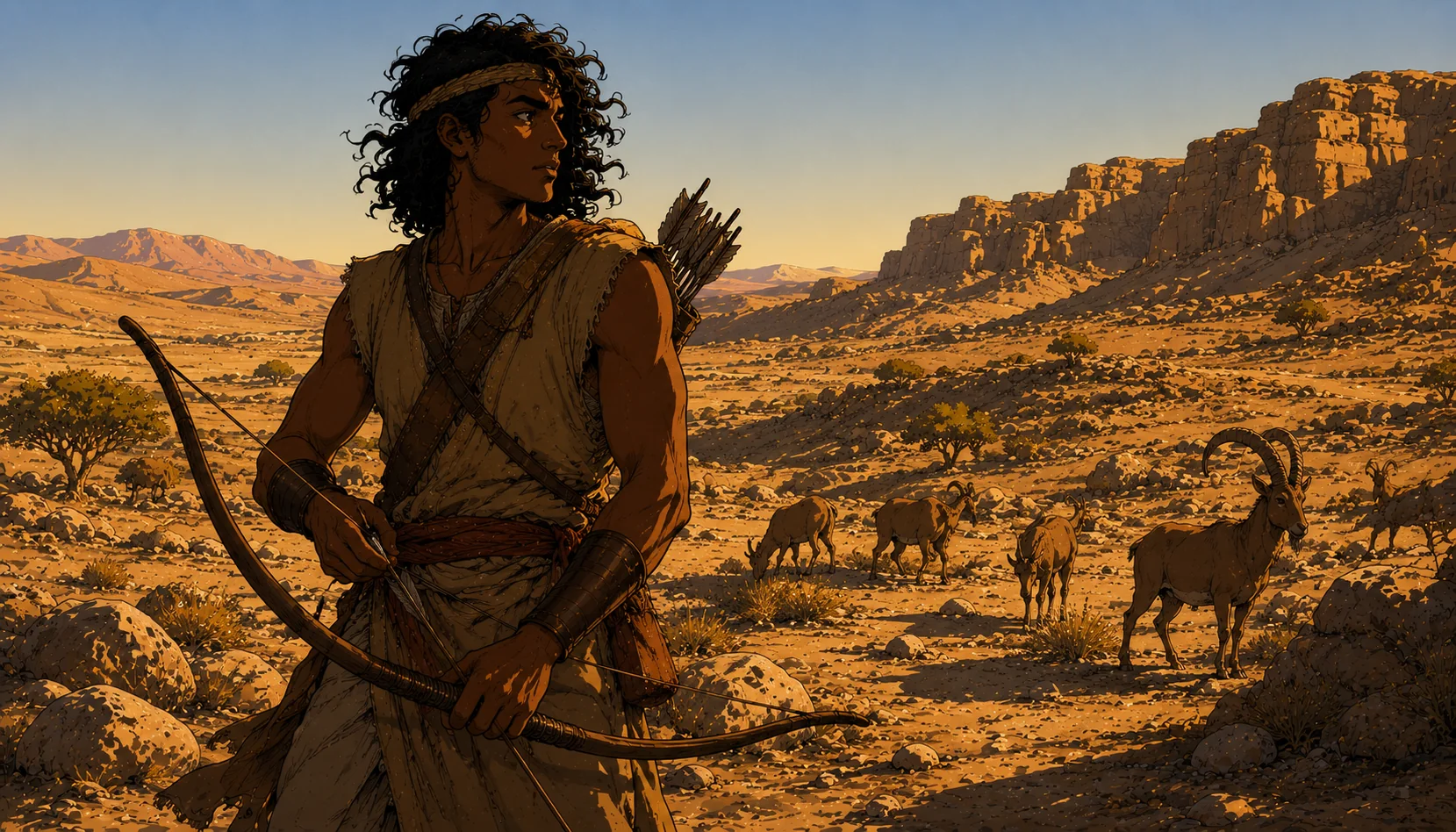
Elohim was with the boy as he grew. He became an archer, dwelling in the wilderness of Paran. A nation rises — outside the covenant, but not outside the protection.
View Breakdown →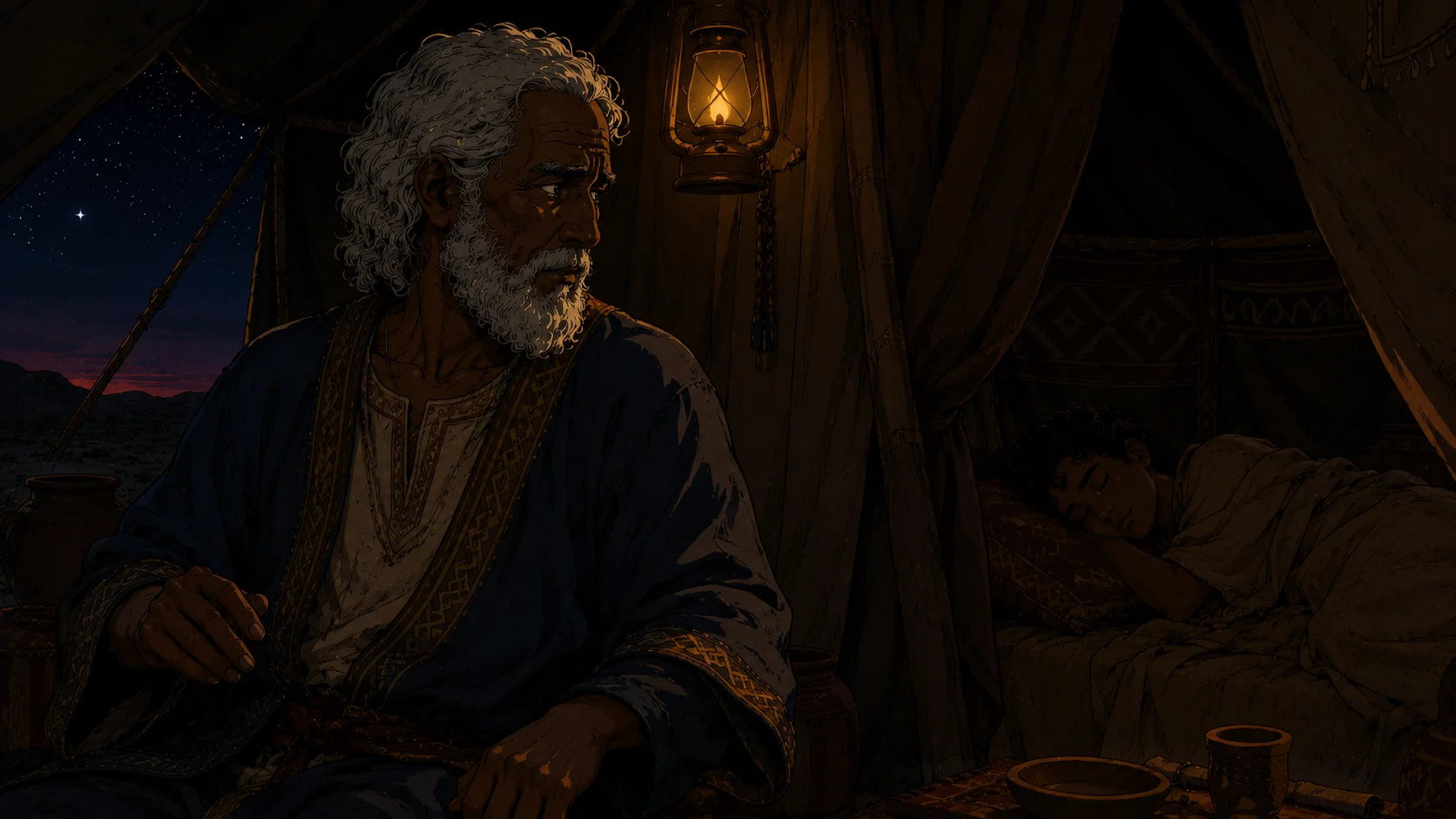
Elohim tested Abraham. Take your son — your only one, whom you love — Isaac. Go to the land of Moriah. The most devastating sentence in the Torah.
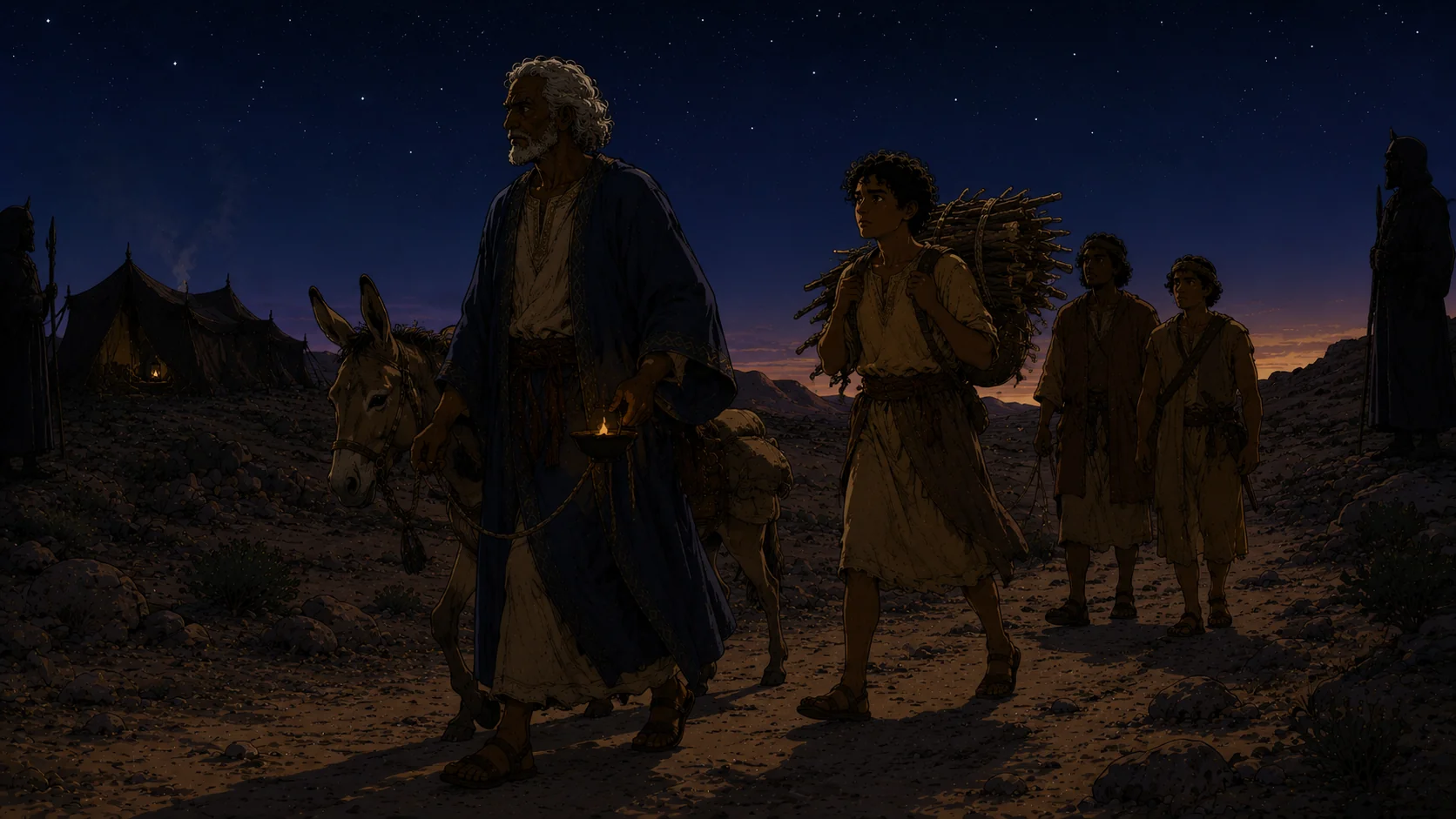
He rose before dawn, saddled his donkey, and split the wood for the burnt offering. He did not delay. No argument this time.
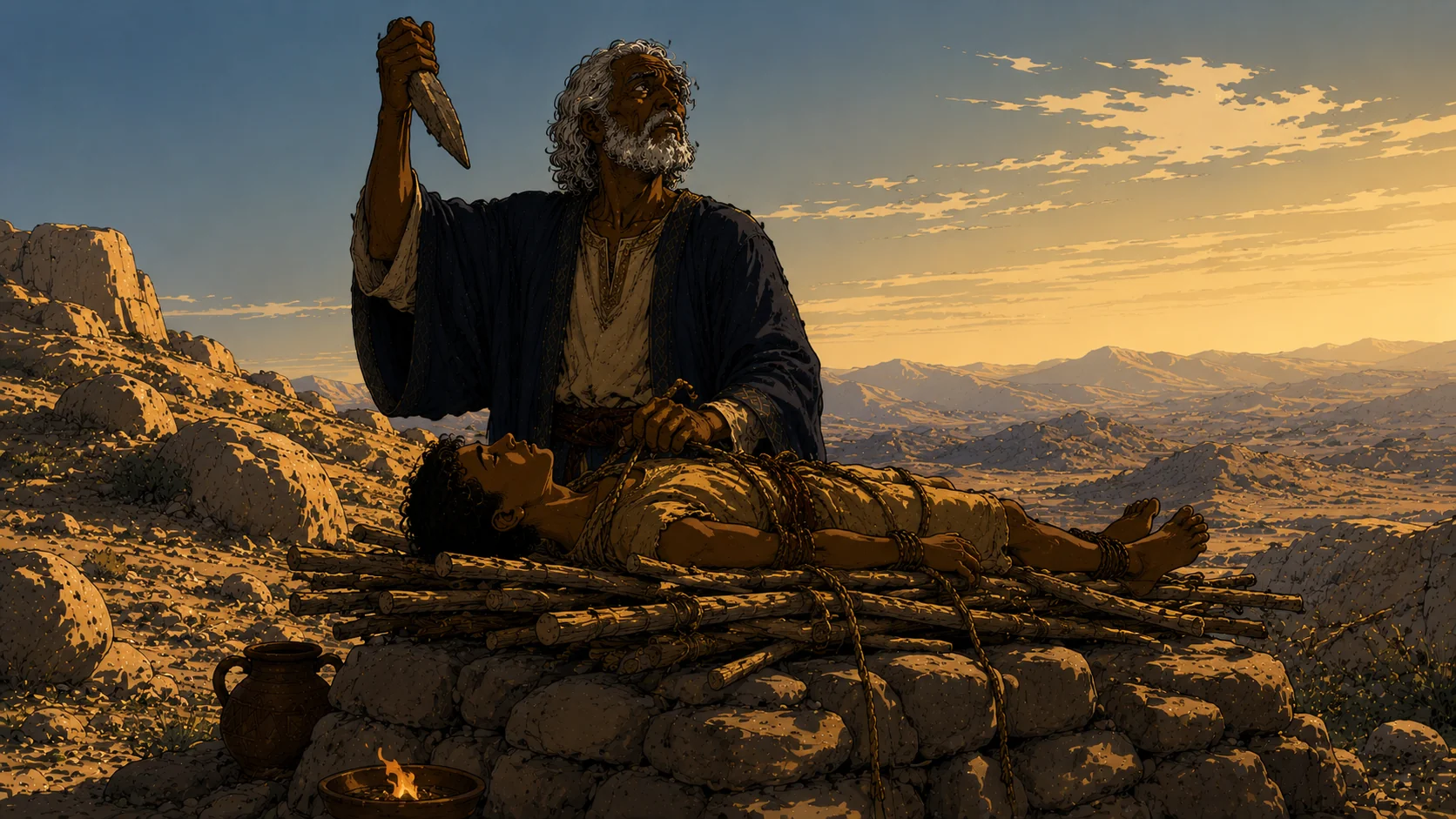
The angel of Yah called from heaven — twice. The doubled name. The hand was stretched out, the knife raised — and then the voice.
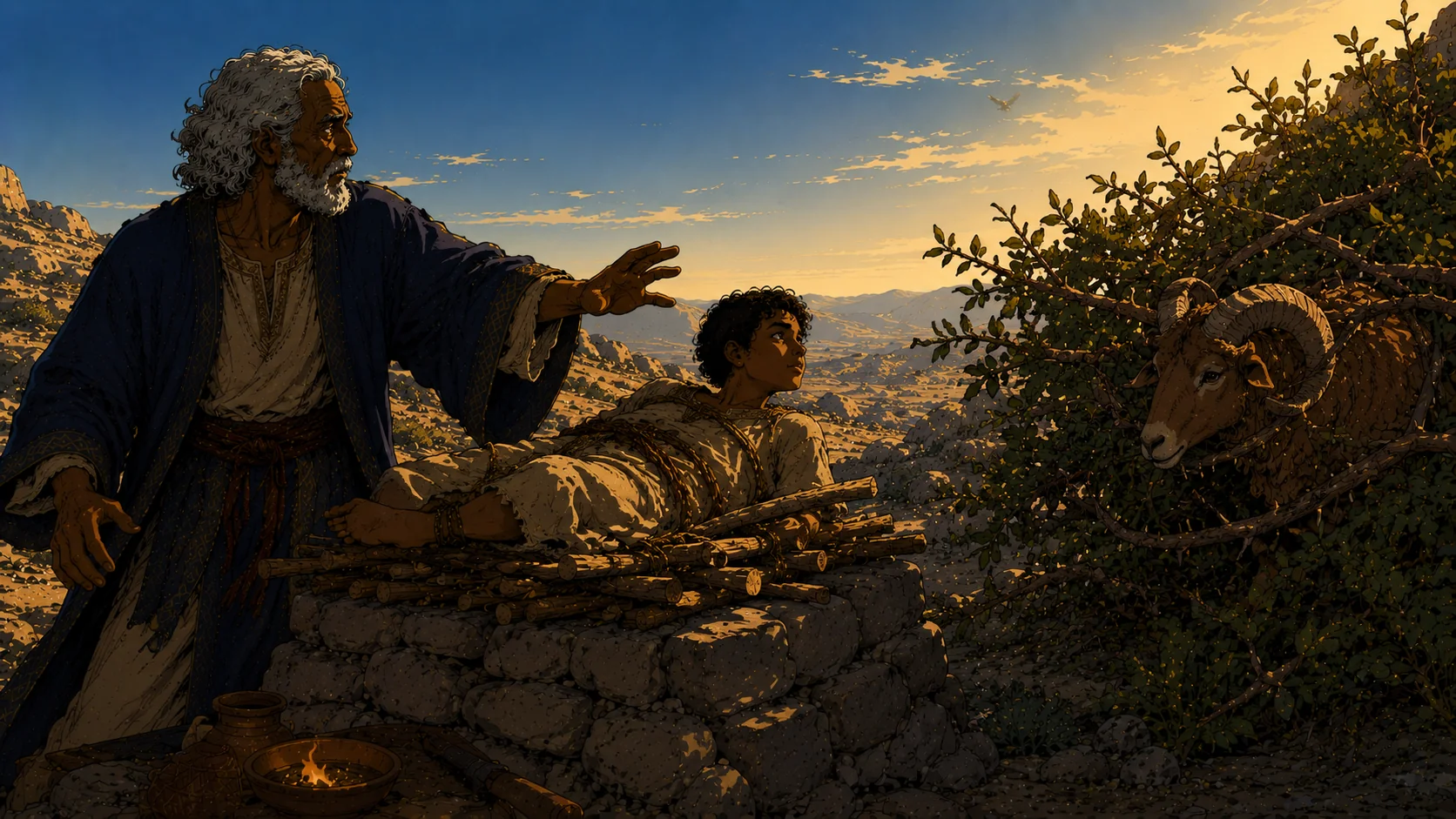
He lifted his eyes and saw — a ram caught in a thicket by its horns. Elohim sees to the offering. He always had.
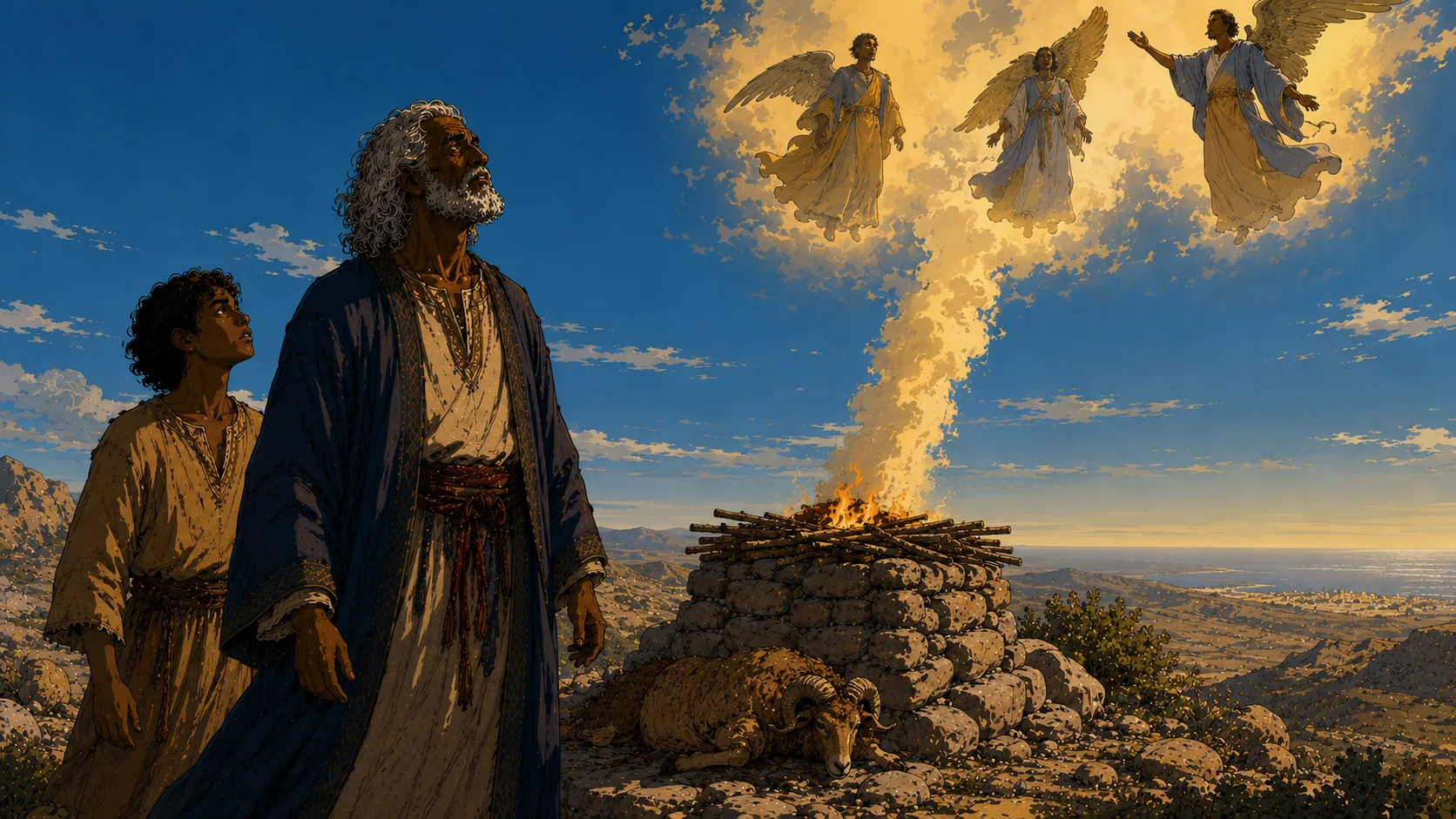
The angel called a second time. By Myself I have sworn — declares Yah. Because you did not withhold your son, I will bless you and multiply your seed.
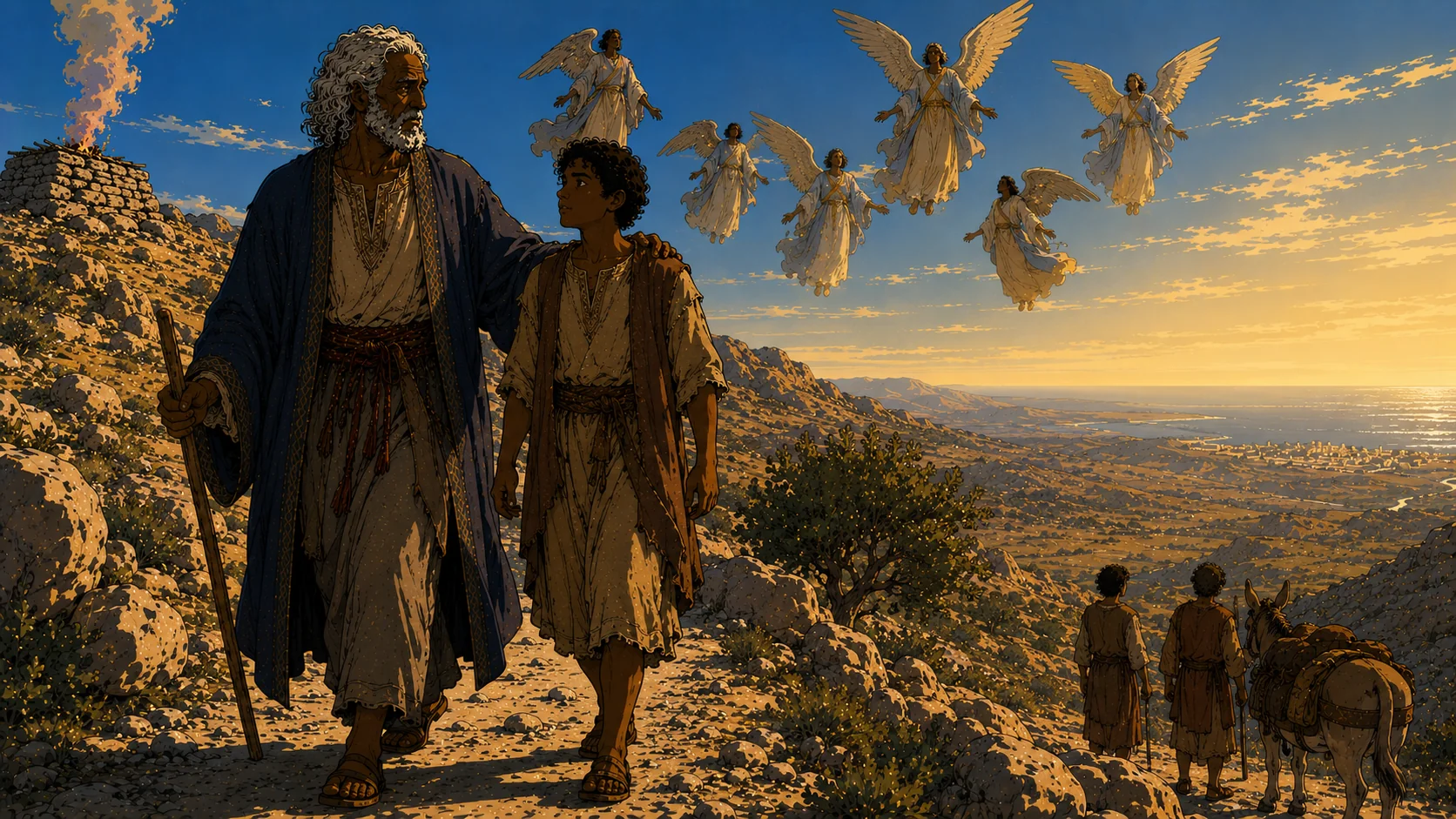
Abraham returned to his young men and they arose and went together to Beer-sheba. Father and son, descended from the mountain together. The word that ends the test.
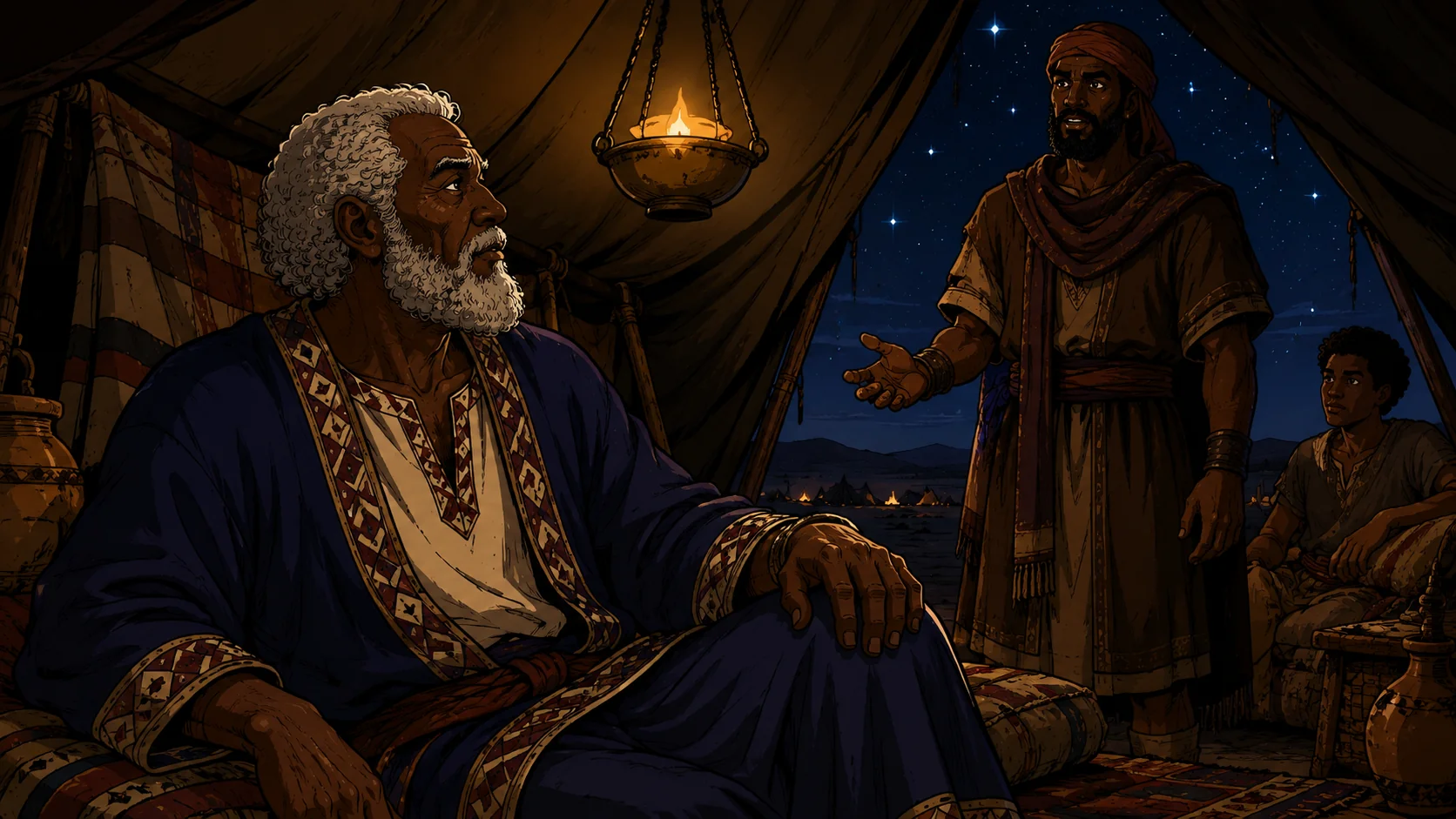
After the Akedah, news arrives from Haran — Milcah has borne eight sons to Nahor. Among them: Bethuel. The lineage that will produce Rebekah has been quietly growing.
View Breakdown →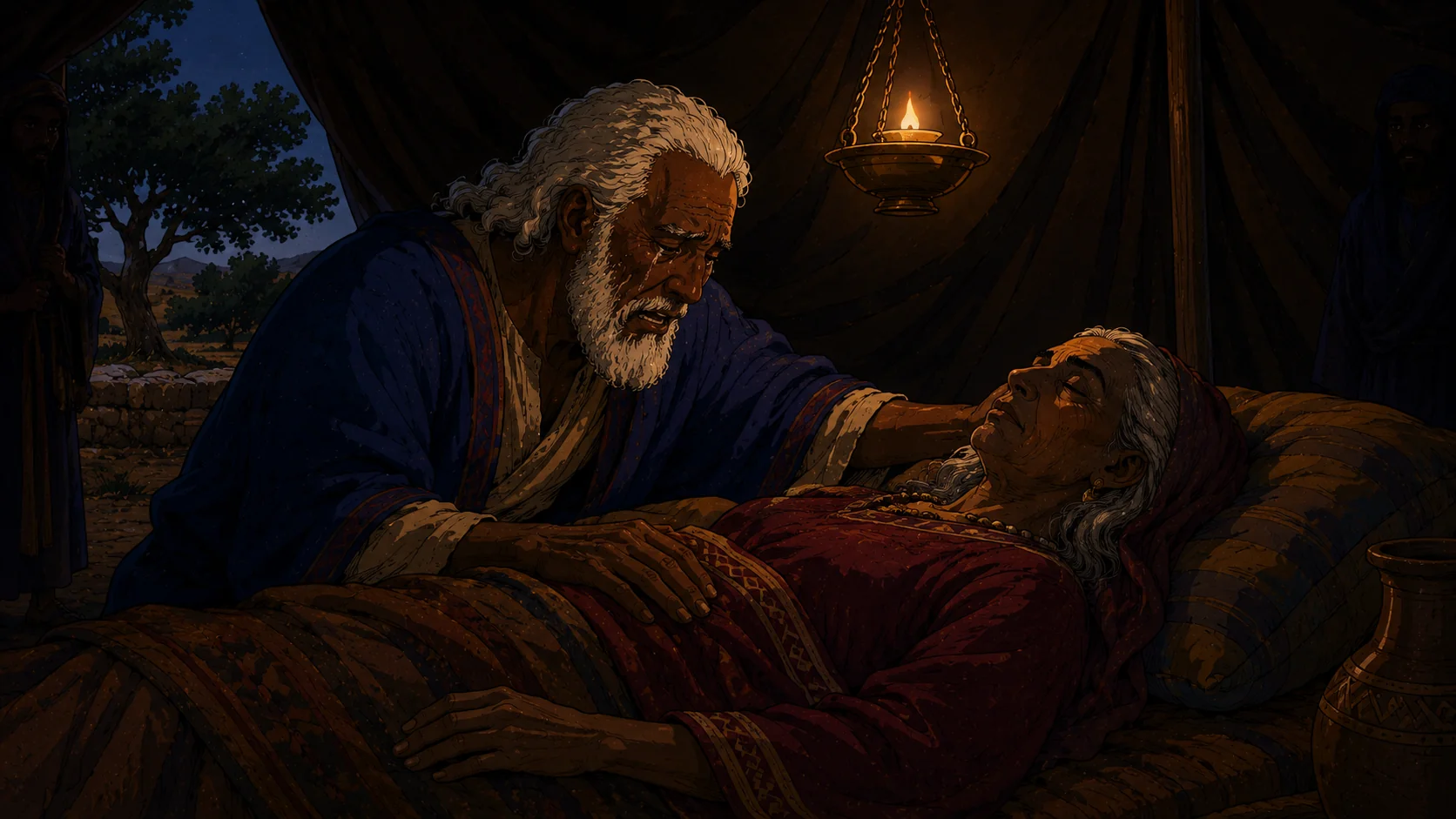
Sarah lived 127 years — the only woman in the Torah whose age is recorded at death. Abraham mourns and weeps for her in Hebron.
View Breakdown →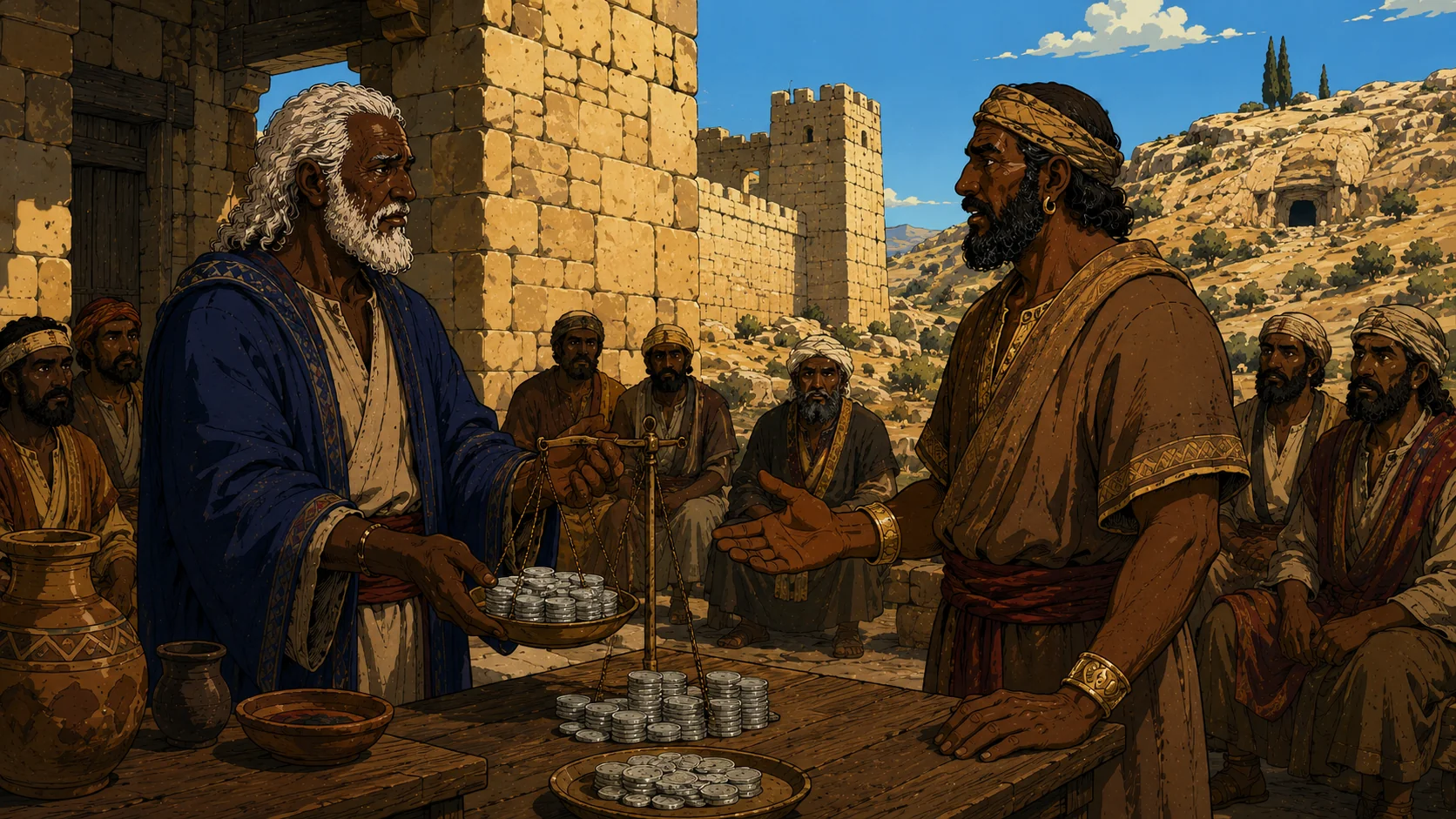
Abraham negotiates with the Hittites and buys the cave at Machpelah for 400 shekels of silver — the first land he owns in Canaan, purchased as a burial plot.
View Breakdown →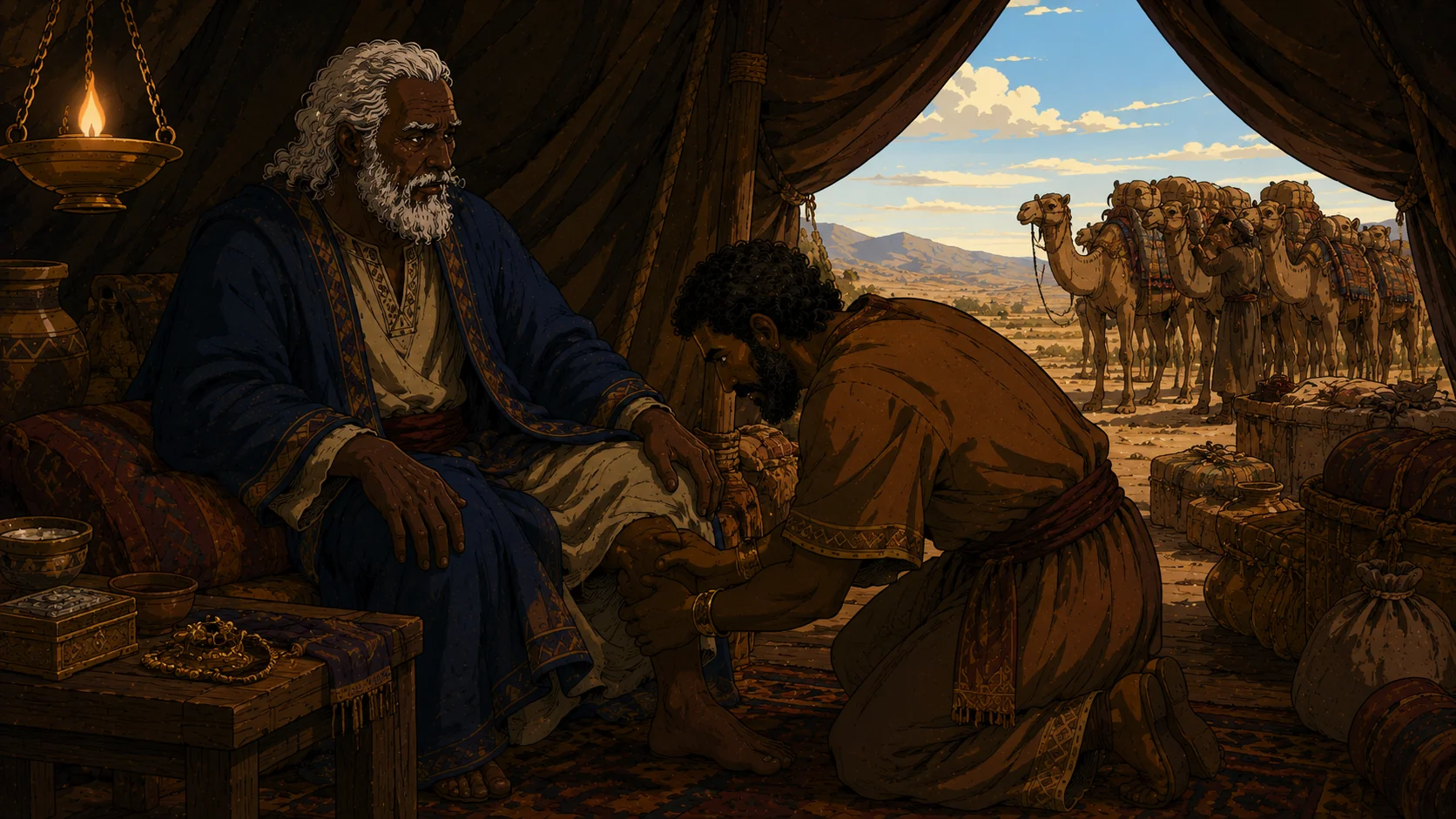
Abraham makes his servant swear by the LORD: go to my country and find a wife for Isaac — not from the daughters of Canaan.
View Breakdown →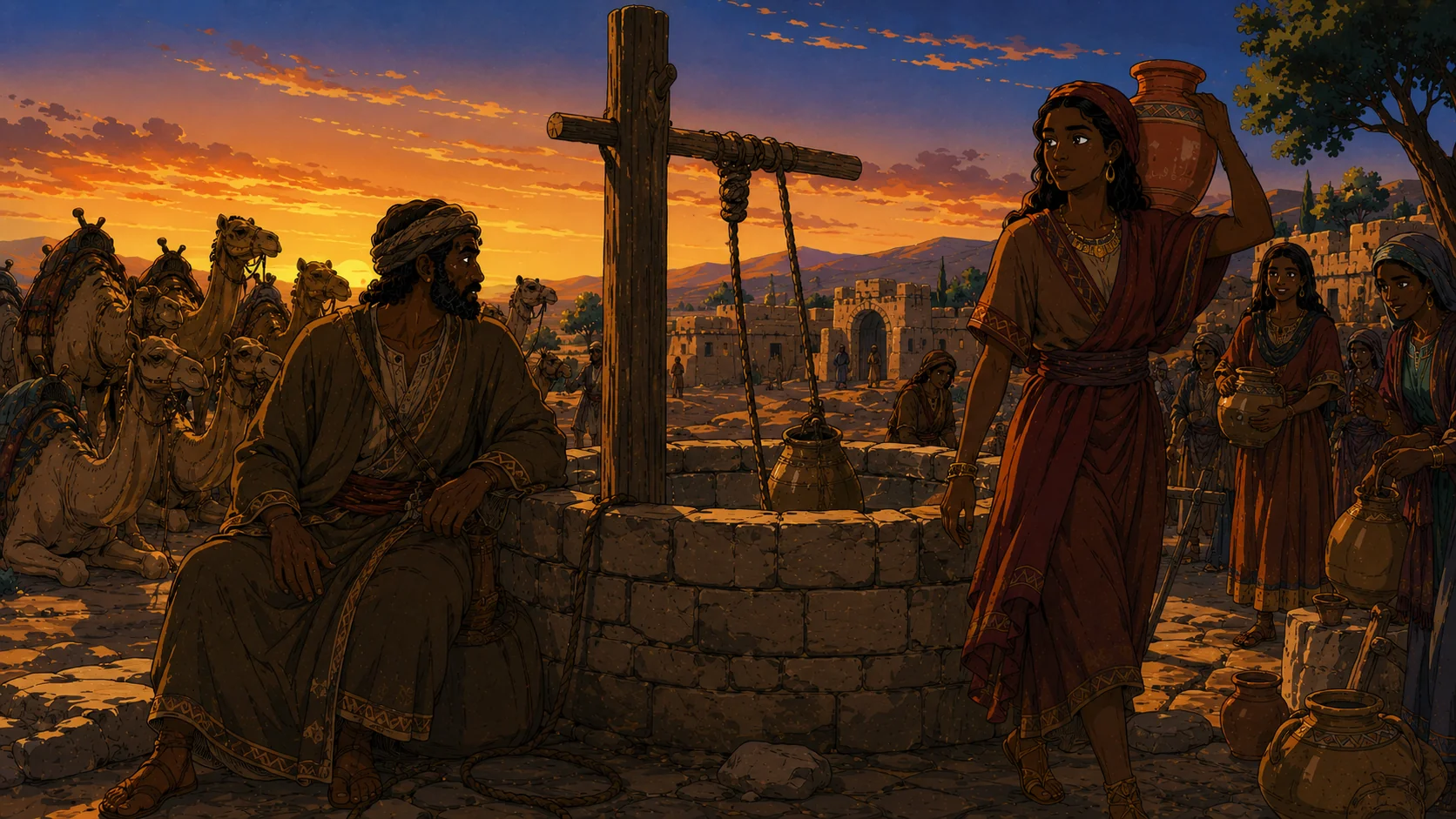
The servant arrives at a well outside Nahor's city at evening. He prays for a sign. Before he has finished speaking, Rebekah comes.
View Breakdown →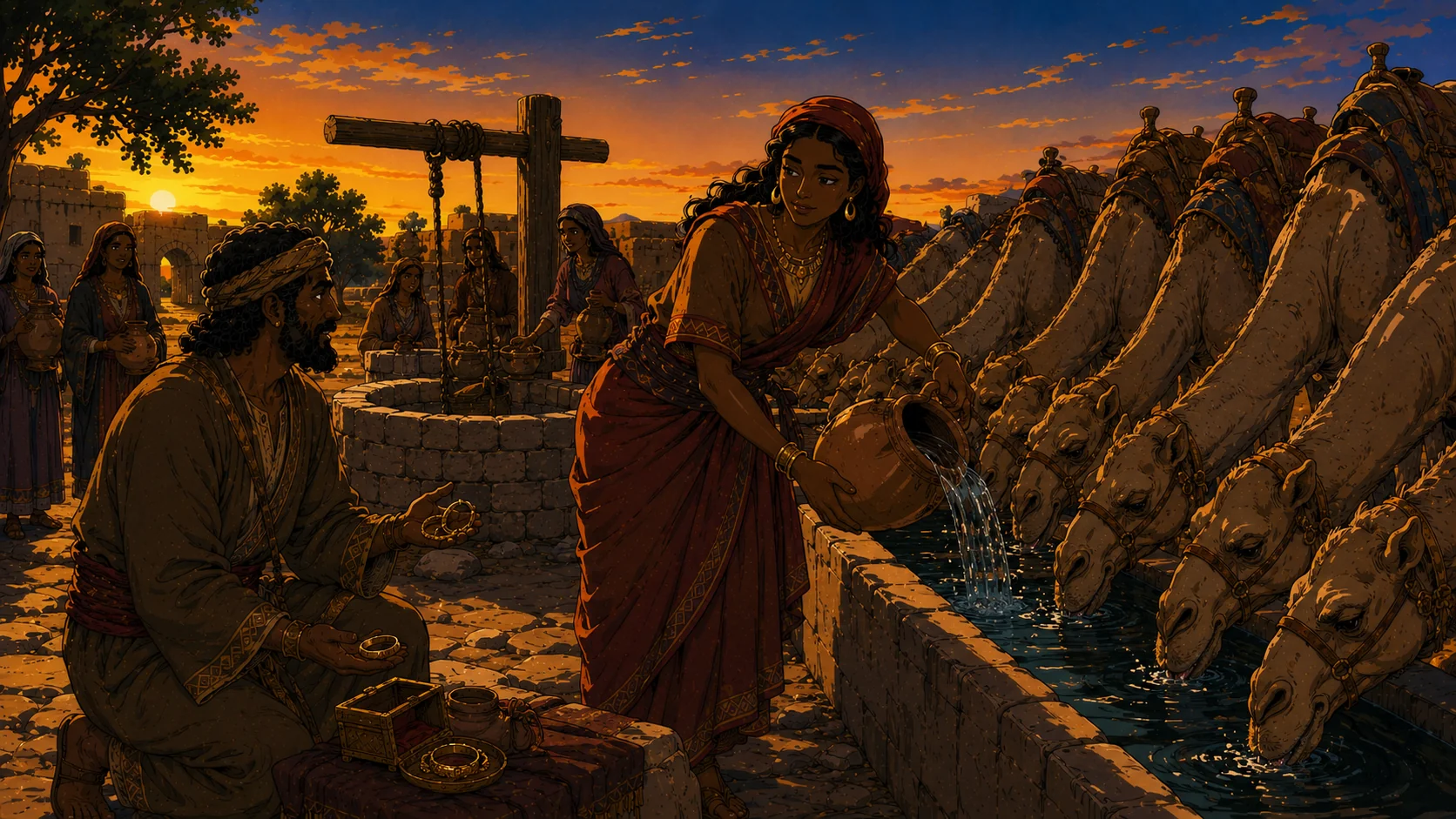
She drew water for all ten camels — enough to drink their fill. The sign is confirmed. The servant bowed his head and worshipped the LORD.
View Breakdown →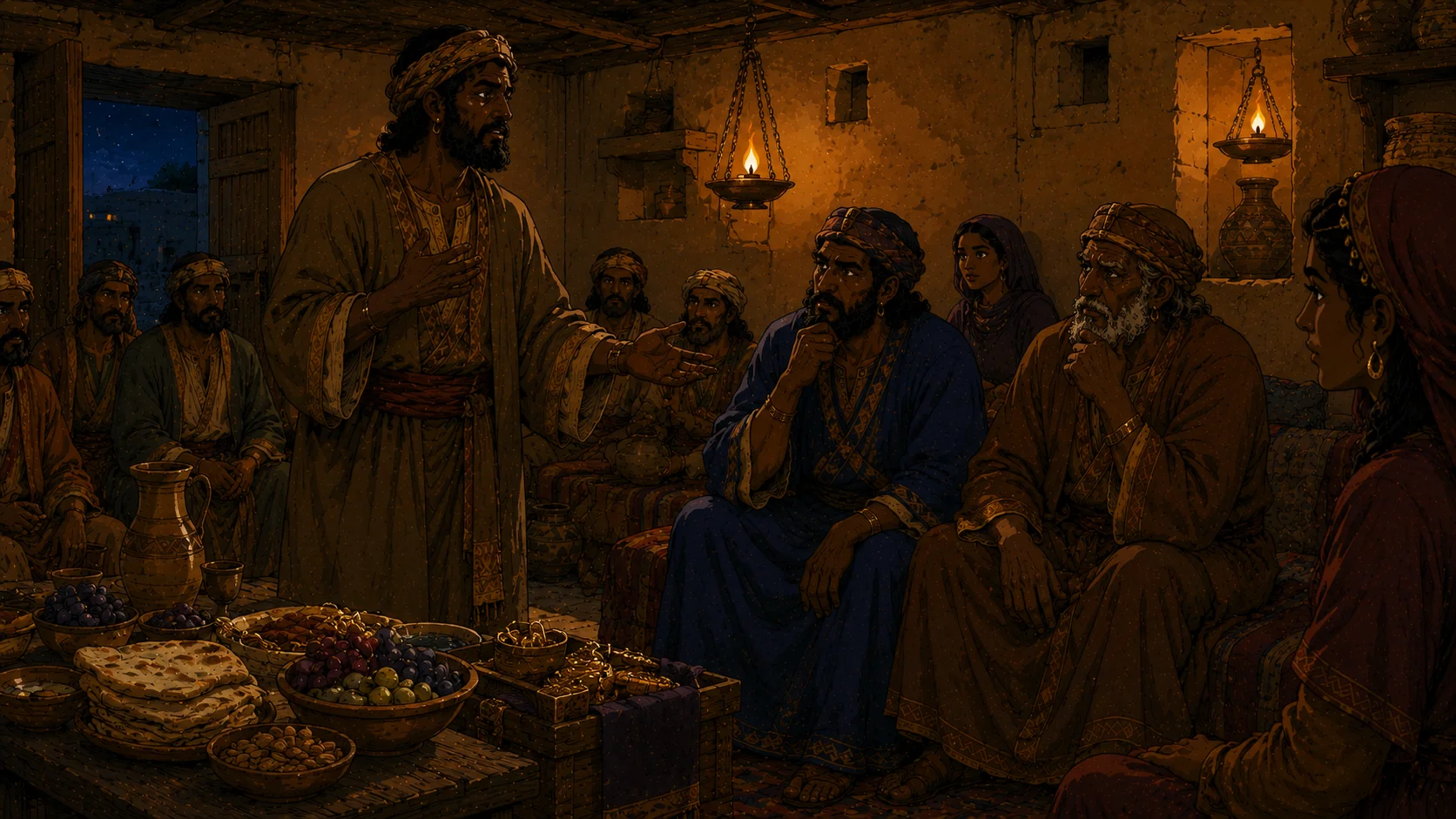
Before eating, the servant tells the full story. Laban and Bethuel answer: "The thing proceeds from the LORD. Take Rebekah and go."
View Breakdown →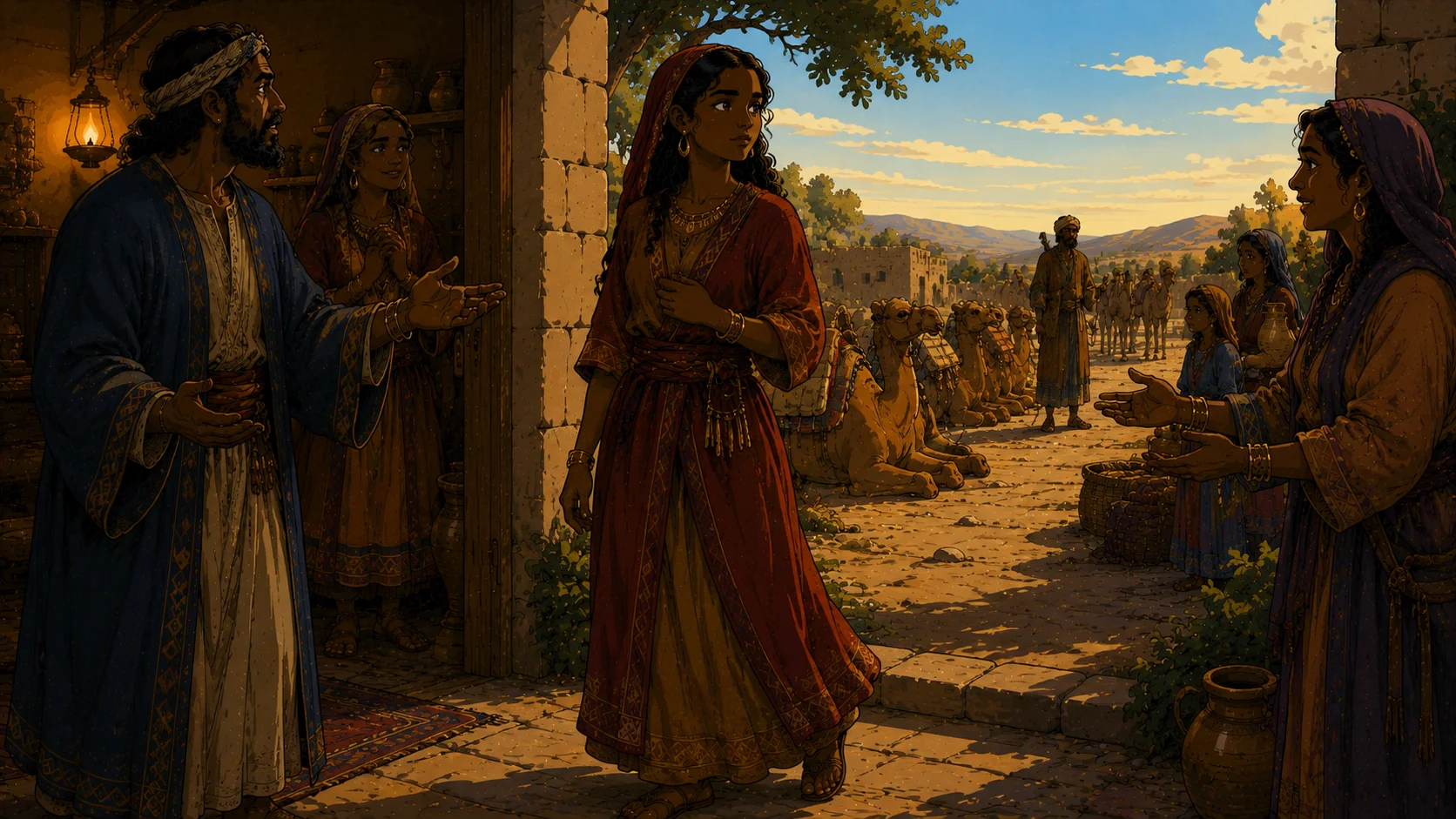
The family asks Rebekah: "Will you go with this man?" She answered: "I will go." The covenant line continues through one young woman's single yes.
View Breakdown →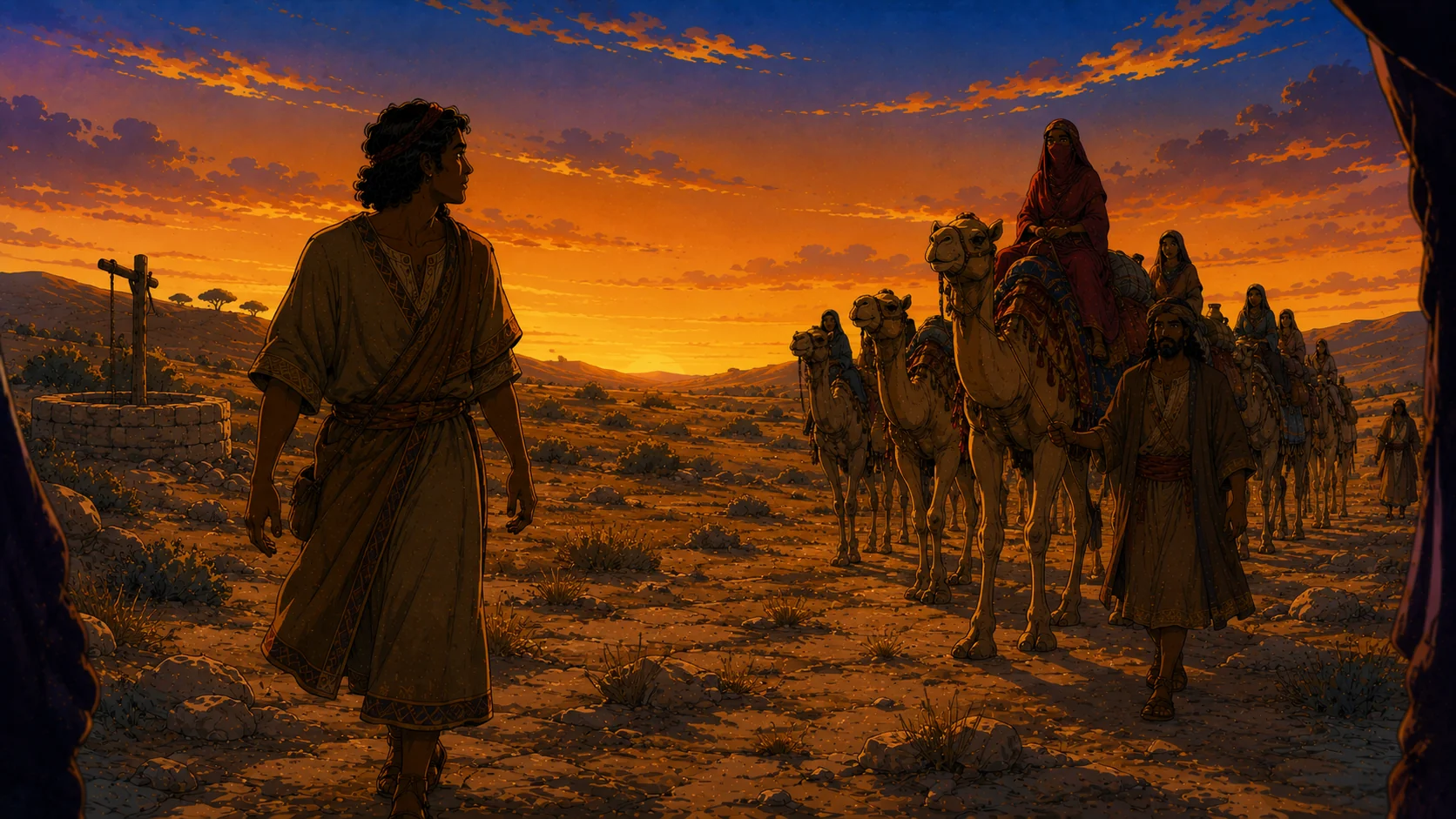
Isaac went out to meditate in the field at evening. He lifted his eyes and saw camels coming. She covered herself with a veil. He brought her into his mother's tent.
View Breakdown →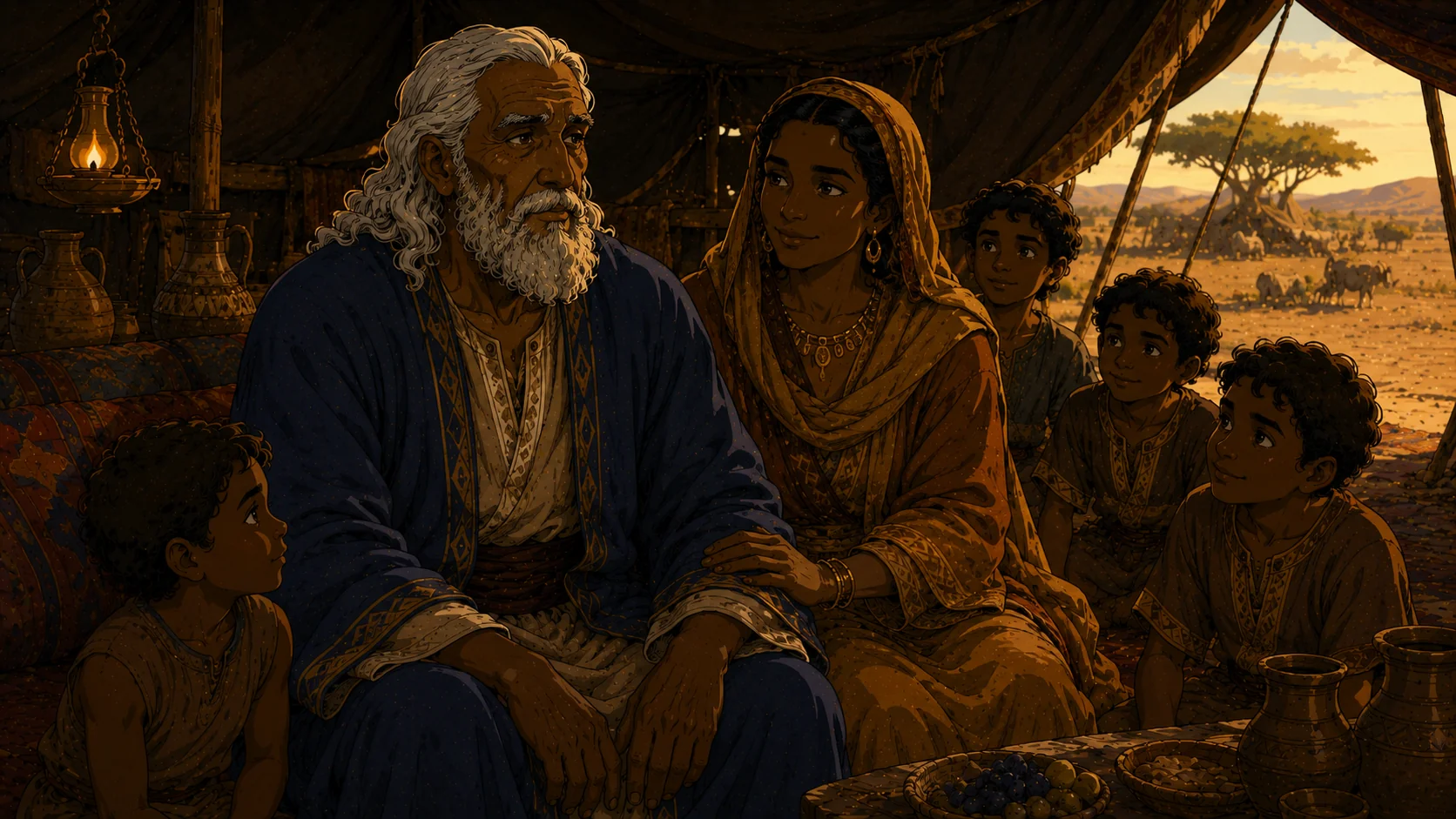
In his final years Abraham takes Keturah as a wife. Six more sons are born — nations that will spread eastward. The covenant line continues through Isaac alone.
View Breakdown →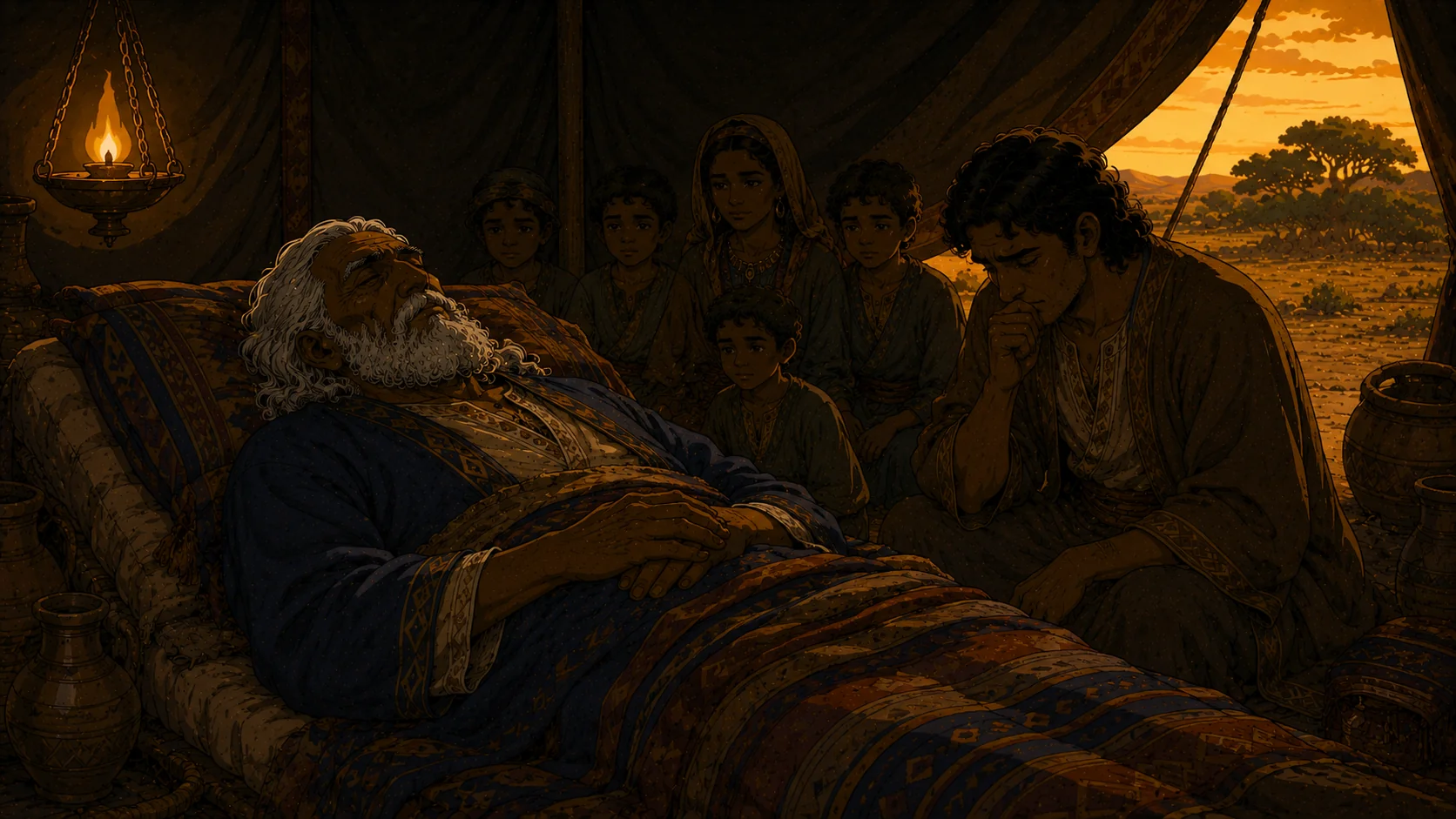
Abraham breathed his last and died at a good old age, an old man full of years — and was gathered to his people.
View Breakdown →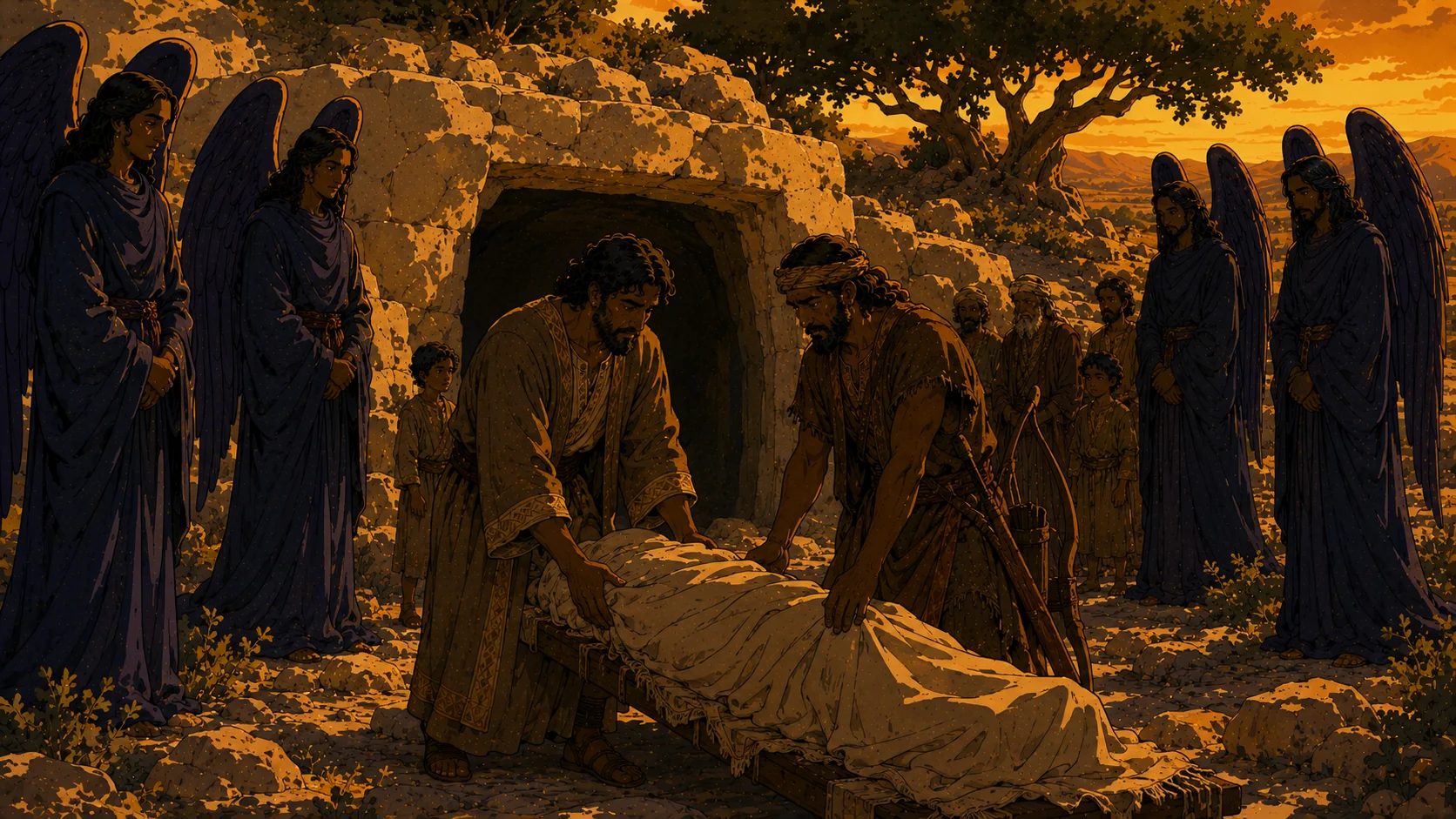
The two sons — separated since childhood — come together to bury their father in the Cave of Machpelah, beside Sarah.
View Breakdown →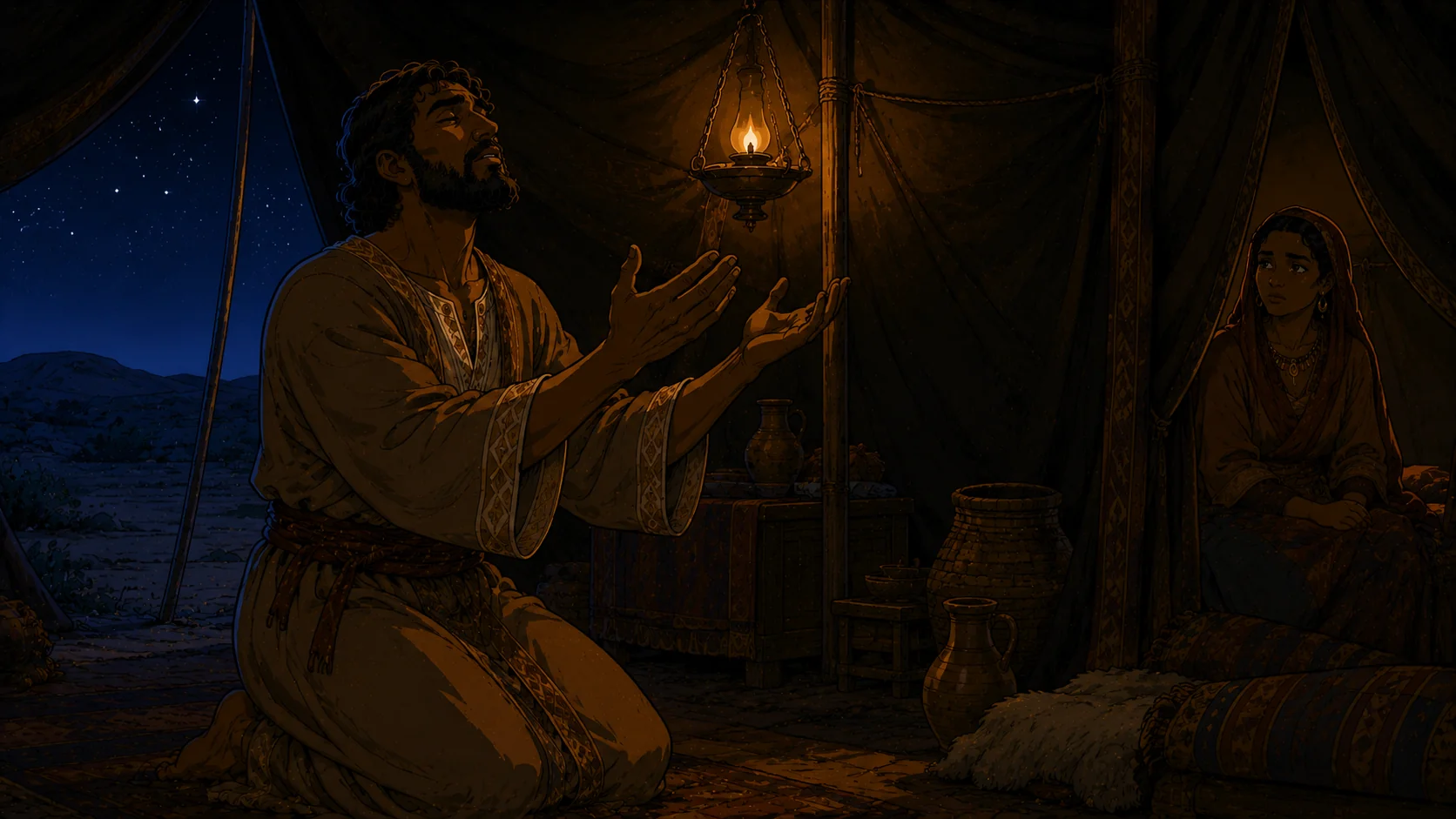
Rebekah was barren. Isaac pleaded with the LORD on her behalf. The LORD granted his plea. Twenty years after the marriage — the covenant waits on prayer.
View Breakdown →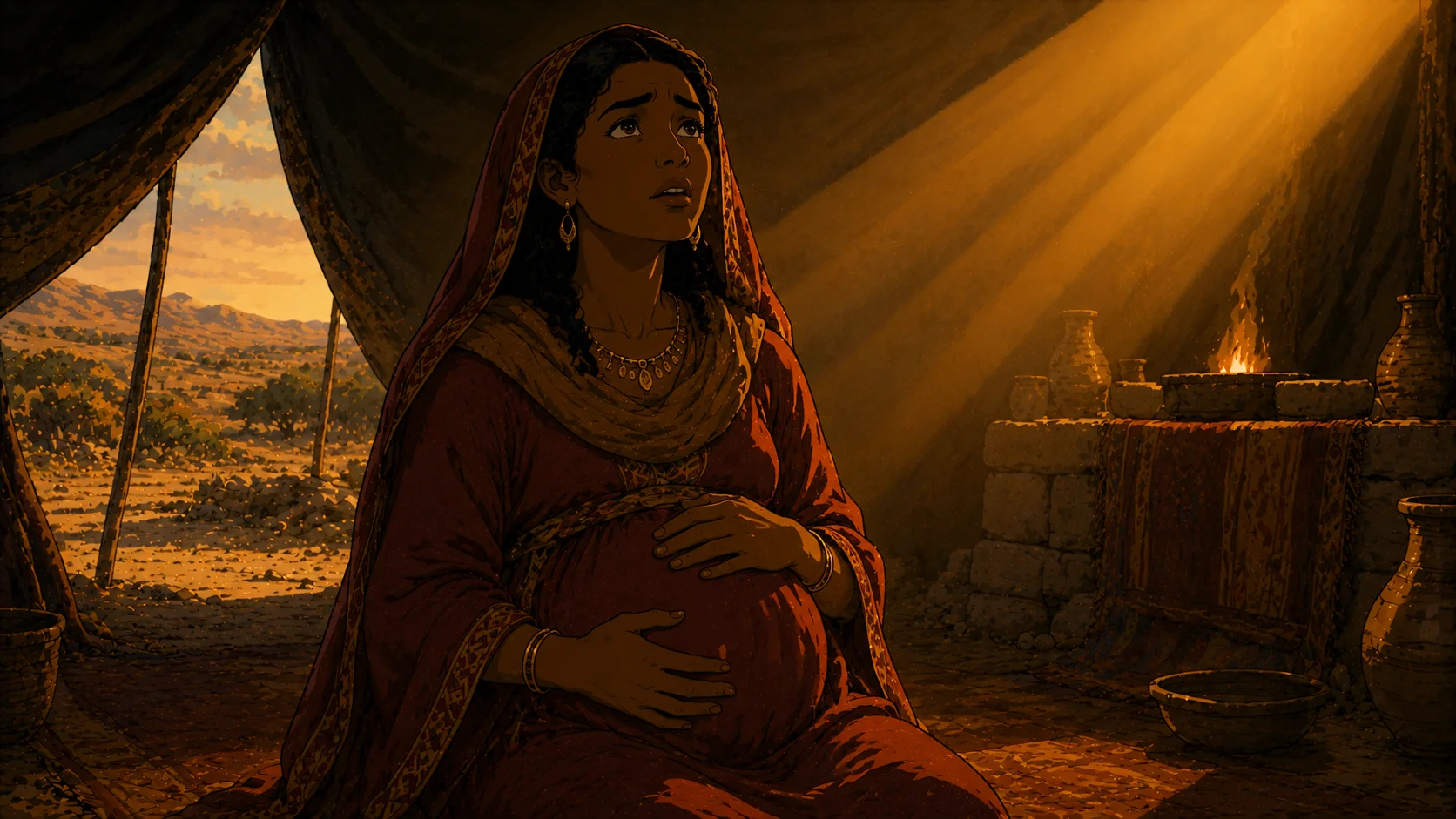
The children struggled within her and she inquired of the LORD. "Two nations are in your womb — and the older shall serve the younger."
View Breakdown →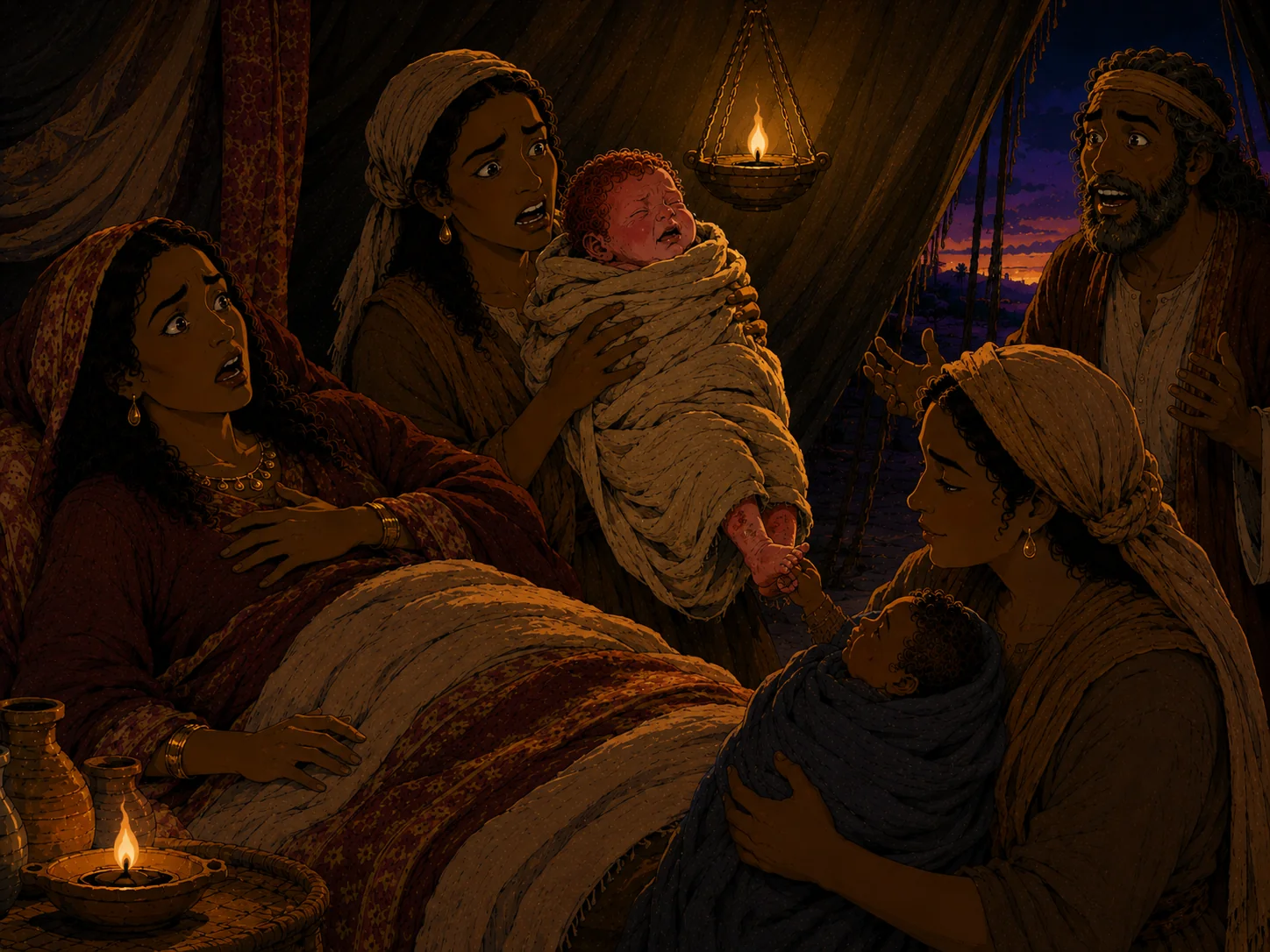
The first came out red, all his body like a hairy cloak — Esau. After him his brother, hand holding Esau's heel — Jacob.
View Breakdown →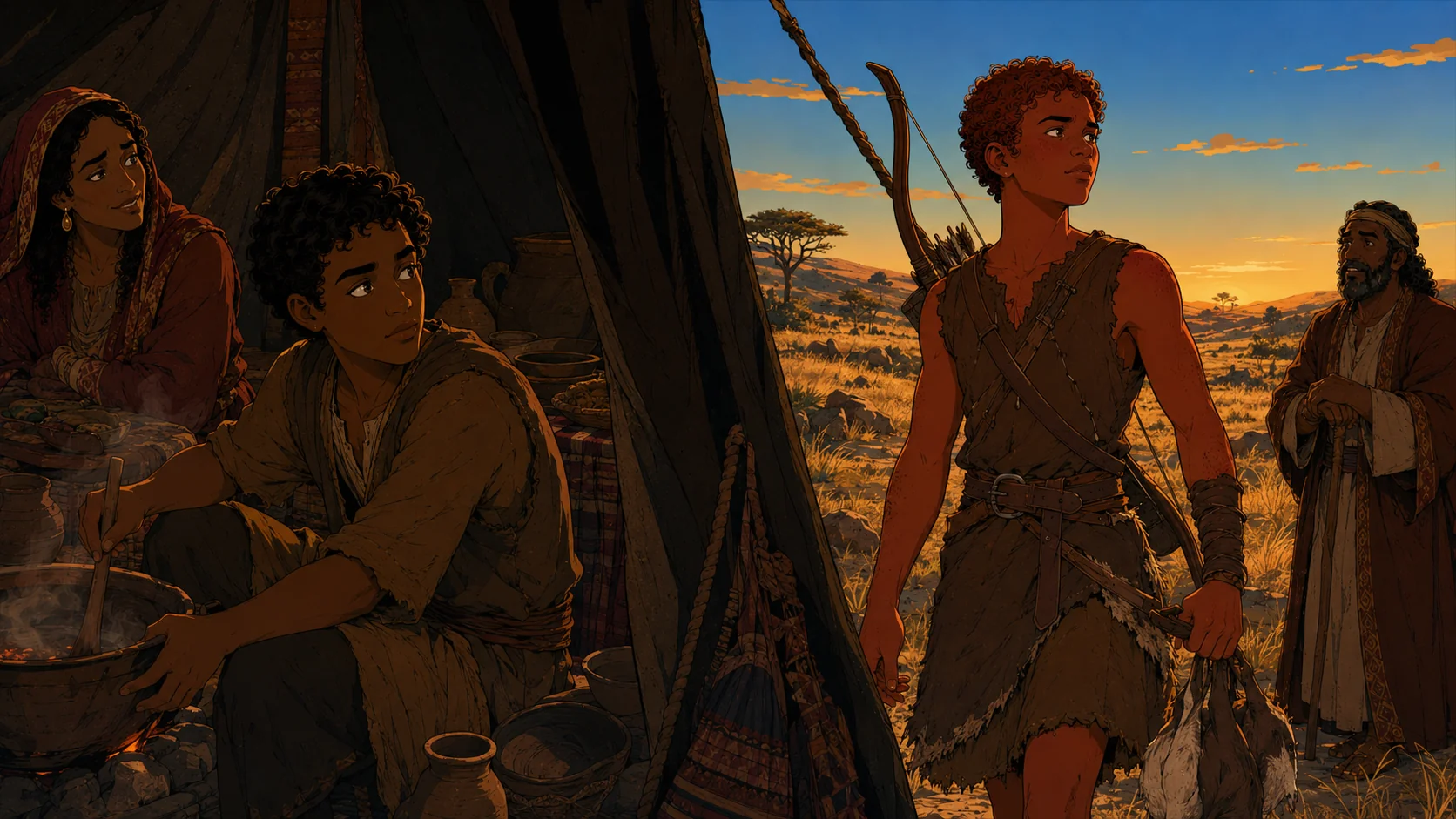
Esau became a skilled hunter, a man of the field. Jacob was a quiet man, dwelling in tents. Isaac loved Esau. Rebekah loved Jacob. Two sons, two destinies.
View Breakdown →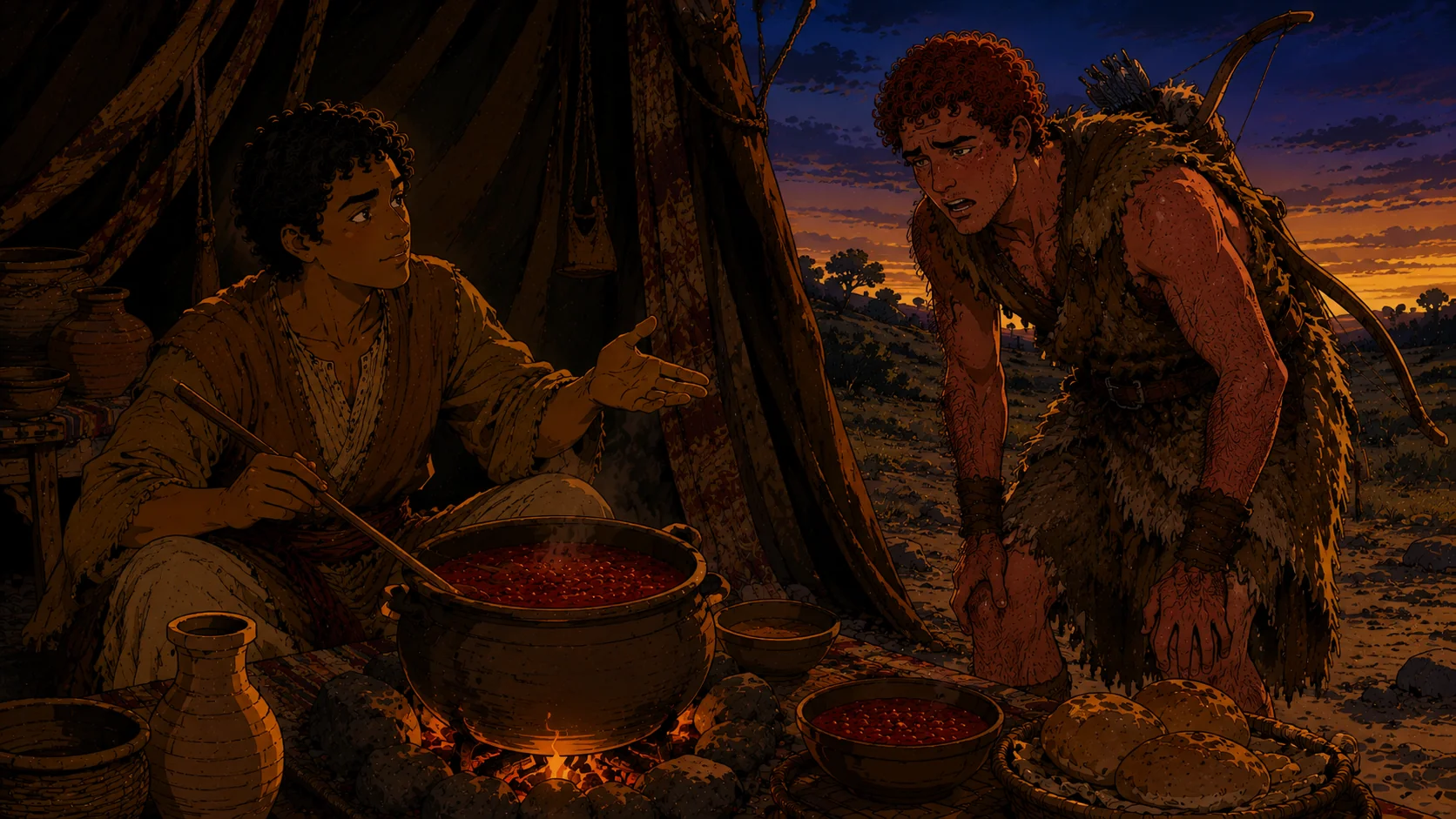
A bowl of red stew. A starving man. A decision that reshapes the destiny of a nation forever.
View Breakdown →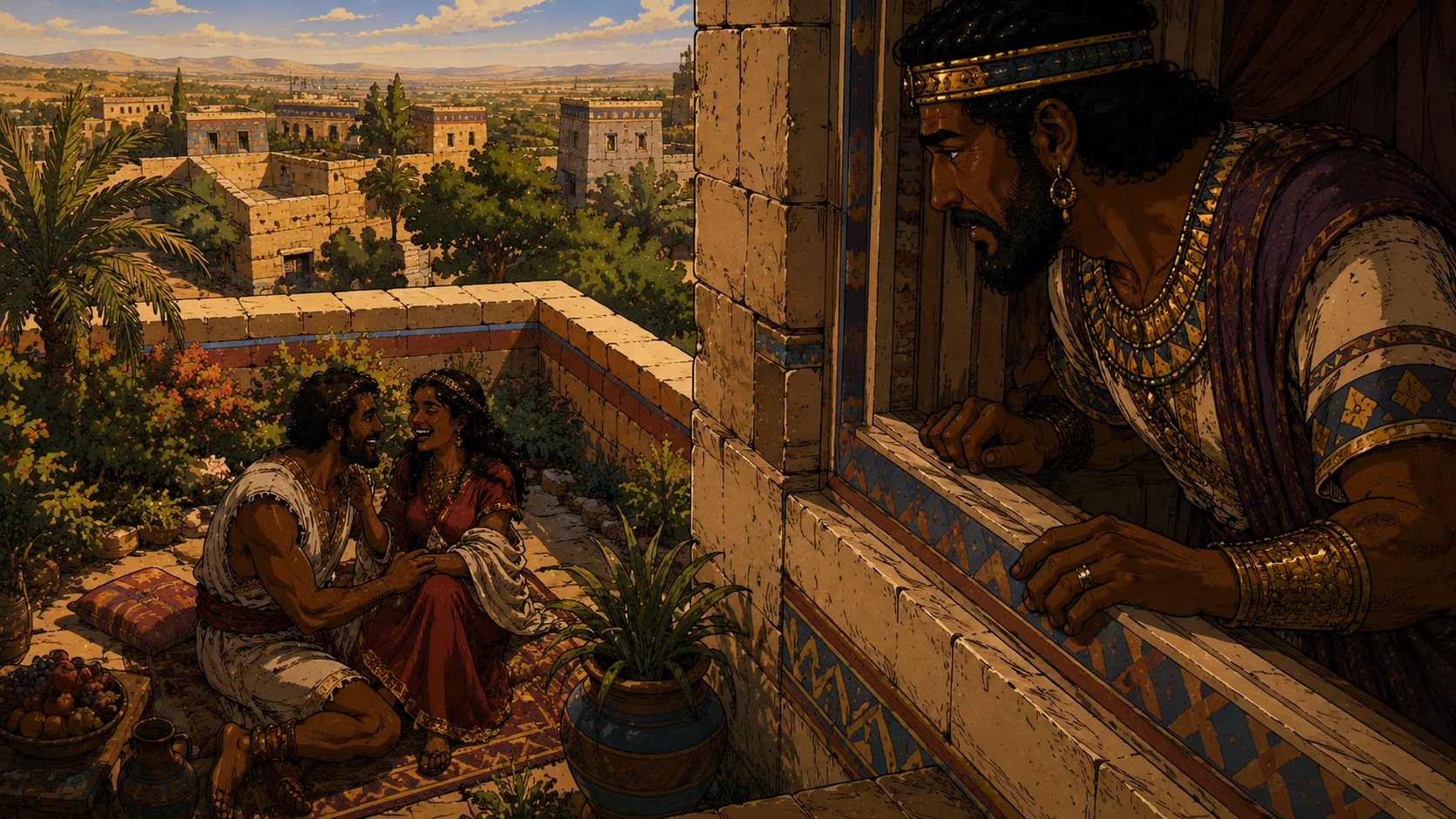
A famine forces Isaac toward Egypt. God redirects him: stay in this land. Then Isaac repeats his father's fear — and his father's lie. "She is my sister."
View Breakdown →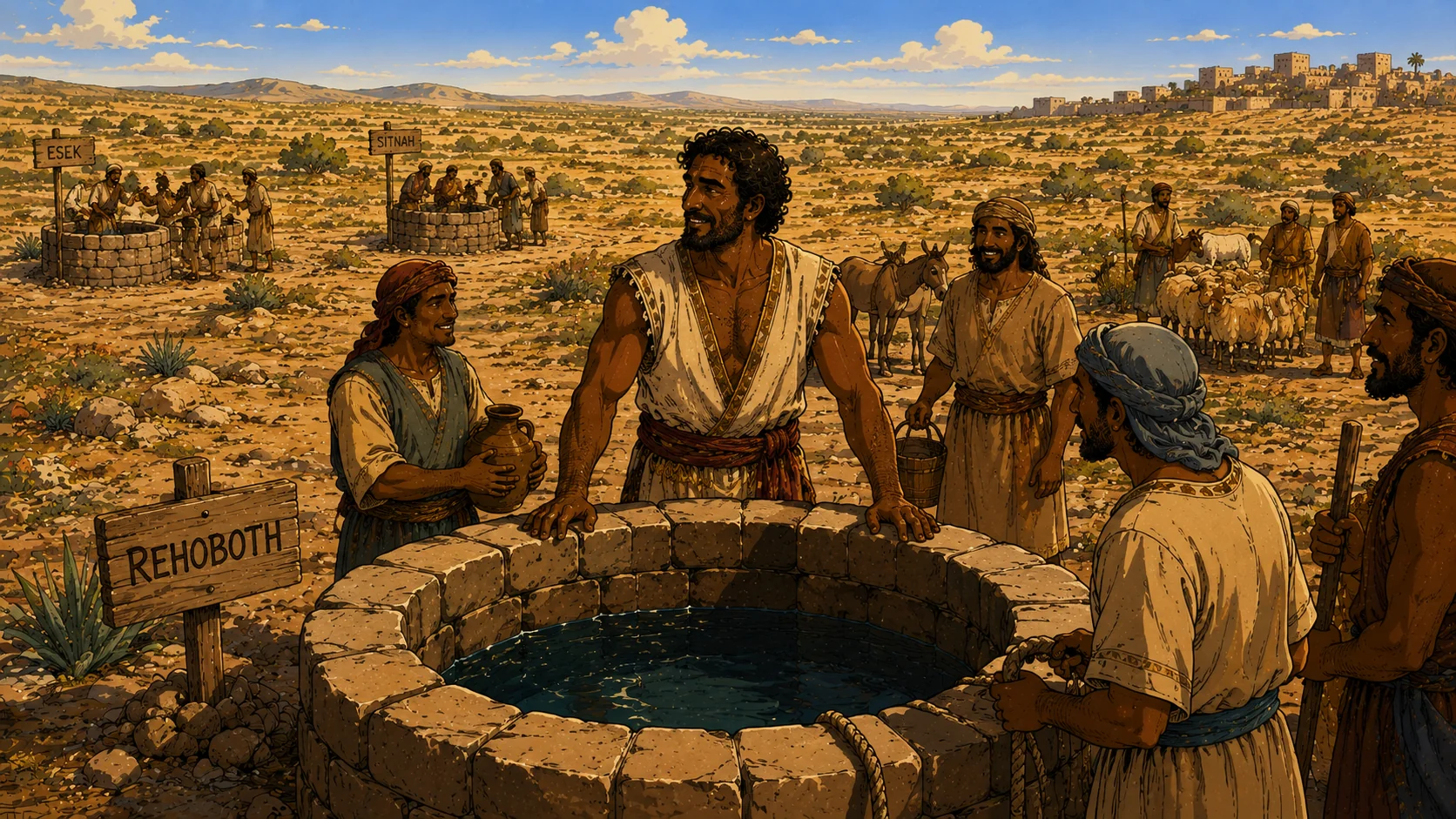
Isaac sows and reaps a hundredfold. The Philistines stop his wells. He digs again. They dispute. He moves. At Rehoboth — room — God makes space at last.
View Breakdown →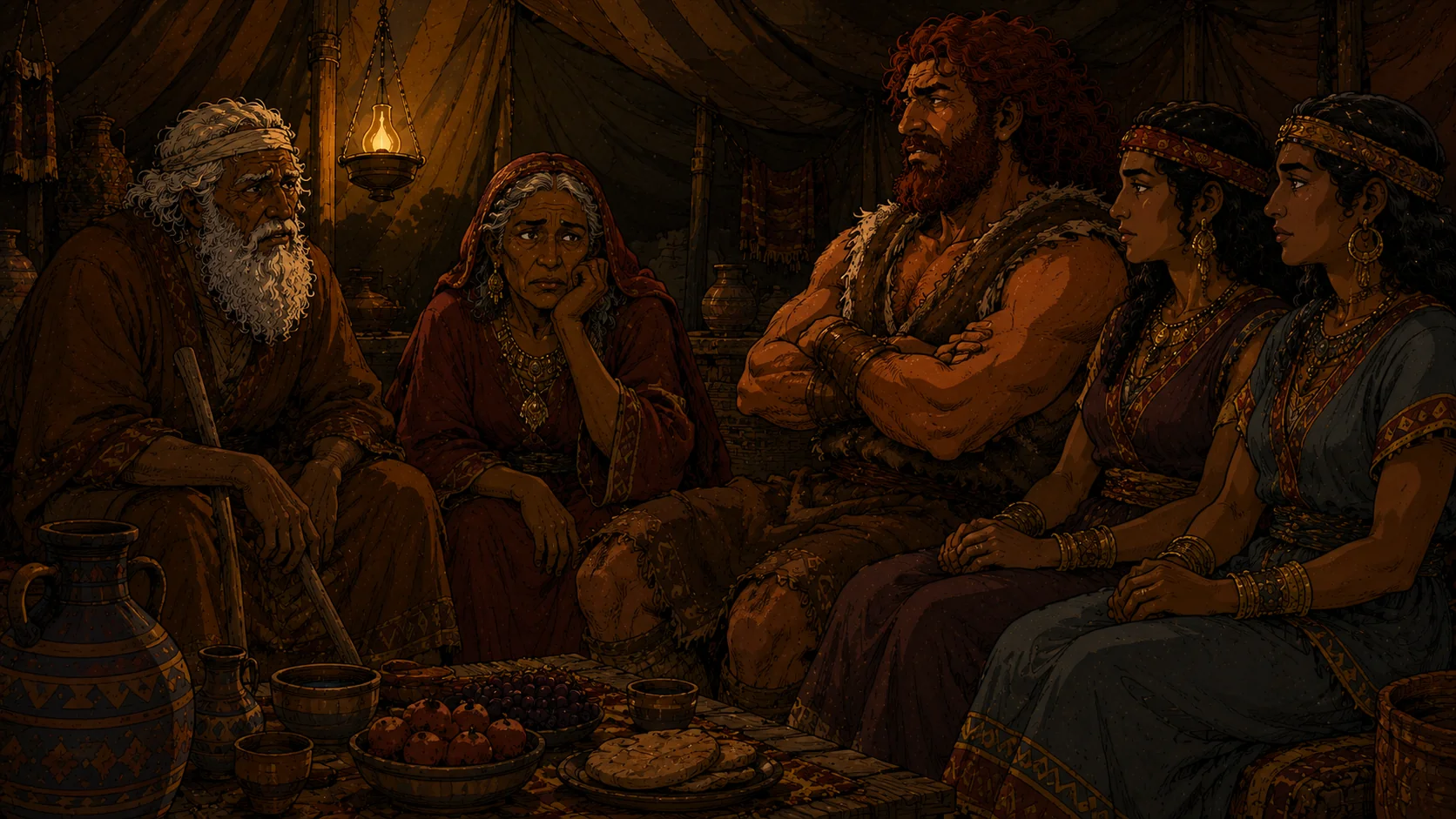
Esau takes two Hittite women as wives. Two words carry the weight: môrat ruach — bitterness of spirit. This grief will shape everything that follows.
View Breakdown →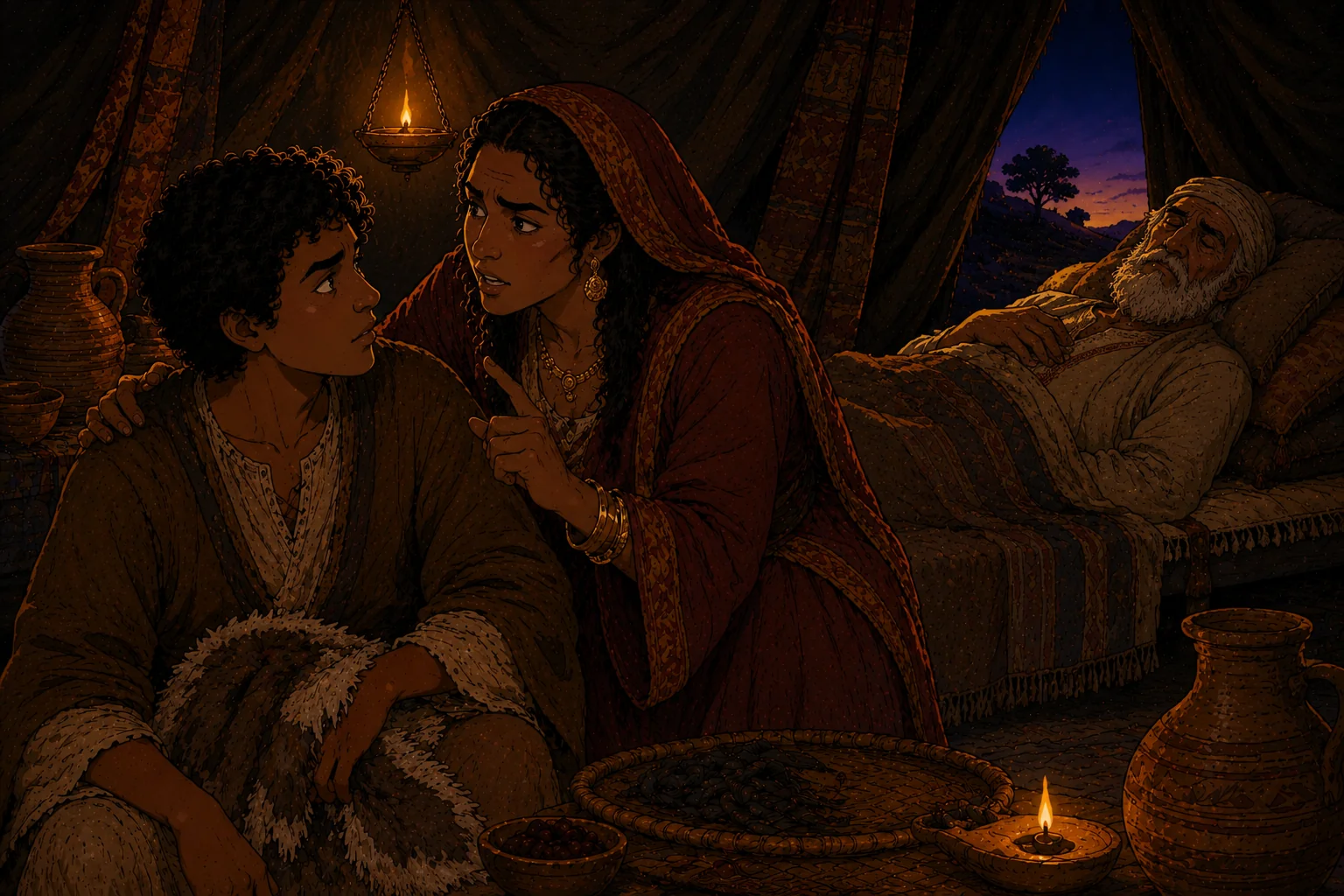
Rebekah overheard Isaac's instruction to Esau. She devised a plan to give the blessing to Jacob. "Listen to my voice, my son. Do what I command you."
View Breakdown →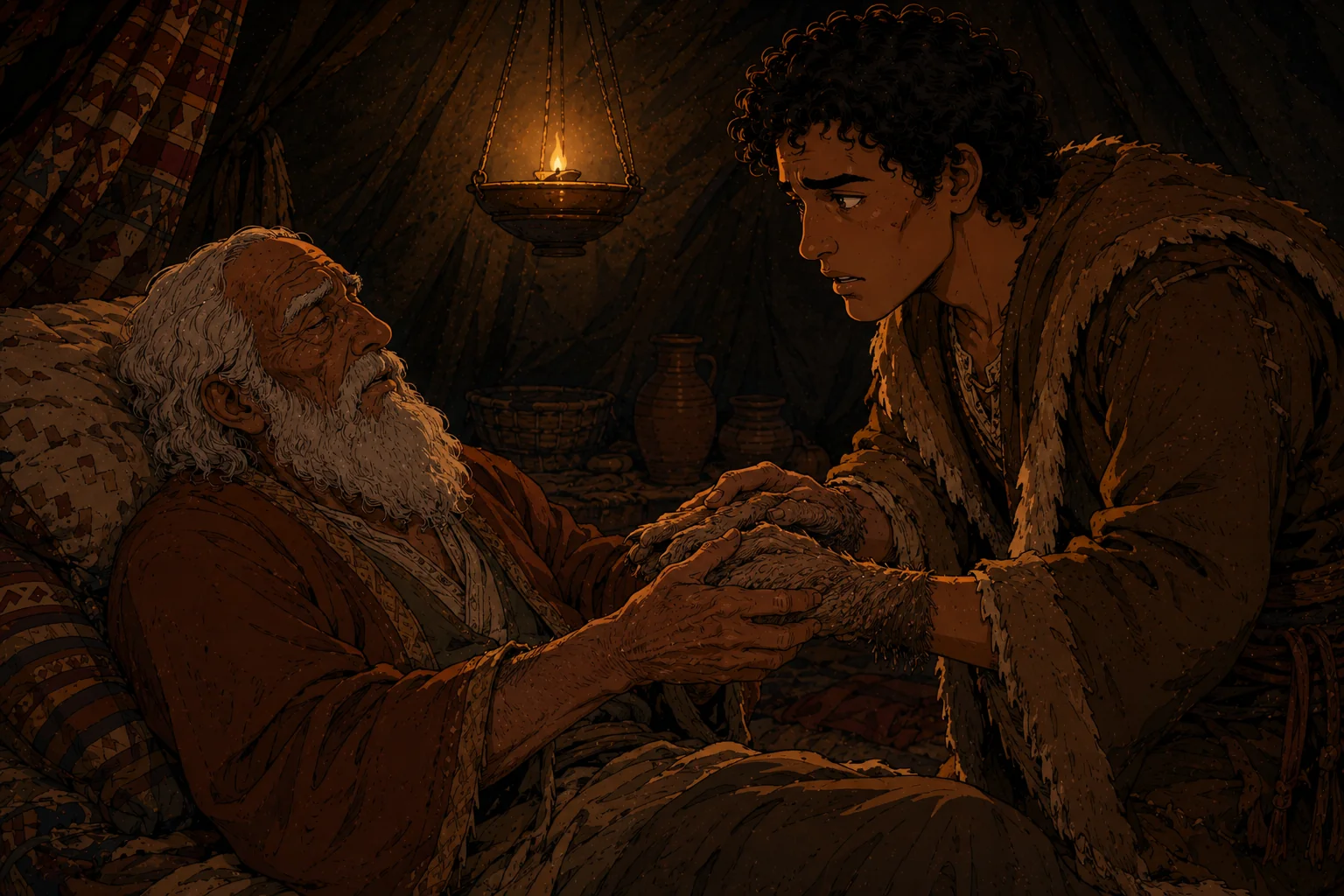
Jacob came before his father wearing Esau's garments and goat skins. "The voice is the voice of Jacob, but the hands are the hands of Esau." Isaac blessed him.
View Breakdown →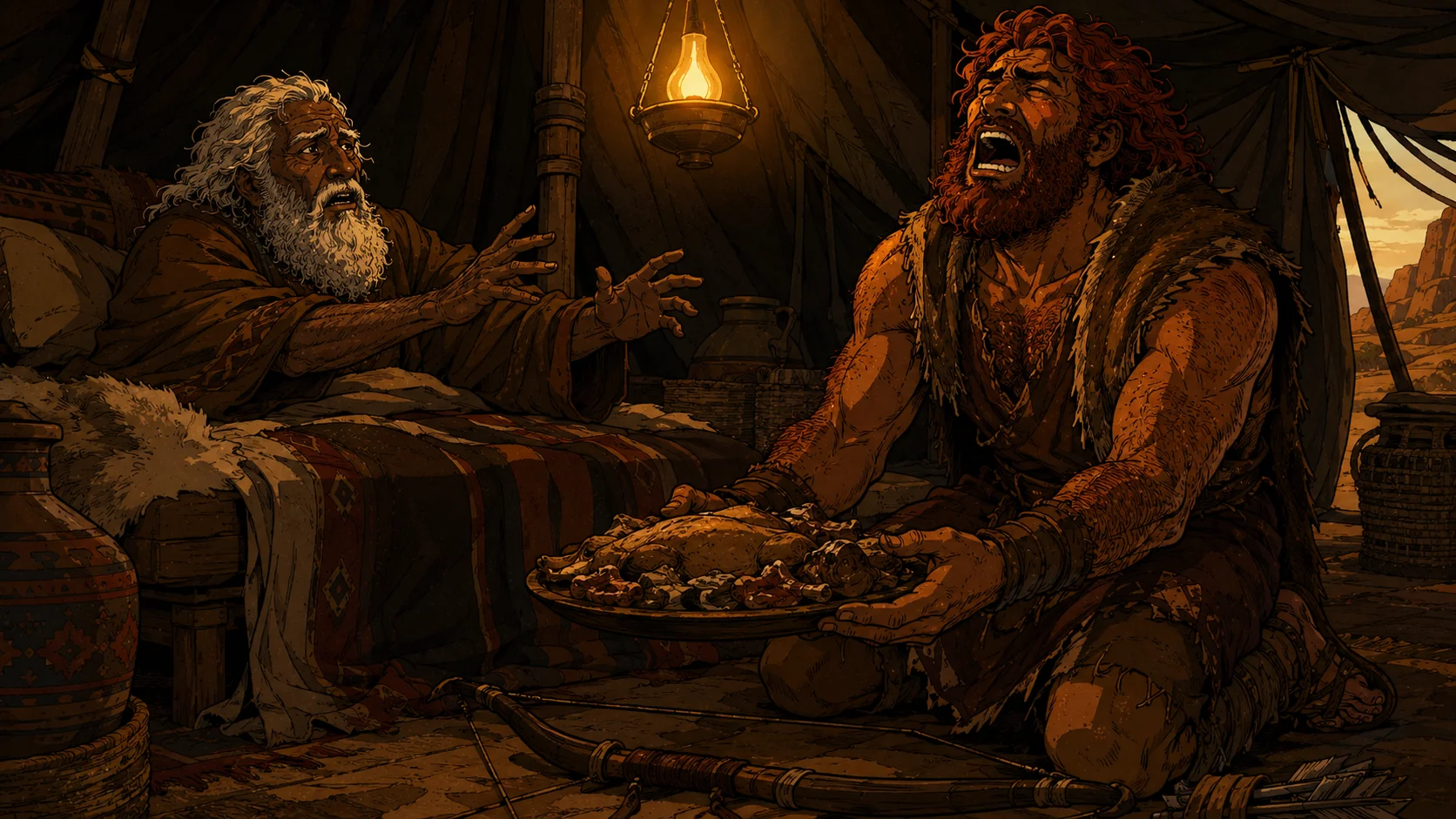
Esau returns from the hunt. The blessing is already gone. He cries with a great and bitter cry — the same Hebrew root used for the slaves' cry in Egypt.
View Breakdown →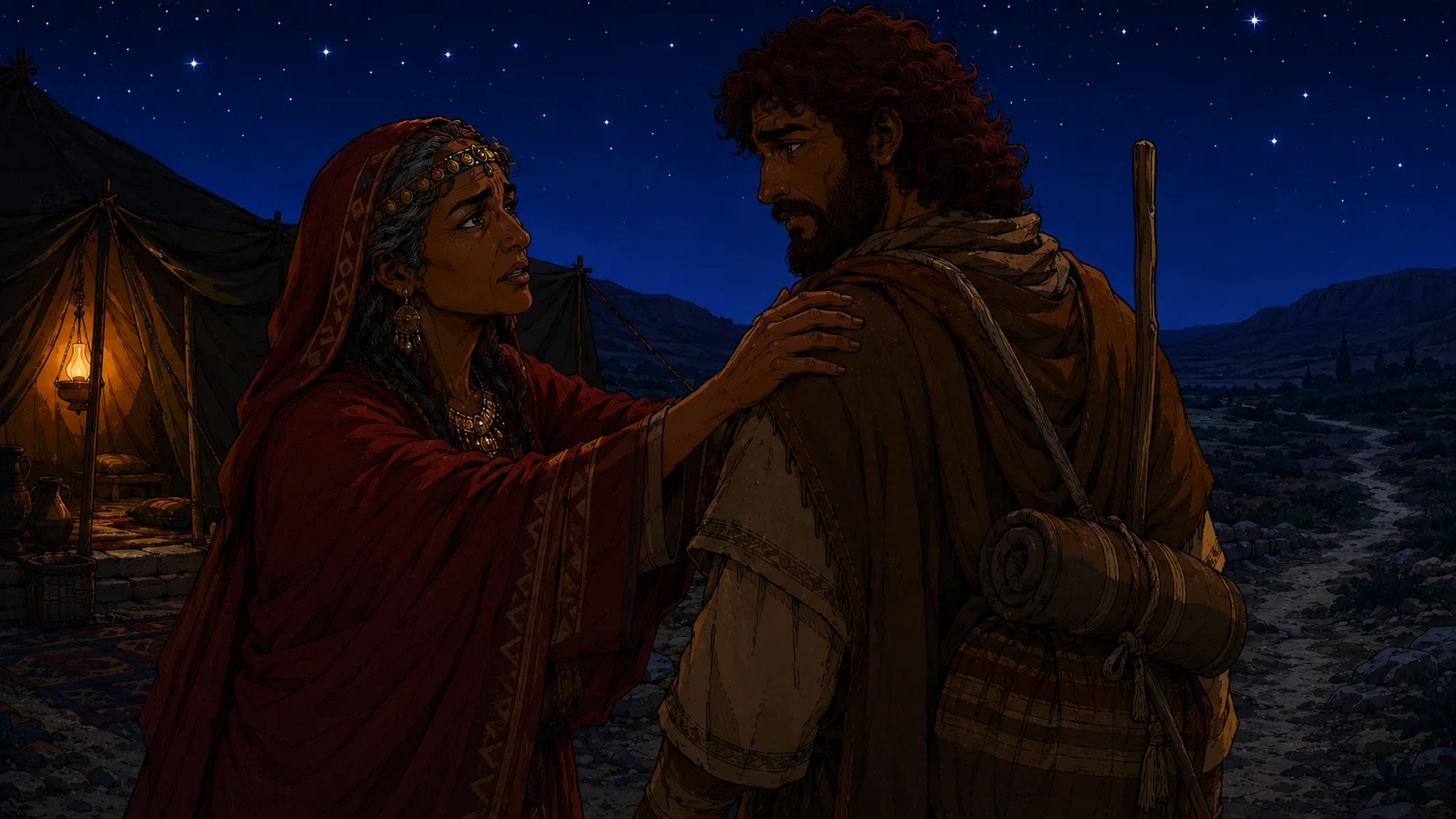
Esau plots to kill Jacob. Rebekah summons her son one final time: flee to Laban in Haran — just a few days. She will never see him again.
View Breakdown →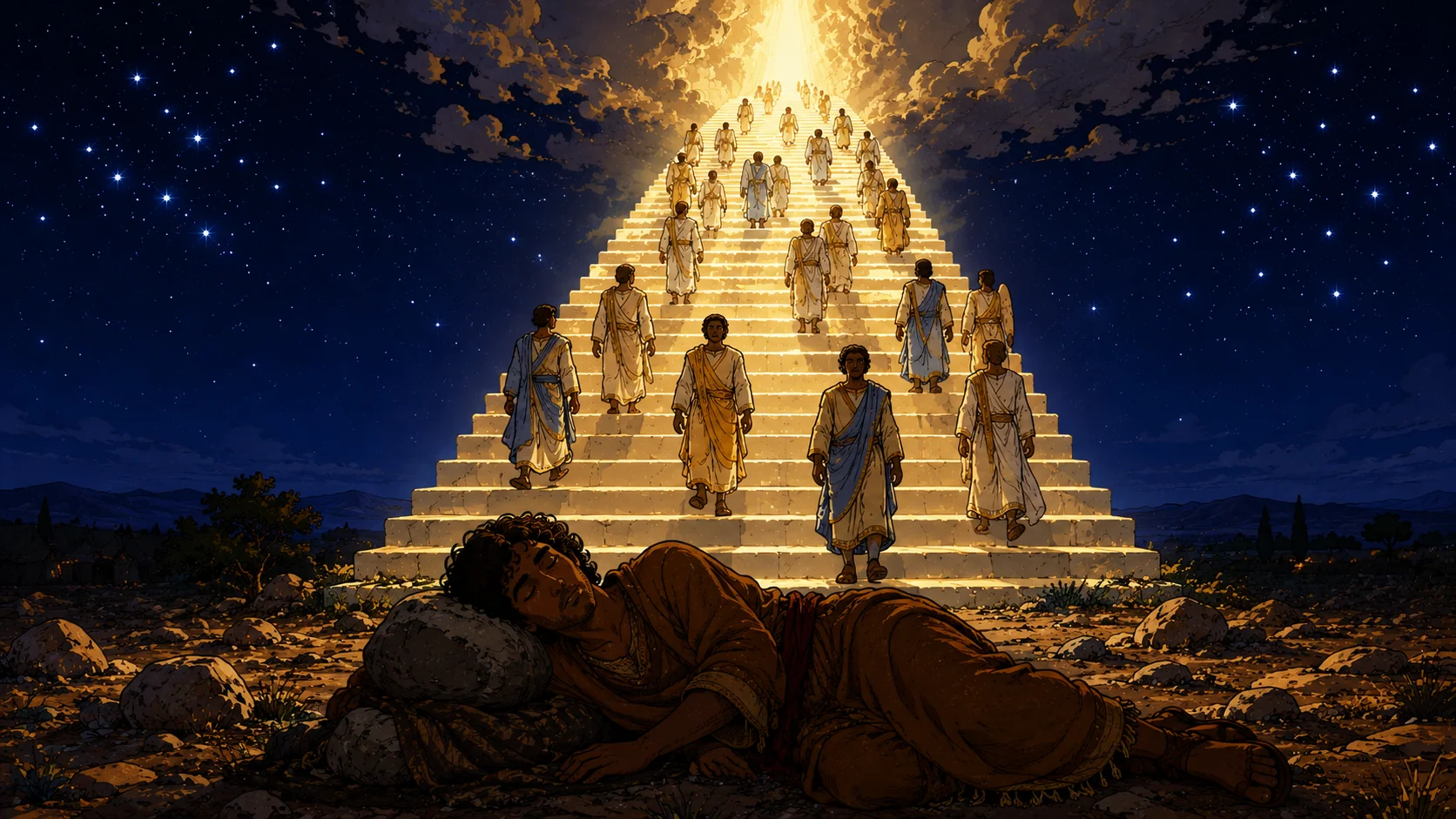
Jacob sleeps alone with a stone for a pillow. A stairway rises from earth to heaven. God speaks to him directly for the first time. He wakes afraid: God is in this place.
View Breakdown →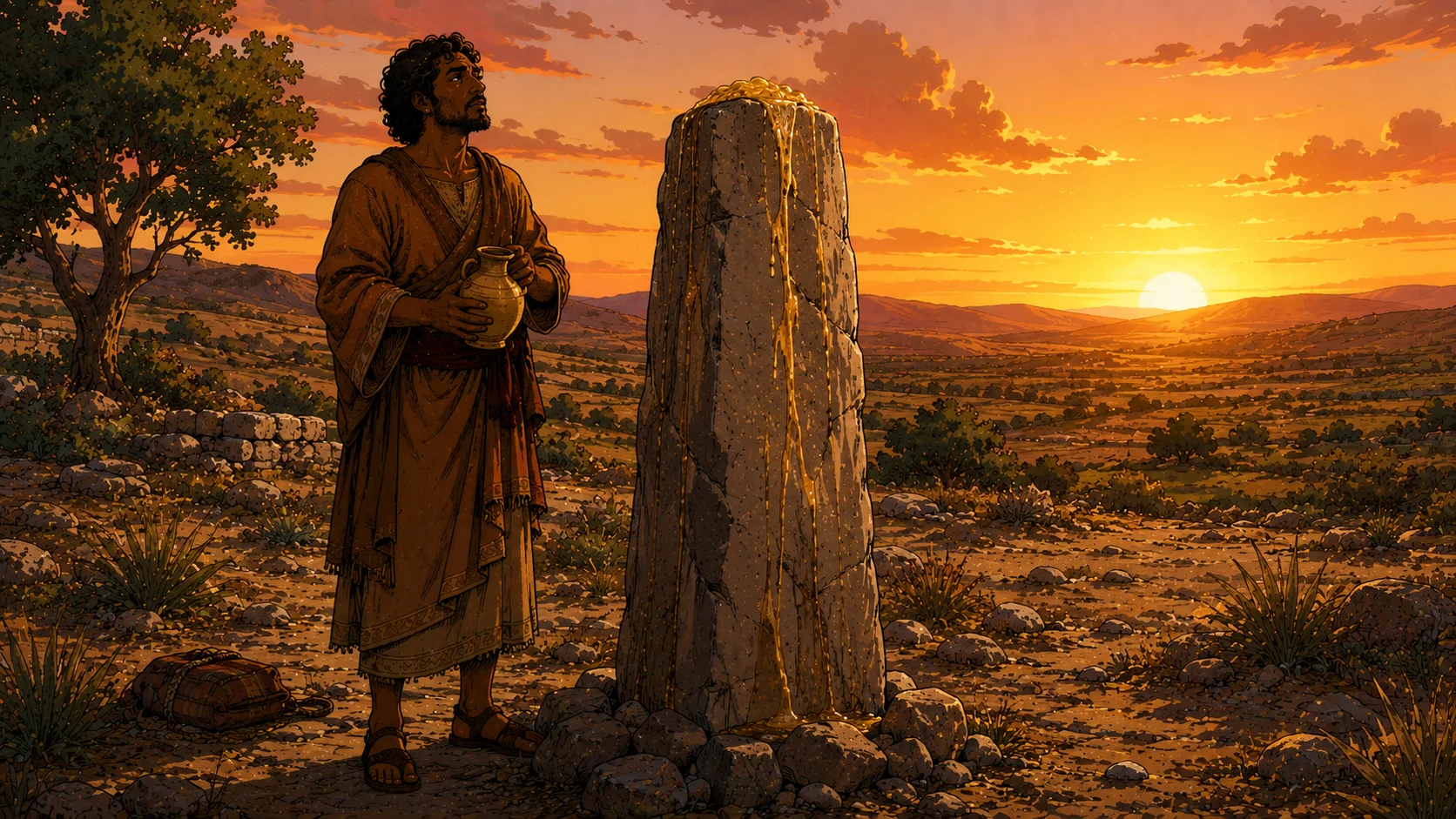
Jacob sets the stone upright and pours oil on it. He names it Bethel — House of God. Then he makes his first vow: if God provides and brings me back, He will be my God.
View Breakdown →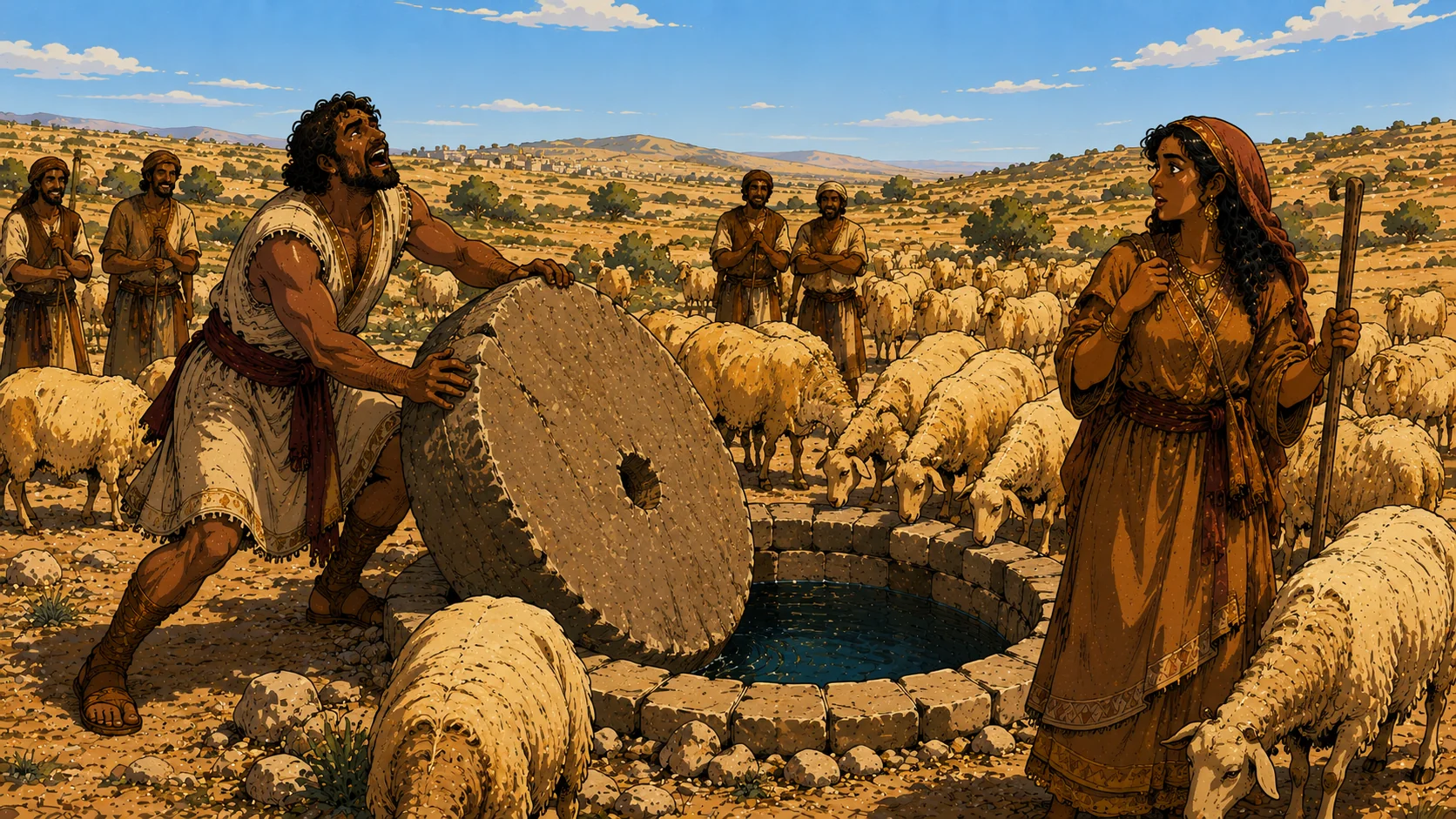
Jacob arrives in Haran and finds Rachel at the well. He rolls the great stone away alone, waters her flock, and weeps. The first man in the Torah to weep at the sight of a woman.
View Breakdown →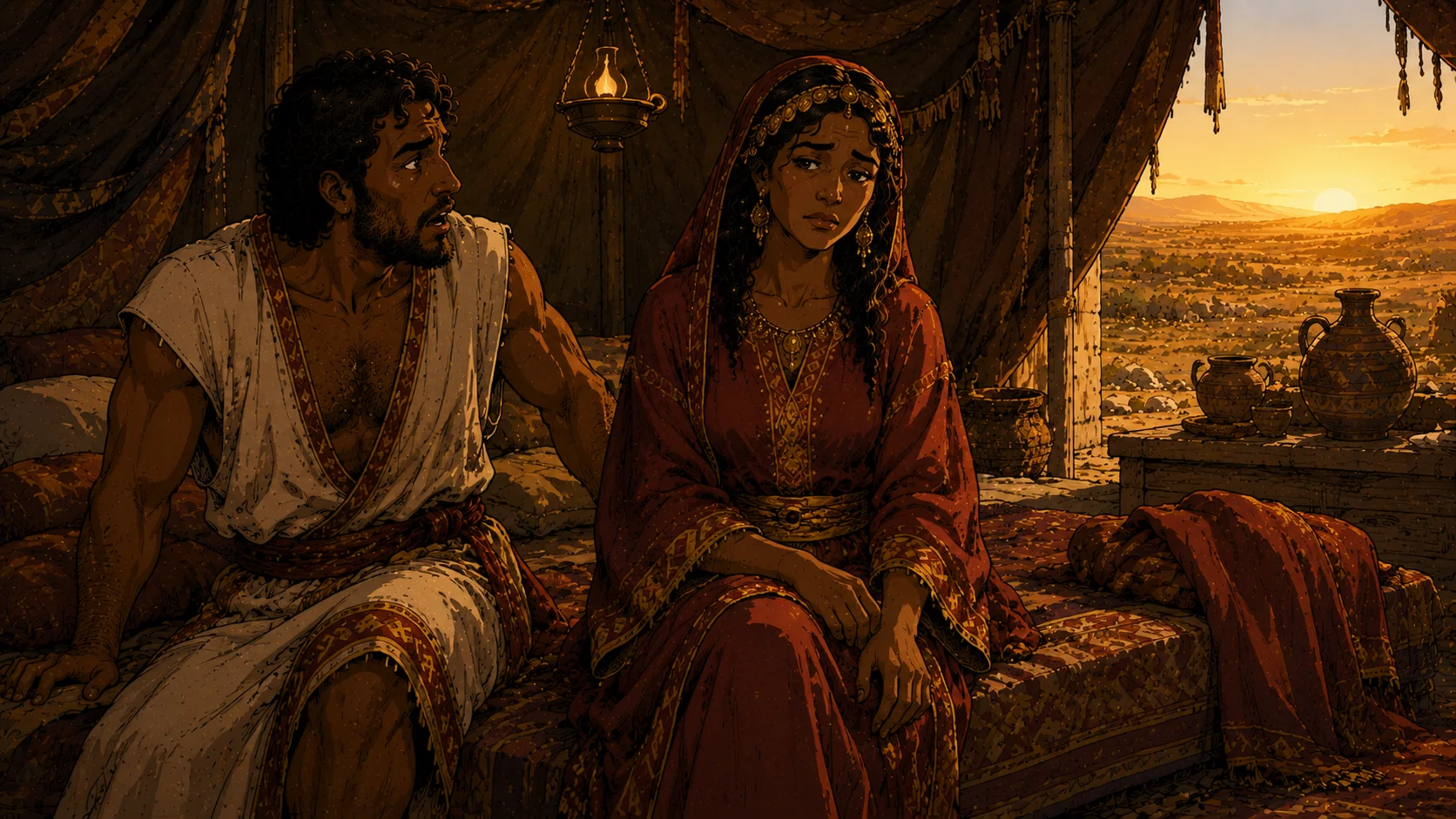
Seven years served for Rachel. In the morning: behold, it was Leah. Laban's explanation is exact: we do not give the younger before the firstborn. Jacob hears his own story turned against him.
View Breakdown →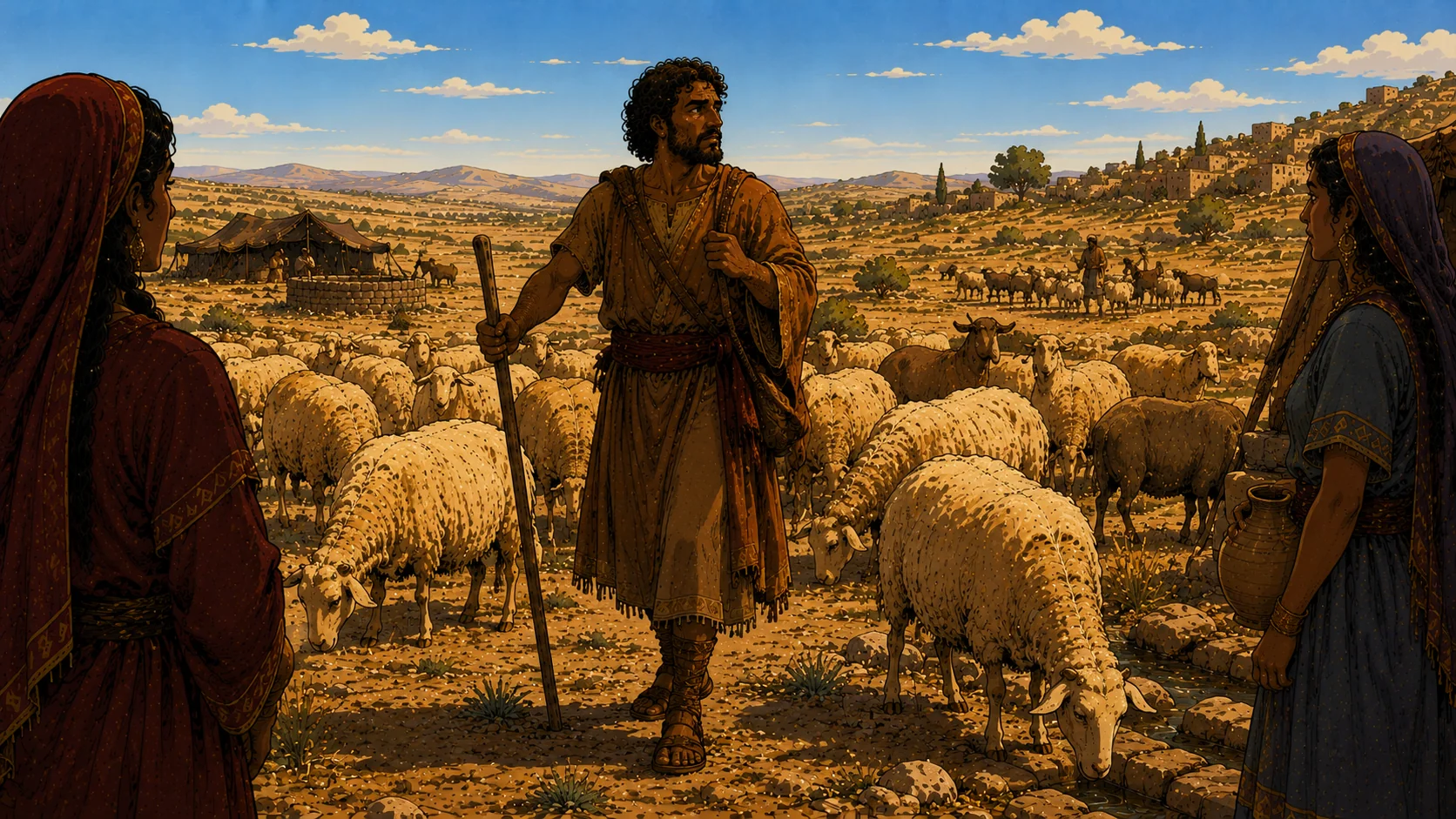
Fourteen years total for two women. He loves Rachel more than Leah. That single comparative — more — will shape the fate of twelve tribes.
View Breakdown →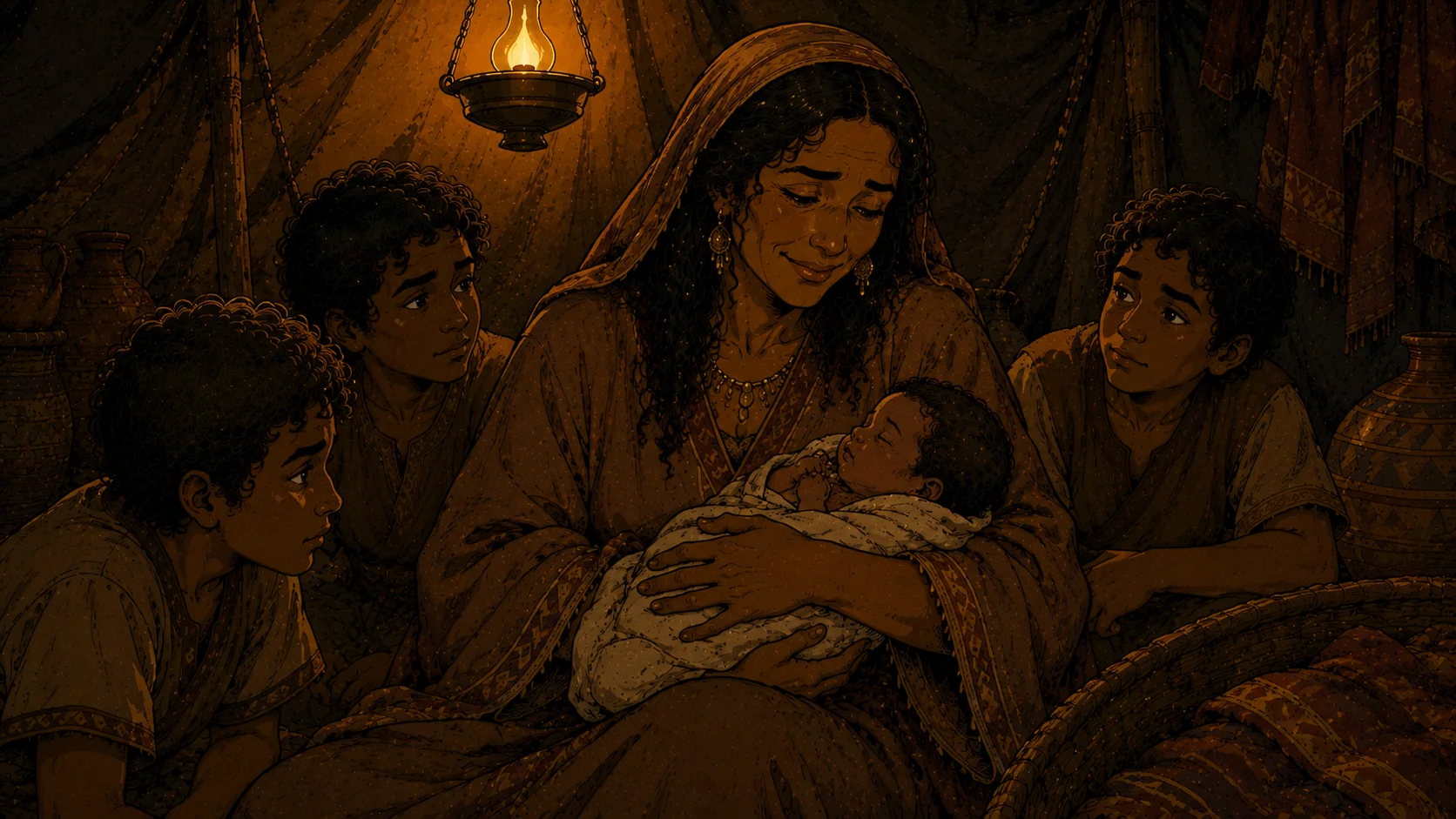
God sees that Leah is hated and opens her womb. Reuben, Simeon, Levi, Judah. Four sons, four prayers to be loved. With Judah, she stops asking and simply praises.
View Breakdown →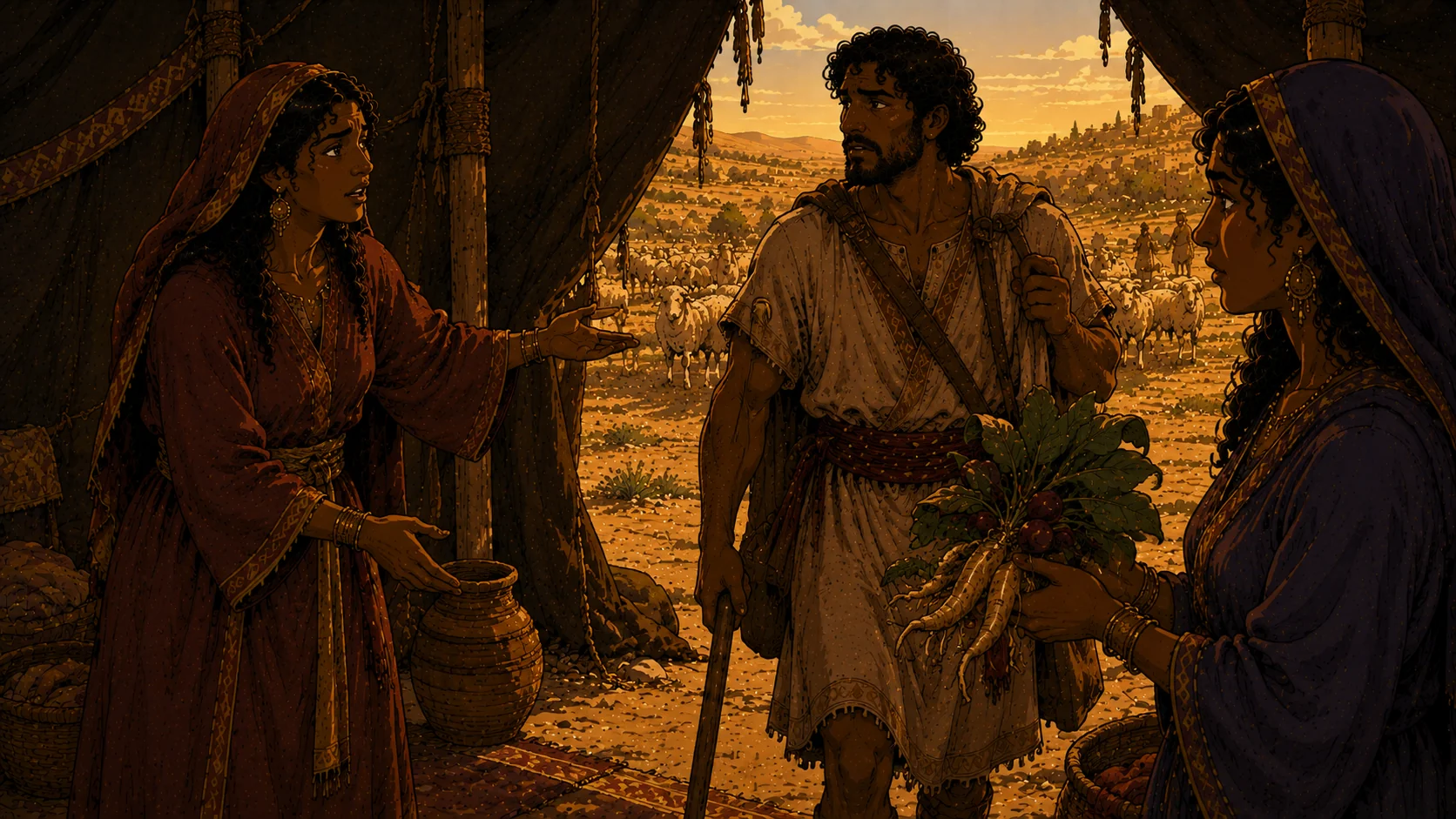
Two sisters negotiating over one man. Leah trades her son's mandrakes for a night with Jacob. Issachar is born from a hired night. Neither woman gets what she really wants.
View Breakdown →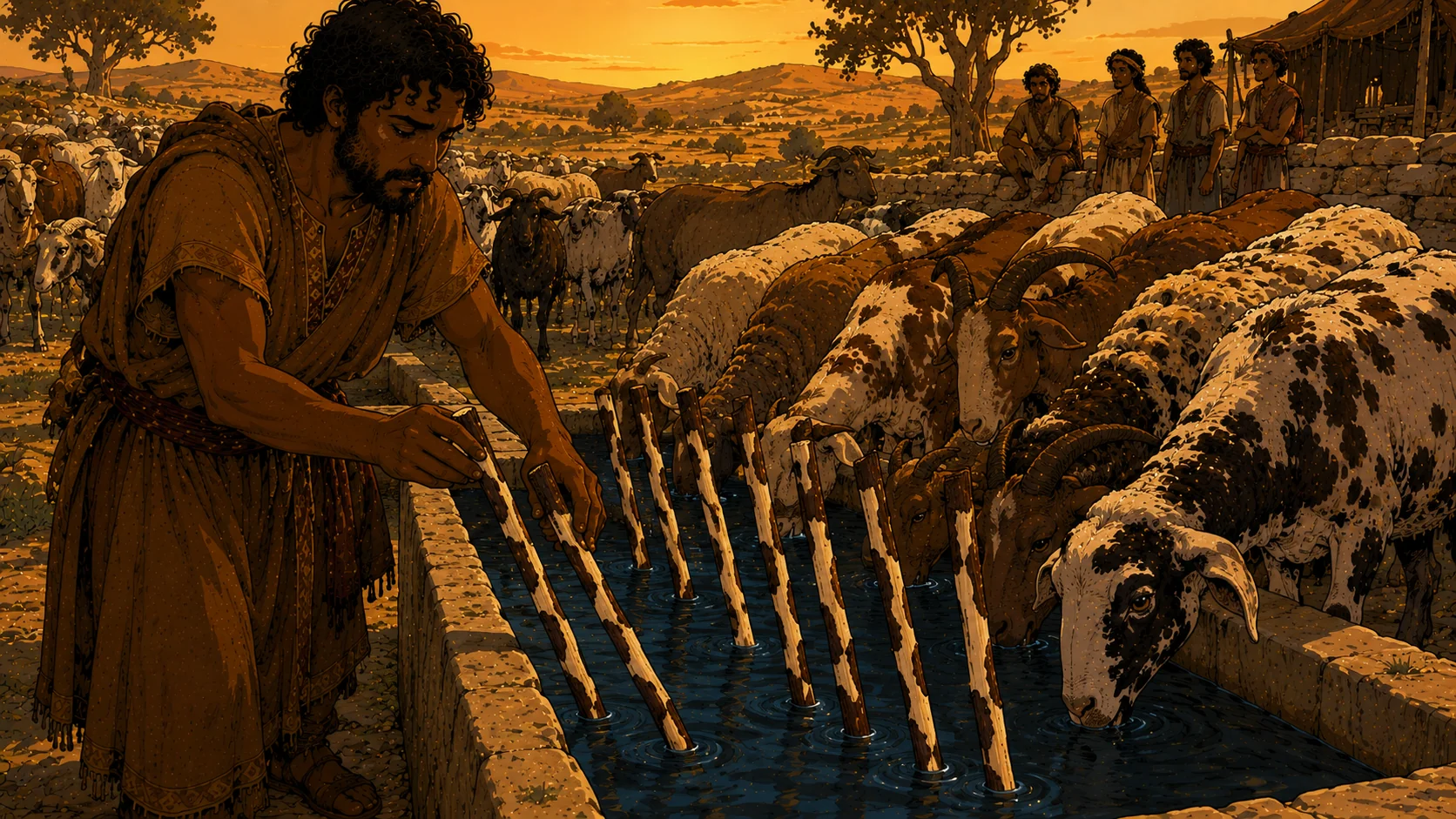
Jacob sets striped rods at the watering troughs. The flock conceives before them and produces speckled offspring. Over six years his flock grows strong and Laban's weakens.
View Breakdown →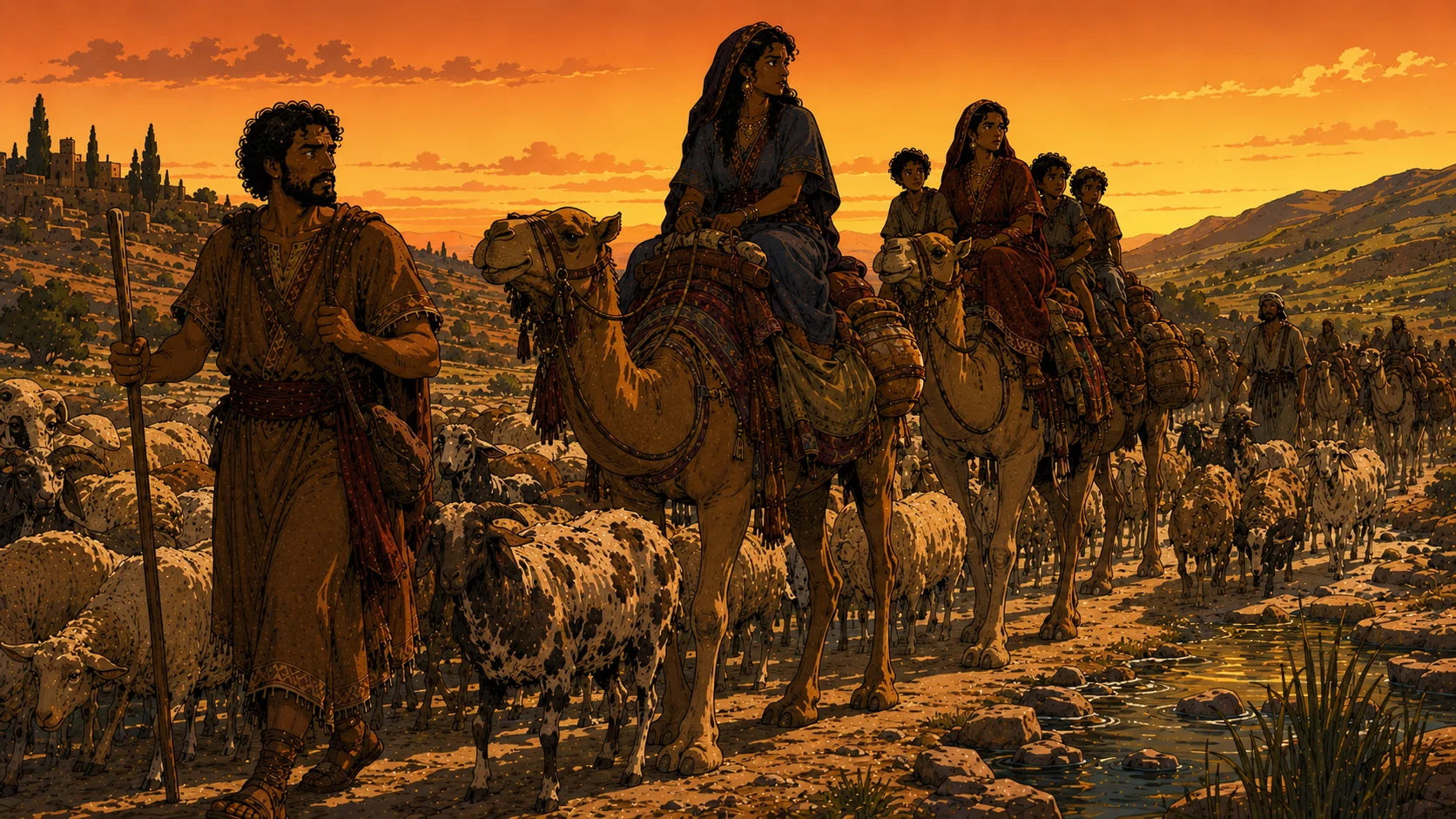
Jacob loads his family and departs without telling Laban. Rachel steals her father's household gods. Jacob stole Laban's heart — Hebrew for leaving in secret. God had said: go.
View Breakdown →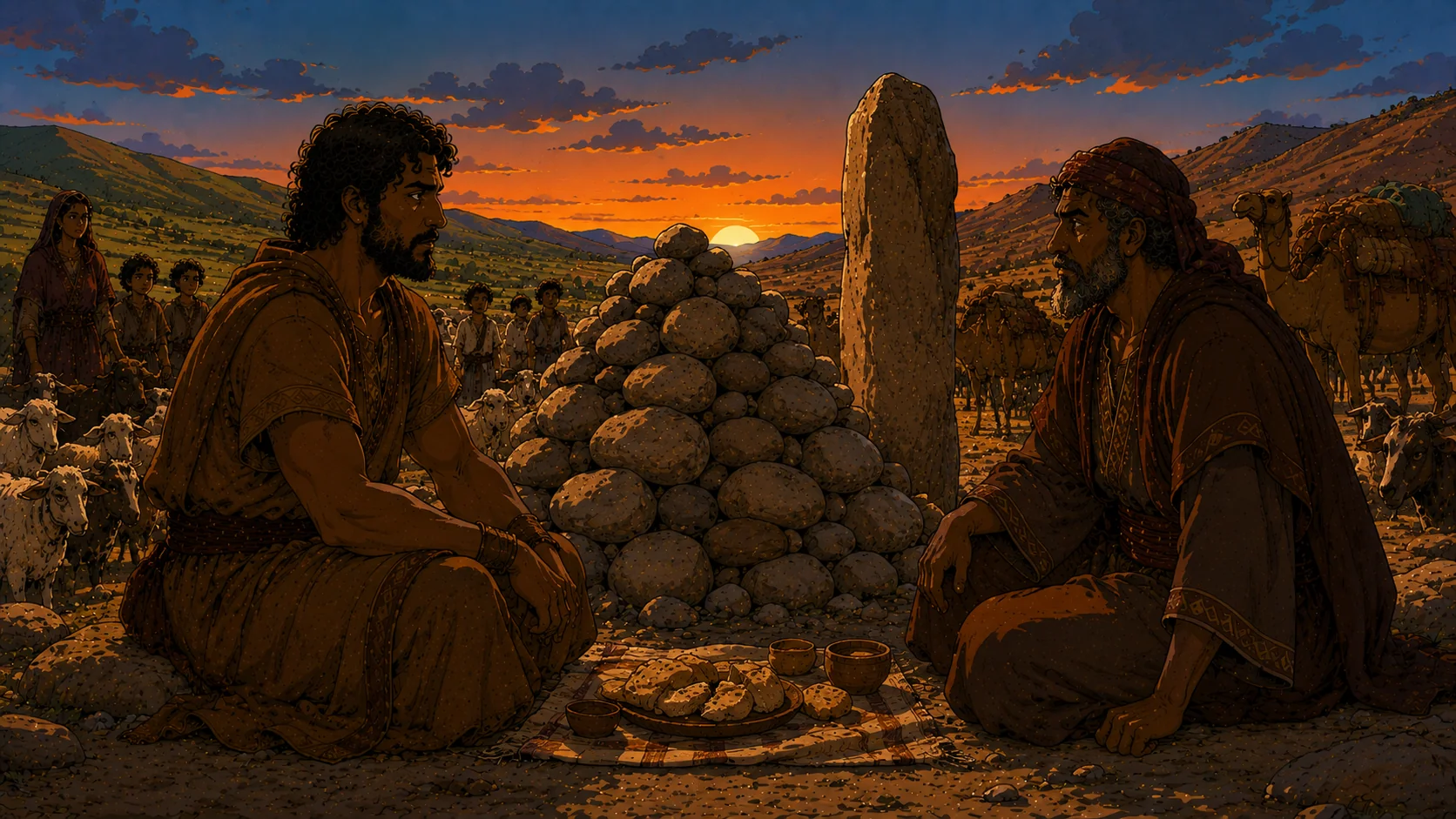
Laban and Jacob raise a heap of stones. Mizpah: the LORD watch between us when we are absent from one another. What is quoted as a blessing was originally a border warning.
View Breakdown →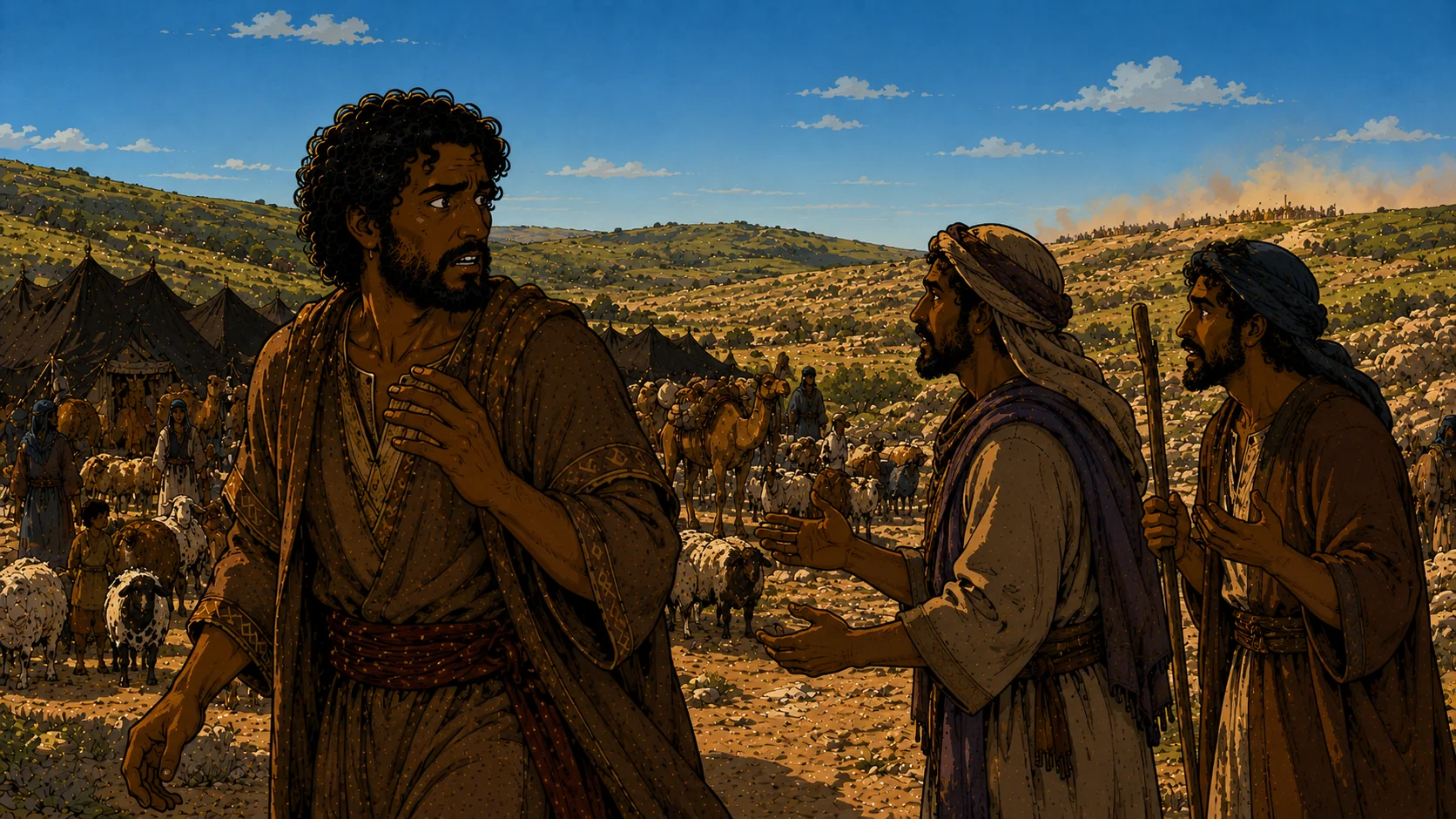
Jacob sends humble messengers to Esau. They return: Esau is coming with four hundred men. Jacob divides his camp into two. His cleverness has no answer for this.
View Breakdown →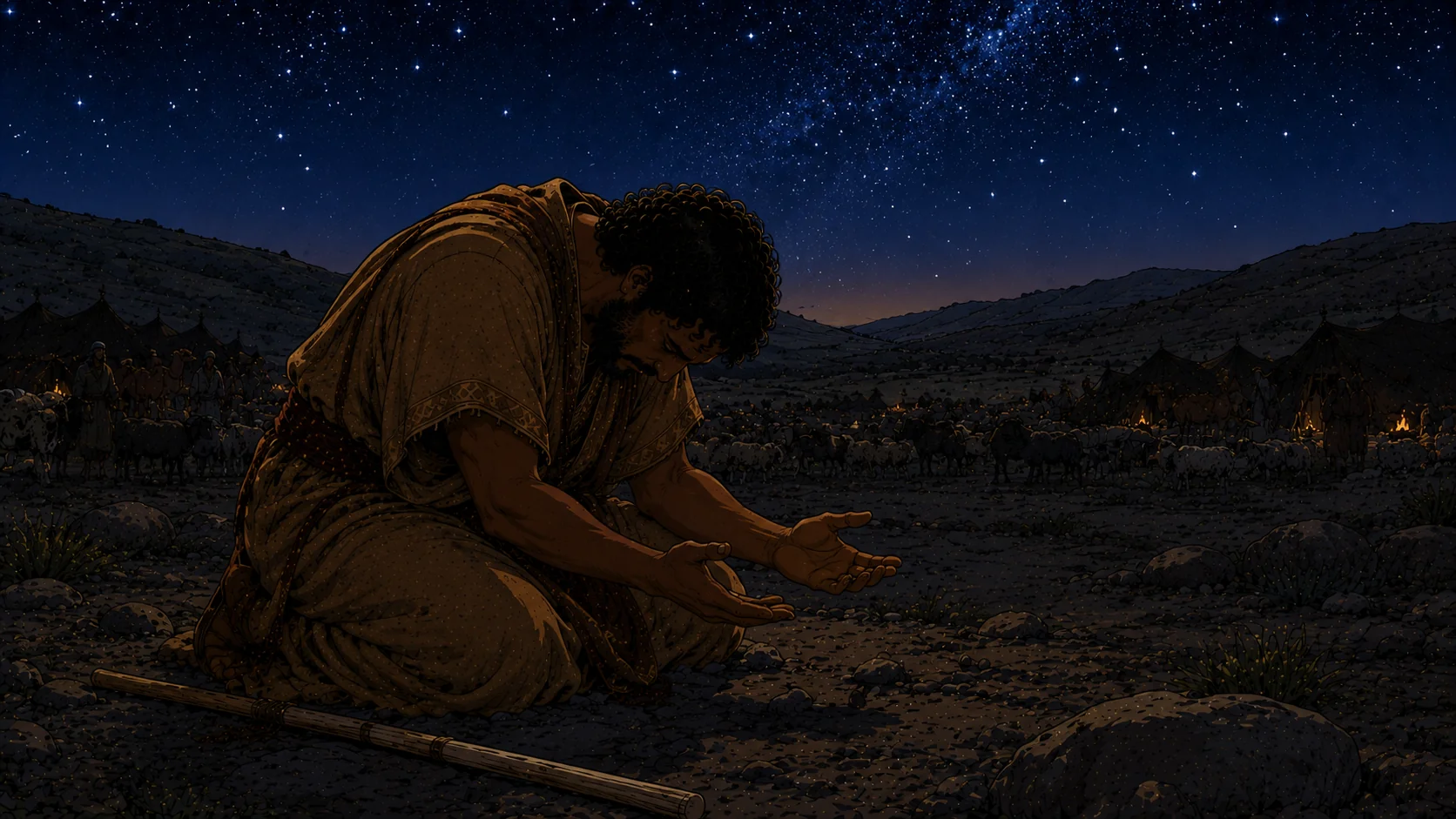
Jacob prays the most complete prayer in the Patriarchal narratives: address, confession, petition, promise. "I am not worthy of the least of all Your mercies."
View Breakdown →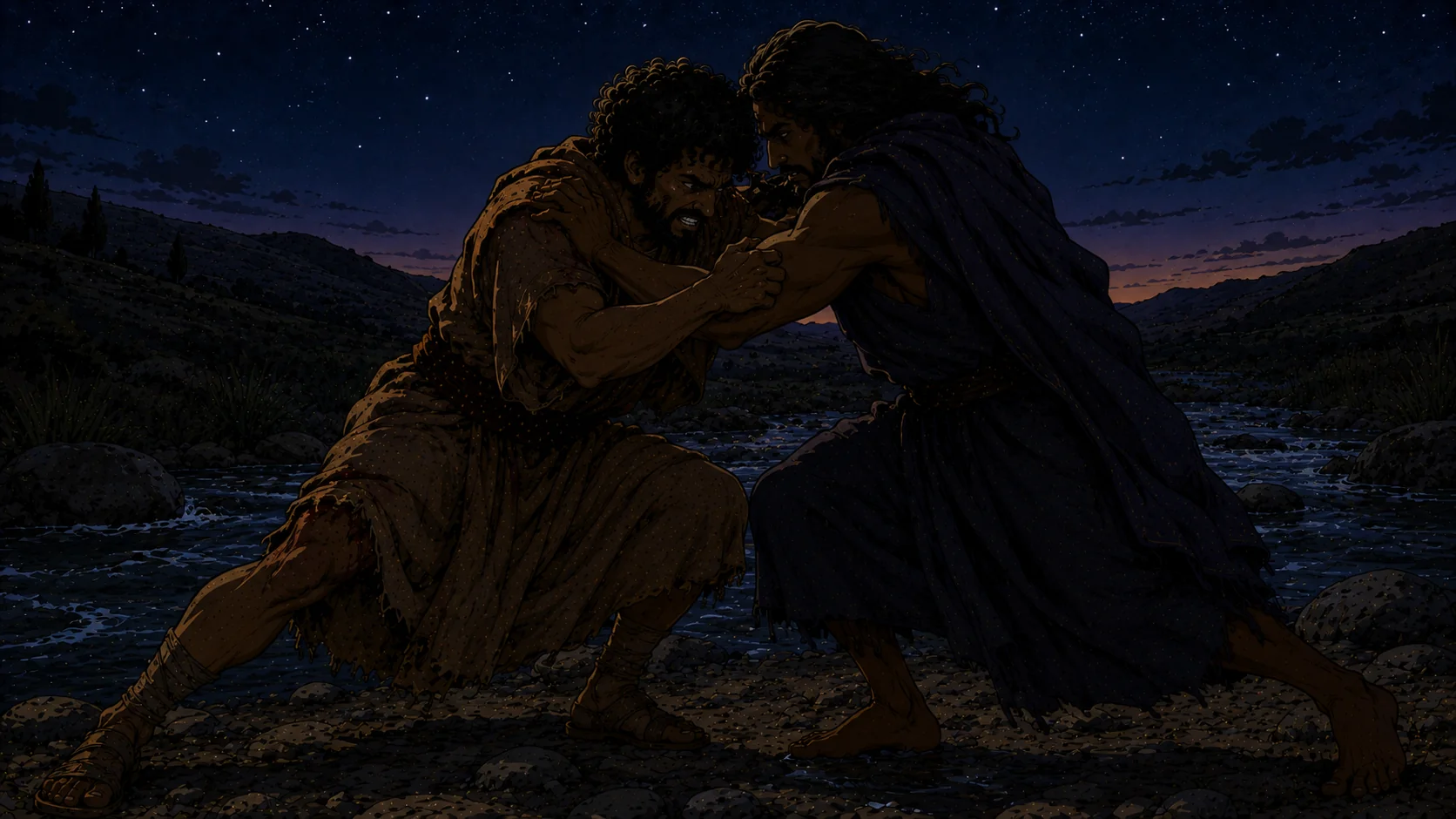
Jacob is alone. A man wrestles with him until dawn. His hip is dislocated. He still holds on. He demands a blessing. He receives a new name. He limps into the morning.
View Breakdown →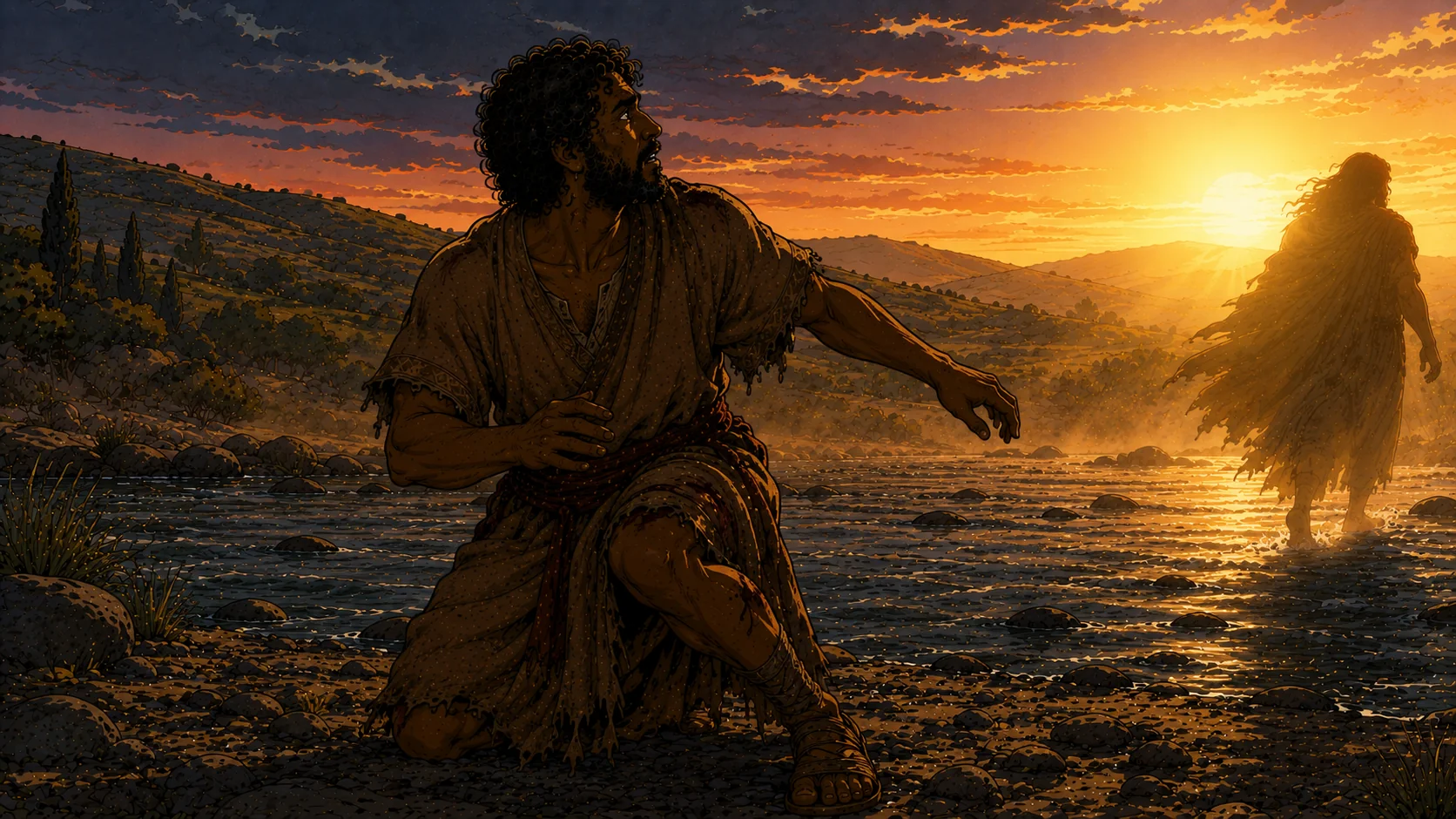
Jacob — the heel-grasper, the supplanter — becomes Israel: one who strives with God. The wound and the blessing come from the same touch. He carries the limp forward.
View Breakdown →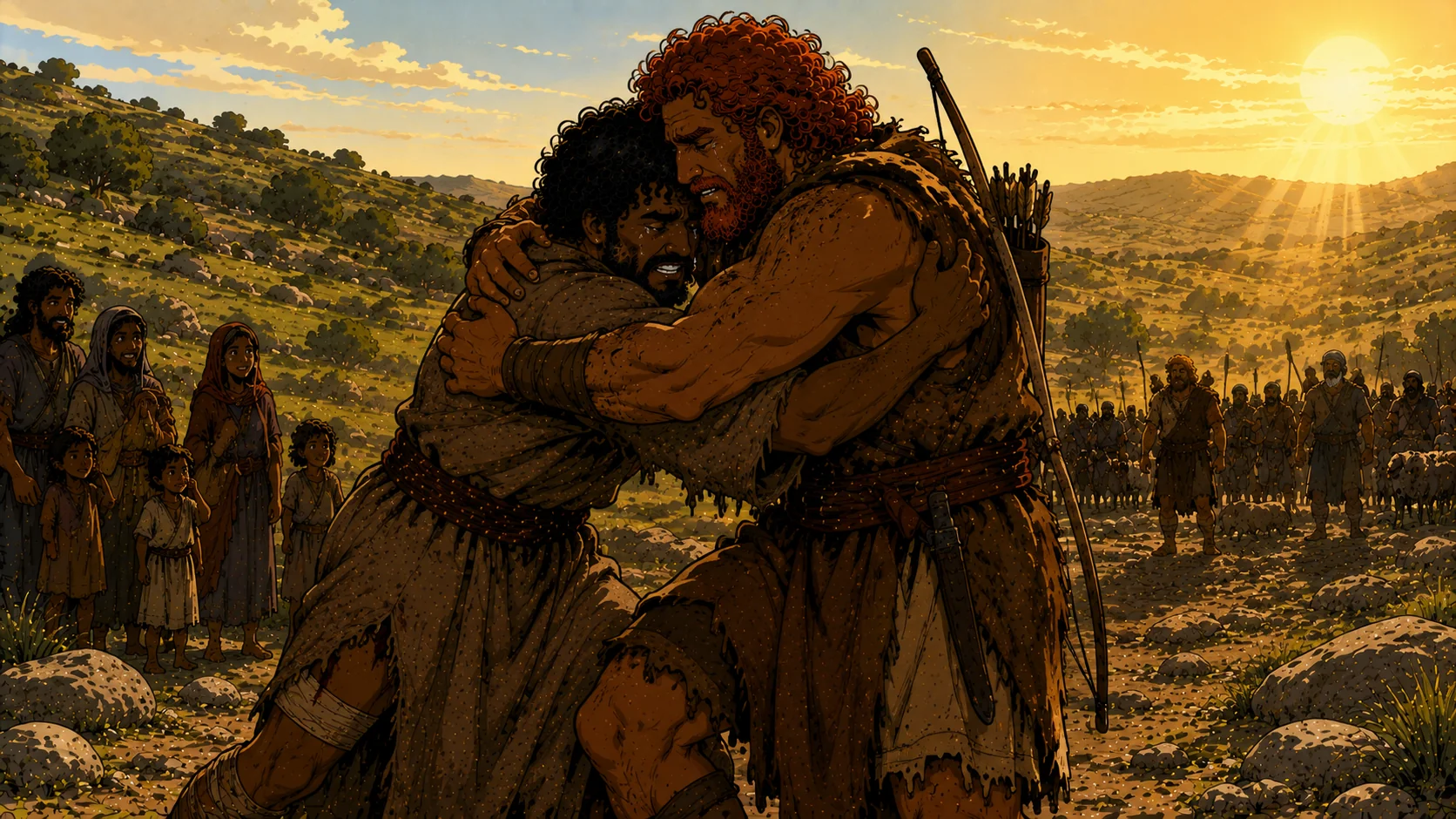
Esau runs to Jacob, falls on his neck, and kisses him. They weep. The violent reunion Jacob feared becomes an embrace. "To see your face is like seeing the face of God."
View Breakdown →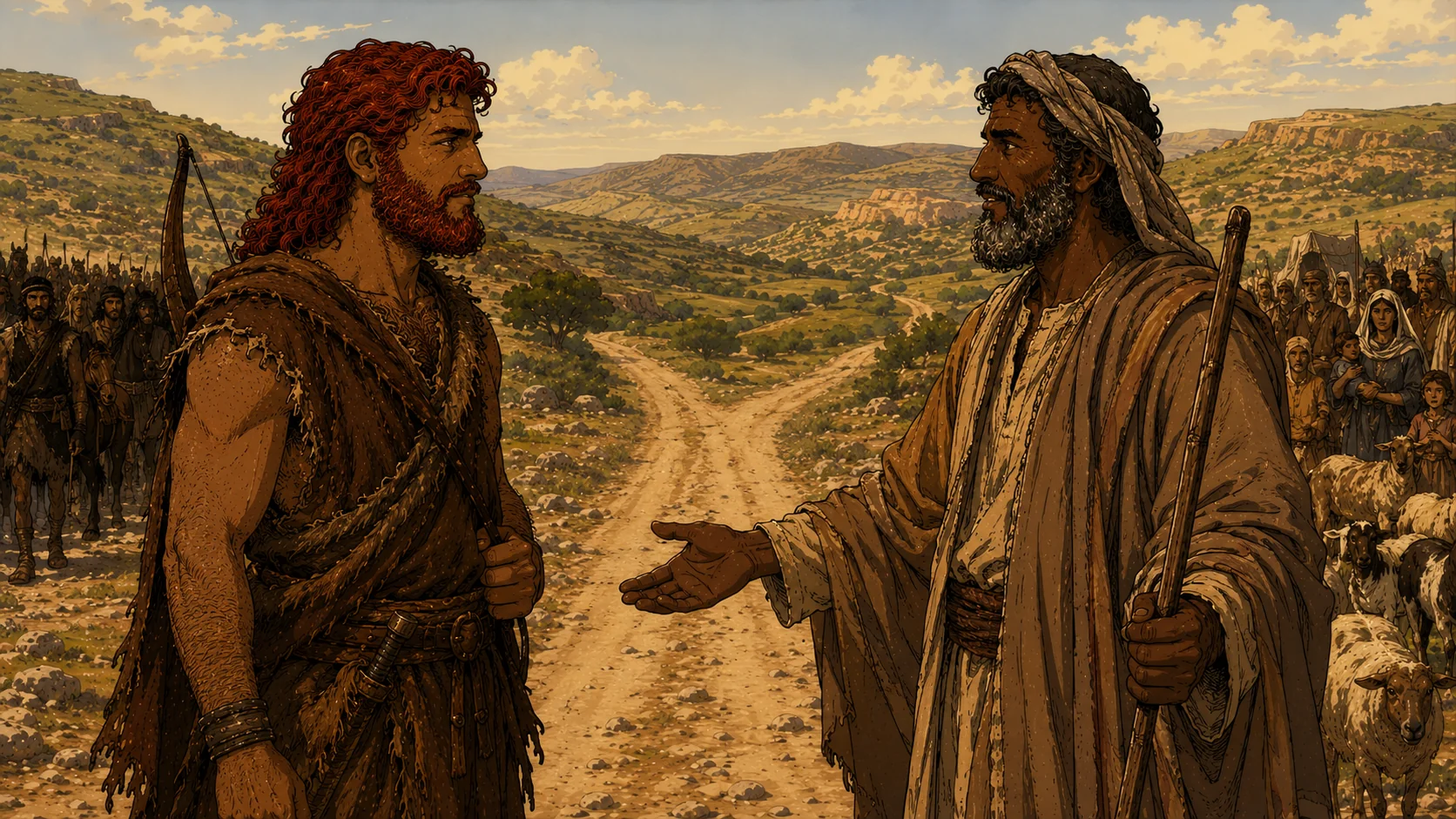
Esau offers to escort Jacob north. Jacob declines with careful diplomacy — "Go ahead, my lord" — and turns toward Succoth instead. Two brothers, two directions, two destinies.
View Breakdown →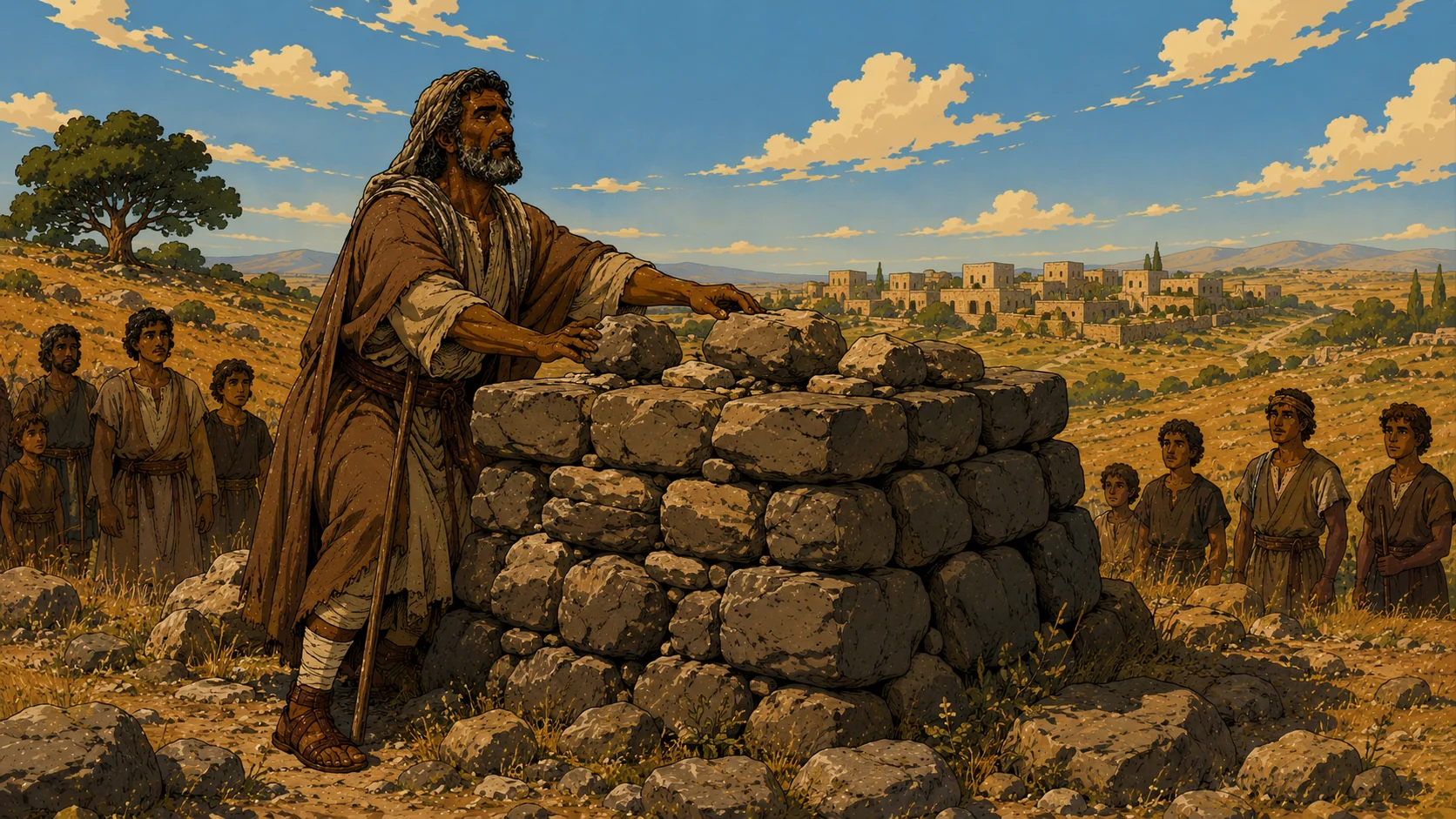
Jacob arrives shalem — whole, complete — at Shechem. He buys land, pitches his tent, and names his altar El Elohe Israel: God, the God of Israel. The first time Israel is used as a nation's name.
View Breakdown →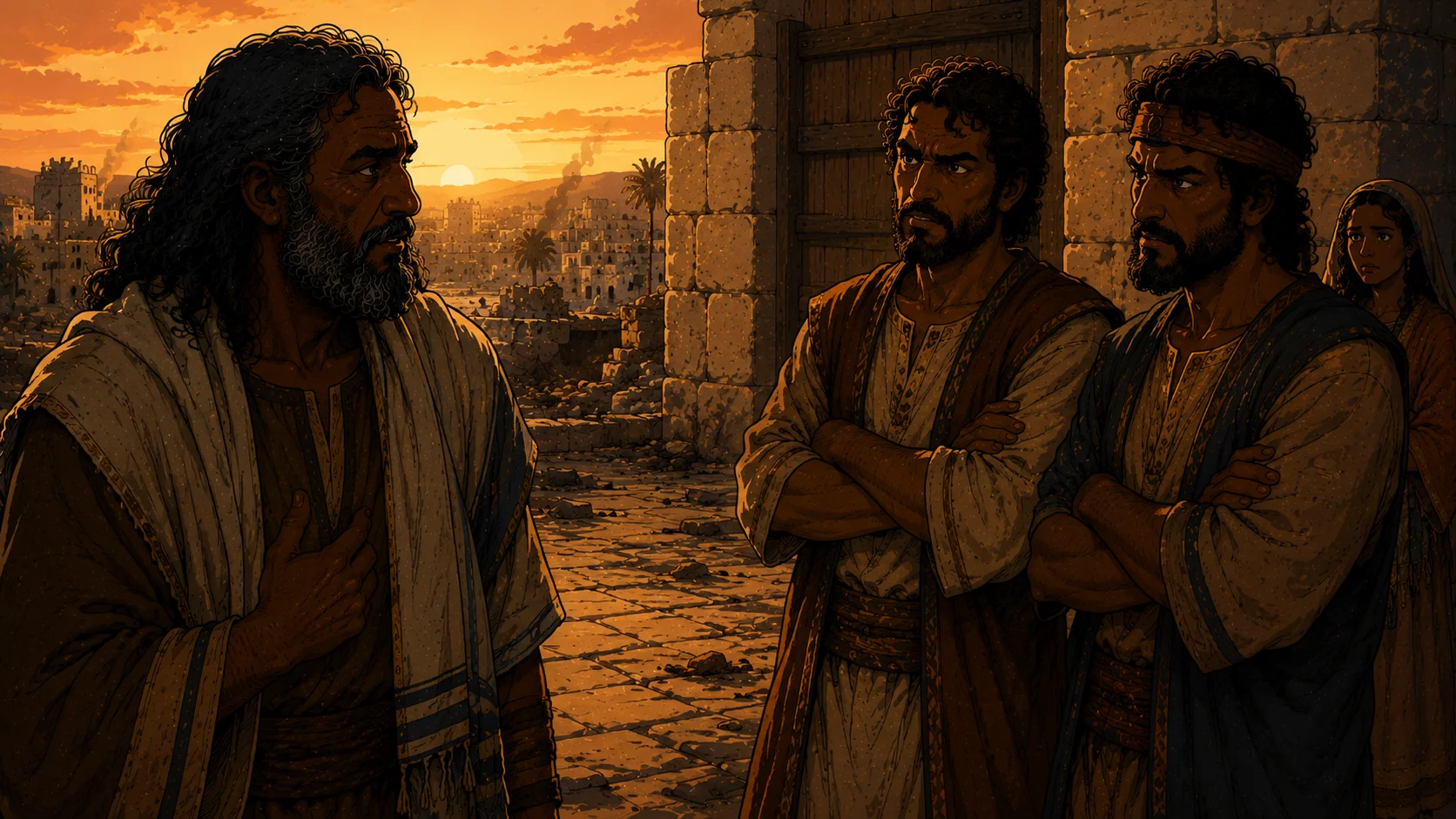
Dinah goes out to see the daughters of the land. Shechem son of Hamor sees her, takes her — and then his soul clings to her. He speaks tenderly to her heart. His father goes to Jacob.
View Breakdown →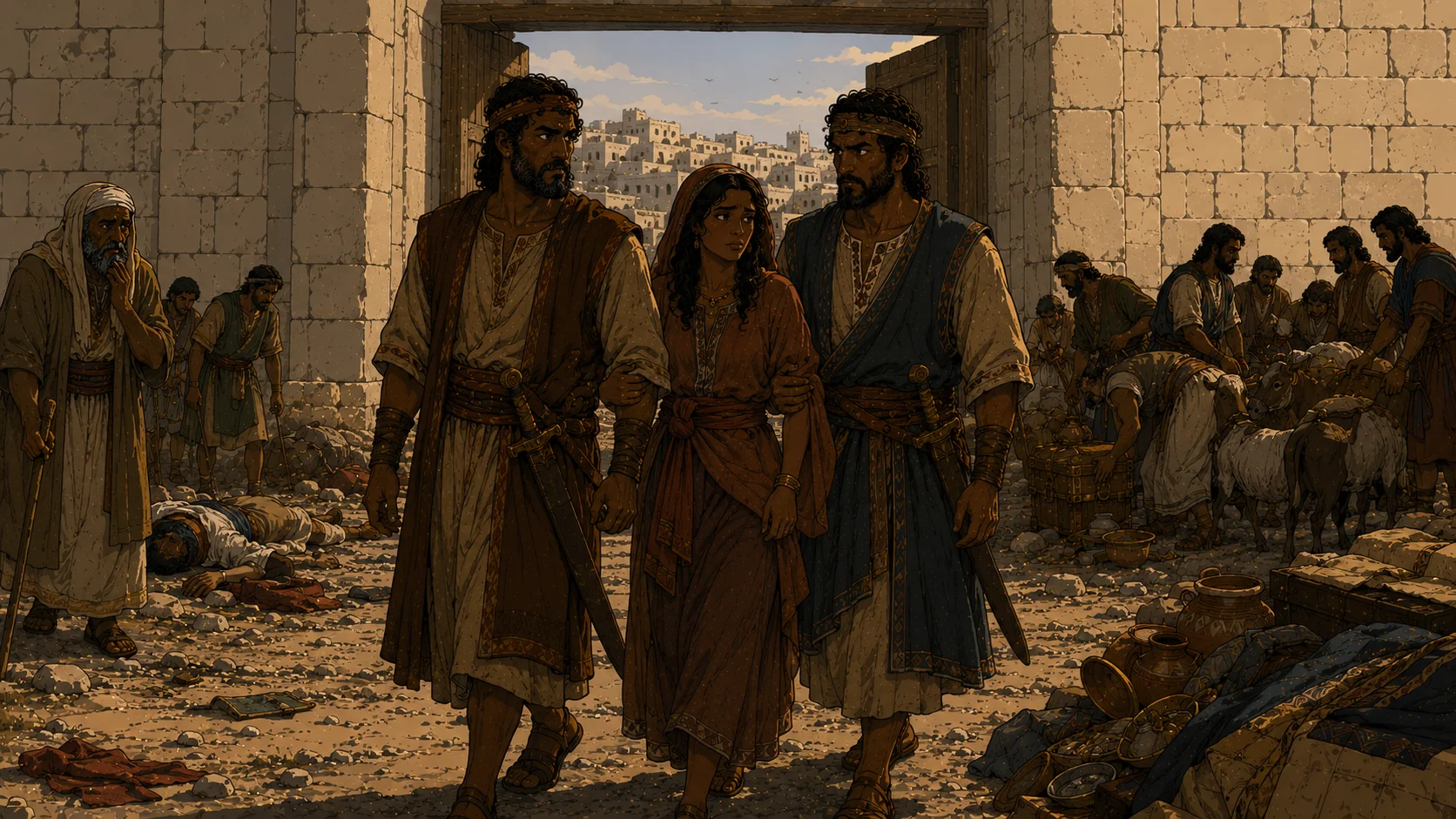
Three days after every man in Shechem was circumcised, Simeon and Levi entered with swords and killed them all. Jacob protests. They answer: "Should he have treated our sister as a harlot?"
View Breakdown →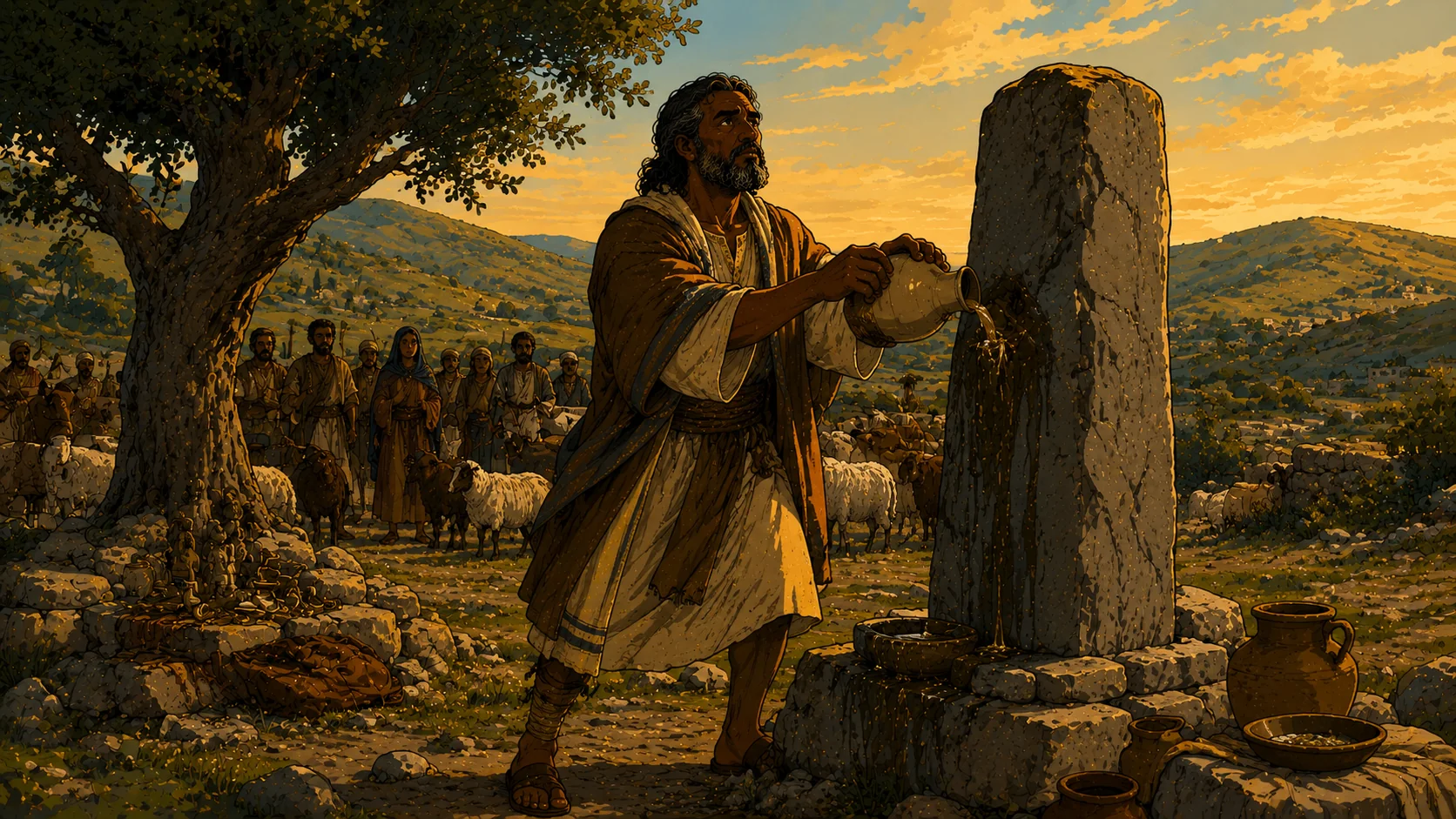
God commands Jacob to go up to Bethel and build an altar. Jacob buries all foreign gods under the oak tree. The terror of God falls on surrounding cities as they journey. At Bethel, God confirms the name: Israel.
View Breakdown →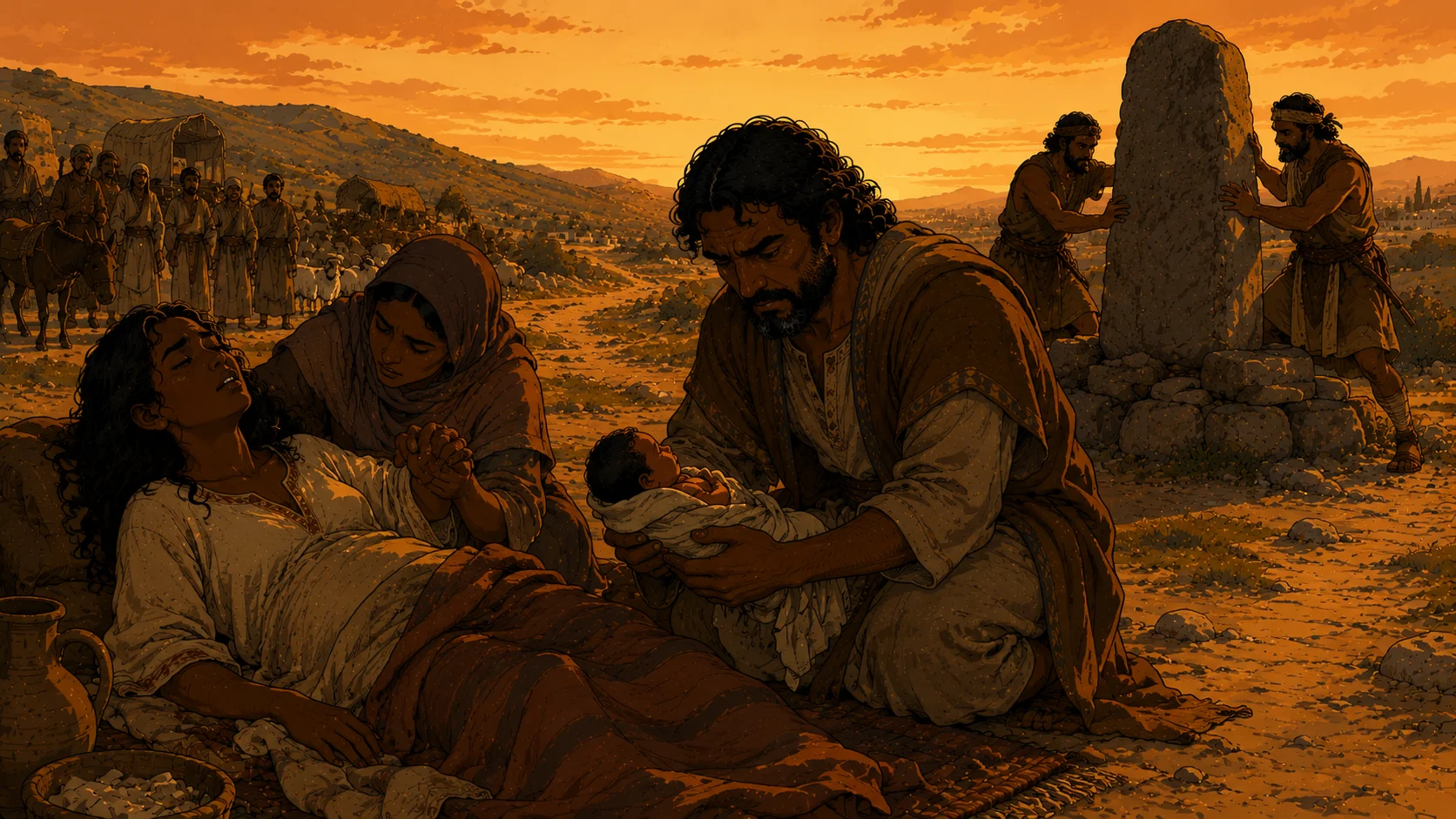
On the road from Bethel, Rachel goes into hard labor. The midwife says "fear not, another son." With her last breath she names him Ben-Oni — son of my sorrow. Jacob names him Benjamin.
View Breakdown →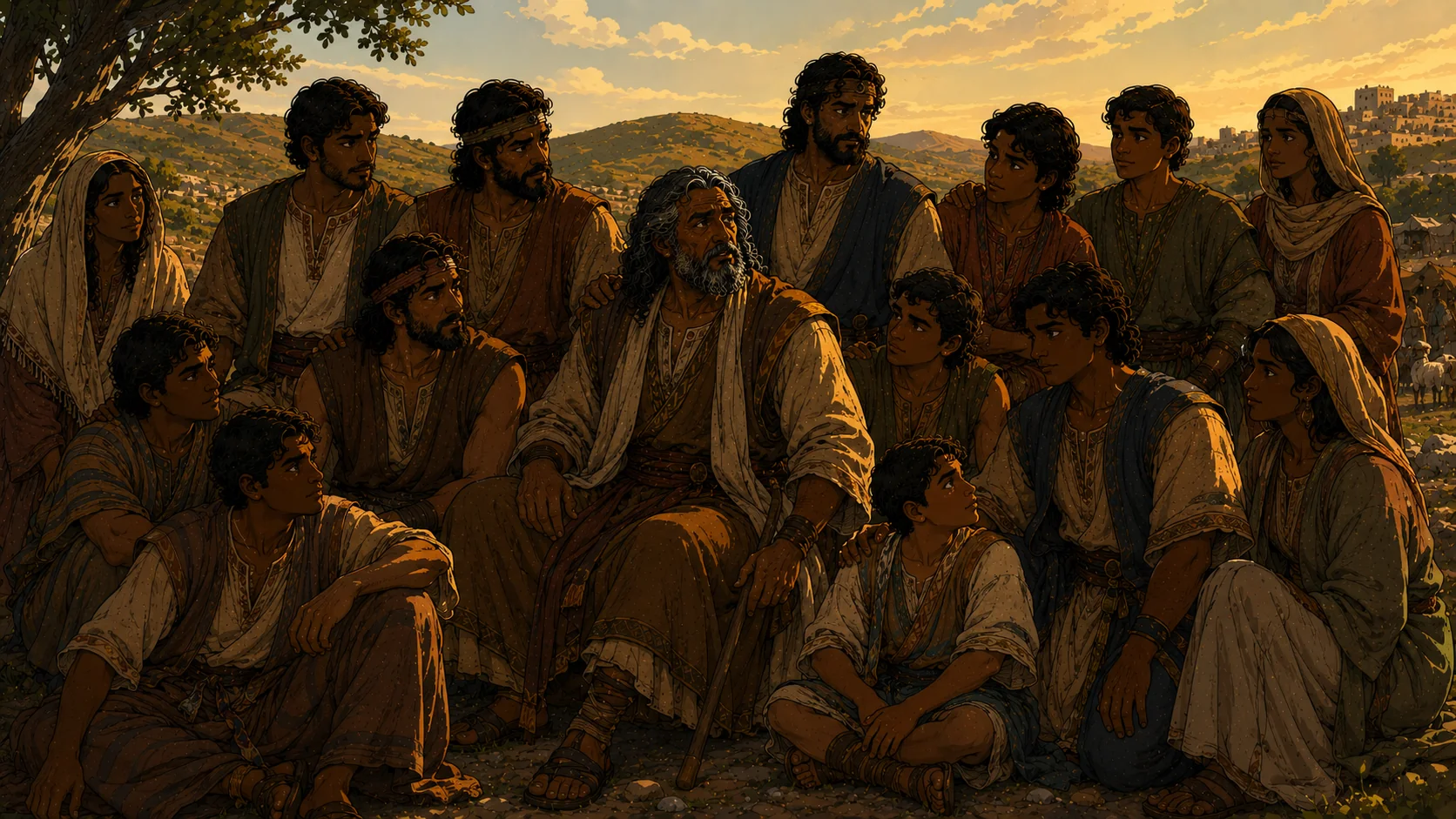
Genesis 35 lists all twelve sons of Jacob by mother for the first time in a single passage. These are the twelve tribes of Israel, named.
View Breakdown →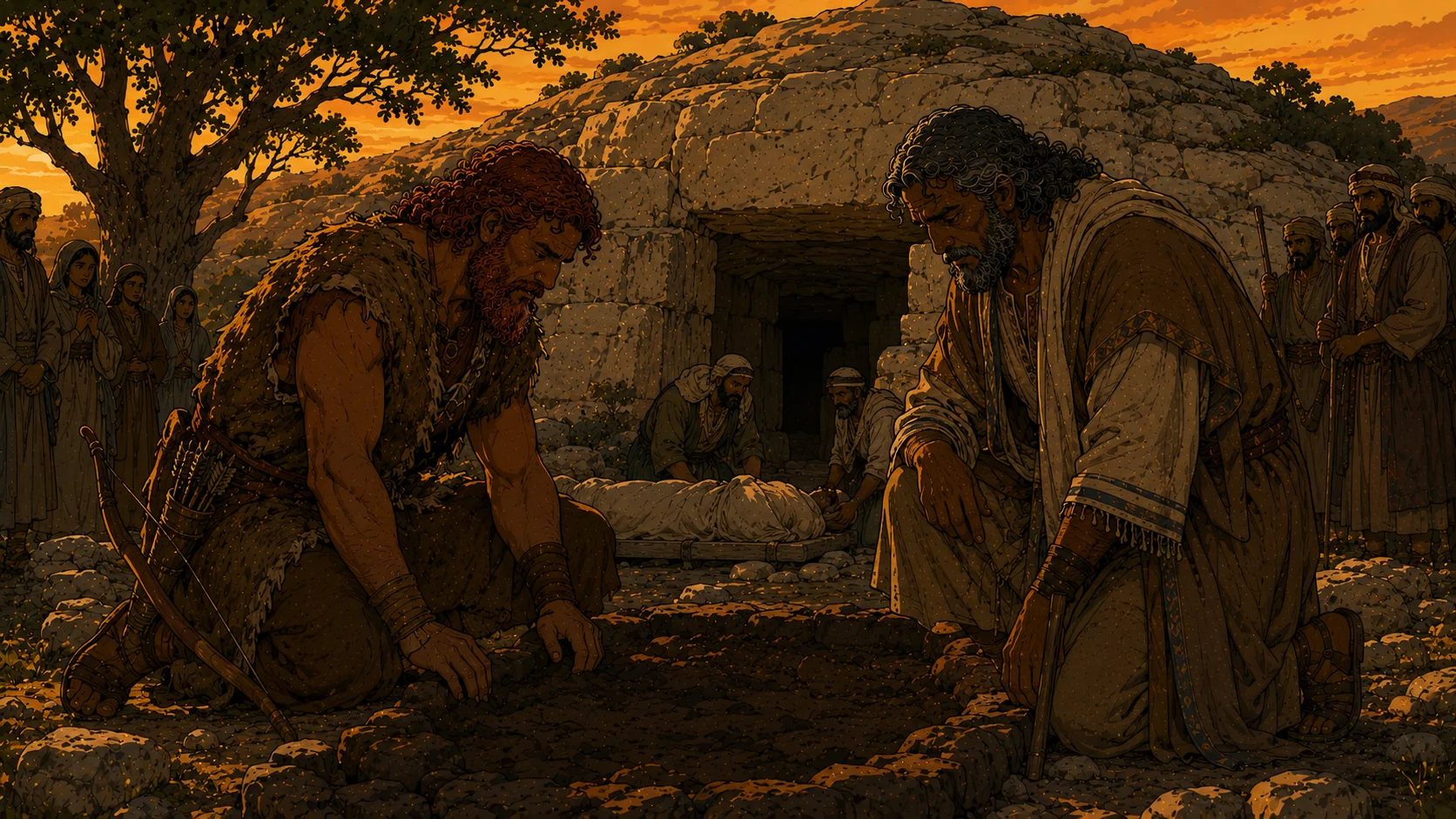
Jacob arrives at Mamre where his father Isaac still lives. Isaac dies at 180 — old and full of days. Both Esau and Jacob bury him together. The last joint act of the two brothers.
View Breakdown →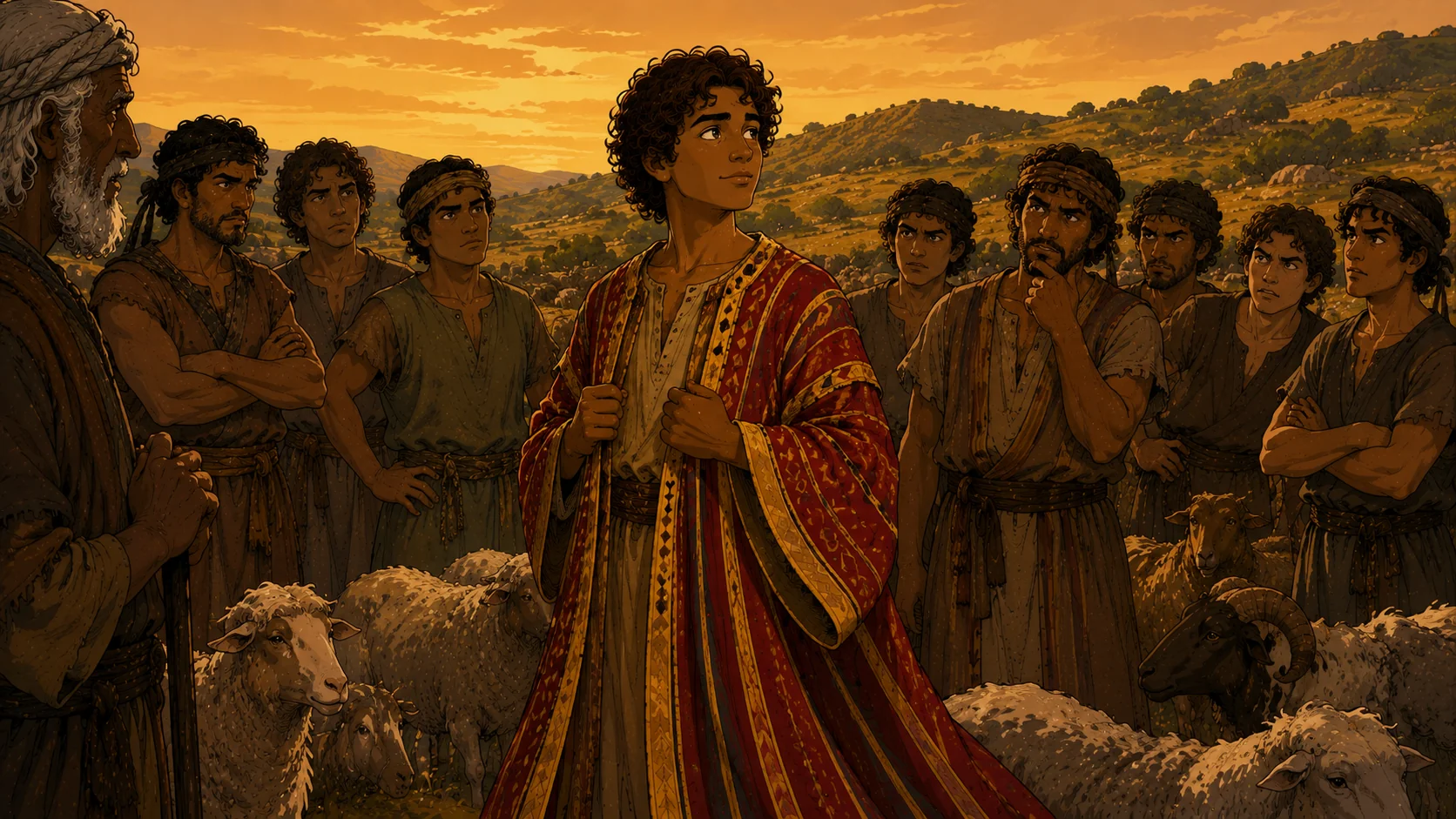
Israel loved Joseph above all his sons and made him a coat of distinction. The brothers saw it — and could not speak peaceably with him.
View Breakdown →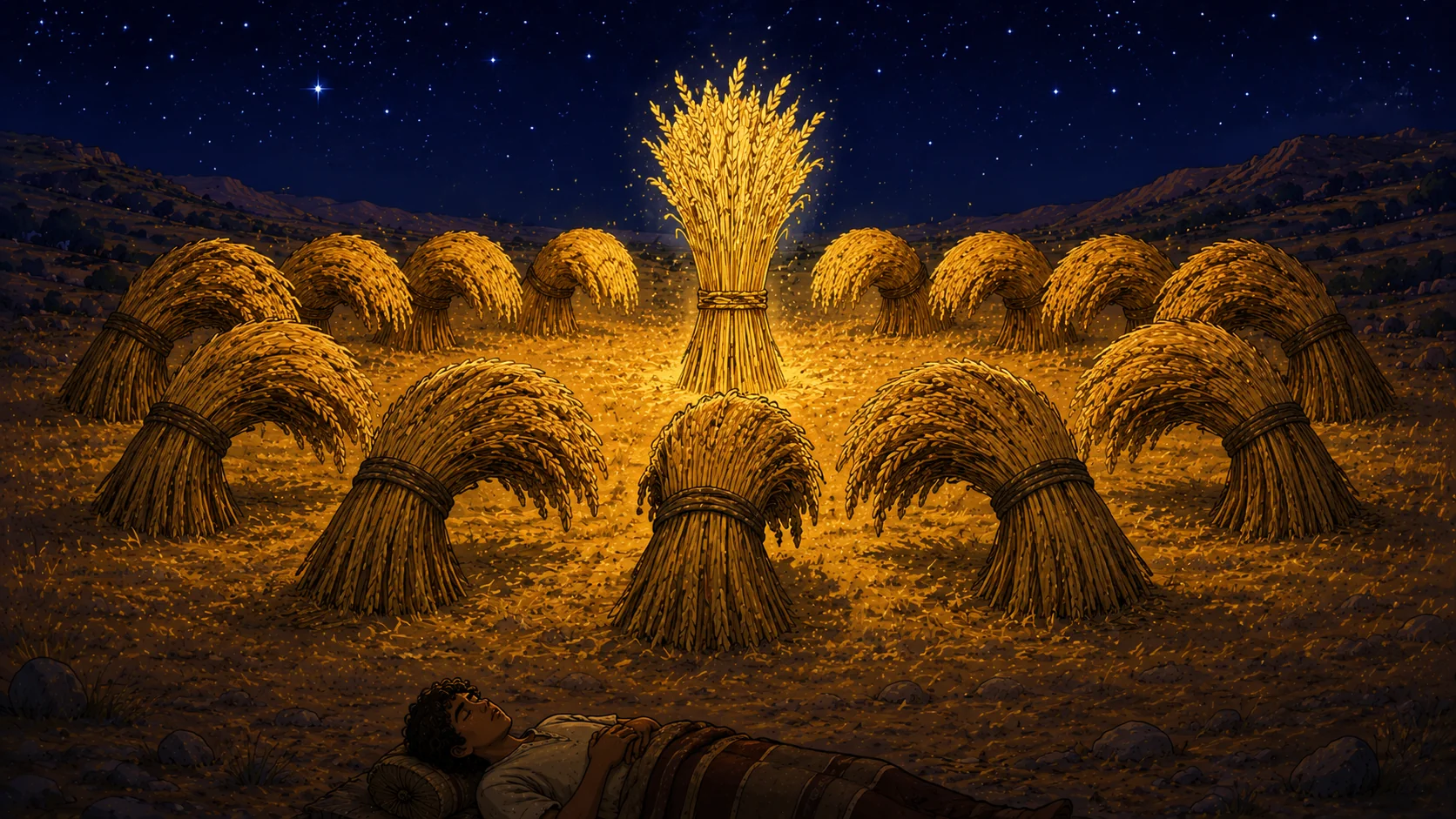
Joseph dreams that his brothers' sheaves bow to his. He tells them. They hate him even more for his dreams and his words.
View Breakdown →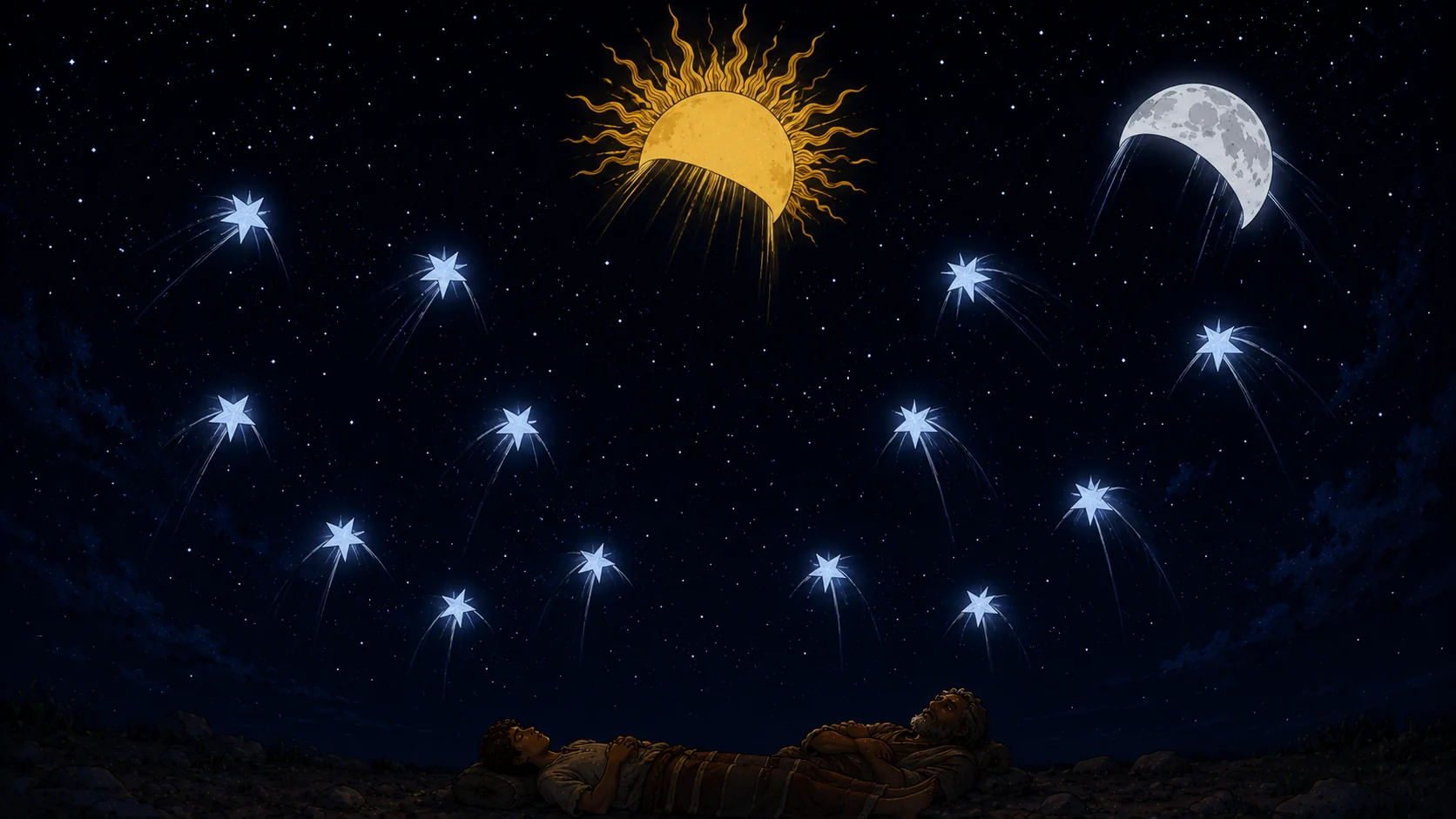
The sun, moon, and eleven stars bow to Joseph. Even his father rebukes him — but keeps the matter in mind.
View Breakdown →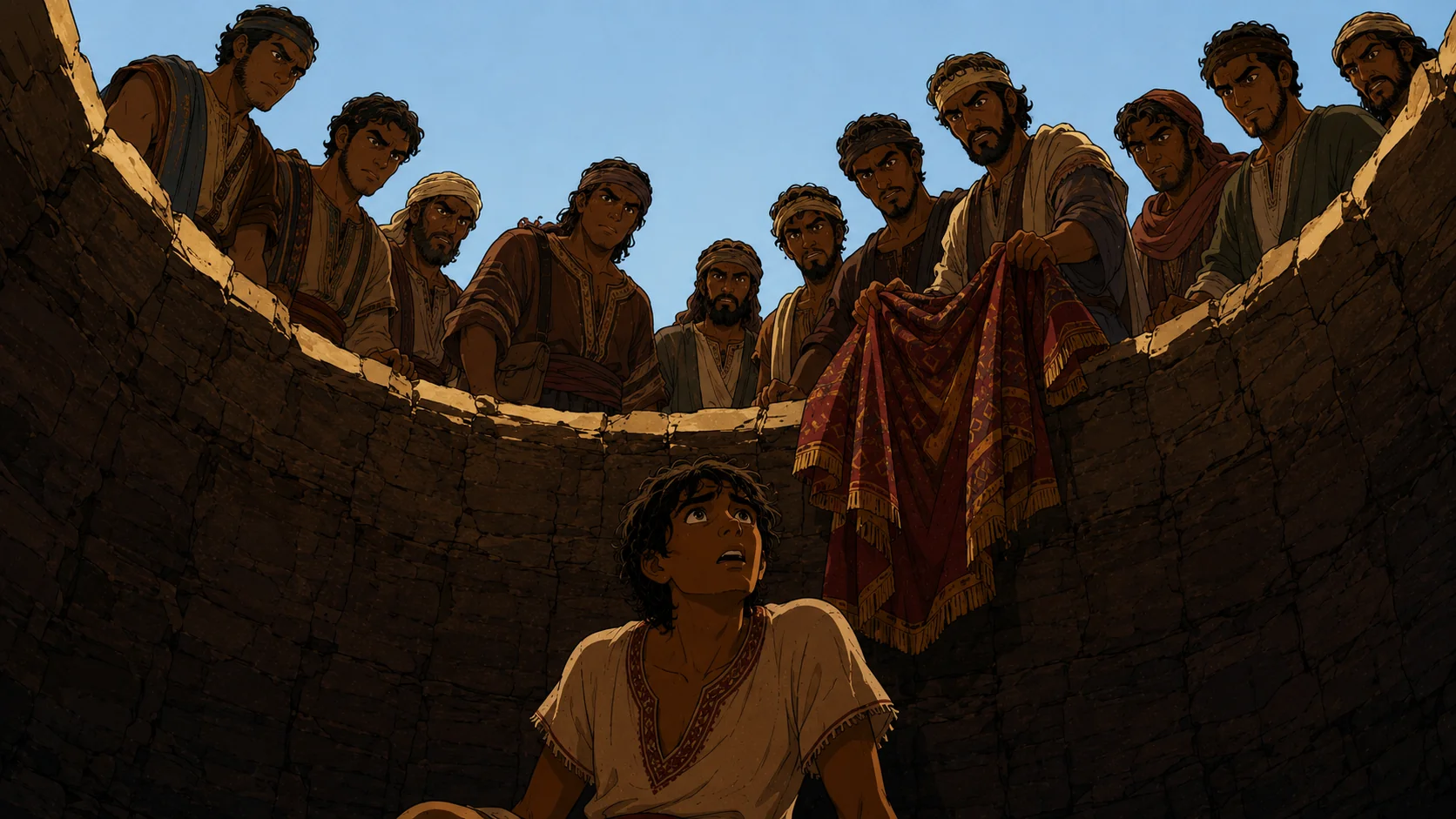
The brothers see the dreamer coming from afar. They strip his coat and throw him into a waterless pit. Then they sit down to eat.
View Breakdown →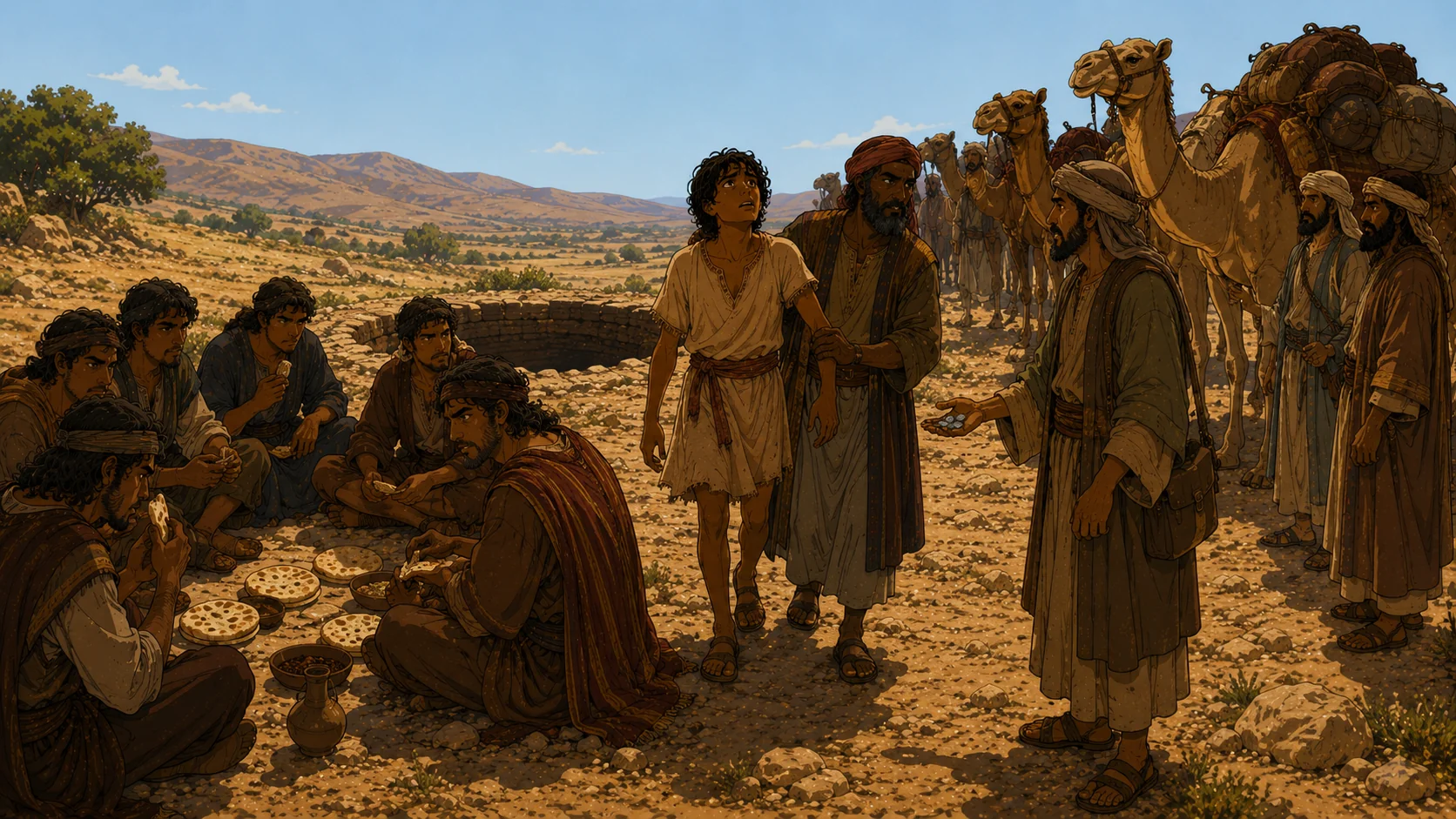
Judah proposes the sale: "He is our flesh." Twenty pieces of silver. Joseph is pulled from the pit and carried down to Egypt.
View Breakdown →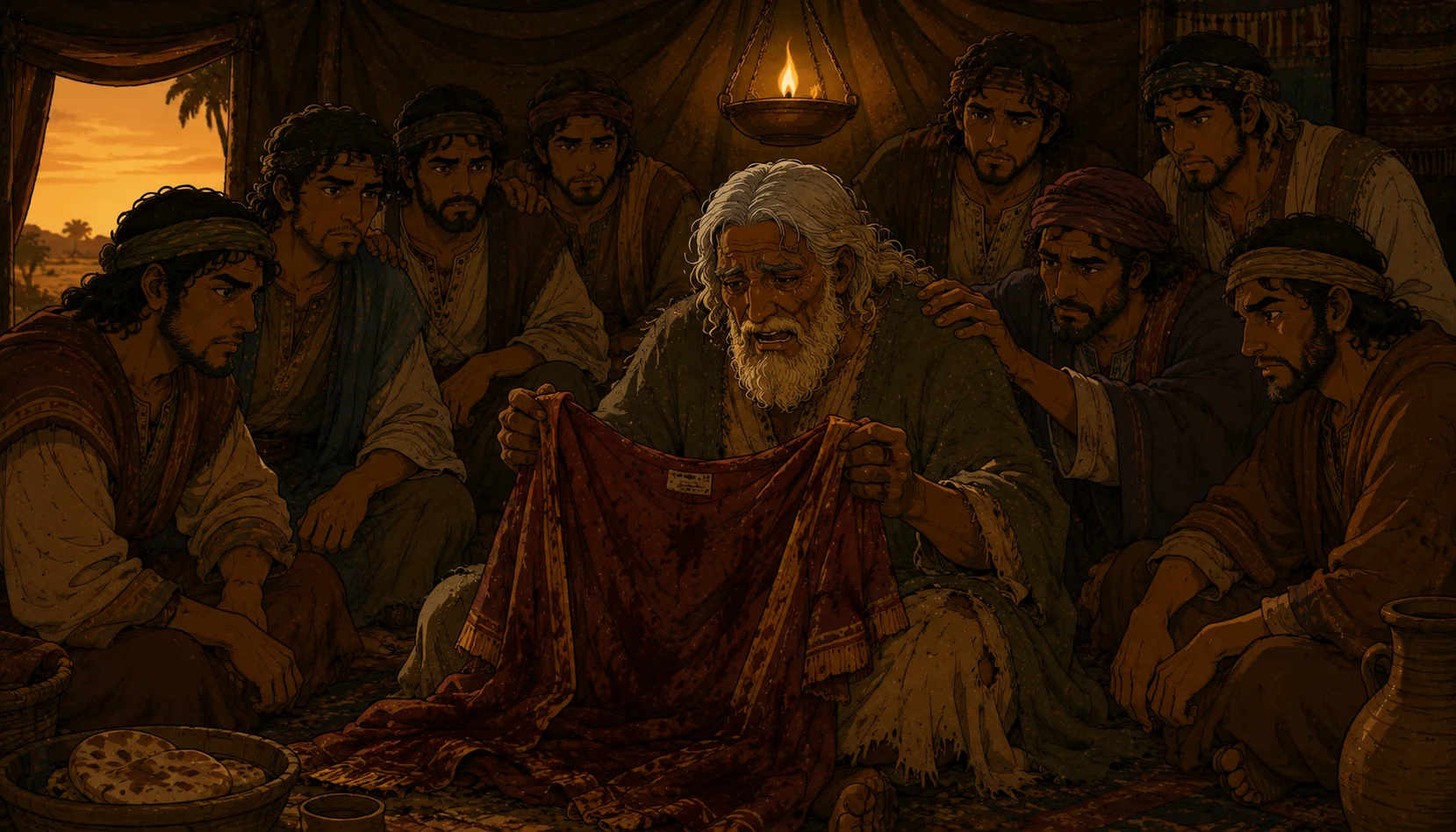
The brothers dip the coat in goat's blood. Jacob recognizes it and mourns. He refuses to be comforted — "I will go down to Sheol mourning."
View Breakdown →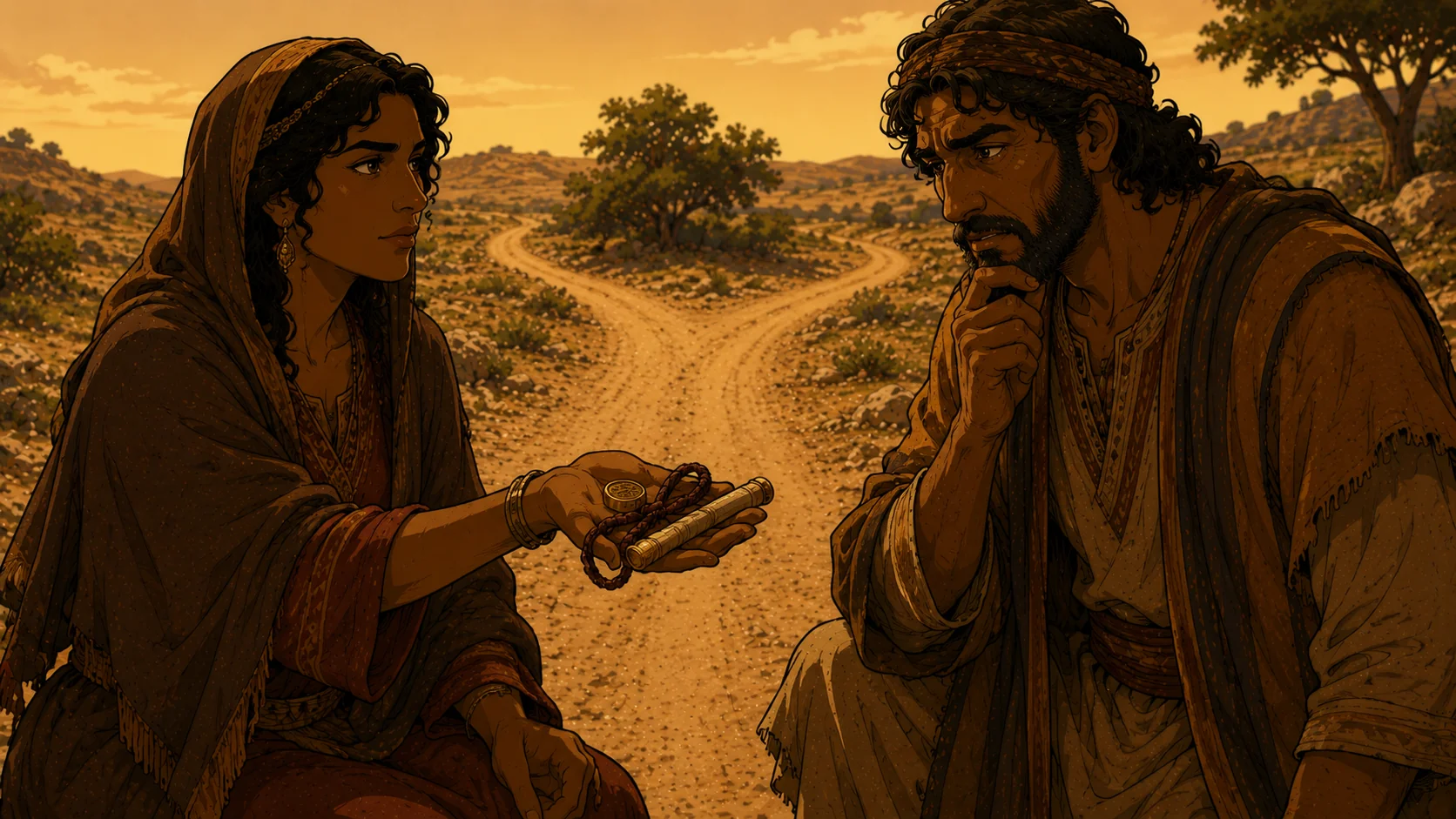
The interruption in Joseph's story. Judah leaves his brothers, and Tamar secures the lineage he denied her. "She is more righteous than I."
View Breakdown →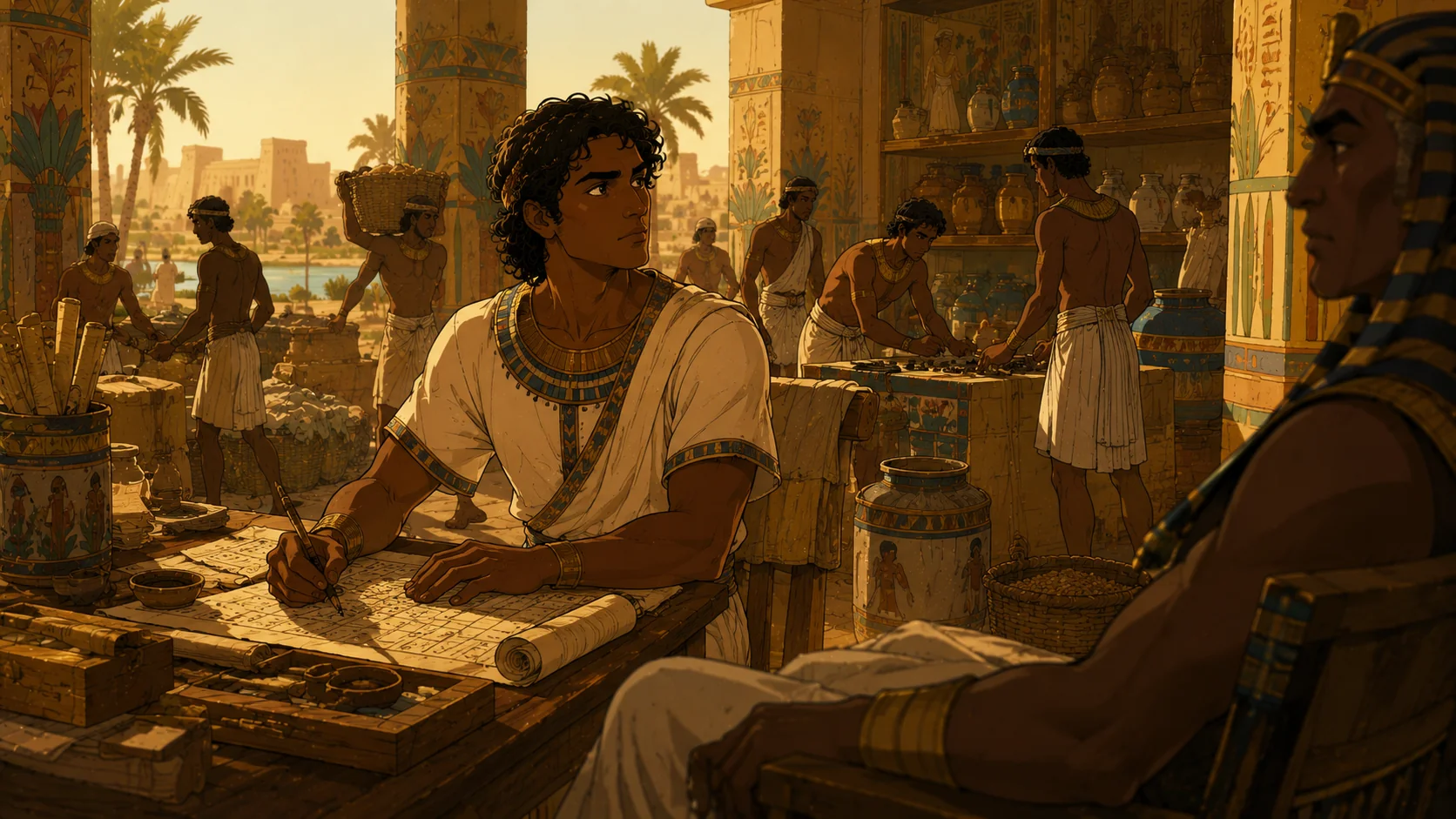
Joseph is sold to Potiphar, captain of Pharaoh's guard. The LORD is with him. Everything he touches prospers. Potiphar makes him overseer of his house.
View Breakdown →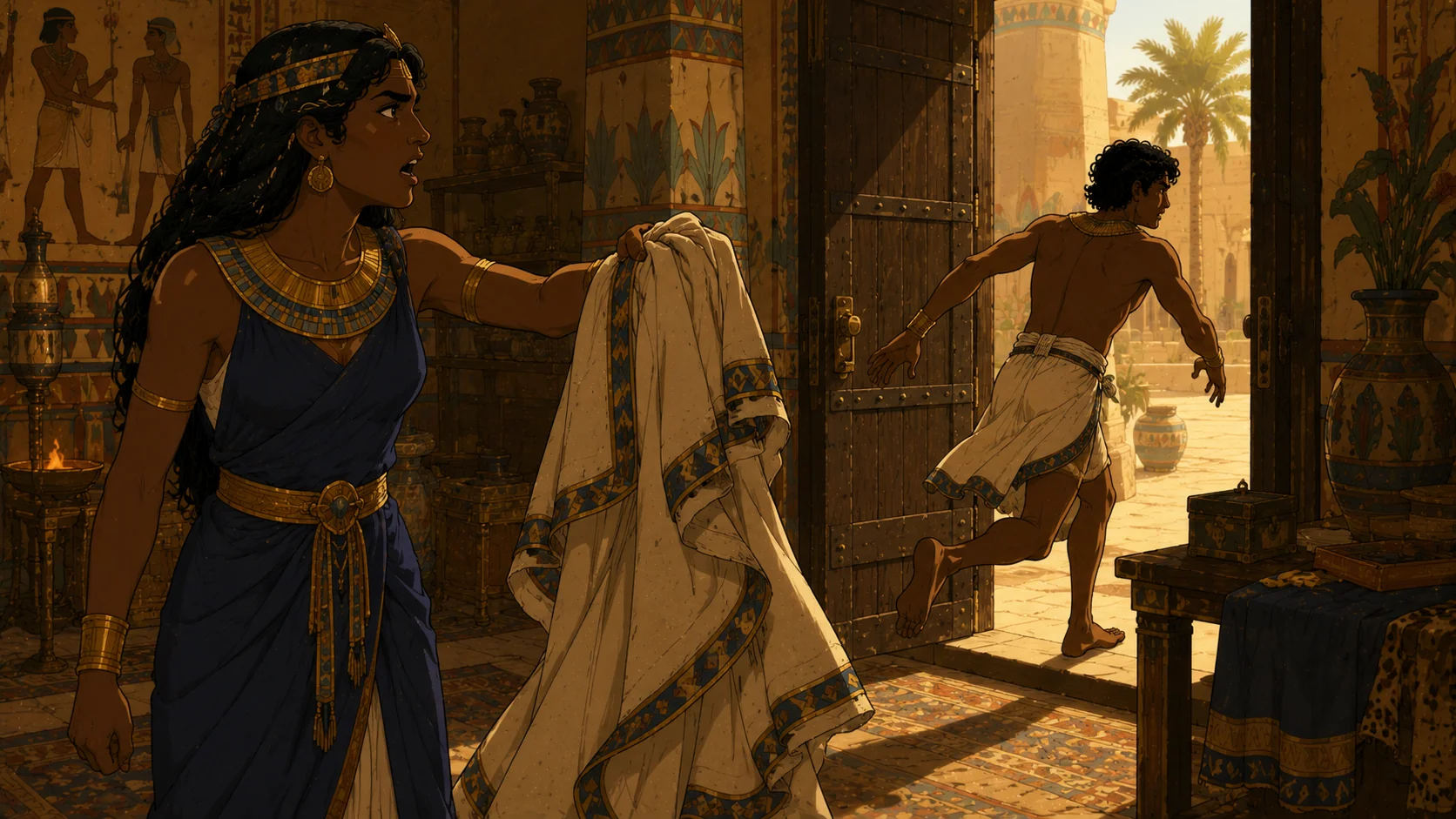
Day after day she invites him. He refuses: "How can I sin against God?" He flees, leaving his garment in her hand. She accuses him. He is thrown into prison.
View Breakdown →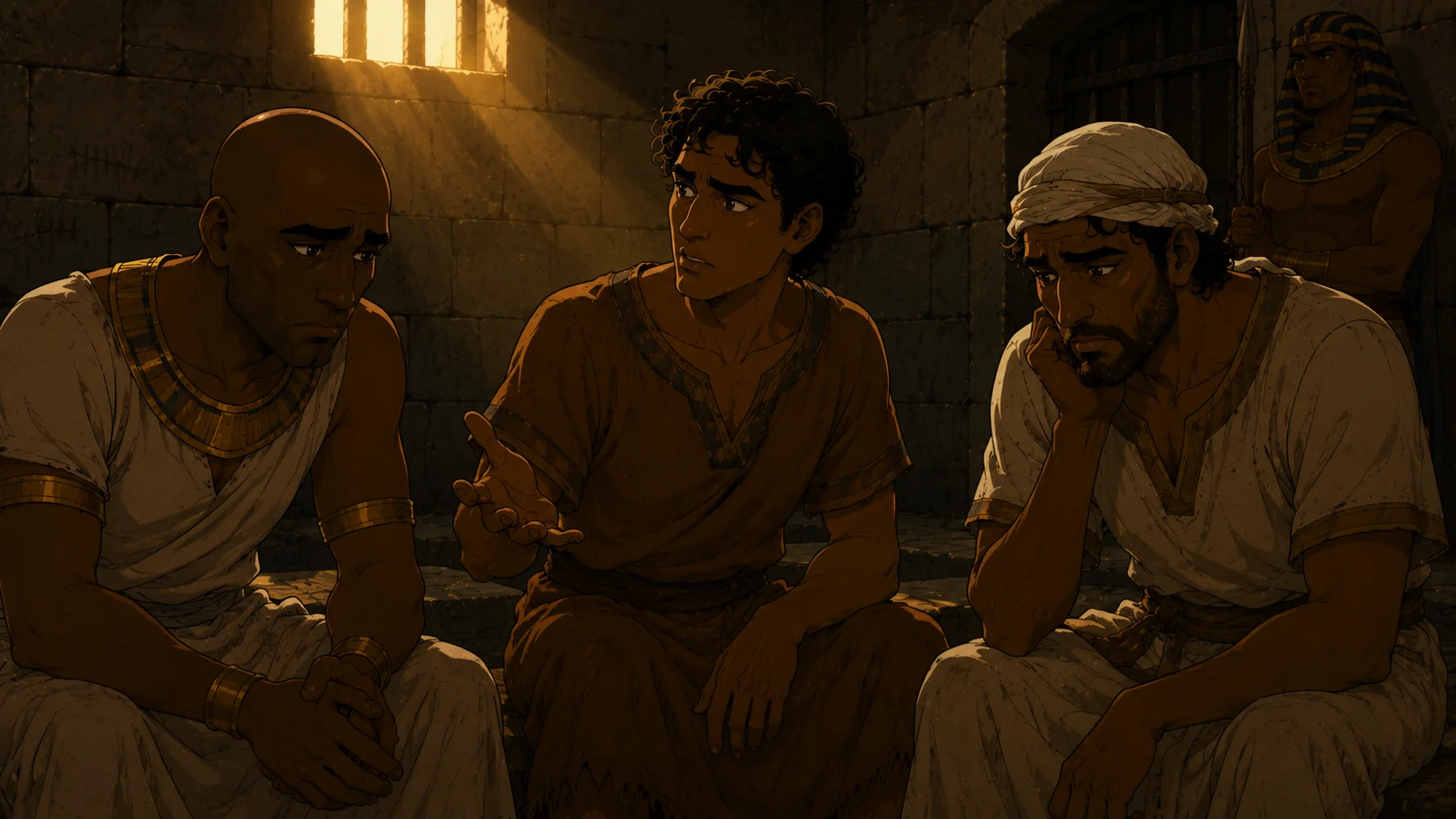
Pharaoh's cupbearer and baker are imprisoned with Joseph. Both dream. "Do not interpretations belong to God?" Joseph asks. "Tell me your dreams."
View Breakdown →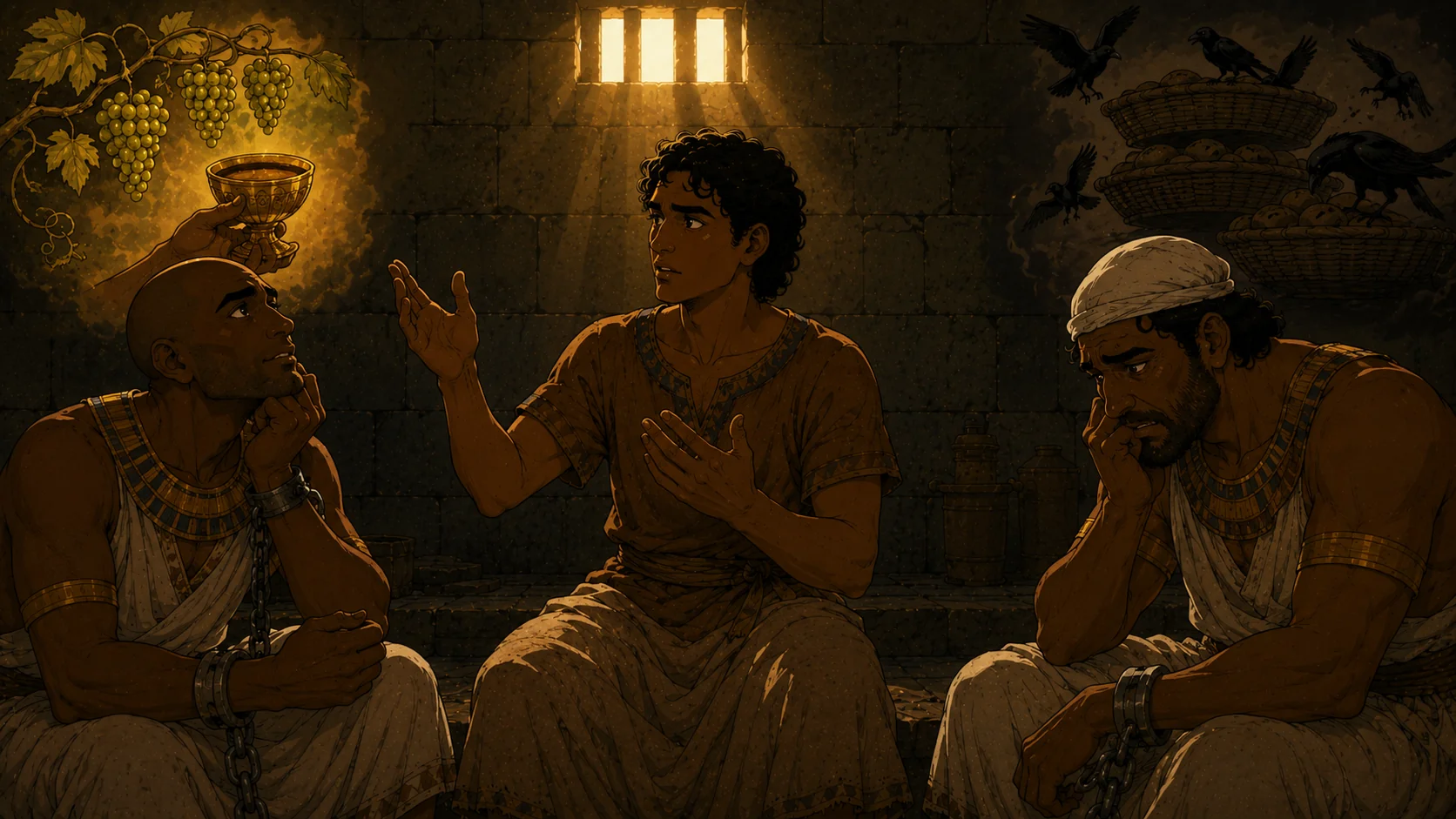
Three days: the cupbearer restored, the baker hanged — both exactly as Joseph said. "Remember me." The cupbearer did not remember him. He forgot.
View Breakdown →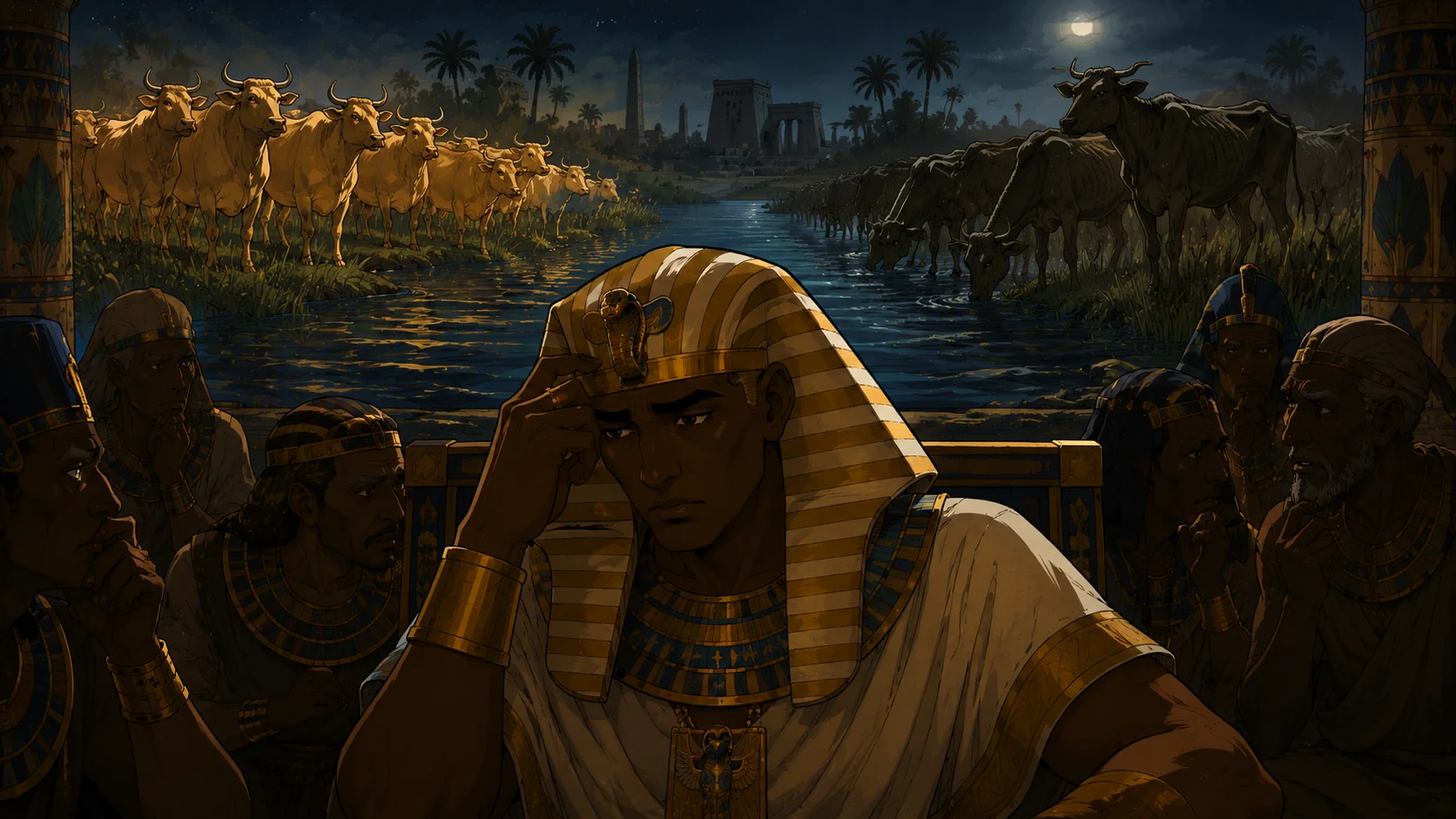
Two full years later, Pharaoh dreams. Seven fat cows devoured by seven gaunt ones. Seven plump ears swallowed by seven scorched ones. No one in Egypt can interpret. The cupbearer finally remembers.
View Breakdown →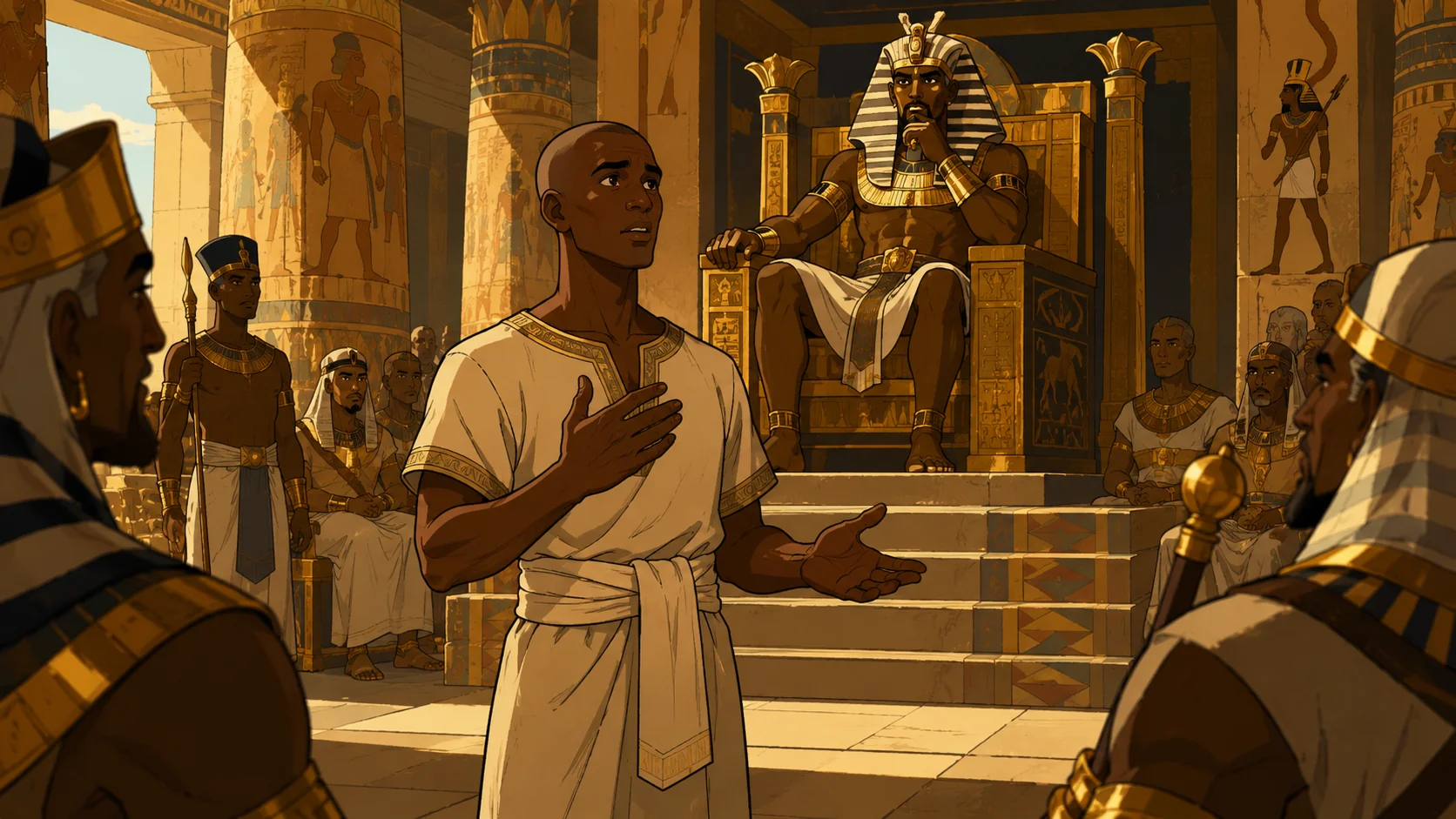
Pharaoh summons Joseph from the pit. Shaved, clothed, Joseph stands before the throne. "It is not in me — God will answer Pharaoh."
View Breakdown →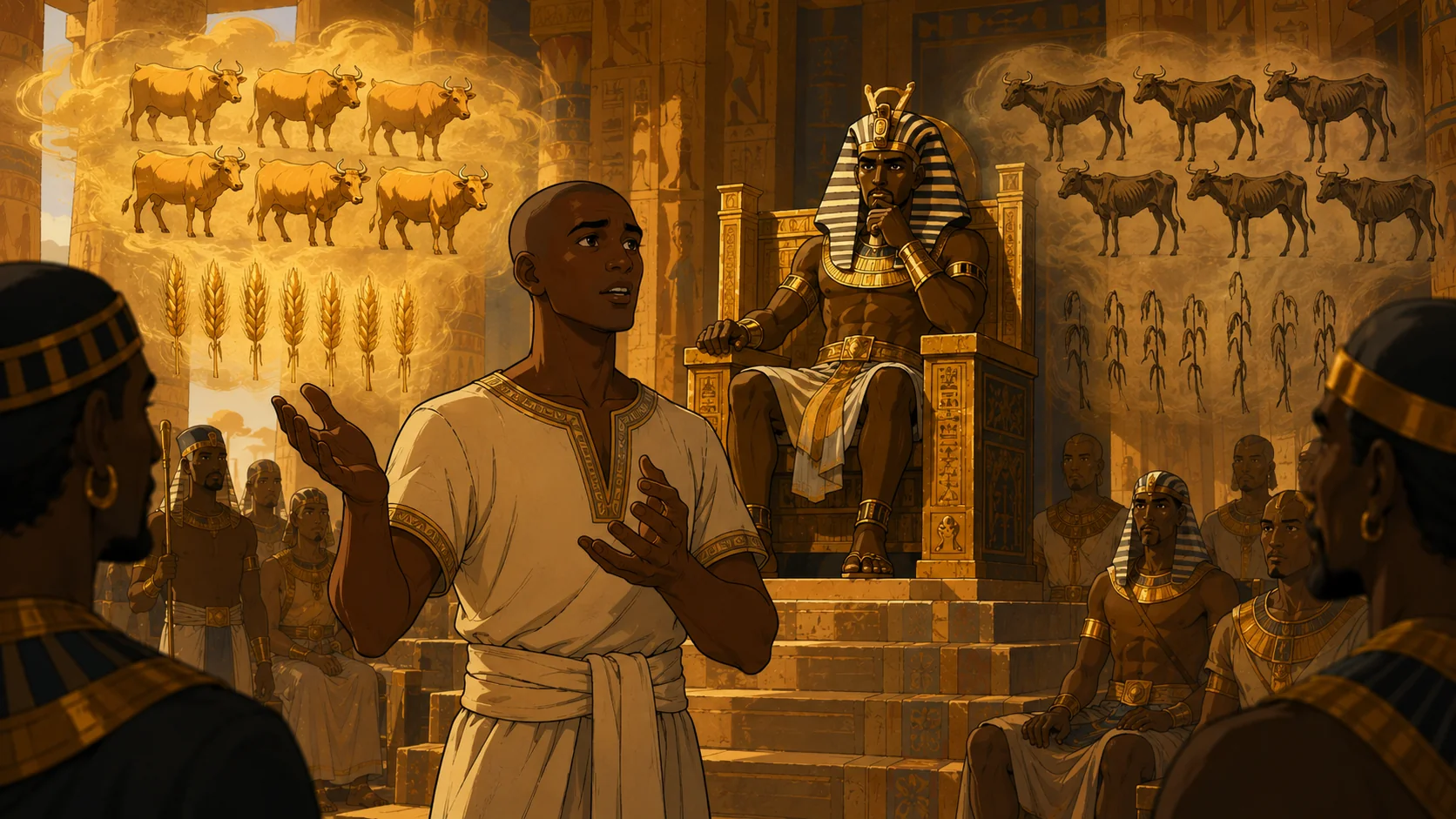
Pharaoh recounts his dreams. Joseph listens — then speaks. The seven fat and the seven gaunt are one dream. Seven years of plenty. Seven years of famine. Appoint a wise man now.
View Breakdown →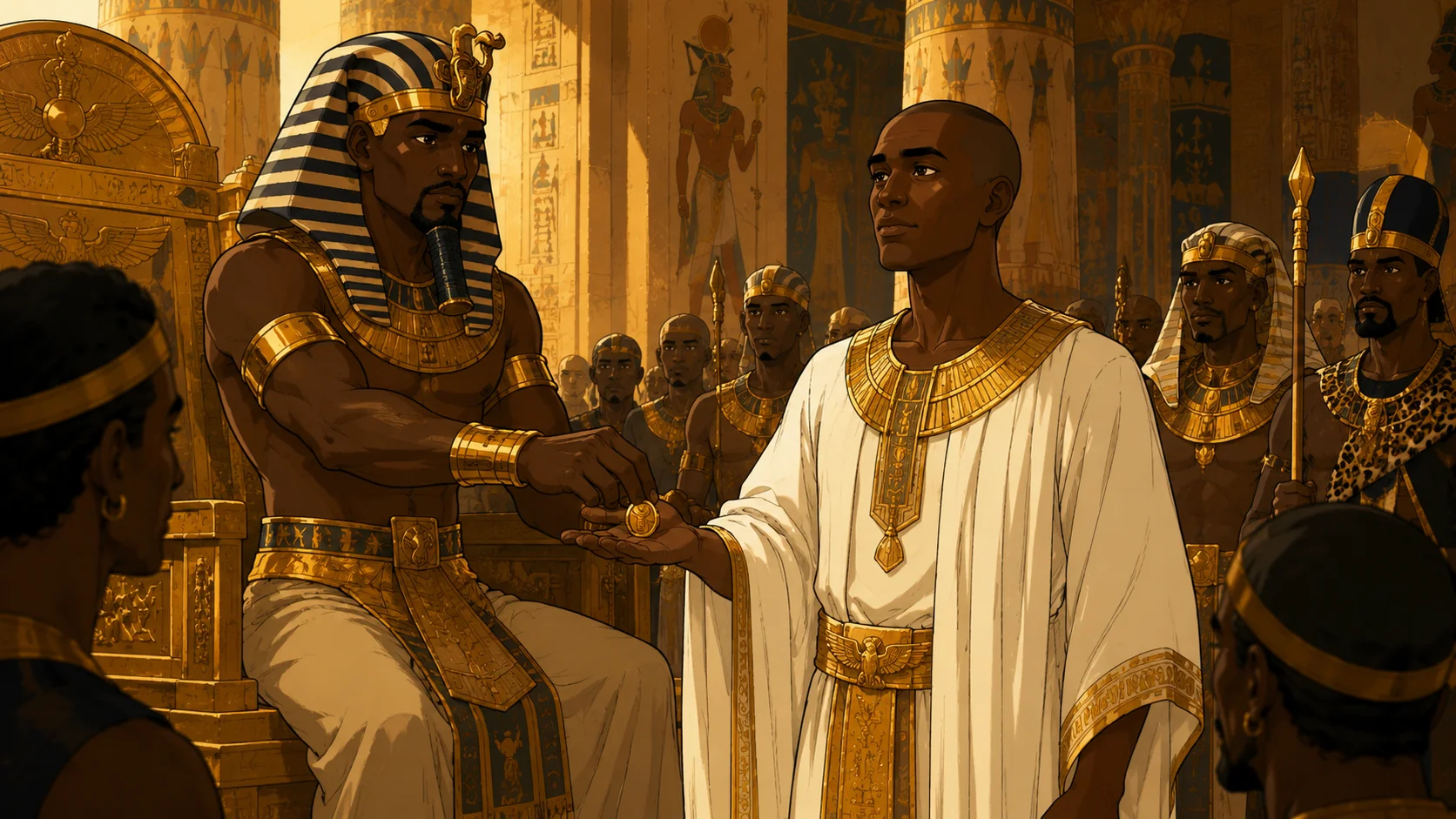
Pharaoh strips his signet ring and places it on Joseph's hand. Fine linen. A gold chain at his neck. Viceroy over all Egypt at thirty years old.
View Breakdown →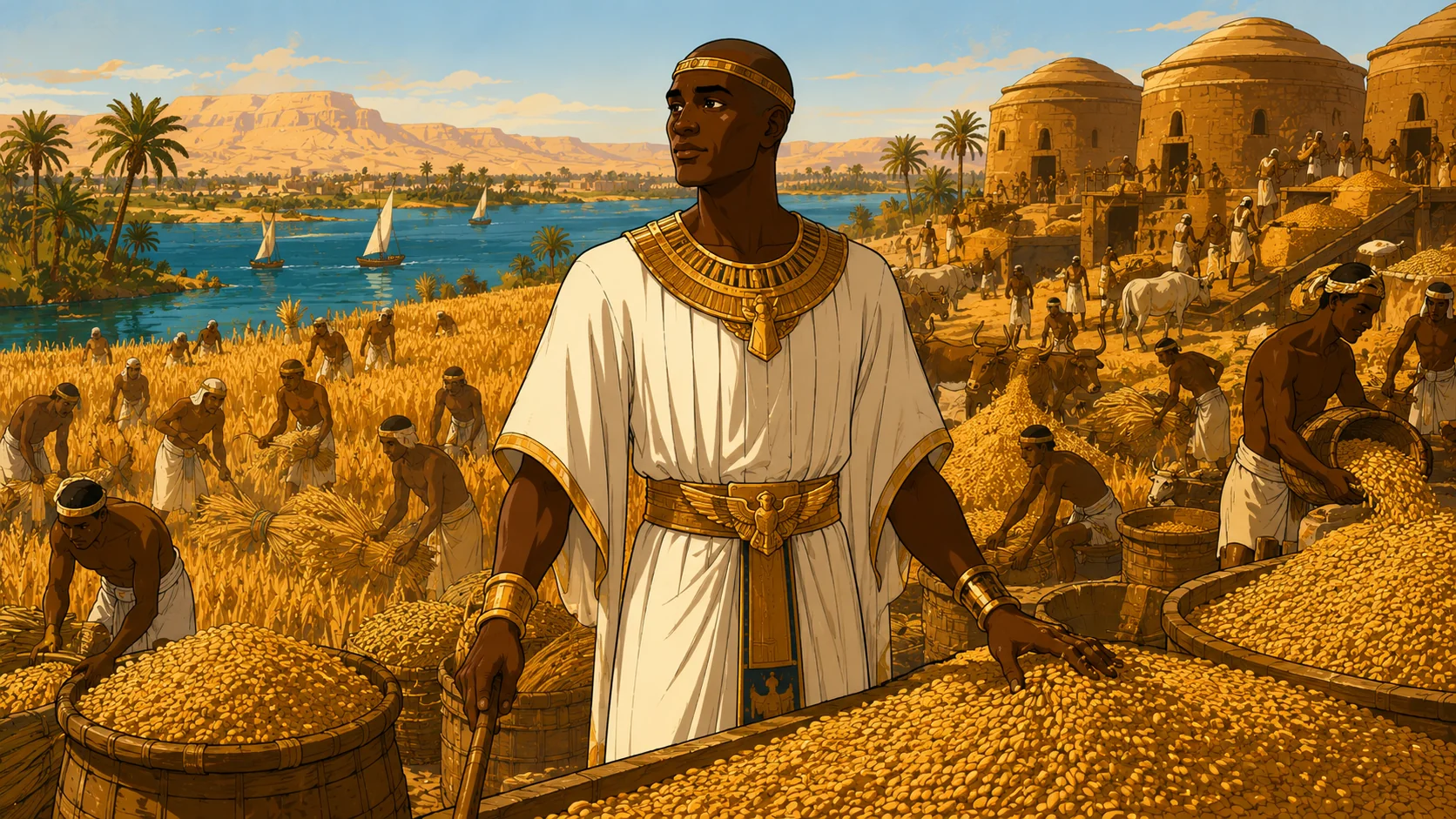
Seven years the grain overflows. Joseph stores it beyond counting. Then famine strikes every land and all nations come to Egypt to buy.
View Breakdown →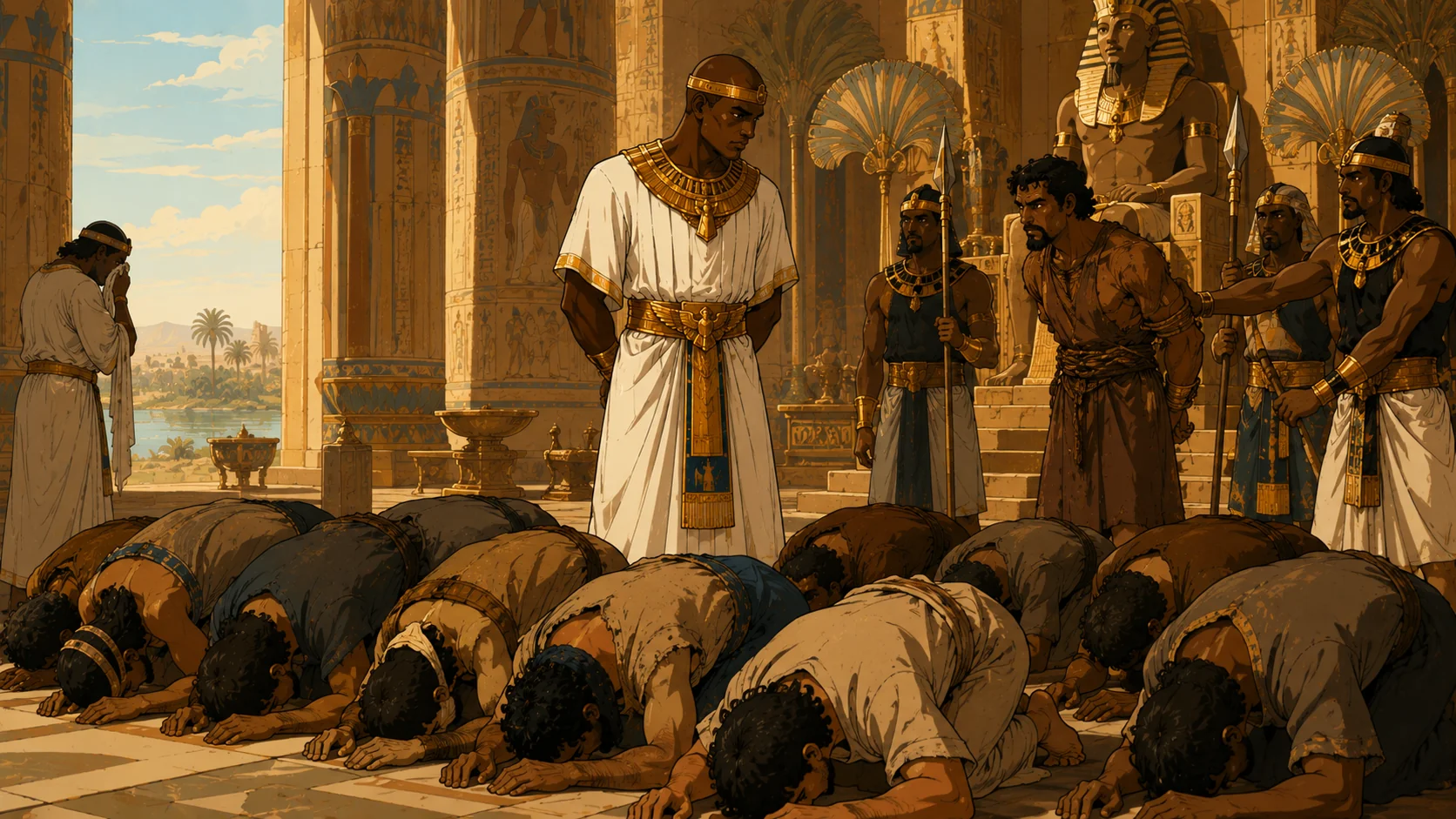
Jacob sends ten brothers to Egypt for grain. Joseph recognizes them — they do not know him. He accuses them of being spies. Simeon is bound and held as pledge.
View Breakdown →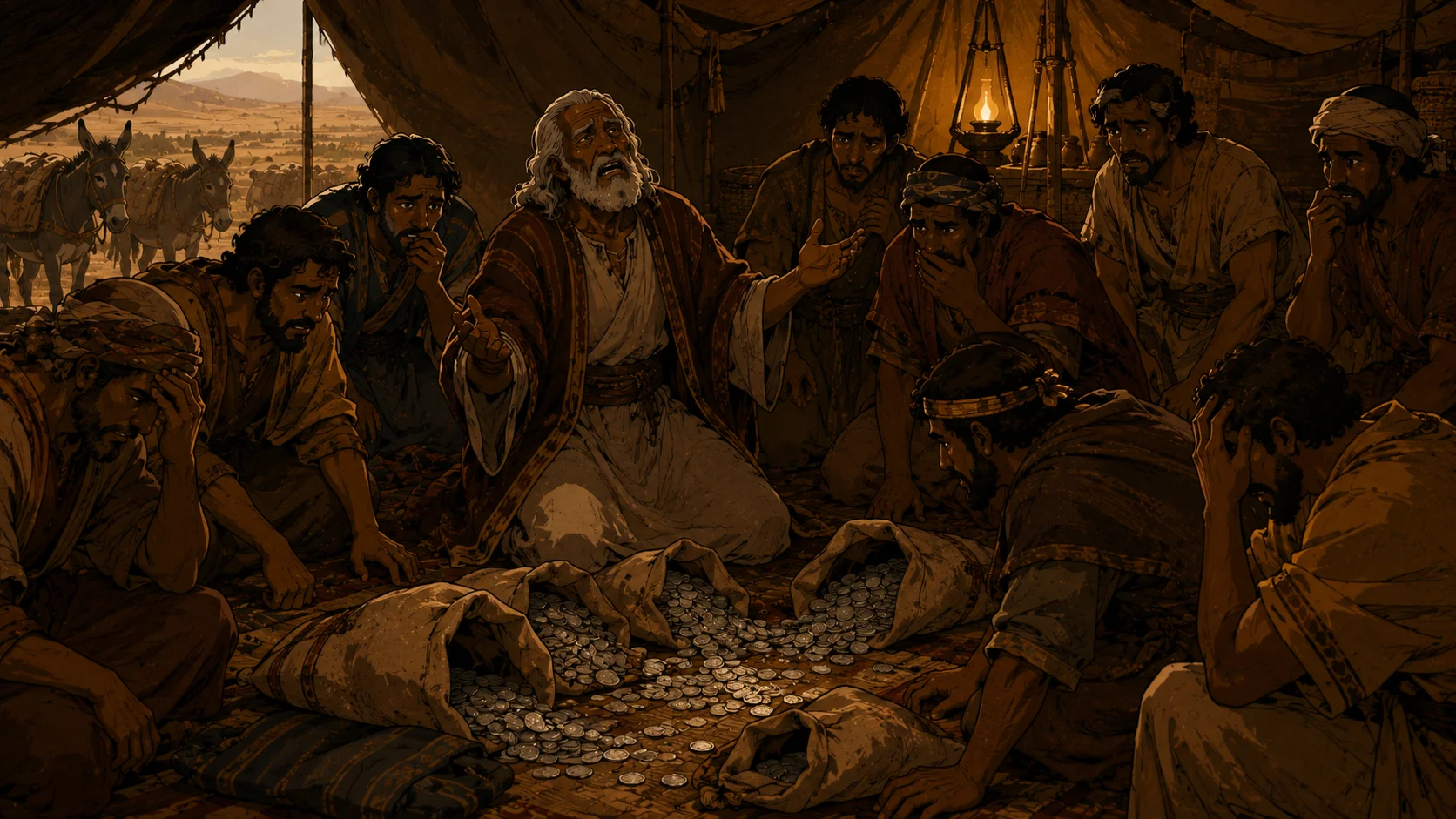
Joseph secretly returns every man's silver into his sack. On the road home they find it and their hearts fail. Jacob hears it all and refuses to let Benjamin go.
View Breakdown →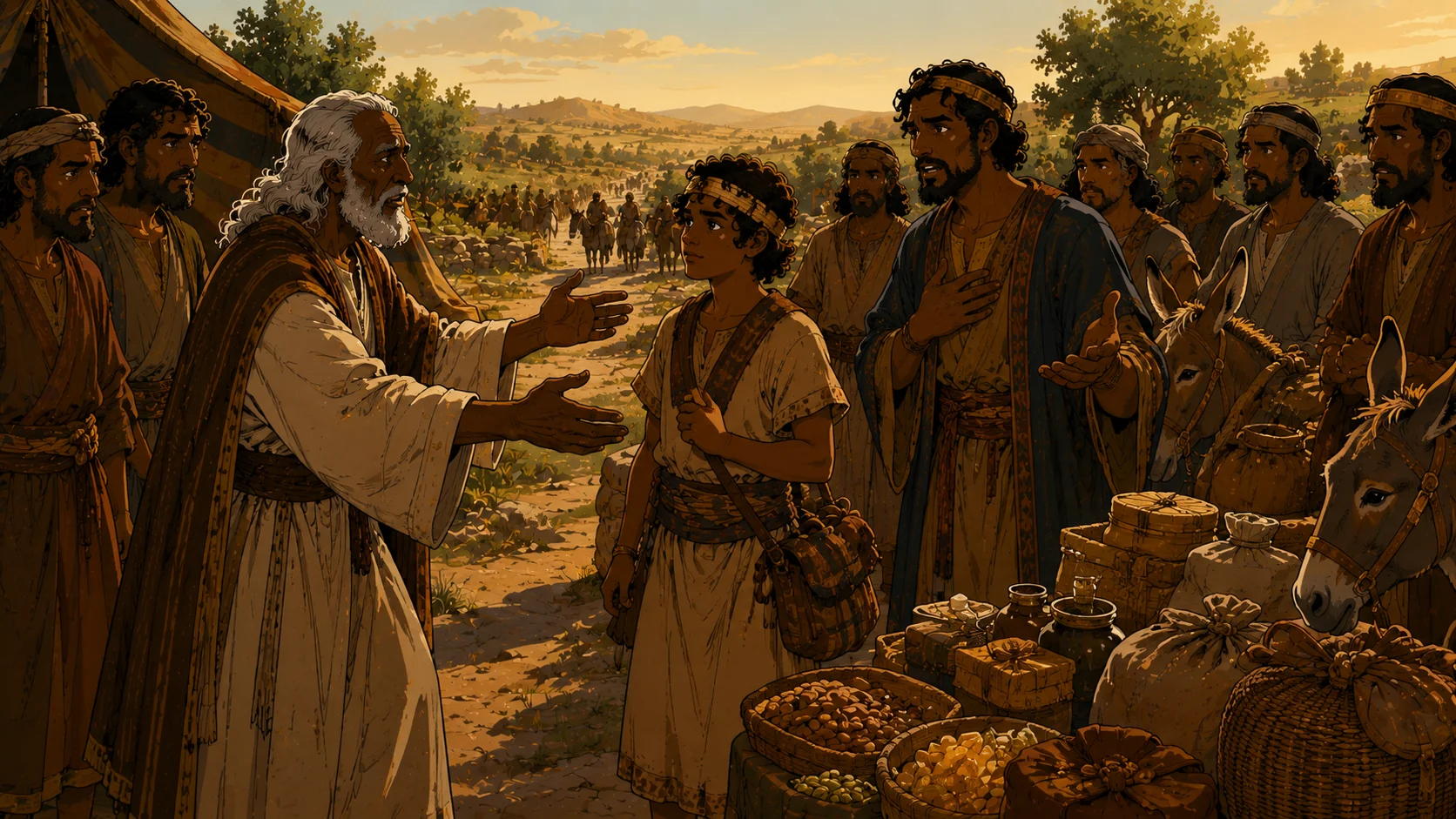
The famine grows severe. Judah pledges his life for Benjamin. Jacob finally releases him, and the brothers go down to Egypt a second time.
View Breakdown →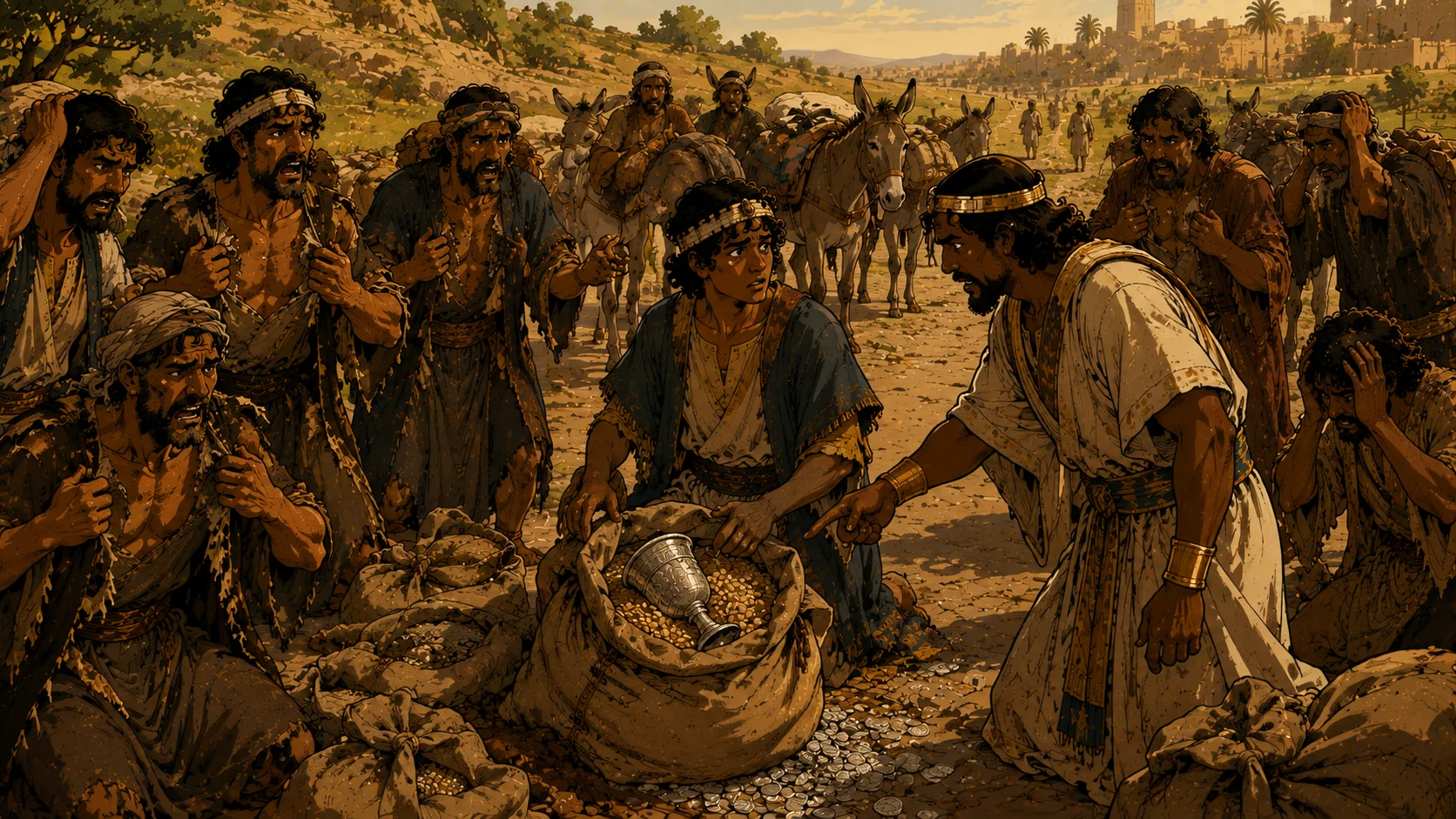
Joseph plants his silver cup in Benjamin's sack. The brothers are stopped on the road. The cup is found. Torn garments. Benjamin seized.
View Breakdown →Judah steps forward. He recounts everything — his father, the pledge, the youngest son. "Take me instead of the boy. He cannot leave or our father will die."
View Breakdown →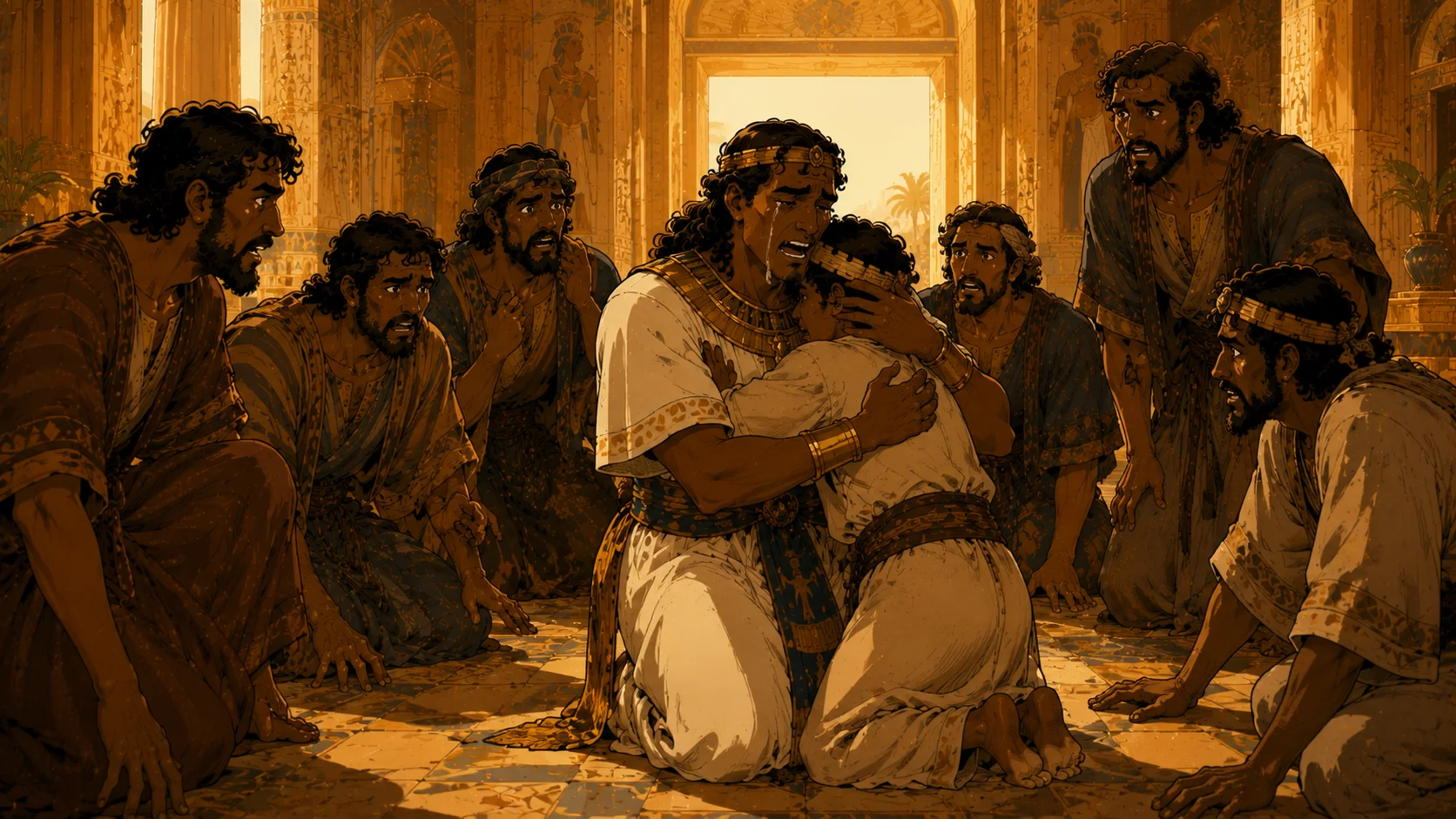
Joseph could not contain himself. Everyone was sent out. Weeping so loud Egypt heard it. "I am Joseph. Is my father still alive?" His brothers could not answer him.
View Breakdown →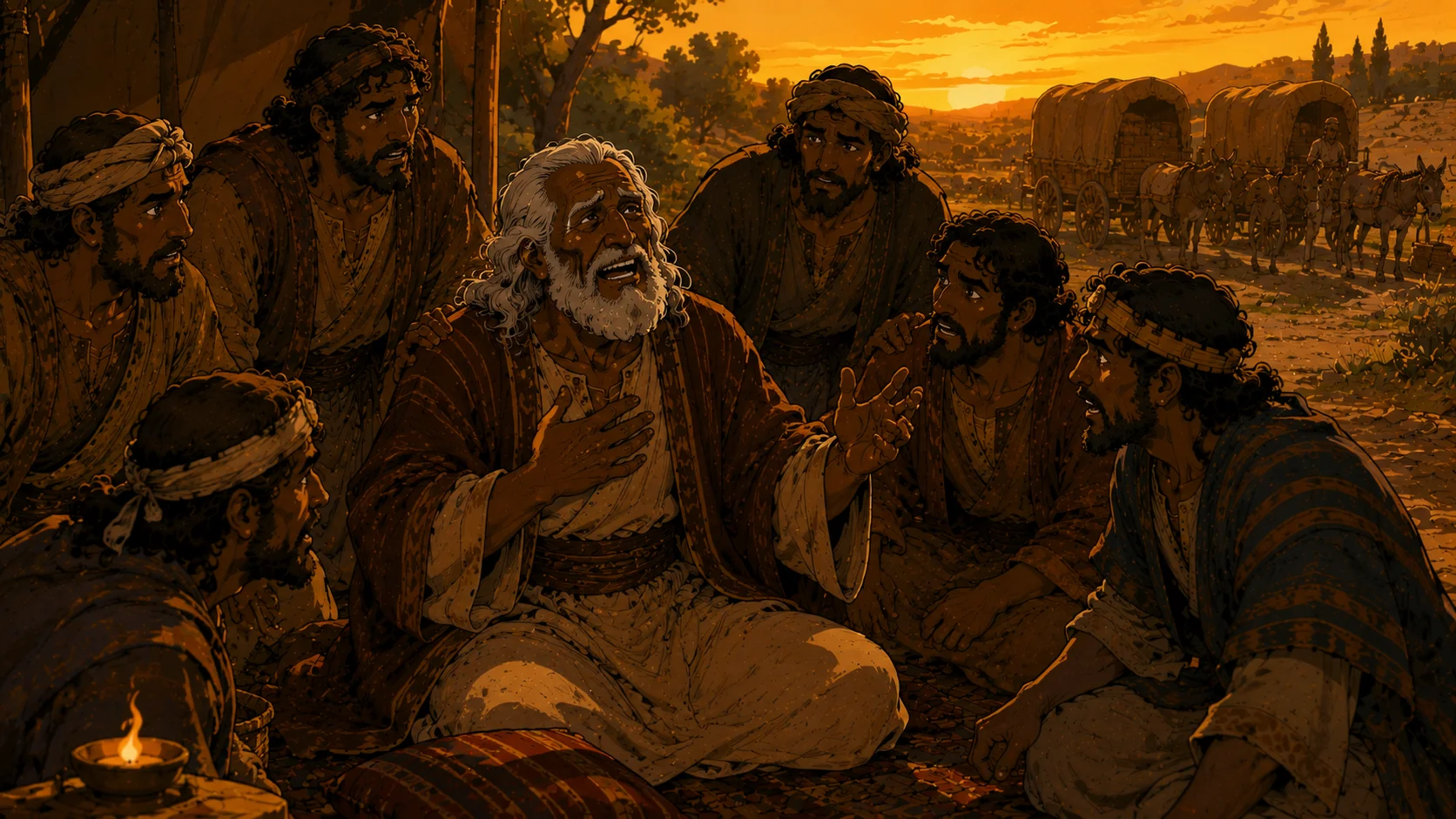
The brothers climb out of Egypt and tell Jacob everything. His heart went numb — then the spirit of Jacob revived. "Joseph my son is yet alive. I will go see him before I die."
View Breakdown →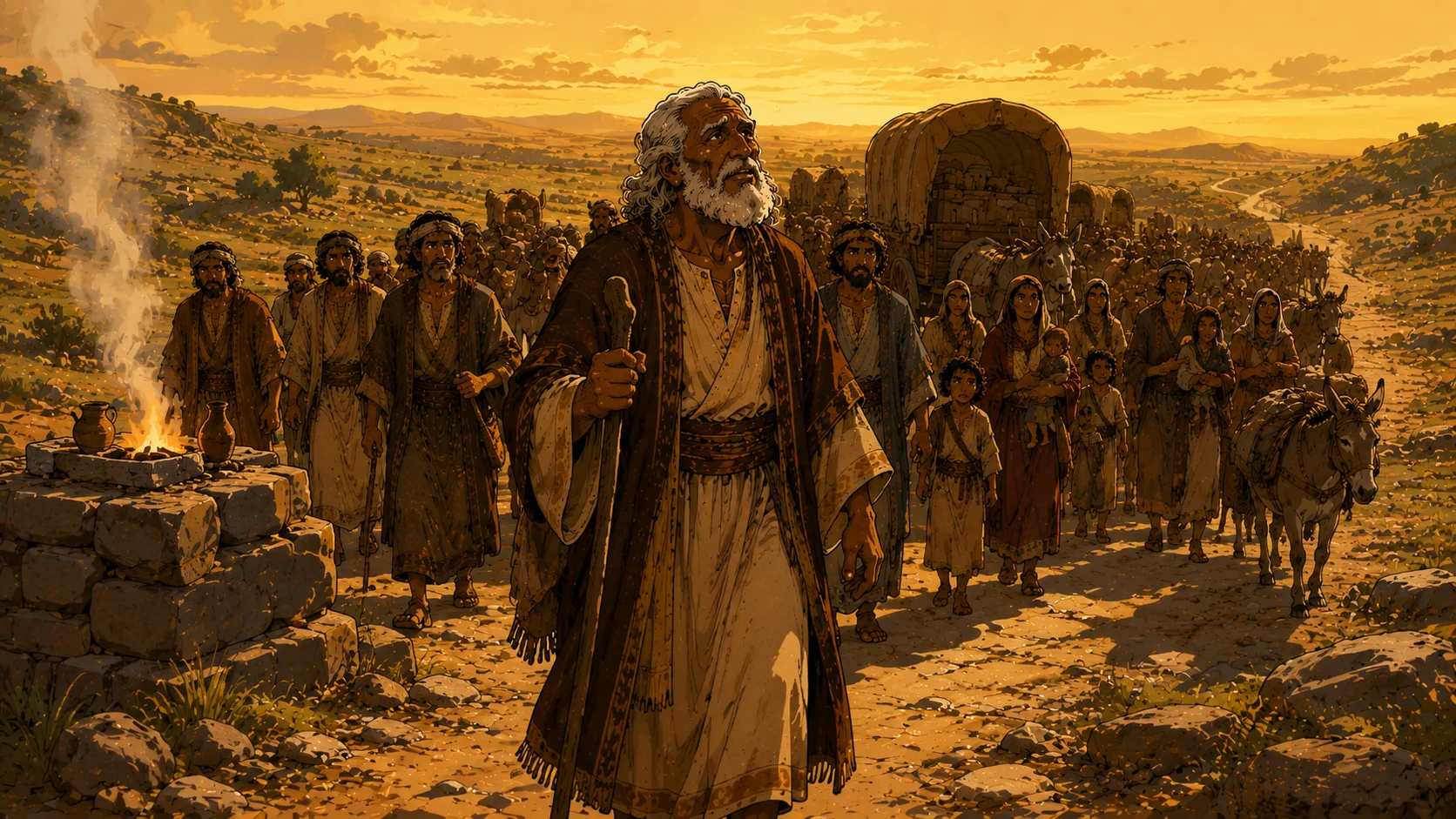
Jacob loads the wagons and stops at Beersheba — the last altar in Canaan. God appears at night: "Do not fear. I will go down with you, and I will surely bring you back up." Seventy souls cross into Egypt.
View Breakdown →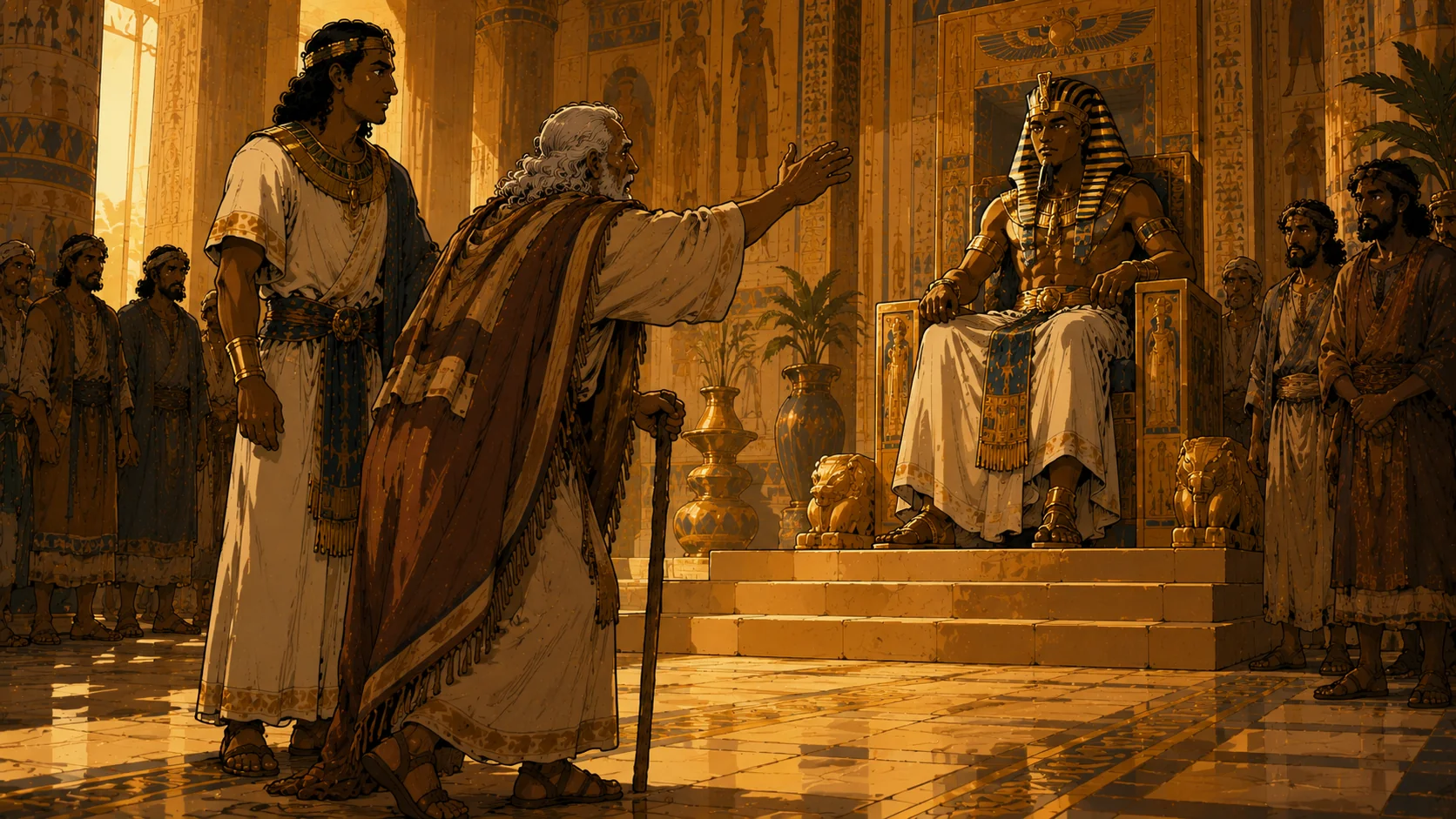
Joseph rides to meet his father. Five brothers stand before Pharaoh. Then Jacob himself — 130 years old — blesses the most powerful man on earth and calls his life few and evil.
View Breakdown →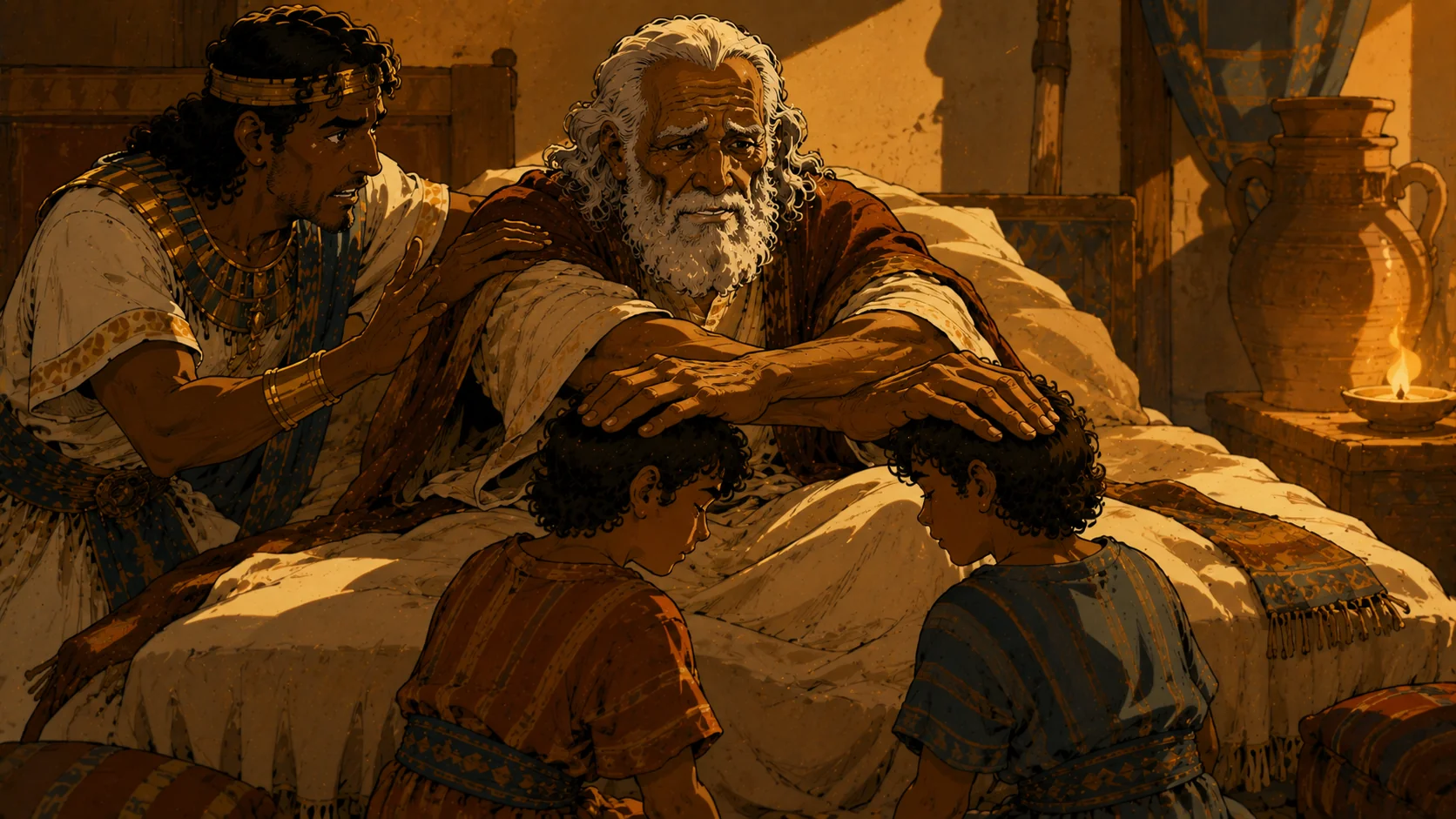
Joseph positions Manasseh for the right hand. Jacob crosses deliberately — right hand on Ephraim the younger. "I know, my son. I know." The fourth reversal of the firstborn blessing in Genesis.
View Breakdown →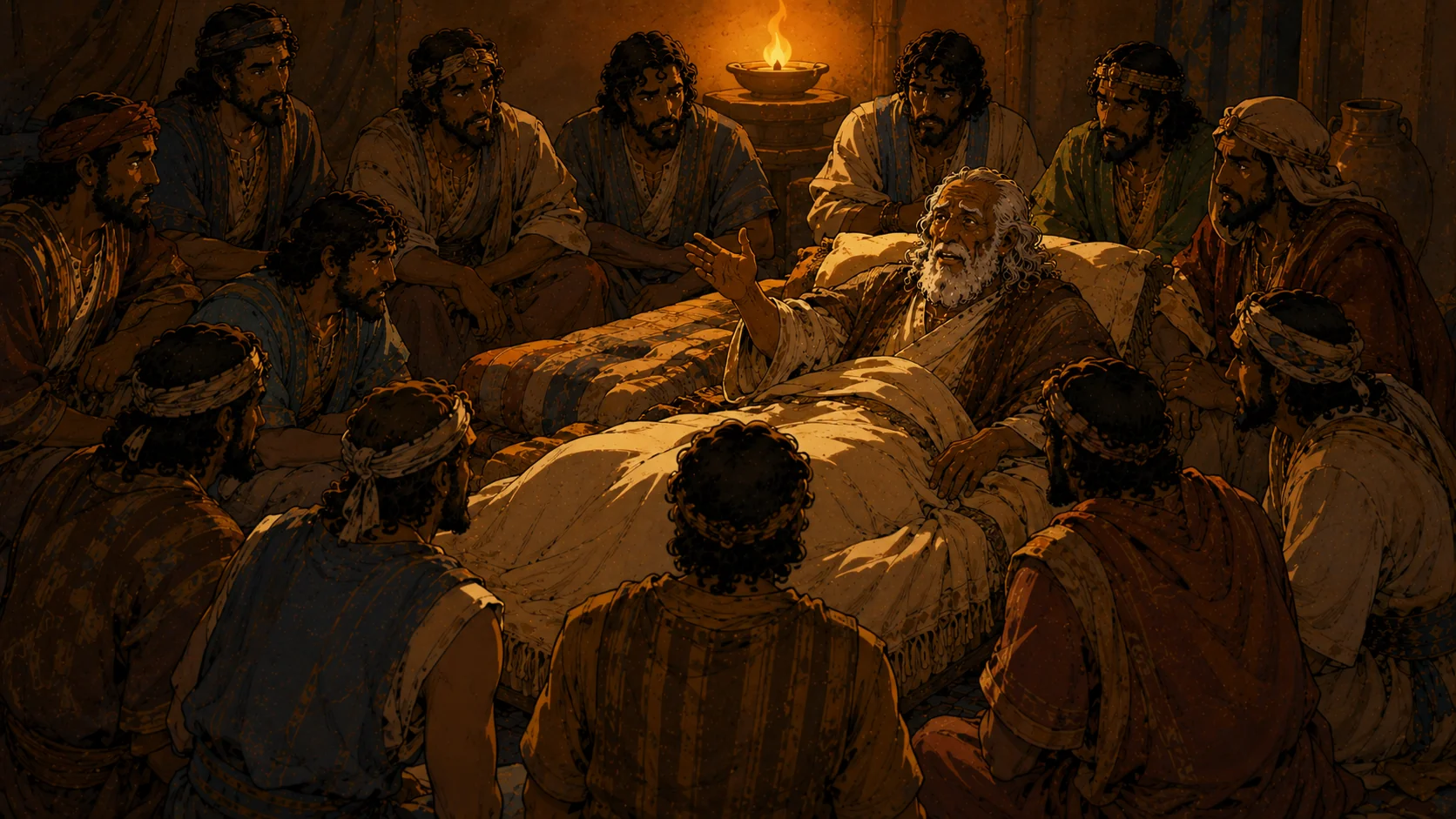
Gather and I will tell you what will befall you in the end of days. Twenty-seven verses of prophetic blessing over every son — the founding declaration of the twelve tribes of Israel.
View Breakdown →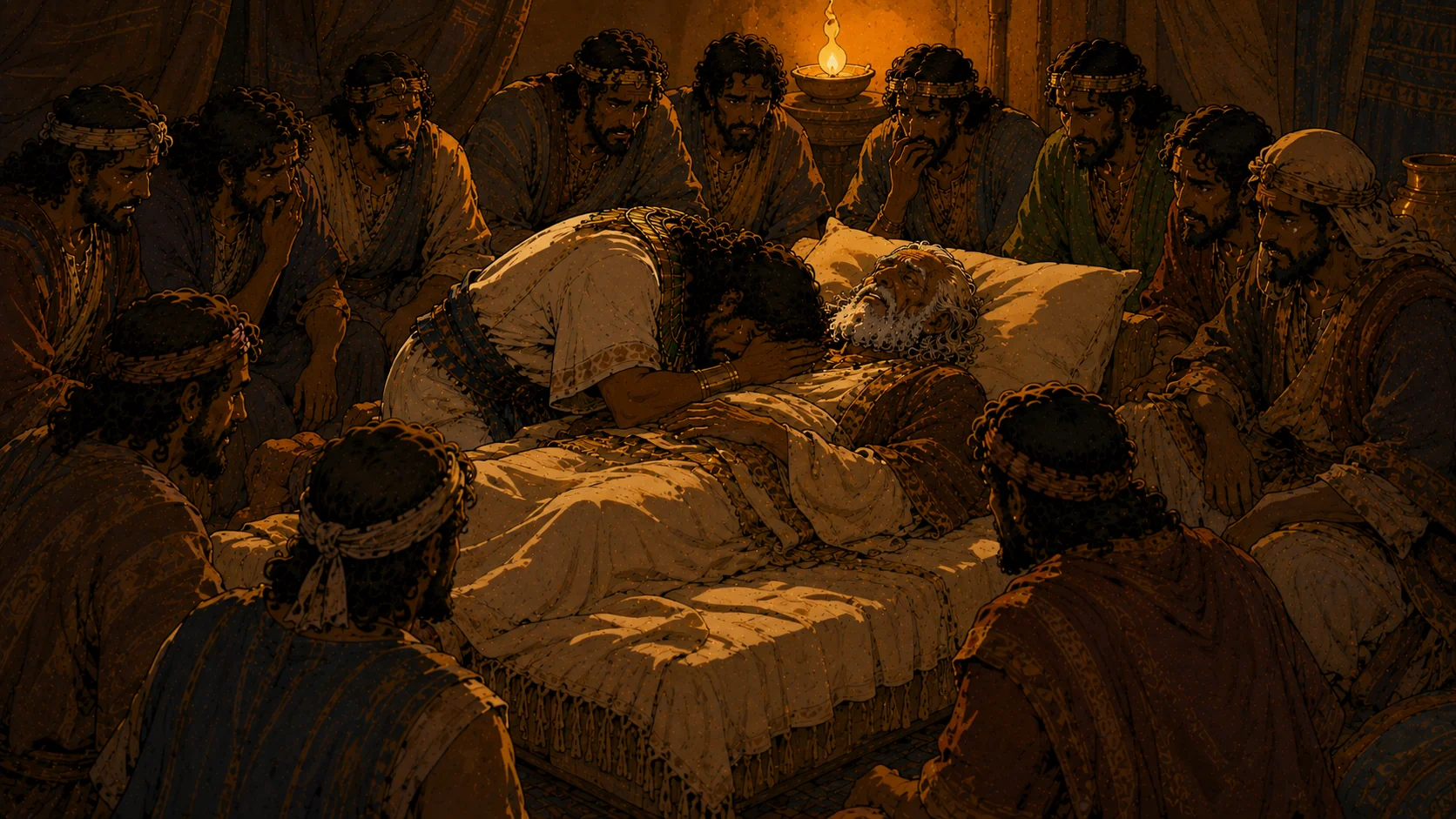
Jacob finishes his commands, gathers his feet onto the bed, and is gathered to his people. Joseph falls on his face and weeps. Egypt mourns the patriarch for seventy days.
View Breakdown →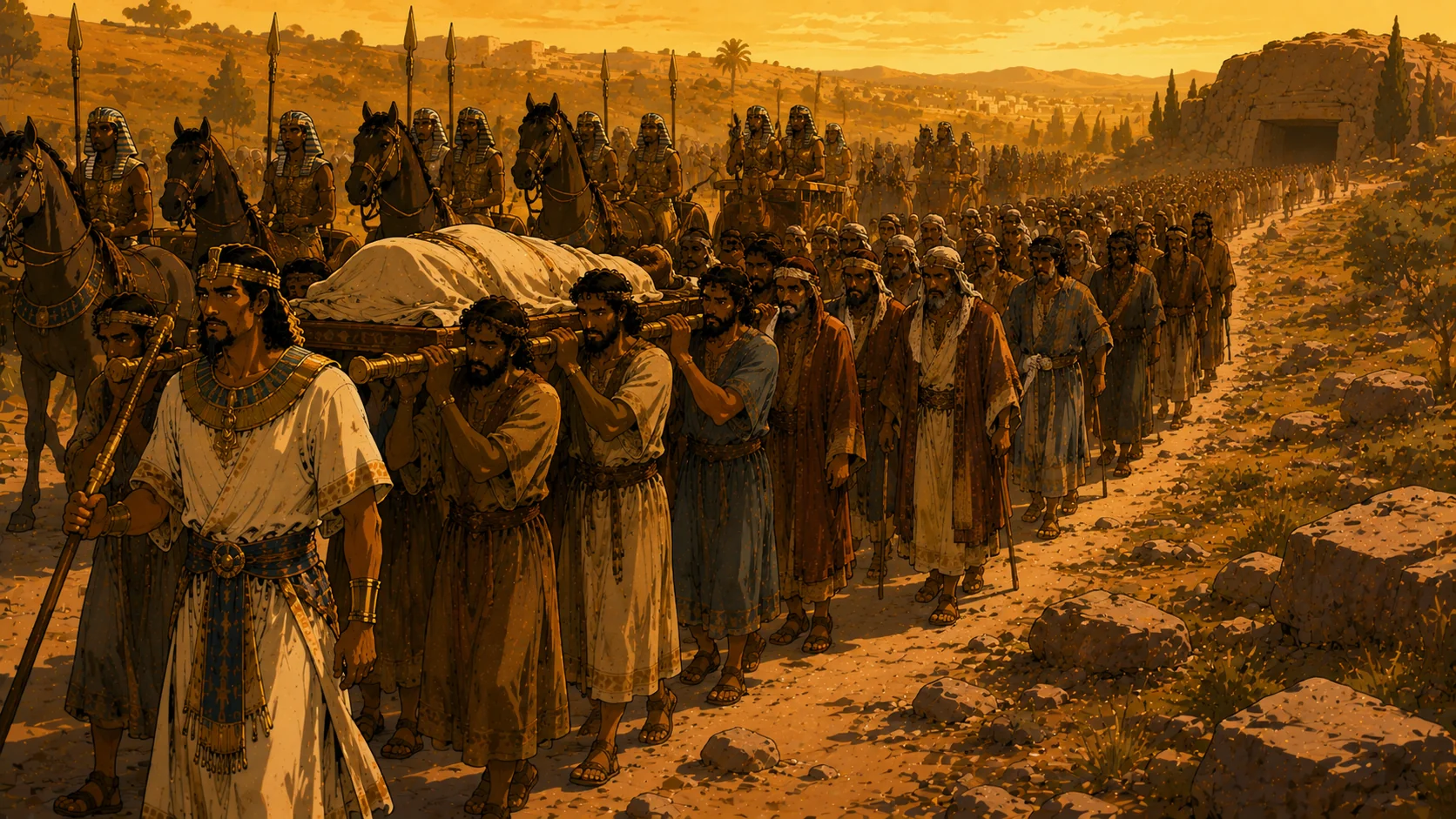
All Pharaoh's servants, all Egypt's elders, chariots and horsemen — a very great company carries Jacob home. The Canaanites name the place Abel Mitzrayim: where Egypt wept.
View Breakdown →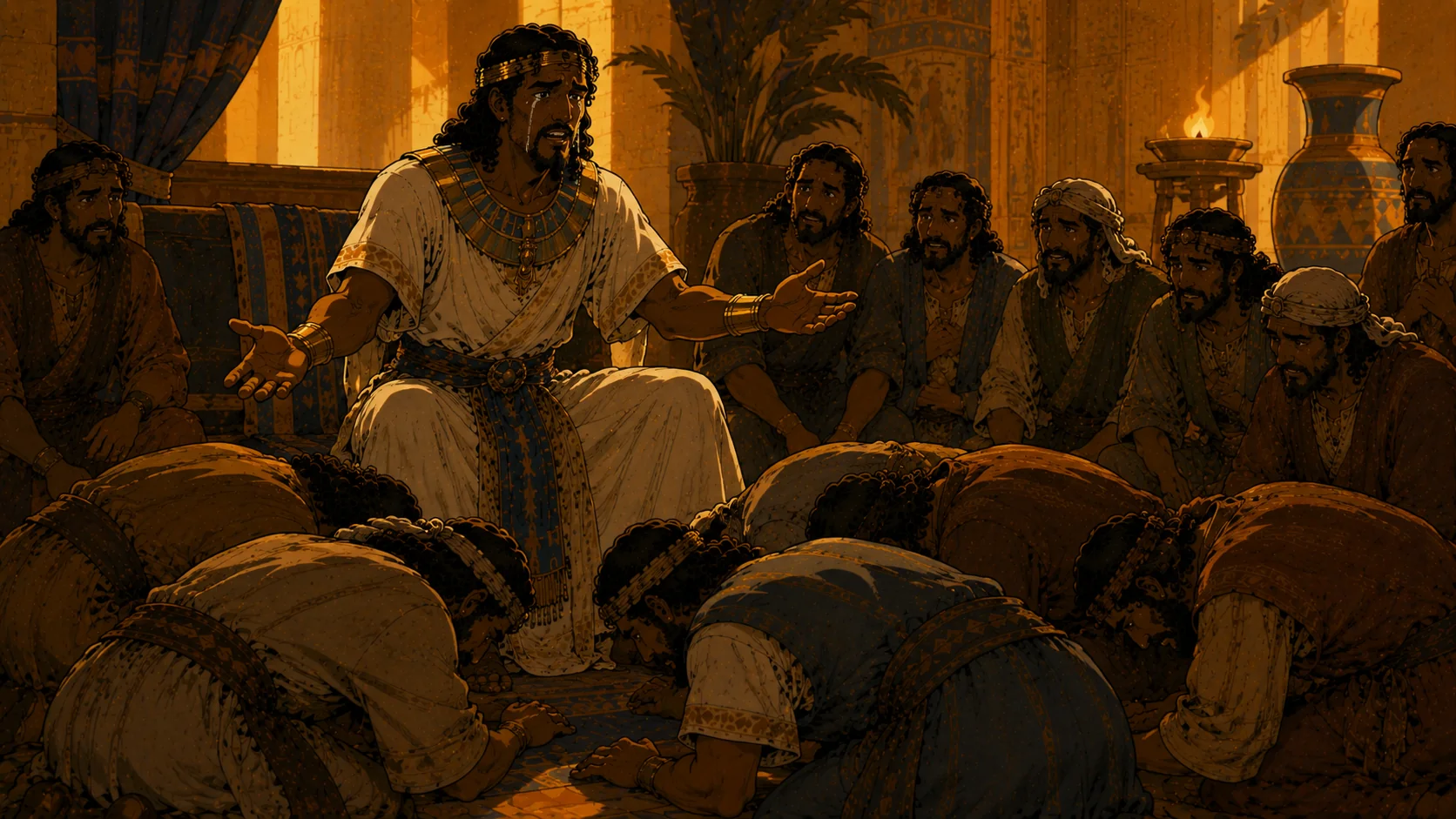
With Jacob dead the brothers panic. Joseph weeps and gives the definitive answer of the entire Joseph narrative: "You meant evil against me — but God meant it for good."
View Breakdown →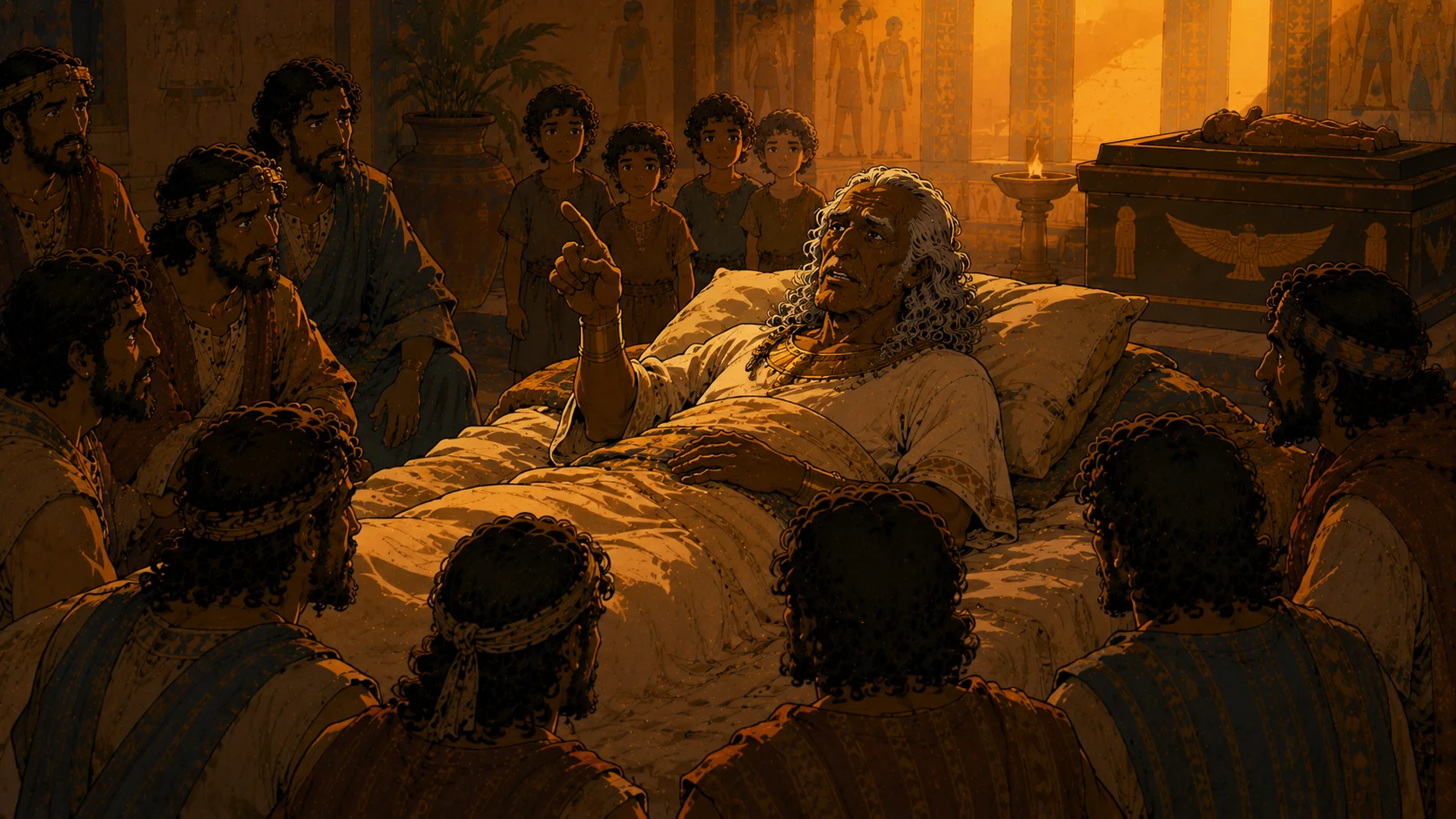
Joseph makes his brothers swear: carry my bones from here. He dies. A coffin in Egypt. Genesis ends mid-sentence — not with arrival but with bones waiting and a promise that God will come.
View Breakdown →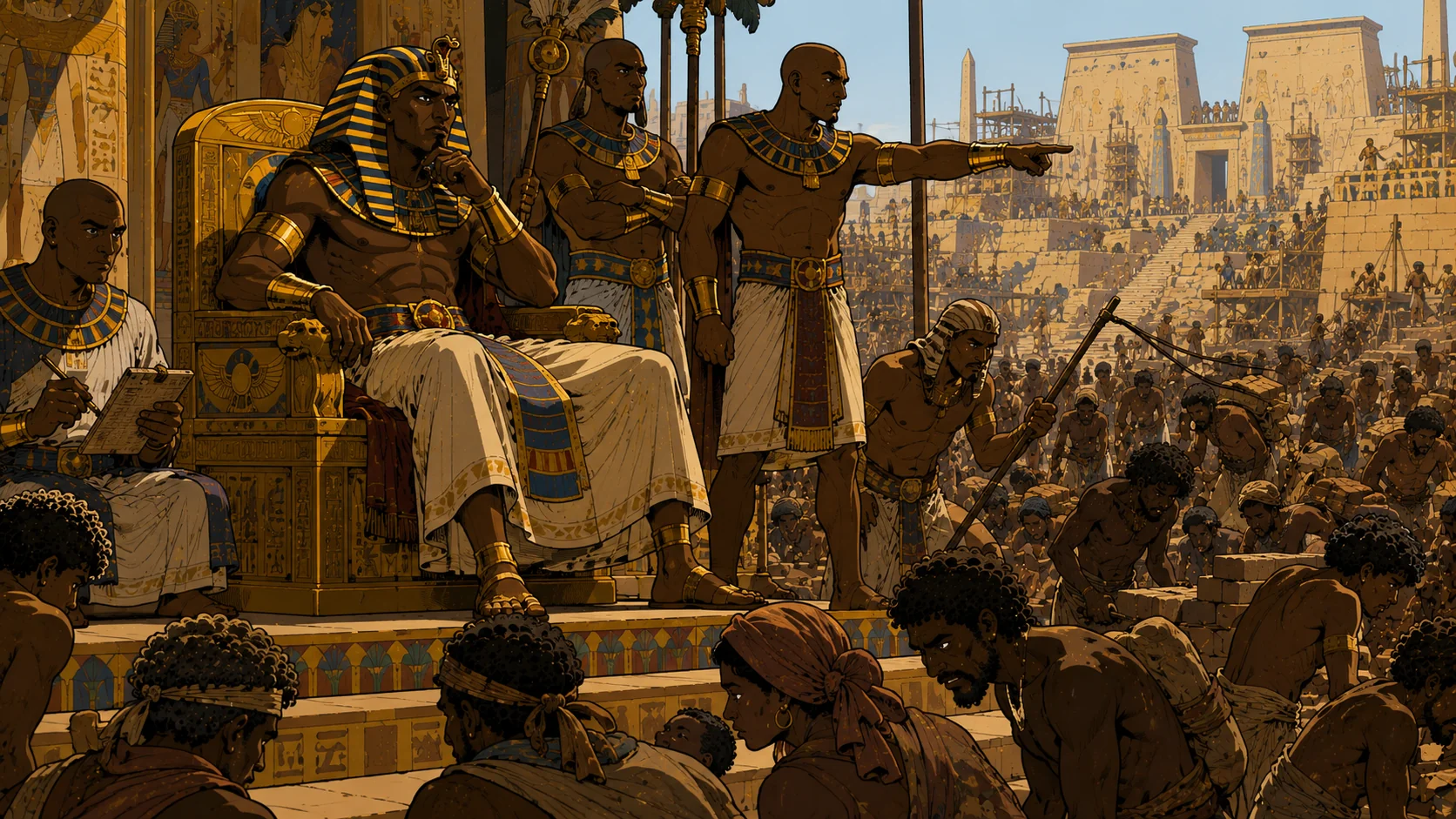
There arose a new king over Egypt, who did not know Joseph. The deliberate forgetting that turned a blessed nation into slaves.
View Breakdown →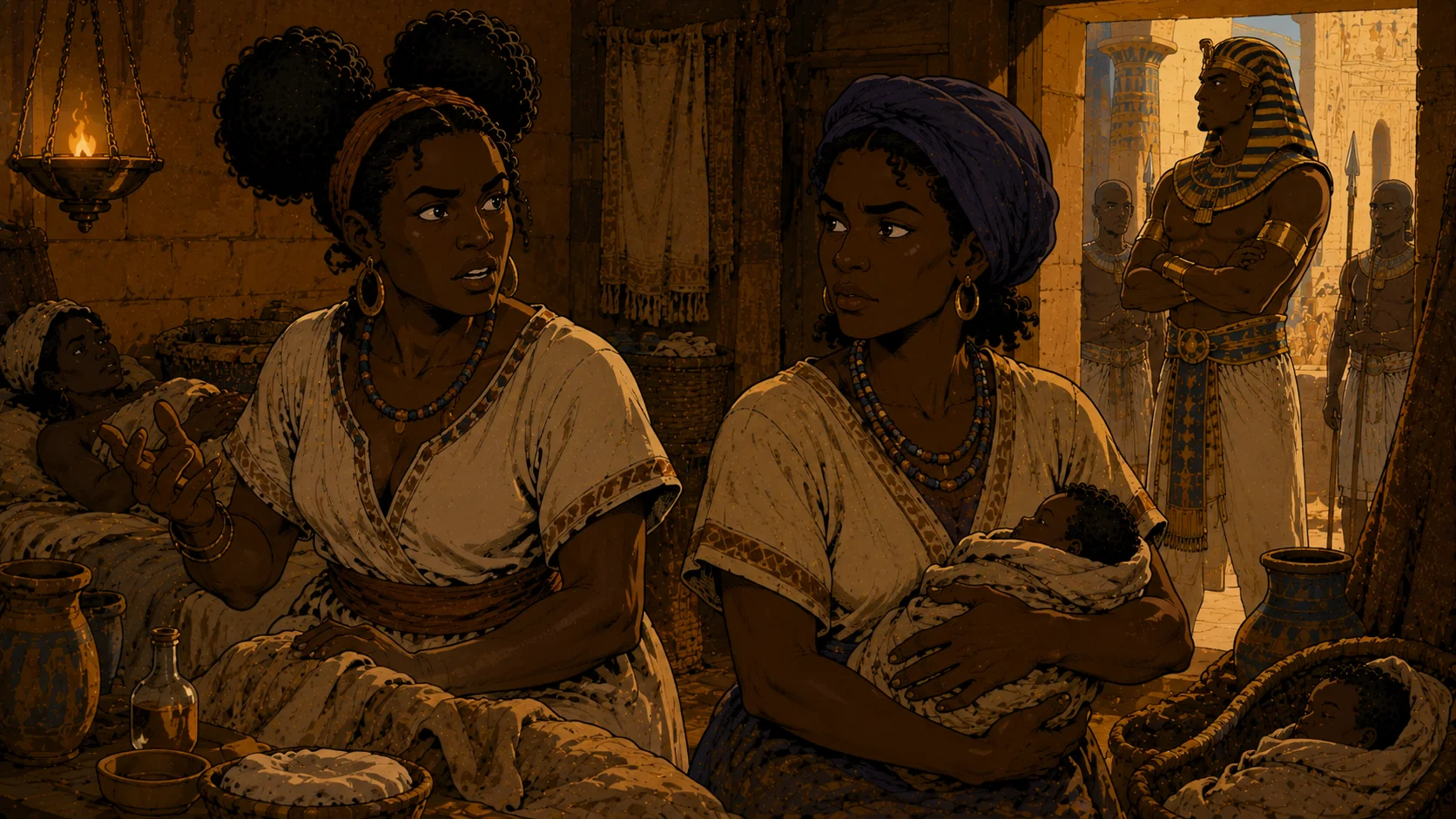
Pharaoh commands the Hebrew midwives to kill every son at birth. Shiphrah and Puah fear God more than Pharaoh — and are blessed for it.
View Breakdown →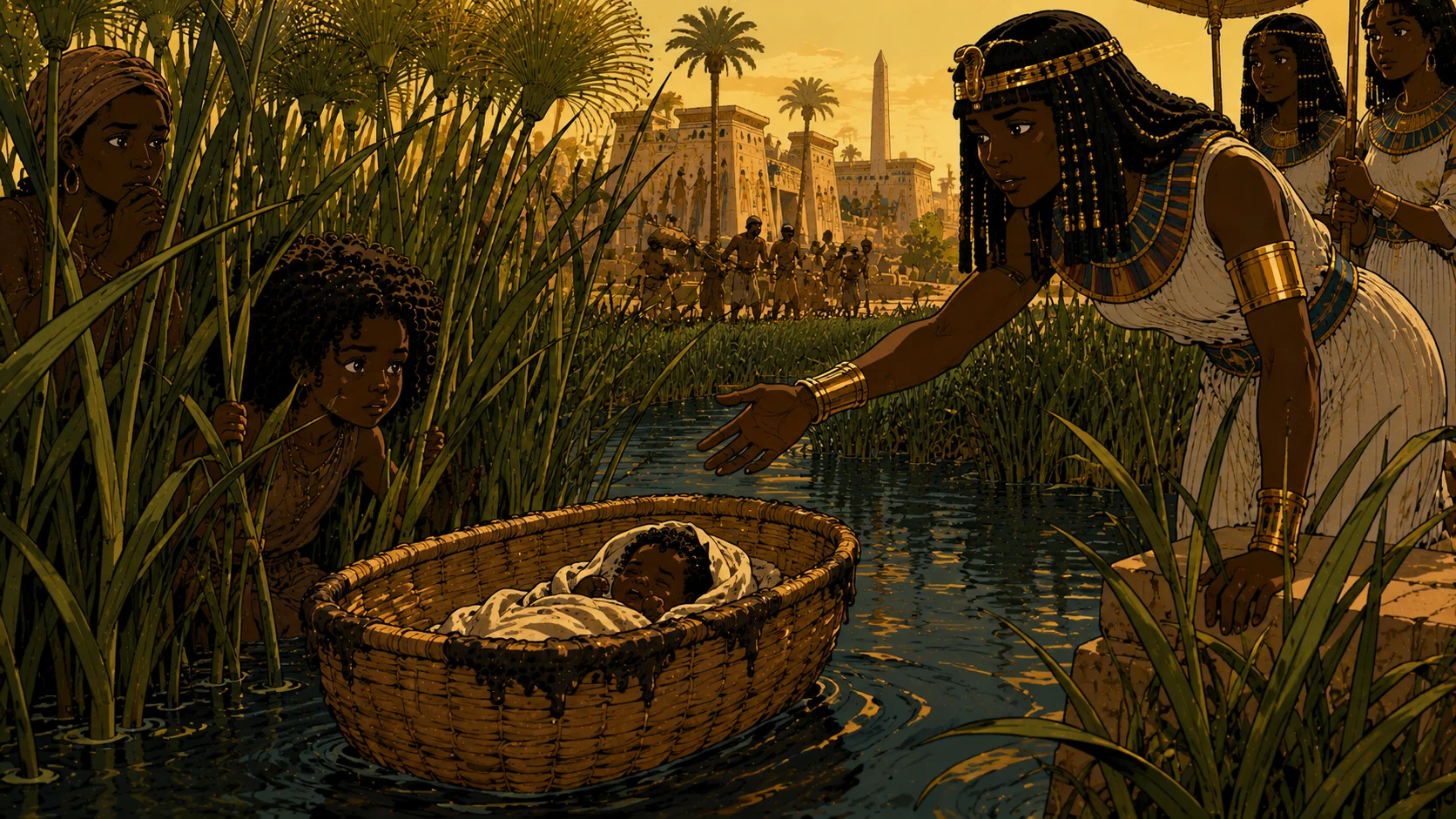
A mother hides her son for three months, then places him in a reed basket on the Nile. Pharaoh's daughter draws him out of the water.
View Breakdown →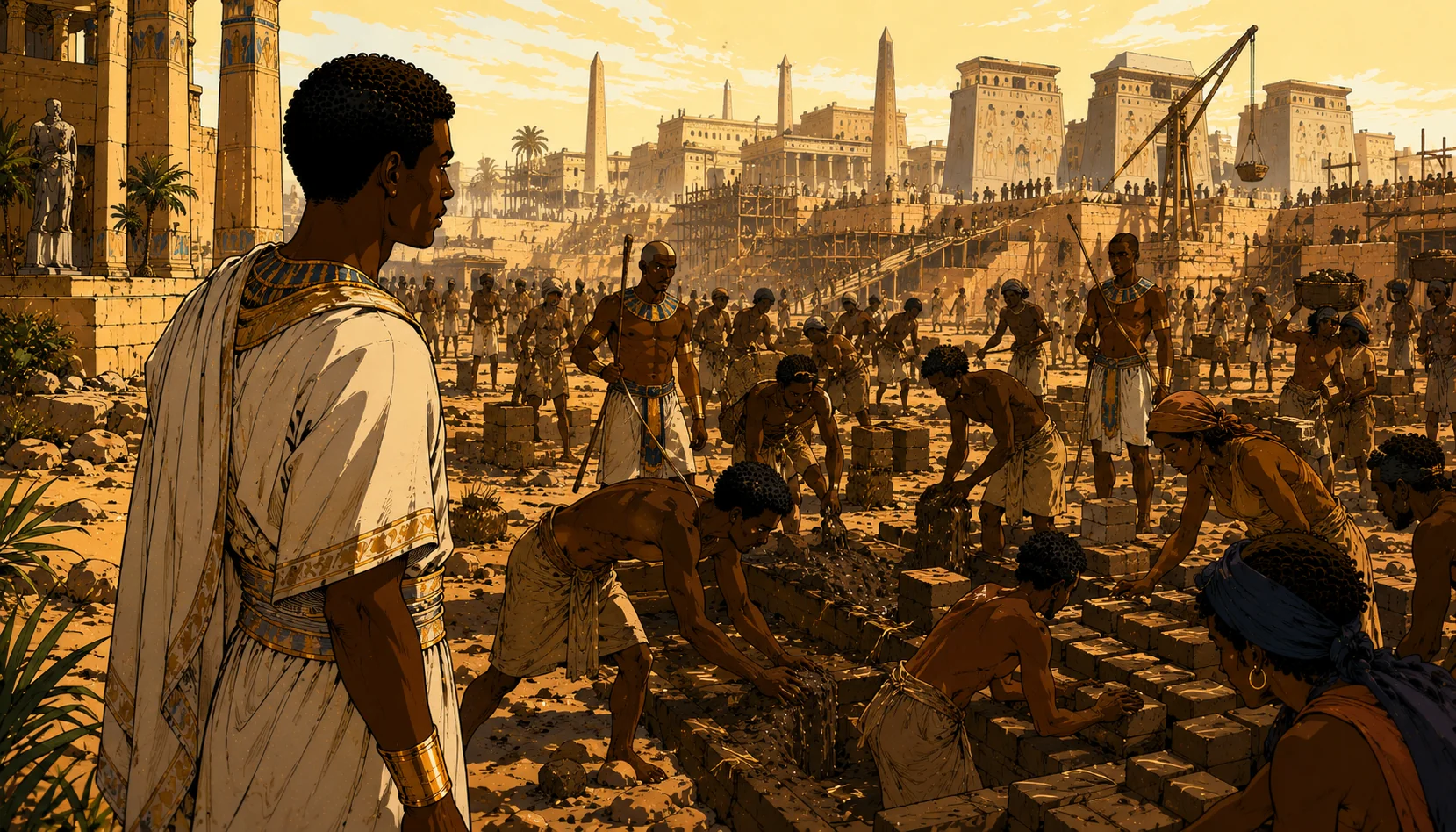
Moses grows up in Pharaoh's palace, then goes out to his brothers and sees their forced labour. He looks and sees their burden.
View Breakdown →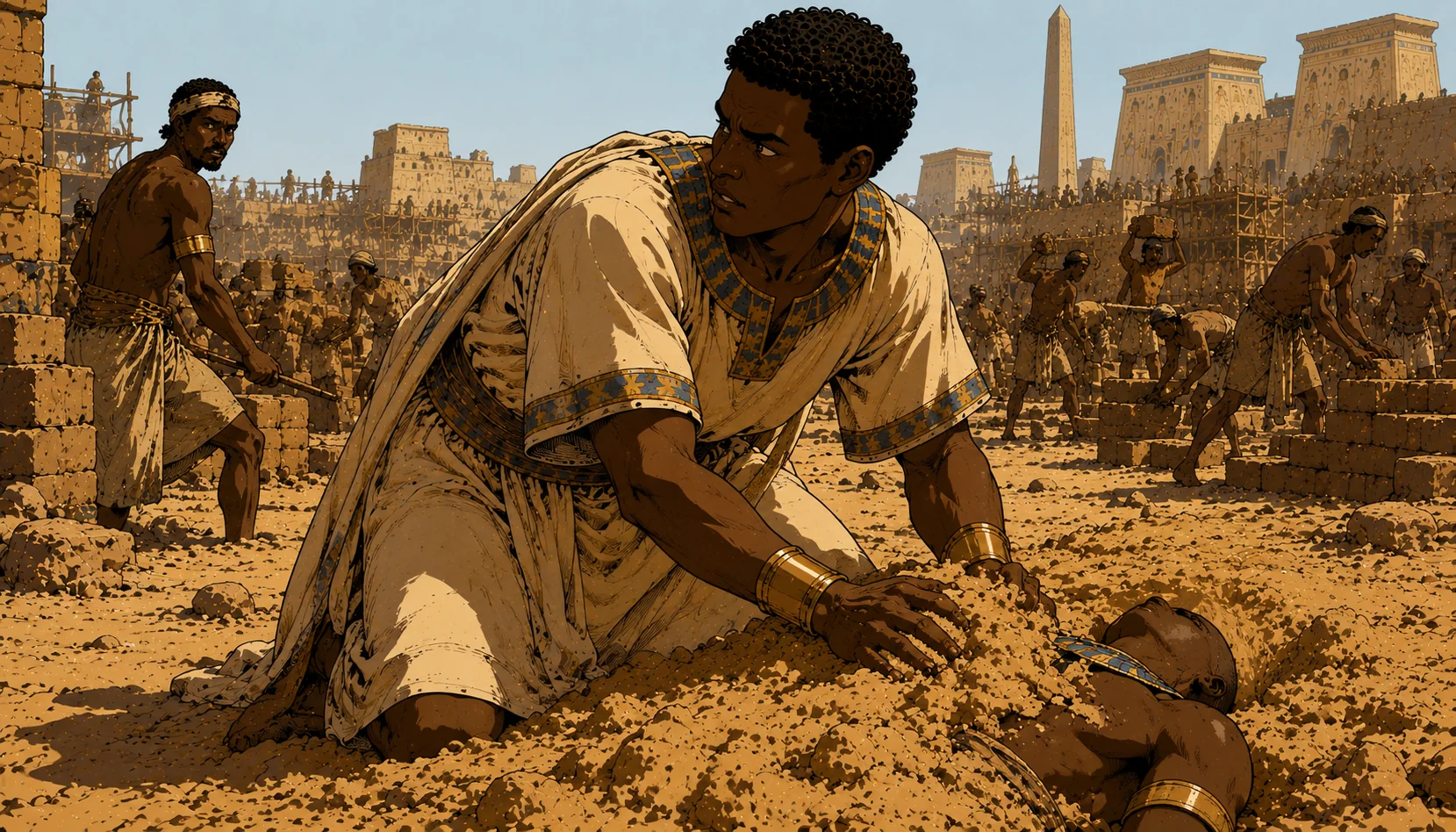
Moses sees an Egyptian striking a Hebrew. He looks this way and that, then strikes the Egyptian down and hides him in the sand.
View Breakdown →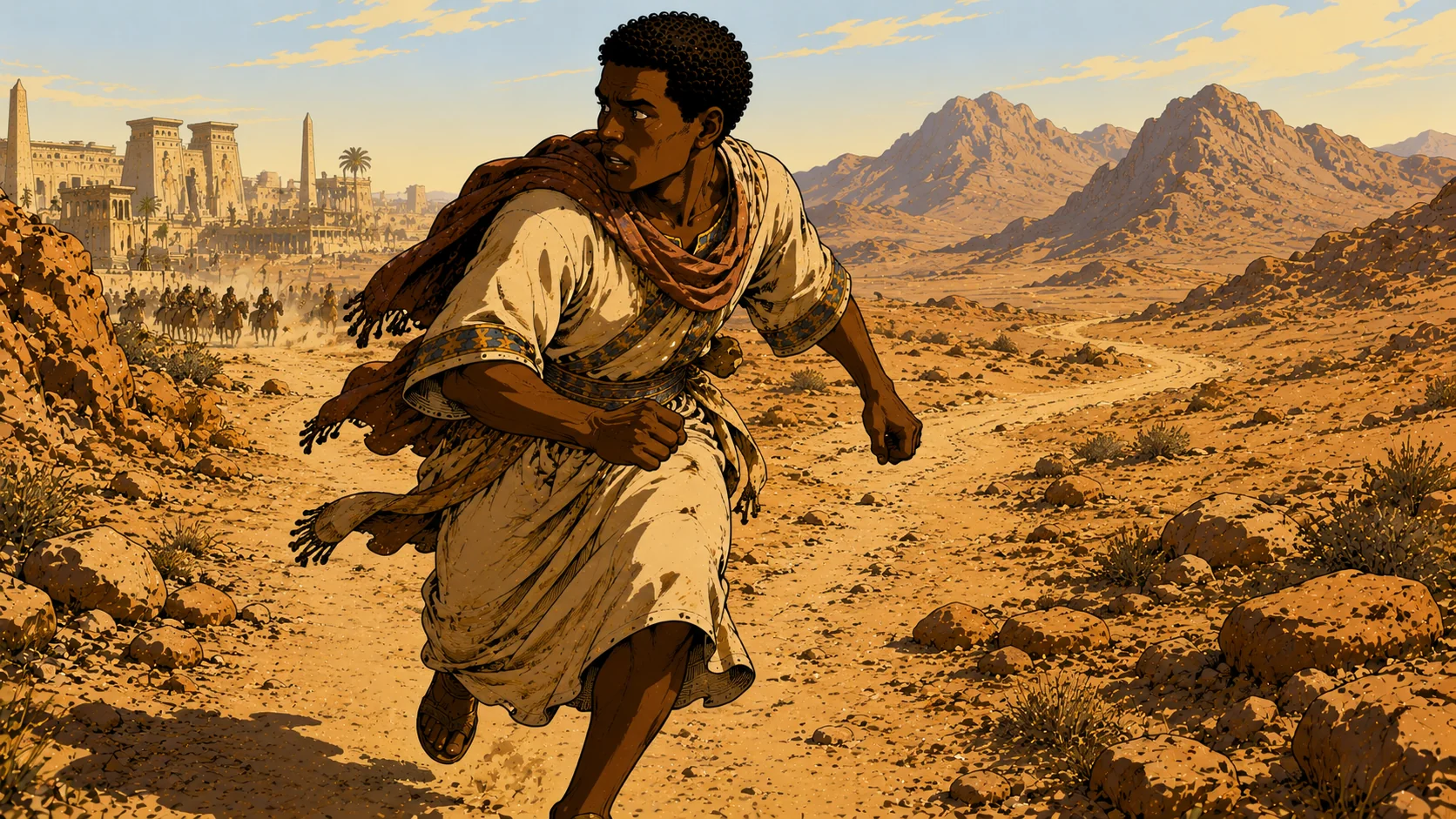
Pharaoh hears what Moses has done and seeks to kill him. Moses flees to the land of Midian and sits down by a well.
View Breakdown →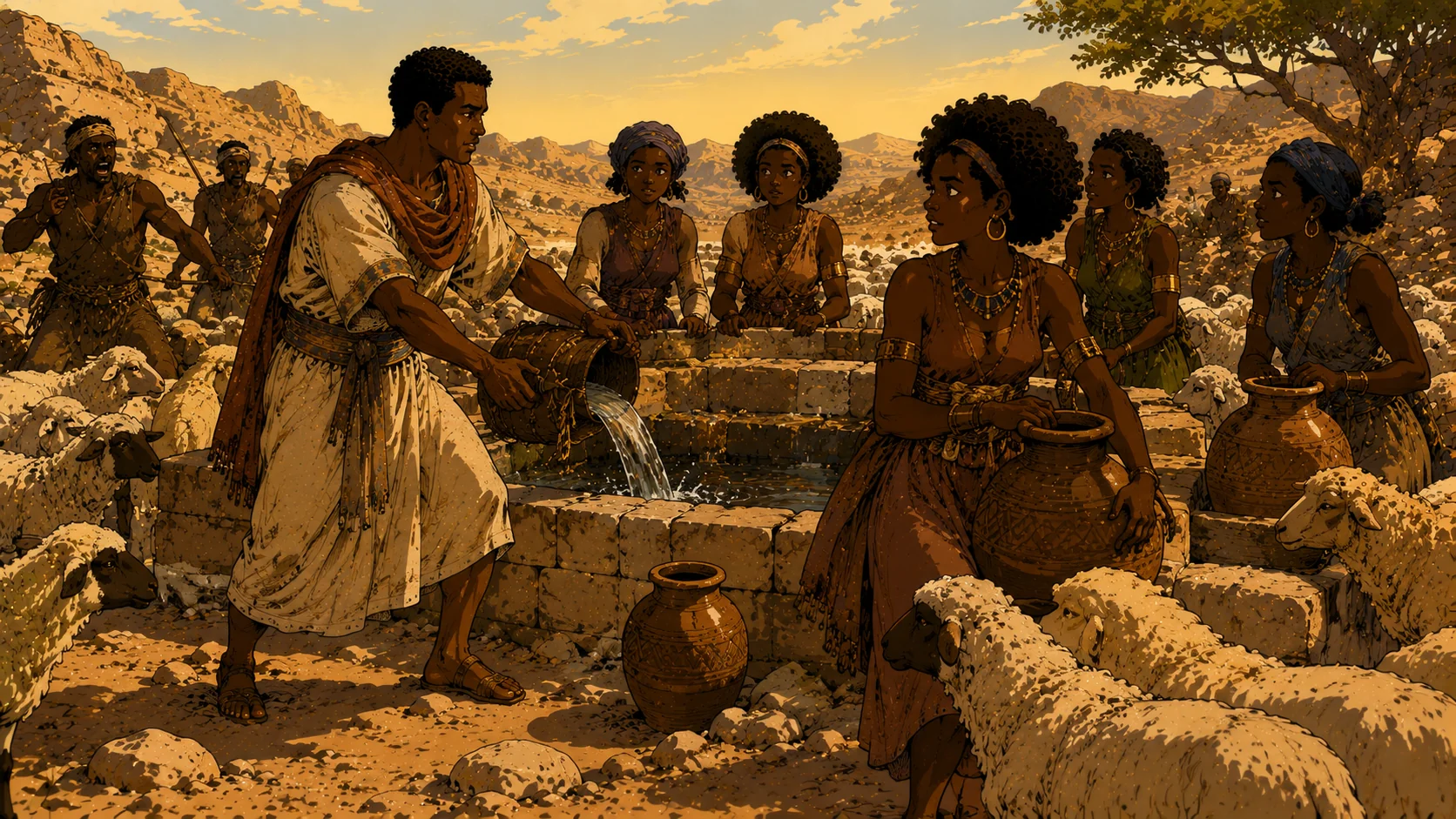
The seven daughters of Jethro the priest of Midian come to water their flocks. Moses drives away the shepherds and waters their flock. Zipporah becomes his wife.
View Breakdown →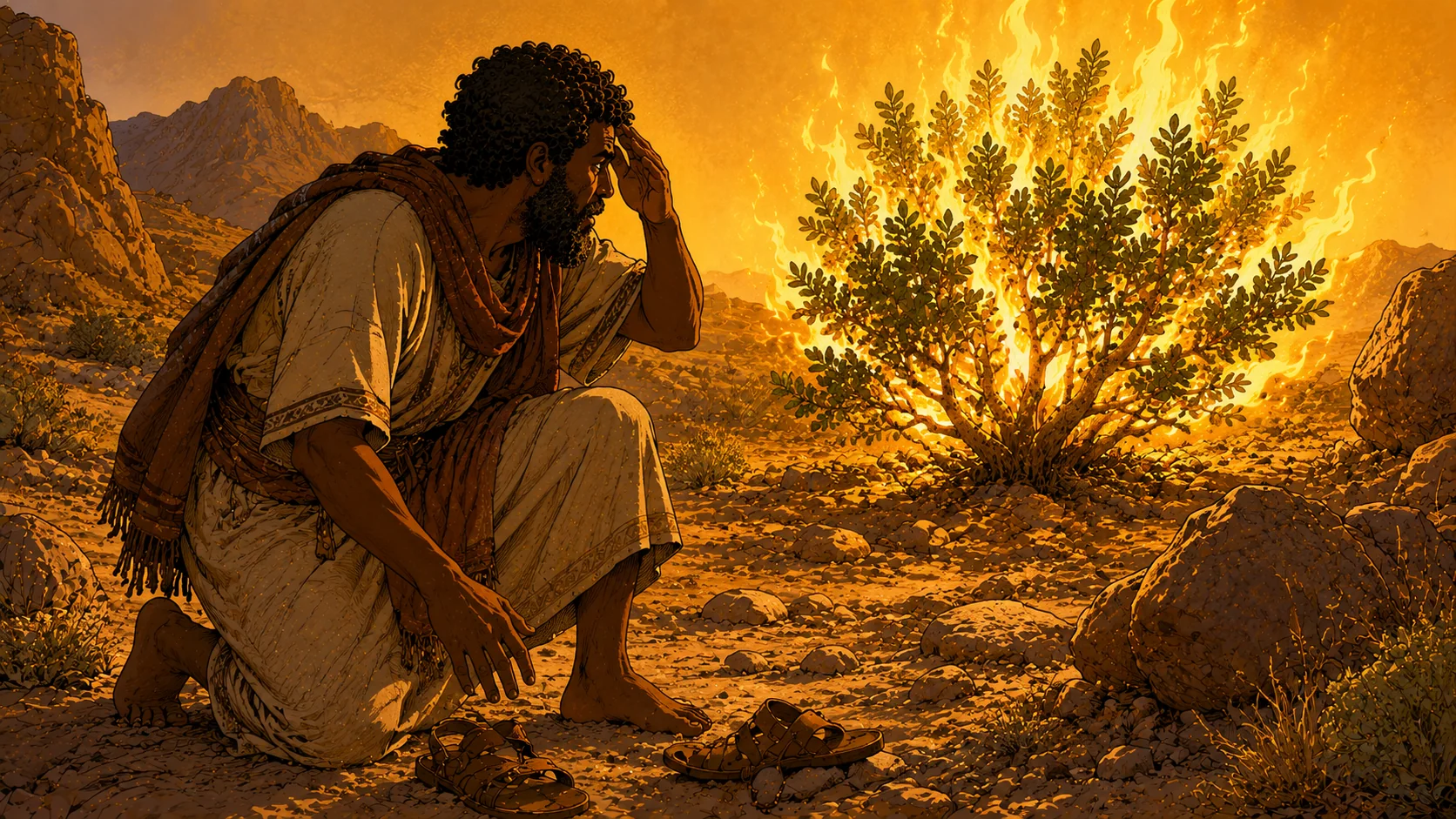
The angel of the LORD appears in a flame of fire from a bush that burns but is not consumed. Remove your sandals — the ground you stand on is holy.
View Breakdown →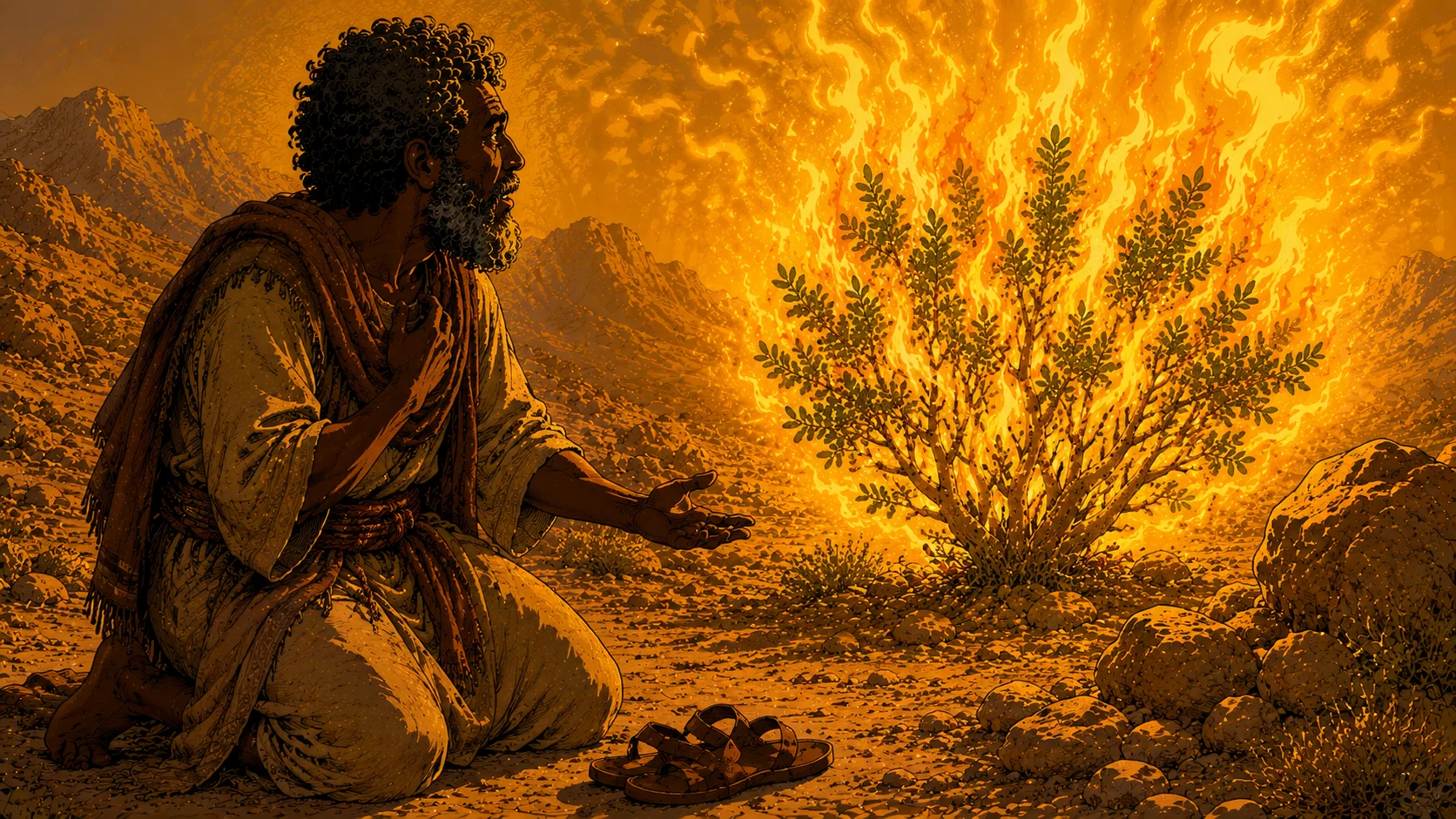
Moses asks: what is your name? God answers with the most profound declaration in all of Scripture — I AM THAT I AM. The Name that contains all existence.
View Breakdown →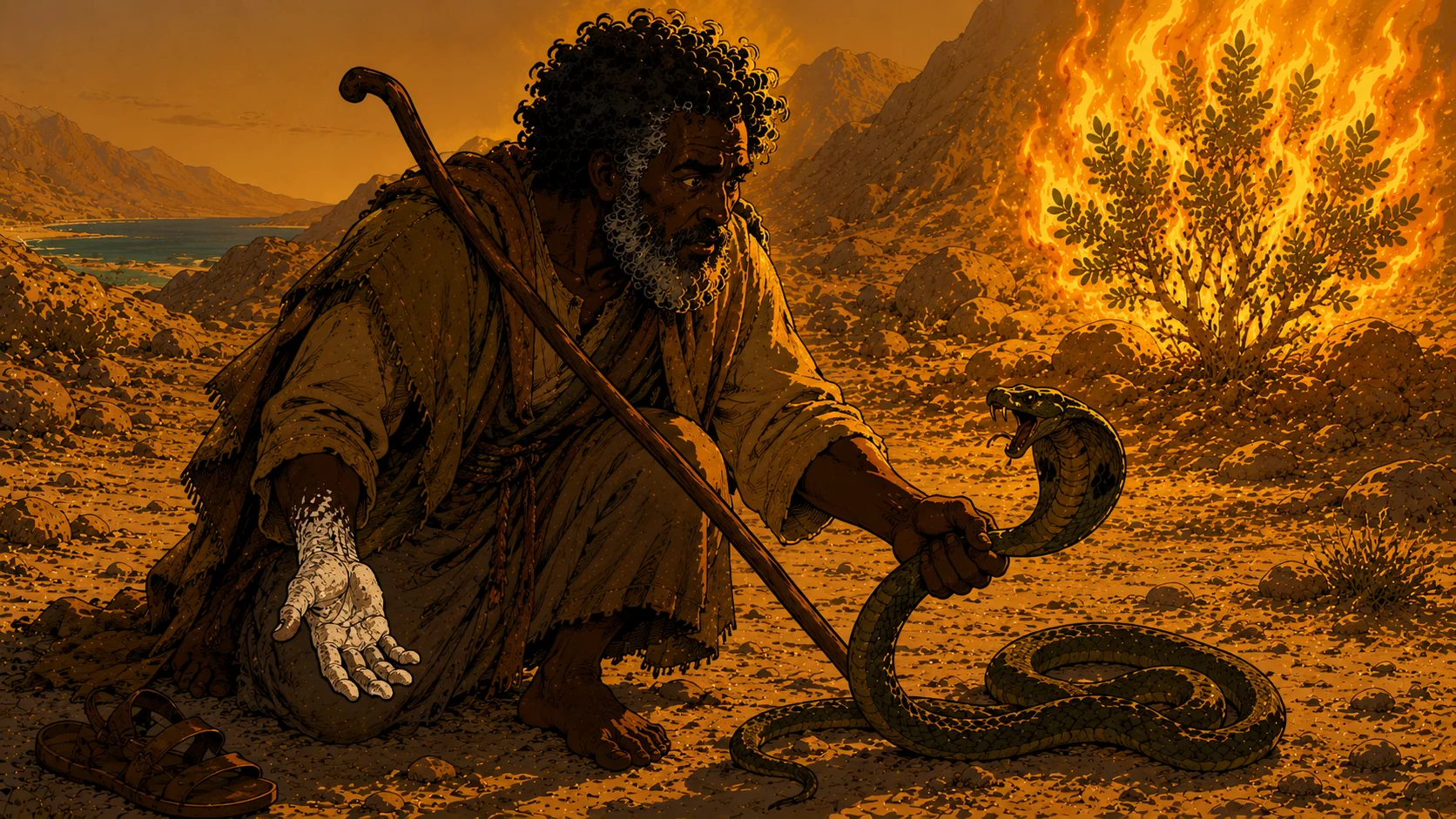
The staff becomes a serpent. The hand becomes leprous. Water becomes blood. Three signs given to a reluctant Moses as proof that the LORD has sent him.
View Breakdown →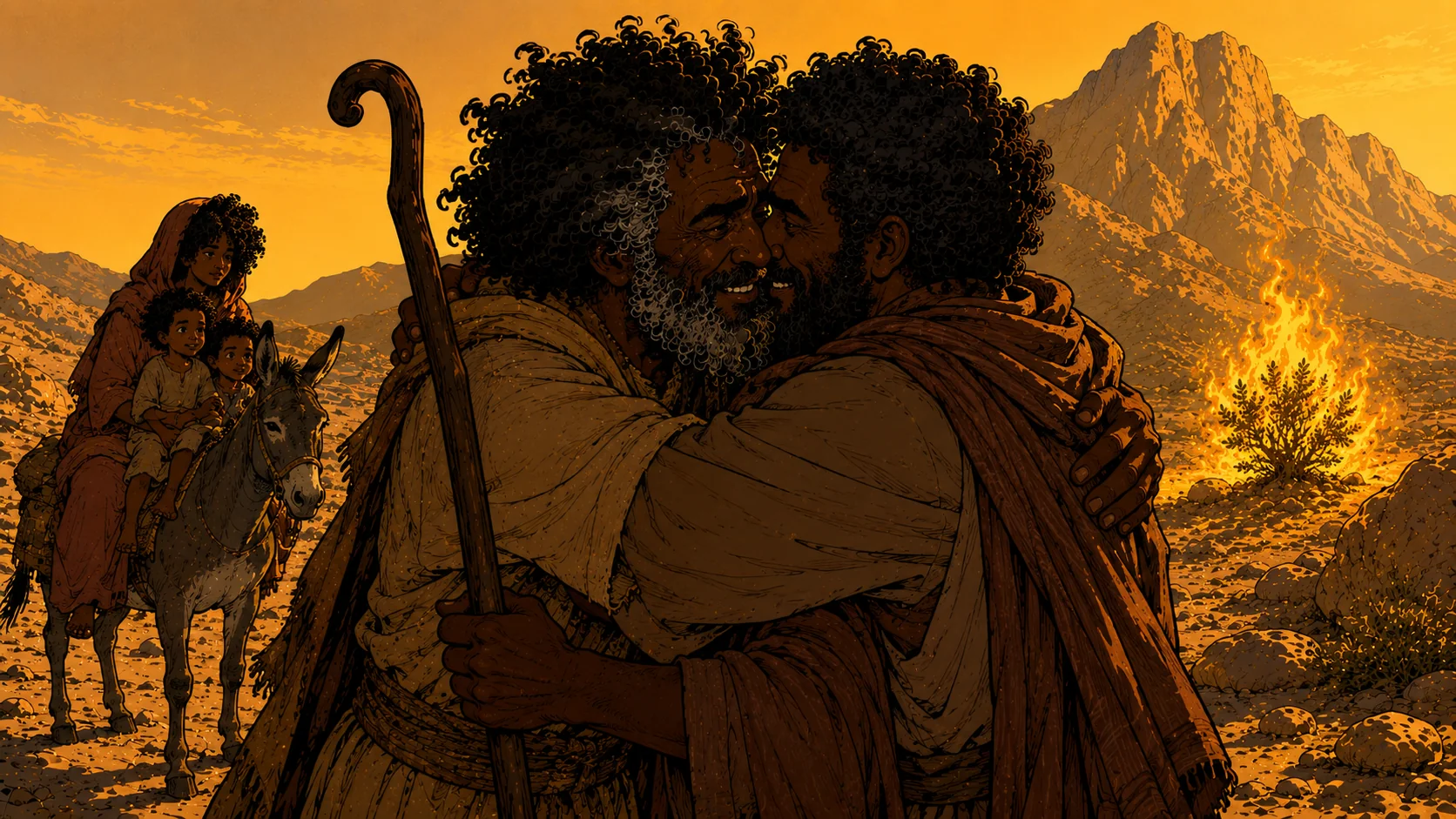
Moses returns to Egypt. Aaron meets him at the mountain of God. Together they prepare to stand before Pharaoh and the elders of Israel.
View Breakdown →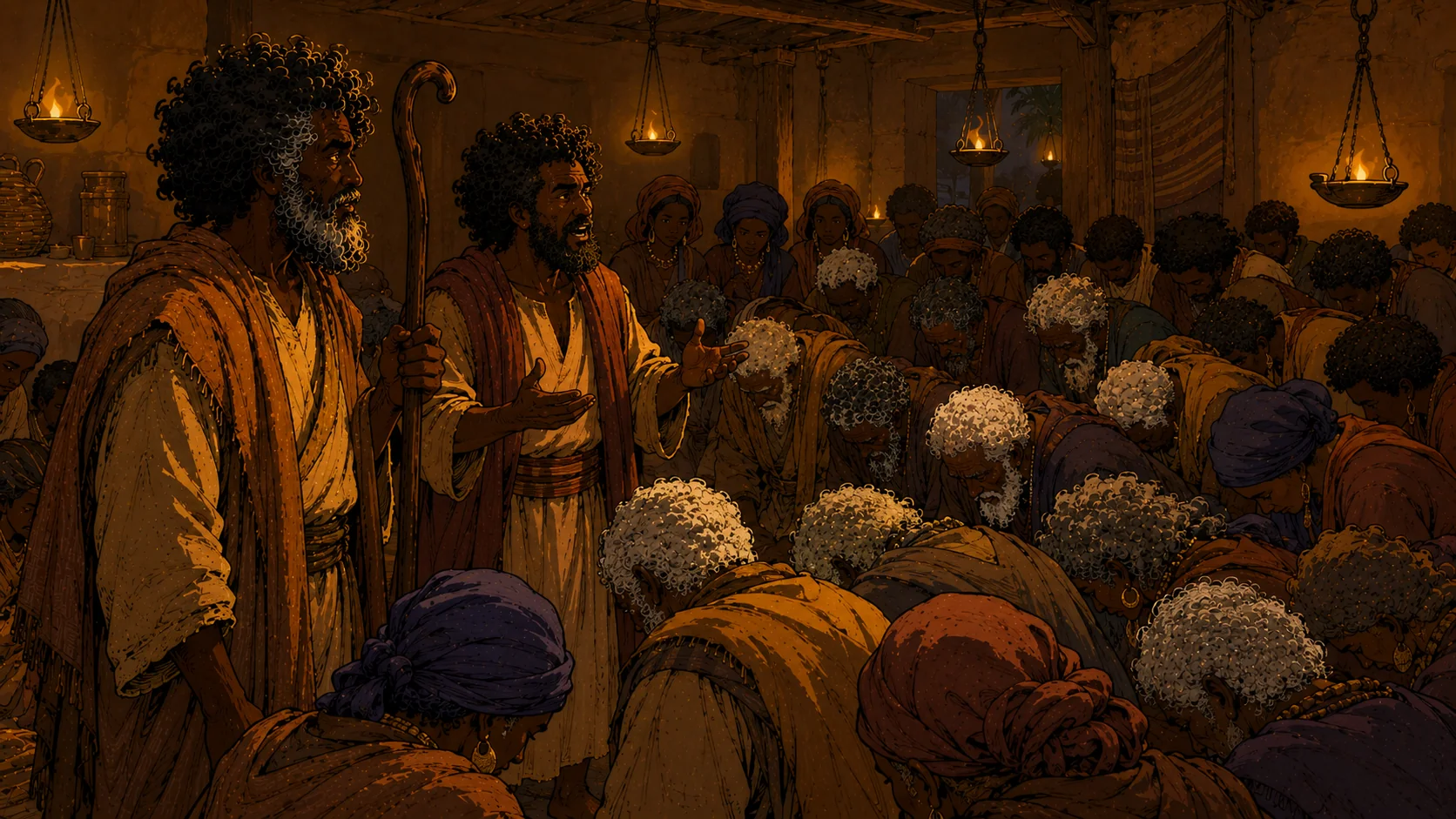
Moses and Aaron gather all the elders of Israel. Aaron speaks the words God gave Moses, performs the signs — and the people bow their heads and worship.
View Breakdown →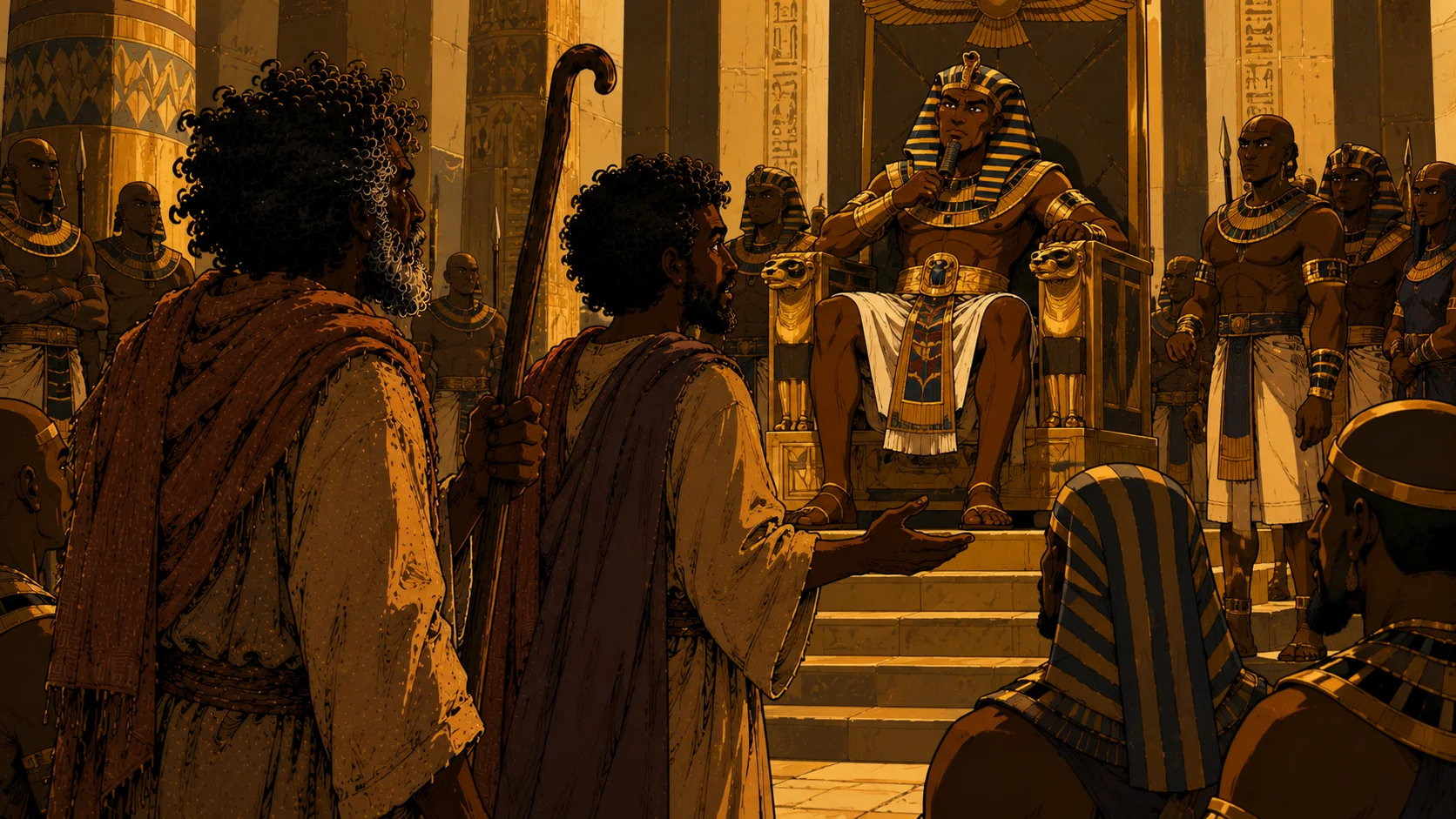
Moses and Aaron stand before Pharaoh and declare: Let my people go. Pharaoh refuses. He increases the burden — no more straw, the same quota of bricks.
View Breakdown →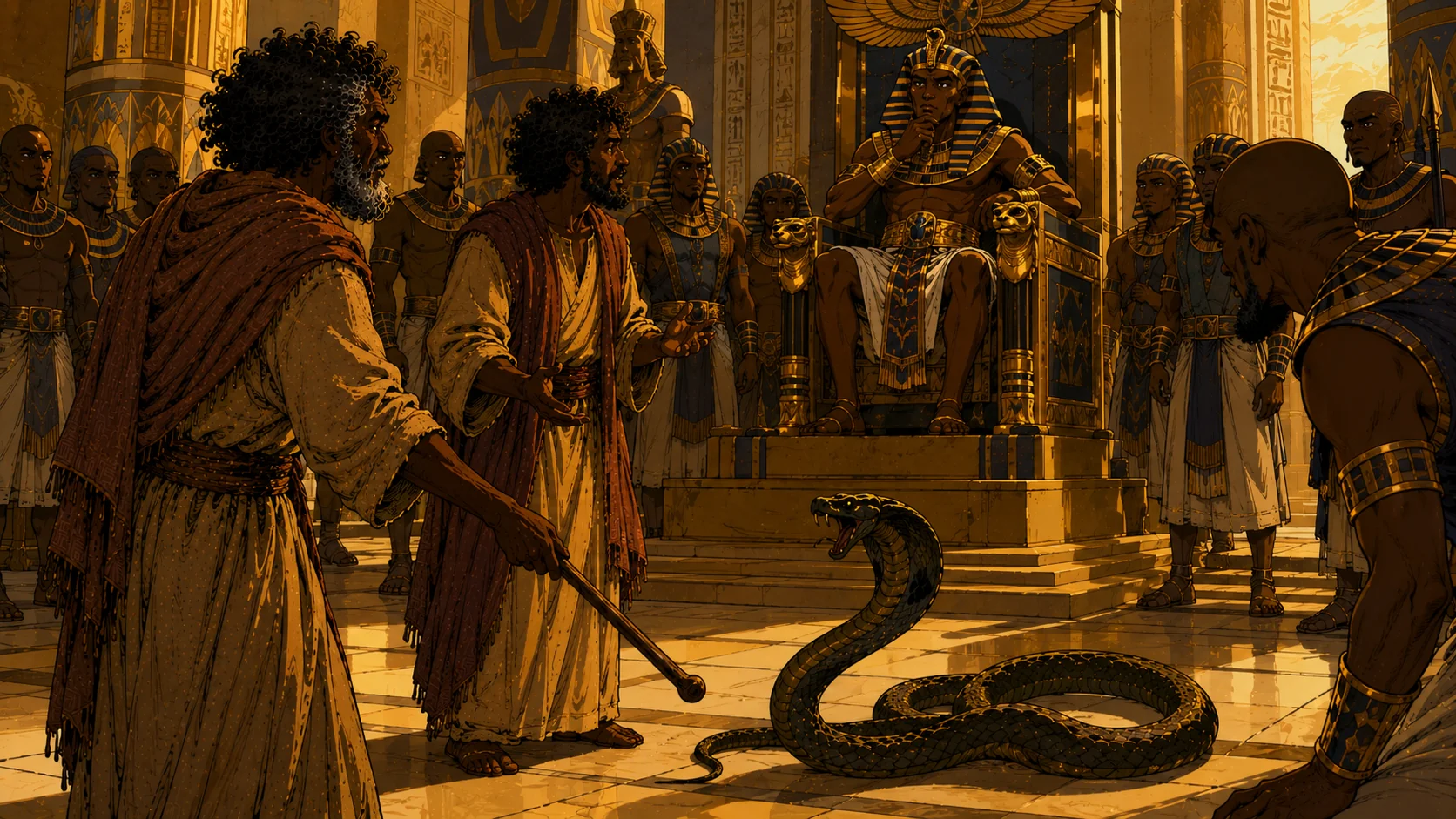
Aaron throws his staff before Pharaoh and it becomes a serpent. The Egyptian sorcerers do the same — but Aaron's staff swallows theirs. Pharaoh's heart is hardened.
View Breakdown →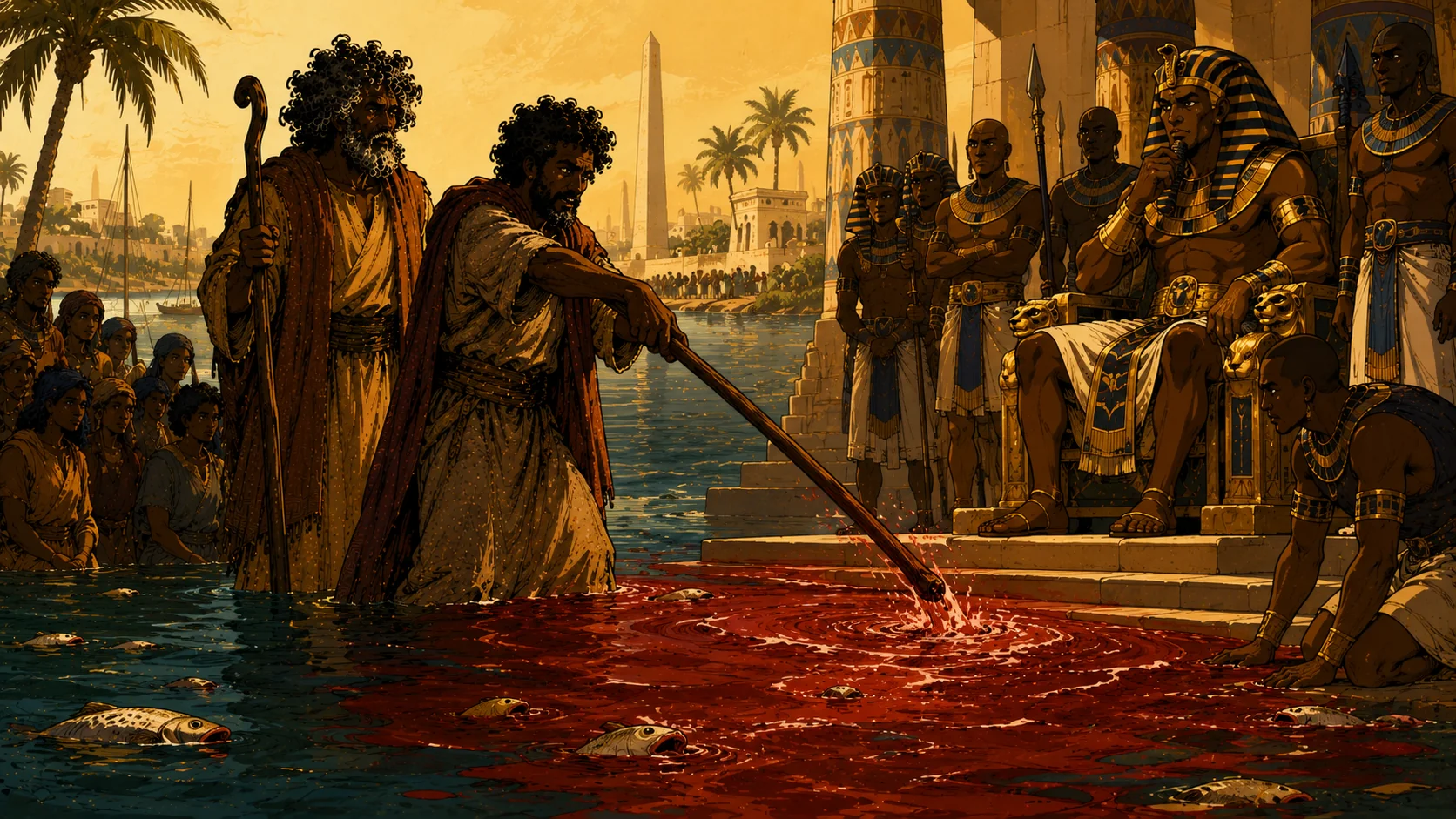
Aaron raises the staff and strikes the Nile in the sight of Pharaoh. The river turns to blood. The fish die. The Egyptians cannot drink the water.
View Breakdown →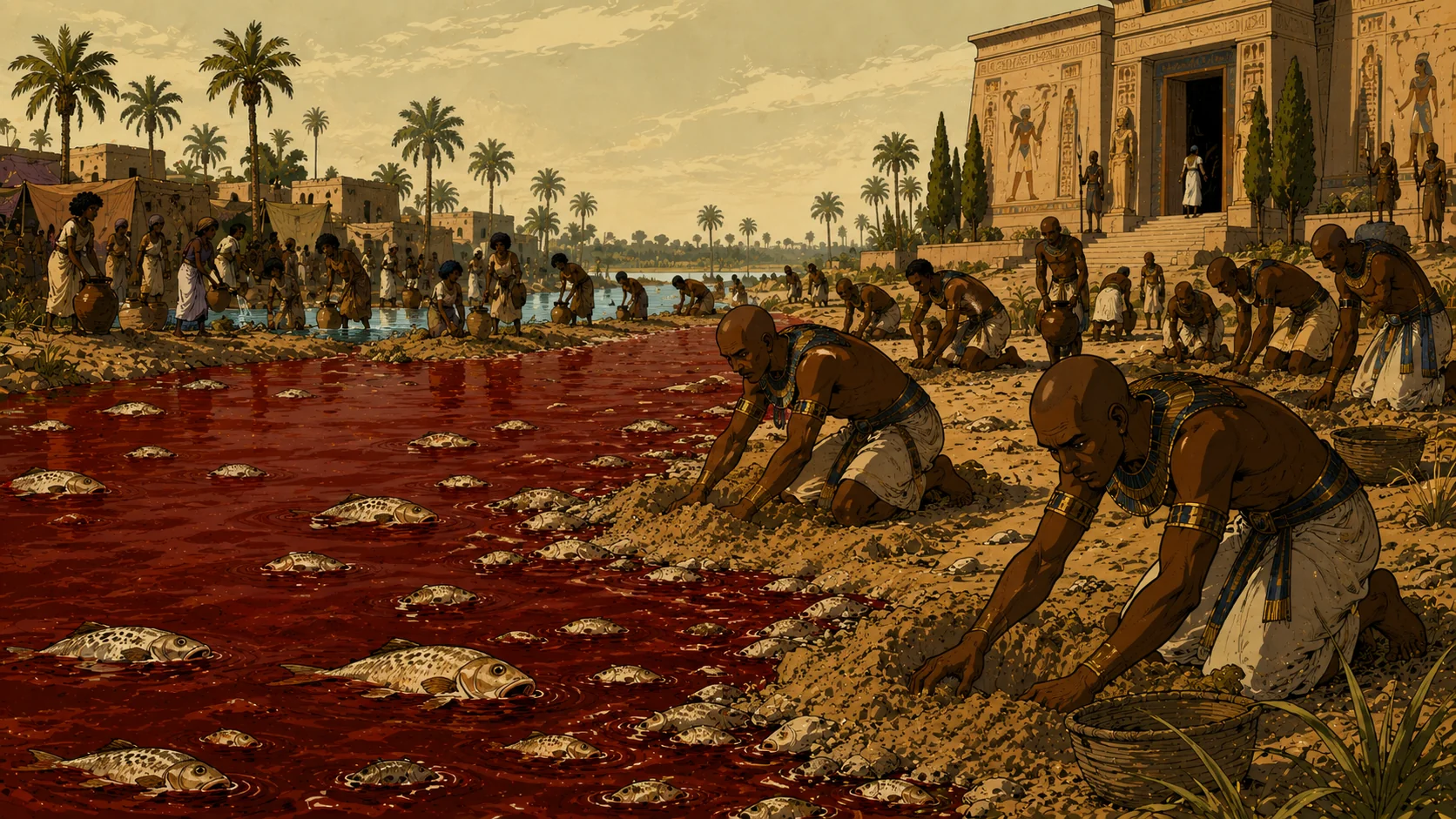
Pharaoh's heart is hardened and he turns away into his house. Seven days pass. The Egyptians dig along the Nile for water to drink — they cannot drink from the river.
View Breakdown →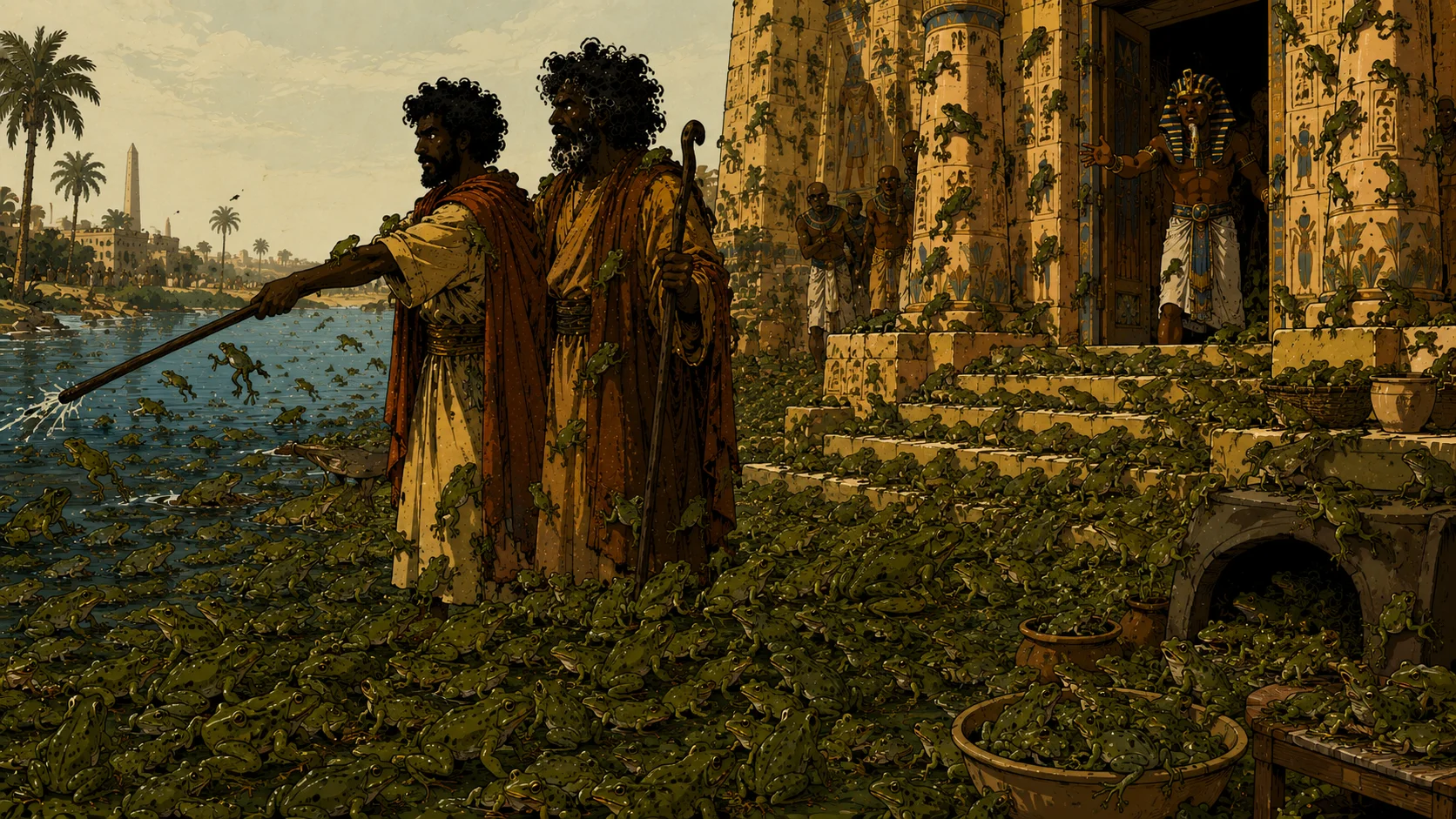
Aaron stretches his hand and frogs swarm all of Egypt — beds, ovens, kneading bowls. For the first time Pharaoh begs Moses to pray. But when relief comes, his heart hardens again.
View Breakdown →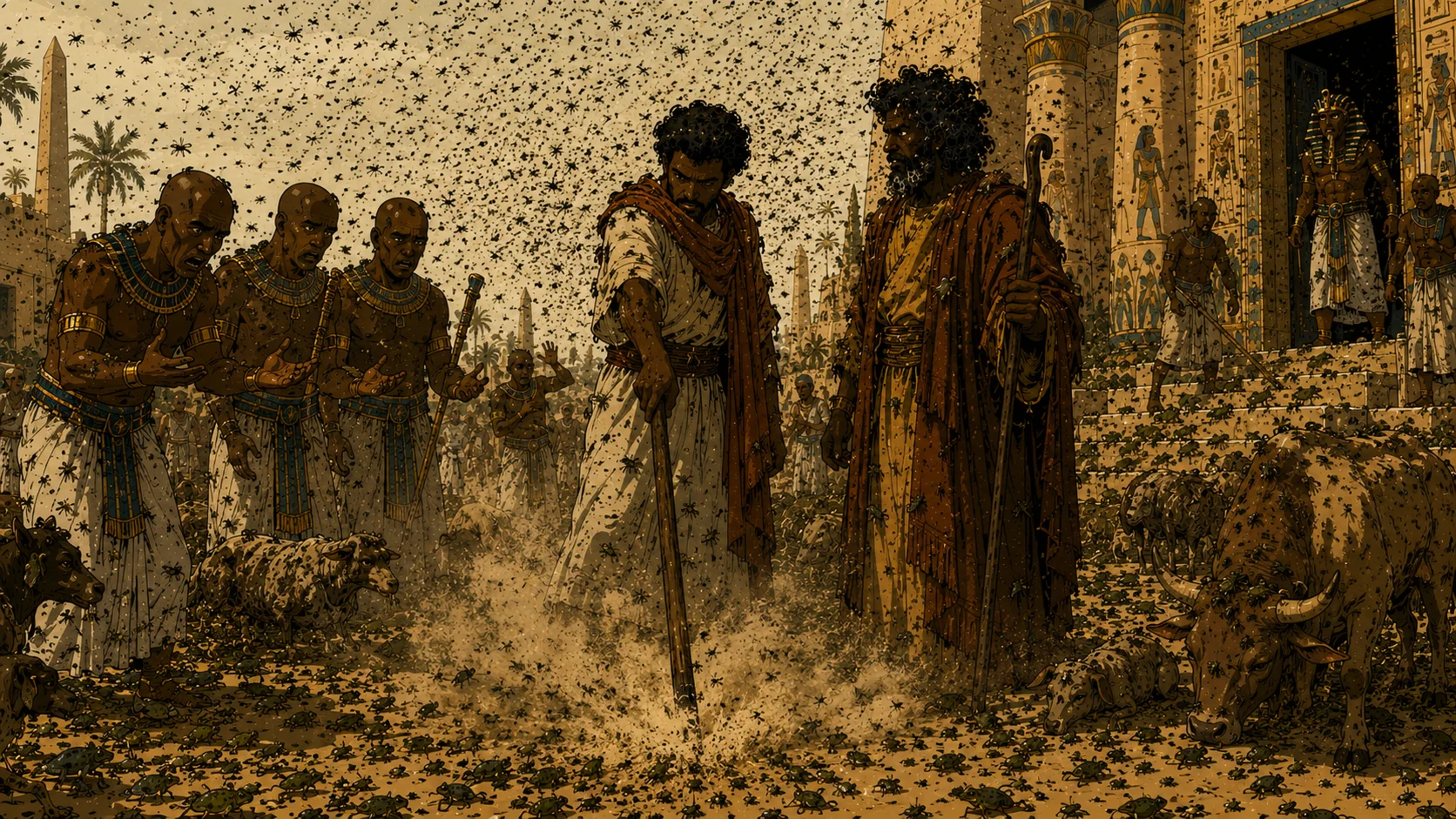
Aaron strikes the dust of the earth and gnats swarm all of Egypt. The magicians cannot replicate it. For the first time they confess: This is the finger of God.
View Breakdown →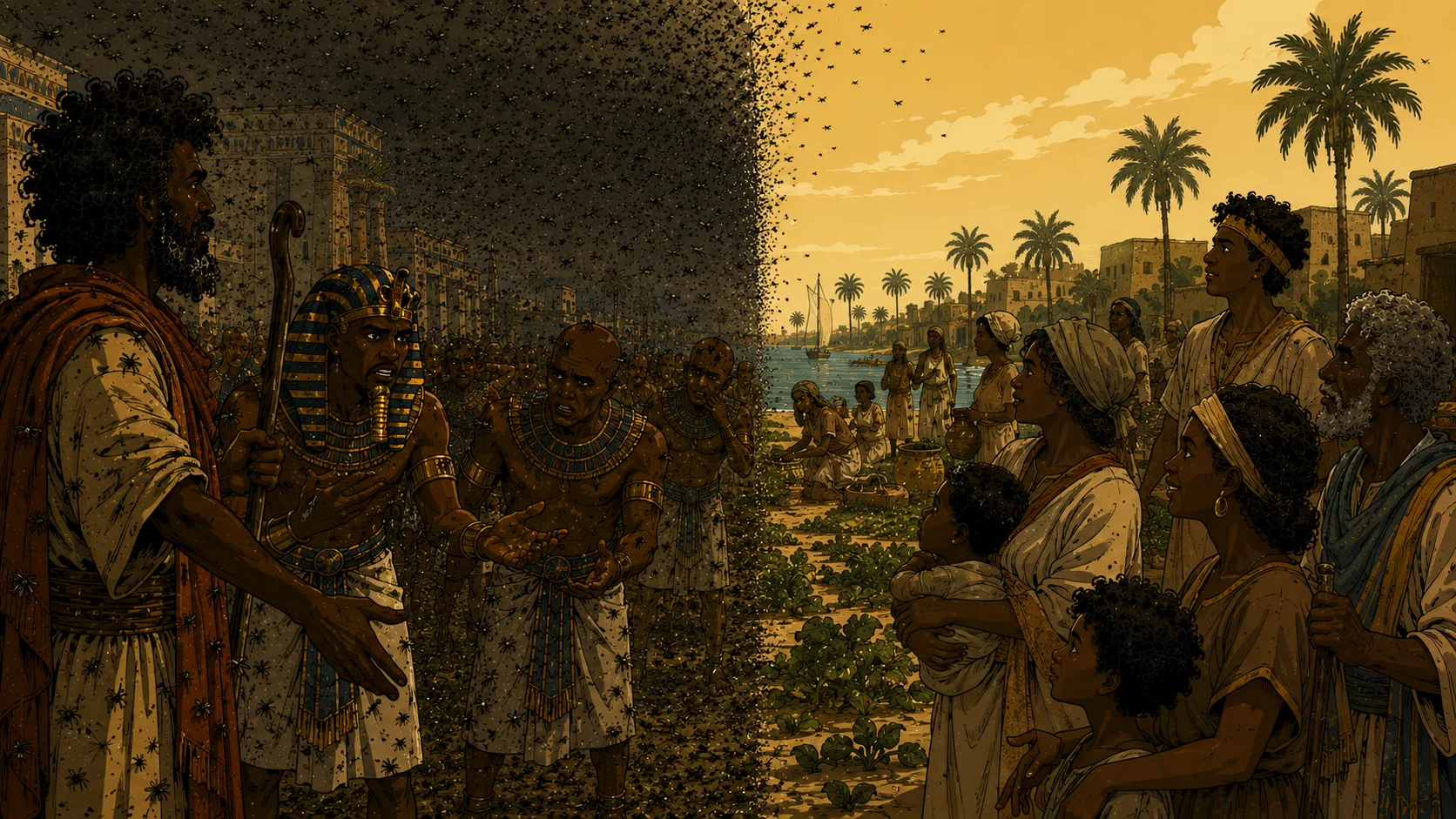
Swarms of flies ruin Egypt — but not Goshen. For the first time God draws a line between Egypt and Israel. Pharaoh negotiates but hardens his heart when the flies leave.
View Breakdown →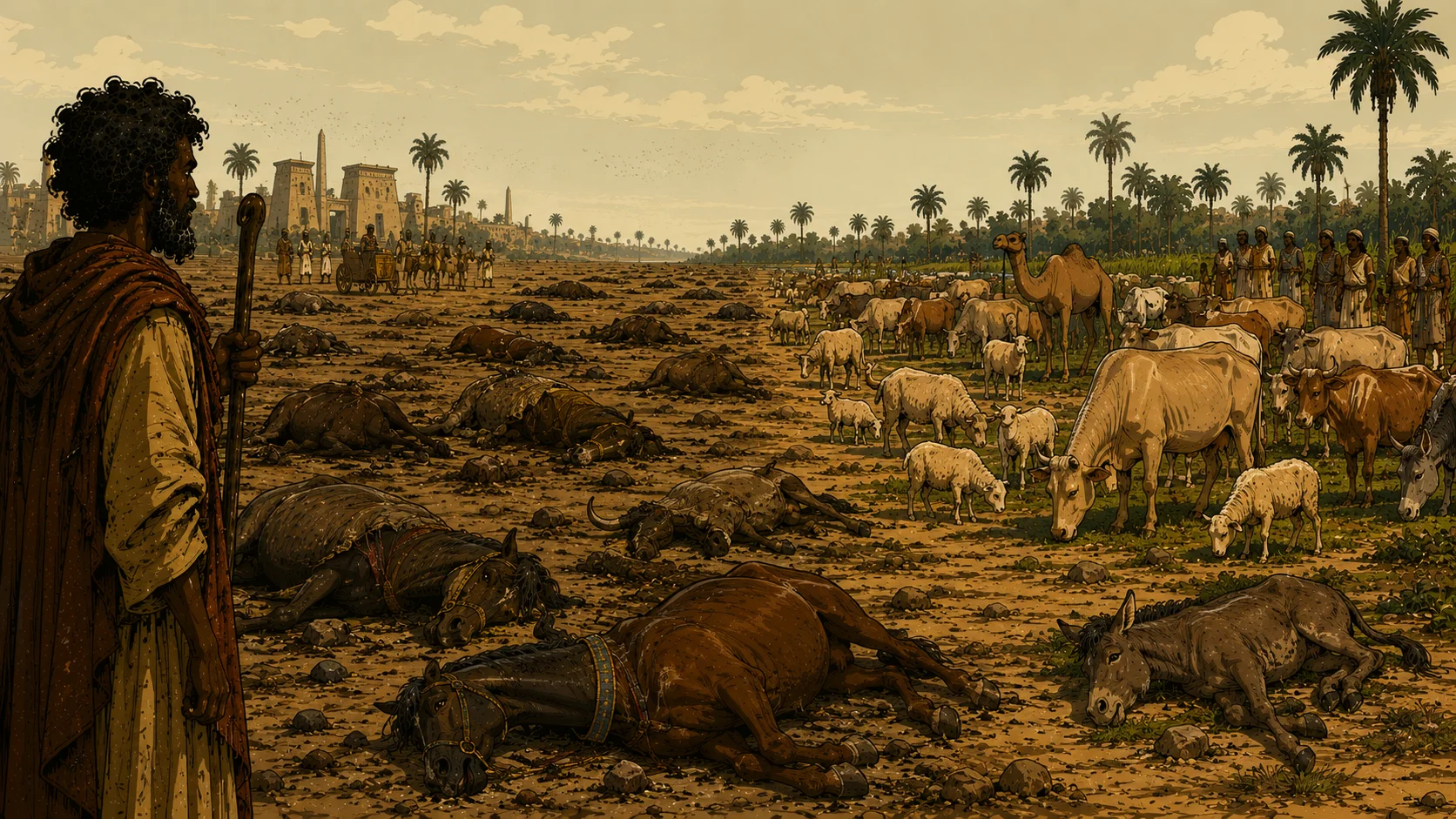
A severe pestilence kills all the livestock of Egypt — horses, donkeys, camels, cattle, flocks. Not one animal of Israel's dies. Pharaoh investigates and still will not let the people go.
View Breakdown →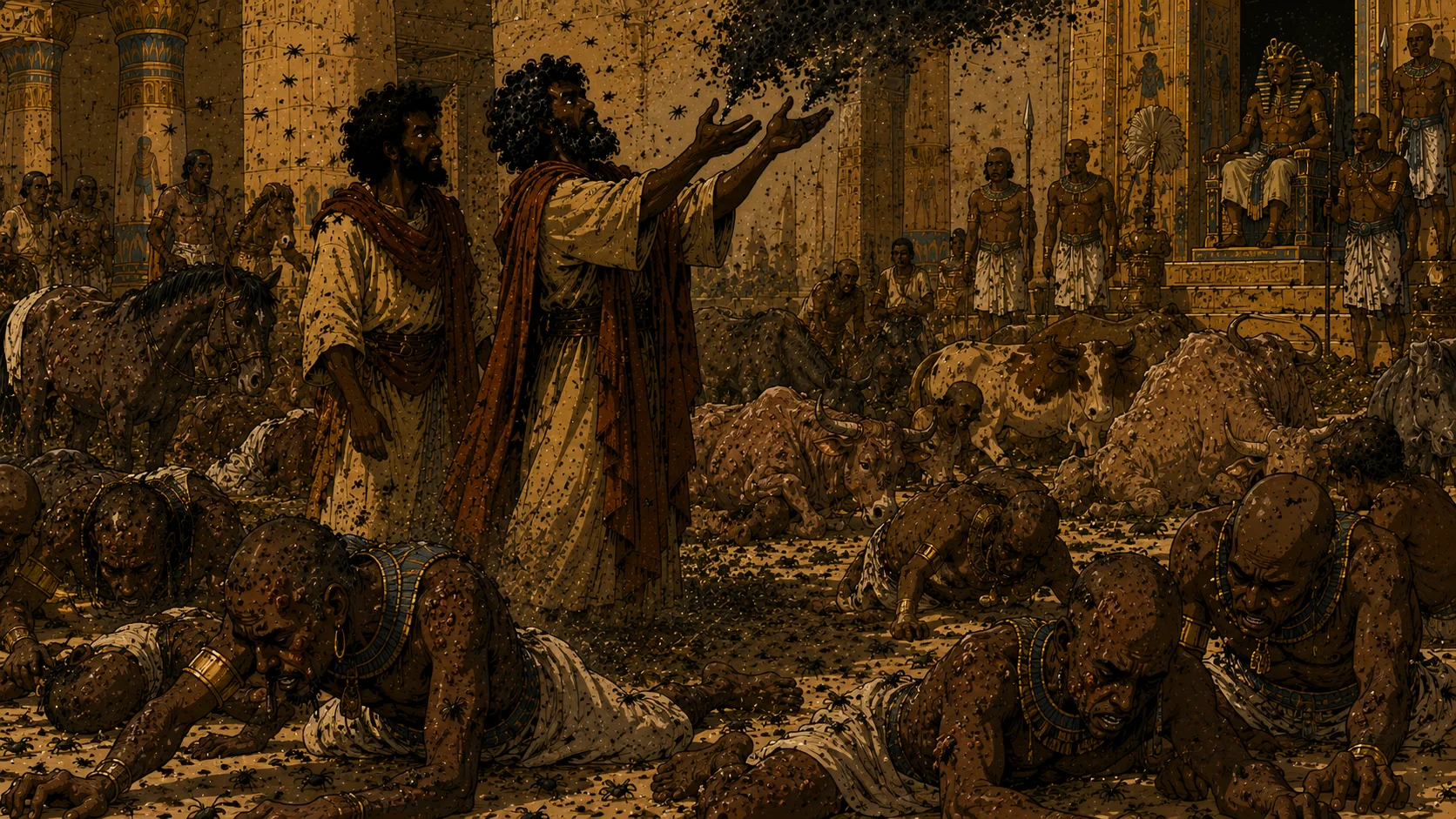
Moses throws soot into the sky and festering boils break out on every Egyptian and animal. The magicians — covered in boils themselves — can no longer stand before Moses.
View Breakdown →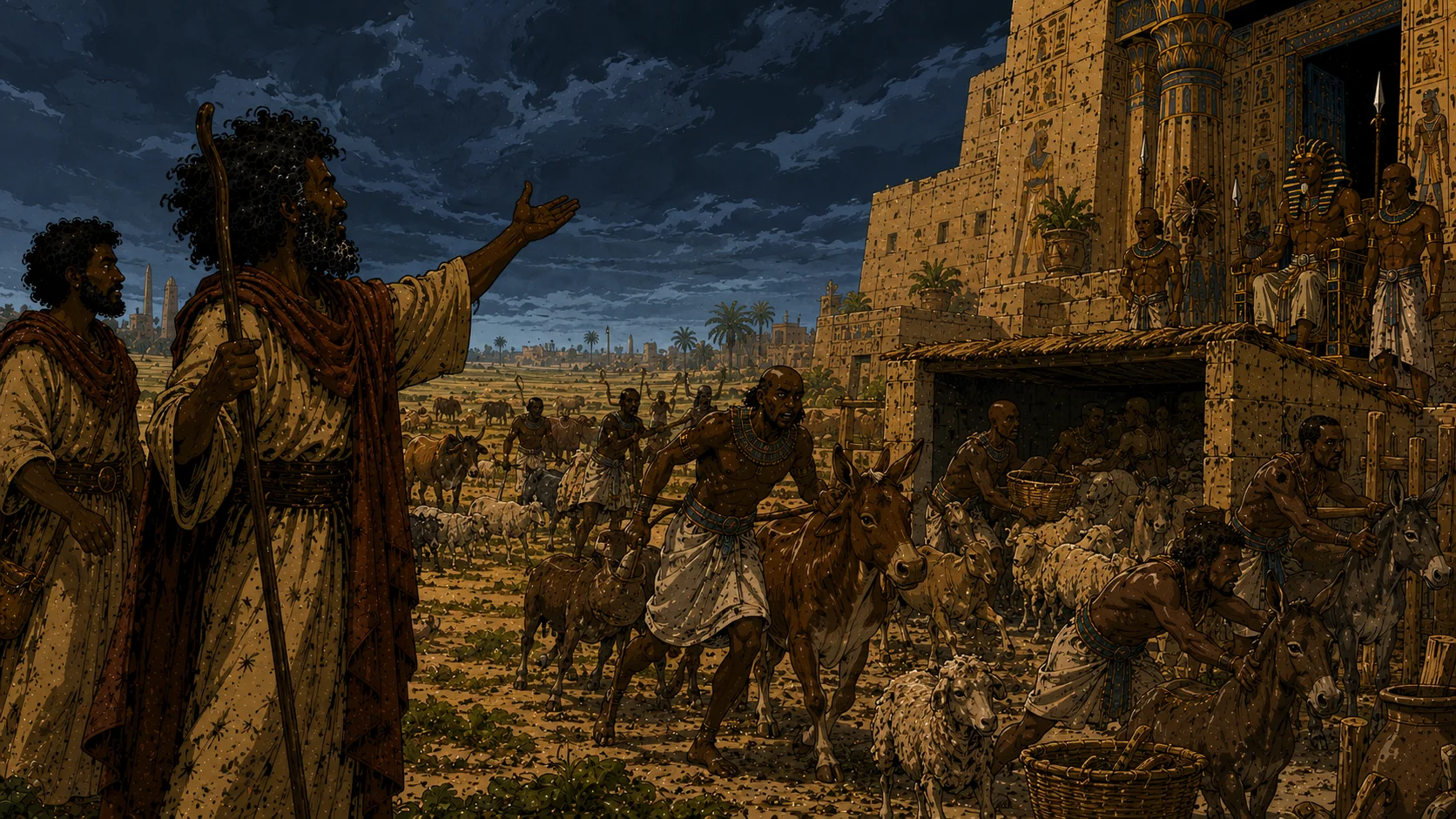
God sends the most severe warning before any plague. Those who feared His word brought their servants inside. Those who did not lost everything. For the first time, the Torah records Egyptians who chose to obey.
View Breakdown →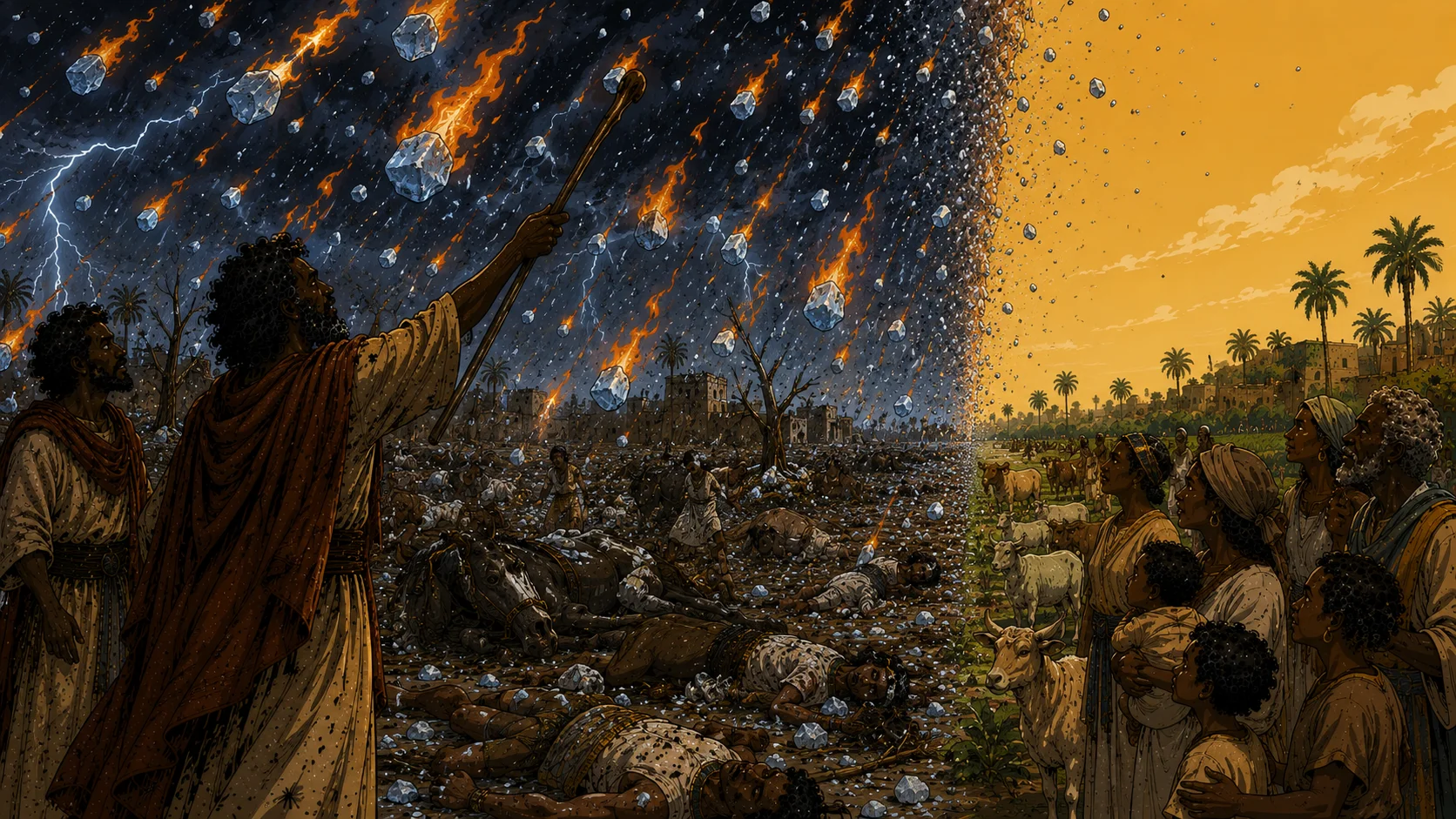
Moses stretches his staff toward heaven. Thunder, hail, and fire rain down — the worst storm in Egypt's history. But in the land of Goshen, where Israel lives, there is no hail.
View Breakdown →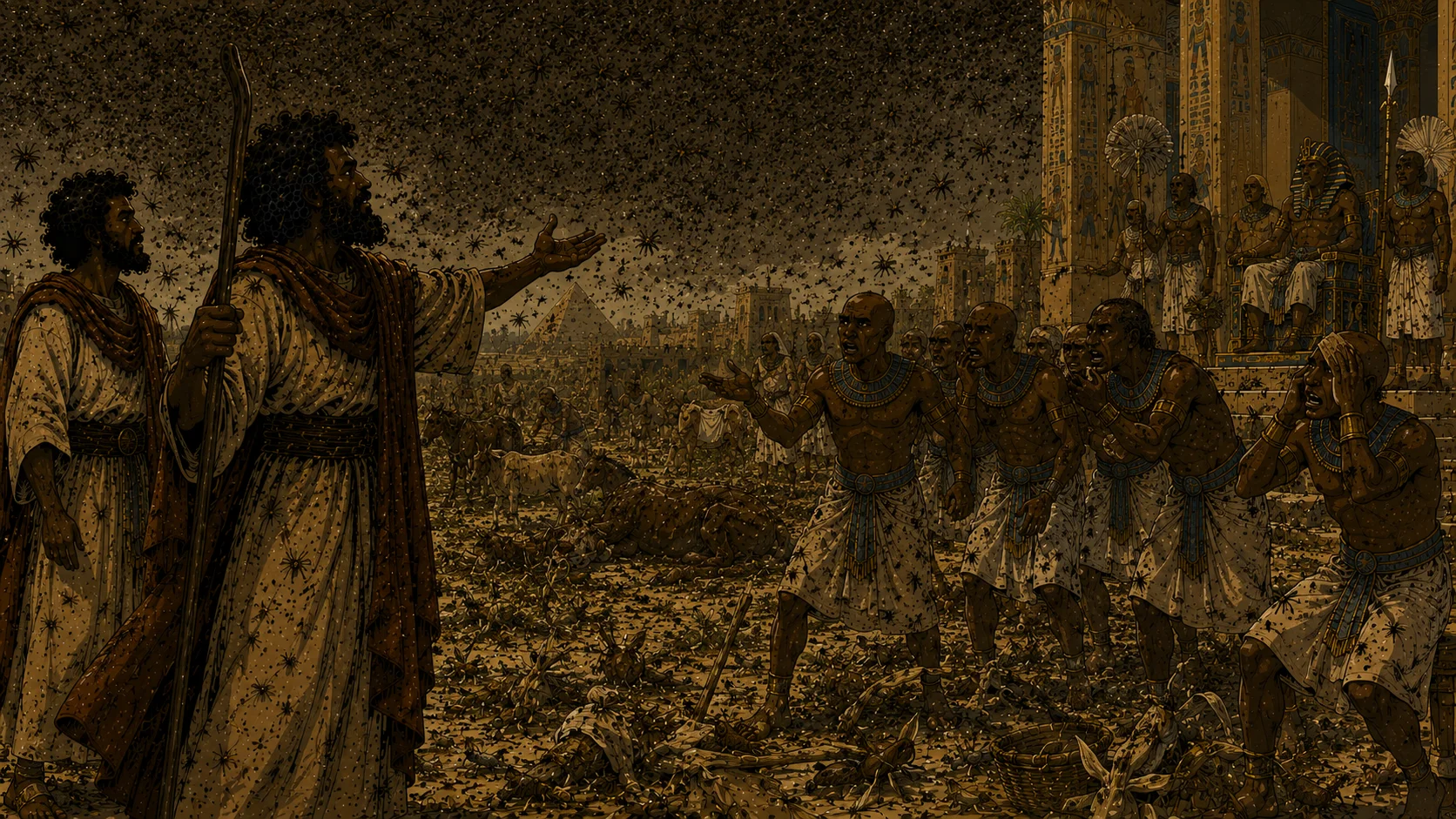
Locusts cover Egypt and devour everything the hail left behind. Even Pharaoh's servants beg him to let Israel go. He offers to release the men only — Moses refuses.
View Breakdown →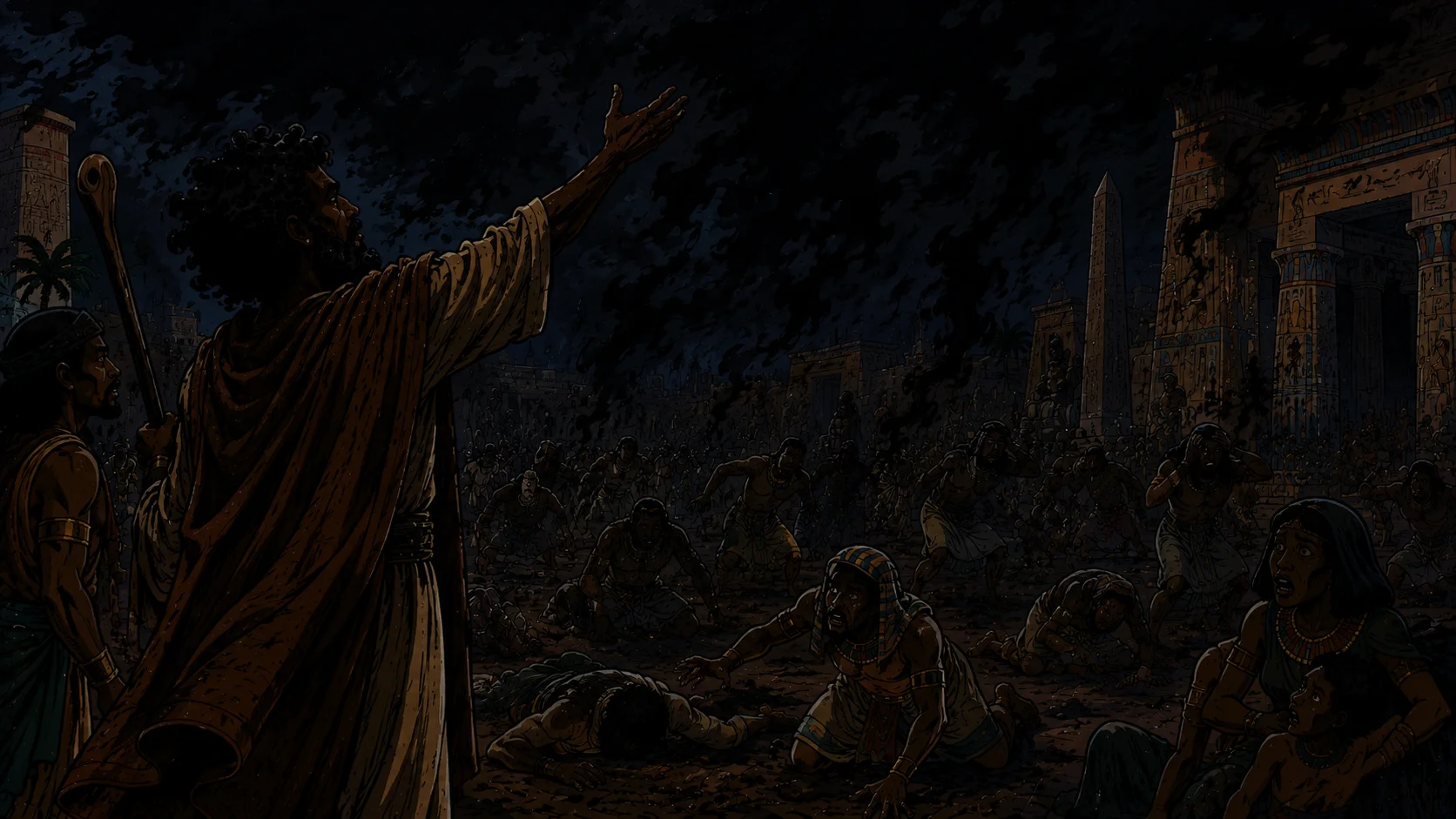
Moses stretches his hand toward heaven and a thick, palpable darkness descends for three days. No one can see. No one can move. But where Israel lives, there is light.
View Breakdown →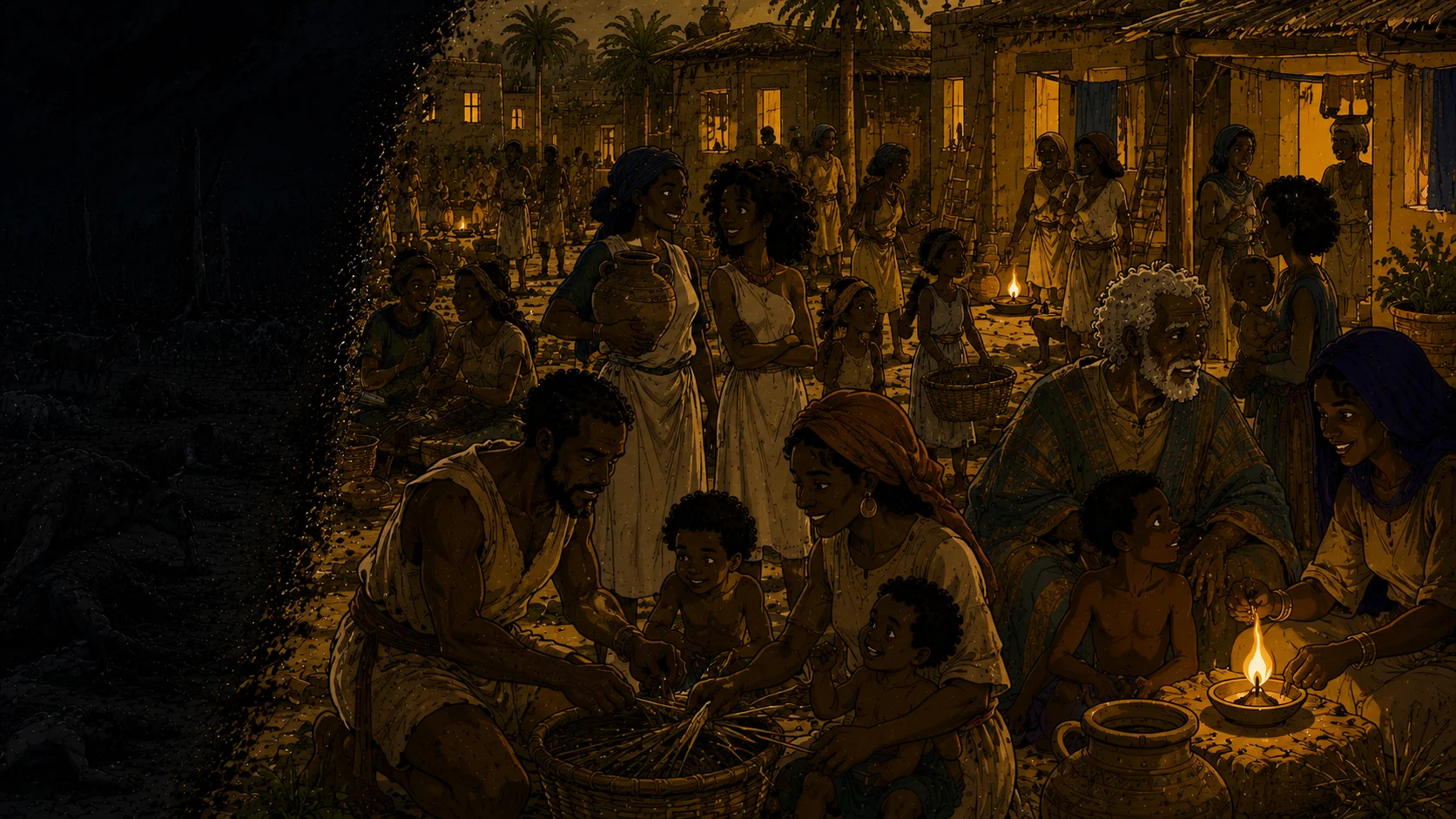
Three days of thick darkness cover Egypt so dense no one can move — yet in Goshen, where Israel lives, there is light. The God who made light on day one now gives it selectively.
View Breakdown →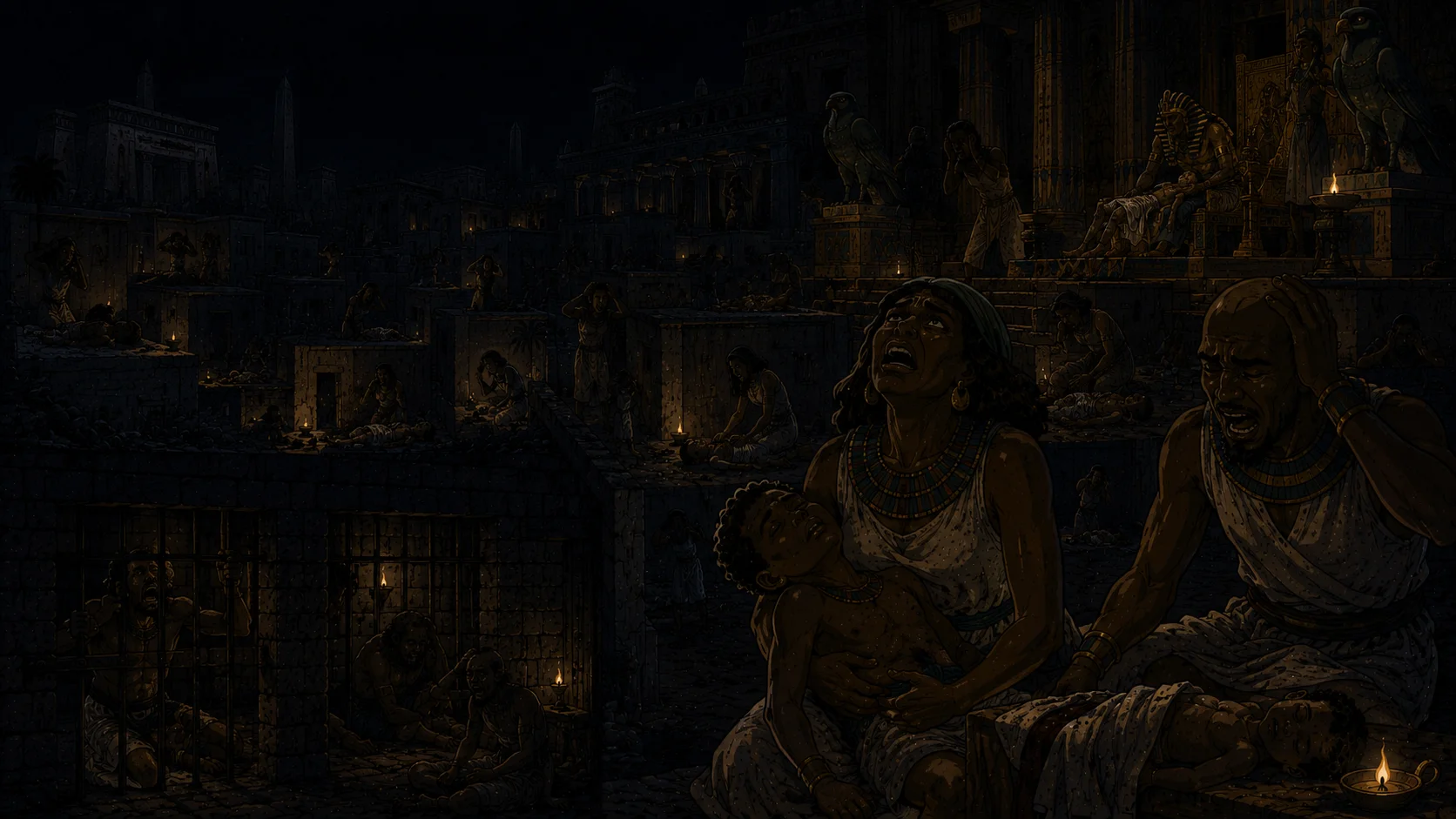
At midnight God strikes every firstborn in Egypt — from Pharaoh's son to the prisoner in the dungeon. A great cry goes up. There is not a house without death.
View Breakdown →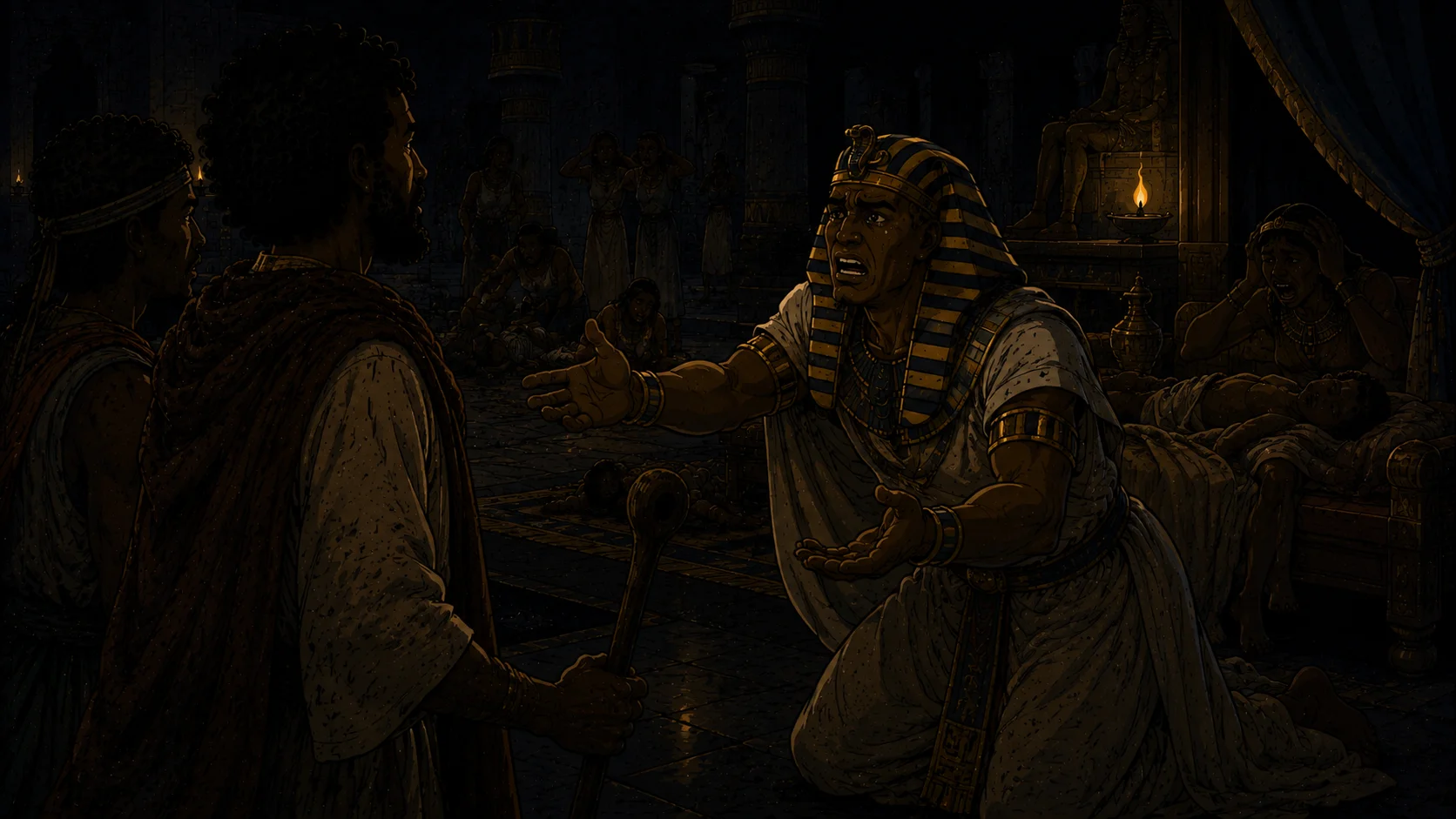
At midnight every firstborn in Egypt dies. Pharaoh rises in the night and summons Moses — the man who refused to bow now pleads in the dark. He speaks the words he has refused for ten plagues: Rise up. Go. Serve your God.
View Breakdown →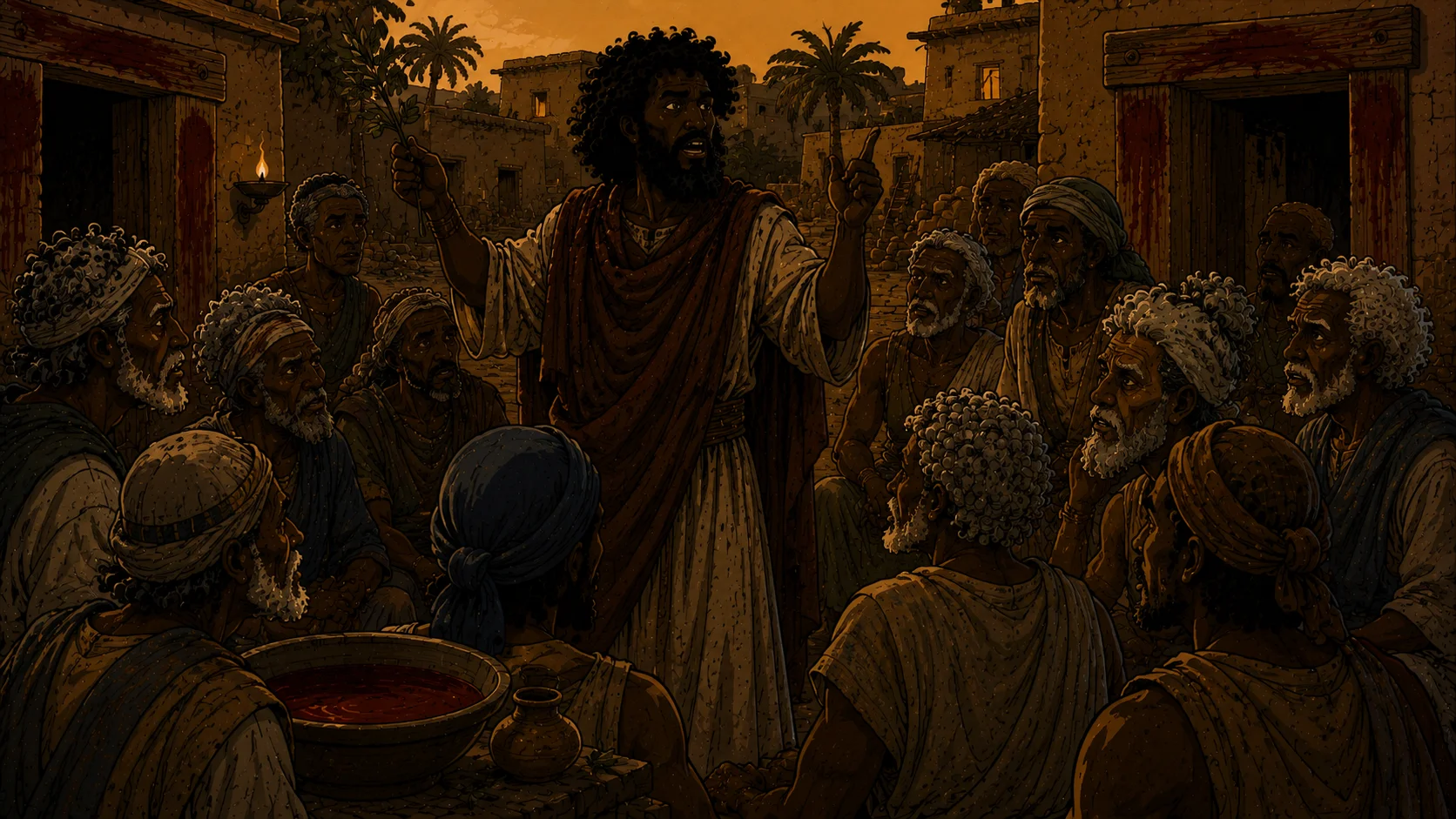
Before the final plague God establishes the Passover — a lamb for each household, blood on the doorposts, meat eaten with bitter herbs in haste. Moses gathers the elders and repeats the instructions. This night will be a memorial forever.
View Breakdown →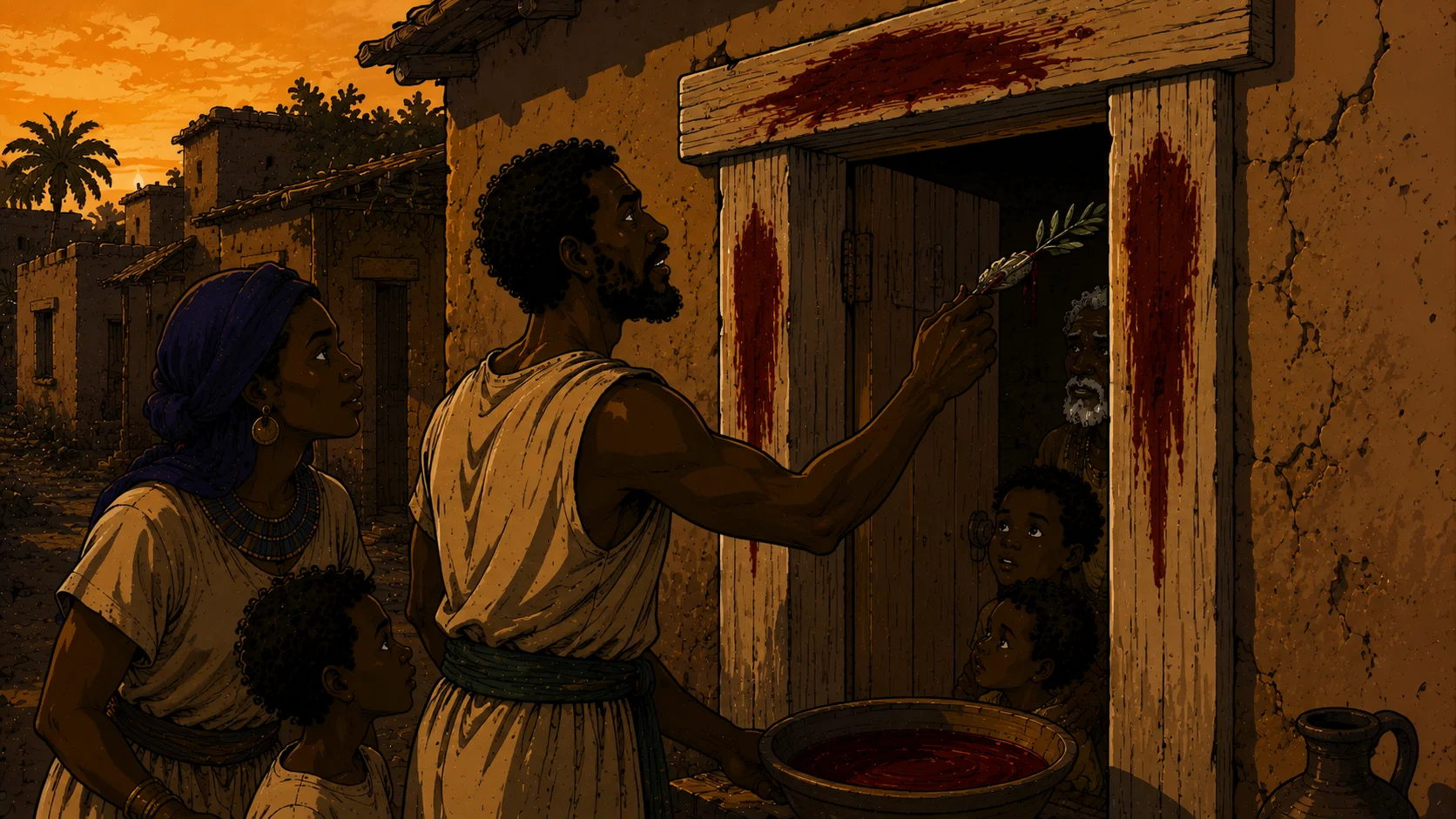
Moses tells the elders: take hyssop, dip it in the lamb's blood, strike the lintel and doorposts. The destroyer will see the blood and pass over. None of you go out until morning.
View Breakdown →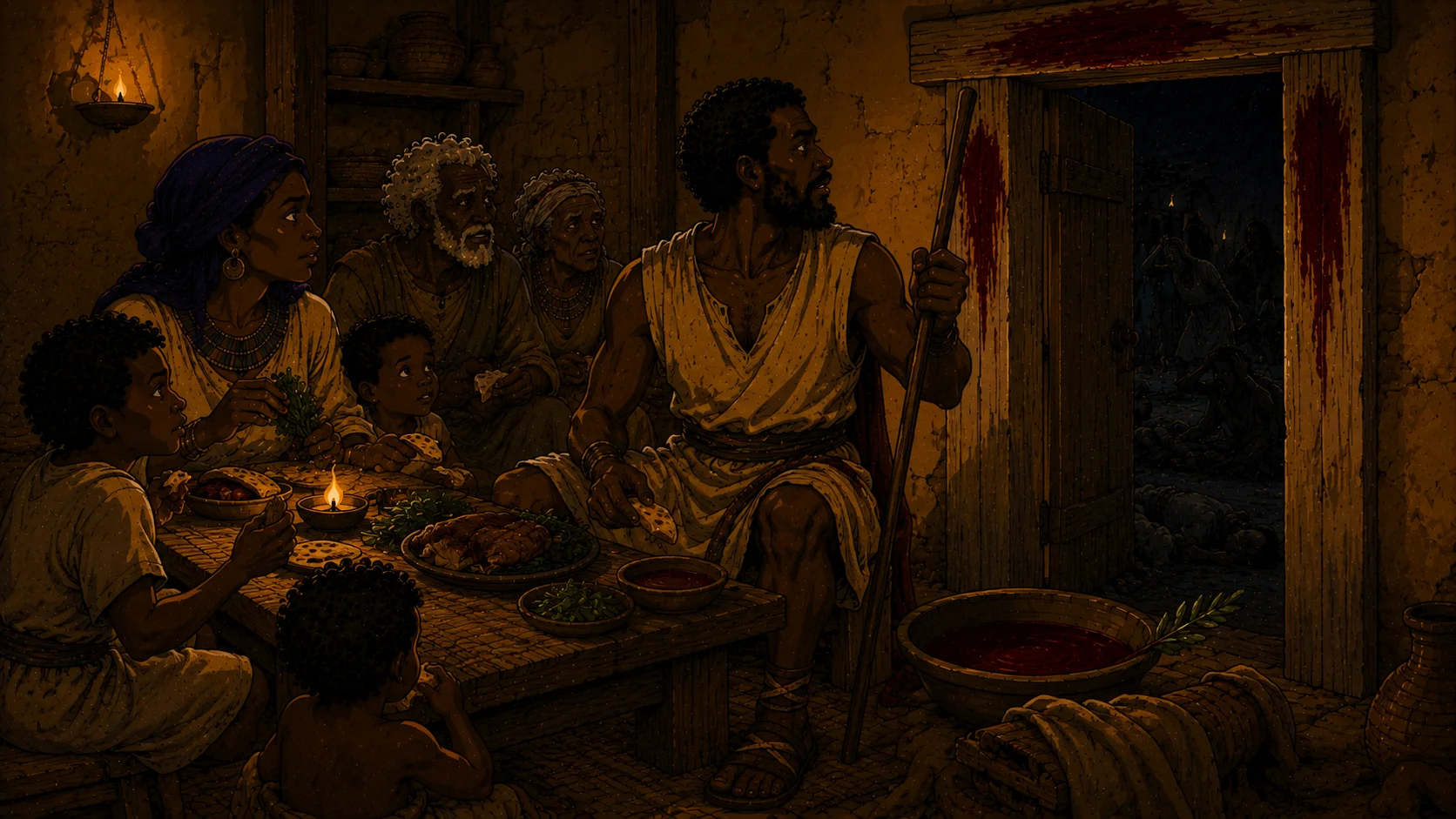
At midnight God strikes every firstborn in Egypt. Pharaoh rises in the night and sends Israel out. Four hundred and thirty years to the day — a night of watching begins.
View Breakdown →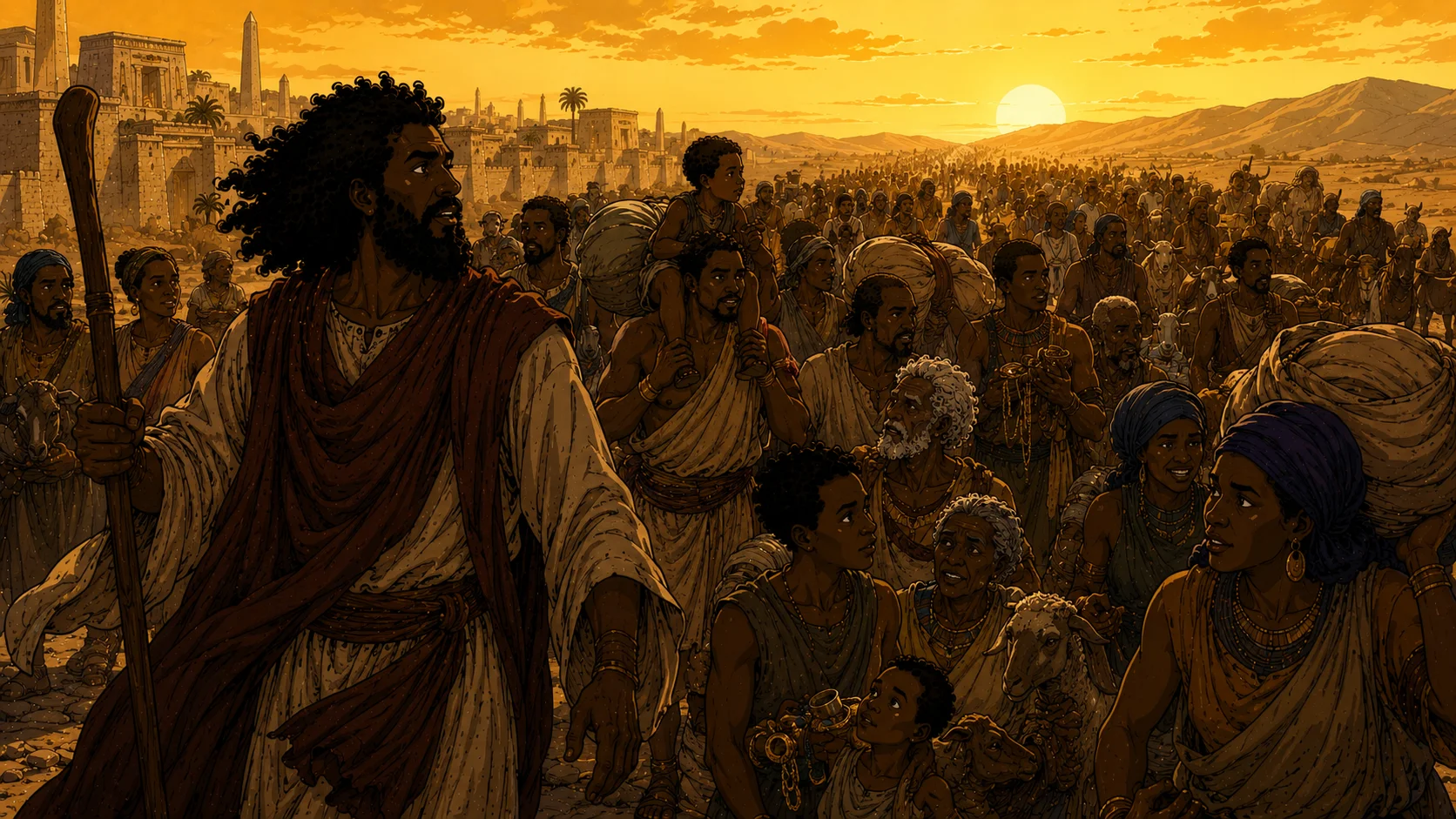
Six hundred thousand men on foot, plus women, children, and a mixed multitude march out of Egypt. They carry unleavened bread — no time to wait. Four hundred and thirty years to the day.
View Breakdown →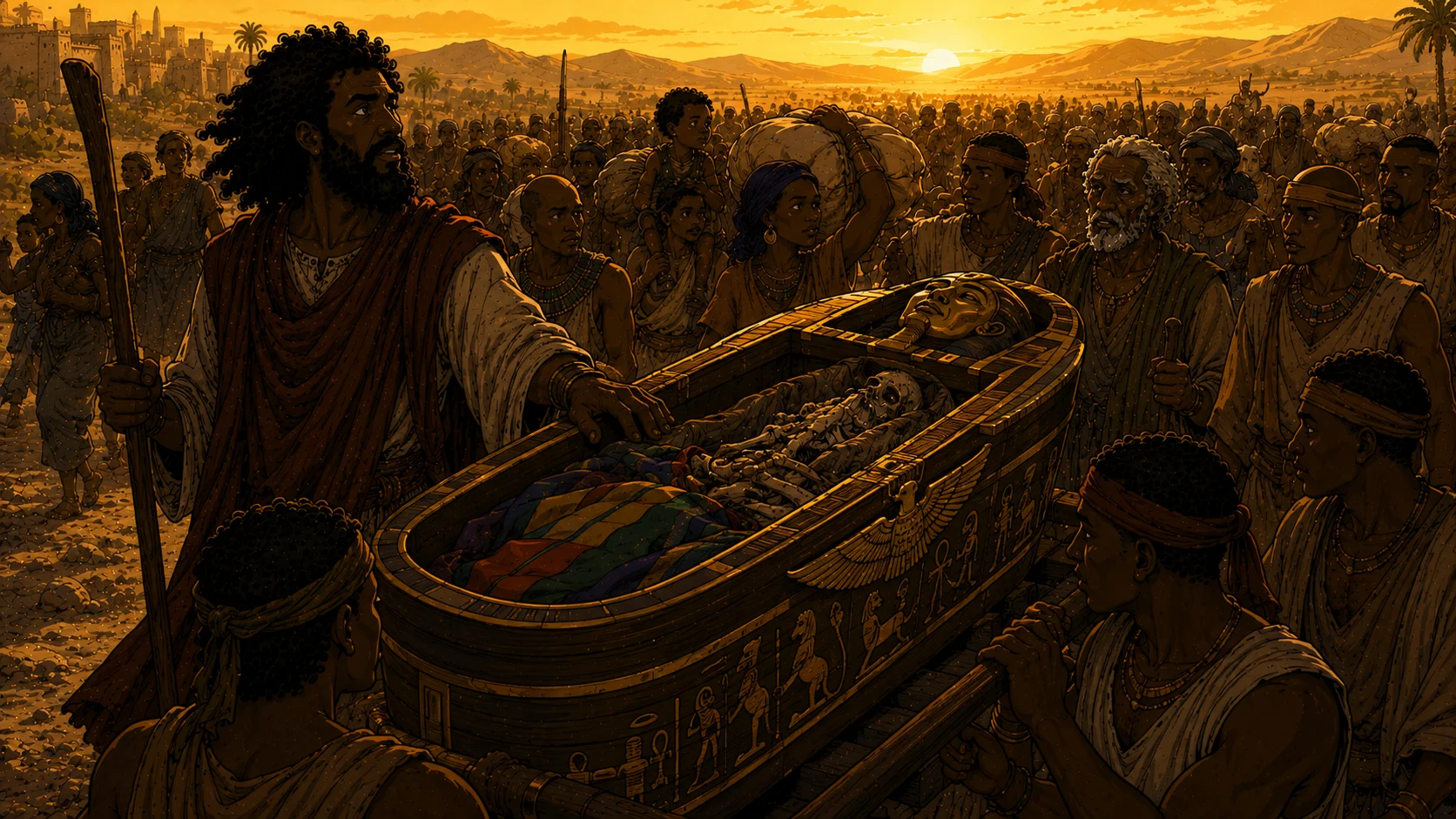
Amid the chaos of the Exodus, Moses stops to carry the bones of Joseph — fulfilling a four-hundred-year-old oath. Joseph had said: God will surely visit you. Carry my bones up with you.
View Breakdown →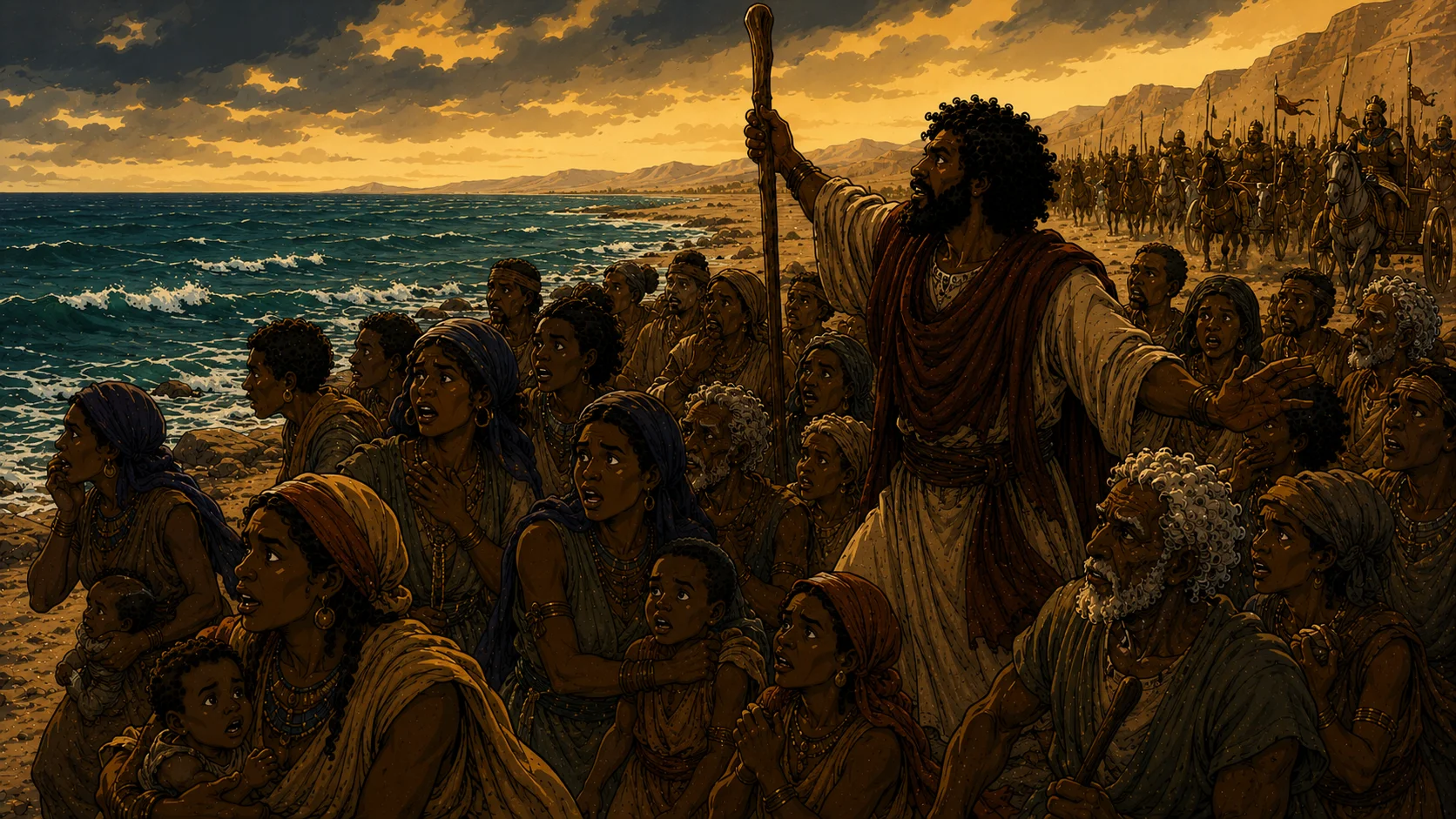
Pharaoh regrets releasing Israel and pursues with six hundred chariots. Israel, trapped at the sea, cries out in fear. Moses answers: stand still and see the salvation of God.
View Breakdown →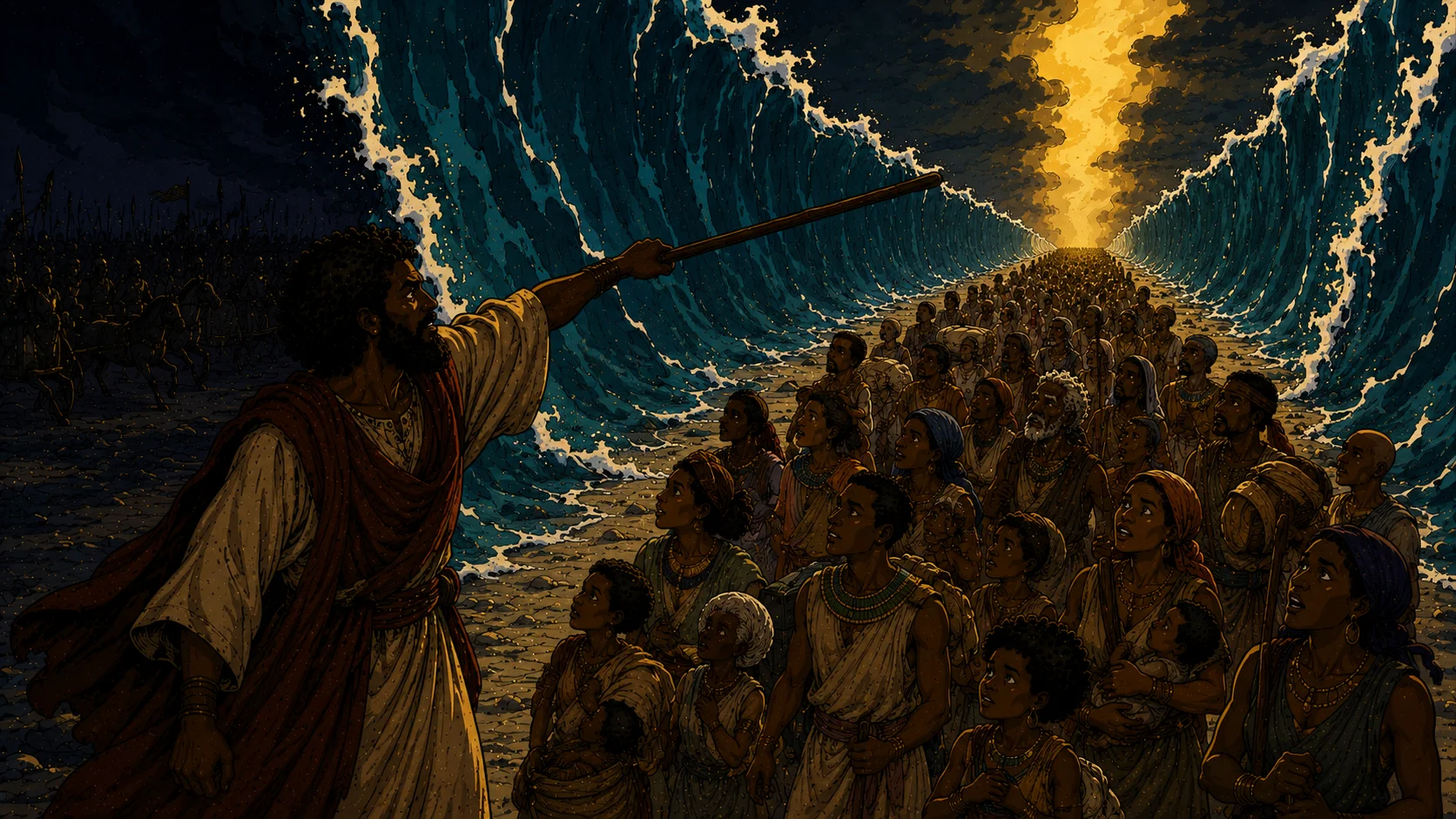
Moses lifts his staff and stretches his hand over the sea. A strong east wind blows all night — the waters divide. Israel walks through on dry ground with walls of water on each side.
View Breakdown →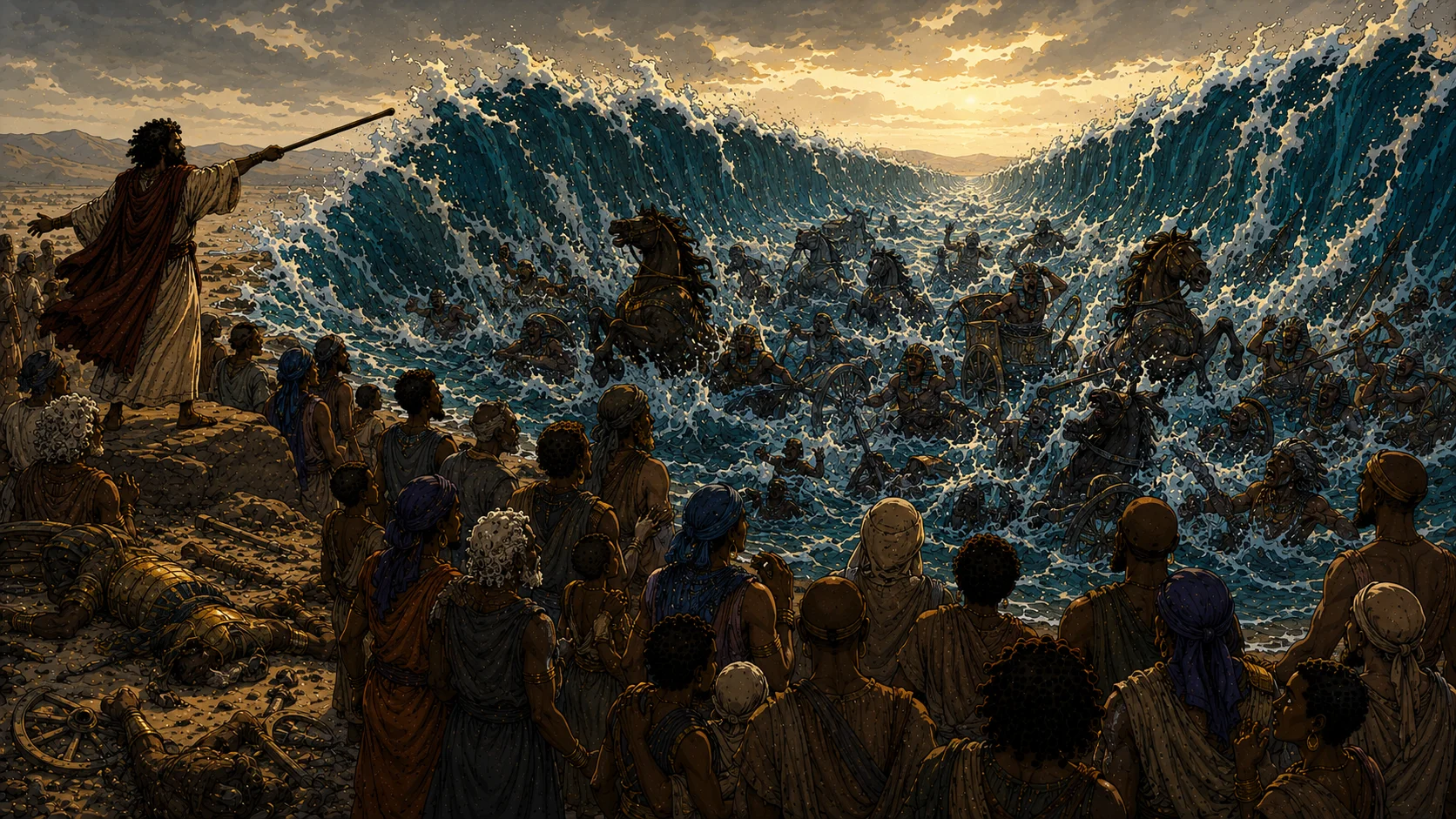
The Egyptians pursue Israel into the sea bed. God looks down and throws the army into panic. Moses stretches his hand at dawn and the sea returns to full strength. Every chariot, every horseman — drowned. Not one remained.
View Breakdown →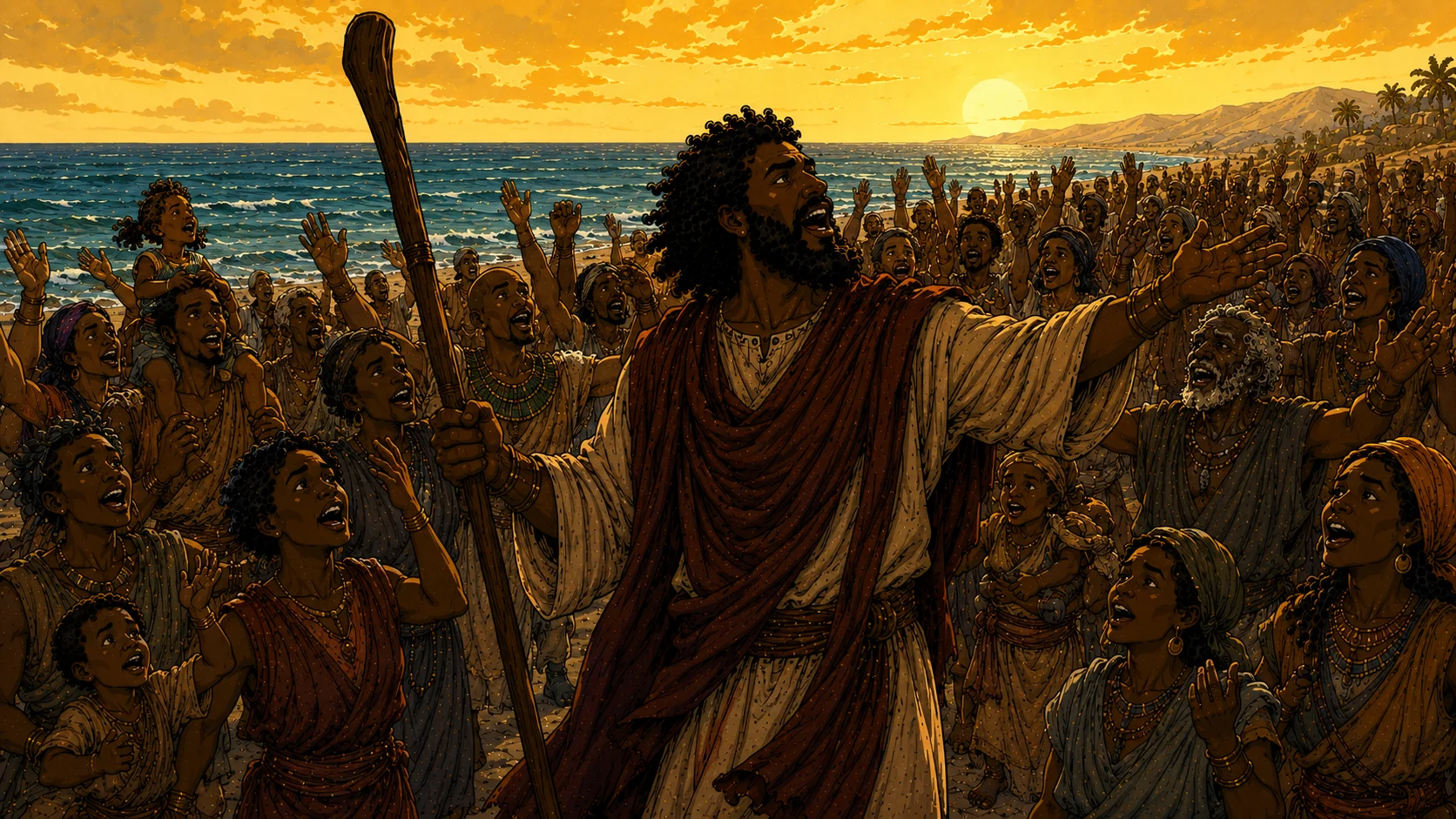
Then Moses and the children of Israel sang. The first song recorded in the Torah — an outpouring of an entire nation on the shore of the sea. Az Yashir: then he sang. The sound of a people who just watched God destroy the army that enslaved them.
View Breakdown →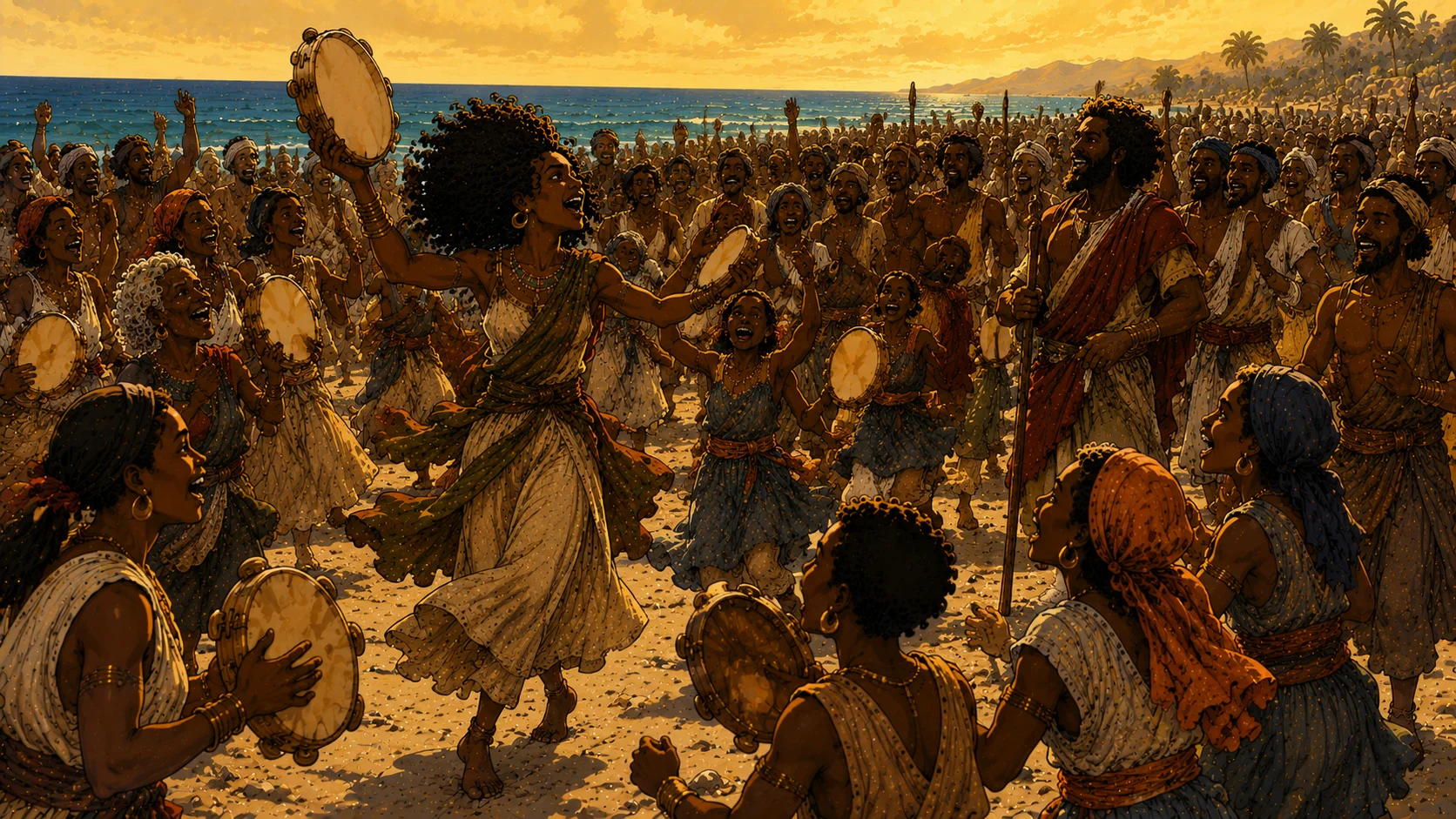
Miriam the prophetess takes a timbrel and leads all the women of Israel in dance and song. Sing to God, for he has triumphed gloriously — horse and rider he has thrown into the sea.
View Breakdown →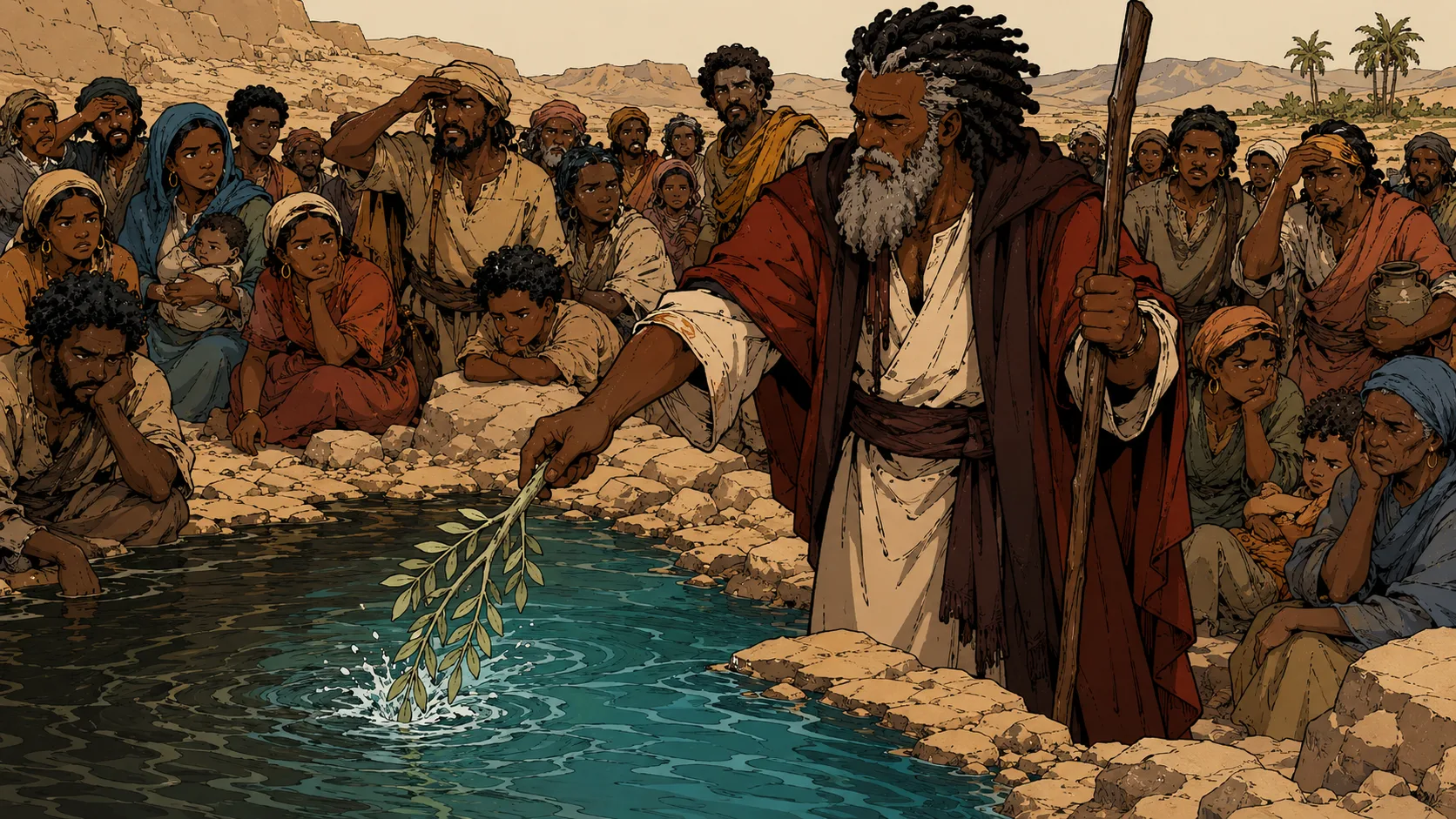
Three days into the wilderness without water, Israel reaches Marah — but the water is bitter. Moses cries to God, throws a tree into the water, and it becomes sweet. God declares himself YHWH your healer.
View Breakdown →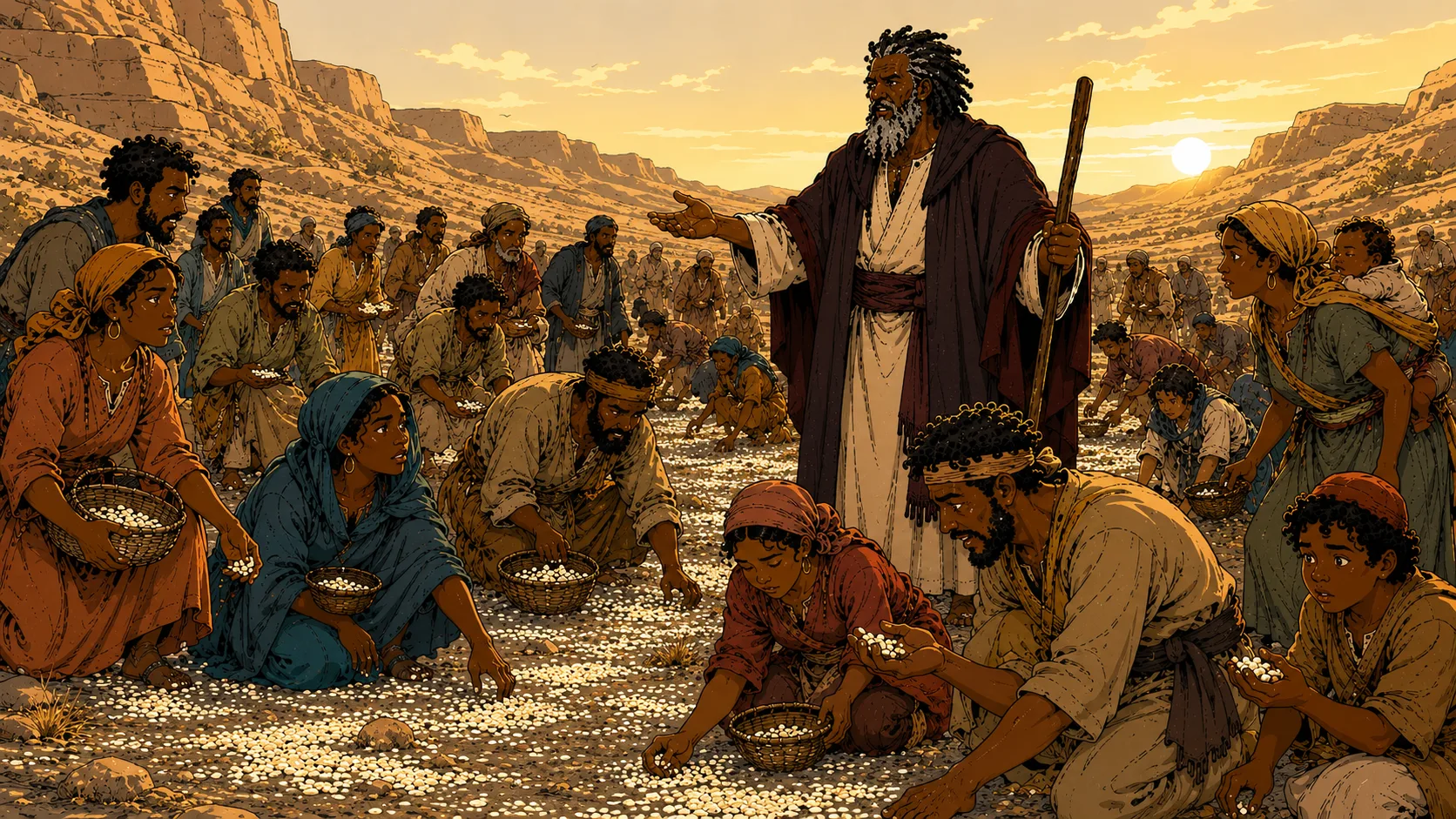
The people murmur: we had bread in Egypt. God says: I will rain bread from heaven. Quail come at evening; in the morning thin flakes appear on the ground — white as coriander seed, sweet as honey wafers. What is it? Manna.
View Breakdown →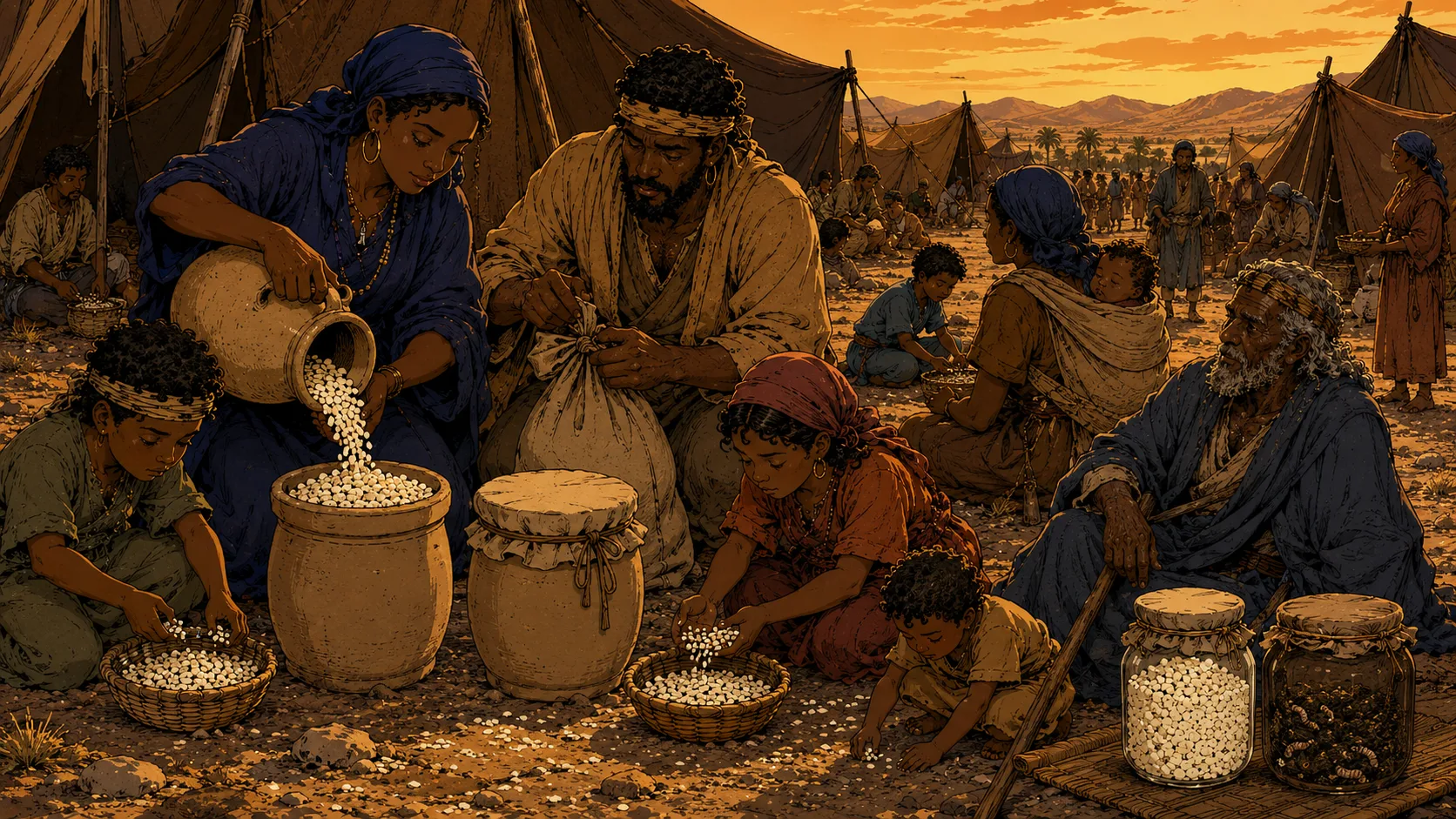
Gather an omer each day — no more, no less. On the sixth day gather double: two omers per person. The seventh is a Sabbath to YHWH — on it there is no manna. The first Sabbath commanded in the wilderness.
View Breakdown →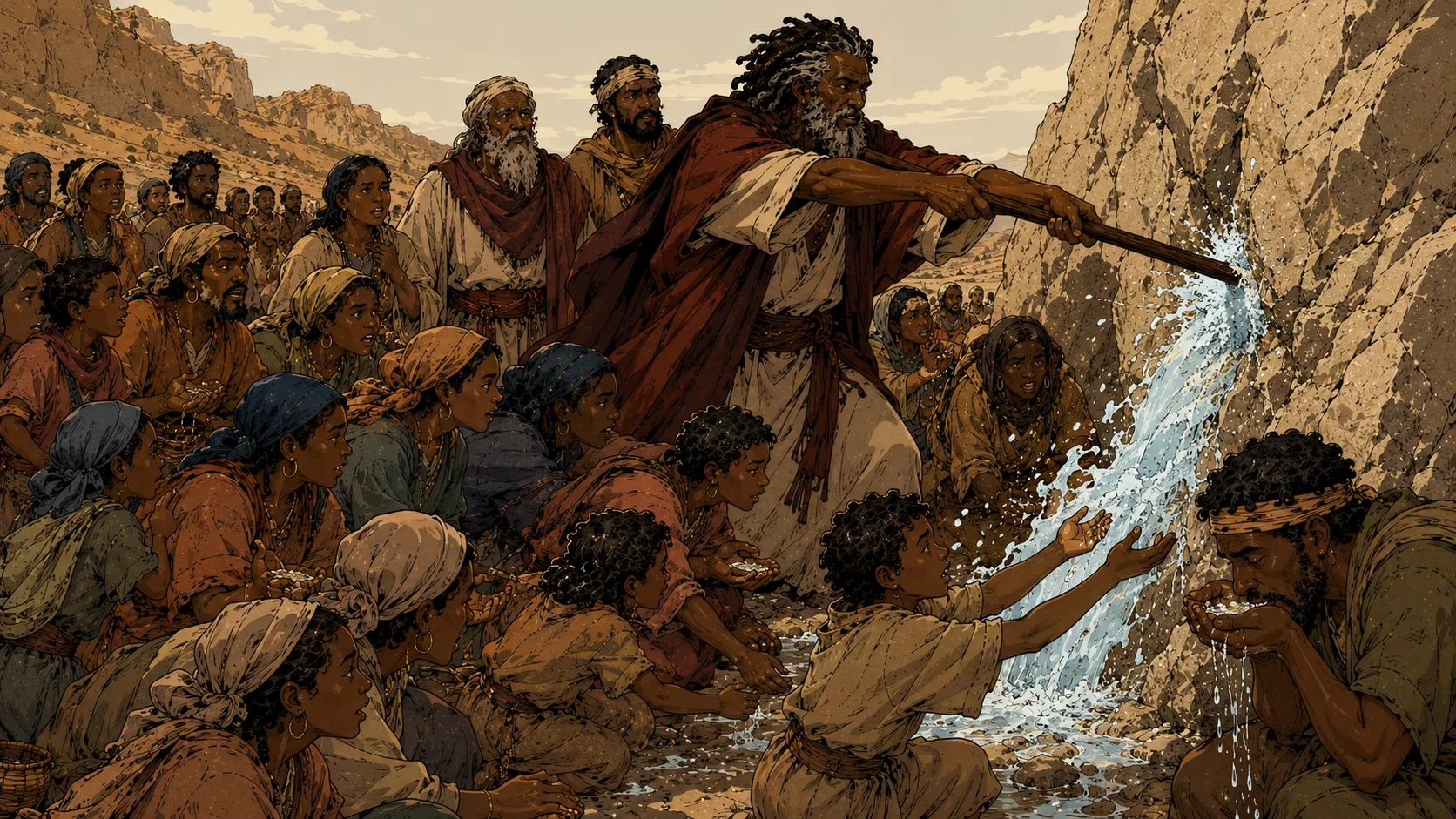
No water at Rephidim. The people quarrel with Moses: have you brought us out of Egypt to die of thirst? God tells Moses to strike the rock at Horeb with his staff. Water pours out for the people to drink.
View Breakdown →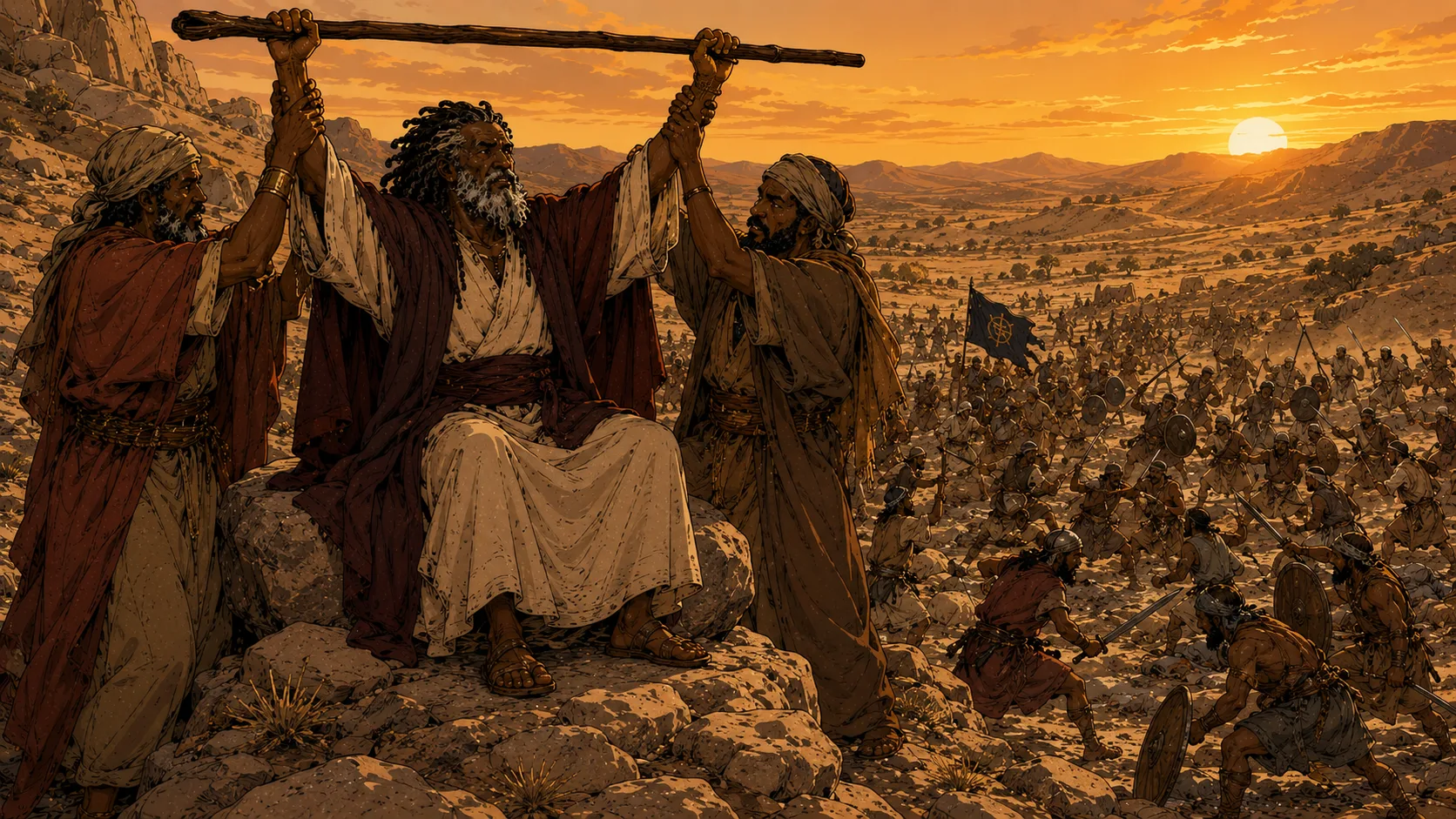
Amalek attacks Israel at Rephidim. Joshua leads the fighting below while Moses stands on the hill with his hands raised. When his hands are up Israel prevails; when they drop Amalek prevails. Aaron and Hur hold up his hands until sunset.
View Breakdown →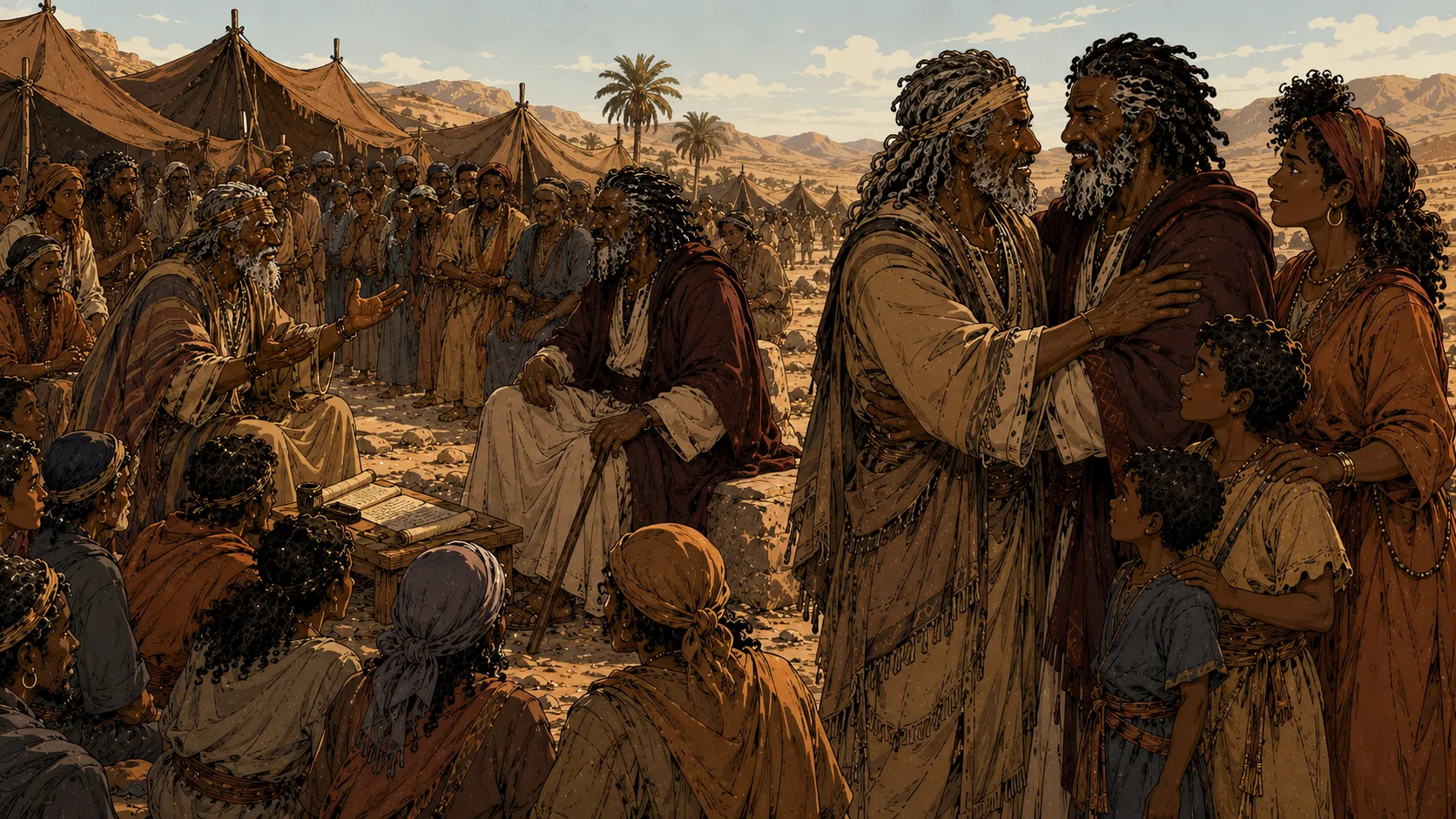
Jethro, priest of Midian, comes to Moses in the wilderness with Zipporah and the boys. He watches Moses judge the people alone from morning to evening and says: the thing you are doing is not good. He counsels appointing leaders over thousands, hundreds, fifties, and tens.
View Breakdown →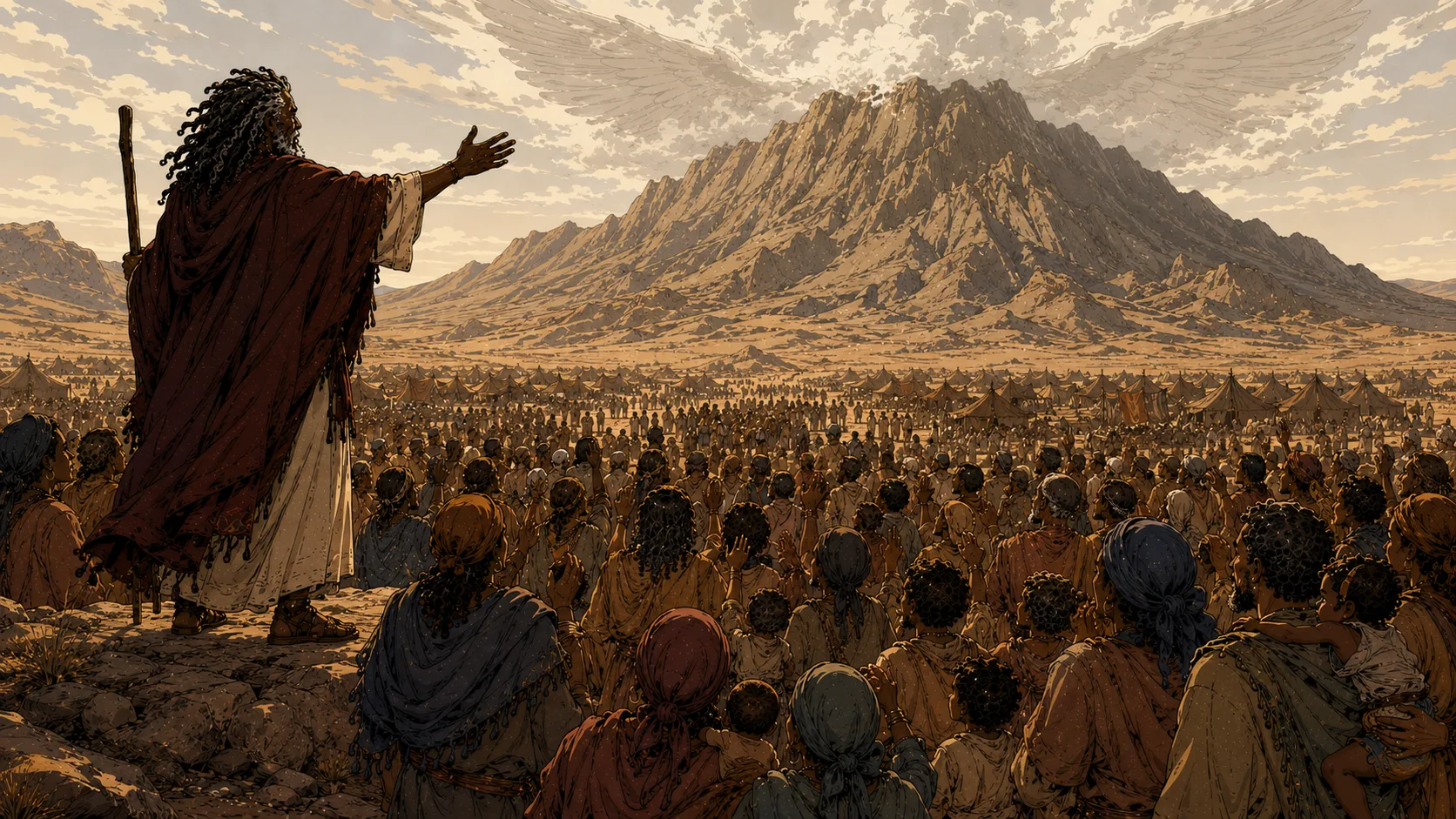
Three months from Egypt, Israel arrives at the wilderness of Sinai. YHWH calls to Moses: I carried you on eagles' wings and brought you to myself. You will be my treasured possession — a kingdom of priests and a holy nation.
View Breakdown →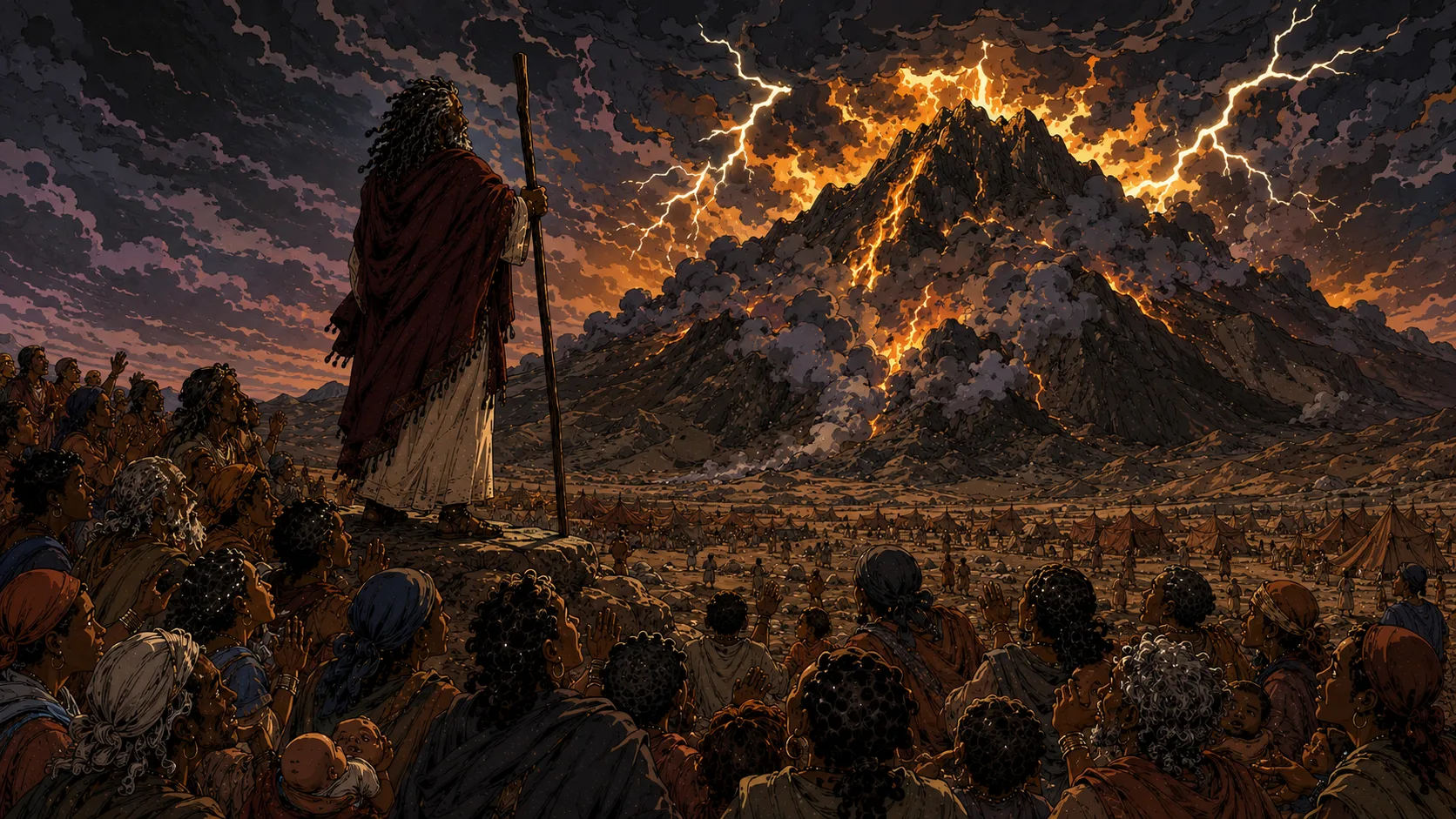
On the third day, thunder and lightning and a thick cloud cover the mountain. YHWH descends on it in fire. Smoke rises like the smoke of a furnace. The whole mountain trembles violently. The sound of the shofar grows louder and louder.
View Breakdown →
YHWH calls Moses to the summit. The people stand at a distance while Moses draws near the thick darkness where God dwells. The cloud covers the mountain. Moses enters and remains forty days and forty nights — and God begins to speak.
View Breakdown →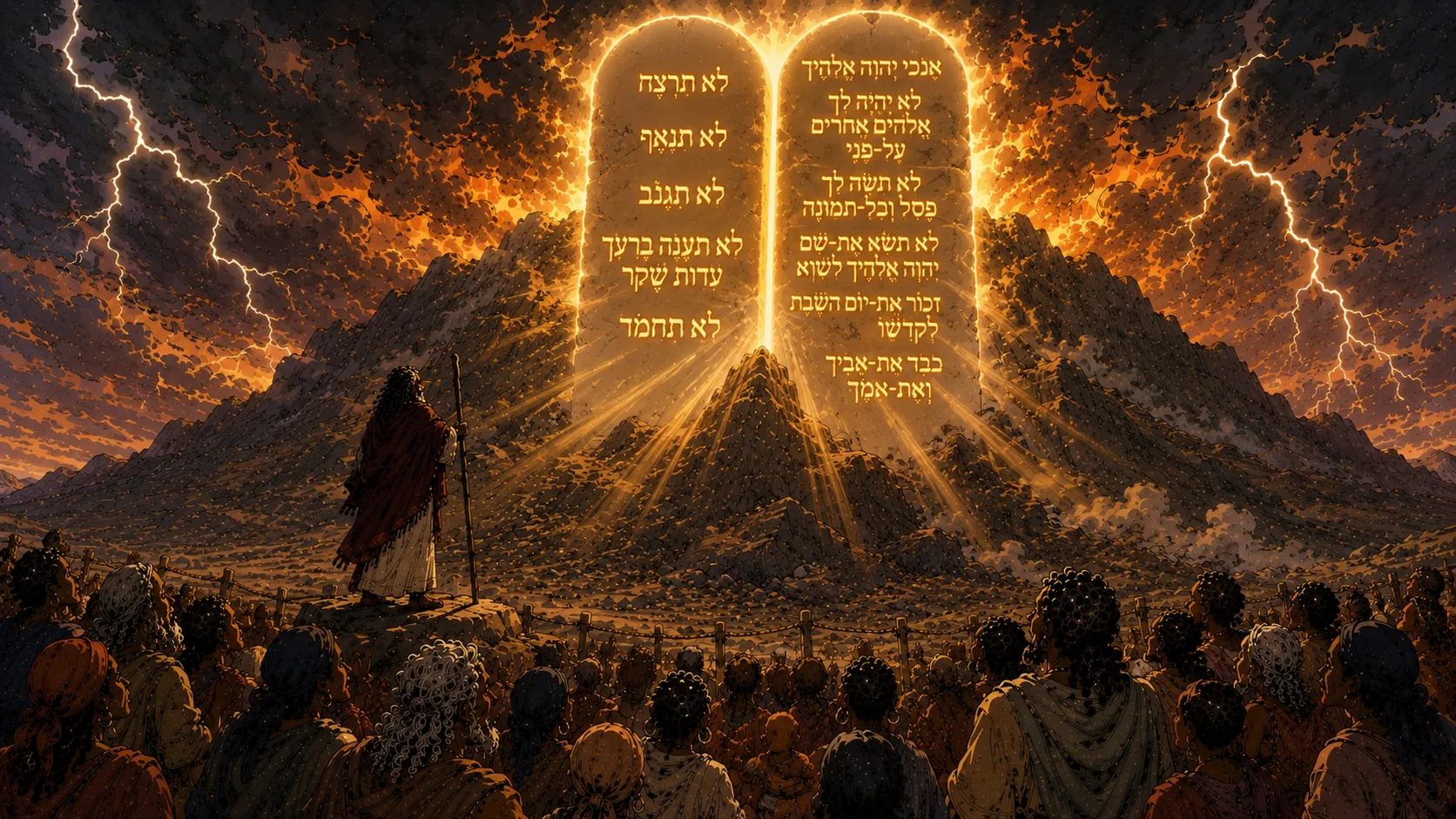
God speaks directly to all of Israel: I am YHWH your God who brought you out of Egypt, out of the house of slavery. The ten words come in thunder and fire — the only time in the Torah that God addresses the entire nation at once.
View Breakdown →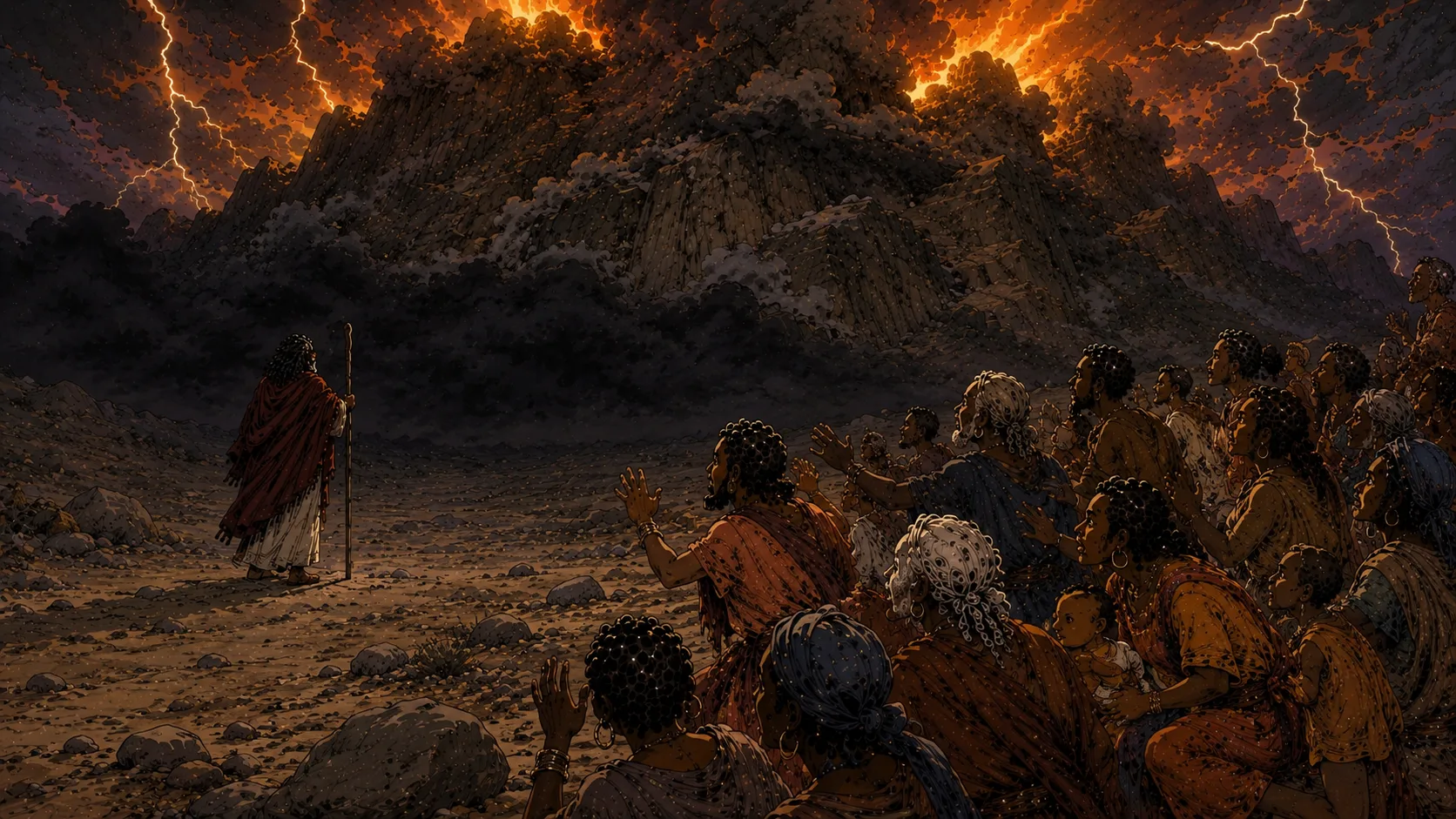
The people see the thunder and lightning and the mountain smoking and the sound of the shofar. They tremble and pull back. They say to Moses: you speak to us, but do not let God speak to us lest we die. Moses moves into the thick darkness alone.
View Breakdown →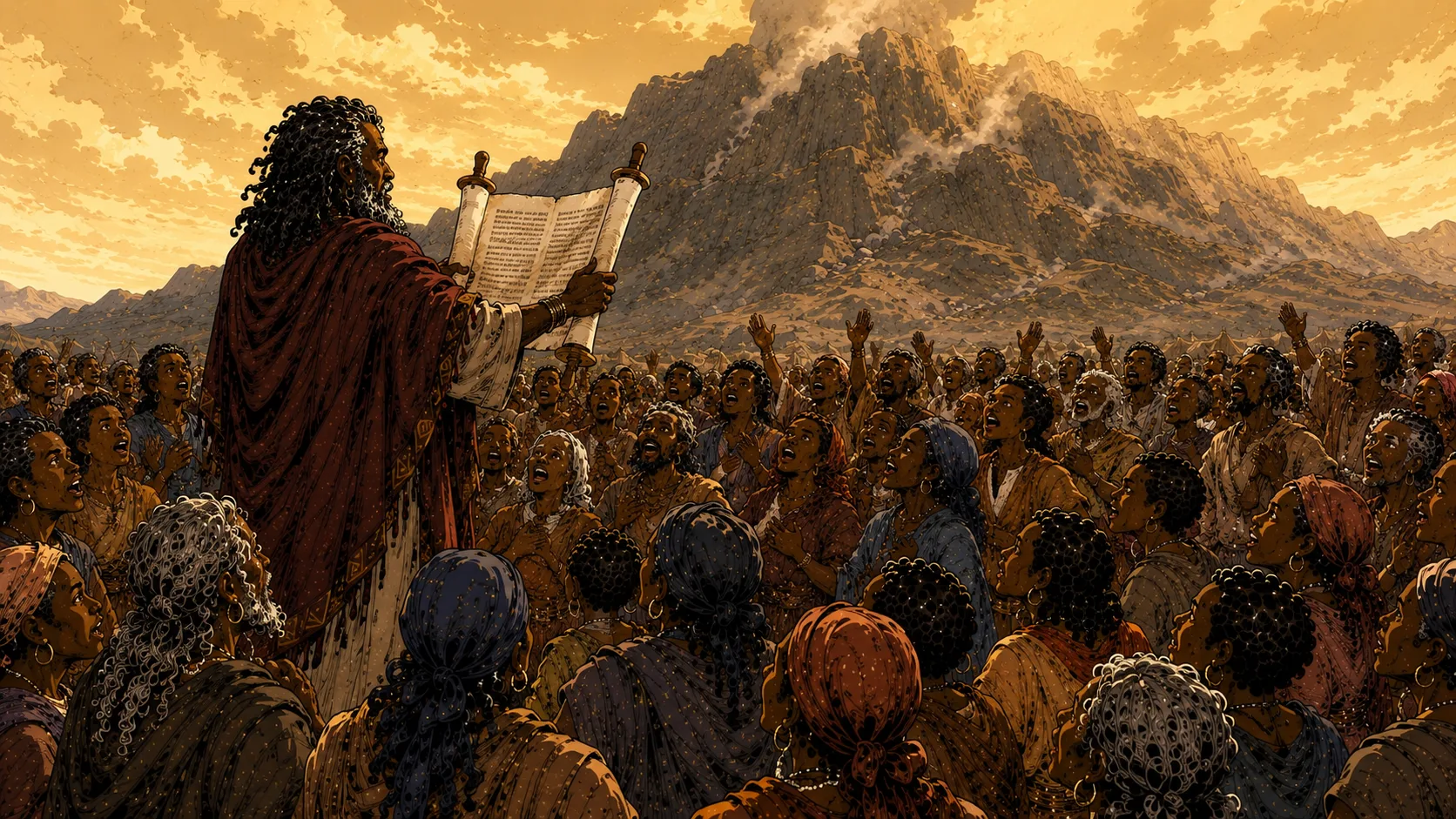
Moses writes all the words of YHWH. He rises early and builds an altar at the foot of the mountain. He reads the Book of the Covenant aloud to all the people. They answer: everything YHWH has spoken we will do and we will hear.
View Breakdown →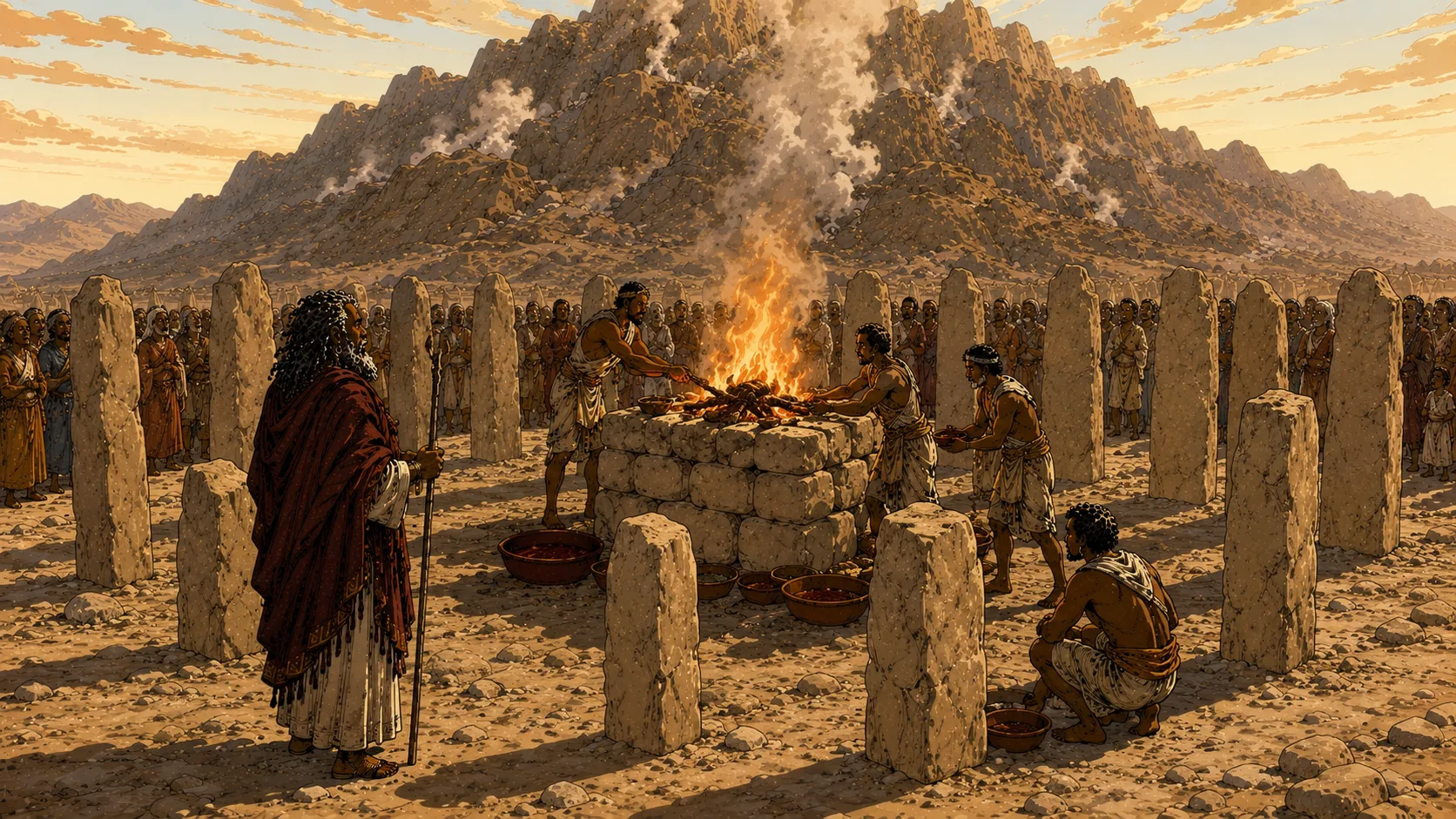
Moses rises early and builds an altar at the base of the mountain — with twelve pillars standing for the twelve tribes of Israel. Young men offer burnt offerings and peace offerings. The covenant is about to be sealed in blood.
View Breakdown →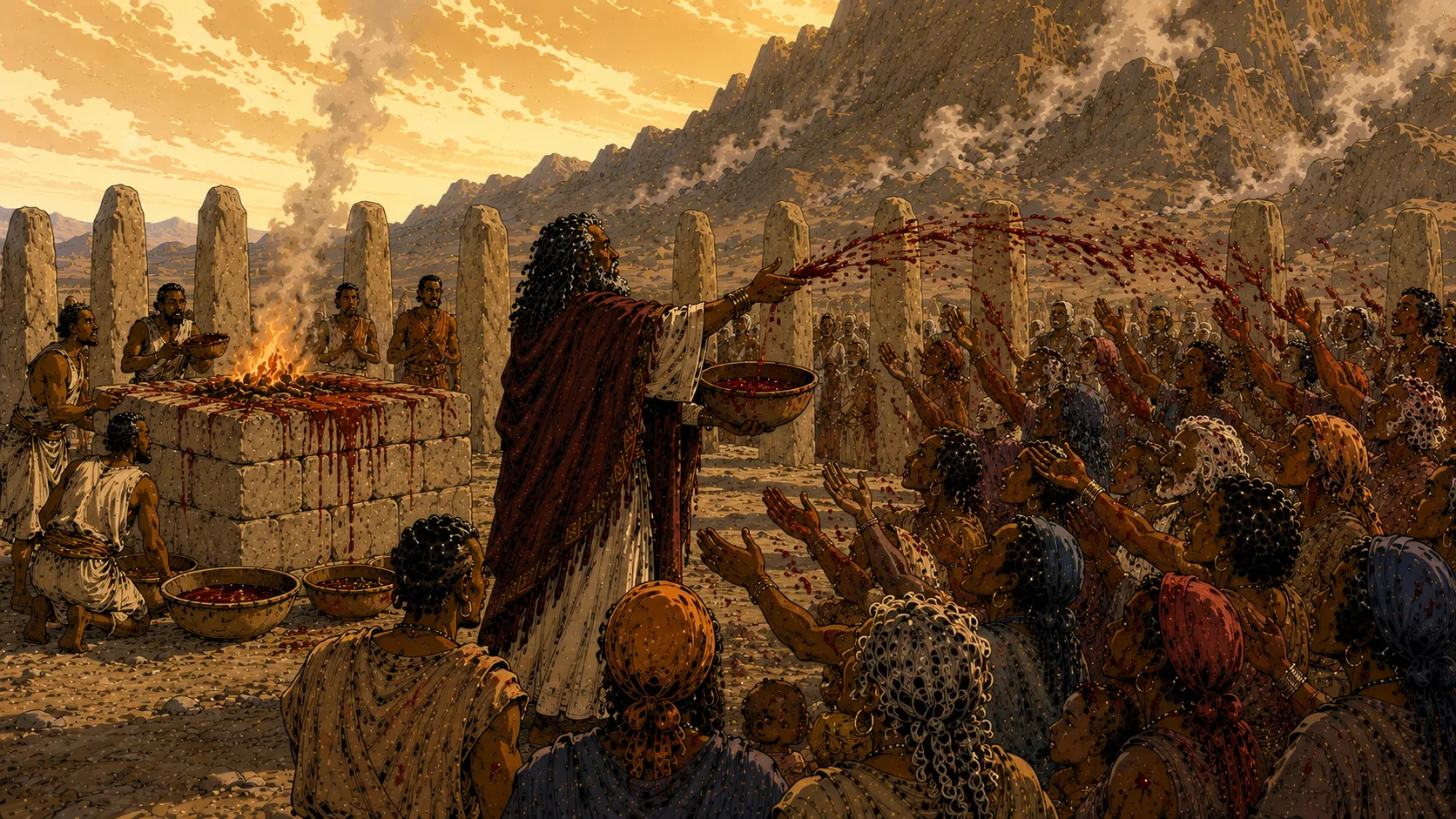
Moses dashes half the blood against the altar. He reads the Book of the Covenant aloud. The people answer: all that YHWH has spoken we will do. He dashes the other half of the blood on the people: this is the blood of the covenant which YHWH has made with you.
View Breakdown →
The cloud covers the mountain for six days. On the seventh, YHWH calls Moses from the cloud. In the sight of all Israel the glory of God looks like a consuming fire. Moses enters the cloud and remains forty days and forty nights — receiving two tablets written with the finger of God.
View Breakdown →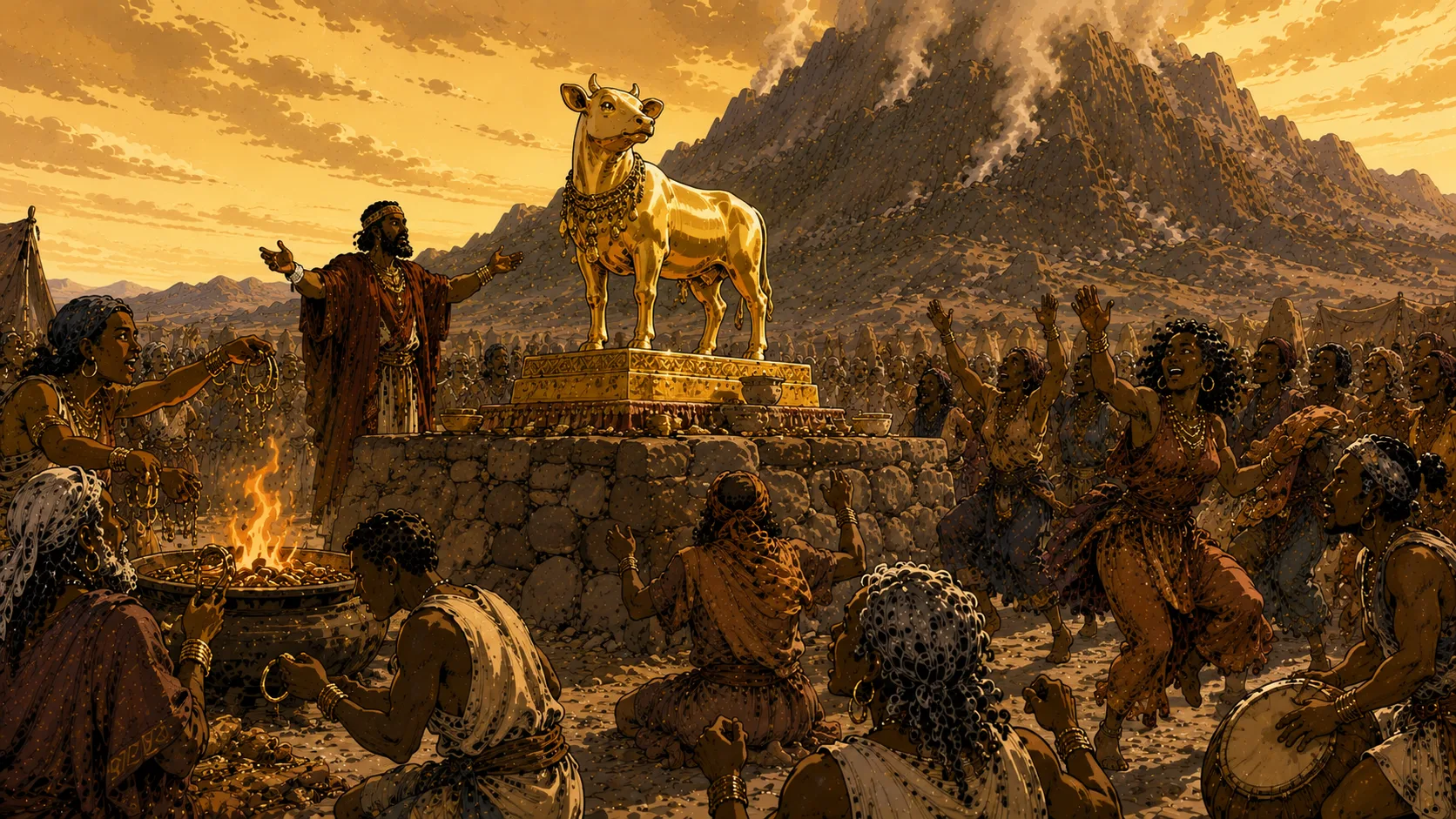
Moses lingers on the mountain and the people lose patience. They gather around Aaron and demand a god they can see. Aaron collects their gold earrings and fashions a molten calf. They say: these are your gods, Israel, who brought you up out of Egypt.
View Breakdown →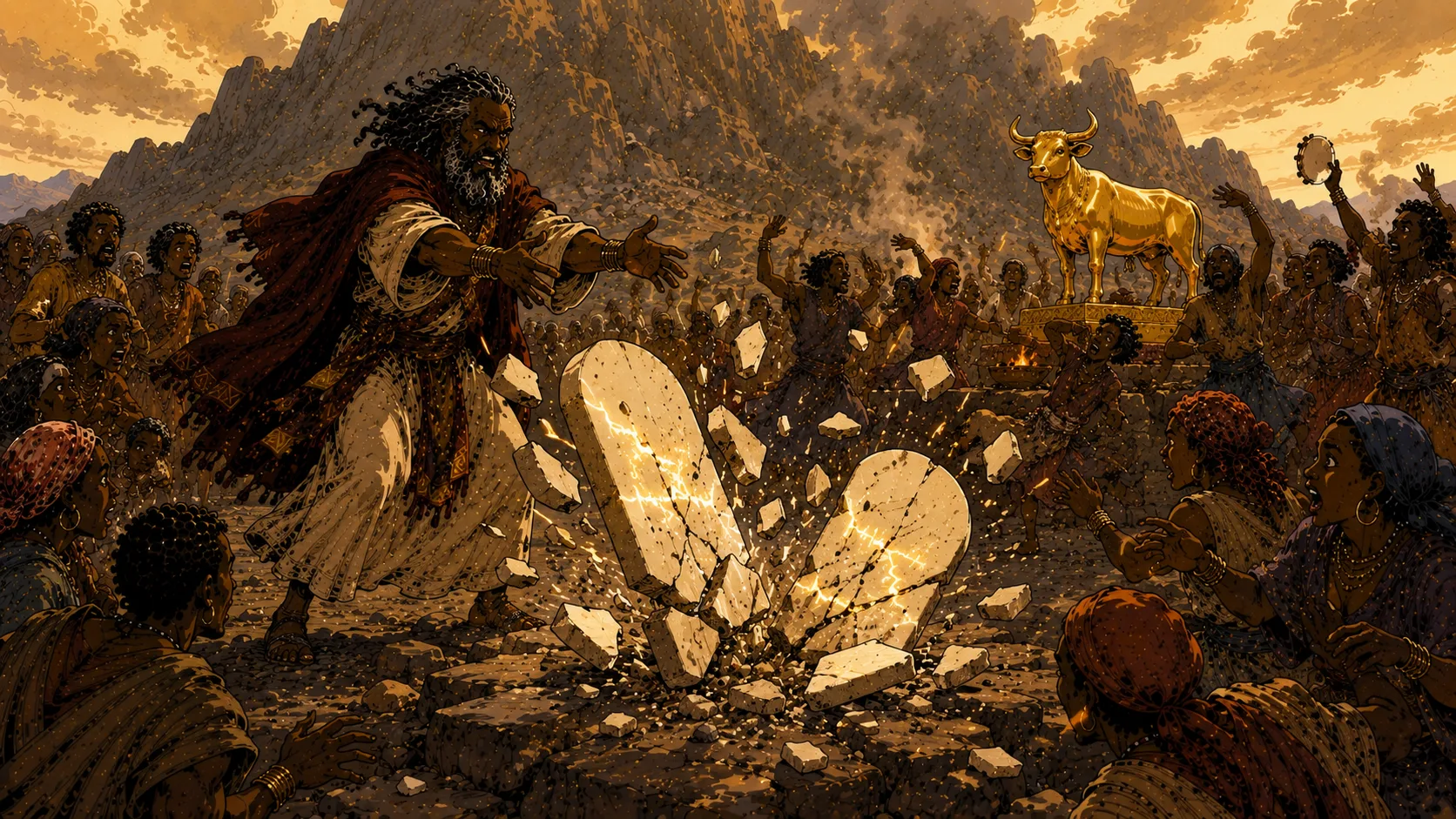
Moses descends from the mountain with the two tablets in his hands. When he approaches the camp and sees the calf and the dancing, his anger blazes. He hurls the tablets and shatters them at the foot of the mountain. Then he takes the calf and burns it.
View Breakdown →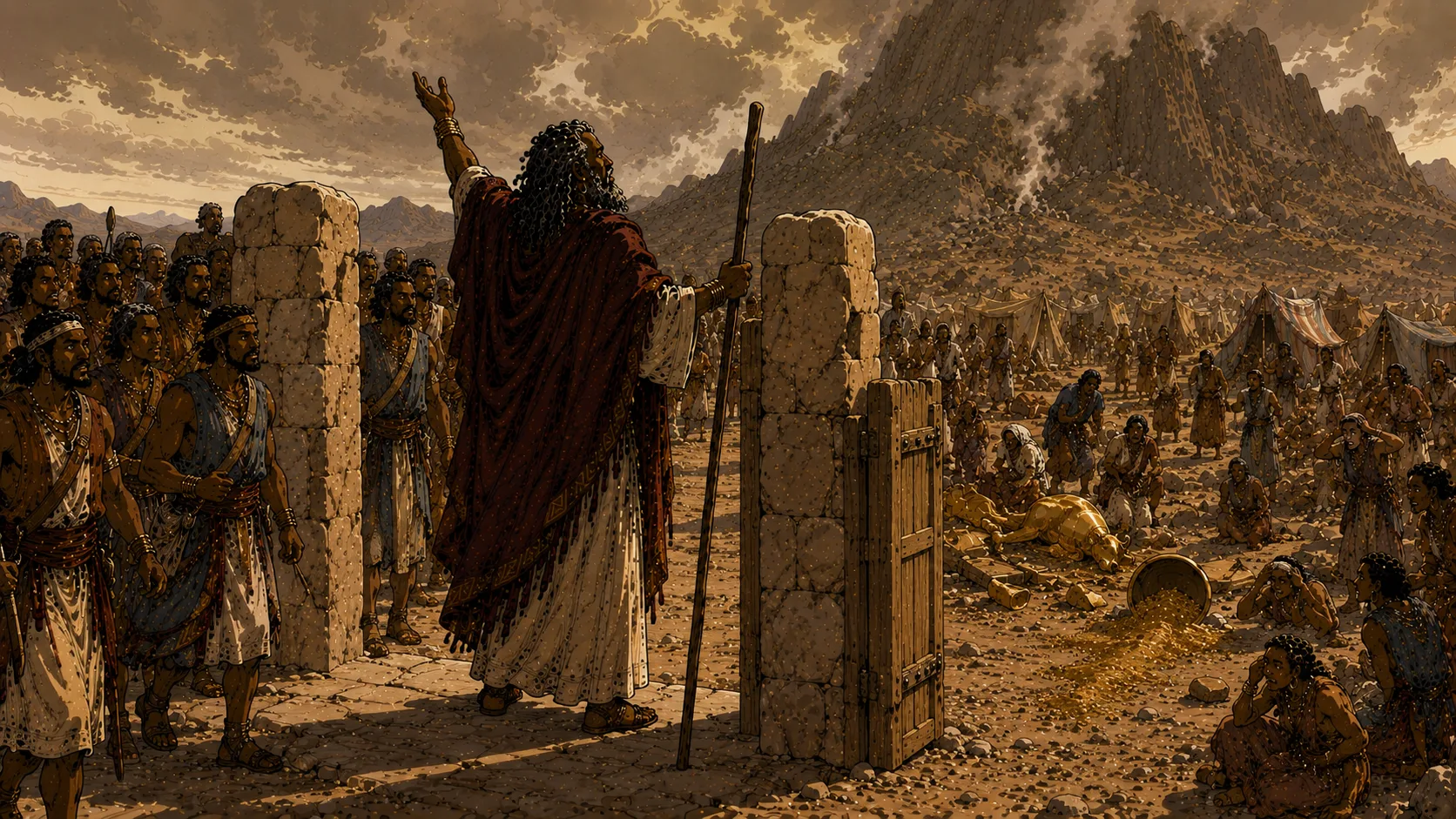
Moses sees the people are broken loose. He stands at the gate of the camp and calls out: who is for YHWH? Come to me. The sons of Levi gather to him. Three thousand fall that day. Moses says: you have ordained yourselves to YHWH today.
View Breakdown →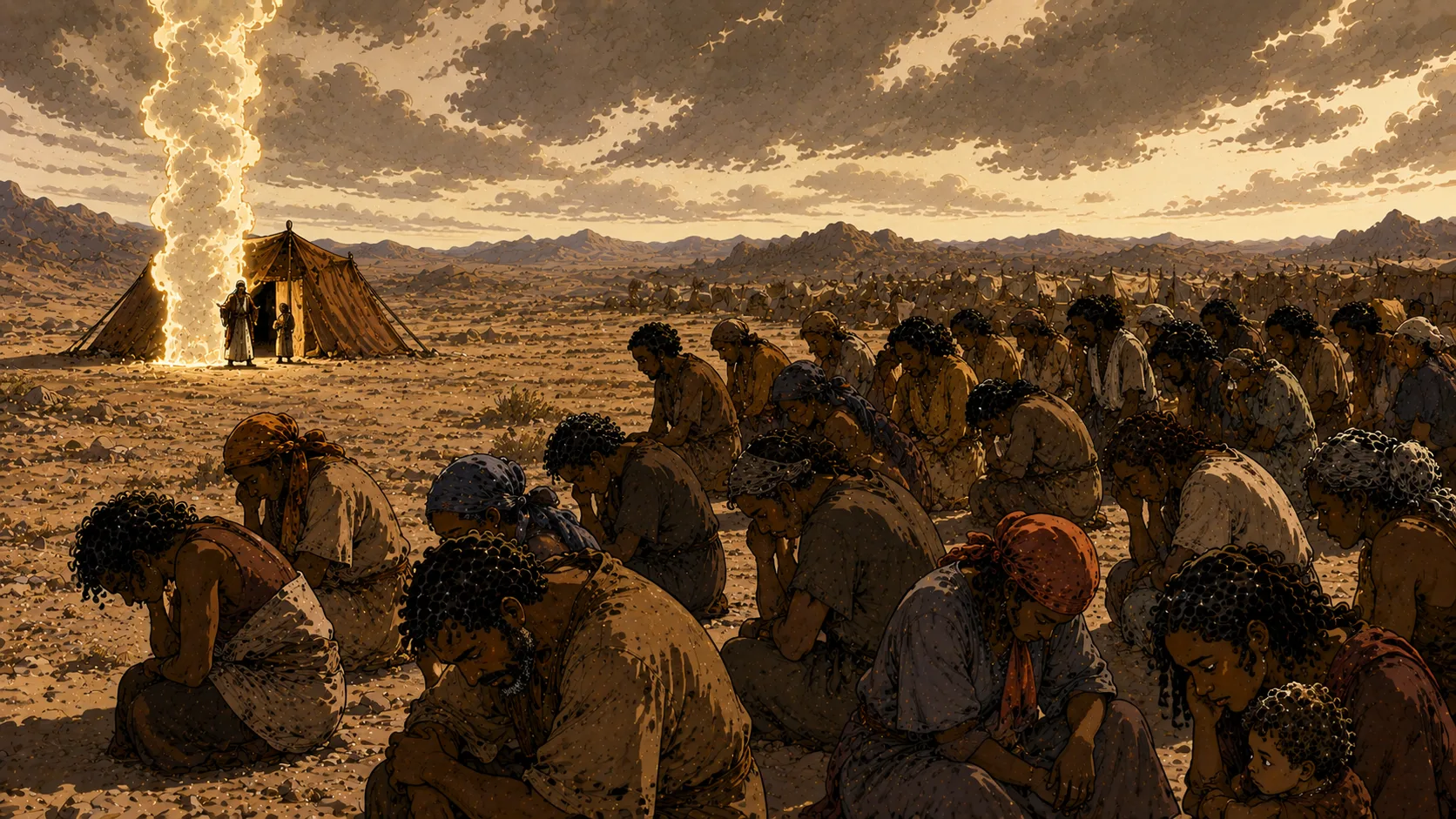
God tells Moses to lead the people onward, but says he will not go in their midst. The people mourn. Moses pitches the Tent of Meeting outside the camp — and all who seek YHWH go out to it. There God speaks to Moses face to face, as a man speaks to his friend.
View Breakdown →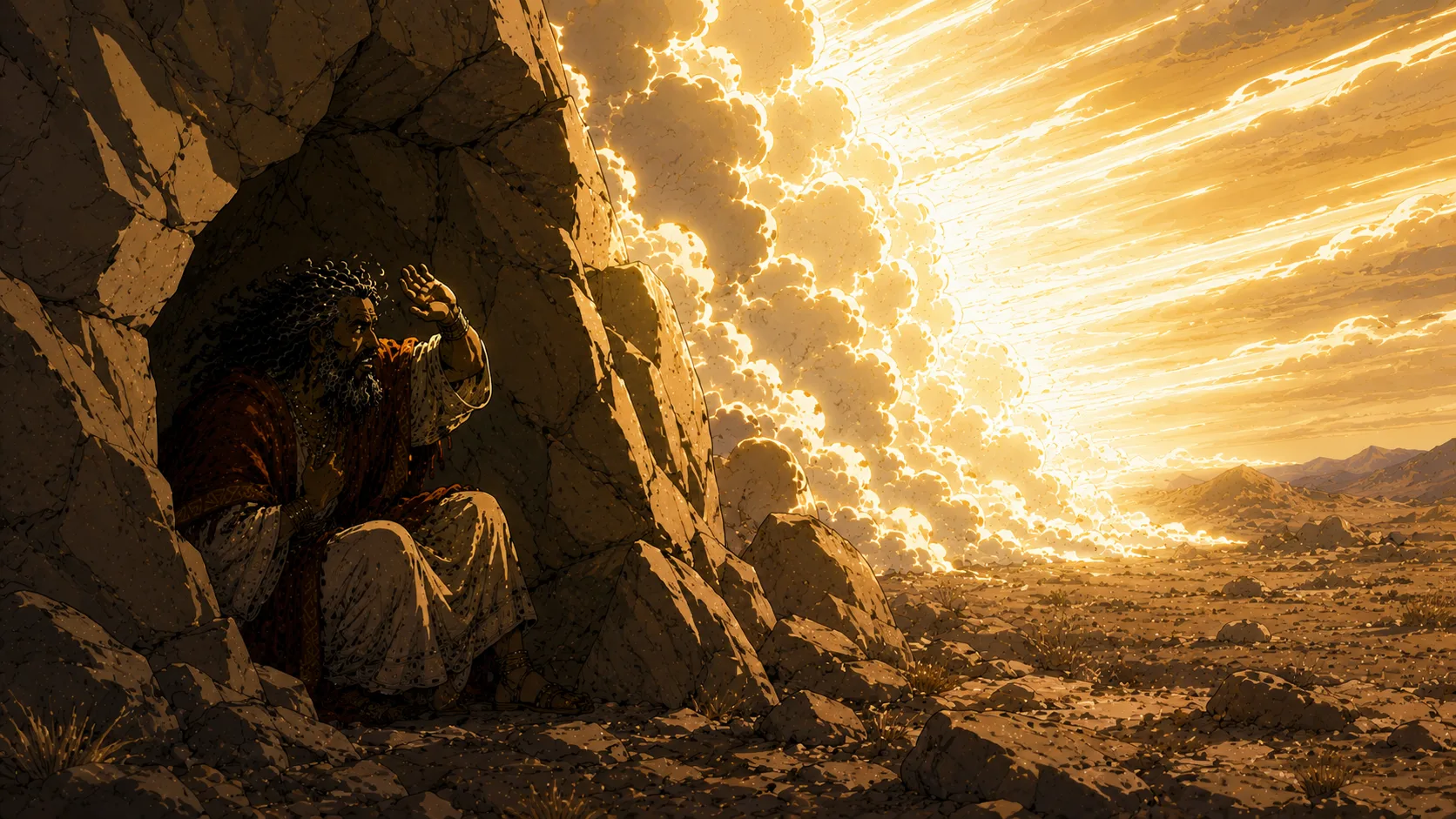
Moses presses God: show me your glory. God answers: I will make all my goodness pass before you and proclaim my name. But you cannot see my face — no one sees my face and lives. I will cover you with my hand. You will see my back.
View Breakdown →
God tells Moses to cut two new tablets and ascend alone. YHWH descends in cloud and passes before him, proclaiming: YHWH YHWH, God compassionate and gracious, slow to anger, abounding in covenant love and faithfulness. The thirteen attributes of divine mercy.
View Breakdown →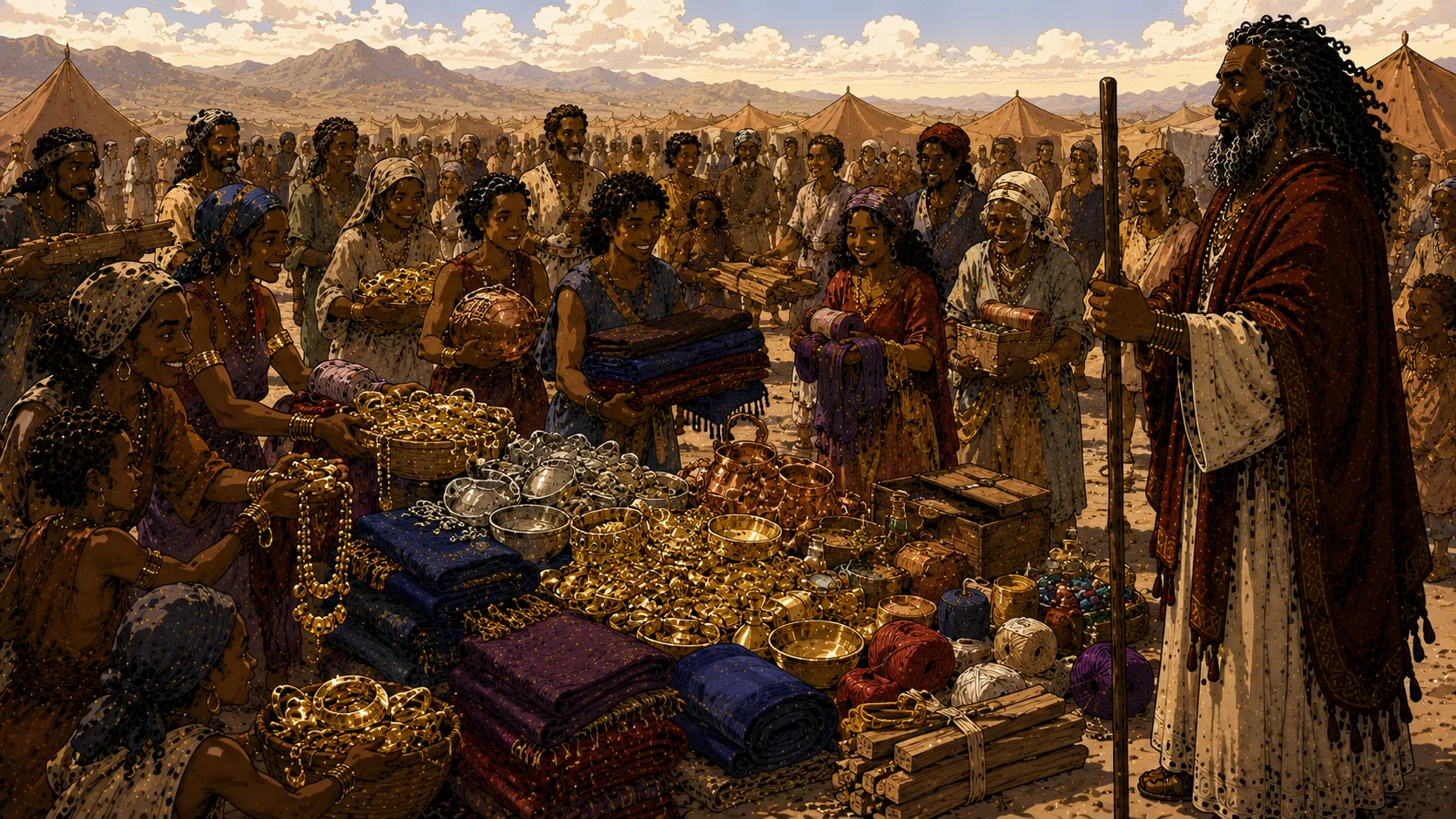
Moses calls Israel to bring a freewill offering for the Tabernacle. Everyone whose heart moves them — men and women alike — brings gold, silver, bronze, blue and purple and crimson yarn, fine linen, oil, and spices. Their hearts are generous.
View Breakdown →
God calls Bezalel son of Uri and fills him with the spirit of God — with wisdom, understanding, and knowledge — in every kind of craftsmanship. Oholiab son of Ahisamach is appointed alongside him. Every craftsman in whom God has placed wisdom comes to do the work.
View Breakdown →
The skilled workers begin to build the Tabernacle — curtains of twisted linen woven with cherubim, planks of acacia overlaid with gold, bars and sockets of silver. Every piece erected exactly as YHWH commanded. On the first day of the first month the Tabernacle is raised.
View Breakdown →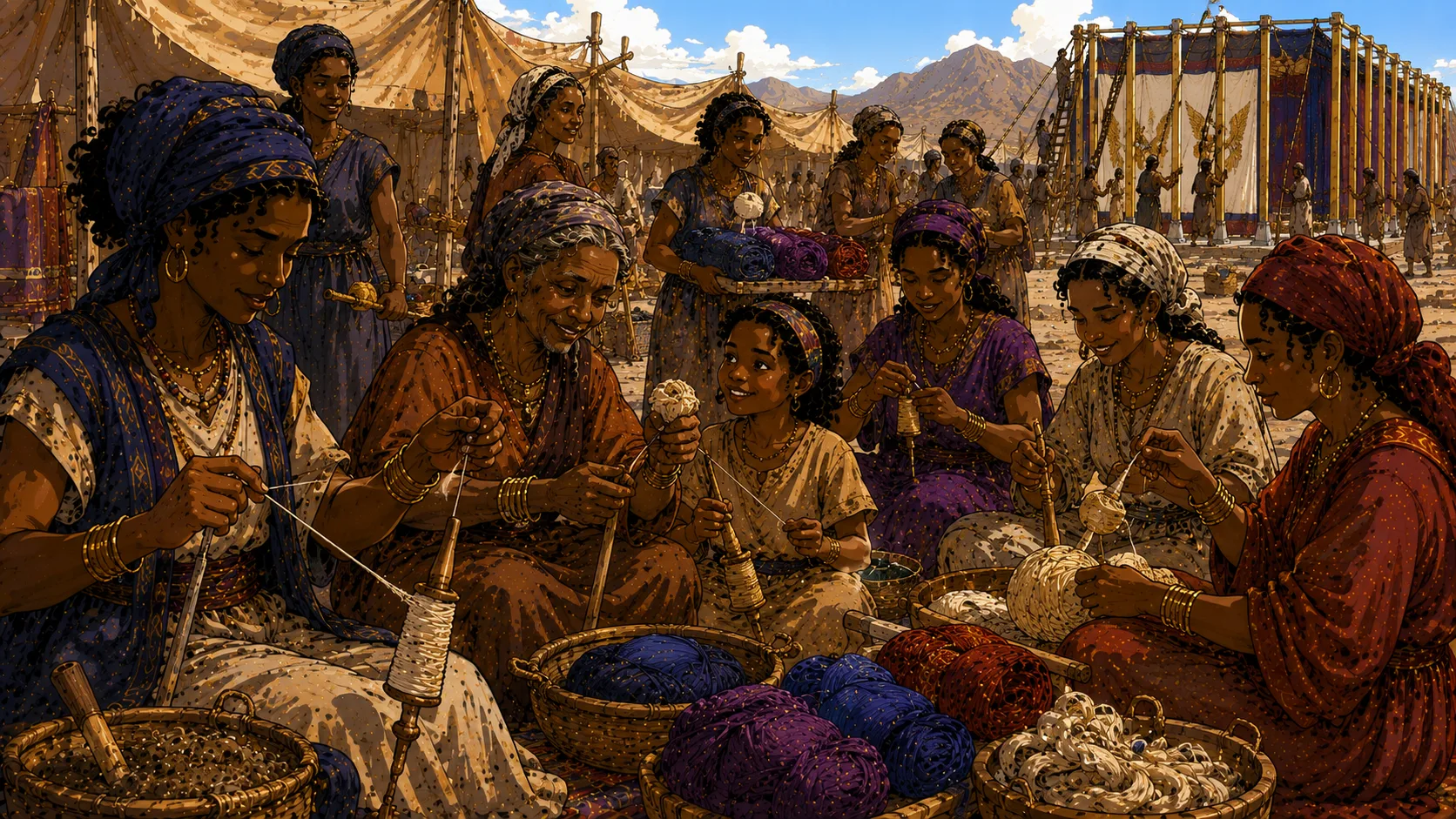
Every woman wise of heart spun with her own hands — blue, purple, and crimson threads, and fine linen — and brought what she had spun. And those whose hearts lifted them up, the women with skill, spun the goat's hair. They gave from their wisdom.
View Breakdown →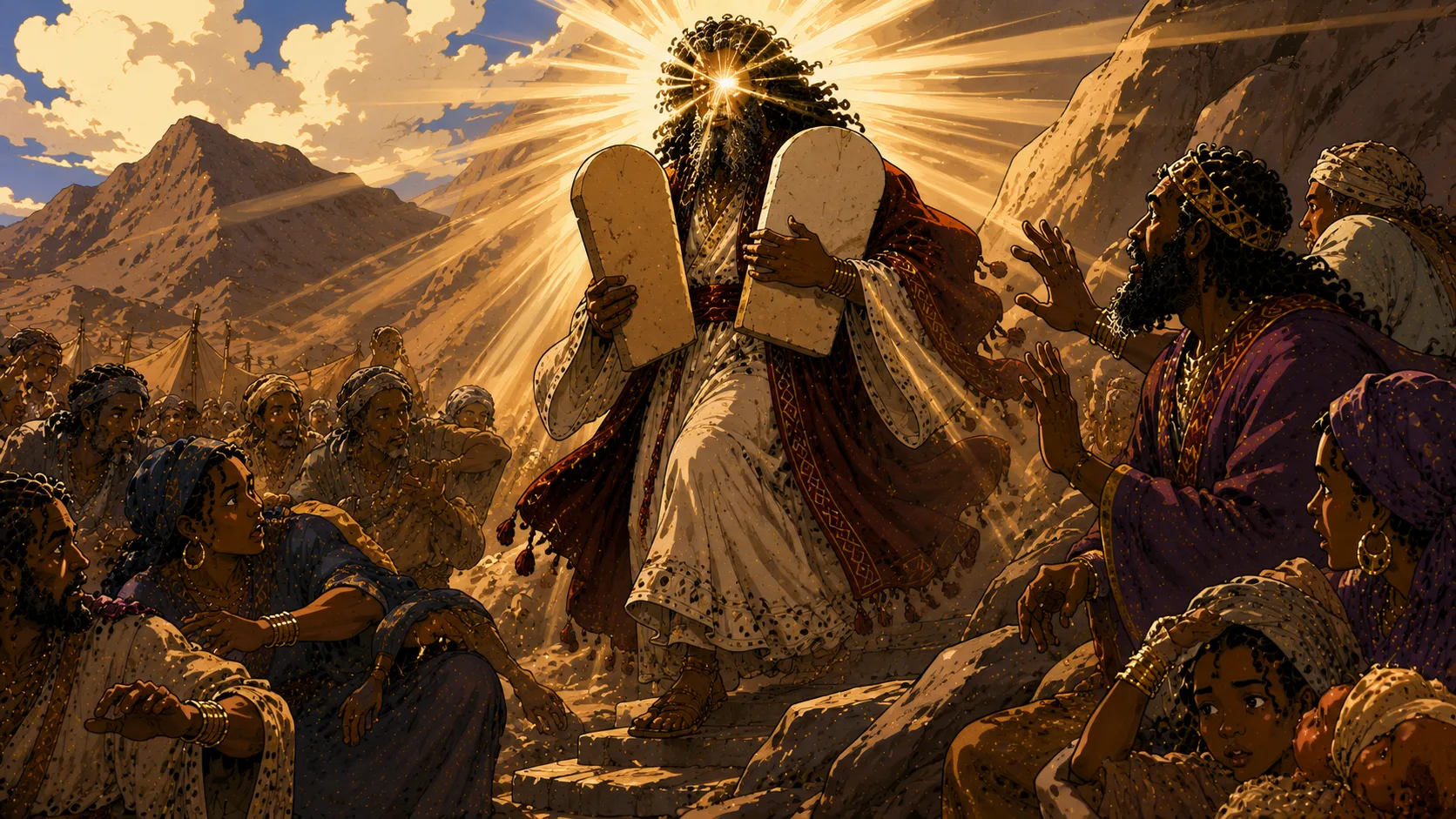
Moses descends from the mountain with the second tablets in his hands. He does not know that the skin of his face is radiating light from speaking with God. The people are afraid to come near. He puts on a veil — except when he goes in to speak with YHWH.
View Breakdown →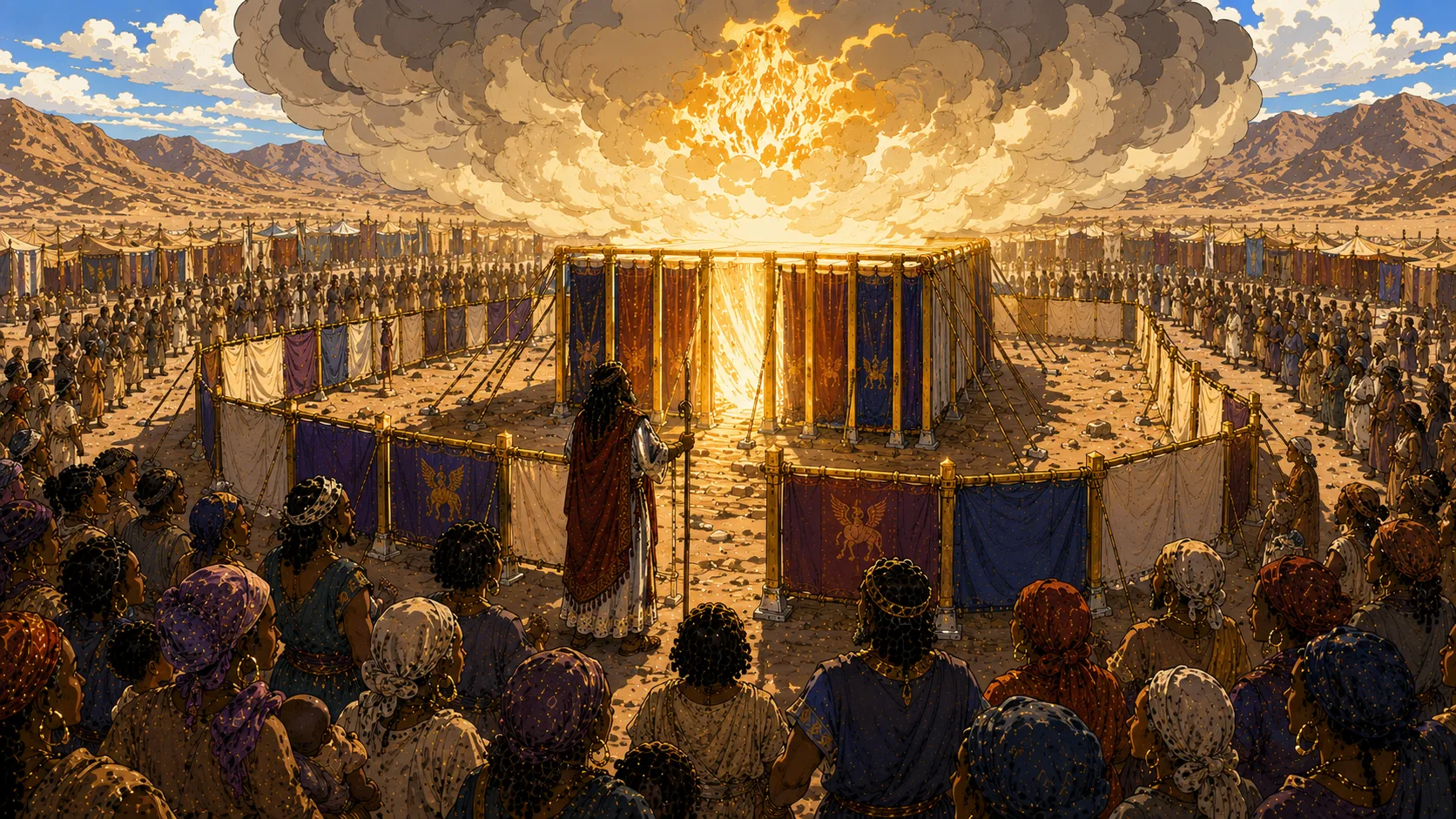
Moses finishes the work. The cloud covers the Tent of Meeting and the glory of YHWH fills the Tabernacle. Moses cannot enter — the glory is too great. By day the cloud is on the Tabernacle; by night fire glows within it, in the sight of all Israel throughout all their journeys.
View Breakdown →