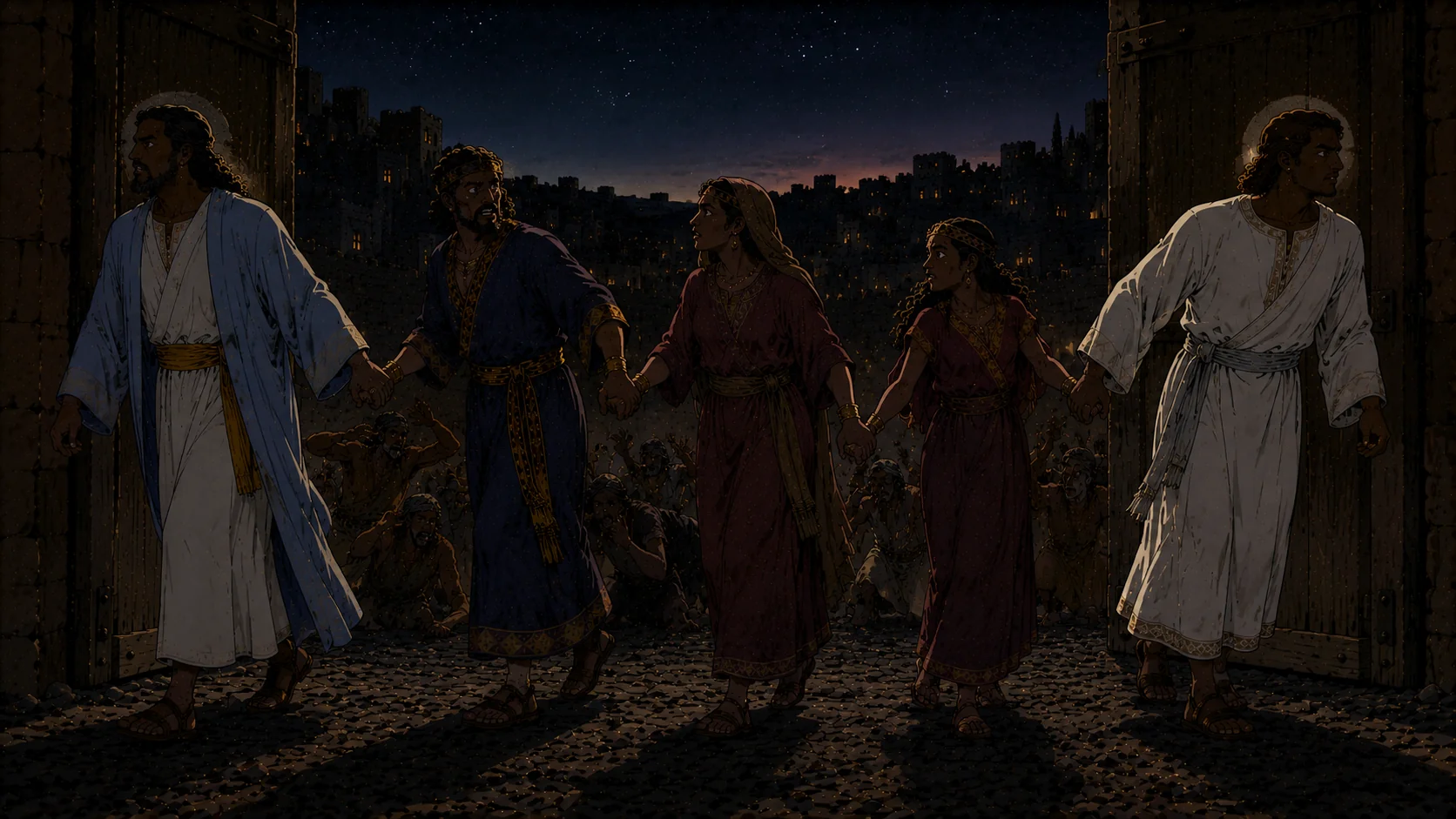
Dawn has come. The angels are urgent: take your wife and daughters, leave now. And Lot hesitates. וַיִּתְמַהְמָהּ — "and he lingered." In the context of a city about to be destroyed, the word is almost incomprehensible. He lingered. The angels are telling him to go. The fire is coming. And Lot lingers.
The text does not explain the hesitation. It does not need to. The lingering is the same spiritual movement that placed him here in the first place: he chose Sodom's valley because it looked like Egypt (13:10), settled near Sodom, moved into Sodom, sat at Sodom's gate. Across years of small choices, he built a life here. Even knowing the judgment, the accumulated weight of a life pulls him toward stillness.
The angels do not rebuke him. They act: they seize his hand, his wife's hand, his daughters' hands, and physically drag them out of the city. And into this act of compelled rescue, the text inserts a phrase: בְּחֶמְלַת יְהוָה עָלָיו — "in the mercy of Yah upon him." The hands that drag him out are mercy. He cannot save himself. He is pulled to safety he did not have the will to walk toward.
