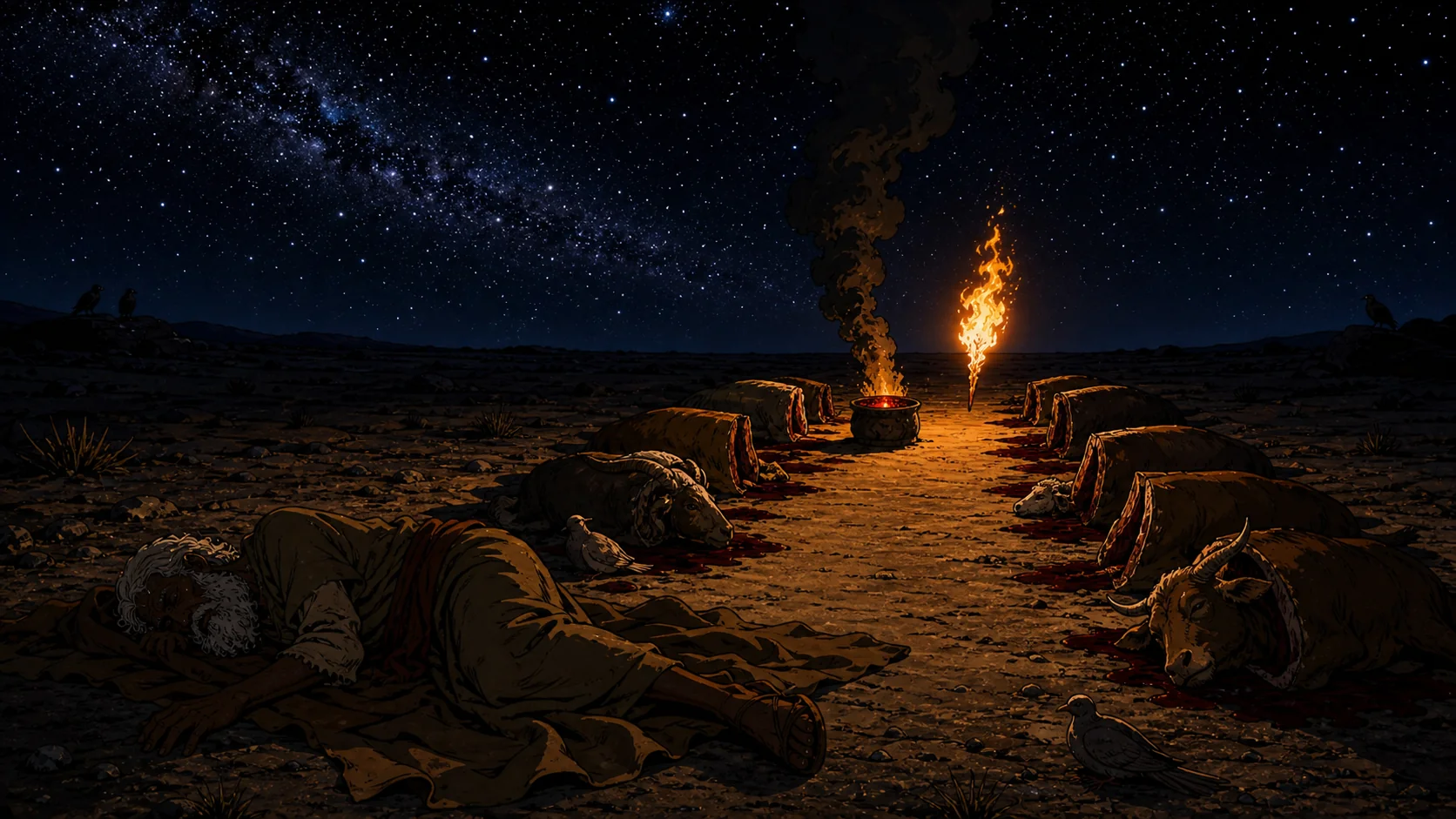
Avram has been promised a great nation, but has no son. When he presses Elohim — (15:8) "How shall I know that I will inherit it?" — the answer he receives is not a word. It is a ritual. He is instructed to cut animals in half and lay the pieces opposite each other, forming a corridor of divided flesh. In the ancient Near East, this was the standard form of a covenant ratification ceremony. Both parties would walk between the pieces, symbolically pledging: may what happened to these animals happen to me if I break this covenant.
Then the sun sets. A deep darkness falls. And Avram falls into a deep sleep — a tardemah, the same word used when Adam was put to sleep before Chavah was formed (2:21). In that darkness, Elohim speaks of the future with stunning clarity: four hundred years of affliction in a foreign land, then exodus, then the land. The whole history of Israel is previewed here in the dark, before it happens. But what comes next is the most extraordinary detail in the chapter.
A smoking oven and a flaming torch — תַּנּוּר עָשָׁן וְלַפִּיד אֵשׁ (tanur ashan v'lapid esh) — pass between the divided animals. Avram watches but does not participate. This is the heart of the Abrahamic covenant: it is unconditional. Elohim stakes His own existence on the promise. If the covenant fails, the fire and smoke that passed between the pieces bear the curse — not Avram. Not Israel. The land, the seed, the blessing — these are guaranteed not by human faithfulness but by divine self-obligation. This is why Paul and the rabbis alike reach back to Bereshit 15 when they want to explain what grace means: it was already there, in the dark, before circumcision, before Torah, before anything Avram did.