After the battle, after the kings, after the encounter with Melchizedek, the word of YHWH comes to Avram in a vision with a single command: do not fear. This suggests that Avram is afraid. The man who pursued four kings through the night with 318 men, who recovered Lot and all his goods, who refused the king of Sodom's wealth — this man is afraid. Perhaps afraid of retaliation. Perhaps afraid of a different kind of emptiness: he has won a great victory, been blessed by the priest of El Elyon, and he has still no son. The promise of a great nation stands over a childless man who is getting older.
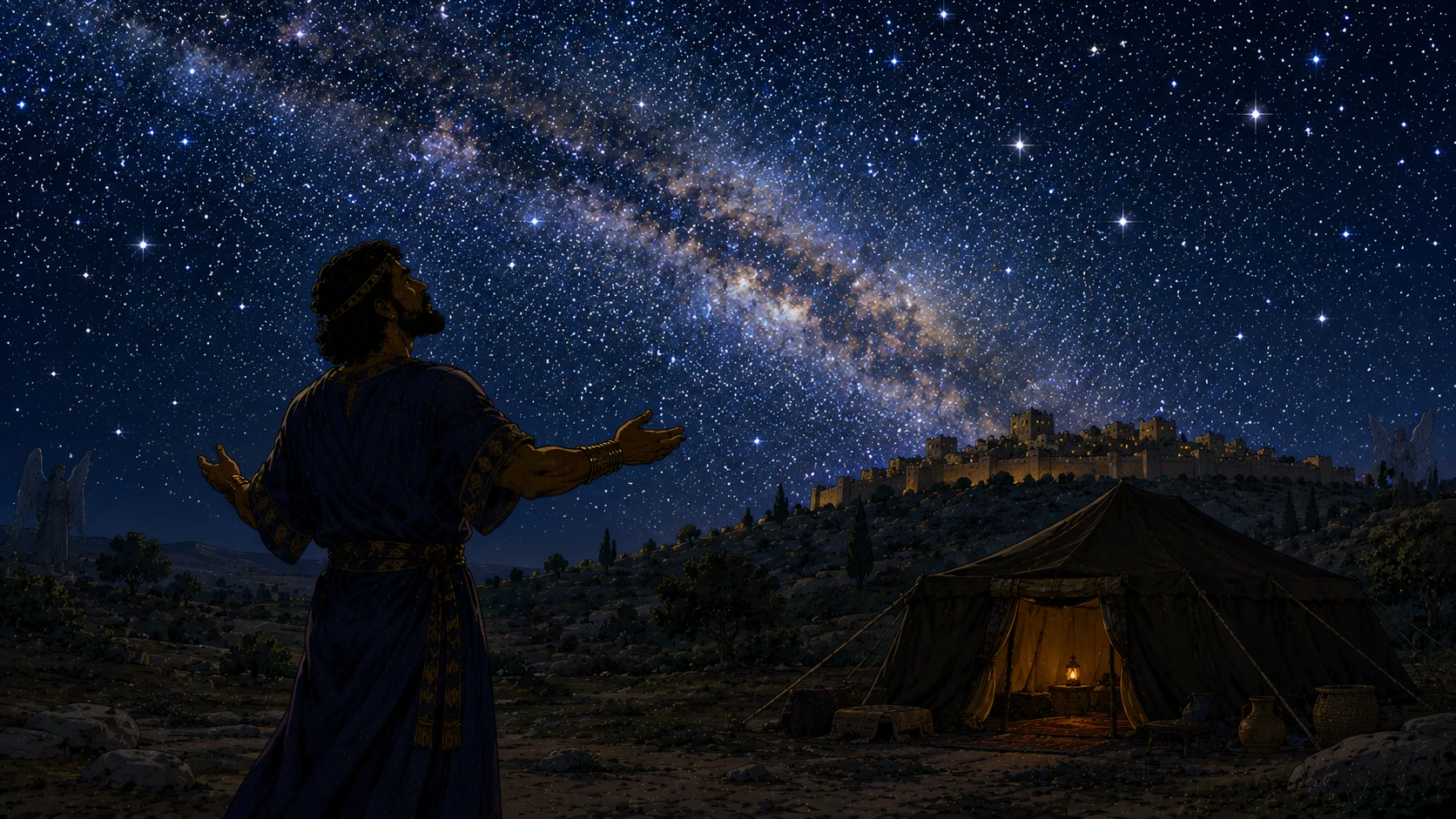
His complaint is direct, even bold: (15:2–3) "What will You give me? I go childless... behold, the son of my household, Eliezer of Damascus, will inherit from me." He names his servant as the de facto heir. The promise of offspring means nothing without a son, and there is no son. YHWH's answer does not come as explanation or rebuke. It comes as demonstration. He takes Avram outside — out of the tent, out of the enclosed space of human reckoning — and says: look at the sky, count the stars if you can. So shall your offspring be. Then comes the verse that Paul and the rabbis will quote for three thousand years: (15:6) "And he believed YHWH, and He counted it to him as righteousness."
The placement of this scene is precise. It follows the battle and the Melchizedek encounter — moments of apparent success and blessing — and it reveals that behind the composure of the patriarch is a man wrestling with the deepest uncertainty a man can hold: will the promise be kept? The fear that YHWH addresses is not physical danger but covenantal doubt. And YHWH's answer to doubt is not an argument but an experience: go outside, look up, receive what you cannot calculate. Faith, in the Torah's construction, is not the absence of struggle. It is the posture maintained through it — the continued reaching toward the promise even when the evidence is against it. Avram had that posture, and YHWH named it righteousness.