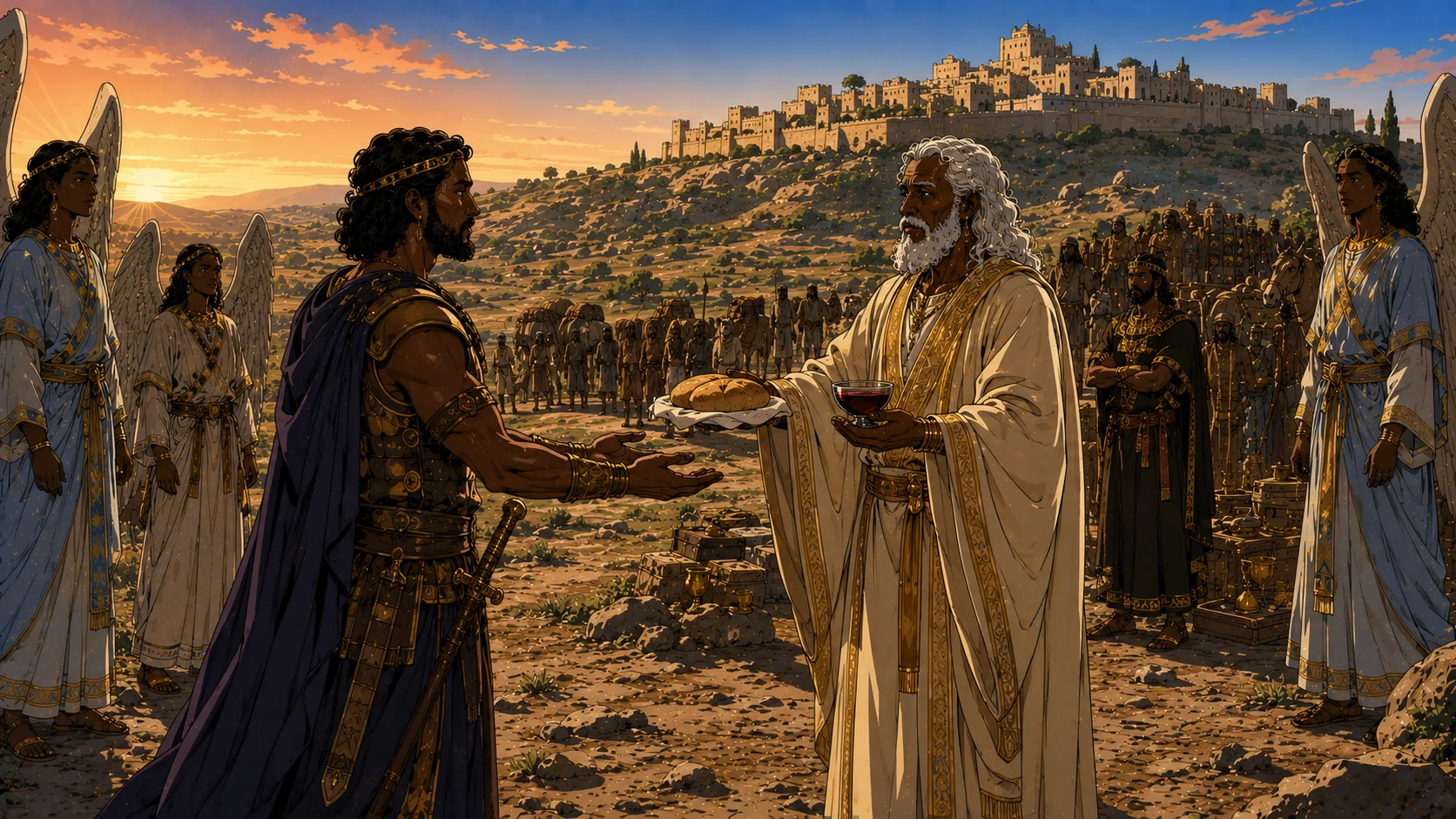
Two kings meet Avram after the battle: the king of Sodom, who offers him the recovered goods, and the king of Shalem, who brings him bread and wine. The contrast is the point. The king of Sodom is unnamed, transactional, associated with the city under judgment. Melchizedek is named — "My King is Righteousness" — royal, priestly, and associated with Shalem, which the tradition identifies as the precursor to Jerusalem. He is the only non-Abrahamic figure in the entire book of Genesis who serves the true God. He appears from nowhere and disappears after three verses, having blessed the father of faith and received his tithe.
His appearance is theologically explosive. He is a priest of El Elyon — "God Most High" — a name that the Torah immediately identifies with YHWH when Avram speaks in response (14:22). The priestly function precedes Sinai, precedes the Levitical order, precedes Aaron. Melchizedek serves in a priesthood that the Psalms (110:4) and the letter to the Hebrews will call eternal — "a priest forever after the order of Melchizedek." He does not offer animal sacrifice; he brings bread and wine. He does not demand tribute; he gives blessing. He does not represent human institutional religion; he represents the righteousness and peace of El Elyon breaking into history in the person of a priest-king whose origins the text does not explain.
Avram then refuses the king of Sodom's offer: (14:23) "I will not take a thread or a sandal thong of all that is yours, lest you say, 'I have made Avram rich.'" He will receive enrichment from YHWH through Melchizedek's blessing. He will not receive it from the city of judgment in a way that would create obligation. The refusal of Sodom's wealth immediately follows the acceptance of Melchizedek's blessing — the two scenes define Avram's economic and spiritual allegiance simultaneously. He chooses the bread and wine of the priest-king over the spoils of Sodom. This choice will cost him nothing material and gain him everything covenantal.
