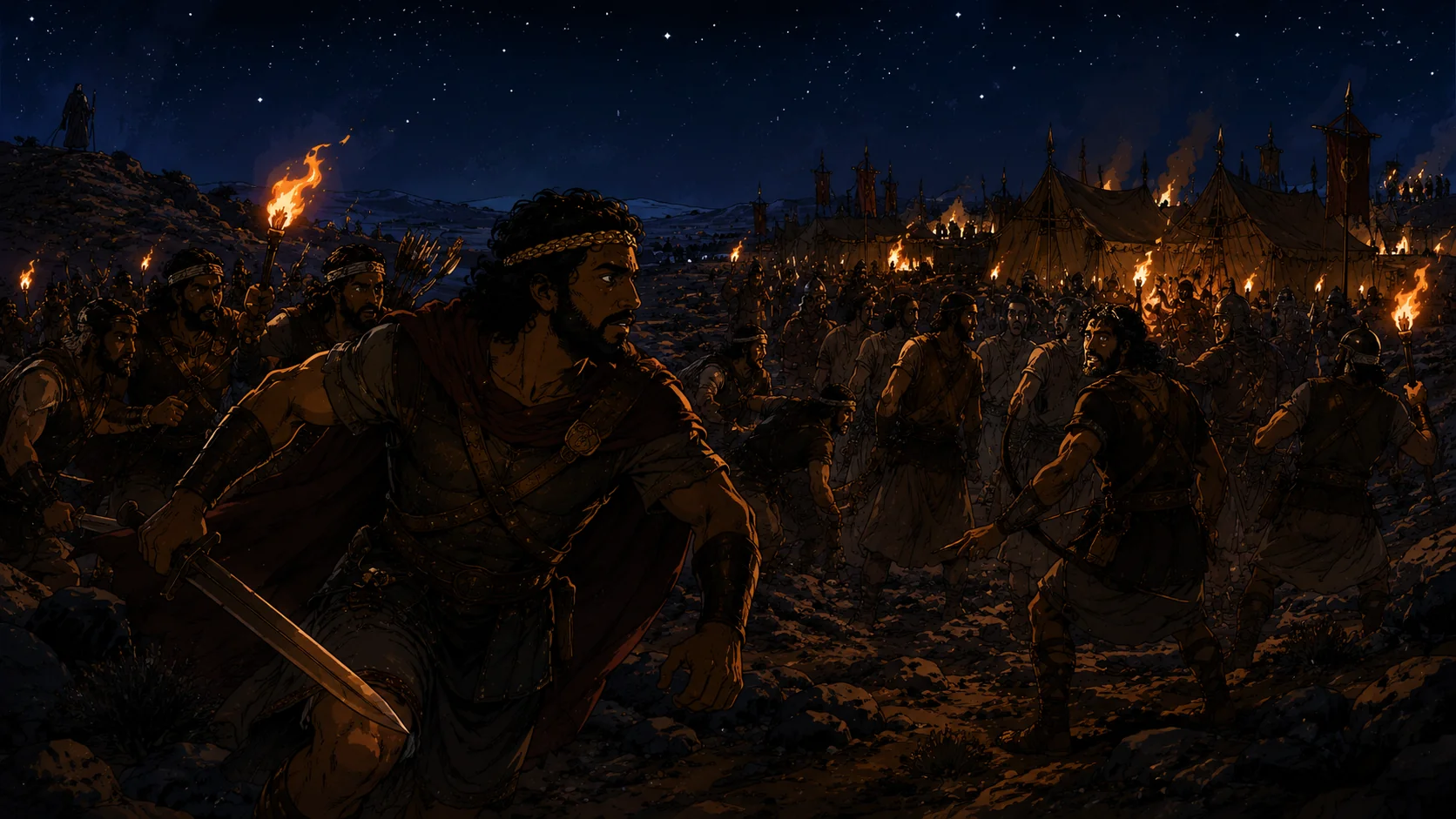
Genesis 14 is unlike any other chapter in the patriarchal narratives. It reads like a war chronicle — kings named, coalitions formed, battles won and lost, cities sacked, prisoners taken. The scale is geopolitical: four kings from the east against five kings of the Jordan plain, an eighteen-year tributary relationship suddenly reversed when Sodom and its allies rebel. Lot, who chose the Jordan plain by sight and settled in Sodom by stages, is caught in the wreckage. He is taken captive along with all his household and possessions. The word reaches Avram.
What Avram does is remarkable. He is called here, for the first time, הָעִבְרִי (Ha-Ivri) — "the Hebrew" — the first use of this ethnic identifier in Scripture. The root עָבַר means to cross over: Avram crossed the Euphrates, crossed into a new covenantal identity, crossed over from the world of Terah into a new world. And now he crosses into battle. He musters 318 trained men born of his household — not mercenaries, not a standing army, but men raised within his covenant community. He pursues the four kings north to Dan, attacks at night, and pursues them further to Hobah north of Damascus. He recovers everything — all the goods, all the captives, Lot, and the women.
The episode reveals a dimension of Avram that the altar-building scenes do not: he is also a man of decisive action in the world. He is not only a worshiper and wanderer; he is a covenant patriarch with the capacity to defend those under his responsibility. The reason for the military operation is stated plainly: (14:14) "he heard that his kinsman had been taken captive." Lot had separated himself from Avram. Lot was heading toward judgment. But Avram rescues him anyway, not because Lot deserves it but because he is family. The covenant does not require that the man be worthy of rescue. It requires that the man doing the rescuing be faithful to the bond.