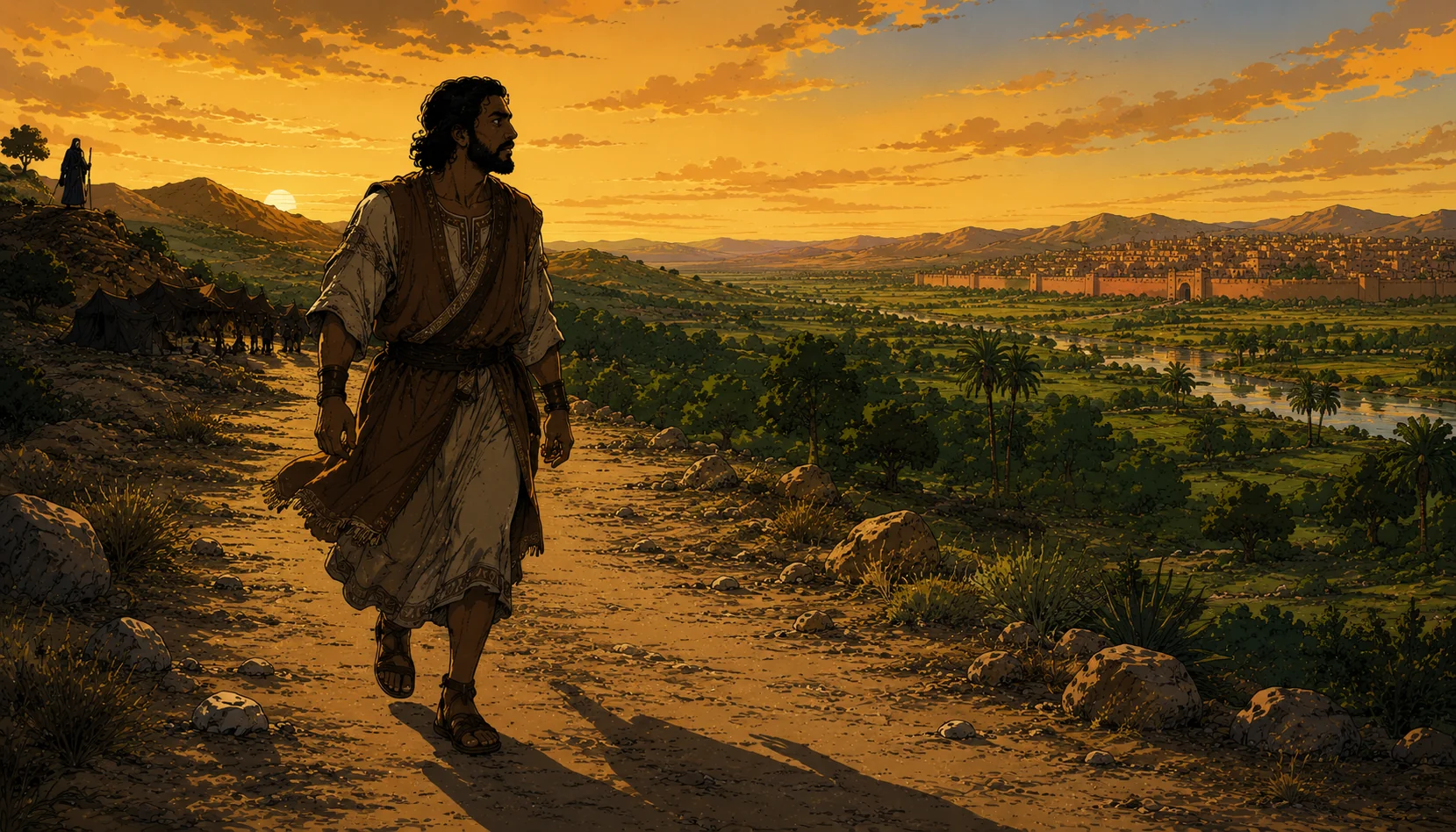
Abraham has just returned from the most extraordinary military action of his life. With 318 trained men, he pursued the four kings of the East who had defeated the alliance of Sodom and its neighbors and carried off captives — including Lot. He struck them, recovered the people, recovered the goods. And among the rescued: Lot, his brother’s son.
Verse 16 is a list. A list of what was restored: all the goods. The women. The people. And — named separately — Lot. The text gives Lot his own mention: וְגַם אֶת-לוֹט אָחִיו, “and also Lot, his kinsman.” He is the only individual named in the rescue. The rest are categories — goods, women, people. Lot is a person, a relationship.
And then: silence. Genesis 14:16 is the last we hear of Lot until chapter 19. Five chapters pass. The Melchizedek encounter. The covenant between the pieces. Hagar. Ishmael. The covenant of circumcision. Three visitors. Sarah laughs. Then — Genesis 19:1: “And the two angels came to Sodom at evening, and Lot was sitting in the gate of Sodom.”
Sitting in the gate. Not passing through. Not visiting. Sitting — as one who belongs, as one with civic standing, as one who has made this city his place. Lot was rescued from Sodom. And Lot returned to Sodom. The text does not say why. It does not editorialize. It simply moves the camera, and when it returns to Lot, he is there.