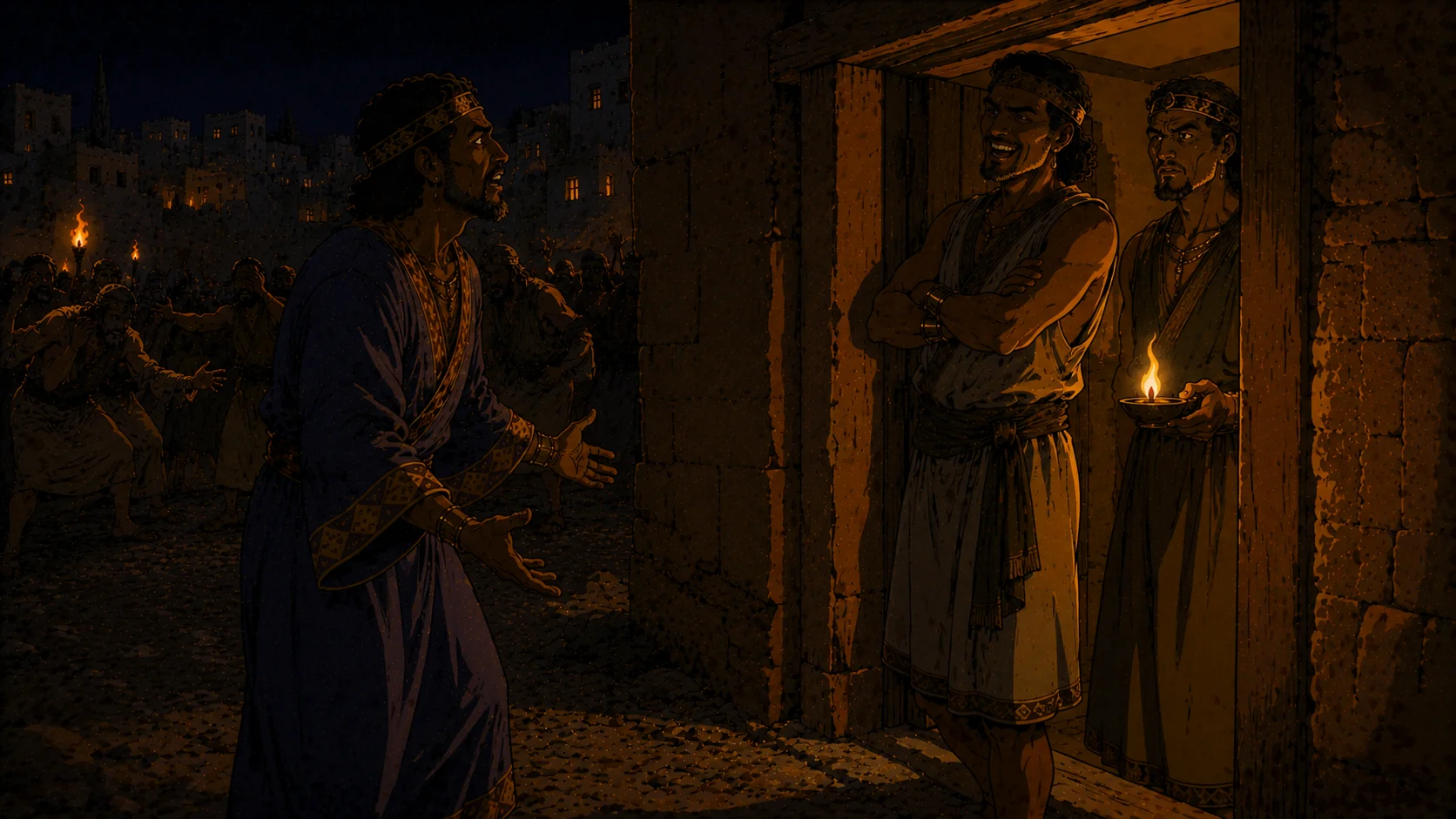
The angels give Lot specific instructions: whoever you have in this city, bring them out. Lot goes to his sons-in-law — the men betrothed to his daughters, not yet married. He speaks plainly: the city is about to be destroyed, you must leave now.
Their response is recorded with a single word that closes their fate: וַיְהִי כִמְצַחֵק בְּעֵינֵי חֲתָנָיו — "and he was like one who jests in the eyes of his sons-in-law." Lot's warning sounds like a joke to them. The city they have built their lives in, the city whose values they have absorbed, cannot be destroyed. Not to them. Not because the evidence says otherwise — the angels are right there — but because they have made themselves at home here. They cannot hear the warning. The familiarity has become its own kind of blindness.
The word מְצַחֵק (metzachek) is from the root צחק — the same root as Sarah's laughter, the same root as Isaac's name. In a narrative haunted by laughter (Sarah laughs in doubt at Mamre, the sons-in-law laugh in disbelief at the warning), the root appears once more. Sarah's laughter becomes the name of the covenant heir. The sons-in-law's laughter leaves them in the city that is about to be overthrown.