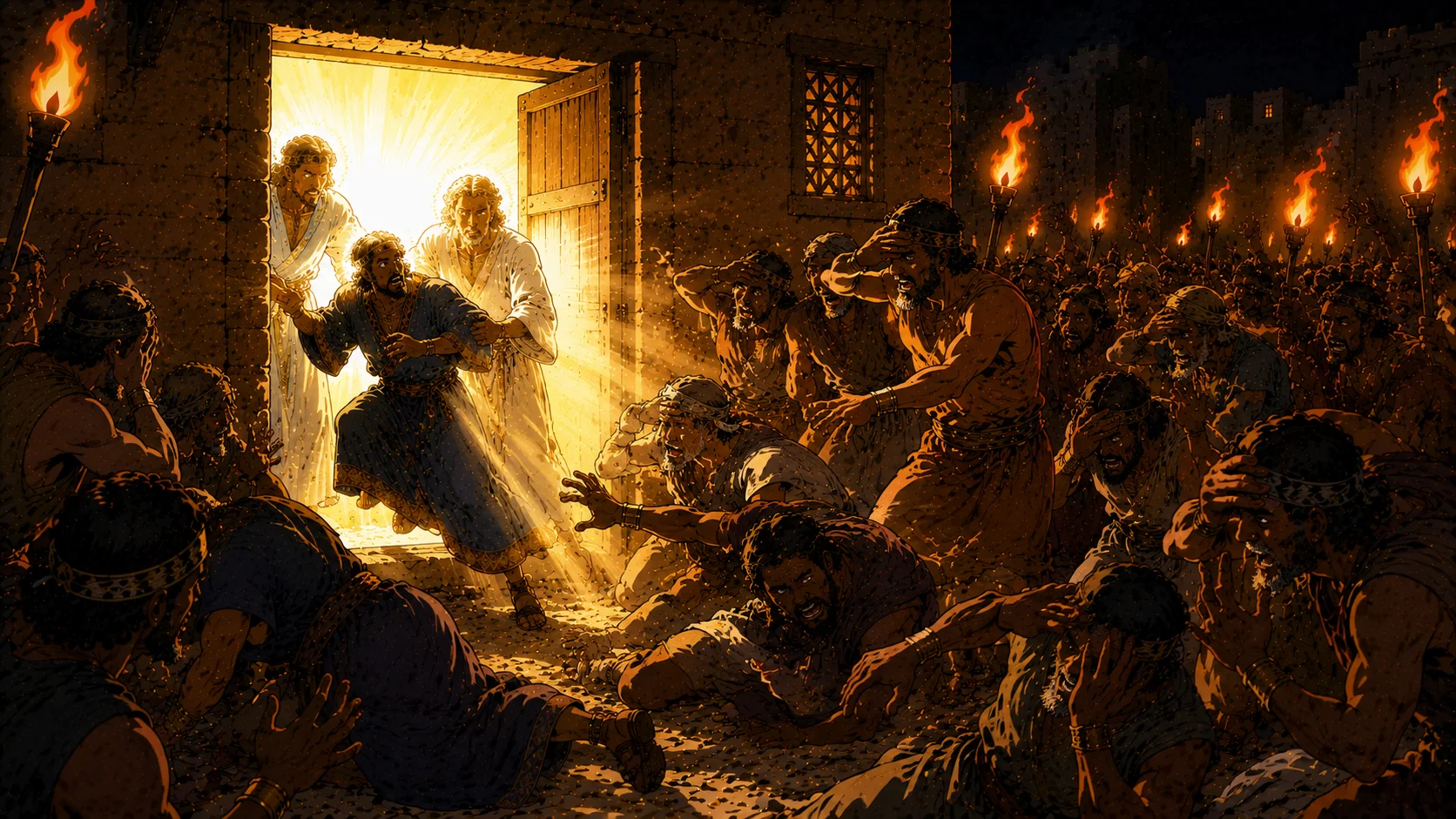
Genesis 19:10-11 is the turning point. The crowd is at the door, pressing, the barrier about to break. And then the angels act: they reach out, pull Lot inside, shut the door. And then they strike the men outside with sanveirim.
The word סַנְוֵרִים (sanveirim) appears only twice in the Hebrew Bible — here and in 2 Kings 6:18, when Elisha asks Yah to strike an Aramean army with the same blinding. The Septuagint renders it with a word suggesting confusion or bewilderment rather than simple sightlessness. Whether the men are truly blinded or struck with disorienting radiance, the result is the same: they cannot find the door.
What is notable is what the blindness does not stop. The text notes: "so that they wearied themselves finding the door." They are struck — and they keep trying. They are on the ground, incapacitated, unable to locate the entrance they could see moments ago — and their intent is undimmed. They wearied themselves. The malice outlasts the capacity. This is a portrait of a moral orientation so total that it does not yield to inability, only to destruction.