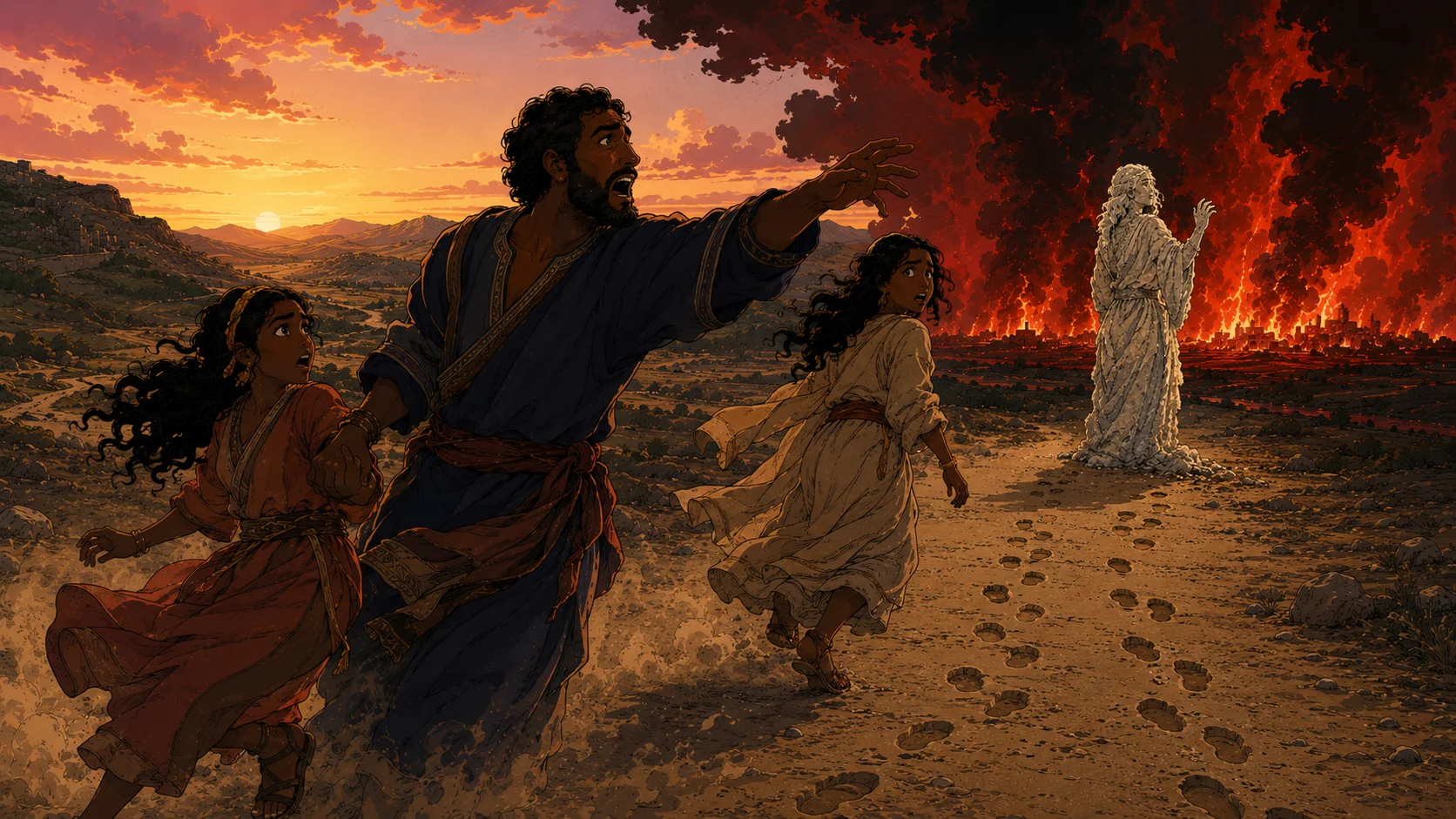
Genesis 19:26 is the shortest verse in the Lot narrative — and one of the most haunting in all of Scripture. The angels have dragged Lot and his family out of Sodom by the hand (19:16). They have commanded: “Escape for your life. Do not look behind you, and do not remain anywhere in the plain. Escape to the mountain, lest you be swept away” (19:17). The instruction could not be plainer. Forward. Do not turn. Do not look back.
And then: וַתַּבֵּט אִשְׁתּוֹ מֵאחֲרָיו. Vatabet ishto me’acharav. His wife looked back from behind him. Three words in Hebrew for what becomes the most expensive glance in Genesis. She looked מֵאחֲרָיו (me’acharav) — from behind him, from after him, in his wake. She was already past the threshold of judgment and turned around. The result: וַתְהִי נְצִיב מֶלַח. Vatchi netziv melach. She became a pillar of salt.
The Hebrew verb וַתַּבֵּט (vatabet) comes from the root נבט (nabat) — to look, to gaze, often with intensity or longing. It is not a casual glance. It is an act of attention, of turning one’s face toward something. The Sages debated what exactly she looked back at: her home, her daughters still in Sodom, the life she was leaving. What is clear is the direction of her heart. The city she had built her life in was being consumed. And she could not fully leave it behind. The body can be carried out; the soul has to choose to go.
The story does not linger. It does not mourn her. The next verse resumes with Avraham, rising early in the morning, looking toward Sodom and Gomorrah and all the plain, and seeing the smoke of the land going up like the smoke of a furnace (19:28). Two responses to the same destruction: Lot’s wife turns back and is fixed in it. Avraham looks forward from a distance and intercedes. The contrast is one of the deepest moral patterns in Genesis — between those who are in covenant with the future and those whose hearts are still anchored in what is passing away.