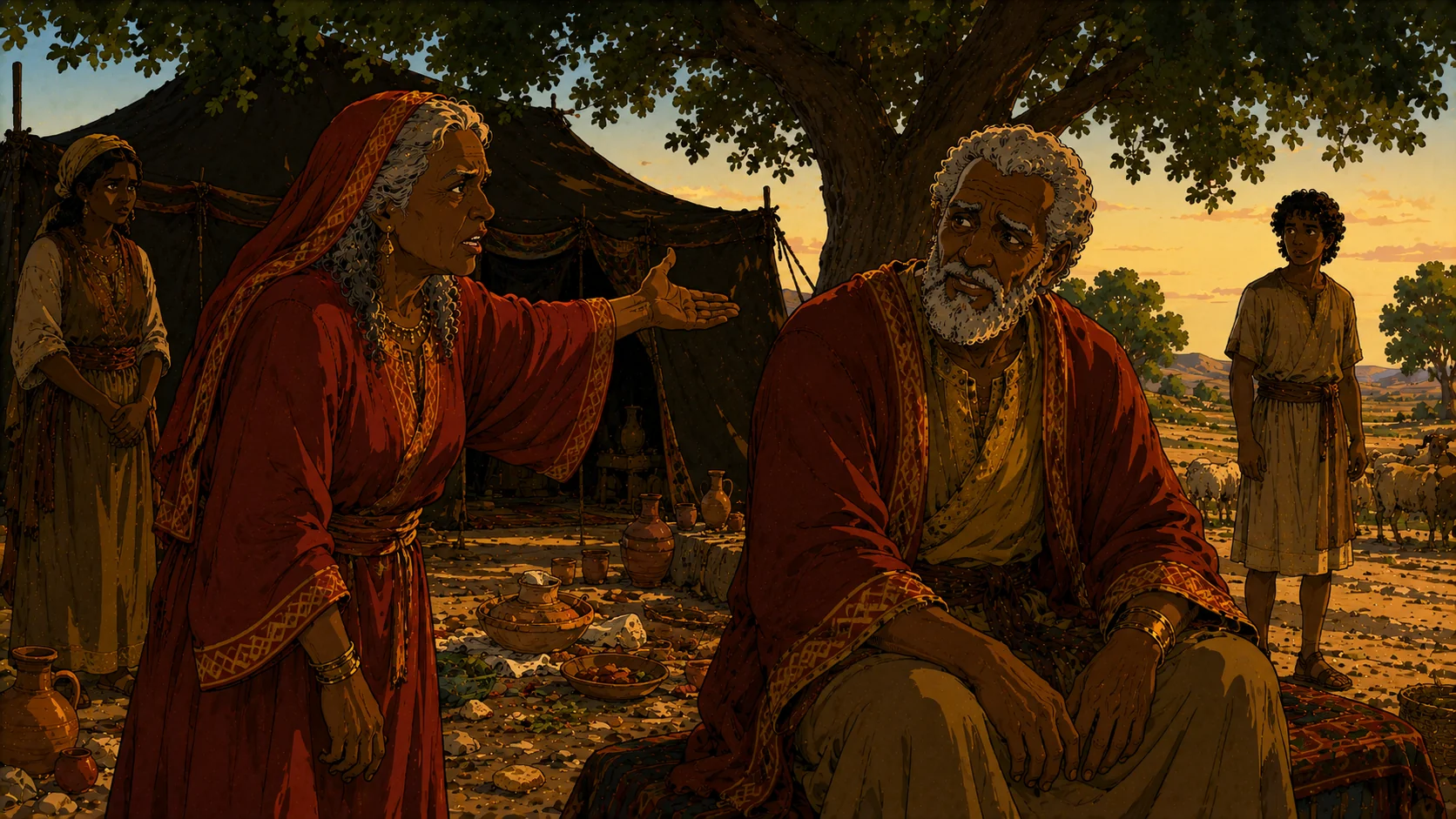
Sarah's demand is blunt: גָּרֵשׁ הָאָמָה הַזֹּאת וְאֶת-בְּנָהּ — "Expel this slave woman and her son." The verb גָּרֵשׁ (garash) — to drive out, to expel, to divorce — is the same word used for the expulsion from Eden (Genesis 3:24). It is also the root of גֵּרוּשִׁין (gerushin), legal divorce. Sarah is not asking Abraham to send Hagar and Ishmael on a journey. She is demanding legal severance of the household bond.
Her stated reason is covenantal and specific: "for the son of this slave woman shall not inherit with my son Isaac." Her concern is the transfer of covenant patrimony. In the ancient Near East, under certain legal codes, the son of a concubine or slave woman could be declared co-heir. Sarah is acting to prevent this explicitly. She wants the legal status settled, not merely the physical separation.
Genesis 21:11 records: "And the thing was very displeasing to Abraham on account of his son." The "his son" here is Ishmael — the son being expelled, not the son being kept. Abraham has two sons. He loves both. He does not want to do this. And then Yah speaks: "Whatever Sarah tells you, listen to her voice, for through Isaac shall your offspring be named." The divine confirmation of Sarah's demand is not an endorsement of her methods. It is a statement about the covenant line. Abraham will obey — and will rise early to do it.