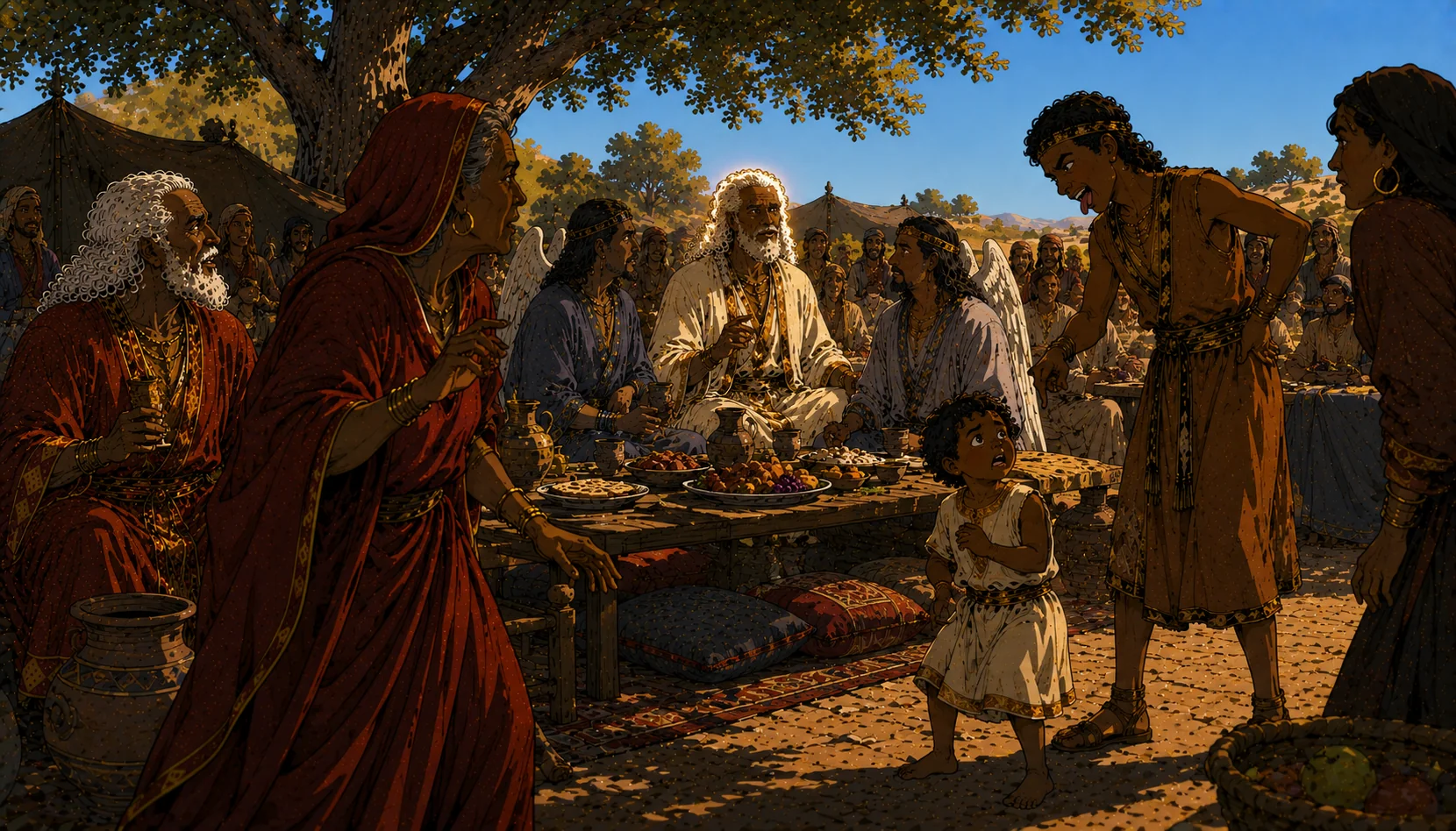
Isaac has been weaned — probably around age two or three — and Abraham makes a great feast in his honor. The covenant child has arrived; the household celebrates. And in the celebration, Sarah sees the son of Hagar the Egyptian, whom she had borne to Abraham, מְצַחֵק — "laughing," "playing," or "mocking."
The word מְצַחֵק (metzachek) is from the same root as Yitzchak's name: צחק (tzachak), to laugh. Ishmael, on the day of Isaac's feast, is doing with his body what Isaac's name does with language: acting in the register of laughter. The Rabbis read the verb intensively — mocking, imitating, usurping the role of the covenant heir at the feast that celebrates him. Some connected it to idolatry, others to sexual immorality. The plain text only says he was metzachek.
What Sarah sees, and what provokes her demand, is Ishmael on Isaac's feast day doing the thing Isaac's name is. She cannot bear it. Whether because it feels like mockery, like a claim, like threat — she acts with full legal force. Her demand is precise and legally complete: גָּרֵשׁ הָאָמָה הַזֹּאת וְאֶת-בְּנָהּ — "expel this slave woman and her son."