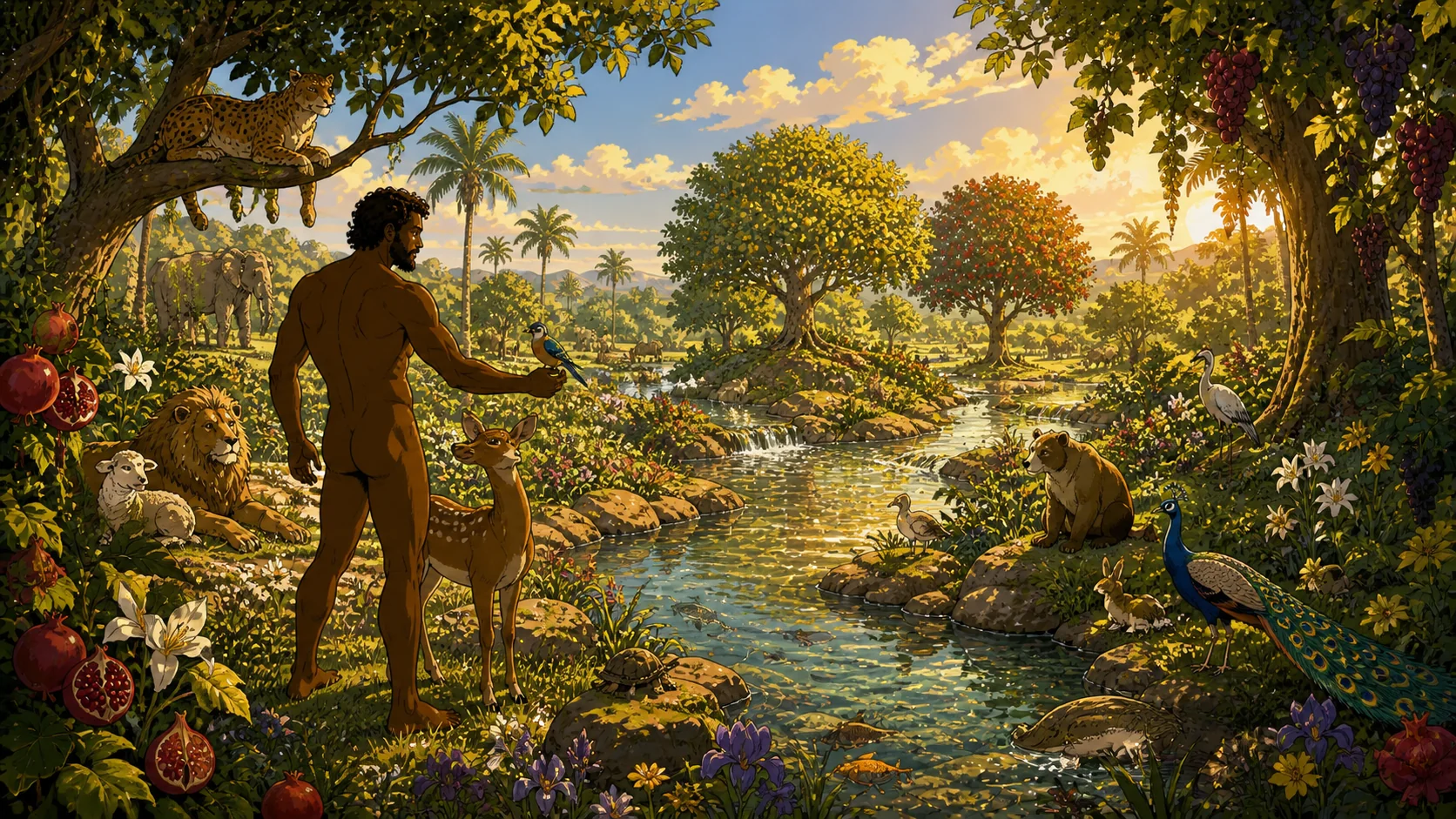
Before any commandment, any law, any covenant — there is a garden. YHWH Elohim plants it מִקֶּדֶם (mikedem), "to the east" or "from ancient times" — the Hebrew word carries both spatial and temporal meaning. Eden is the original address of humanity, the place Elohim prepared before placing the man there. The word "planted" (וַיִּטַּע, vayita) is agricultural, intimate — the God who breathed life into man also tended the ground he would inhabit.
The garden is described as full of every tree pleasing to the eye and good for food, including two trees at its center: the Tree of Life and the Tree of the Knowledge of Good and Evil. The first is freely available; the second is the only prohibition. This is a critical observation — the baseline is abundance, freedom, and blessing. The one restriction is not cruel but is the boundary of trust: will the man honor the one limit that defines the relationship?
Adam is placed in the garden לְעָבְדָהּ וּלְשָׁמְרָהּ — "to work it and to keep it" (v.15). These two verbs — עָבַד (avad, to serve/work) and שָׁמַר (shamar, to guard/keep) — are the same verbs later used for the service of the Levites in the Mishkan (Tabernacle). The garden is a sanctuary, and the man is its priest-caretaker. This is not punishment labor but sacred vocation — to tend what Elohim has made.