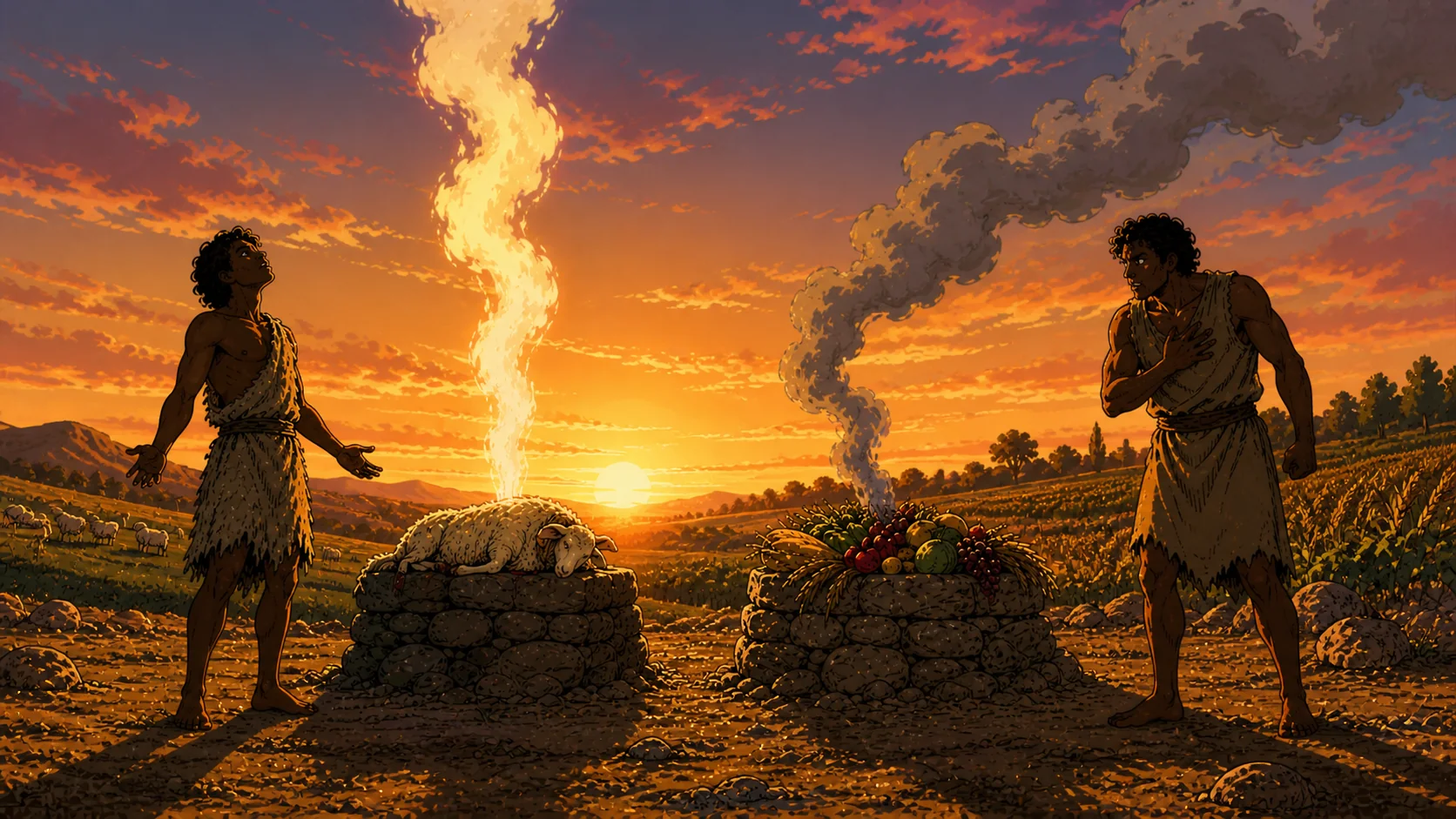
The text does not tell us why Cain's offering was rejected — the Torah leaves the reason in the details. Cain brings מִפְּרִי הָאֲדָמָה (mipri ha'adamah) — "from the fruit of the ground." Abel brings מִבְּכֹרוֹת צֹאנוֹ וּמֵחֶלְבֵהֶן — "from the firstborn of his flock and their fat portions." The contrast is in specificity: Cain brings some; Abel brings the first and the best. The firstborn and the fat were always the portion reserved for Elohim throughout the Torah's sacrificial system. Abel already understood something about holiness that Cain had not yet grasped.
Elohim responds to Cain's rejection not with silence but with compassion and a warning: (4:6–7) "Why are you angry? Why is your face fallen? If you do well, will you not be accepted? And if you do not do well, sin is crouching at the door. Its desire is for you, but you must rule over it". This is extraordinary — Elohim does not abandon Cain after the rejection. He reaches toward him, explains that restoration is still possible, and warns him of the danger lurking. Cain has a choice. He does not have to be destroyed by his anger.
The word חַטָּאת (chata'at) here — "sin" — is feminine in Hebrew, and it is described as crouching at the door like a predator whose desire is for Cain. The same word תְּשׁוּקָה (t'shukah) — desire — was used of the woman's relationship to the man after the fall (3:16). Sin does not merely tempt — it desires to possess. And the command Elohim gives Cain is the same given to every person since: מְשָׁל בּוֹ (m'shol bo) — "rule over it." Mastery of self is the first spiritual battleground.
