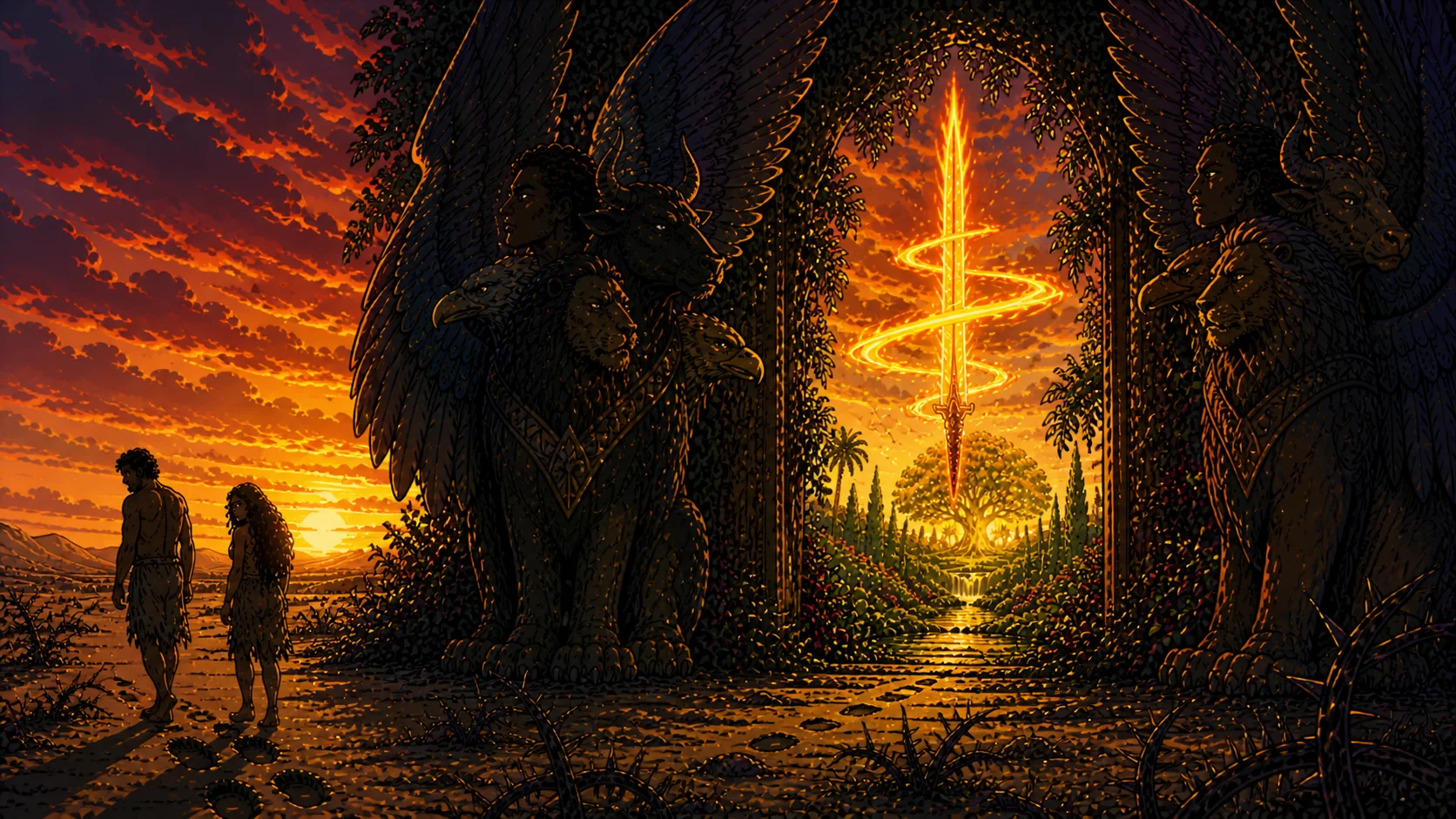
The expulsion from Eden uses two different verbs, and the distinction matters. First: וַיְשַׁלְּחֵהוּ (vay'shal'chehu) — "He sent him out." This is the word used when you send a messenger, dismiss a servant, or release a bird from your hand. Then, sharper: וַיְגָרֶשׁ (vayegaresh) — "He drove him out." This is forceful, even violent — the word used of a husband divorcing his wife, of enemies expelled from a land. The escalation is deliberate. The first is dismissal; the second is banishment.
Before they leave, something remarkable happens that is easy to miss: (3:21) "the LORD God made garments of skin for Adam and his wife, and clothed them". In the middle of judgment, Elohim stoops to clothe the ones He is expelling. The first act of divine provision for fallen humanity is not condemnation — it is tailoring. Something died to cover them. The pattern of blood and covering that runs through the entire Torah begins here, in the garden, before the exile.
The flaming, turning sword — לַהַט הַחֶרֶב הַמִּתְהַפֶּכֶת — is extraordinary. It spins in every direction, guarding not one approach but all approaches. There is no path around it. And yet the Torah does not say the garden was destroyed, only that its entrance was sealed. Eden remains. The tree of life remains. The way back is guarded, not eliminated. The entire arc of Israel's story — from Sinai to the Temple to the exile and return — can be read as Israel's journey back toward that sealed gate, toward life restored, toward the presence of Elohim once more accessible.