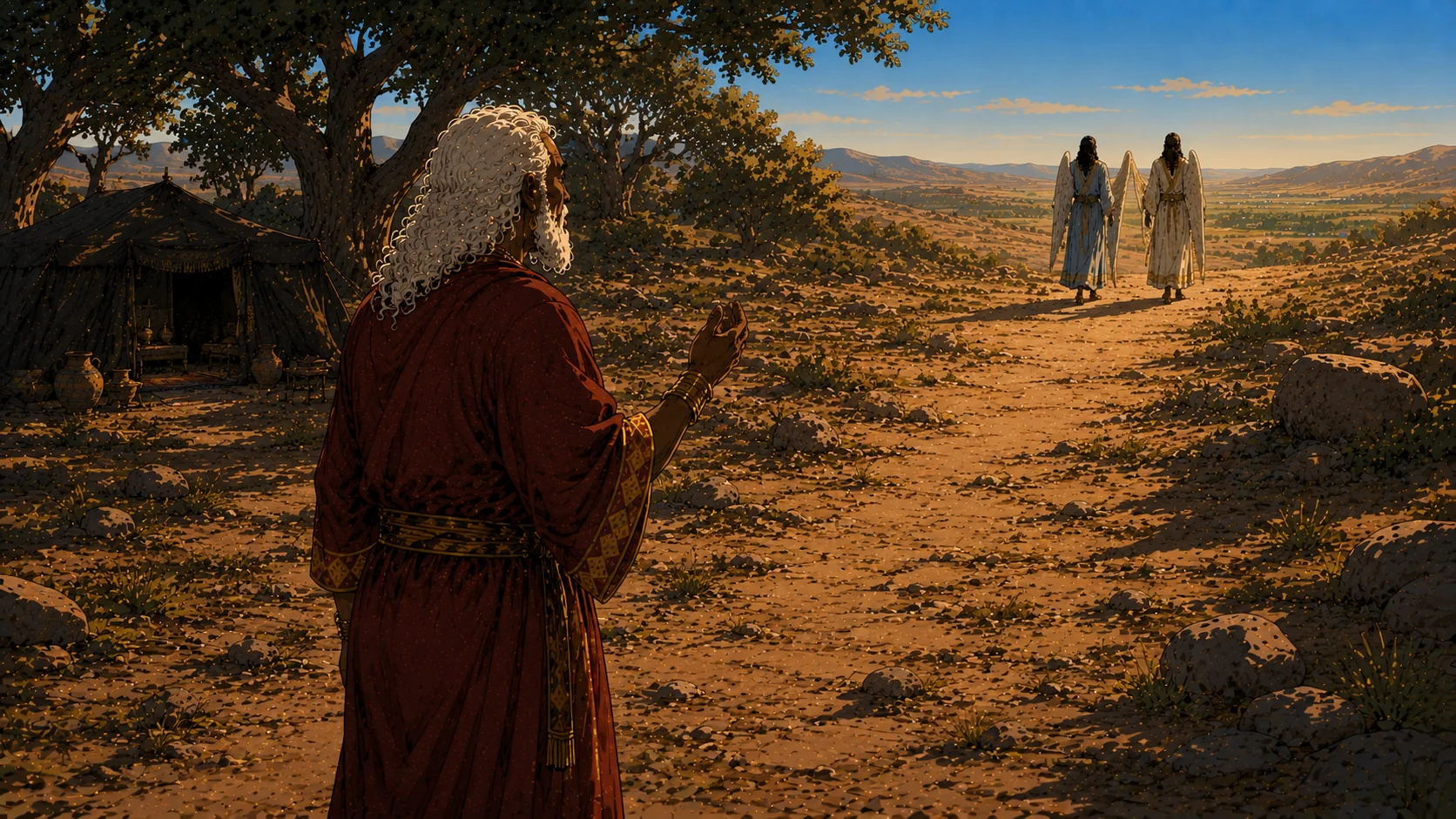
Genesis 18:22 is a single verse between the announcement and the intercession — and it is one of the most theologically loaded verses in the chapter. The three visitors have eaten. They have declared that Sarah will bear a son. Now they move. Two of the men turn toward Sodom. They begin to walk.
וְאַבְרָהָם עוֹדֶנּוּ עֹמֵד לִפְנֵי יְהוָה — "But Abraham still stood before Yah." The word עוֹדֶנּוּ (odenu) means still, yet, while yet. He has not moved. The visitors are already in motion toward the city that will be destroyed. Abraham's feet have not left the ground where he stood to serve them. He is standing — not walking, not sitting — standing. In the posture of a servant before a master, a petitioner before a judge.
The Masoretic tradition marks this as one of the eighteen tikkune soferim — corrections of the scribes — places where an original text was considered theologically too bold and was softened. The proposed original reading: "and Yah still stood before Abraham." Meaning it was Yah who lingered, who waited to see whether the covenant man would speak. Whether that tradition is accurate, the theological weight is the same: this is a pause before judgment. A moment when intercession becomes possible. A moment when Abraham could speak — and does.