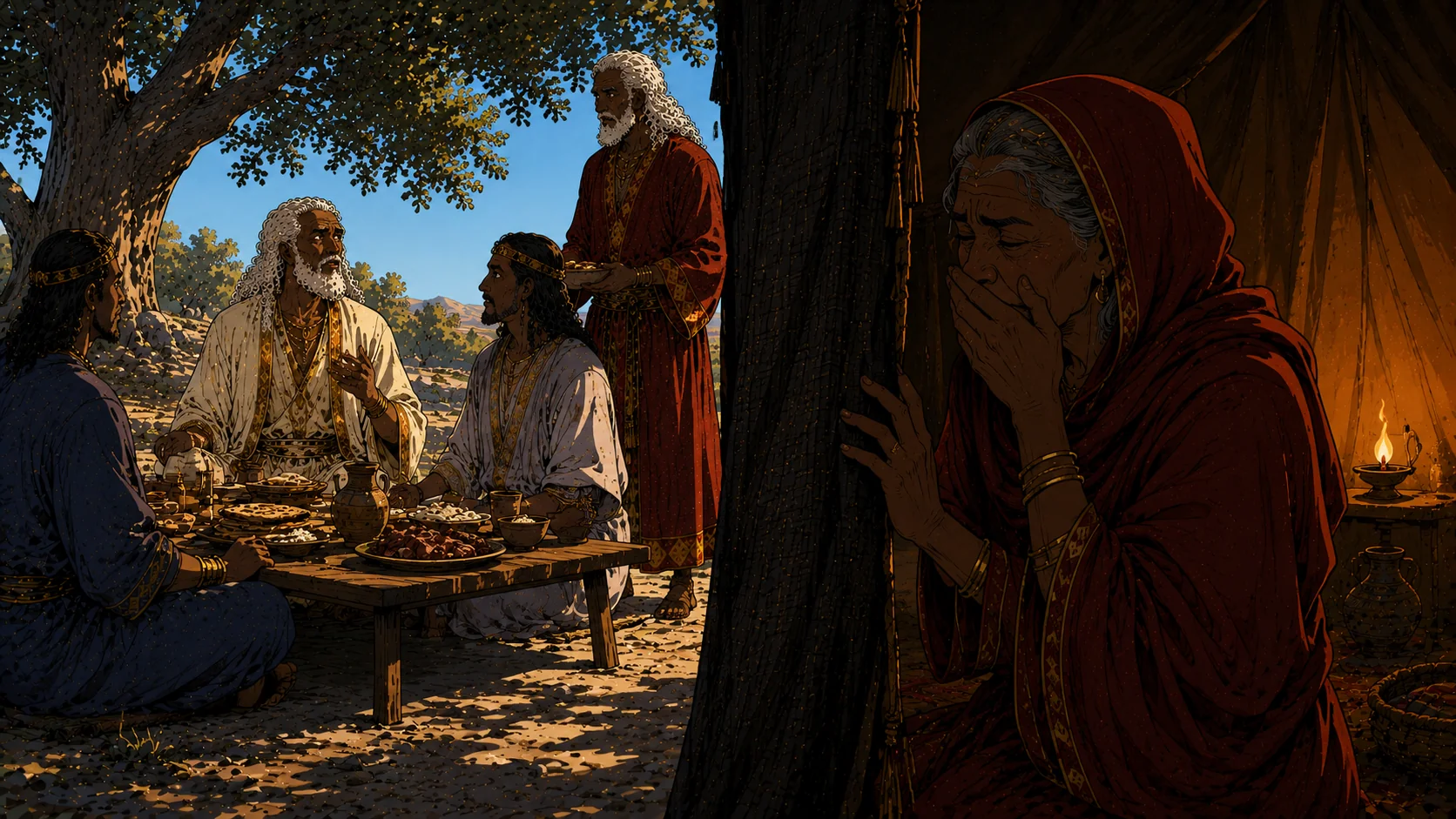
The scene at Mamre has shifted. The calf has been eaten, the cakes consumed. Now one of the three visitors speaks the announcement that the whole narrative has been building toward: At this time next year, Sarah your wife will have a son. The words land — and Sarah, behind the tent flap, hears them.
She laughs. The Hebrew is precise: וַתִּצְחַק שָׂרָה בְּקִרְבָּהּ (vatitzchak Sarah b'kirbah) — she laughed within herself. Not aloud. Not publicly. Inside. This is a private laugh, a laugh she did not intend anyone to hear — a self-protective laugh that comes from decades of hope deferred and a body that no longer holds any biological promise. Her reasoning is stated plainly: "After I am worn out, shall I have pleasure? And my master is old."
But it was heard. Yah asks Abraham: "Why did Sarah laugh, saying: Shall I truly bear a child, now that I am old?" And then comes the covenant question — הֲיִפָּלֵא מֵיְהוָה דָּבָר (hayipale me'Adonai davar) — "Is anything too wondrous for Yah?" It is addressed not to Abraham but to a private laugh in a tent. Yah heard what Sarah did not speak. He answers it. "At the appointed time I will return to you, and Sarah will have a son."
Sarah denies laughing. לֹא צָחַקְתִּי — "I did not laugh." The denial comes from fear. And Yah's answer: לֹא כִּי-צָחַקְתְּ — "No, but you did laugh." He does not shame her. He simply names what happened. The laughter is on the record — and it will be on the record forever, because the child who comes from this moment will carry that laughter as his name: יִצְחָק (Yitzchak) — He laughs. He will laugh.