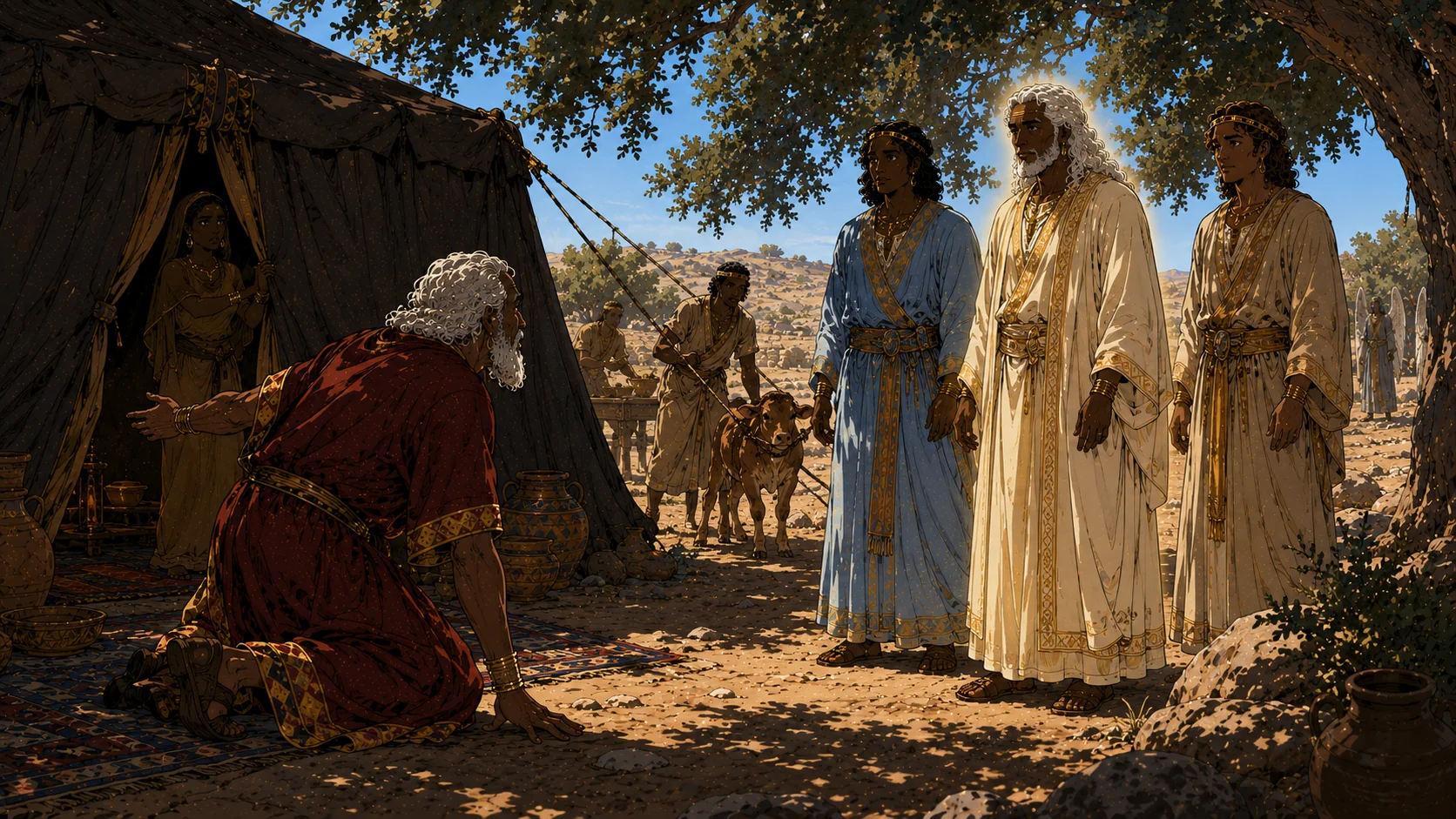
The scene is domestic before it is divine: Avraham sitting at the door of his tent in the heat of the day. The oak trees of Mamre provide shade. He is resting — and then he looks up. Three men are standing before him. The text moves with extraordinary economy: "he saw them, he ran to meet them, he bowed to the earth." The man who is ninety-nine years old, days after his circumcision, runs to strangers in the midday heat. The urgency of his welcome is the urgency of hospitality raised to the level of covenant practice. In the ancient world, a man who welcomed strangers was a man who understood that the divine moved through the ordinary road.
The hospitality Avraham offers is lavish and personal. He runs to the tent, he runs to Sarah, he runs to the herd. Every action is described with urgency and abundance: (18:6–7) "Sarah hastened," "he ran to the herd," "the servant hastened to prepare it." The meal is not ceremonial; it is flesh and cakes and curds and milk — physical, generous, immediate. Avraham stands beside them under the tree while they eat. This is not a host who seats his guests and withdraws; it is a man who attends the meal himself, who serves, who honors with his presence as much as with his provision. The three men have brought an announcement that will change everything. Avraham feeds them first.
The question of who the three men are is one of the great interpretive puzzles of Genesis. The text says YHWH appeared (18:1); the men appear (18:2); Avraham addresses one as "my lord"; and by 18:22 "the men" depart toward Sodom while "Avraham remained standing before YHWH." The tradition reads the three as manifestations of the divine presence, or as two angels accompanying YHWH, or as the messenger identity of El expressing itself through created forms. What is clear is that the announcement comes from these three, that one of them is identified with YHWH's direct speech, and that the encounter at Mamre is the moment the promise of Yitzchak becomes specific, dated, and certain: "at this season, in about a year, Sarah your wife shall have a son." The laughter of disbelief will become, in one year's time, the laughter of fulfillment — for Yitzchak means "he laughs."