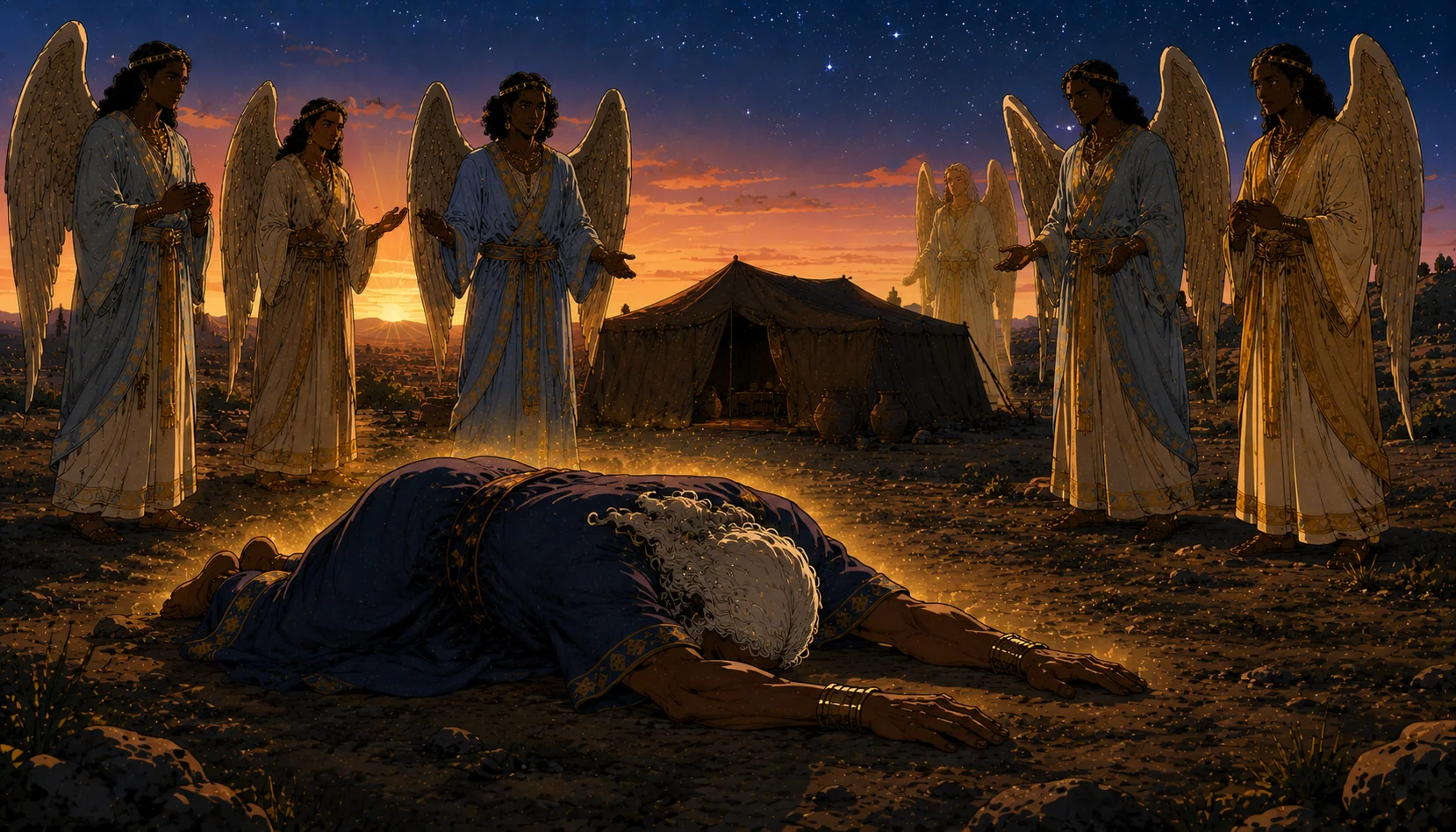
Thirteen years of silence. Ishmael is born in chapter 16; chapter 17 opens with Avram at ninety-nine. Between them: nothing recorded. Thirteen years in which Avram presumably believed that Ishmael was the promised son, that the covenant would pass through the boy he loved, that the long delay was finally resolved. Then YHWH appears again. His first words are not about Ishmael: (17:1) "Walk before me and be whole/blameless (תָּמִים, tamim)." The covenant has not been interrupted by thirteen years of silence; it has been waiting for the moment of its deepest disclosure. What follows is the chapter of the covenant of circumcision — the word brit (covenant) appearing thirteen times, inscribing the number of Ishmael's age and the years of silence into the structure of the text itself.
The name change is the heart of the chapter. Avram — אַבְרָם, "exalted father" — becomes Avraham — אַבְרָהָם, "father of a multitude." The letter added is heh (ה), the fifth letter of the Hebrew alphabet, the same letter that appears in the divine name YHWH. The tradition reads this as YHWH inscribing a fragment of His own name into the patriarch's identity: the man becomes a bearer of the divine signature. The addition is not merely phonetic; it is ontological. He is no longer Avram the man of Haran and Canaan. He is Avraham, the father of nations — a title larger than one family, one land, or one people. Sarai likewise receives the heh: she becomes Sarah, her name given the same divine addition.
The covenant of circumcision is given in this chapter as the sign in the flesh — the mark of covenant membership placed on every male in the household, including servants and those not born of Avraham's line. Circumcision is not a racial marker but a household one; it is the sign of belonging to the covenant community. Ishmael is circumcised on the same day as Avraham (17:26). The sign is inclusive of all who dwell within the covenant household — while the promise of the specific line runs through the son who has not yet been born. YHWH names him in this chapter: his name will be Yitzchak, and the covenant will be established with him. Thirteen years of Ishmael, and the name of the promised son is finally spoken aloud.
