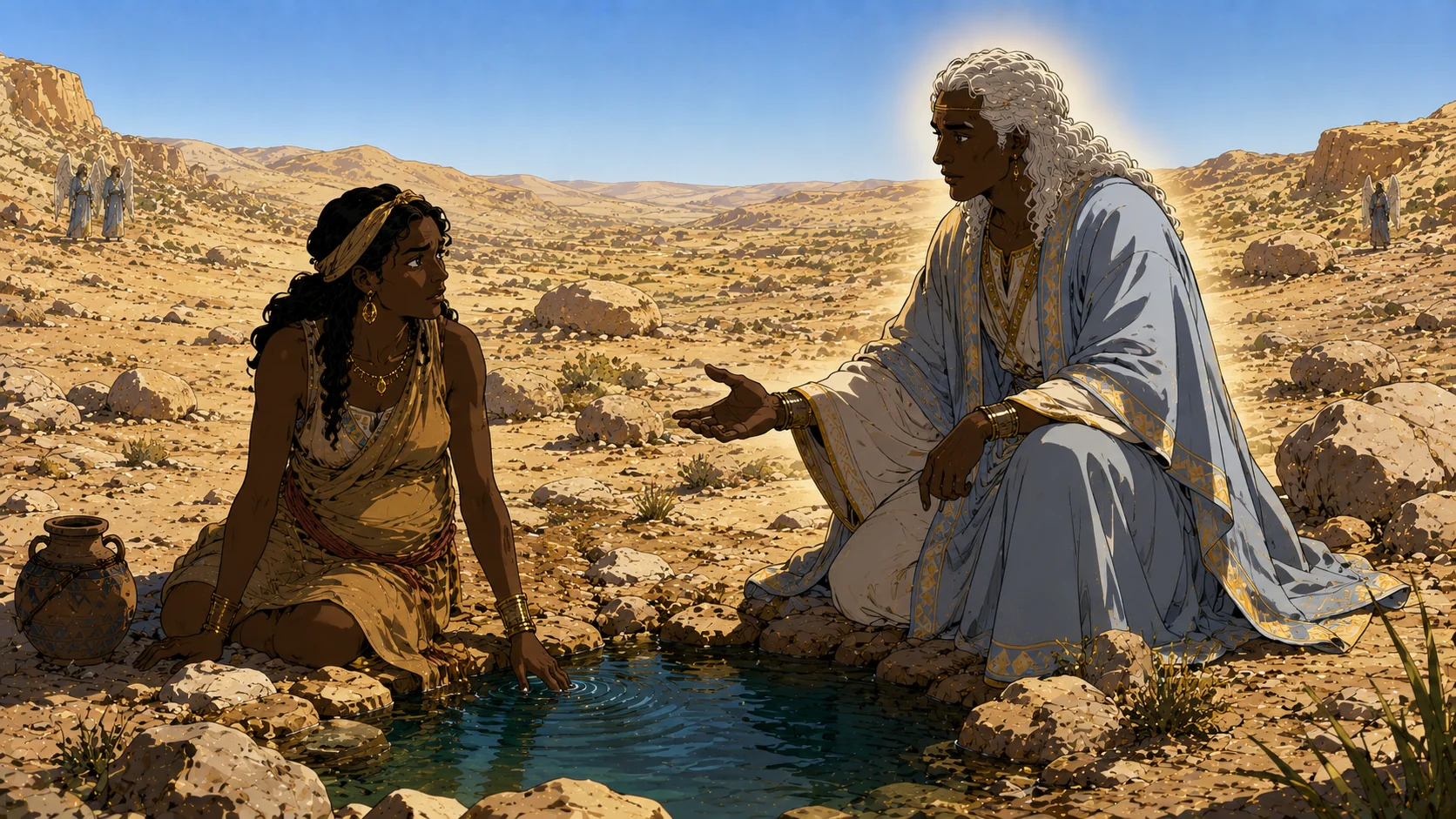
Treated harshly by Sarai after Avram returns her to Sarai's authority, Hagar flees. She runs south toward Shur — on the road toward Egypt, toward home. She is a pregnant Egyptian woman in the wilderness, running away from the household of the man who will become the father of nations. The angel of YHWH finds her at a spring on that road. The word מָצָא (matza) — found, discovered — is used: YHWH did not wait for Hagar to seek Him. He sought her. The one who is pursued, who is running, who has no standing in the covenant household, is the one the angel tracks down in the desert.
The angel's first question is not a command but a question: "Where did you come from, and where are you going?" This is not a request for navigation — the angel knows. It is the question of identity and direction that only the one addressed can answer. The question holds Hagar in place: you are here, between a past you fled and a future you don't have. The angel tells her to return — and then speaks one of the most remarkable announcements in Genesis: you will bear a son, name him Ishmael (אֵל יִשְׁמַע — God hears), and he will be a wild man, free as the desert, hand against everyone and everyone's hand against him. He will live in defiance of all — and he will live. The promise to Hagar is not the Abrahamic covenant. But it is a promise, spoken directly to her, before any Israelite has ever received such a personal word.
Hagar returns. She bears Ishmael. Avram is eighty-six years old. The return is obedience, not defeat — she hears the divine word and acts on it. The Torah follows her return with the simple notation of Ishmael's birth and Avram's age, and then moves on. But the weight of the Beer Lahai Roi encounter lingers in the text. It will resurface when Hagar is expelled a second time (21:14–19) and YHWH again hears the cry of the child in the wilderness. The pattern is established: those outside the formal covenant community are not outside YHWH's sight. The God who found Hagar at a wilderness spring keeps finding her.
