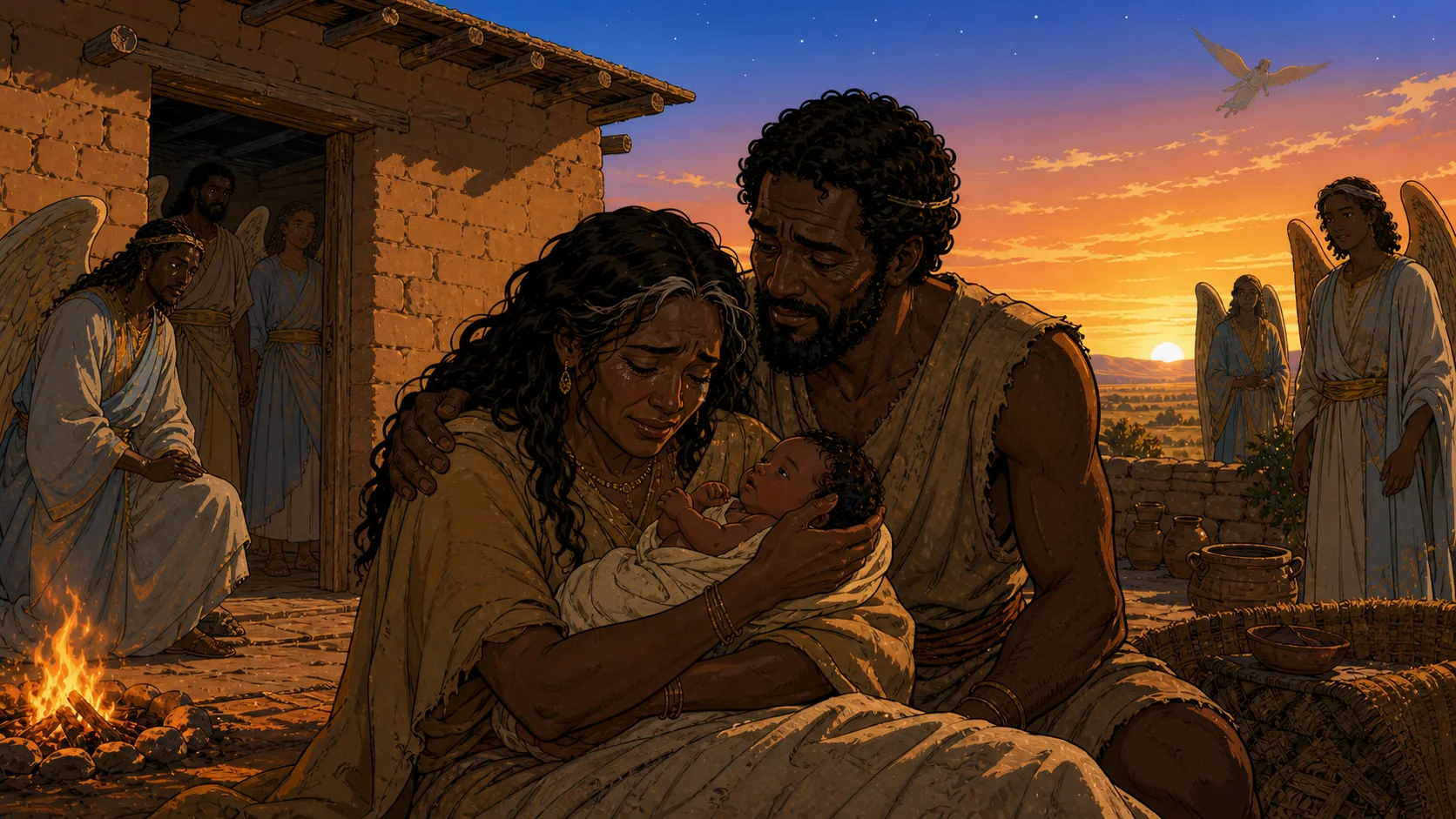
Between the expulsion from Eden and the birth of Seth, Genesis 4 traces the line of Cain — a lineage of builders, metalworkers, musicians, and eventually Lamech, who boasts of killing a young man and claims seventy-seven-fold vengeance. Human civilization is advancing. Violence is escalating. And then, quietly, the text pauses: "Adam knew his wife again, and she bore a son." From the ashes of Abel and the exile of Cain, a new line begins.
The phrase זֶרַע אַחֵר (zera acher) — "another seed" — carries tremendous weight. This is the first time since Genesis 3:15 — where Elohim promised enmity between the seed of the woman and the seed of the serpent — that the word "seed" (זֶרַע, zera) reappears in this context. Seth is that continuing seed. The line of promise, the covenant lineage that will eventually lead through Noah, through Avraham, through Yitzchak, through Ya'akov, through Yehudah — it runs through Seth, not Cain.
The chapter closes with a statement that has echoed through millennia: "And to Seth also a son was born, and he called his name Enosh. At that time, people began to call upon the name of YHWH." The birth of Seth does not just restart a line — it restarts worship. In the midst of a world trending toward violence and self-exaltation, a remnant calls on the name of Elohim. This is the pattern of Scripture: when the dominant culture falls into darkness, there is always a Seth, a Noah, a remnant that calls on the Name.