The world that Seth's generation had called on the name of YHWH is now unrecognizable. The earth is filled with חָמָס (chamas) — violence. The word is the same used throughout the prophets for oppression and injustice. Every inclination of the thoughts of every human heart was (6:5) "only evil continually". Elohim is grieved. He determines to start again. But not without a remnant.
Noah is described as צַדִּיק תָּמִים (tzadik tamim) — righteous and blameless — in his generation. The qualifier "in his generation" has been debated for millennia: was Noah only relatively righteous, or genuinely so? The Torah does not speculate; it states the fact and moves forward. Noah walked with Elohim (6:9) — the same language used of Enoch (5:22). Whatever the world around him was doing, Noah was walking in the opposite direction.
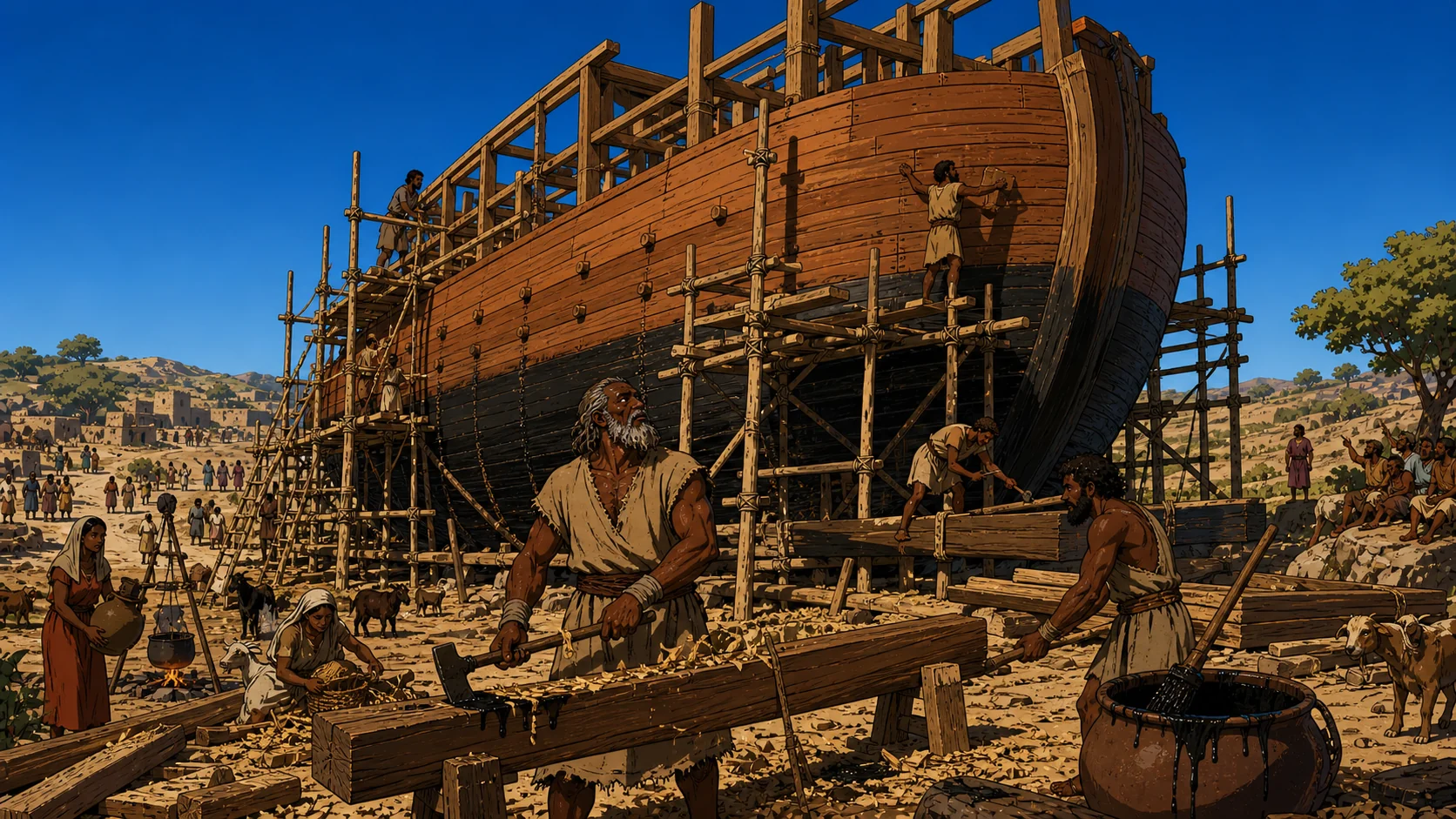
Elohim's instructions are precise and detailed — dimensions, materials, rooms, a window, a door. The ark is not a vague lifeboat; it is a carefully engineered vessel built to specification. And the closing verse of this passage is one of the most powerful in Genesis: vaya'as Noach k'chol asher tzivah oto Elohim ken asah — "Noah did according to all that God commanded him — so he did." Not a word of objection. Not a question about whether this would work or whether his neighbors would mock him. Simple, total, unqualified obedience in the face of the incomprehensible. That is the righteousness that saves.
