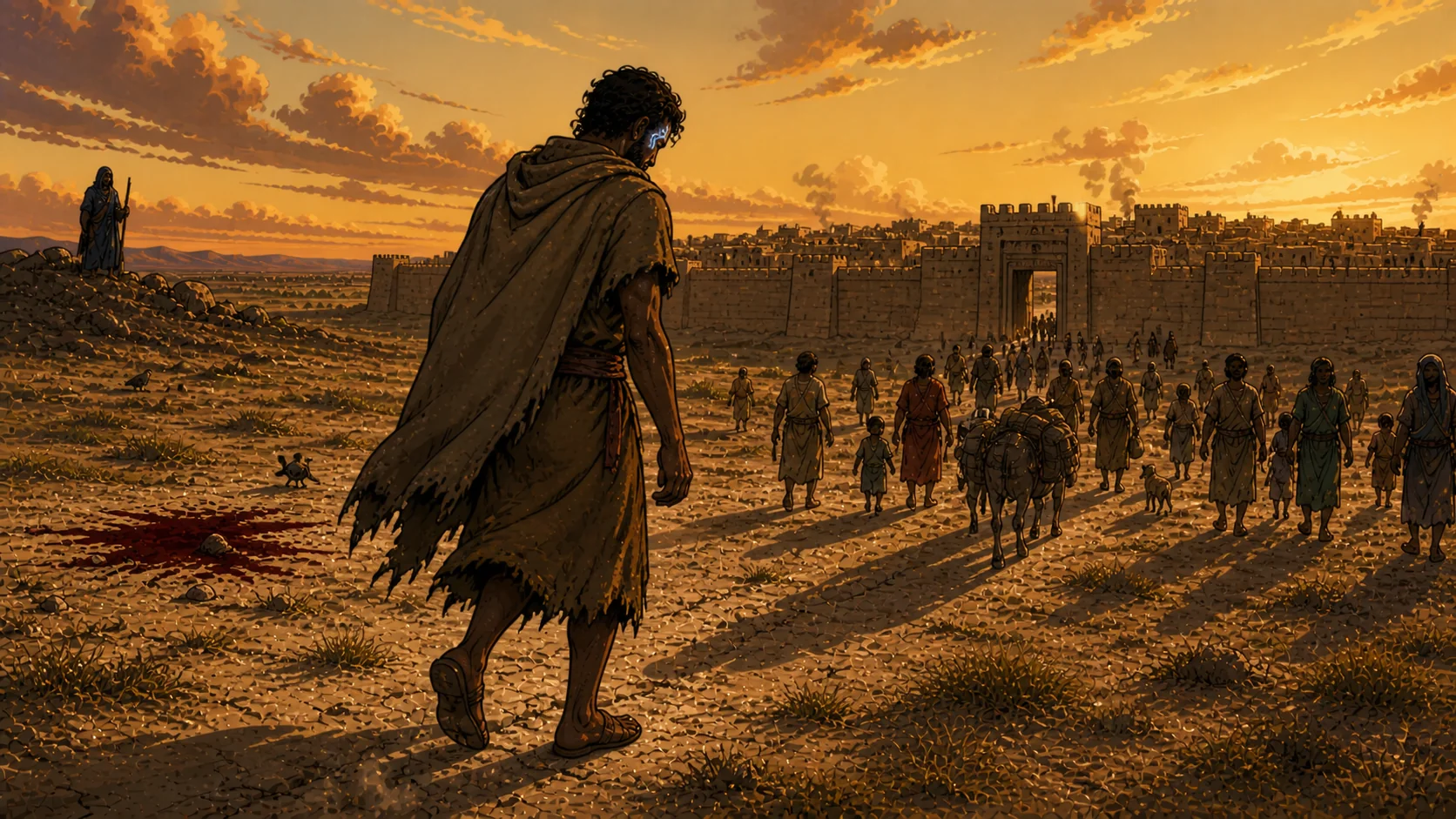
The symmetry of Cain's punishment is precise. He was a worker of the ground — his identity, his offering, his whole livelihood came from the earth. And now the earth itself rejects him. The very אֲדָמָה (adamah) that opened its mouth to receive Abel's blood now closes itself to Cain's labor. The thing he clung to instead of Elohim becomes the thing that abandons him. Divine judgment often follows this pattern: the false god fails first.
Cain's response is not repentance — it is protest: (4:13) "My punishment is too great to bear!". And yet Elohim does something unexpected: He marks Cain with a sign of protection. (4:15) "Whoever kills Cain, vengeance shall be taken on him sevenfold". Even after the first murder, even for the first murderer, Elohim acts to preserve life. The mark of Cain is not a mark of shame — it is a mark of divine protection. Judgment and mercy exist simultaneously in Elohim's dealings with humanity.
Cain goes to live in the land of Nod — which means "wandering" — east of Eden, further from the presence of Elohim. The eastward direction is significant throughout Genesis: it is always the direction of exile (Eden's eastern gate is where the cherubim stand; Babel is built on the eastern plain). And yet even in Nod, Cain builds a city and names it after his son. Life goes on, even in judgment. The restless wanderer becomes a builder — but what he builds, without rootedness in Elohim, is ultimately a monument to displacement.
