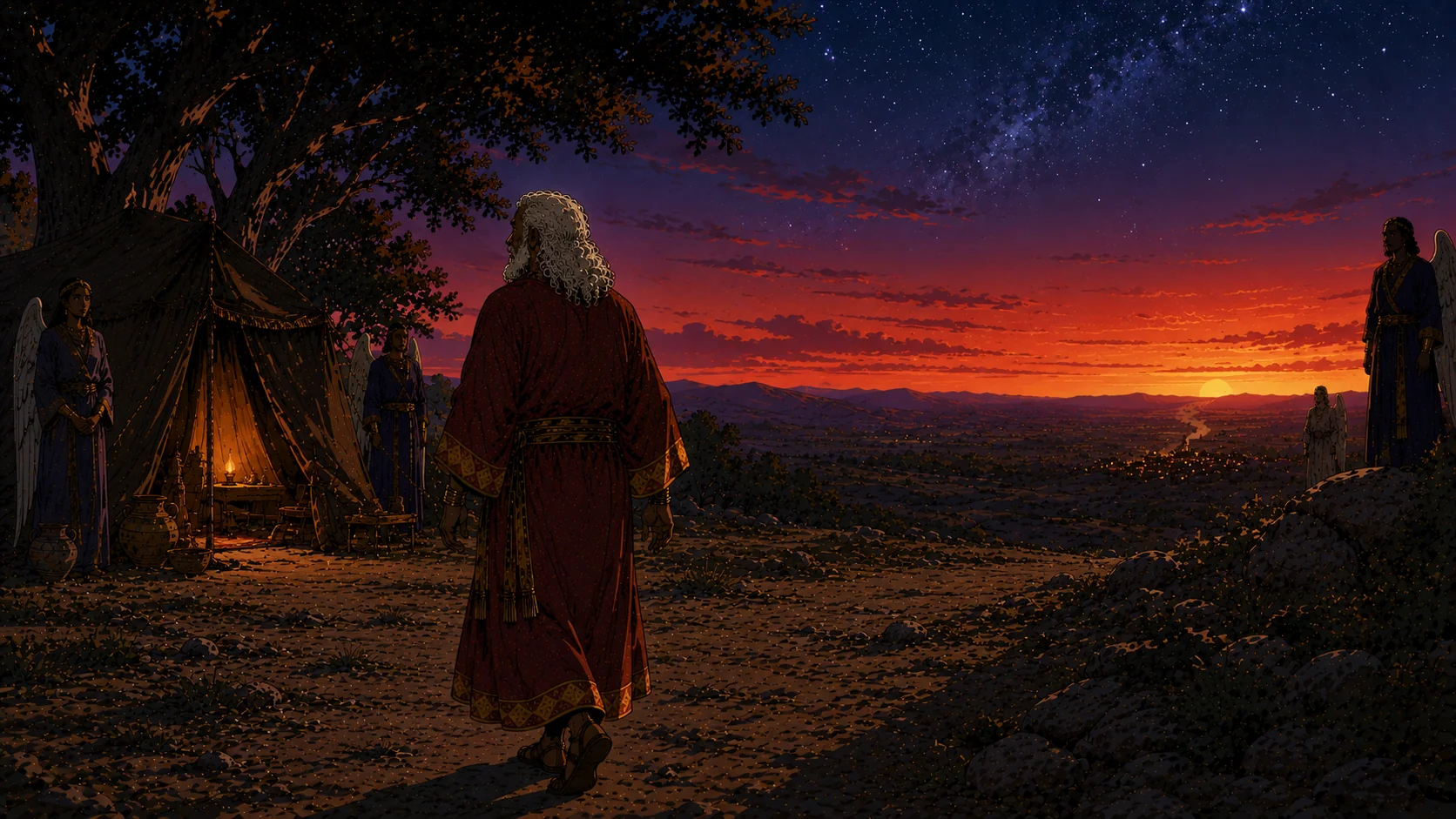
Genesis 18:33 is the quietest verse in the chapter. Six exchanges have taken place. The number has descended from fifty to ten. The terms have been set. And then two sentences close the scene.
The verb כִּלָּה (killah) means finished, completed, concluded — not abandoned, not cut short. When the conversation was complete, when everything that needed to be said had been said, Yah departed. The departure is orderly. The terms hold.
Then: וְאַבְרָהָם שָׁב לִמְקוֹמוֹ — "and Abraham returned to his place." The same verb שָׁב (shav) — returned — appears in Genesis 22:19, after the Akedah: "And Abraham returned to his young men." Both times he has done something irreversible in covenant and returns. Life continues on the other side of the threshold.
The next morning, Abraham will rise early and go to the place where he stood before Yah. He will look toward Sodom and Gomorrah. He will see the smoke rising like the smoke of a furnace. He will see the result of the conversation he just had, the negotiation that could not prevent what follows. The intercessor returns to his place and waits for the morning.