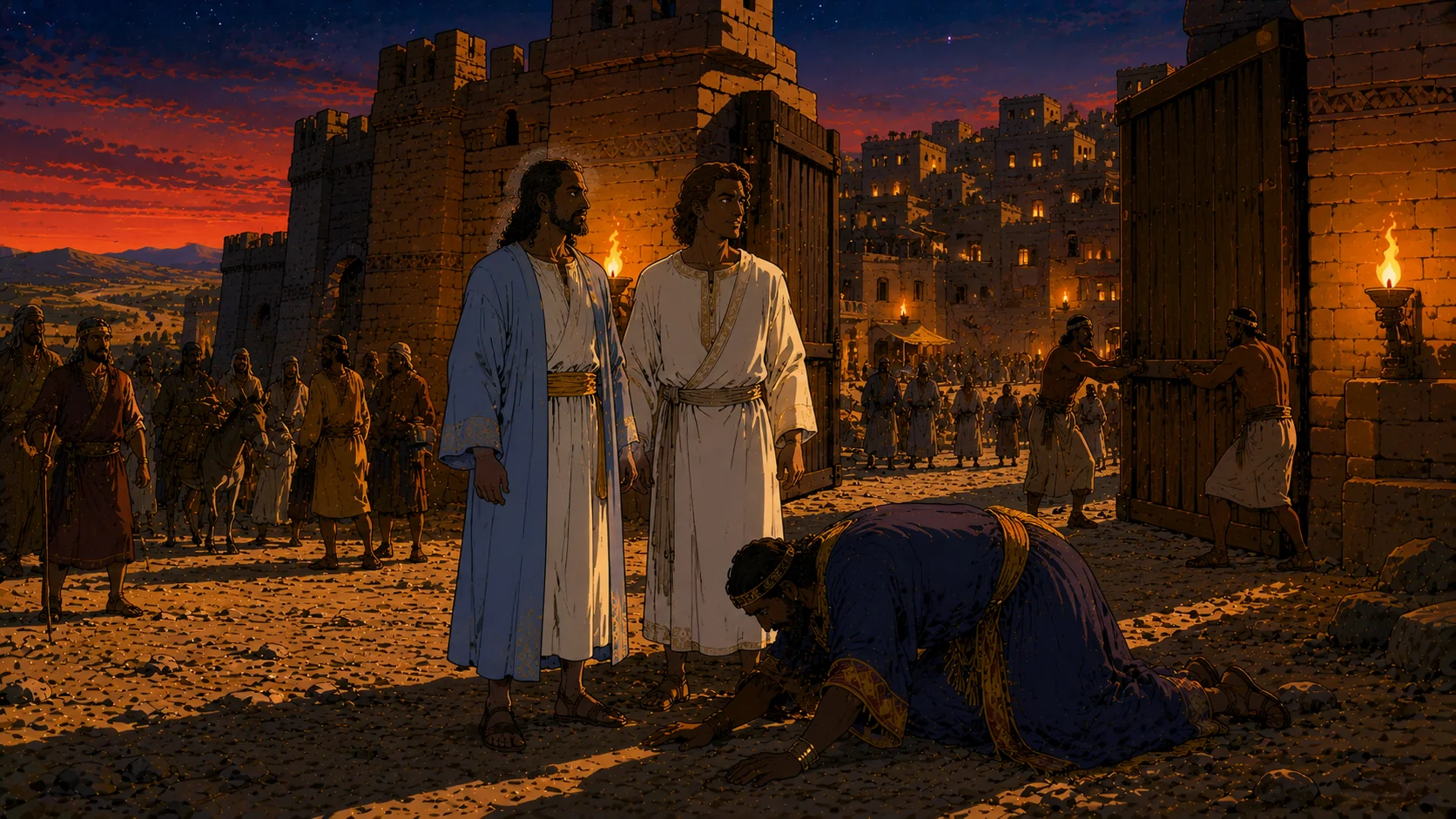
The Sodom narrative begins with geography and timing. The two angels arrive at the city gate — בָּעֶרֶב (ba'erev), in the evening. Hours earlier, at midday, they had been at Abraham's tent. The contrast is deliberate: the heat of the day versus the fall of evening, the open tent in the countryside versus the walled gate of a city, the man who ran to meet them versus the man who is simply sitting there when they arrive.
Lot is at the gate. In the ancient world, the city gate was the seat of civic life — where judges sat, commerce was conducted, disputes were resolved, contracts witnessed. Lot, who arrived at Sodom as a wandering shepherd, has positioned himself at the center of civic authority. He has become a citizen. He sits at the gate of the city that will not survive the night.
The angels' initial response to his invitation is to decline: "We will sleep in the square tonight." At Mamre, Abraham's guests had accepted immediately. Here they resist. Lot must press them greatly (וַיִּפְצַר־בָם מְאֹד) before they agree to come to his house. Why? Perhaps it is a test of his hospitality's persistence. Perhaps it is a literary signal: this arrival is not like the one at Mamre. The city that awaits them is not a household of covenant.
