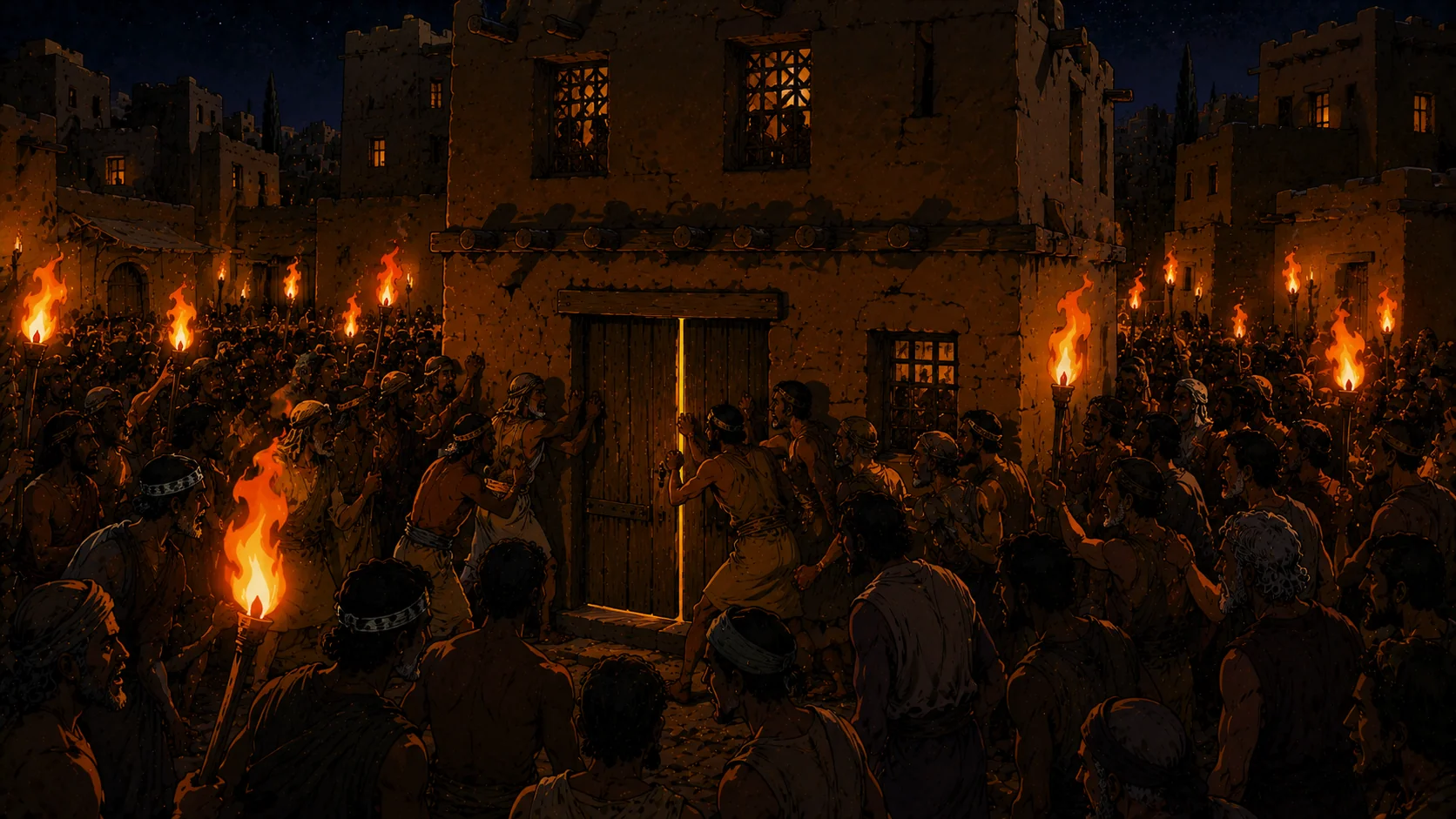
Genesis 19:4 arrives with terrible immediacy. The angels have barely entered Lot's house when the mobilization begins. There is no morning, no time to settle — the text says "before they lay down." The city responds to the presence of strangers within hours. Its network of information and appetite is fast.
The description is total: מִנַּעַר וְעַד־זָקֵן כָּל־הָעָם מִקָּצֶה — "from young to old, all the people from every quarter." The phrase מִקָּצֶה means from the extremities, from every end. No corner of the city is exempt, no generation is uncorrupted. There are no young men holding a different ethic, no elders wise enough to intervene. Young and old stand outside Lot's door and make the same demand: bring them out to us, that we may know them.
The verb יָדַע (yada) — "to know" — has a range of meanings in the Hebrew Bible, from intellectual knowledge to intimate union. In context, given Lot's response, given the breadth of the destruction, the demand is coercive and sexual. What this scene reveals is not merely private vice but a mobilized, communal culture. Sodom is not a city with some wicked people. It is a city that organizes as a unit around wickedness.