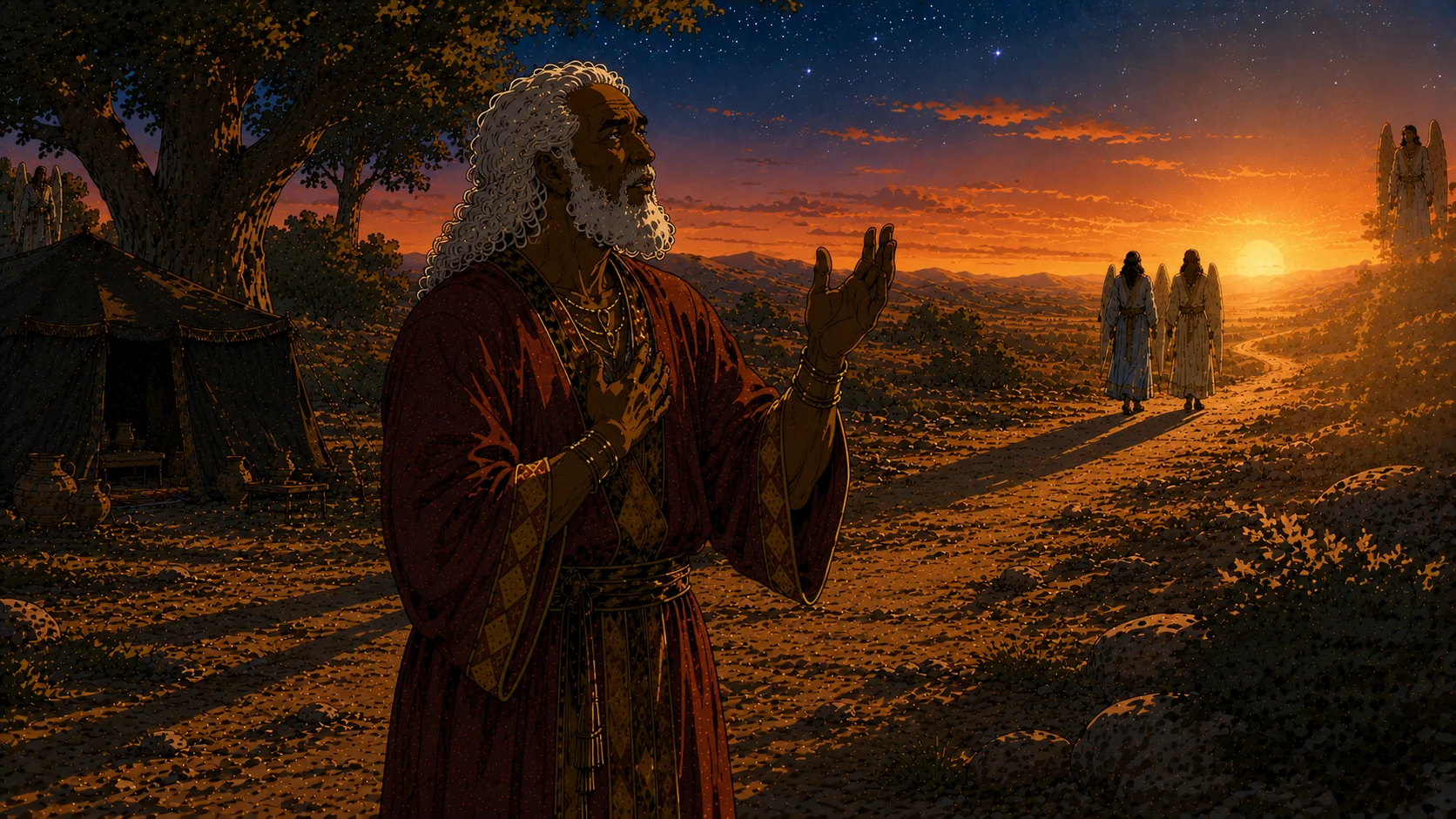
The descent continues: forty to thirty, thirty to twenty, twenty to ten. Abraham has been in this negotiation long enough that his formula is now worn smooth: "Please do not let my Lord be angry that I speak." He is managing the relational tension of returning again and again, aware that each ask is more audacious than the last, but continuing anyway.
He stops at ten. Not five. Not one. The Sages asked why, and one answer became traditional: ten is the minimum quorum for a minyan — the smallest number that constitutes a congregation of worship. Below ten, you no longer have a community; you have isolated individuals. Abraham was reasoning that if there were not even enough righteous people to form a prayer community, the city had lost its essential covenantal structure. There was nothing left to save as a city.
The other answer: Abraham knew there were not ten. He may have counted Lot's household, added sons-in-law, reached something close to ten — and stopped because he was afraid to ask lower and receive the final no. The man who argued boldly for fifty grows quieter as the numbers fall. At ten, he reaches the edge of what he can hold in faith. And Yah closes the negotiation with the same assurance given at fifty: I will not destroy for the sake of ten found there.