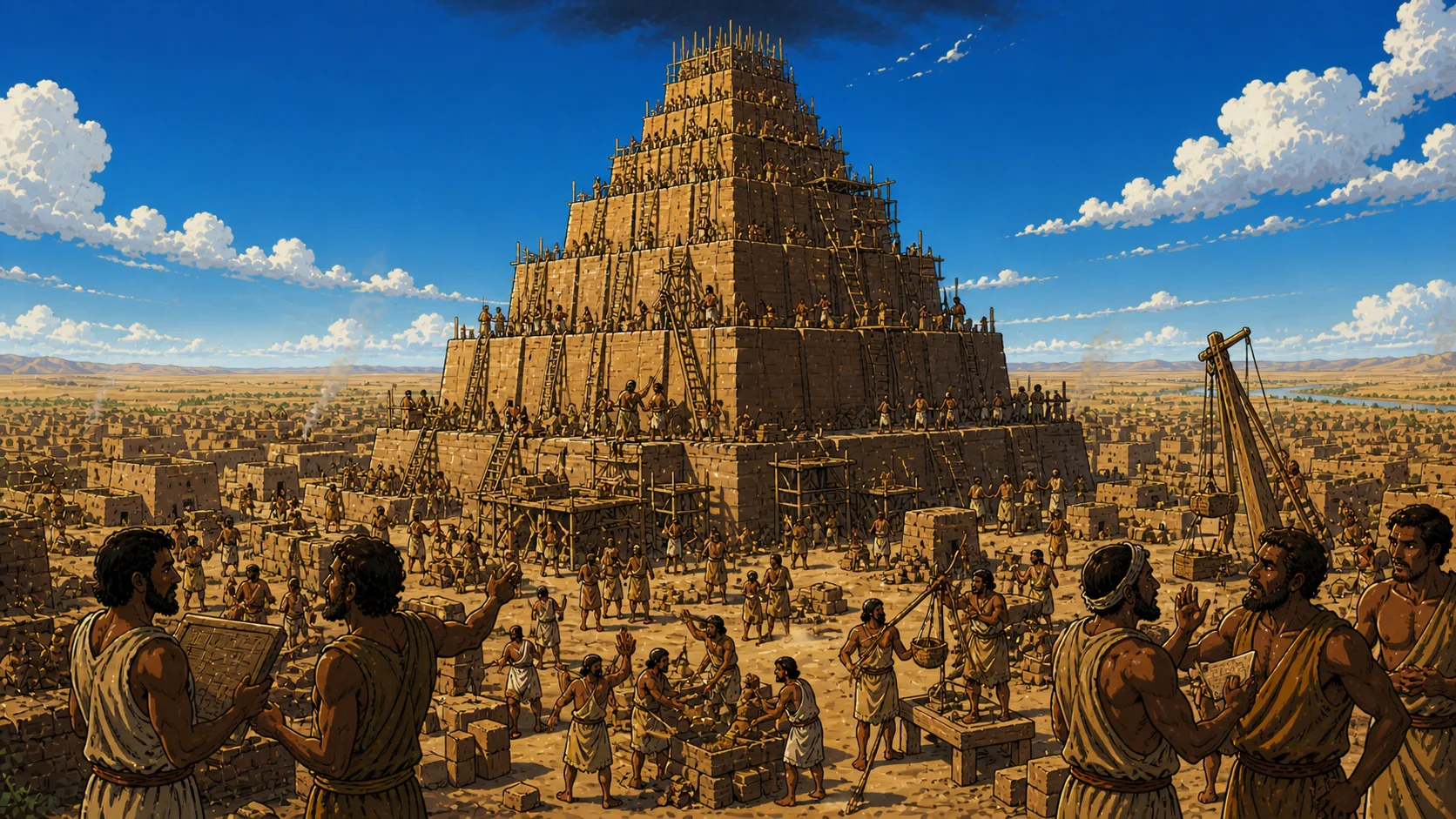
After the flood, Elohim told Noah's descendants to fill the earth (9:1). They refused. Instead, they migrated eastward — the direction of exile in Genesis — to the plain of Shinar, and decided to consolidate rather than scatter. The project is breathtaking in its ambition: a city anchored by a tower whose top reaches the heavens. One language. One people. One name. The dream of collective self-deification is not born in evil; it is born in fear. "Lest we be scattered" — they want permanence, security, transcendence on their own terms.
The irony the text establishes is almost comedic. They want a tower with its top "in the heavens" — yet YHWH must come down even to see it. (11:5) "YHWH came down to see the city and the tower that the sons of men had built". Their greatest achievement, the tower that would pierce the sky, requires Elohim to condescend just to look. The gap between human ambition and divine perspective is total. What humanity calls a tower reaching heaven, heaven calls something worth stooping to examine.
Elohim's response sets a precedent for all human empire: (11:6) "If as one people speaking the same language they have begun to do this, then nothing they plan to do will be impossible for them". This is not a statement of threat — it is an observation about the nature of unified human will divorced from Elohim. The confusion of languages is not punishment in the ordinary sense; it is a structural reset, a mercy that prevents humanity from ascending into a worse condition than the flood produced. Scattered, humanity will stumble into Avraham. Together, they would have built a world without Him.
