Fifty days after the Passover — the period that will become the counting of the Omer — the nation of Israel stands at the base of Sinai. They have been brought out of Egypt to this specific mountain, to this specific moment. Elohim told Moshe at the burning bush: (3:12) "When you have brought the people out of Egypt, you shall worship Elohim on this mountain". The Exodus was always heading here. Freedom was not the destination — it was the path. Sinai is the destination.
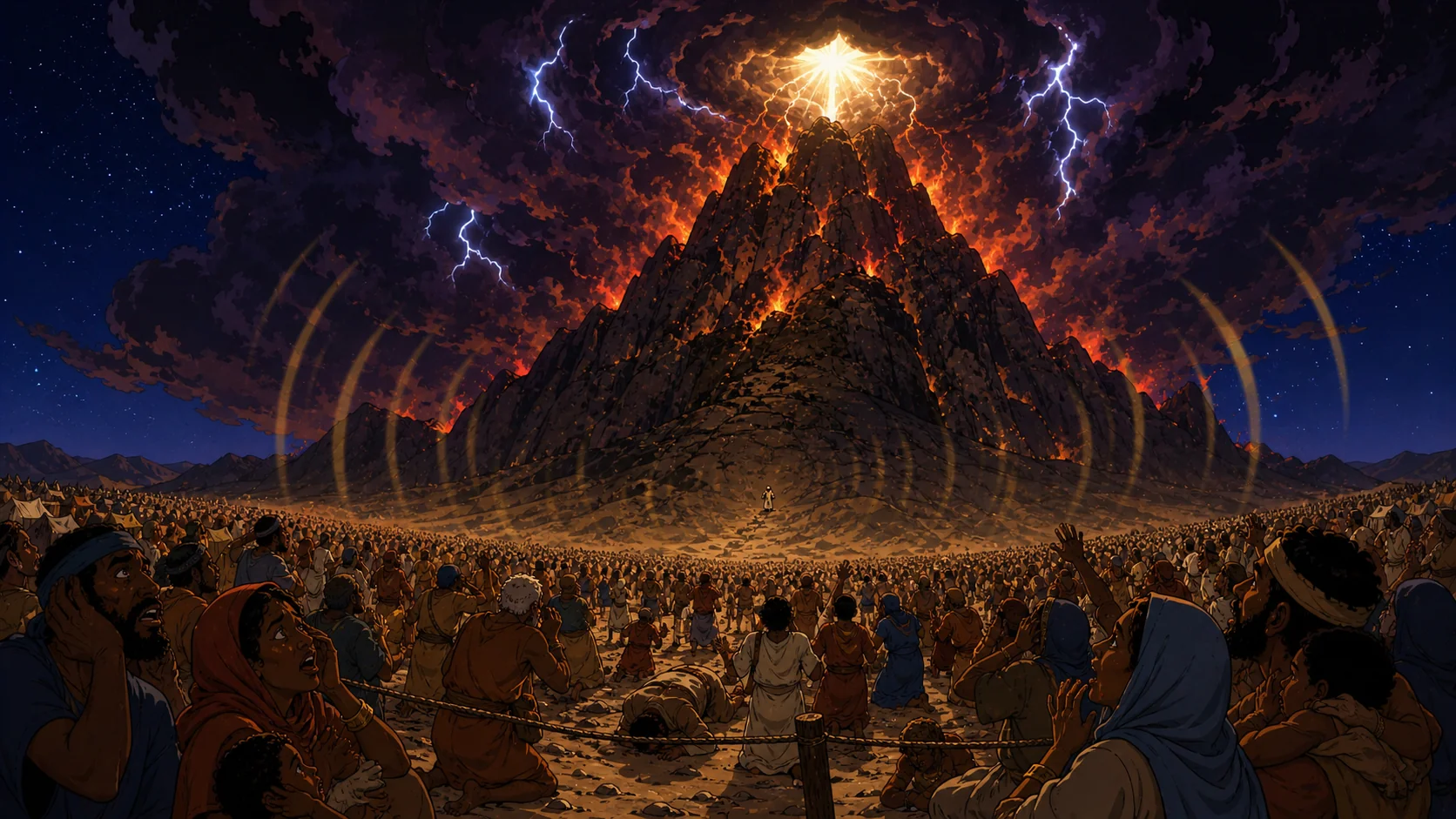
The preparation takes three days. The people wash their garments. Moshe marks a boundary around the mountain: the holy presence cannot be approached casually. Then on the third day, something happens that no human being had experienced since Eden — direct audible communication with the living Elohim, experienced by an entire nation at once. Thunder, lightning, dense cloud, the blast of a shofar growing louder. The mountain shakes violently. (19:16) "And all the people who were in the camp trembled". The Hebrew is precise: they quaked. Not some of them — all of them.
What is spoken at Sinai is not a list of rules. It is a marriage covenant — preamble, historical review, obligations, witnesses, blessings and curses — the standard structure of ancient Near Eastern suzerainty treaties between a great king and a vassal people. YHWH is the great King. Israel is the vassal. But the treaty begins not with demands but with identity: (20:2) "I am YHWH your God, who brought you out of the land of Egypt, out of the house of slavery". The commandments come after the deliverance. They are the shape of life for a people already redeemed, not the conditions for being redeemed. Sinai does not create the relationship; it defines it.