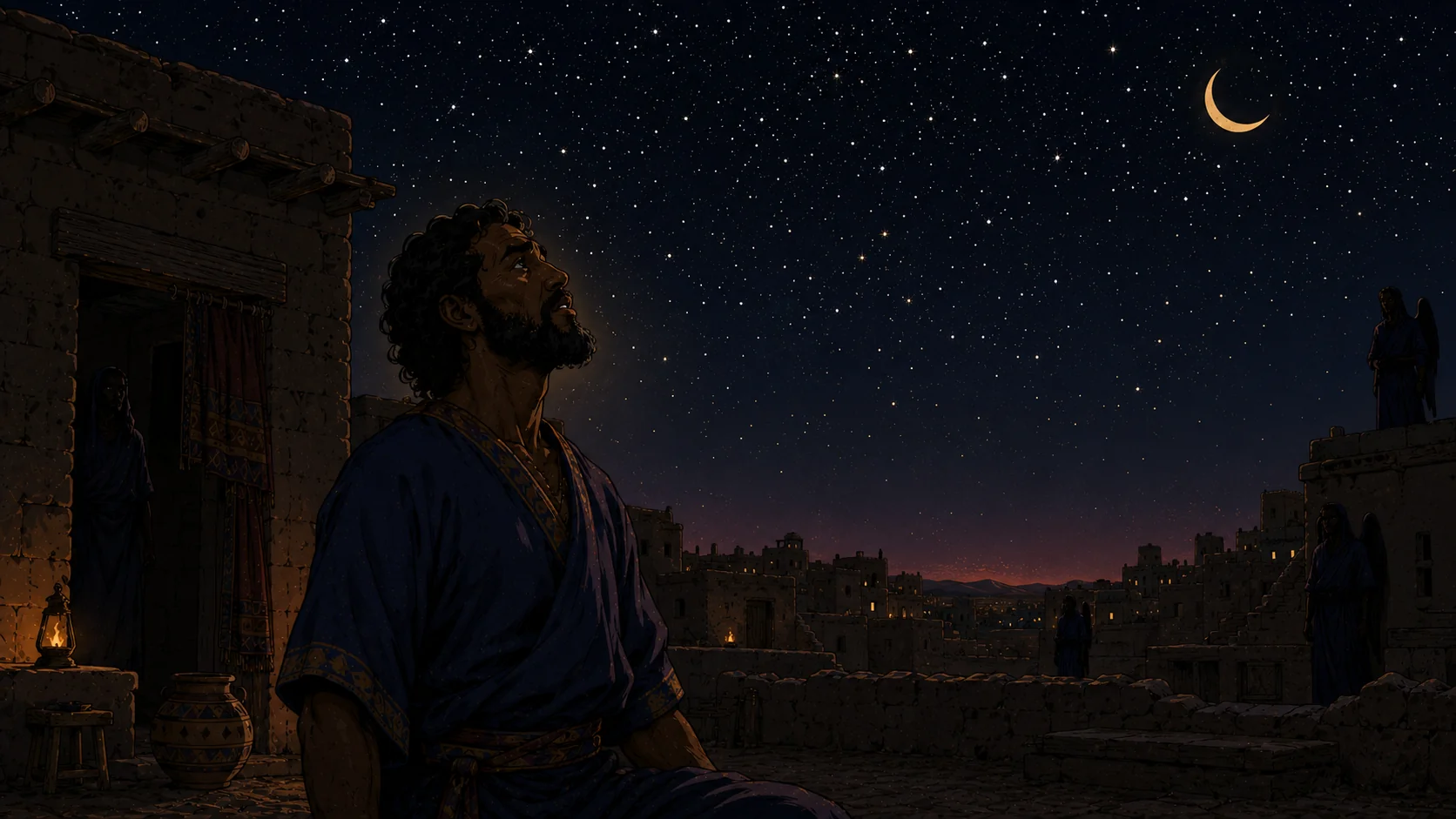
The call comes without preamble. There is no explanation of why Avram was chosen, no record of his prior righteousness, no catalogue of qualifications. YHWH simply speaks: go. The destination is not named — "to the land that I will show you." This is the structural heart of the call: Avram is asked to move toward a future he cannot see, to a location that will be revealed only as he walks. The call does not give him a map; it gives him a direction and a promise. This is the definition of faith as the Torah will construct it through the rest of the patriarchal narrative.
The three things Avram is told to leave — land, birthplace, father's house — form a deepening spiral of identity. Land is the broadest: the nation, the culture, the world he knows. Birthplace is narrower: the clan, the extended family, the community of belonging. Father's house is the innermost: the household, the immediate family, the place where his identity was formed. The call strips him from the outside in, moving from geography to genealogy to intimacy. He must leave all three. The promise answers each: in place of a land, he will receive a land. In place of a people, he will become a people. In place of a father's name, his name will be made great.
The sevenfold blessing in 12:2–3 is the most structurally significant speech in the patriarchal narratives: I will make you a great nation; I will bless you; I will make your name great; be a blessing; I will bless those who bless you; I will curse those who curse you; in you all the families of the earth shall be blessed. The seventh element — blessing to all families of the earth — is not a footnote but the culmination. The covenant with Avram is not tribal; it is universal in scope. It begins with one man leaving one city, and it ends with every family of the earth finding its blessing in him. The Torah announces this at the very first moment of the call, before Avram has taken a single step.
