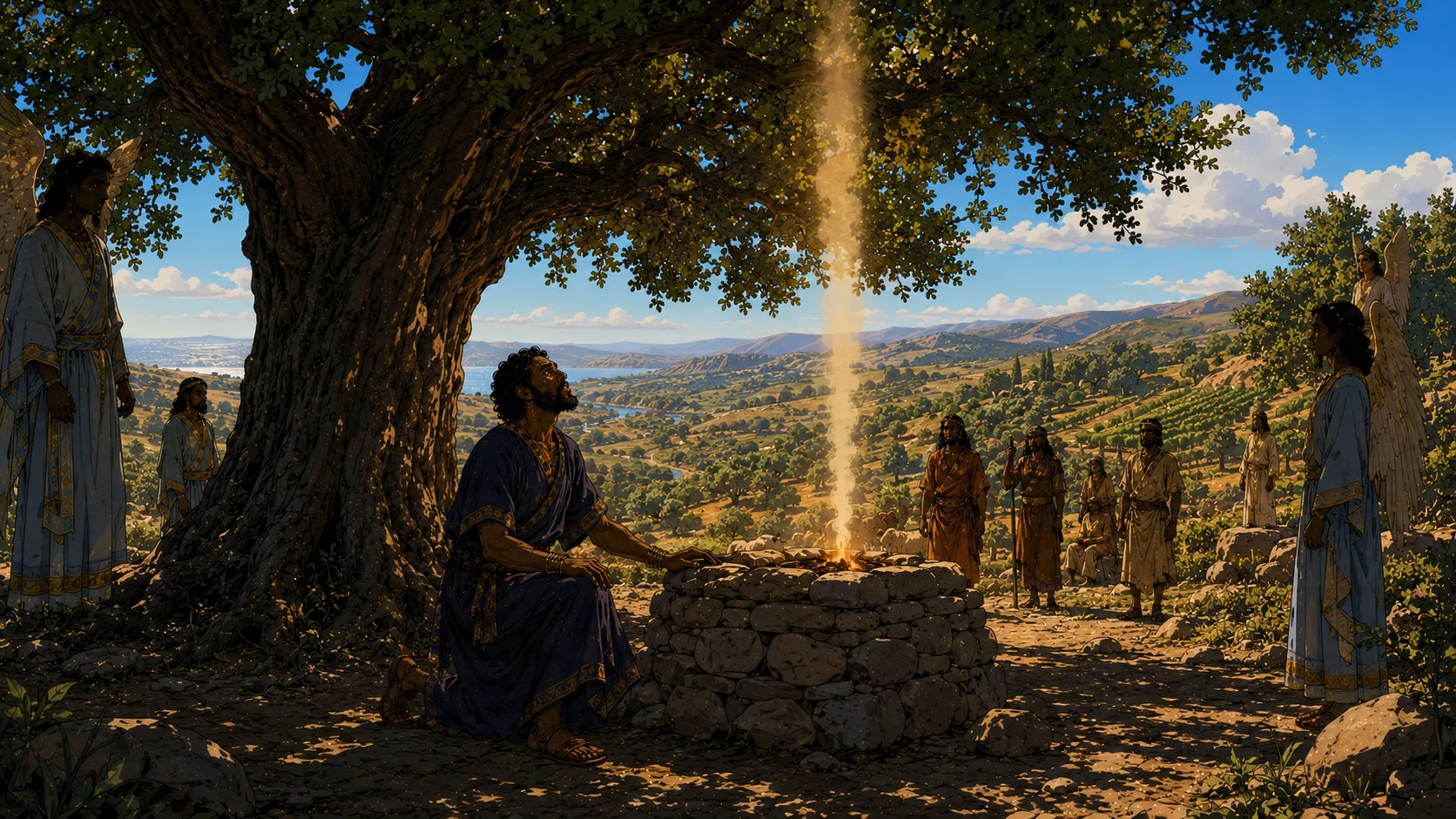
Avram walks into the land and immediately the Torah notes what he finds there: (12:6) "the Canaanite was then in the land." The first thing Avram sees in the promised land is that it belongs to someone else. YHWH does not address this reality with an explanation — He speaks only the promise: "To your offspring I will give this land." The land is given in the future tense. It is not Avram's to possess today; it is Avram's to trust. He responds by building an altar — not a house, not a fortification, but a place of worship. The altar is Avram's answer to every divine appearance throughout the Genesis narrative.
The oak of Moreh at Shechem is the location of the first divine appearance and the first altar. Moreh means "teacher" or "instructor" in Hebrew — אֵלוֹן מוֹרֶה (Elon Moreh), the teaching tree. The place where Elohim first instructs Avram within the land is the same place where Ya'akov will later bury the foreign gods of his household (35:4) and where Yehoshua will read the covenant to all Israel after the conquest (Joshua 8:30–35). Shechem is the pivot of covenant renewal throughout the entire Torah. Avram's first altar inaugurates a tradition of divine encounter that will run through every major turning point of the nation's story.
The pattern established at the first altar — YHWH appears, YHWH speaks the promise, Avram responds with worship — will be repeated at every major transition in his life. The appearance precedes the altar; the divine word precedes the human response. Avram does not build an altar to summon YHWH. He builds one because YHWH appeared. Faith, in the Torah's construction of it through Avram, is always responsive. It does not initiate the relationship; it answers it. The covenant moves from YHWH to Avram, and the altar is the register of that movement — stone piled on stone in the occupied land, marking the place where YHWH spoke what will not be revoked.