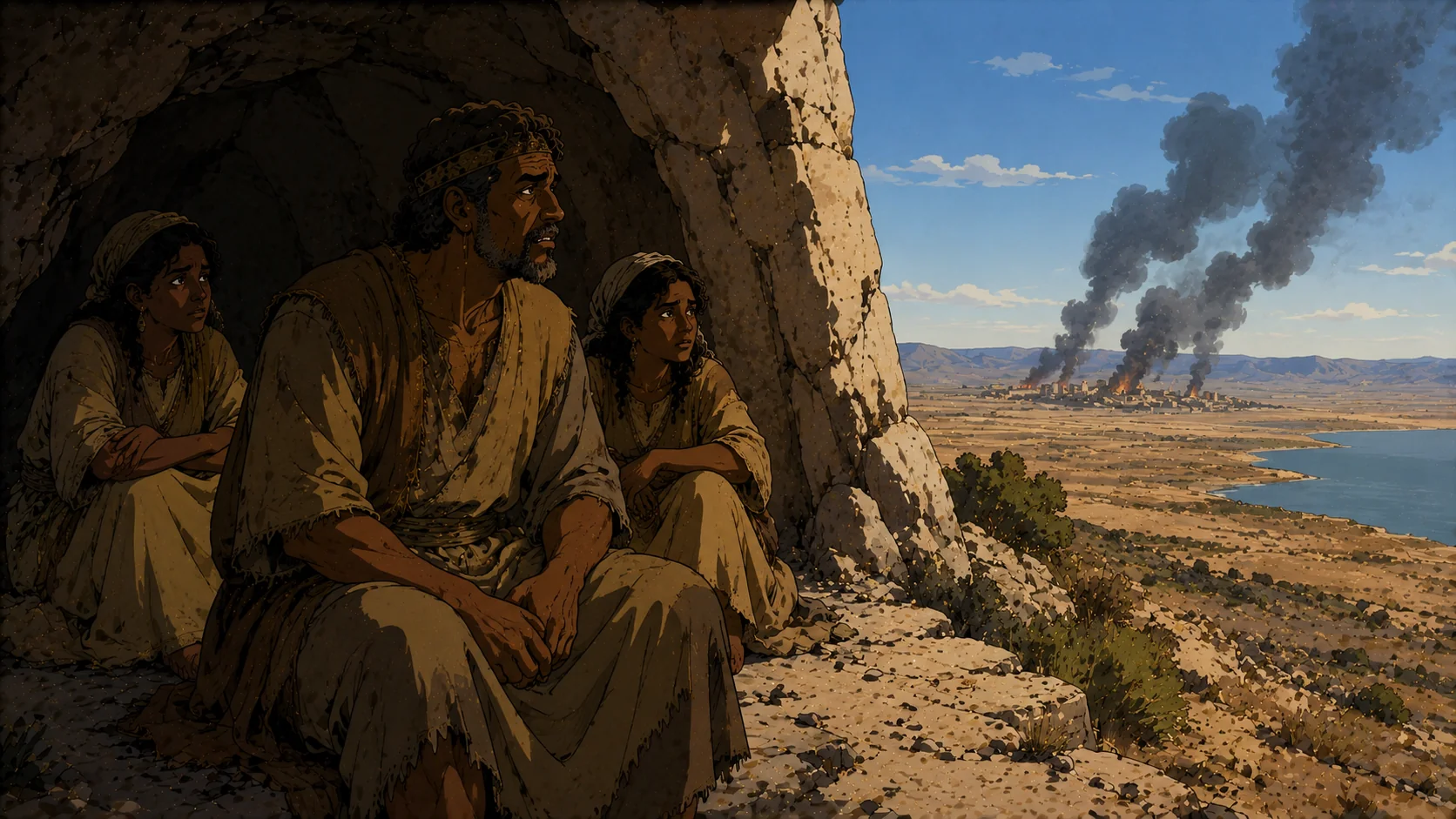
Genesis 19:30 is an anticlimax that carries its own weight. The city is destroyed. Lot's wife is a pillar of salt behind them. He has reached Zoar, the city he begged to be spared. The angels held back the judgment until Lot arrived there safely. And now Lot leaves Zoar and goes to the hills.
כִּי יָרֵא לָשֶׁבֶת בְּצוֹעַר — "for he was afraid to stay in Zoar." The fear is not explained. Was he afraid the judgment would extend there? Was he recognized as the man whose arrival coincided with the annihilation of the region and made unwelcome? Or was it something harder to name — survivor's guilt, the impossibility of settling in a living city when the city he had built his life in is smoke on the horizon?
Lot ends the arc where Abraham found him at the beginning: without a city, without a household, in a cave with his daughters. The parallel to Abraham's tent is deliberate and painful. Abraham is in a tent in the open, accompanied by covenant and blessing. Lot is in a cave, accompanied by fear and the last remnant of what he chose. He is alive. He was pulled out by the mercy of Yah and by the prayers Abraham offered at the gate of heaven. But the city is gone, the sons-in-law are gone, the wife is behind him in the plain.
