Abraham rises early — וַיַּשְׁכֵּם אַבְרָהָם בַּבֹּקֶר (vayashkem Avraham baboker) — the same phrase that will appear in Genesis 22:3, when he rises early to take Isaac to Moriah. Both times he rises early to lose a son. Both times the loss is commanded. Both times Yah provides at the last moment. The parallel is structural: the father who rises before grief can override obedience, and the Yah who provides.
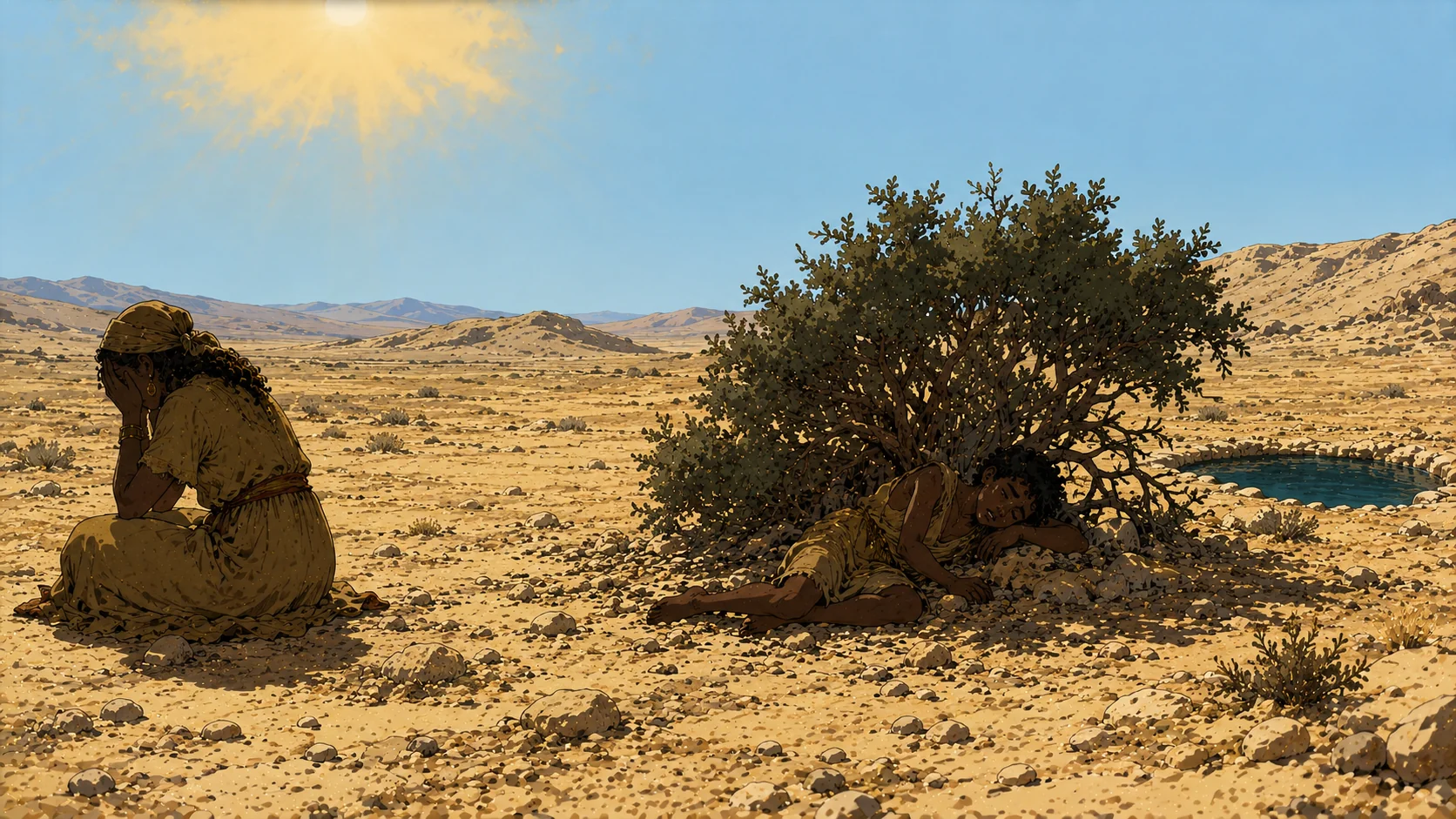
He takes bread and a skin of water and places them on Hagar's shoulder, along with the child, and sends them away. They wander in the wilderness of Beer-sheba. The water runs out. Hagar places Ishmael under one of the bushes, goes a bowshot away — exactly far enough that she cannot watch him die but close enough she cannot escape the sound — and weeps.
Then: וַיִּשְׁמַע אֱלֹהִים אֶת-קוֹל הַנַּעַר — "And God heard the voice of the boy." Not Hagar's weeping. The boy's voice. The angel calls her name twice: הָגָר, הָגָר. "What is wrong with you? Fear not, for God has heard the voice of the boy where he is." Then Yah opens her eyes and she sees the well. The second great theophany to Hagar. The first was at the spring of Shur when she ran from Sarah; now she is in the wilderness of Beer-sheba. The same Yah who found her the first time finds her again.
