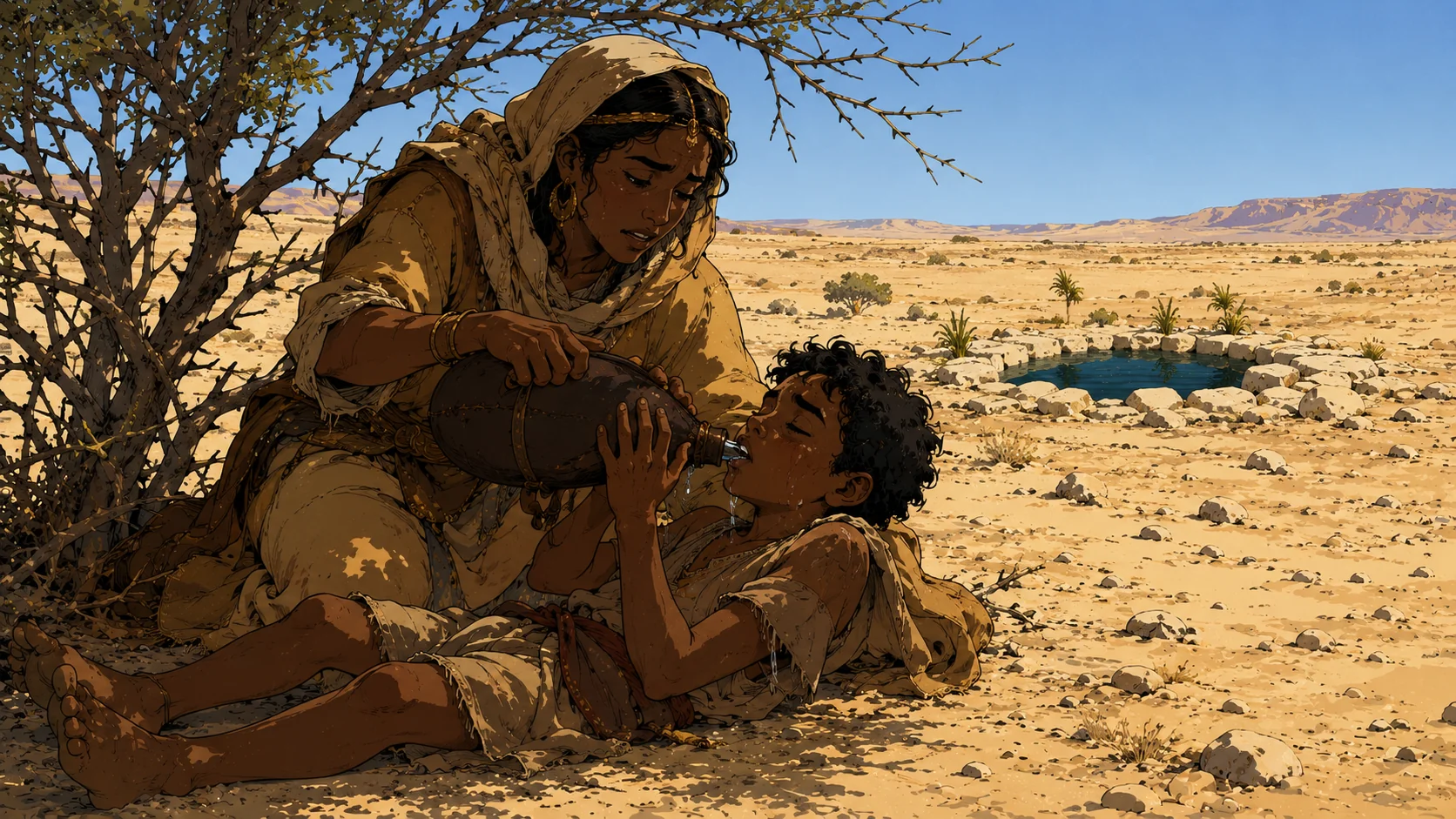
The well was already there. The text does not say God created a well. It says God opened her eyes and she saw a well — וַתֵּרֶא בְּאֵר מָיִם, “and she saw a well of water.” The provision was present before the recognition. Hagar was perishing with her son beside an unseen well.
The sequence that precedes this moment is devastating. The water Abraham gave her was gone (v.15). She set the child under a bush. She moved away the distance of a bowshot because, she said, אַל-אֶרְאֶה בְּמוֹת הַיָּלֶד — “let me not see the death of the child.” The one who cannot bear to see sits and weeps. Then: God heard the voice of the lad (v.17). Not Hagar’s weeping — the boy’s voice. The angel calls from heaven. He tells Hagar: do not fear. Lift up the lad. Hold him by your hand. He will become a great nation. And then: God opened her eyes.
The verb וַיִּפְקַח (vayifkach) — “and he opened” — is the same root used in Genesis 3:5 and 3:7, when the serpent told the woman her eyes would be opened to know good and evil, and when the eyes of both were opened after they ate. In Eden, opened eyes brought shame. Here, opened eyes bring life. The same verb, two different salvations — or two different kinds of knowing.