Four verbs. A whole life: he was accompanied, he grew, he dwelt, he became. Genesis compresses Ishmael’s years into a single verse — not because he is unimportant, but because the Torah’s focus lies elsewhere and the text is honest about that. What it does say about him, it says with precision.
The first clause is the most important: וַיְהִי אֱלֹהִים אֶת-הַנַּעַר — “And God was with the lad.” The same phrase appears of Joseph in Egypt (39:2,3,21,23): “And YHWH was with Joseph.” It marks those who are outside the place of power yet carried by divine presence. Ishmael is outside the covenant line of Abraham–Isaac–Jacob. He is in the wilderness. Yet Elohim is with him. The promise made at Beer Lachai Roi (16:10) and repeated by the angel in this chapter (21:18) — that Ishmael will become a great nation — is not abandoned when Abraham sends him away. It follows him into Paran.
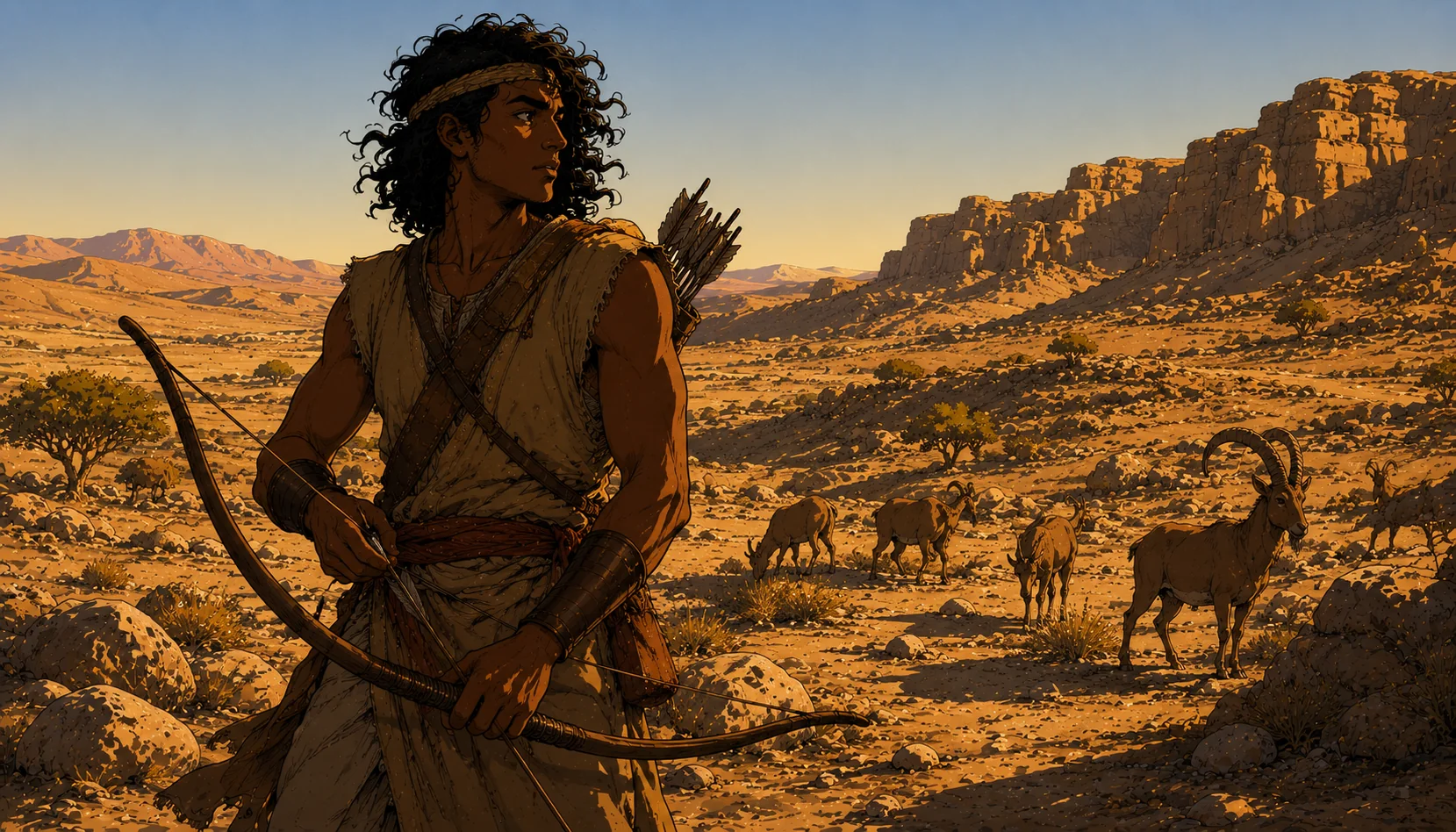
He became רֹבֶה קַשָּׁת — “an archer,” one who draws the bow. In the ancient world, the bow was the weapon of the wilderness hunter, the nomad, the frontier scout. Ishmael did not build cities. He did not inherit tents or flocks in a settled place. The wilderness that nearly killed him becomes his country. His mother takes a wife for him from Egypt (v.21) — her homeland, the place she was taken from. He is a man formed by the terrain where God provided water.