Returned from Egypt with great wealth, Avram and Lot find that the land cannot hold them both. Their herdsmen quarrel over grazing. Avram proposes separation and offers Lot the choice of the entire land — an extraordinary gesture from the man to whom the whole land was promised. He is surrendering the right of priority to his nephew. The promise was that the land would belong to Avram's offspring; he nonetheless gives Lot first selection. This is generosity that operates from security, not scarcity. Avram can give freely because he does not depend on his own choice to receive what YHWH has already promised.
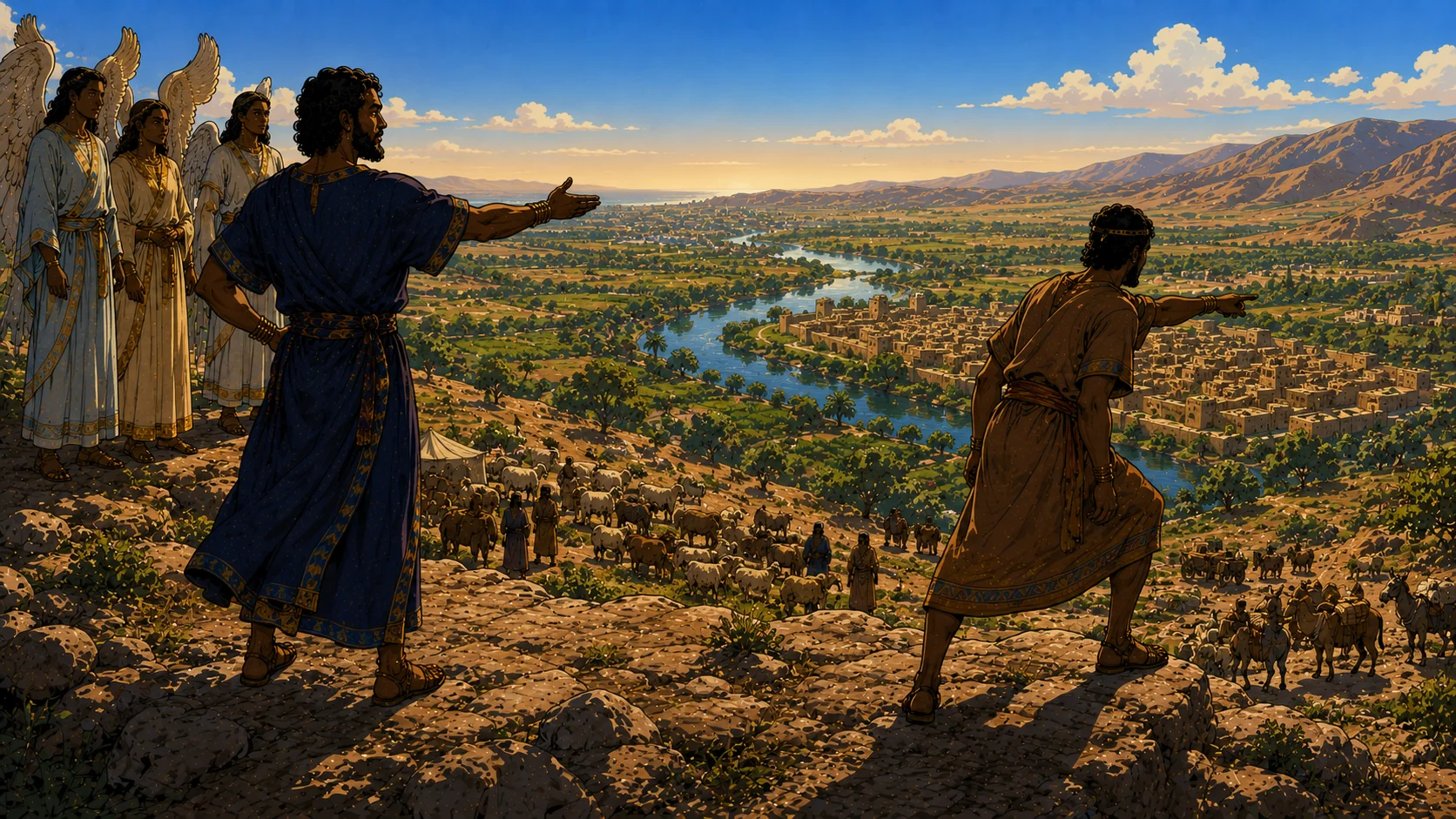
Lot lifts his eyes and sees the Jordan plain — lush, well-watered, (13:10) "like the garden of YHWH, like the land of Egypt." That comparison should stop the reader. Like Egypt, which Avram just fled in disgrace. Like the garden, from which Adam was expelled. The two things Lot's description invokes are precisely the two places in the Torah that ended in expulsion. He chooses by sight and by appetite — the plain is beautiful and fertile — and his choice moves him step by step toward Sodom: first near Sodom (13:12), then inside Sodom (14:12), then sitting at Sodom's gate as a leader (19:1).
Immediately after Lot departs, YHWH speaks to Avram again: (13:14) "Lift your eyes and look from where you are — northward, southward, eastward, westward. All the land that you see I will give to you and to your offspring forever." YHWH commands Avram to lift his own eyes — and what he sees is not what Lot saw. Lot saw a well-watered plain. Avram sees the full extent of the covenant promise. The same verb, the same gesture, entirely different visions. YHWH then tells him to walk through the land in its length and breadth, for He is giving it to him. Lot's departure does not diminish Avram's inheritance; it clarifies it. The covenant narrows to the one who stays.