Before any call is given, before any covenant is cut, the Torah introduces the family of Terah with a single devastating detail: Sarai is barren. The text does not mention this in passing — it doubles down: (11:30) "Sarai was barren; she had no child." The repetition is deliberate. No child at all. The ground condition of the Abrahamic covenant is human impossibility, stated plainly before the story begins.
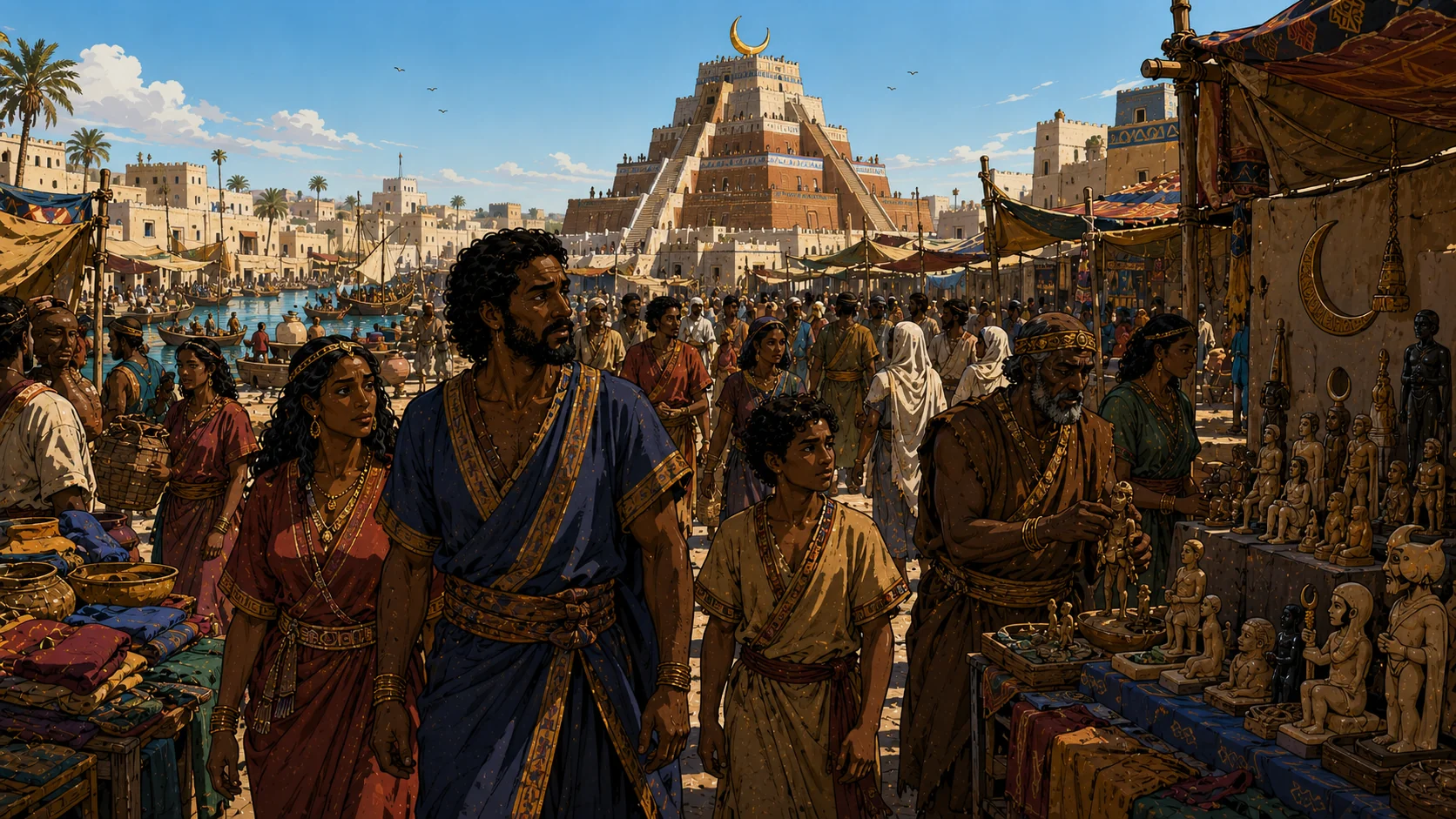
Ur of the Chaldees was among the greatest cities of the ancient world — a Sumerian metropolis built around the worship of Sin, the moon god, whose ziggurat dominated the skyline. Abram was not called from the margins of civilization but from its center. The idolatry Elohim would dismantle was not primitive superstition but the most sophisticated religious system of the age, complete with temple bureaucracy, priestly hierarchies, and a cosmology that placed the heavenly bodies as divine powers. Out of this world, YHWH would call one man — and that man's wife cannot conceive.
The genealogy of Terah (11:27–32) functions as a threshold passage — it situates Abram geographically and relationally before the divine call overturns everything. He is in Ur. His father is Terah. His brother Haran is dead. His wife is barren. The family has already experienced loss — Haran died before his father, a reversal of the natural order that the Torah notes without comment. It is from this specific configuration of ordinary grief and extraordinary impossibility that YHWH will speak. The covenant will not proceed around the barrenness; it will proceed through it.