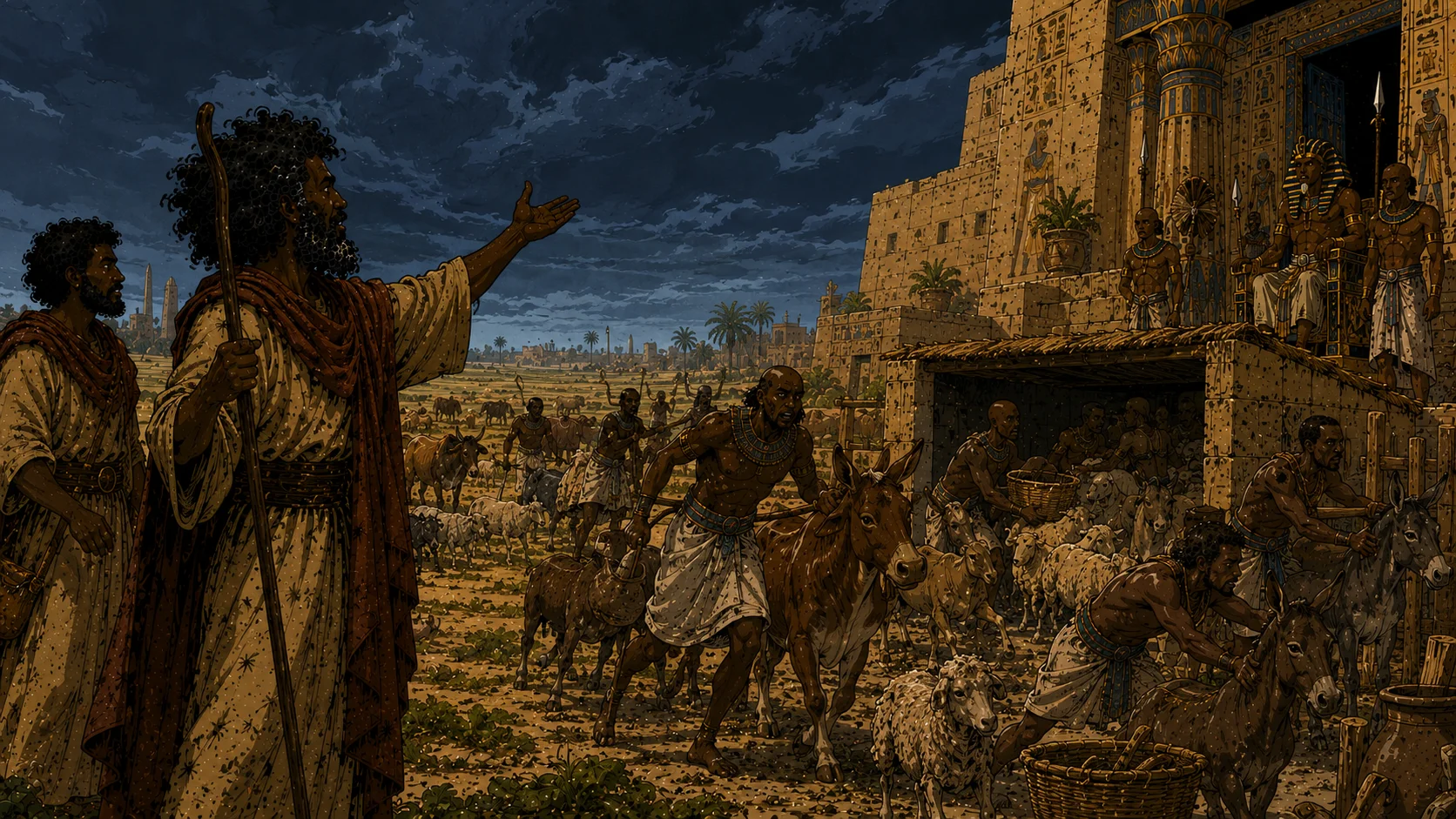
Before the hail falls, God tells Moses to deliver a warning. This is unusual. The earlier plagues came without advance notice; this one comes with an explicit invitation: bring in your livestock and servants, or lose them to what is about to fall. It is both a mercy and a test.
The Torah records the response in two brief verses. Some of Pharaoh's servants feared the word of God and brought everything inside. Others did not listen. What follows is not a comment on nationality — it is a comment on character. Two groups of Egyptians, same warning, different responses.
The Hebrew for "feared the word" is הַיָּרֵא אֶת-דְּבַר יְהוָה (ha-yare et-devar Adonai). These unnamed servants of Pharaoh make a choice that costs them nothing and saves everything they have. The Torah does not say they converted or changed masters — only that they heard, believed, and moved.
When Moses stretches his staff toward the sky, hail falls unlike anything Egypt has seen. Fire runs along the ground. In the land of Goshen, there is no hail. The distinction that began with the flies and the livestock is now unmistakable to the entire nation.
Pharaoh summons Moses and confesses for the first time: "I have sinned — God is righteous, and I and my people are wicked." Moses agrees to pray, knowing Pharaoh will change his mind. But the moment of confession is recorded. The king of Egypt spoke the truth once, briefly, before his heart hardened again.