God tells Moses: I have hardened Pharaoh's heart so that these signs may be performed — and so that you may tell your children and grandchildren what I did in Egypt. The plagues are not only judgment; they are testimony. They are meant to be remembered.
This time it is Pharaoh's own servants who break. They come to him before the plague even begins: Let the men go and serve their God. Do you not yet see that Egypt is ruined? They see what Pharaoh will not see. Egypt has already been devastated — the hail alone destroyed everything. The servants are begging for it to stop.
Pharaoh calls Moses and Aaron back. He makes his offer: go, worship — but who exactly is going? Moses answers: all of us. Young and old, sons and daughters, flocks and herds. We are going to hold a feast to God.
Pharaoh refuses. He will allow only the men. He drives Moses and Aaron out.
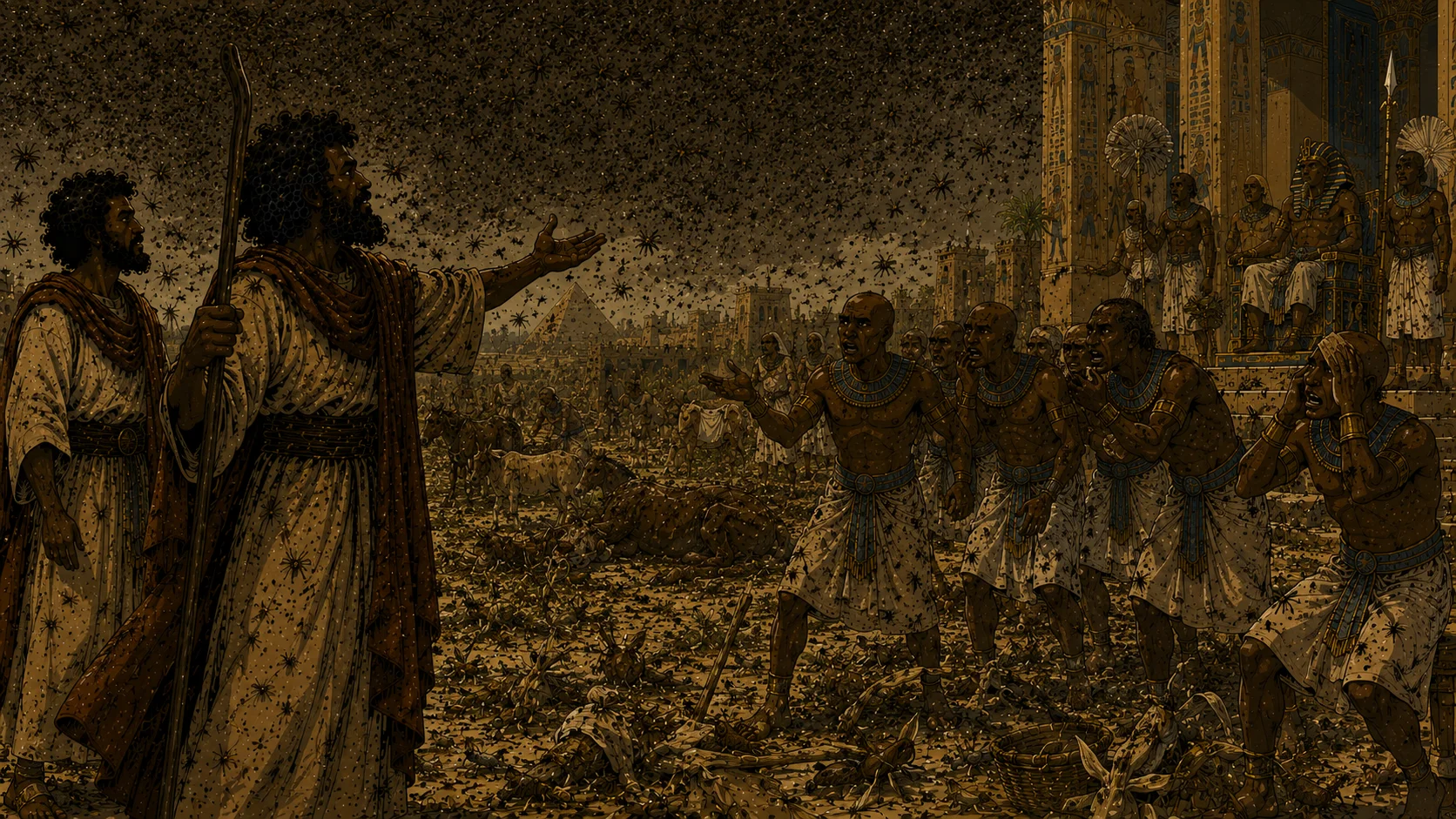
God tells Moses: stretch your hand over Egypt. The east wind blows all day and all night. By morning the locusts have come — a cloud so thick it darkens the ground. They eat everything the hail left behind. Not a green thing remains in all of Egypt.
Pharaoh summons Moses. He confesses sin against God and against Moses — and asks forgiveness. Moses prays. God sends a strong west wind, which carries the locusts into the Red Sea. Not one locust remains. And God hardens Pharaoh's heart. He will not let Israel go.