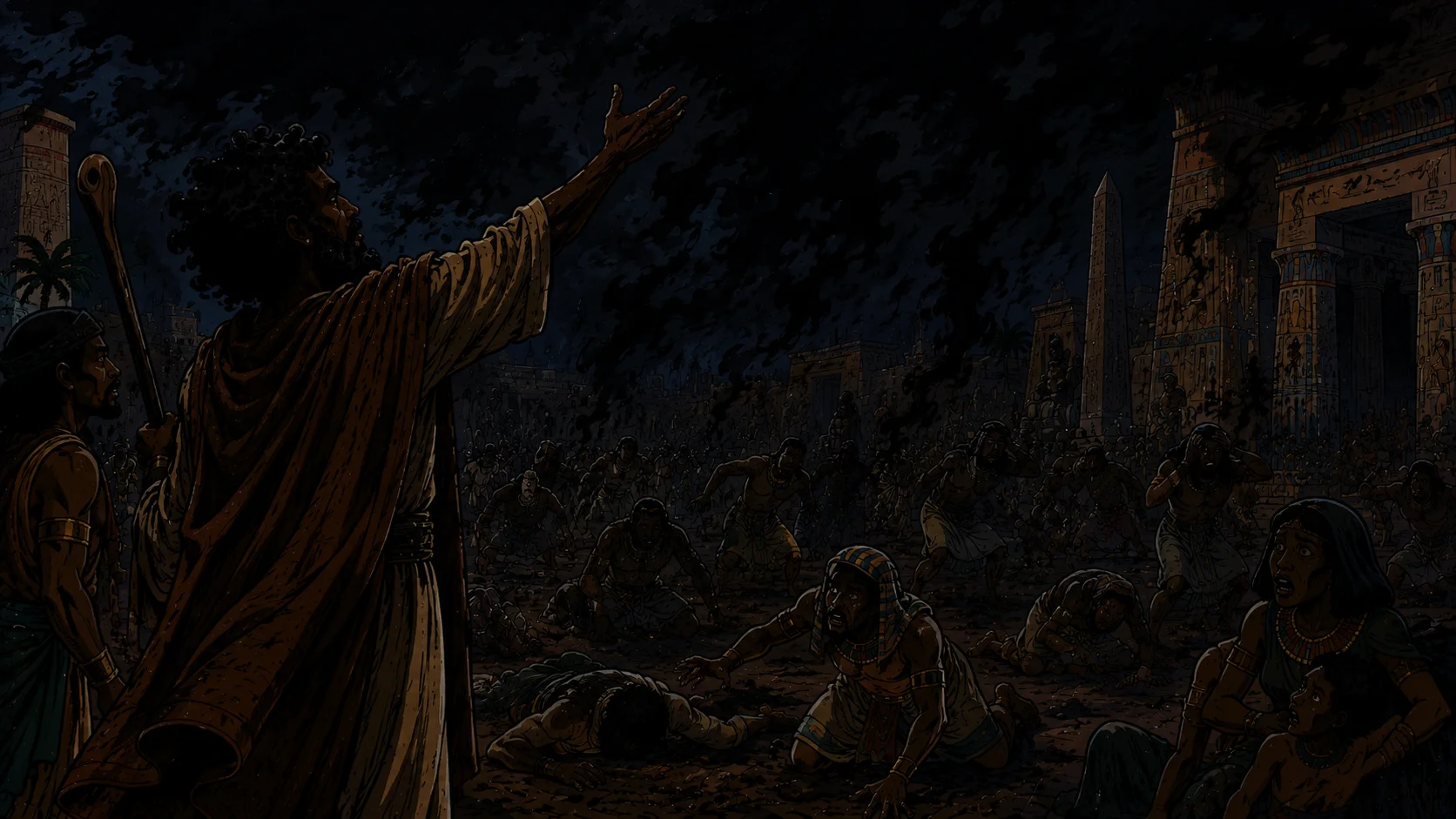
No warning is given this time. Moses stretches his hand toward heaven and a thick, tangible darkness descends on Egypt. It lasts three days. No one can see anyone else. No one rises from their place. The entire land is paralyzed.
Egypt worshipped the sun above all gods — Ra, the sun god, was the supreme deity of the empire. The pharaoh himself was considered the son of Ra, the earthly embodiment of the sun's power. The ninth plague strikes at the very center of Egyptian theology.
But in the dwellings of Israel — light. The contrast could not be starker. Where Egypt is in absolute darkness, Israel has light. The ninth plague is not merely natural disaster; it is a theological statement. The sun of Egypt has no power here.
Pharaoh calls Moses and makes his final compromise: go, worship — take your children. But leave your flocks and herds behind. Moses refuses again: not a hoof will be left in Egypt. Every animal must go, because we do not know what we will need for the sacrifice until we arrive.
God hardens Pharaoh's heart. He will not let them go. And Pharaoh dismisses Moses with a final threat: if Moses appears before him again, he will die. Moses responds: you have spoken well. I will never see your face again.