The ninth plague is darkness — but not ordinary darkness. The Hebrew calls it חֹשֶׁךְ אֲפֵלָה (choshekh afelah): thick, tangible darkness. The Egyptians cannot see each other. No one rises from their place for three days. The land is paralyzed.
Egypt worshipped Ra, the sun god. This plague is not merely inconvenient — it is a direct refutation of the most powerful deity in the Egyptian worldview. The sun god cannot illuminate his own land. The God of Israel can give light where He chooses and withhold it where He does not.
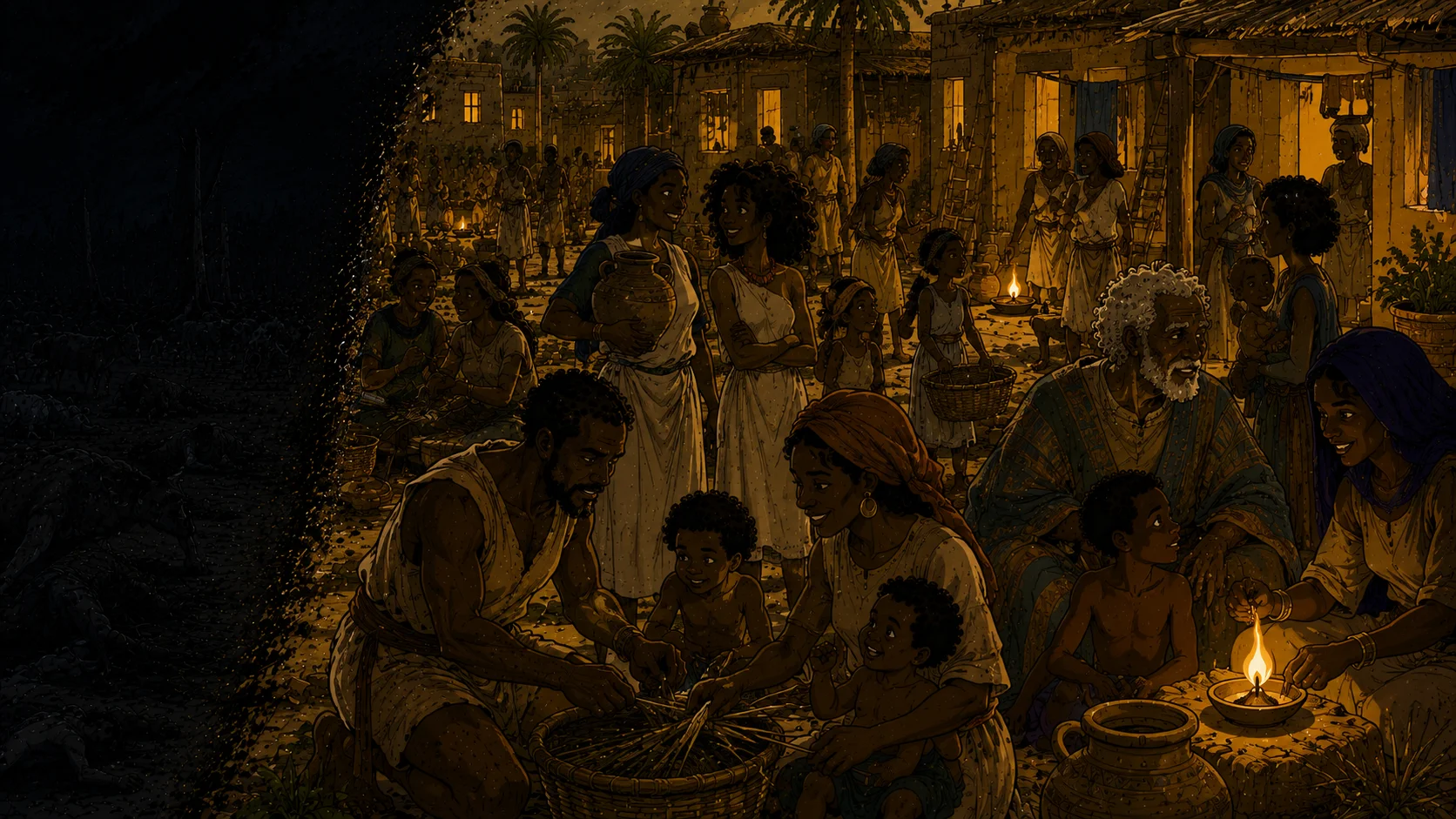
The contrast in the verse is stark and deliberate. "They did not see one another... but all the children of Israel had light in their dwellings." The same sky, the same moment — two completely different realities. This is the pattern God established with the flies, confirmed with the livestock, made unmistakable here.
The word used for Israel's dwellings is מוֹשְׁבֹתָם (moshvotam) — their settled places, their homes. Israel was not wandering in a lit corridor while Egypt fumbled in darkness around them. They were home, at rest, with light. The plague distinguished not just between peoples but between a people in covenant and a people in rebellion.
Pharaoh's response is to try negotiating again — this time offering to let Israel go, but without their livestock. Moses refuses. All of Israel must go, and all their possessions. Pharaoh explodes and sends Moses away, promising death if he appears before him again. Moses agrees. It is the last time they will speak in Egypt.