Before any plague falls on the firstborn, God gives Israel a set of instructions that will define them for every generation. This is the birth of Passover — not as a tradition but as a live command delivered the night before it happens for the first time.
A lamb — unblemished, a year old — is to be selected on the tenth of the month and slaughtered on the fourteenth. The blood is to be placed on the two doorposts and the lintel of the house. The meat is to be eaten that same night, roasted with fire, with unleavened bread and bitter herbs, with sandals on, staff in hand, in haste.
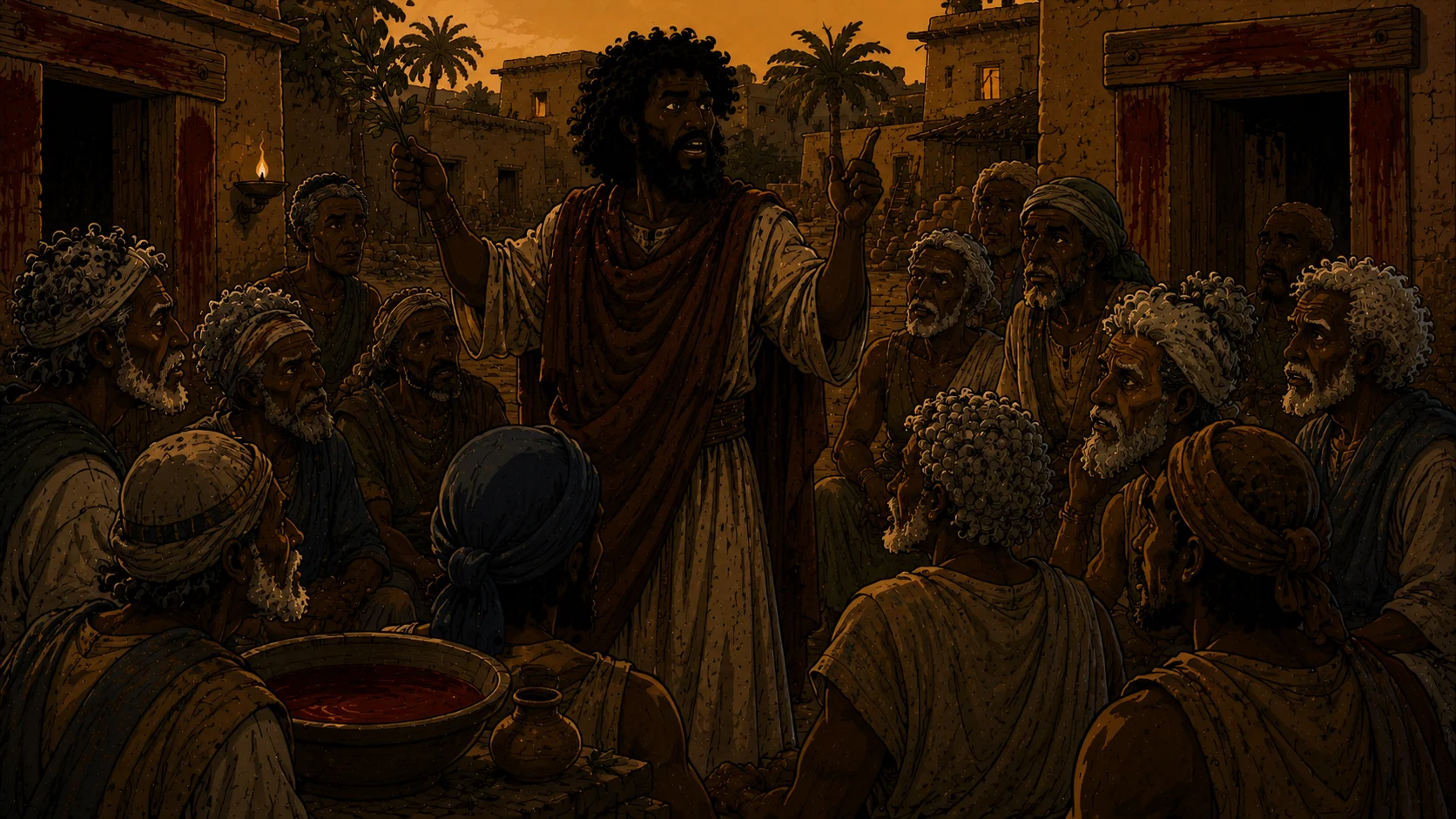
Moses gathers the elders of Israel and repeats the instructions. The detail that the elders "bowed their heads and worshipped" when they first heard the plan (verse 27) is recapitulated here in action. They do not question. They go and do exactly as the LORD commanded Moses and Aaron.
The blood on the doorpost is called an אוֹת — a sign. Not to inform God of who lives inside, but to mark the household as standing in covenant. The God of Israel said "when I see the blood I will pass over you." The blood is the visible declaration of allegiance.
The first Passover is eaten in full readiness for departure. Not a feast of leisure but a meal of movement — loins girded, sandals on, staff in hand. Every detail of the instruction points toward what is about to happen: Israel is leaving Egypt, and this night is how it begins.