Shemot · שְׁמוֹת · Exodus

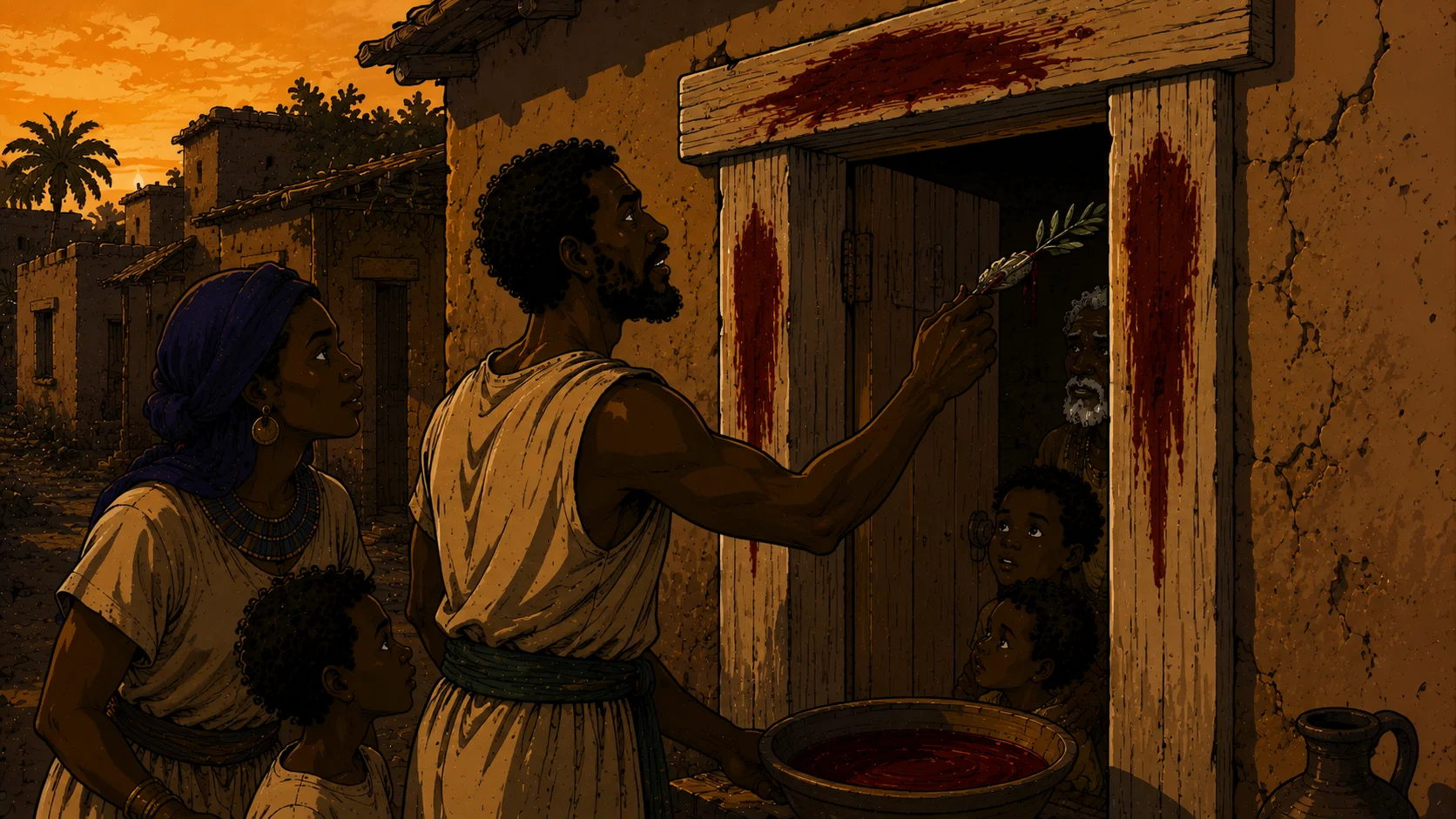
The Families Applying the Blood

וּלְקַחְתֶּם אֲגֻדַּת אֵזוֹב
Exodus 12:21–23
Exodus 12:22
וּלְקַחְתֶּם אֲגֻדַּת אֵזוֹב וּטְבַלְתֶּם בַּדָּם אֲשֶׁר-בַּסַּף וְהִגַּעְתֶּם אֶל-הַמַּשְׁקוֹף וְאֶל-שְׁתֵּי הַמְּזוּזֹת מִן-הַדָּם אֲשֶׁר בַּסָּף
"And ye shall take a bunch of hyssop, and dip it in the blood that is in the bason, and strike the lintel and the two side posts with the blood."
The Families Applying the Blood — Exodus 12:21–23

In the Hebrew

Moses calls the elders of Israel and gives them the instructions. Draw out a lamb — one per household, or share with a neighbor if the household is small. Slaughter it at twilight. Take the blood and, with a bunch of hyssop, mark the lintel and the two doorposts.

Then: none of you shall go out from the door of your house until morning. The destroyer is passing through Egypt. When he sees the blood on the doorposts, he will pass over. He will not enter. He will not strike the house.

The blood is not hidden — it is applied to the outside of the door, visible to anyone who passes. Israel is asked to make itself known: to mark its household publicly as belonging to God on the night when the most fearful judgment passes through the land.

The elders of Israel went and did as Moses commanded. They bowed their heads and worshipped. And they did exactly as God had instructed — not a detail altered.

Key Hebrew Word
אֵזוֹב
ezov — hyssop. Hyssop is a small, bushy plant used throughout the Torah for ritual purification. It appears here as the instrument of application — not a brush or cloth, but a living plant. The same plant appears in the purification rites of Leviticus, in the healing of the metzora (one with skin disease), and in Psalm 51: "purge me with hyssop and I will be clean."
Key Hebrew Word
הַמַּשְׁחִית
ha-mashkhit — the destroyer. An agent of destruction — possibly an angel, possibly a force, possibly God's own outstretched arm under a different name. The text says God will "not allow the destroyer to enter your houses." The blood on the door is not a charm — it is obedience made visible, a sign that the household belongs to those who have heard and responded.
Save to Pinterest Compartir en WhatsApp
← PreviousPlague Ten — The Death of the Firstborn All↑ Breakdowns