Shemot · שְׁמוֹת · Exodus

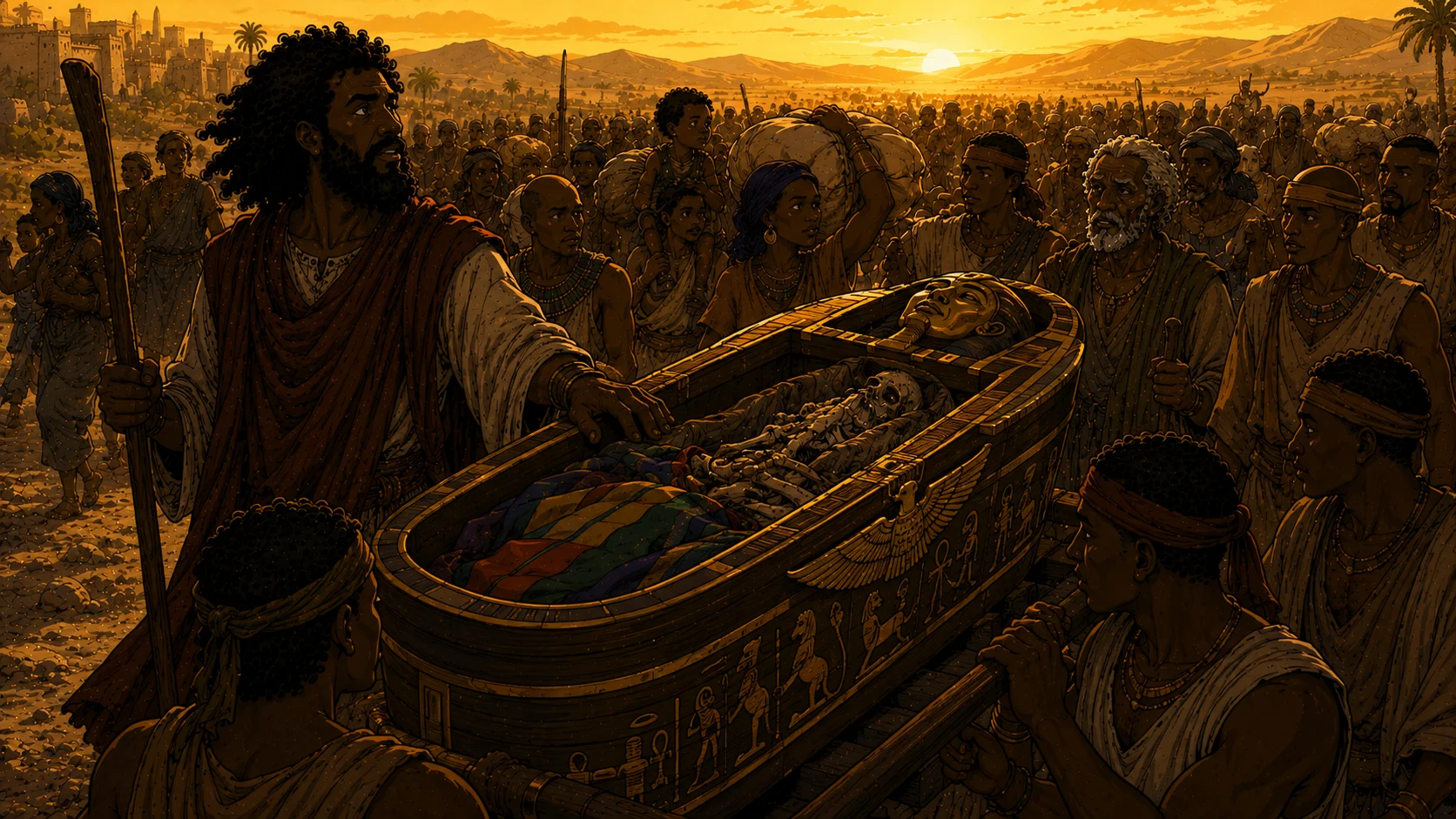
Moses Takes the Bones of Joseph

וַיִּקַּח מֹשֶׁה אֶת-עַצְמוֹת יוֹסֵף עִמּוֹ
Exodus 13:19
Exodus 13:19
וַיִּקַּח מֹשֶׁה אֶת-עַצְמוֹת יוֹסֵף עִמּוֹ כִּי הַשְׁבֵּעַ הִשְׁבִּיעַ אֶת-בְּנֵי יִשְׂרָאֵל לֵאמֹר פָּקֹד יִפְקֹד אֱלֹהִים אֶתְכֶם וְהַעֲלִיתֶם אֶת-עַצְמֹתַי מִזֶּה אִתְּכֶם
"And Moses took the bones of Joseph with him: for he had straitly sworn the children of Israel, saying, God will surely visit you; and ye shall carry up my bones away hence with you."
Moses Takes the Bones of Joseph — Exodus 13:19

In the Hebrew

Amid the haste of the Exodus — six hundred thousand men, a mixed multitude, unleavened bread, no time to wait — Moses stops to take the bones of Joseph.

Joseph had died in Egypt four hundred years before. Before his death he made the children of Israel swear: God will surely visit you. When that day comes, carry my bones up from here with you. He did not ask to be buried in Canaan immediately — he asked to be taken with the people when the time came.

The oath held through centuries of slavery. Moses, who had spoken with God at the burning bush, who had stood before Pharaoh ten times, who had watched the plagues unfold — takes a moment in the chaos of departure to fulfill a promise made by a dying man four generations before.

Joseph's bones travel through the Exodus, through the wilderness, through forty years of wandering, and are finally buried at Shechem in the parcel of ground that Jacob had bought. The longest journey of the Exodus was the one made by the bones of the man who had made it all possible.

Key Hebrew Word
עַצְמוֹת
atzmot — bones. Joseph, dying in Egypt, extracted an oath from his brothers' descendants: when God delivers you, take my bones up with you. This oath was passed down through four hundred years of slavery. Moses, amid the chaos of the Exodus, remembers it and honors it. The bones of Joseph travel through the wilderness for forty years and are eventually buried in Shechem (Joshua 24:32).
Key Hebrew Word
פָּקֹד יִפְקֹד
pakod yifkod — God will surely visit. Joseph used a double expression — an infinitive absolute preceding the verb — to emphasize certainty: God will surely, certainly, definitely remember and act. This phrase became a signal phrase passed through the generations. When Moses heard it from the elders in Egypt at the start of his mission, he knew it was the fulfillment of what Joseph had promised.
Save to Pinterest Compartir en WhatsApp
← PreviousThe Exodus — Israel Leaves Egypt All↑ Breakdowns