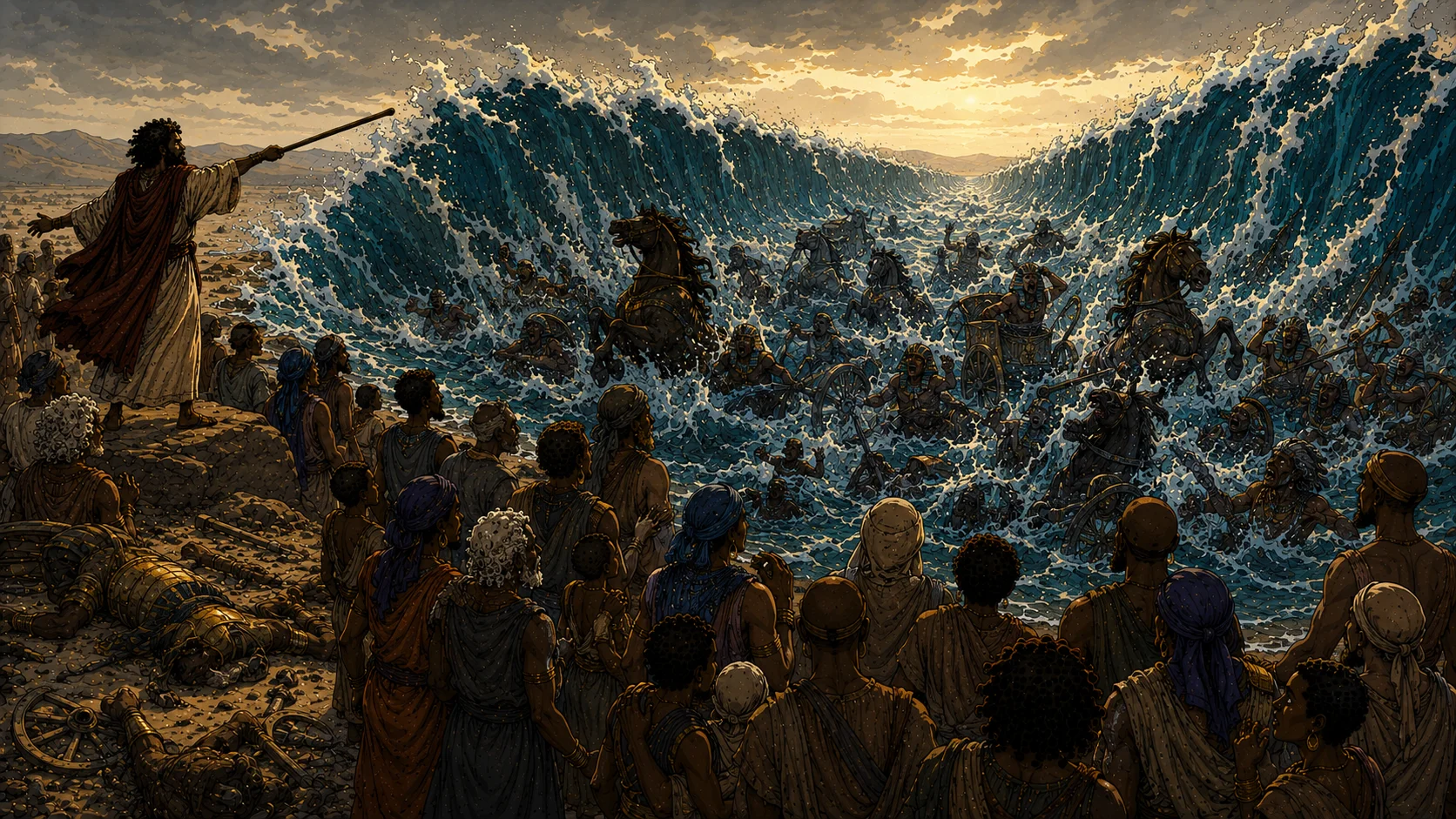
Israel is on the far shore. Behind them, the Egyptians see the same open sea floor and pursue — chariots, horsemen, the entire army of Pharaoh driving into the dry seabed. It is the same path Israel walked. But the morning is coming.
God looks down from the pillar of fire and cloud and throws the Egyptian army into panic. The chariot wheels clog and drag. The drivers cry out: "Let us flee from Israel — the LORD is fighting for them against Egypt." They see what is happening and try to turn back. But it is too late.
God tells Moses to stretch his hand over the sea. At the morning watch — just before dawn — Moses stretches his hand. The water returns. Not slowly, not partially — לְאֵיתָנוֹ, to its full strength. The walls of water that held on both sides crash inward. Chariots, horses, the entire host of Pharaoh — covered.
The Torah says "not one of them remained." This is the same phrase used when the frogs died and were heaped in piles, when the locusts were swept into the Red Sea. But here it means the most powerful army that ever threatened Israel has been erased. Not one survivor.
Israel sees the Egyptians dead on the shoreline. They see the great work God did against Egypt. And the Torah records their response: they feared the LORD and they believed in the LORD and in His servant Moses. That faith — forged at the water's edge with the dead visible behind them — is the beginning of everything that follows.