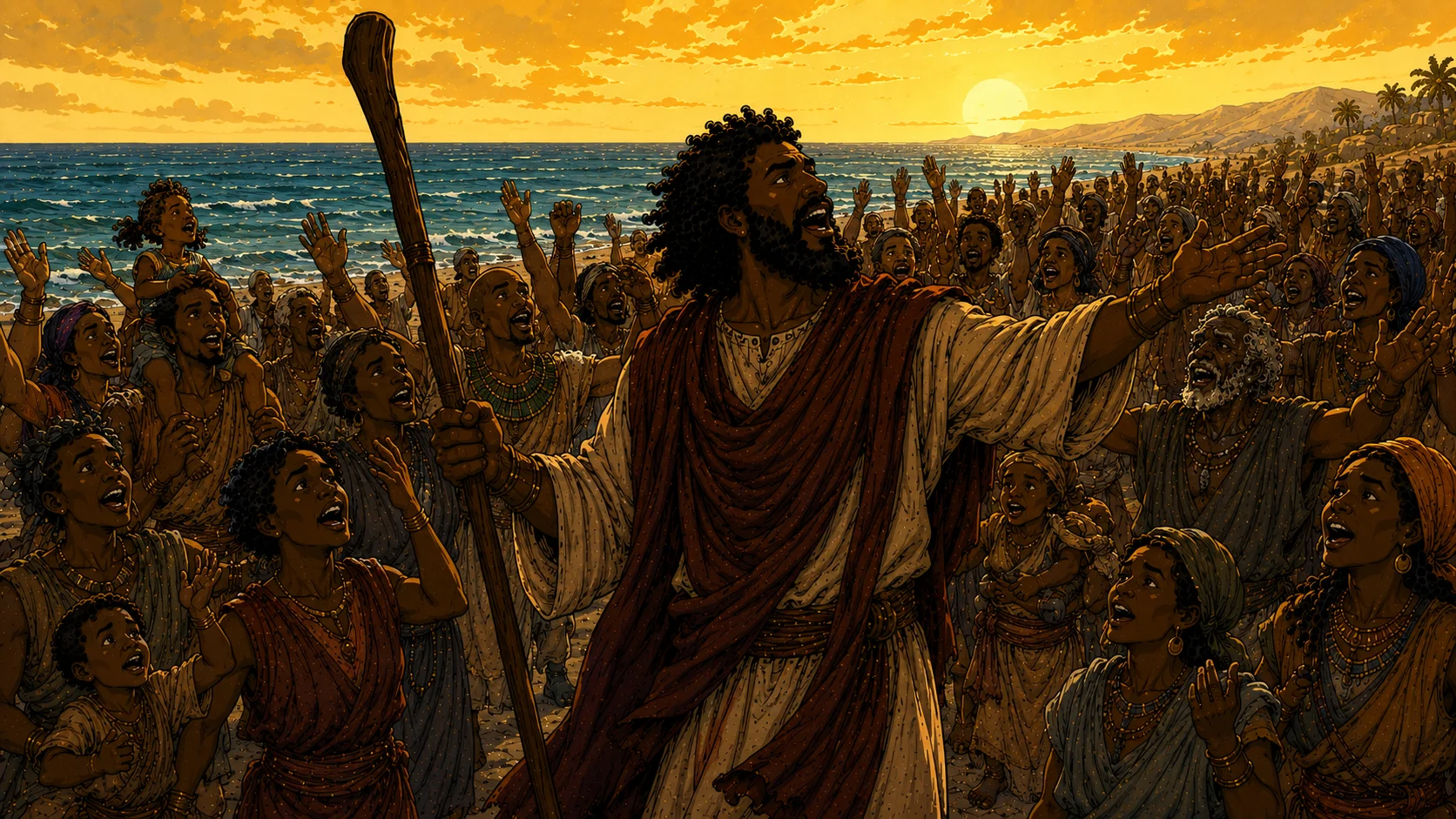
Then Moses and the children of Israel sang this song to YHWH. The word אָז — then — opens it. This is the Hebrew marker of consequence: then, after all that has happened. After the sea closed over the army of Pharaoh. After Israel stood on the other shore with dry ground under their feet. Then they sang.
It is the first song in the Torah. Not a quiet prayer but a full-throated declaration from the entire nation — men and women who had just walked between walls of water while the greatest army of the ancient world drowned behind them. The song opens with a personal claim: This is my God — and I will praise him. My father's God — and I will exalt him. Not the God of Abraham alone, but my God. The generation that crossed the sea claims him personally.
The song rehearses the crossing in the language of witness: YHWH is a man of war. He cast Pharaoh's chariots and army into the sea. The flood covered them — they sank to the depths like a stone. Your right hand, O YHWH, is majestic in power. Your right hand shattered the enemy. The imagery is overwhelming — horse and rider drowned, the proud brought down, the blast of God's nostrils piling up the waters in a heap.
Then the song turns to face forward. It describes nations who will hear this story and tremble: the peoples heard and they shudder. Anguish has seized the inhabitants of Philistia. The chiefs of Edom are dismayed. The mighty men of Moab are seized with trembling. All the inhabitants of Canaan melt away. The song of deliverance is also a prophecy — when they hear what happened at the sea, the land ahead will be afraid.
The final line: YHWH will reign forever and ever. יְהוָה יִמְלֹךְ לְעֹלָם וָעֶד. This is the last word of the song that began on the shore. The army is at the bottom of the sea. The nation is alive and dry. And the God who parted the water will reign over everything that comes next — the wilderness, the covenant, the land, and every generation after.