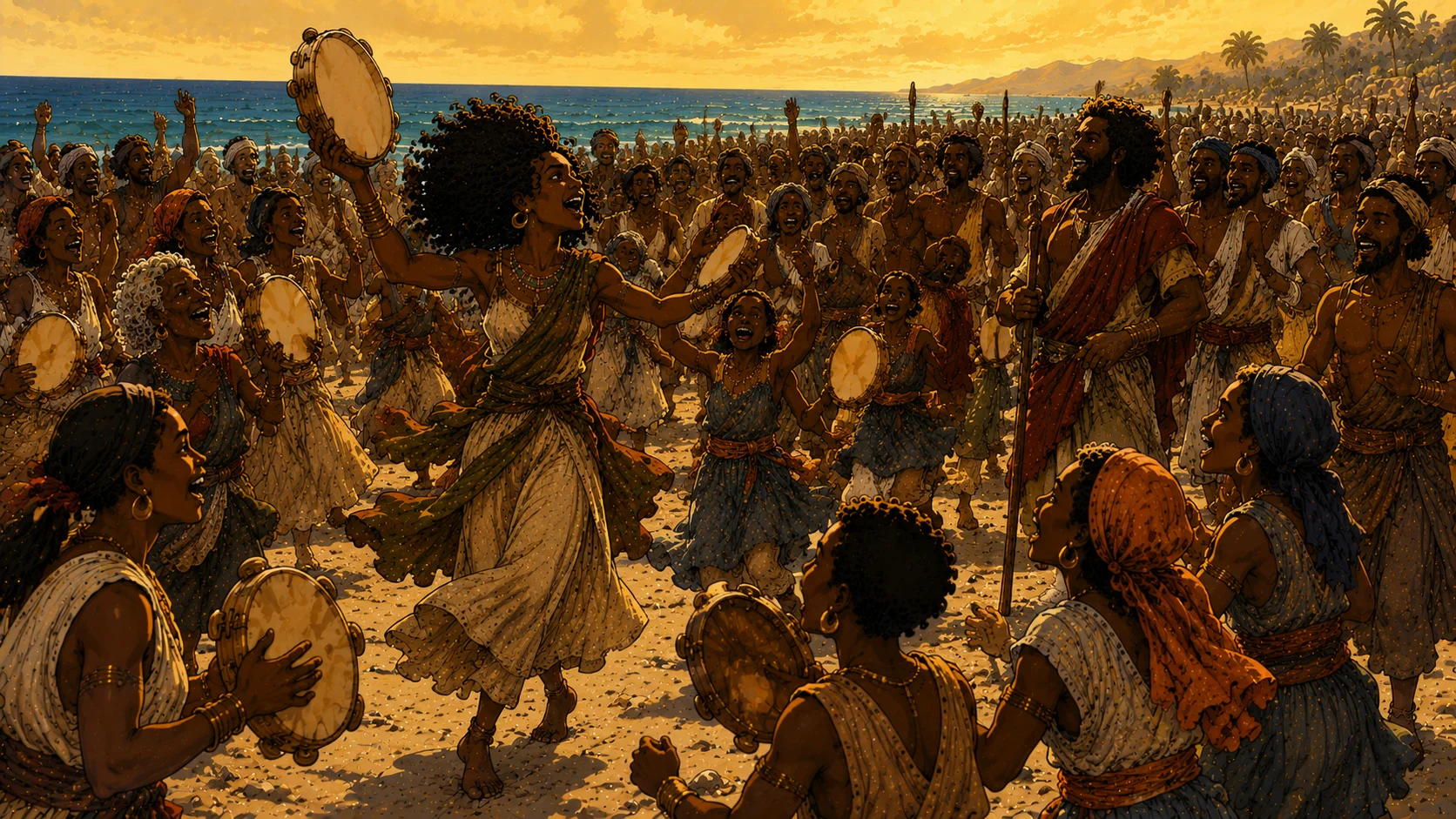
After Moses and all Israel finish the Song of the Sea — Exodus 15:1–18 — Miriam the prophetess, Aaron's sister, takes a timbrel in her hand. And all the women go out after her with timbrels and with dancing.
Miriam answers them — calls back to the people, leads the response: Sing to God, for he has triumphed gloriously. Horse and rider he has thrown into the sea.
This is the closing scene of the Exodus narrative. The sea has closed over Pharaoh's army. Israel stands on the other shore. And the first voice lifted in celebration belongs to a woman who has been watching since the beginning — since the basket in the Nile, since the daughter of Pharaoh came down to the water, since she stood at a distance to see what would become of her brother.
Miriam had kept this moment in her hands, literally. The timbrels she and the women of Israel carried out of Egypt were carried in faith — they had prepared to celebrate a deliverance that had not yet happened. When it happened, they were ready.
The Exodus ends in song and dance on the shore of the sea. The plagues, the negotiations, the midnight departure, the pursuing army, the walls of water — all of it arrives at this: women with timbrels, a prophetess leading, the whole nation singing on dry ground where the sea had been.
