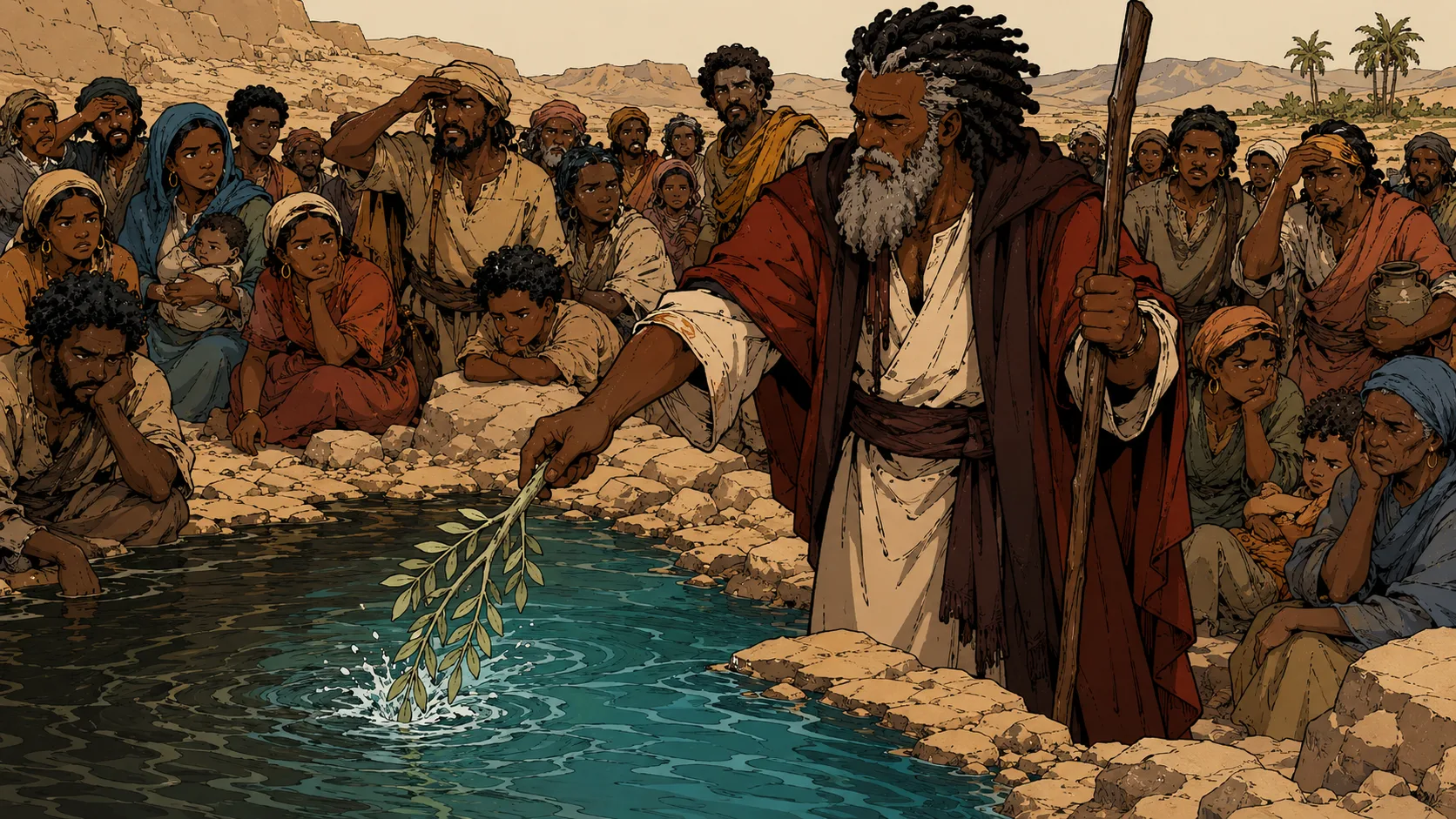
Three days after the crossing of the sea, Israel travels through the Wilderness of Shur — the flat, arid stretch of Sinai east of Egypt. Three days without water. The song of triumph on the shore has given way to the grinding reality of survival in an empty land. When they finally reach water at Marah, they cannot drink it. The water is bitter — מָרִים, marim.
The people grumble against Moses: What shall we drink? — מַה-נִּשְׁתֶּה. This is the first complaint of the wilderness journey, and it is immediate. One body of water, undrinkable. Moses cries out to YHWH. God shows him a tree — עֵץ, etz. Moses throws it into the water. The water becomes sweet.
But YHWH does not leave it as a miracle of provision alone. He tests them there. He makes a chok and a mishpat — a statute and an ordinance — the first law-word of the wilderness. And he sets a condition: If you will diligently listen to the voice of YHWH your God, do what is right in his eyes, give ear to his commandments, and keep all his statutes — none of the diseases I put on Egypt will I put on you.
Then the declaration: כִּי אֲנִי יְהוָה רֹפְאֶֽךָ — For I am YHWH your healer. YHWH-Rapha. The first compound divine name of the wilderness. Before the Ten Words, before Sinai, before the tabernacle, God declares himself as the one who heals. The transformation of the bitter water at Marah is the pattern: bitter things made sweet, sickness averted, the conditions of Egypt — its diseases, its bondage — stripped away from those who listen.
From Marah they continue to Elim — twelve springs and seventy palm trees, and they camp there by the water. Twelve springs for twelve tribes. Seventy palms for the seventy souls who descended to Egypt. The resting place after the bitterness is shaped exactly for the people who arrive at it.